Tag Archives: stress

Are you into conspiracy theory?

A broad cross-section of people I have come across lately believe in conspiracy theories.  The argument mostly goes like this:  The world is being ruled by a small group of people who decide and control most of the things that happen in the world today from political decision-making to technological invention.

conspiracy-theories

Conspiracy theorists seem to have moved from the fringe to the mainstream.  Here is the top 10 list of conspiracy theories compiled by Time magazine:

Some conspiracy theories in history have in fact been proven true, like the Nixon cover-up in the Watergate affair, the Iran-Contra affair and the Libyan involvement in the terror attack on the Pan Am Flight 103 in December 1988.  One of the most absurd allegations during  South Africa’s apartheid era also turned out to be true many years later.  Research was actually being conducted on a virus that would only kill the blacks.

But there is a need to be a bit more  sceptical when it comes to some of the conspiracy theories out there. The common thread seems to be to find a way to explain in simplistic terms many of the events happening in a world of growing complexity. A lot of people have the tendency to form an opinion and then verifying what they believe with some information on the Internet. On closer scrutiny the article or website turns out to be a badly written diatribe of a single opinion without any valid sourcing or solid evidence

Take the story on the so-called “fake moon landing”. I cannot possibly imagine thousands of people working on such a complex space project over many years and all of them keeping a “fake made in a Disney film studio” a secret for decades. The world is so intricate and complex that the truth in the end always comes out. A cover-up, especially if many people are involved, simply doesn’t work. It is a human tendency to tell their family and friends “a secret.” Someone will always spill the beans.

The issue that needs to be addressed is the gullibility with which every half-truth, speculation and downright wacky theory is being claimed as truth while sound investigative journalism, scientific study or a judicial finding is being ignored or slammed as being part of this conspiracy thing. Part of the problem is that established media is not doing its job and has lost credibility by placing emphasis on superficial entertainment instead of being a watchdog on society and itself blasting some of these theories into the world without verifying the facts.  A growing number of people feel alienated in a fast-changing society and are seeking simple answers.

Conspiracy theories first and foremost feed on fear. Here lies the bigger problem. Fear breeds irrationality and a victim mentality. It is just a short step away from blaming a religious or racial minority, the politicians, the media or anyone else for all that is going wrong in the world.  It’s a “cop out” mentality of refusing to stand up and taking responsibility.

We have the freedom of choice on most things that matter. Health and personal happiness is a choice. It is a  choice of what we eat, how we exercise, what we read, what people, family and friends we want to spend our time with and especially what information we are feeding our minds with.

Leave a comment

Filed under energy, life vision, Uncategorized

Should we care about cell-phone microwave radiation?

CellPhoneRadiation

Just like the issue of vaccination, low-level microwave radiation from cell phones has become a highly emotionally-charged debate.

On the one hand the cell phone manufacturers and numerous government health authorities tell us that the “low-level” of radiation from tower signals and the cell phones is perfectly safe.

On the other side we are hearing a growing number of health experts warning us that the wireless technology is having numerous adverse effects such as cancer, sleep disorders and cognitive dysfunctions.

“The greatest polluting element in the earth’s environment is the proliferation of electromagnetic fields. I consider that to be a far greater threat on a global scale than warming, or the increase of chemical elements in the environment,” says Dr. Robert O. Becker, M.D., author of The Body Electric.

Researchers have now coined the term “electromagnetic sensitivity”. Some individuals show little or no effects when exposed to low-level radiation while others are obviously showing cardiovascular disorders and effects to the vegetative nervous system.

Here I see a correlation to the vaccination controversy. Individuals react differently. The human body is enormously complex. Individual emotional and physical responses will be different when exposed to toxins.

Proposing blanket immunisation ignores the obvious side-effects it has on certain individuals and that it should be a free choice to vaccinate or not. Likewise the claim that cell-phone radiation is harmless ignores the fact that there are harmful effects on individuals with a history of cardiovascular problems, pregnancies and sensitive child immune systems.

Dr. Lebrecht von Klitzing has researched the influence of electromagnetic radiation on cardiovascular disease (published in the German magazine „Umwelt – Medizin – Gesellschaft“ 27, pages . 17 – 21 (1 / 2014)

Von Klitzing’s research has found a method to measure heart variability in relation to electrosmog sensitivity. He has concluded that there is a reduction in heart variability in relation to certain electromagnetic signals. He also found a much higher reaction to WLAN signals compared to wireless phone systems.

The fact is that we are living in a modern world where we are exposed to numerous electromagnetic fields be it in the office or at home with a tower signal or power line in the vicinity.

Very few of us would like to return to a primitive lifestyle, doing without all the modern comforts.

We can do much more than most of us believe to strengthen our body’s natural defence systems. We are not merely helpless victims exposed to the dangers “caused by someone else”. It is truly empowering to know that a healthy body is largely the result of personal choice and lifestyle management.

If you belong to the group of people with an “electromagnetic sensitivity” there are choices such as:

  • Removing energy-saving light bulbs from the interior of your home
  • Do most of your phone use from a landline
  • Switch off the WLAN at night
  • If you’re not using your phone for a longer period, especially at night, put it on airplane mode
  • Get rid of your microwave oven
  • Use a radiation free headset

Physical exercise and good nutrition will work wonders in making your body more resilient to the stresses it is being exposed to daily from our environment and our intake of industrially-produced foods. See my blog: Boosting your stress resilience

So when it comes to my question. Should we care about cell-phone radiation? We should indeed, especially if we have children or frail dependents in the home who are most likely to have an “electromagnetic sensitivity” reaction. But I am interested to hear your views on this.

Leave a comment

Filed under cancer, immune system, life vision, liver, low-level radiation

Alarming rate of high-professionals addicted to substance abuse

substance abuse

An alarming rate of doctors, lawyers, bankers, film stars and other high professionals seem to be functioning only by substance and alcohol abuse. While alcohol is the more common, there seems to be a large group of people addicted to substances available at the chemist around the corner or by mail order through the internet.

Most of these substances give a short-term energy boost but cause havoc with your health on the long-term and could even shorten your life.

Lately, I have come across several people in high-powered jobs admitting to taking a sleeping pill every night. The short-term effect is a good nights rest, especially if you have to be alert the next day and have to take important boardroom decisions. But it is important to understand the long-term health effects of these sedatives which are potentially addictive.

Several long-term studies have been conducted on the effects of sleeping pills. One of them is by Daniel F. Kripke. M.D. (The Dark Side of Sleepinig Pills) also available as an eBook.

Kripke refers to the life-shortening effects of common sleeping pills such as zolpidem (e.g., Ambien), temazepam (e.g., Restoril), eszopiclone (e.g., Lunesta), zaleplon (e.g., Sonata), other benzodiazepines such as triazolam (e.g., Halcion) and flurazepam (e.g., Dalmane), barbiturates, and sedative antihistamines such as diphenhydramine (e.g., Benadryl).

A whole industry is thriving on the mass consumption of energy pills, caffeine boosters and other chemical cocktails as a growing number of high-professionals and executives resort to such short-term relief to overcome chronic fatigue. The manufacturers claim that their energy boosters are non-addictive and safe but the truth is quite the opposite.

Most of these supplements provide short-term relief with an energy-high. Eventually, the effects wear off, often resulting what is called a “crash.” with individuals experiencing even more exhaustion, negative mood swings, lack of concentration, irrational decision-making, depression or a chronic headache. The cycles between the “high” and the “crash” become shorter and shorter.

Many energy supplements have been found to speed up the metabolism and to influence the production of adrenaline in the body, which might already be at a high level because of stress. Long-term effects are high blood pressure with the added risk of a heart attack or stroke.

Some experts even claim that the banking crisis was caused by the irrational behavior of the many bankers in the City of London addicted to cocaine.

In our consumerist world our mindset is to want a quick-fix if something goes wrong with the body or mind. Dysfunctional lifestyles inevitably lead to a physical and mental “crash”. Most of our modern diseases and mental health problems are caused by lack of exercise, poor nutrition and high emotional stress levels.

It is possible to lead a highly successful and healthy life by investing just a little time and energy in your own health. Have a look at my blogs on the best weapons against stress and the 7 simple ways of boosting your energy levels by safe and natural means.

Leave a comment

Filed under Uncategorized

Muscle tension and stress

Psychological stress and tension affects us on many levels. A stiff neck and shoulders or back pain are typical symptoms.

Image

When we face stress the body is flooded by stress hormones such as adrenalin, noradrenaline and cortisol. These cause the muscles to tighten up. In extreme cases the muscle fibres pressure the blood vessels causing circulatory disorder that can trigger inflammation.

A good circulation is particularly important to flush acidic waste or other products from cell tissue. Lack of nutrients and too much acidity typically cause fatigue and pain.

We might feel a stinging pain, sensitivity to pressure and limitation to body movements. Tense muscles or pain causes further tensing-up which puts us into a vicious cycle of stress and pain.

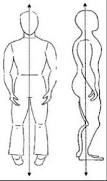
With most people doing office jobs we are top-heavy, meaning there is a lot of pressure and tension in the upper part of the body with the lower abdomen and the feet “losing their grounding”.

Muscle tension is not to be underestimated. A painful back and shoulders are often the first signs that “we are carrying too much”. It is amazing how many people just bear with it and become used to this pain. But the longer we wait in dealing with our stress management, the worse it will get. The quality of life suffers enormously on the long run.

Focusing our mind on slow, deep gentle breathing will help you relax, especially if you breathe out into the region of muscle tension. Take time out for yourself and find a spot where you can be at peace.

In the Taiji body arts we spend a lot of time aligning the three energy centres:

  • The lower Dan Tien below the navel that encompasses the area of the lower back and kidneys. Here we work on loosening the thighs so that energy can flow from the feet and legs.

  • The second Dan Tien from the breastbone to the lower end of the shoulder blades. Opening the chest and relaxing the shoulders

  • The third Dan Tien or “third eye” between the eyebrows. Lowering the chin towards your chest and aligning the centre of your head to a point about 60 cm above you so that your neck muscles are slightly stretched.

     Image

With an improved posture and good vertical alignment of the body your breathing will automatically improve and help you relax, even during times of stress. This takes time and patience, especially if you decide to learn the body arts such as yoga, taiji or qi gong. But the reward is immense. It makes you become more aware of your real needs on many levels and certainly improve your quality of life – pain free.

1 Comment

Filed under Uncategorized

City life versus country life. What is better?

For decades now we have seen a global phenomenon. Hundreds of millions of people are deserting the countryside and moving to the big cities. Its time to take stock. Is life really all that much better in the city? Signs are that indeed a growing number of people are moving back to the rural areas, finding that life out in the backwoods is not so bad after all.

Image

 Many young people, fed-up at being unemployed in the big Greek, Spanish or Italian cities are finding contentment by moving to grandparents or long-forgotten aunts and uncles in remote rural villages. There they live easy-going lives cultivating vegetables or picking olives. The trend is catching on elsewhere too.

 Even in the much wealthier Germany a growing number of city-slickers are moving to rural communes based on a sustainable and alternative lifestyle. One such village is Sieben Linden http://goo.gl/7LxYxL in a remote part of eastern Germany. The 100 adults and 40 children living there are not bound by any religion or ideology. It is a microcosm of different ideas and people with the common cause to leave as small a carbon footprint as possible, experimenting with natural building materials such as clay and hay or cultivating organic vegetables.

 I moved to a mainly farming village, 76 kilometres, southeast of Hamburg some 18 years ago and have never regretted it. I was simply fed-up with the grumpiness, the anonymity, the noise and the stress level in the big city. Some years ago I was shocked to learn that a retired former colleague of mine was found in his Hamburg apartment. He had been lying dead in his armchair for over a year. The janitor only opened the door after neighbour’s complained of a smell in the building during a hot summer!

 You could say that the downside of country life is that everybody is minding everyone else’s business. But is that really bad? If my 93-year-old neighbour fails to appear before her favourite window for a day, sure enough I would have people asking me, whether I had seen Ilse and if she is still OK. Most children still have the decency to greet adults or to ask strangers looking for directions, if they can be of assistance. I can get fresh milk from the local farmer and have a chat about local politics. If I need someone to feed the cats, there is always someone to help, and we do the same. Its a natural give-and-take. Of course there are disputes between neighbours here too. This is not paradise. But it is nothing like the vicious acrimony I’ve seen between neighbours in the city over petty things such parking space.

 Life in a city, especially in Europe, is exorbitantly expensive. I would not even get a small apartment in Hamburg for the price I paid for my big house and property here. Everything from food, garbage collection to water and electricity costs at least a third more. That adds to the stress to earn enough just to get by.  When you are in your early 20s you enjoy the night life, the concerts, the movies and the many other attractions a city has to offer. But the shine wears off. Quality of life cannot be measured only in material terms and an entertainment agenda. This is the illusion of city life. The truth is that most people in the big cities appear to be in a constant rush and are pretty stressed-out, if you ask me. But I would enjoy your opinion on this?Image 


1 Comment

Filed under Uncategorized

Are we all in stress overload?

The fast-paced rhythm of modern life with all its ups and downs, often gives us the feeling that its too much and that we are really stressed-out. Hardly a day goes by at the workplace without people complaining that they have a “stress overload”. But is stress all bad?

 Image

In principle stress the stress reaction in our bodies is part of our survival mechanism that dates back to the dawn of mankind. The early hunter on the plains of Africa meets a predator. A flood of stress hormones such as adrenalin and cortisol are released, causing an increase in blood pressure, the heart to pound faster, muscles to contract . All senses are put on alert. We are focused completely on confronting the danger ahead. “Where is the next tree? Do I run or use all my additional strength to throw my spear at the predator?”

 We might feel the same kind of “rushed” energy and focused attention when we are busy doing something we enjoy. Time seems of no relevance. We are in flow with what we are doing and the additional adrenalin gives us that extra push. This is the “stage fright” that most actors, singers or sports stars go through before giving an immaculate performance.

 The problem starts when stress gets out of control. When our body is more or less permanently flooded with stress hormones. We are practically confronting a predator for many days, weeks and even years. The long-term health effects are disastrous with every system in the body affected from high blood pressure, poor libido and even rewiring of brain functions that can cause severe fear and depression symptoms.

 Its all about finding the right balance between what we call the yin and yang.

 One part of the Taiji body art principles is finding the balance between muscles contracting and expanding, inhaling and exhaling, vertical and horizontal alignment, internal and external flow. These gentle movements are ideally suited to bring stress under control.

 So when do I know that I have too much stress and need to wind down?

 This differs from person to person. What one person might shake off and forget immediately another person might carry around for days severly stressing him/her emotionally – the worst kind of stress. Much is dependent on the personality. Are you an outgoing, joyful person at heart with a big family and support network? Or are you a pessimist. Can you deal with setbacks? How do you catch yourself again? What gives you strength and energy?

 The “collective burnout syndrome” we are seeing around us in essence means that something is out of balance, that there is too much yang – too much physical energy, thoughts, distractions, over indulgence spent on things that are harming us. We need more yin to bring that in balance such as meditation, stillness, the ability to be completely alone with ourselves, the ability to downsize and to abstain – seeing the beauty and abundance in small things. Now we can’t all go and escape into a monastery. We have family and other obligations. The challenge is to find that balance in our everyday lives. Here are just a few ways of getting quick stress relief:

 Get out into nature: Taking a short break for a walk in the park just listening to the birds and awakening the senses to smell, sight and sound will do a lot. Nearly all great teachers, leaders and philosophers from varied cultures and traditions have been strengthened by alone time in nature.

Image

 Thought control: Most chronic stress comes from an emotional disconnection from the world outside and our own needs. This, scientists have recently discovered, has a lot to do with the effects of stress on the prefrontal cortex of the brain. Taking a different perspective and just accepting that life has ups- and downs will help. Meditation exercises can really help.

 Physical exercise and nutrition: Even mild regular exercise will release pent-up pressure and tension. Reduce your white sugar and salt intake and feed your body with fresh organic foods with lots of Omega 3 and 6 nutrients. See also my blog on foods.


3 Comments

Filed under Uncategorized

Is “stress” a myth?

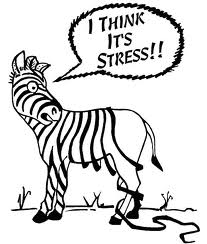
ImageIf we feel and look around us we so often find ourselves “driven” by forces out of our control that we perceive as stressful. We find ourselves under pressure, in a constant state of hectic activity with no time to relax. More and more people are succumbing to these pressures with a burnout, depression or other psychological disorders.


Not a day goes by without some publication, giving us some tip on how to deal with the stresses of modern life.


In psychological terms stress is defined as a psychological and physical response of the body in reaction to changing conditions. These conditions may be real or perceived and has a powerful effect on mental functioning.


The last point is particularly poignant. Is having stress all in the mind? A lot of recent medical research is focusing on just this question. Some people obviously manage to deal much better with change than others.


Why do some people really take off when they are under pressure, finding in themselves enormous stamina and creative flow while others doing the same work under the same conditions suffer from chronic exhaustion and end up having a burnout.


I think its time to put some things into perspective. Compared to previous generations and compared to much of humanity in the so-called Third World, we in the industrialised West live a pretty comfortable life – at least in material terms. In order to get something to eat, we merely take a drive down to the next supermarket where we have a choice of foods that no other generation ever experienced. We have warm homes in winter with central heating and in the warmer areas air conditioning in summer. We have a life expectancy that is much higher on average than that of our great-grandparents.


Would you really want to go back in time to the Middle Ages when people lived in constant fear of dying in warfare, from famine or disease. The wealthiest king or queen did not have the choice and comforts of life that the average person enjoys today. So what has gone wrong? Why are we so under stress?


Today’s stress is primarily not about physical but about emotional and social survival.


When we are under stress, our sympathetic nervous system initiates a “fight or flight” reaction, restricting blood flow, raising blood pressure, releasing adrenaline and the stress hormone cortisol, slowing body functions so that all energy can be used to fight the stressor. After the perceived danger has passed, the parasympathetic system takes over, decreasing heartbeat and relaxing blood vessels.


In our modern world our stress response is activated so frequently that the nervous system doesn’t have a chance to return to normal, resulting in a state of chronic stress. There is a chronic imbalance between activity and relaxation. It is very often the same type of stress over a long period of time that takes its toll.


In my consultancy for many different types of business on corporate health issues, there appear to be several common denominators that cause negative stress among employees, leading to growing absenteeism from burnout or depression:

Here are the most common:


  • Management that fails to communicate to its employees that they are really valued as fellow human beings. Simple acts of courtesy fall by the wayside with employees merely seen as “a human resource” costing xxxx number of dollars or euros a month.

  • Performance is measured merely in individual output with social skills such as team play not being taken into consideration.

  • Total control with little or no freedom in utilising personal skills or creativity

  • Round the clock availability via email or cell phone, even during vacation time

  • Finding no meaning, vision or real perspective in the job one is doing

  • No time allowed or taken for real breaks where colleagues can communicate with each other

  • No time for relaxation or physical exercise during work time


People don’t just go to work to earn money. It is the place where they spend the largest portion of their lives, where they interact with fellow human beings, seek meaning in their lives and find the challenges that make them grow and become fully human. Companies that really understand this and train their managers to lead people rather than machines will inevitably lead the field, even in highly competitive market segments.


More information on the Five Elements in my book “Yield and Overcome”http://goo.gl/TXSgw0


Leave a comment

Filed under Uncategorized

A walk through Switzerland – a different Camino

All across western Europe a network of ancient trails used by pilgrims for centuries are being re-discovered as a growing number of people are realising that taking a long walk is one of the best ways to get your stress level down.

During the Middle Ages it was common practise for at least one member of the family to walk by foot to Santiago de Compostela in Spain to pay homage to what is believed to be the burial place of St. James – one of the Apostles of Jesus. Many did not survive the hazards of disease, bandit attacks and other accidents.

Image

Following a series of recent best-selling books on the Camino including “The Pilgrimage” by Paulo Coelho and “I’m Off Then: Losing and Finding Myself on the Camino de Santiago” by the German entertainer Harpe Kerkeling, tens of thousands of people are again walking the Camino every year.

The main route, the Camino Frances, from Roncesvalles to Santiago is 737 kilometres long and will take the hiker several weeks to complete. The route is well signposted and the “peregrino” or hiker will find a pilgrims hostel in almost every village on the way where he/she can stay at a cheap price overnight. It is a far cry to the hazardous route from the days of yore.

After taking my first “small” 120 kilometre walk from Saria to Santiago several years ago I have literally become hooked to these ancient paths. Since then I have understood why many a wise teacher has pronounced that getting back into sync with nature “is your best healer”. Walking helps you find your natural rhythm, relaxes your breathing and has many other positive health effects.

On one of my longest trails lasting more than four weeks, which I walked with my good friend Tom, we took the more rugged Camino del Norte along the coast from Urquera to Santiago. It was an exhilarating experience, off the main route frequented by most other peregrinos. The landscape is spectacular with mountains, a rugged coastline and remote villages.

This year my wife Alyce, our Dalmatian dog Klara and I did a short stretch from St. Gallen to Einsiedeln in Switzerland. During the Middle Ages most pilgrims from northern Europe walked the same route, gathering at the famous monastery in Einsiedeln before commencing on the long route through France and Spain. Walking slowly by foot through a country makes you see so many things you would never see when travelling by car, bus, train or even bicycle.

After a long afternoon walk up an Alpine hill during summer temperatures of well over 30 degrees Celsius we found a hut next to the road and a fridge filled with cold drinks and ice cream. You merely put into a bottle the money for the drinks you consumed. I couldn’t help but wonder what such a gesture of trust in one’s fellow man would have meant in my home country South Africa with its spiralling crime rate. Camping sites in the Swiss Alps are spotlessly clean and equipped with all the necessary utensils with obviously no danger of theft and vandalism. People had warned us not to take a dog on the walk but we were positively surprised how accommodating and dog-friendly the Swiss really are.

True, Switzerland also has its problems, but somehow the Swiss for centuries have managed to stay on track with a grass roots democracy based on mutual tolerance for different religious, language and cultural affiliations with a broad consensus on this common value system. A general scepticism in big government is deeply embedded with the cantons or regions having wide legislative freedoms. The result: A healthy and vibrantly affluent society.


Leave a comment

Filed under Uncategorized