Category Archives: climate change

When Faith Stops Working: Are You Listening?

This summer, as Europe swelters under yet another wave of extraordinary heat, I find myself thinking about an old story I heard many years ago. It is a simple story, almost a joke. But sometimes the simplest stories contain truths we would rather avoid.

There was an old man named Angelo who lived in a small Italian village. One day, his neighbour came running to his door.

“There is a flood warning,” he told him. “The river is rising. Everyone has been told to leave the village within 24 hours.”

Angelo listened calmly.

“I will be fine,” he replied. “I trust in the Lord.”

His neighbour pleaded with him, but Angelo refused to leave.

A little later, a fire engine came through the village, its loudspeaker warning everyone to evacuate immediately.

Angelo heard it.

But he stayed.

Then the river began to rise. Water flooded the houses closest to the river, and people started fleeing for higher ground. A rescue worker came to Angelo’s door.

“You have to leave now!”

But Angelo shook his head.

“I trust in the Lord.”

Eventually, the water reached the upper floor of his house. Angelo climbed onto the roof.

Then a helicopter appeared.

A rescue worker lowered a ladder.

“Come on, Angelo! We can get you out!”

But once again Angelo refused.

“I trust in the Lord.”

The helicopter eventually disappeared.

Angelo drowned.

When he arrived at the gates of heaven, he was furious.

“I trusted you,” he said to God. “I believed you would save me. And you didn’t.”

God looked at him with sadness.

“Angelo, I sent you your neighbour. I sent you the fire engine. I sent you the rescue worker. And finally, I sent you a helicopter. What more did you expect me to do?”

Perhaps the warnings are the message

I thought about Angelo recently while walking through Wandsworth Common. Walking has become a way for me to make sense of the world. When I walk, I notice things I might otherwise miss.

This time, I noticed the grass. I noticed the bumblebee dying and the pigeon spreading its wings, trying to stay cool.
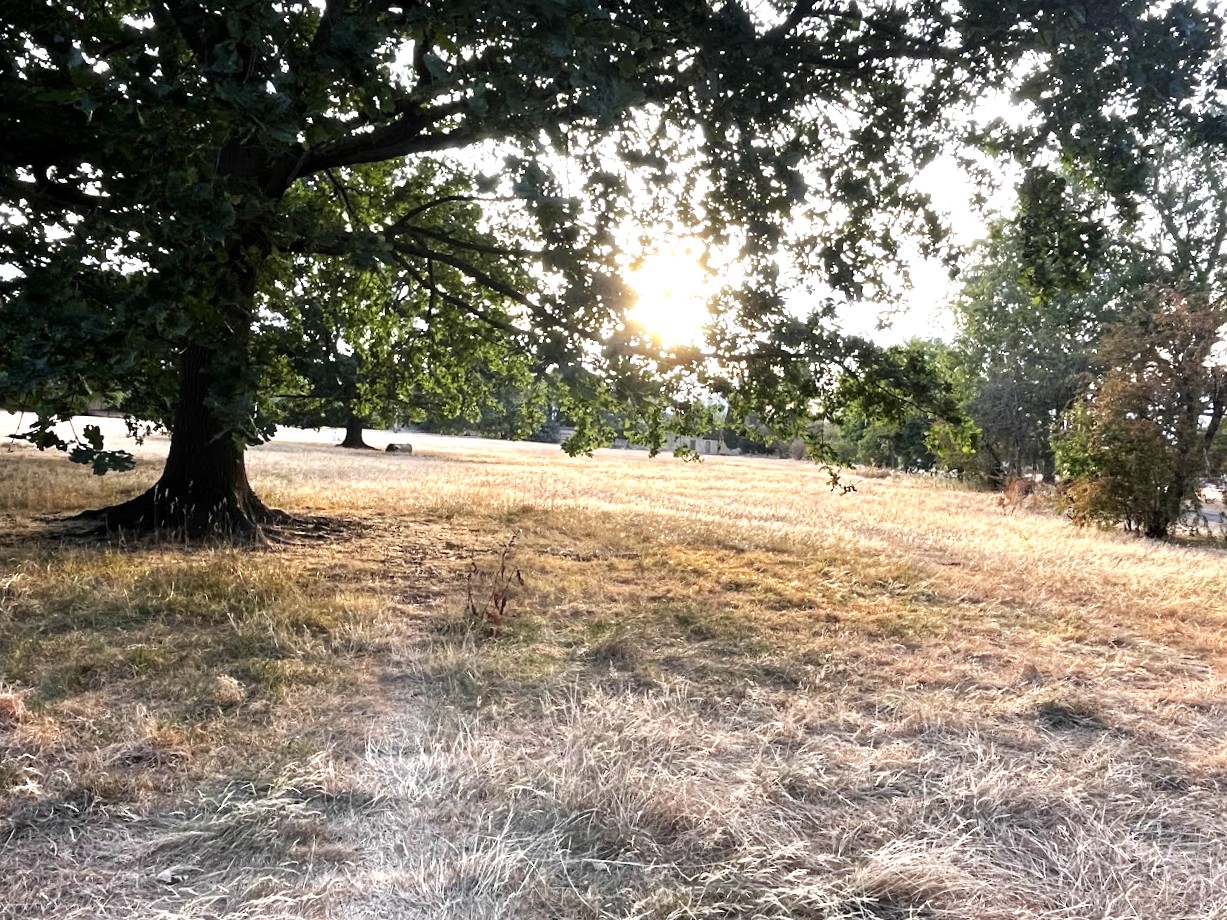
The grass should have been green. Instead, it was dry and yellow, brittle beneath my feet. Trees and shrubs were showing the strain of weeks without sufficient rain. Nature seemed tired. There was something strangely unsettling about it. Perhaps because I have lived long enough to remember summers when rain in central Europe was something we complained about rather than something we worried about.

I know that one hot summer does not prove climate change. Nor does a dry lawn. But when an isolated event becomes part of a pattern, perhaps the wise response is not to explain it away, but to ask questions, pay attention, and to listen.

And that is what keeps returning to me from the story of Angelo.

I attended one of the early United Nations climate conferences as a journalist many years ago. The scientists were warning us about the consequences of pumping ever greater quantities of carbon dioxide into the atmosphere. At the time, the future seemed comfortably distant. Climate change belonged to another generation. It would have to deal with it

What if the warnings are already the message?

But perhaps that is one of the great illusions of human beings: our tendency to imagine that the consequences of what we do will always arrive somewhere else, sometime later, and affect somebody else. Now the future has become the present. The heat, the droughts, the record-breaking summer temperatures, the fires, and the floods simply cannot be denied anymore. And yet, like Angelo, we seem strangely reluctant to leave the comfort zone of our house.

When faith becomes a way of not seeing

This is where the story touches something much deeper for me than climate change. It touches the question of faith itself. For much of my life, I have wrestled with what it means to believe.

I have become suspicious of a faith that gives us easy answers to difficult questions. A faith that tells us everything will be all right if only we trust enough. Because sometimes everything tells us that something is just not right. The river really is rising. The diagnosis is serious. A relationship is really over. The world is changing rapidly beneath our feet. The certainties we have built our lives around simply have stopped working.

Perhaps that is one of the most frightening experiences in life: discovering that the beliefs that once gave us security no longer help us make sense of what is happening. But perhaps it is also an invitation. When faith stops working, something else may be asking to emerge. It is perhaps a deeper faith that does not require you to know how everything will turn out. It is a faith that allows you to say:

I don’t know.

I am afraid.

I may have been wrong.

But I am willing to look.

Listening to what is in front of you

I am increasingly convinced that wisdom has less to do with having answers than with learning how to listen. It is listening to your body, to other people, your intuition, and to that voice that you perceive only in silence, above all in nature.

Nature does not speak to you in words. It speaks through patterns, seasons, heat, drought, rain, abundance and scarcity. Our ancestors knew very well how to interpret these signs. Their survival depended on it. But in the disconnect from the natural world, we seem to have lost that ability.

We can choose to ignore these whispers from the universe. But ignoring them does not make them disappear. That is what Angelo misunderstood. He believed that faith meant waiting for God to intervene. Perhaps the deeper truth is that God had already intervened. The neighbour was the intervention. The fire engine was the intervention. The rescue worker was the intervention. The helicopter was the intervention. Angelo simply didn’t recognise them as such.

And I wonder how often we do the same.

How many times in your life has something tried to get your attention?

A relationship that no longer feels right. A body telling you to slow down. A restlessness that cannot be explained. A recurring dream and a difficult conversation that you keep avoiding.

A landscape that no longer looks the way it once did. A world that is changing before our eyes. Perhaps these are not interruptions to our lives. Perhaps they are our lives speaking to us.

The helicopter is still there

I don’t know what the world will look like ten or fifteen years from now. I don’t know whether we will succeed in changing course quickly enough. And I certainly don’t believe that fear and denial is going to save us.

But I do believe we still have choices. That may be the most hopeful part of the story. Angelo was not a victim until the very end.

He had choices. And so do you. We are not powerless in the face of a changing world. We can change how we live. We can demand that those who govern us take reality seriously. We can consume less, waste less, protect what remains and support those working to restore what has been damaged.

But perhaps the first step is simpler.

We need to listen. To put down our certainties for a moment. To look out of the window.

To walk through a park. To notice the colour of the grass. To feel the heat and rescue the bumblebee looking for water.

To see the trees struggling.

And then to ask yourself honestly:

What is life trying to tell me?

Faith does not mean believing that someone will come and save you.

Perhaps faith means trusting yourself enough to recognise the helicopter when it arrives. And having the courage to climb aboard.

Reino Gevers – Host of the LivingToBe podcast

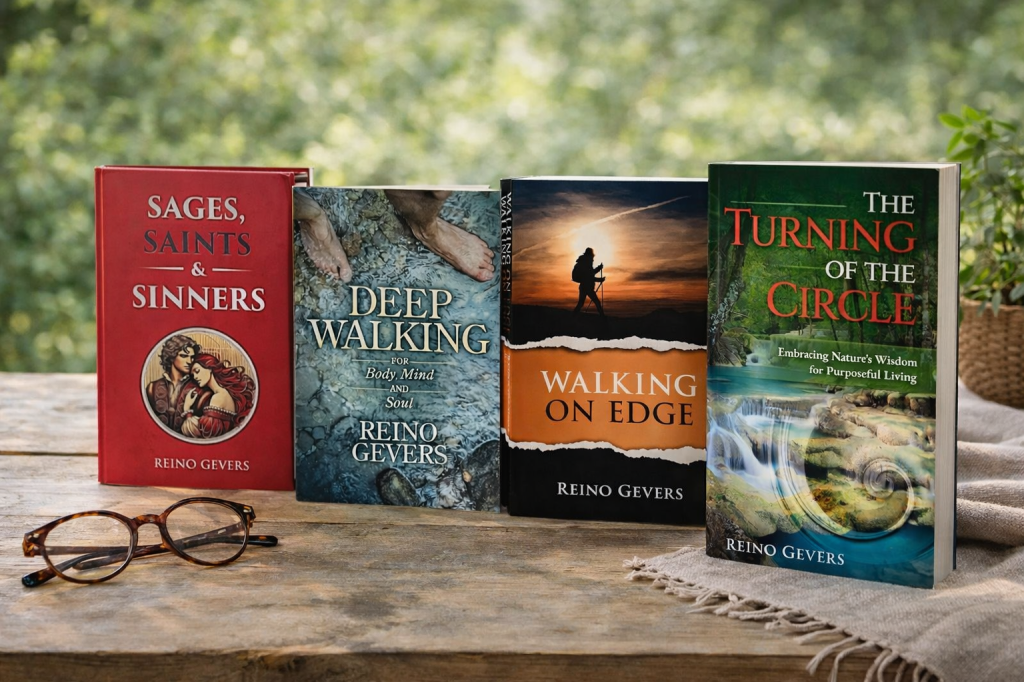
P.S: If you enjoyed this article, you might be interested in reading one of my four books, available where all good books are sold.
Leave a comment

Filed under climate, climate change, healing nature, spirituality

Disinformation: The Threat to Democracy

I had to read the headline twice to fully grasp what was happening: meteorologists in the U.S. have been inundated with abuse, including death threats, from conspiracy theorists accusing them and the government of manufacturing and controlling hurricanes.

This disturbing trend mirrors the threats scientists faced during the COVID-19 pandemic, when fake news spread claims that the virus was a hoax. Recently, I made the mistake of commenting on an article about the U.S. presidential elections, only to be bombarded with vile remarks and personal insults.

Violent threats are becoming alarmingly common, especially on platforms like Twitter, where safeguards against disinformation have largely collapsed since Elon Musk’s acquisition. Now, anyone with an internet connection can propagate wild conspiracies, with little to no oversight.

A key tactic of right-wing extremists is to vilify both independent and mainstream media, constructing a dystopian reality where truth is distorted into lies and falsehoods are presented as truth. By manipulating reality and eroding public trust in factual information, they create fertile ground for the rise of totalitarianism.

Hannah Arendt, the German-American political theorist and philosopher, best known for her works on totalitarianism, warned as long ago as six years after World War II:

“The ideal subject of totalitarian rule is not the convinced Nazi or the convinced communist, but people for whom the distinction between fact and fiction (ie the reality of experience) and the distinction between true and false (ie standards of thought) no longer exist.”

Arendt’s concern with the fragility of truth in the public realm echoes today’s concerns about the impact of fake news on public trust in media, government, and institutions. When people no longer trust facts, they withdraw from democratic engagement and become vulnerable to authoritarian manipulation.

The reason why MAGA Trumpists and their acolytes such as Musk are targeting “mainstream media” is that Independent media is often at the forefront of exposing corruption, abuses of power, and misinformation, which might otherwise go unchecked.

Investigative journalism plays a pivotal role by digging into stories that powerful entities want to keep hidden. Independent media, free of government control, regularly fact-check falsehoods. Some examples include the British Broadcasting Corporation (BBC), The Guardian, and ProPublica.

PolitiFact is one of the most well-known fact-checking organizations in the United States. It is widely recognized for its Truth-O-Meter, which rates the accuracy of statements made by politicians, public figures, and media outlets. The ratings range from “True” to “Pants on Fire” for particularly egregious falsehoods.

Basic democratic freedom and liberty are being threatened in multiple countries. Authoritarian messaging is based on negativity and falsehoods to spread fear, anxiety, and division. The existing reality is exaggerated to much worse than it is. It promises the struggling working class a Utopian future. This future will, of course, never materialize.

Here are just a few examples of what you face if you allow authoritarianism to take control of your life:

  • Power is mostly concentrated in the hands of a single leader or a small ruling elite. Checks and balances are eroded allowing leaders to act without accountability or transparency.
  • Authoritarian leaders use their positions to enrich themselves and their acolytes. Public resources are diverted for personal gain, leading to a lack of investment in essential services like education, healthcare, and infrastructure.
  • Political competition is eliminated or severely restricted by changes in laws benefiting the ruling party. Opposition leaders may be imprisoned, exiled, or assassinated as we are currently seeing in Putin’s Russia.
  • Authoritarian regimes stoke hatred of “the other,” including ethnic and religious minorities, leading to social fragmentation violence and unrest.
  • Authoritarianism prioritizes control over economic liberalization, creativity and innovation. In the long term economies stagnate, and entrepreneurship is stifled.

Happiness is created by mindset and perspective. Foundational is a society with basic freedoms of democracy and expression. Authoritarianism ultimately has a devastating effect on every citizen. You end up being poorer, more desperate and living a life of quiet misery.

As Winston Churchill once summized: “Democracy is the worst form of government, except for all the others that have been tried.”

Reino Gevers – Author – Mentor – Speaker

P.S. If you enjoyed this article you will be interested in my books available where all good books are sold.

Leave a comment

Filed under climate change, demagogues, humanity, ideology, mental health, social media

2020: Our biggest challenge

In the northern hemisphere, the time between Christmas and New Year is characterized as the time of the “rough nights” with cold winds and snow battering the shutters. I like to use the time for reflecting on the blessings of the past year and working on my vision board for the year ahead.

church

One of the great highlights of my year were the unforgettable conversations with the wonderful people I met while serving as a volunteer in a pilgrims hostel on the Camino in the village of Najera, northwestern Spain.

What are you doing with the rest of the days of your life?

People from numerous different age groups countries, cultures, religions and traditions are walking the Camino with burning questions such as: What do I need to do with the rest of the days of my life?  What are the ingredients of a happy, fulfilled and contented life of bliss? What can I do to make the world a better place for my children and grandchildren? Who am I on a deep soul level beyond what the world outside there is trying to tell me who I am and what I need to believe, consume and do?

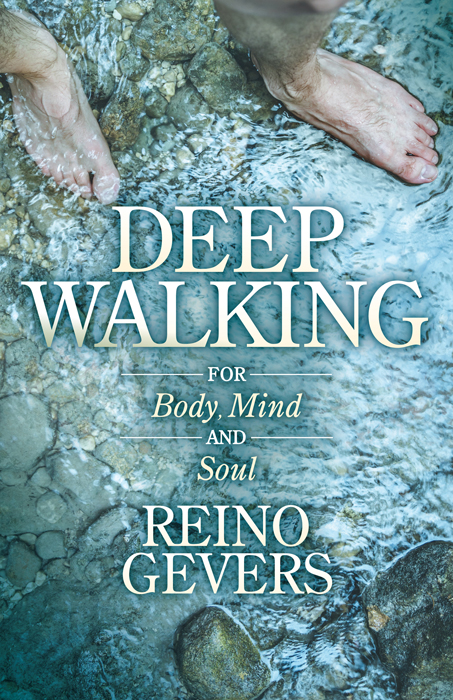
I have delved into some of these questions and lessons learned on the Camino with my new book Deep Walking for Body, Mind and Soul.

Taking time-out for reflection and alignment

The idea and purpose is to inspire readers on how valuable our time on earth really is. We need a time-out every day to perceive our inner world and one of the best ways of doing so is taking a walk in nature. It is the start of healing self and when we heal self we can start healing the world outside. The state of our world is a reflection of our inner consciousness and state of mind.

Much of the western world has lost its spiritual compass with the over-emphasis on external gratification. “Things” can never compensate for the yearnings of the heart and soul. There is a reason why depression and other mental illnesses have become a scourge of our time. We no longer know who we are? It is not surprising when we are bombarded almost non-stop with information overload, and confused by professional deceivers on social media. On the threshold to a new decade, we are faced with possibly the biggest challenge of our time:

Moving to a restorative, sustainable mindset

We need to move from the exploitative, consumerist mindset that is rapidly destroying our ecosystems and foundation of life to one of sustainability and restoration.  The firestorms and unprecedented heatwaves in many parts of the world in the past year, the tornado winds and flooding have come much earlier than the climate scientists predicted. We don’t have much time left to make the turnaround and Nature is trying to tell us something.

We need to change how we are transporting ourselves, what we are eating and what we are consuming.

The Western diet of junk and processed foods is not only ruining our individual well-being and health. Mass agriculture and animal feed production is the single largest contributor to greenhouse gas emissions. We need to eat less meat and we need to eat what comes from the local farmer.

The next decade is going to be defining in many ways. We are either going to make it or break it. Already the battle lines are drawn between raised human consciousness and the pushback from the fossil fuel-based industries and the exploitative mindset of the past.

The delusion the deceivers are putting out there is that the new consciousness wants to push us back into a poverty-stricken hunter and gatherer lifestyle.  The opposite is true. Imagine a much better carbon-free world in 2030 with cutting edge clean-energy transportation, clean air and rivers, oceans, lakes, and forests teeming with life, and foods that keep us healthy and fit.

Reino Gevers – Author, Mentor, and Consultant

https://www.reinogevers.com

Gevers-DeepWalking CVR.indd               paperback_cover_1                            applepodcast         


Leave a comment

Filed under Camino de Santiago, climate change, environment, exercise mental health, self-development, Uncategorized

Climate: No time to lose

Two weeks ago the northeastern part of the Mediterranean island of Majorca was hit by a freak storm. Within a matter of hours the area was hit by so much rainfall that dry streams were soon flooded and a five-meter high wave swept away cars, bridges and buildings. Twelve people died.

Such a catastrophe hits the world headlines for a day or two and then is forgotten. In this case it happened only a 40-minute drive from my home on the island.  It was a stark reminder that climate change is real. It is happening and it is affecting all of us.

Behind the news of hundreds of thousands of people fleeing civil wars in Latin America and the Middle East is the story of agricultural devastation as a result of unprecedented drought.

Unfortunately the debate on climate change has become so partisan and emotional that even sound science is losing the argument.

mathew-schwartz-698735-unsplash

Photo by Mathew Schwartz on Unsplash

When I was working as a journalist for an international news agency, I attended the first series of conferences of the United Nations Intergovernmental Panel on Climate Change (IPCC) nearly two decades ago. In one of the workshops climate scientists were showing slides of predicted extreme weather patterns by the year 2030. Freak storms, floods and massive hurricanes would become the norm, they argued. The sad truth is that they were wrong.  These weather patterns are already happening twelve years ahead of time.

Nobody in the year 1996 could predict that the fast growing-economies of China and India and the unprecedented destruction of rain forests would fast-track carbon dioxide emissions. In the year 2013 they surpassed 400 parts per million (ppm) in the atmosphere for the first time.  Now get this: For ten thousands of years the level was stable at around 280 ppm. The level only started increasing at the turn of the last century as the industrial revolution gained pace. This is not a natural cycle. What we are seeing is human-induced climate change. It is part of the bigger picture of our human impact on the planet.

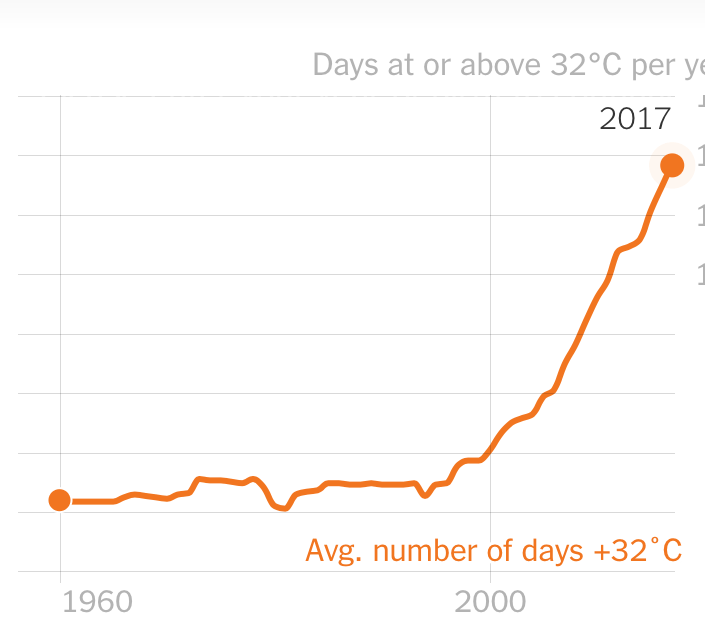
I was born in Paulpietersburg, South Africa . This is how much the temperature has risen in the small town during my lifetime: img_1143-e1540994626687.png

Humanity seems to move to the edge at the brink of a new evolutionary cycle. We were there before during the Cold War when the superpowers were very close to annihilating most of humanity in a nuclear war. It is my firm belief that on at least three occasions missiles were not launched because of divine intervention. The crisis had to happen to make us aware of the madness of the ideological walls in our minds.

If the world had not come together in signing the Montreal Protocol in 1987 banning substances that deplete the world’s protective ozone layer, we would be in a dire state today.

Hope springs that we will manage it this time around as well.  It is a close call. We have no time to lose.  It is up to our generation to preserve our planet for the generations ahead.  On a deeper level environmental consciousness is all about self-awareness and self-love – without the shadow of ego and narcissism.

We are treating our bodies in the same way that we are treating our planet. Mindfulness to self is how we exercise, cope with stress, and the choice of foods we eat. It magnifies to the world around.  We seem to know very little about ourselves. Its time for a real game changer.

Reino Gevers – Author, Mentor and Consultant 

https://www.reinogevers.com


2 Comments

Filed under climate change, humanity, lifestyle management, Majorca, Uncategorized