Category Archives: climate

Ancient Trees: Cathedrals of Nature and Keepers of Time

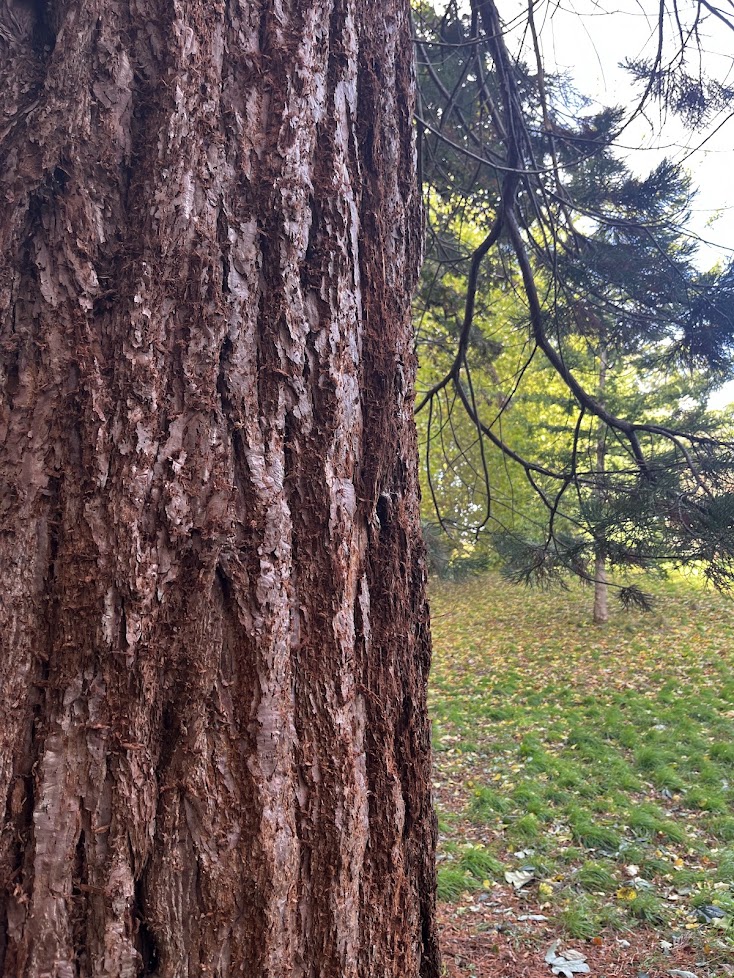
Ancient trees possess a majestic, timeless beauty. Their weathered trunks seem to hold the stories of generations long gone. They have stood through changing seasons, witnessed the rise and fall of human fortunes, and endured storms, wars, and the passing of centuries. Long after the people who planted them have disappeared, these silent giants remain, rooted in the earth and reaching towards the sky.

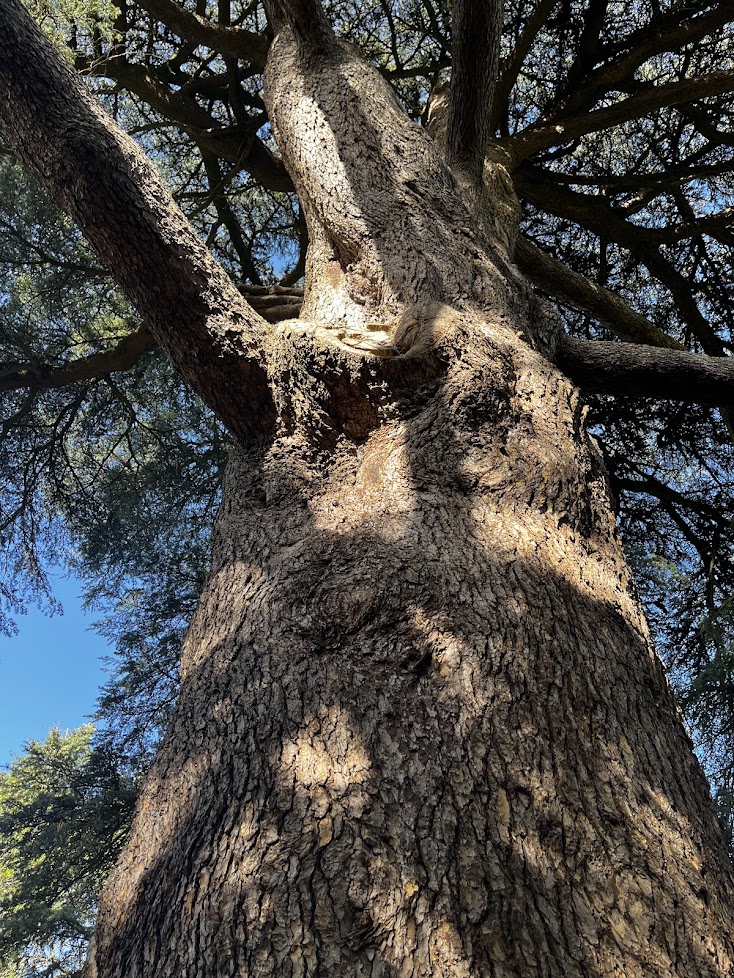
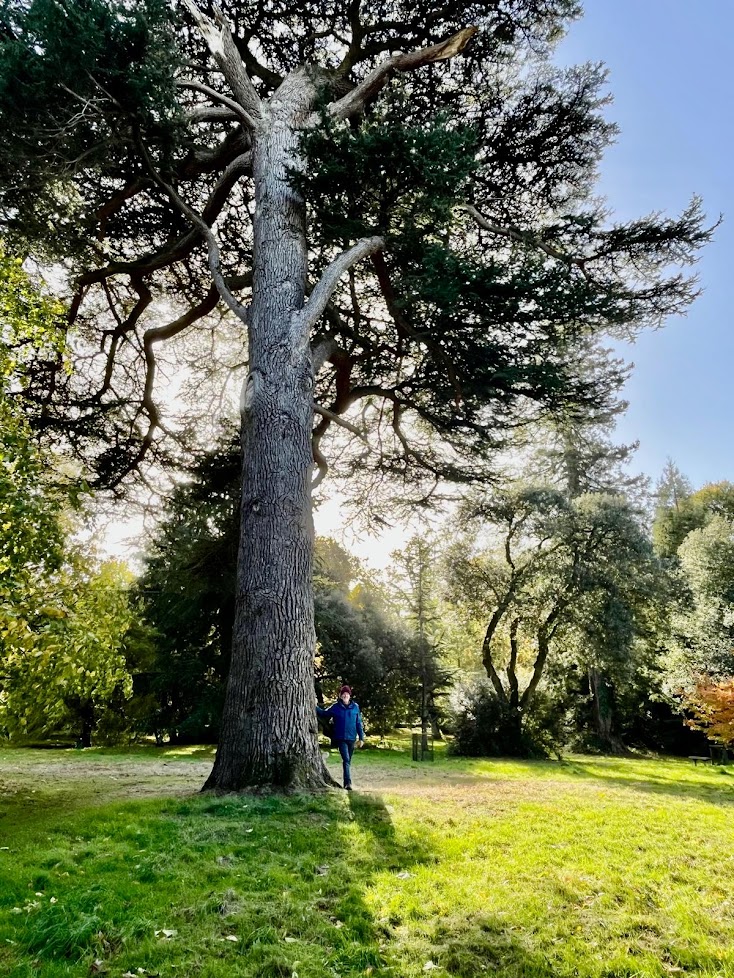
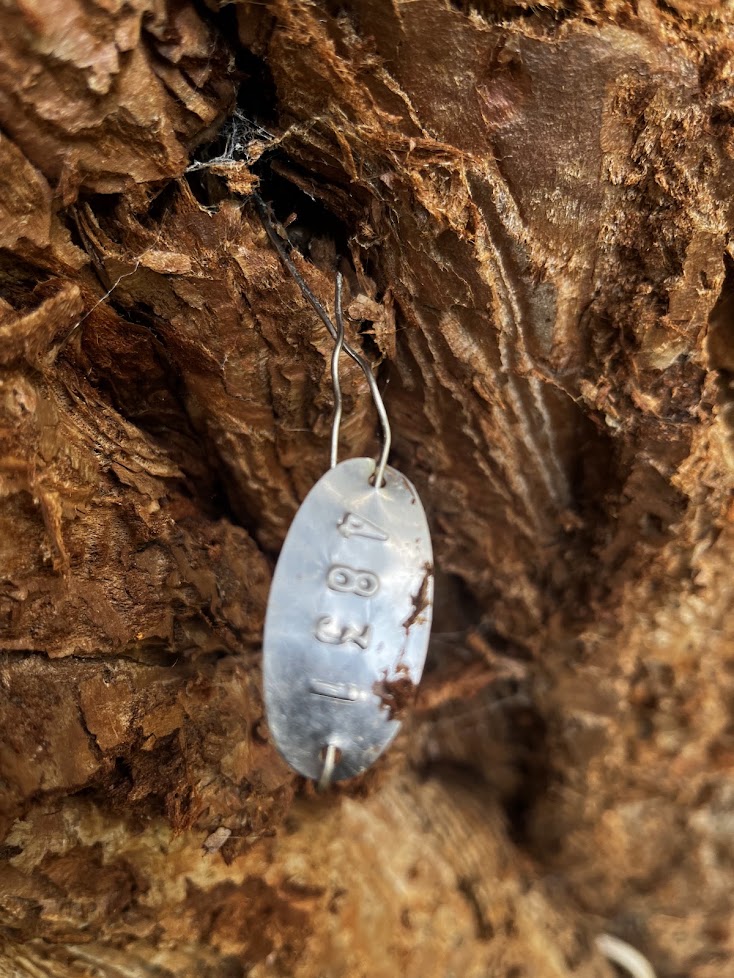
During a recent walk through the grounds of Kingston Lacy in Dorset, I found myself pondering these cathedrals of nature. Standing beneath their expansive canopies, I wondered what they might tell us if they could speak. What changes had they witnessed? What conversations, celebrations, and sorrows had unfolded in their shadow? How many generations had passed by, scarcely aware that these trees would outlive them all?

Perhaps their greatest wisdom lies in their silence.

The landscape at Kingston Lacy, in Dorset, United Kingdom, tells a story of changing ideas about wealth, beauty, and our relationship with the natural world. The estate’s avenues and parkland reflect the ambitions and tastes of successive generations of the Bankes family. In the nineteenth century, William John Bankes, an adventurer and landowner, helped transform the estate’s gardens and landscape. Among its notable features is Cedar Avenue, with trees grown from seeds brought back from Lebanon. These magnificent trees, now part of the estate’s historic character, are reminders of a time when exploration, wealth, and the desire to create something enduring found expression in the landscape itself.

As I stood beside these trees, I felt a profound sense of humility. Each began as a tiny seed, carrying the potential for a life far greater than its beginnings might suggest. With time, sunlight, water, and nourishment from the earth, it had grown into something magnificent. Its roots had reached deep into the soil while its branches stretched towards the heavens.

A tree does not grow in haste. It does not measure its progress against the achievements of others, nor does it seem troubled by the passing of time. It grows according to its own nature, season by season, year after year. Its strength lies not in resisting every change but in adapting to it. Branches break, leaves fall, and the trunk bears the scars of earlier storms. Yet life continues, finding new ways to grow around the wounds.

There is something deeply humbling about standing beside a tree that has lived through centuries of human history. It reminds us that our own lives, with all their ambitions, disappointments, and certainties, occupy only a brief moment in the larger unfolding of time. We tend to measure our lives in years and decades. Ancient trees invite us to think in centuries.
They also invite us to reconsider what it means to leave a legacy.

When I look at the great cathedrals and churches of medieval Europe, I wonder whether the architects and master builders drew inspiration from the trees that surrounded them. The soaring columns, branching arches, and vaulted ceilings of Gothic architecture evoke a forest, with stone pillars rising like trunks and ribs spreading overhead like branches. Sunlight filters through stained glass in much the same way that light finds its way through a canopy of leaves.

Perhaps the builders understood something we have largely forgotten: that the spaces we create can shape how we experience our place in the world. A cathedral was not simply a building. It was an expression of devotion, a gathering place for a community, and a monument intended to endure beyond the lives of those who constructed it. Generations of craftsmen contributed to structures they might never live to see completed, trusting that others would carry their work forward.

Today, we seem to have lost the long view.

Much of our modern world is shaped by speed, convenience, and the demand for immediate results. Buildings are often designed around short economic cycles, while public decisions are judged by their immediate political or financial returns. Politicians can be tempted to focus on the next election rather than the consequences of their choices for people who have not yet been born.

Of course, we cannot romanticize the past. Earlier generations also pursued power, exploited nature, and made decisions with devastating consequences. Nor is every modern building temporary or every political decision short-sighted. Yet there is a difference between creating something for immediate consumption and accepting responsibility for a world that will outlive us.

Ancient trees offer a challenge to this culture of immediacy. They embody a different understanding of time: one in which growth requires patience, resilience comes through adaptation, and what we do today may matter to people we will never meet.

Perhaps this is also a spiritual lesson.

For me, trees represent a meeting place between heaven and earth. Their roots reach into the darkness of the soil, drawing nourishment from a world hidden from our eyes. Their trunks rise through the space between earth and sky, while their branches reach towards the light. They hold these two worlds together without needing to explain the relationship between them.

There is something profoundly reassuring about this simple image. We, too, need roots and reach. We need a sense of belonging, a connection to the ground beneath our feet, and something beyond ourselves towards which we can grow. When either is missing, we may feel unmoored: caught up in our thoughts, disconnected from our bodies, or estranged from the natural world of which we are a part.

In a time when so many people experience spiritual disconnection, perhaps we do not always need another theory, another belief system or another explanation of life’s mysteries. Sometimes we need to step outside, slow down and pay attention to what has been here all along.

The next time you feel disconnected, try spending a few quiet minutes with a tree.

Find one that draws your attention. Stand beside it, or sit with your back resting gently against its trunk if that feels comfortable. Notice the texture of the bark against your skin. Feel the ground beneath your feet. Allow your breathing to settle into a natural rhythm.

As you inhale, imagine yourself opening to the sky above you, to the space and light beyond your immediate concerns. As you exhale, bring your attention downwards, towards the earth beneath you, towards the roots that anchor the tree and the ground that supports your own body.

There is no need to force an experience or expect anything extraordinary to happen. Simply remain present. Notice the movement of leaves, the sound of birds, the shifting light and the quiet rhythm of your breath. Let your attention move away from the endless stream of thoughts and return to the living world around you.

The tree will not ask you to believe anything. It will not judge your past or demand that you become someone else. It simply stands, rooted in the earth, reaching towards the light.

Although trees have no magical power to heal every wound, time spent among them can offer a genuine sense of calm, perspective and connection. Sometimes the change is subtle: a little less tension in the body, a little more space in the mind, a renewed awareness that we belong to something larger than ourselves.

Perhaps this is what I was searching for as I walked through Kingston Lacy. Not an answer to a question, but a reminder of something easy to forget: that life unfolds on a scale far greater than our individual concerns, and that we are not separate from the natural world but part of it.

Long after we have gone, the trees will continue their work. They will gather sunlight, draw water from the earth, shelter birds and insects, and offer their branches to the changing seasons. They will bear the marks of time without needing to understand time itself.

We do not have to live for centuries to learn from those who do. We only need to pause long enough to listen.

Reino Gevers – Host of the LivingToBe podcast

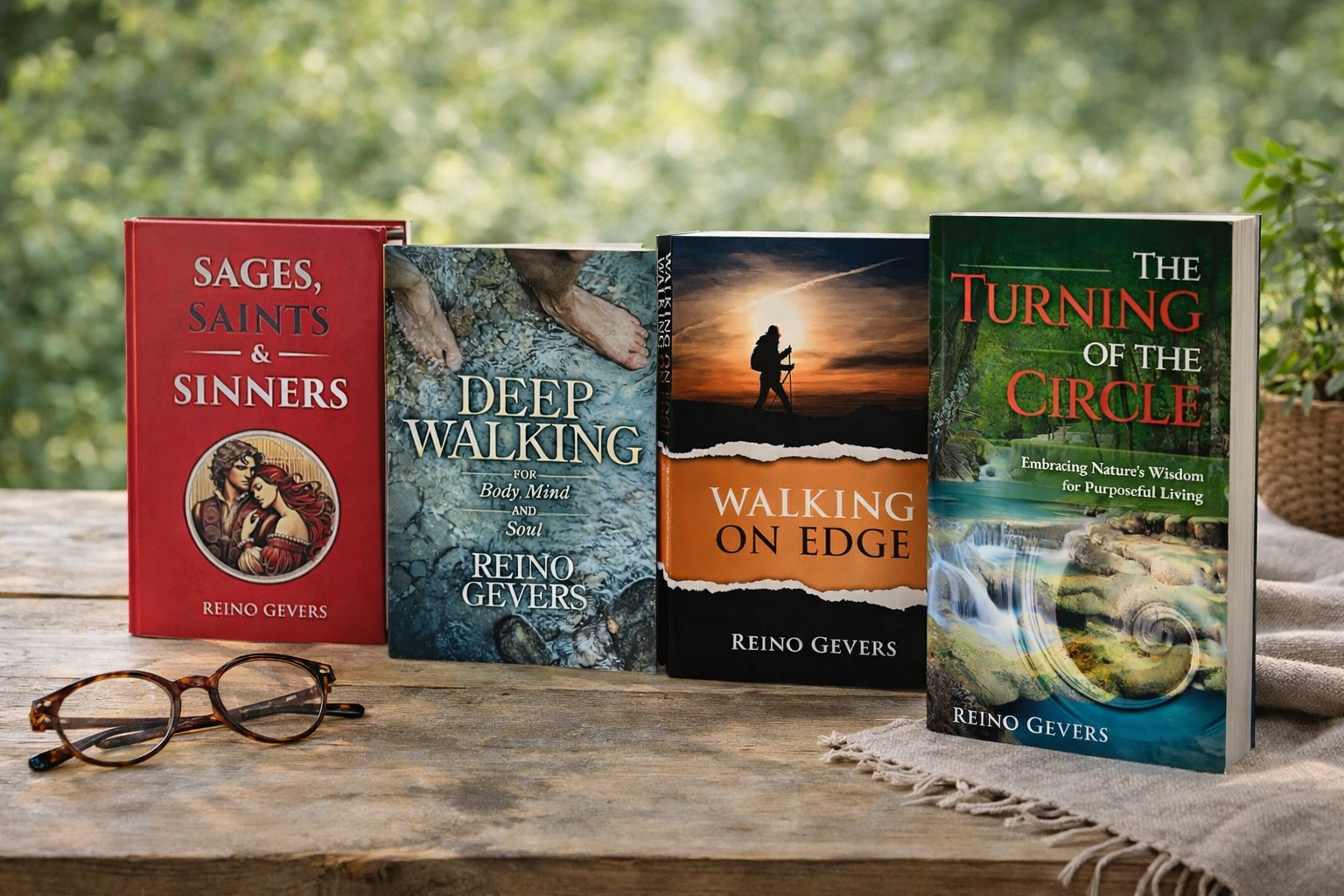
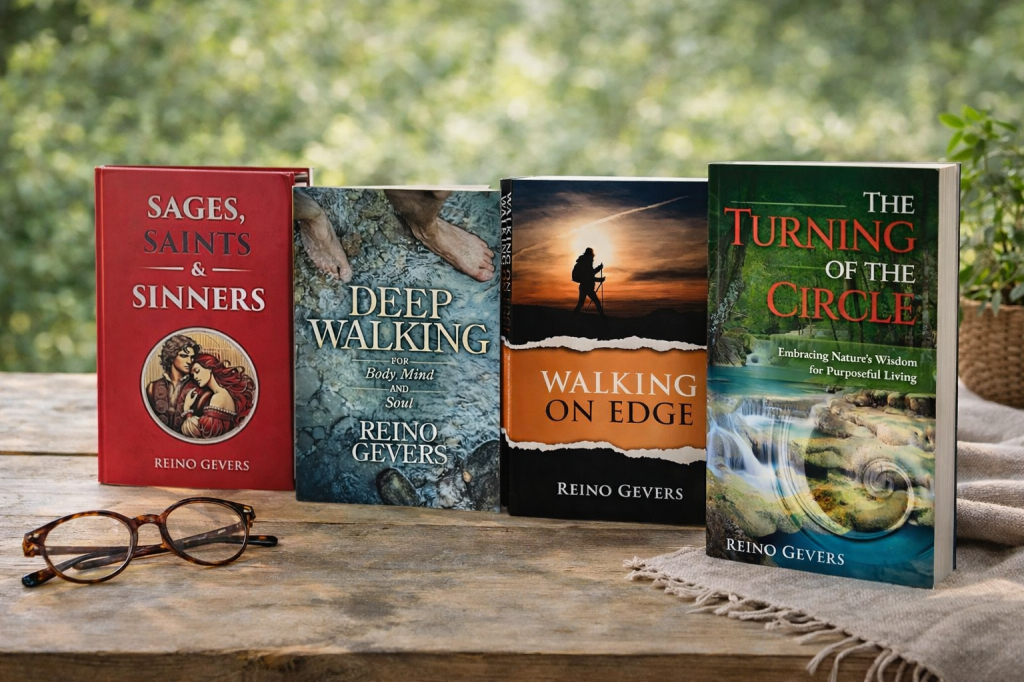
P.S: If you enjoyed this article, you might be interested in reading one of my four books, available where all good books are sold.
Leave a comment

Filed under climate, meditation, spirituality

When Faith Stops Working: Are You Listening?

This summer, as Europe swelters under yet another wave of extraordinary heat, I find myself thinking about an old story I heard many years ago. It is a simple story, almost a joke. But sometimes the simplest stories contain truths we would rather avoid.

There was an old man named Angelo who lived in a small Italian village. One day, his neighbour came running to his door.

“There is a flood warning,” he told him. “The river is rising. Everyone has been told to leave the village within 24 hours.”

Angelo listened calmly.

“I will be fine,” he replied. “I trust in the Lord.”

His neighbour pleaded with him, but Angelo refused to leave.

A little later, a fire engine came through the village, its loudspeaker warning everyone to evacuate immediately.

Angelo heard it.

But he stayed.

Then the river began to rise. Water flooded the houses closest to the river, and people started fleeing for higher ground. A rescue worker came to Angelo’s door.

“You have to leave now!”

But Angelo shook his head.

“I trust in the Lord.”

Eventually, the water reached the upper floor of his house. Angelo climbed onto the roof.

Then a helicopter appeared.

A rescue worker lowered a ladder.

“Come on, Angelo! We can get you out!”

But once again Angelo refused.

“I trust in the Lord.”

The helicopter eventually disappeared.

Angelo drowned.

When he arrived at the gates of heaven, he was furious.

“I trusted you,” he said to God. “I believed you would save me. And you didn’t.”

God looked at him with sadness.

“Angelo, I sent you your neighbour. I sent you the fire engine. I sent you the rescue worker. And finally, I sent you a helicopter. What more did you expect me to do?”

Perhaps the warnings are the message

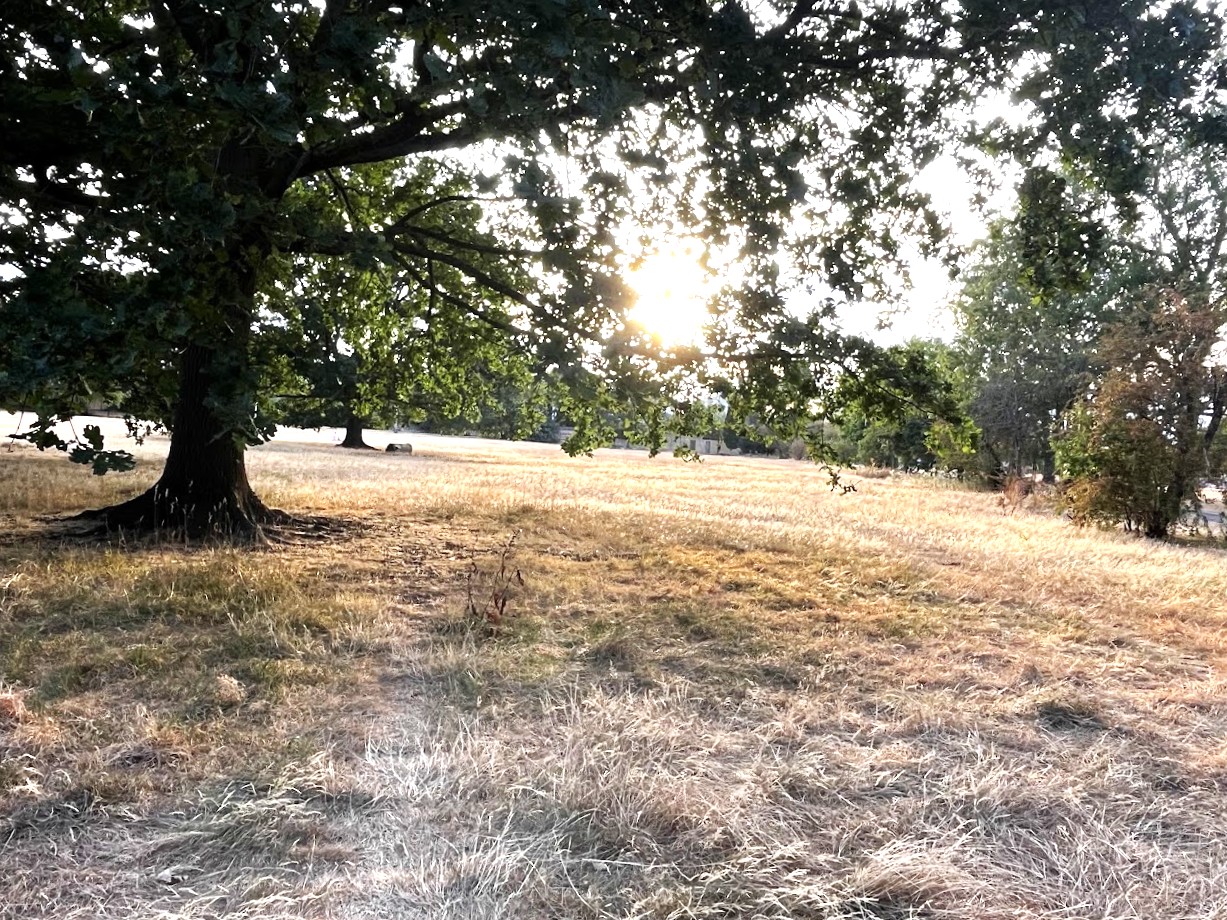
I thought about Angelo recently while walking through Wandsworth Common. Walking has become a way for me to make sense of the world. When I walk, I notice things I might otherwise miss.

This time, I noticed the grass. I noticed the bumblebee dying and the pigeon spreading its wings, trying to stay cool.

The grass should have been green. Instead, it was dry and yellow, brittle beneath my feet. Trees and shrubs were showing the strain of weeks without sufficient rain. Nature seemed tired. There was something strangely unsettling about it. Perhaps because I have lived long enough to remember summers when rain in central Europe was something we complained about rather than something we worried about.

I know that one hot summer does not prove climate change. Nor does a dry lawn. But when an isolated event becomes part of a pattern, perhaps the wise response is not to explain it away, but to ask questions, pay attention, and to listen.

And that is what keeps returning to me from the story of Angelo.

I attended one of the early United Nations climate conferences as a journalist many years ago. The scientists were warning us about the consequences of pumping ever greater quantities of carbon dioxide into the atmosphere. At the time, the future seemed comfortably distant. Climate change belonged to another generation. It would have to deal with it

What if the warnings are already the message?

But perhaps that is one of the great illusions of human beings: our tendency to imagine that the consequences of what we do will always arrive somewhere else, sometime later, and affect somebody else. Now the future has become the present. The heat, the droughts, the record-breaking summer temperatures, the fires, and the floods simply cannot be denied anymore. And yet, like Angelo, we seem strangely reluctant to leave the comfort zone of our house.

When faith becomes a way of not seeing

This is where the story touches something much deeper for me than climate change. It touches the question of faith itself. For much of my life, I have wrestled with what it means to believe.

I have become suspicious of a faith that gives us easy answers to difficult questions. A faith that tells us everything will be all right if only we trust enough. Because sometimes everything tells us that something is just not right. The river really is rising. The diagnosis is serious. A relationship is really over. The world is changing rapidly beneath our feet. The certainties we have built our lives around simply have stopped working.

Perhaps that is one of the most frightening experiences in life: discovering that the beliefs that once gave us security no longer help us make sense of what is happening. But perhaps it is also an invitation. When faith stops working, something else may be asking to emerge. It is perhaps a deeper faith that does not require you to know how everything will turn out. It is a faith that allows you to say:

I don’t know.

I am afraid.

I may have been wrong.

But I am willing to look.

Listening to what is in front of you

I am increasingly convinced that wisdom has less to do with having answers than with learning how to listen. It is listening to your body, to other people, your intuition, and to that voice that you perceive only in silence, above all in nature.

Nature does not speak to you in words. It speaks through patterns, seasons, heat, drought, rain, abundance and scarcity. Our ancestors knew very well how to interpret these signs. Their survival depended on it. But in the disconnect from the natural world, we seem to have lost that ability.

We can choose to ignore these whispers from the universe. But ignoring them does not make them disappear. That is what Angelo misunderstood. He believed that faith meant waiting for God to intervene. Perhaps the deeper truth is that God had already intervened. The neighbour was the intervention. The fire engine was the intervention. The rescue worker was the intervention. The helicopter was the intervention. Angelo simply didn’t recognise them as such.

And I wonder how often we do the same.

How many times in your life has something tried to get your attention?

A relationship that no longer feels right. A body telling you to slow down. A restlessness that cannot be explained. A recurring dream and a difficult conversation that you keep avoiding.

A landscape that no longer looks the way it once did. A world that is changing before our eyes. Perhaps these are not interruptions to our lives. Perhaps they are our lives speaking to us.

The helicopter is still there

I don’t know what the world will look like ten or fifteen years from now. I don’t know whether we will succeed in changing course quickly enough. And I certainly don’t believe that fear and denial is going to save us.

But I do believe we still have choices. That may be the most hopeful part of the story. Angelo was not a victim until the very end.

He had choices. And so do you. We are not powerless in the face of a changing world. We can change how we live. We can demand that those who govern us take reality seriously. We can consume less, waste less, protect what remains and support those working to restore what has been damaged.

But perhaps the first step is simpler.

We need to listen. To put down our certainties for a moment. To look out of the window.

To walk through a park. To notice the colour of the grass. To feel the heat and rescue the bumblebee looking for water.

To see the trees struggling.

And then to ask yourself honestly:

What is life trying to tell me?

Faith does not mean believing that someone will come and save you.

Perhaps faith means trusting yourself enough to recognise the helicopter when it arrives. And having the courage to climb aboard.

Reino Gevers – Host of the LivingToBe podcast

P.S: If you enjoyed this article, you might be interested in reading one of my four books, available where all good books are sold.
Leave a comment

Filed under climate, climate change, healing nature, spirituality

Thought control? Hope springs

The Trump administration released the dire warning of its own climate scientists from 13 agencies during Thanksgiving, hoping it would be buried at a time when most people in the US are spending time with their families and eating Turkey.

Trump told reporters that he did not believe the study from the 300 climate experts after reading “some” of their conclusions. But  instead of hiding the bad news, Trump succeeded in really focusing attention on the matter.

At about the same time the Brazilian government published data telling us that deforestation in the Amazon rain forest had jumped to its worst rate in a decade. The New York Times also published an in-depth report on how fast the rain forests in Asia are disappearing to fulfill an insatiable demand for palm oil.

A huge consensus of the world’s best climate scientists have been telling us for years that we have a serious problem and that the earth will become uninhabitable for humans in half a century if humanity does not gets its act together in the next few years in doing something about climate change.

The climate scientists are telling us that limiting global warming to 1.5 degrees Celsius above pre-industrial levels is essential. Planting more trees, and keeping existing trees in the ground is essential if we want to meet that goal.

Only a small group of pseudo-scientists – nearly all of them funded by the fossil fuel industry- are in denial and pumping us with “thought control” fake news. It is much the same scenario that the world saw in the early 1960s when the tobacco industry paid “researchers” to deny the overwhelming evidence that smoking caused cancer. I don’t know how these people sleep at night or whether they really believe their own lies.

The danger is that when we hear all this bad news, it makes us fall into a paralytic state of in-action. What the anti-environmentalist governments in Brazil and the U.S. do is out of our control. The Amazon or Borneo is far away. We aren’t inhaling – yet – the smoke from all the burning forests.

Fact is that in our little worlds we can all do something. Here are only a few suggestions:

  • Each time we pick up a shampoo or cosmetic item in the supermarket we can check whether it contains palm oil.
  • Refuse to buy products equity or stock from agro-companies that are involved in deforestation. Check for the FSC label on sustainable forestry.
  • A vegan diet and food from the local organic farmer leaves the smallest carbon footprint. Mass animal production farms are dependent on monoculture farming that is destroying biodiversity.  For me personally a mainly vegetarian diet with a little organic meat every now and then is the best option.

Amid all the bad news, hope springs that we might after all get this climate issue solved if we really supported some very innovative ideas out there:

  • Dr. David Vaughan is a scientist who has achieved a breakthrough technology in bringing coral reefs back to life by making them grow up to 40 times faster than in the wild. Coral reefs are key to the ocean ecosystem and are major carbon sinks.
  •  Creating green roofs on skyscrapers in the major cities of the world could have a really positive effect in changing the micro-climate in urban areas and reducing carbon dioxide emissions.
  • Vertical farming in skyscrapers is a very effective way of providing fresh organic produce in cities, requiring much less land than conventional farming that is the second-largest emitter of carbon dioxide after the energy sector.  The Swedish company Plantagon is working on making a first prototype by constructing a 16-story building called The World Food Building that could serve as an international model for industrial urban farming.

Reino Gevers – Author, Mentor and Consultant

https://www.reinogevers.com


Leave a comment

Filed under climate, energy, lifestyle management, nutrition, spirituality, Thanksgiving, Uncategorized