Monthly Archives: September 2026

When Fear Turns Good People Dark

All my life I have grappled with a question that has never allowed me much peace: How can ordinary, seemingly good people turn almost overnight against their fellow human beings and participate in acts of terrible cruelty?

History gives us countless examples. Perhaps among the most shocking are the genocidal conflicts in Rwanda, where people who had lived alongside one another for generations suddenly turned on their neighbours, friends and even family members in a frenzy of violence.

In Nazi Germany, ordinary citizens looked away as Jewish neighbours were arrested and deported. Some went further, informing the authorities where those who were hiding could be found.

These events are difficult to comprehend because they challenge one of our most comforting assumptions: that good people and evil people are fundamentally different kinds of human beings.

During my years as a journalist, I came to question that assumption.

A few months into my first job as a junior reporter, an elderly colleague took me aside one day. He had been watching me, he said, and there was something I needed to understand about the profession.

“You really need to stop being so naïve.”

At the time, I thought he was talking about journalism. Over the years, I came to understand that he was talking about something much larger: human nature.

Each of us carries within us the capacity for both compassion and cruelty, courage and cowardice, generosity and selfishness. The fact that we may currently live peaceful, decent lives does not make us immune to the darker possibilities within ourselves.

Sometimes the greatest good and the greatest evil can even exist within the same person.

This is one of the most uncomfortable truths of being human.

The great thirteenth-century mystic Meister Eckhart understood suffering not simply as punishment or divine cruelty, but as something that could chisel us into beings capable of carrying light.

St. Augustine, too, understood evil not as an independent force competing with God, but as a form of absence — a turning away from the source of being and love.

These ideas have stayed with me because they suggest that darkness is not something we overcome simply by declaring ourselves to be good. It has to be seen.

And this is where the idea of the shadow becomes important.

The shadow is everything within us that we would rather not acknowledge: our fear, envy, resentment, shame, aggression, insecurity, grief and woundedness. It contains the parts of ourselves that we have pushed out of conscious awareness because they do not fit the image we have constructed of who we are.

But what we refuse to see does not necessarily disappear.

It can operate from the darkness. You can project it onto others. You can turn unresolved fear into suspicion. Or humiliation into hatred. Pain into aggression and insecurity into the need to control. The sense of powerlessness turns into the desire to find someone weaker to blame.

This may help explain one of the great paradoxes of human history: why people who have themselves suffered persecution can sometimes become persecutors.

Afrikaners who carried the historical memory of British colonial oppression later participated in a political system that subjected Black South Africans to systematic discrimination and humiliation.

I witnessed another contradiction in my own childhood.

Members of my church congregation could receive communion on a Sunday, be loving husbands and fathers, generous to their fellow parishioners and apparently sincere in their Christian faith — and yet treat their Black farmworkers with extraordinary cruelty. They could compartmentalize their lives so completely that compassion existed in one part of their world while dehumanization existed in another.

And history continues to remind us that liberation from one form of oppression does not automatically free us from the impulses that created it. Some people who once fought apartheid have themselves later been accused of corruption and abuse of power.

The lesson, for me, is not that one political group or another is inherently good or evil. It is that no human being, movement or community is automatically protected from the shadow.

We remain incomplete beings.

Nobody is immune to temptation. Nobody is entirely free from fear. And nobody can honestly claim that darkness belongs only to someone else.

This is why I have become increasingly convinced that one of the most important tasks of a human life is to transmute fear and integrate the shadow.

By transmutation, I don’t mean suppressing fear or pretending that it isn’t there. Nor do I mean excusing harmful behaviour because someone has been wounded.

You have to become conscious of what moves within you. You have to be willing to sit with your fear long enough to understand what lies beneath it. What are you protecting? What are you afraid of losing? Where did the fear begin? What old wound does it touch? What story about yourself or other people has grown around it?

When fear remains unconscious, it easily becomes a justification.

It tells us that they are the problem.

They are dangerous.

They are taking something from us.

They don’t belong.

They must be controlled.

And once another human being has been reduced to they, compassion becomes much easier to abandon. There is separation between them and us and the seeds of tribalism are sown.

It can become xenophobia. Racism. Religious hatred. Political extremism. Nationalism stripped of compassion. The search for scapegoats. Fear narrows the field of perception until the other person is no longer experienced as a human being with a story, a family, wounds and hopes of their own.

Love, by contrast, reconnects.

This does not mean that fear is always irrational. Fear has an important biological function. It protects us from genuine danger. The problem begins when old fear, inherited fear or unprocessed trauma becomes the lens through which the present is interpreted.

Trauma can travel through families and communities. Historical grievances can become part of collective identity. Stories of humiliation and victimhood can be passed from one generation to another until they become almost indistinguishable from truth itself.

Unless someone interrupts the pattern through consciousness.

It requires the courage to look inward and ask not only, What have they done to us? but also, What is happening inside me because of what has happened to us?

This, I believe, is where genuine transformation begins.

To transmute the shadow is to bring what has been unconscious into consciousness and, rather than acting it out, allow it to be understood.

Fear can become discernment.

Anger can become a recognition of injustice without becoming hatred.

Grief can become compassion.

Shame can become humility.

Pain can become wisdom.

The darkness does not necessarily have to be destroyed. It has to be brought into the light.

Perhaps this is what Eckhart meant by being chiselled into someone capable of carrying light. The work is not to become a person who has no darkness. It is to become a person who knows their darkness well enough not to be ruled by it.

This is also why I have become wary of the temptation to divide humanity into the good and the bad, the enlightened and the unenlightened, the victims and the perpetrators.

Those distinctions may sometimes be necessary when confronting injustice. Responsibility must never disappear into spiritual abstraction. People must be held accountable for what they do.

But accountability and shadow work are not opposites.

The more honestly we recognize our own capacity for darkness, the less easily we can project that darkness onto others.

Perhaps the real work of becoming human is not to prove that we are good.

It is to become conscious enough to choose goodness when fear gives us another option.

Because the shadow will always be there.

The question is whether we remain unconscious of it — allowing it to shape our thoughts, our relationships and our societies from beneath the surface — or whether we have the courage to turn towards it, understand it and gradually transform its energy into something life-giving.

That, for me, is the deeper meaning of inner work.

You cannot create a less divided world simply by changing other people. You can only begin by becoming conscious of what lies within that divides.

And perhaps the most important spiritual journey of all is the journey from fear back into connection — from separation back into wholeness, and from the unconscious shadow into the light.

Reino Gevers – Host of the LivingToBe podcast

P.S: If you enjoyed this article, you might be interested in reading one of my four books, available where all good books are sold.


Leave a comment

Filed under spirituality

Where the Earth feels thin

There are places in the world where the boundary between the ordinary and something deeper feels remarkably thin.

Ancient peoples understood this instinctively. Long before maps, property boundaries and modern planning regulations, they paid careful attention to where they built their temples, sacred groves and places of worship. Certain springs, mountains, caves, rocks, forests and hilltops were regarded as places where the human world came closer to the divine. The location itself mattered. Sacredness was not simply something that could be brought into a building; sometimes it was already present in the landscape.

We might call this a thin place—a place where the distance between the visible and invisible worlds seems diminished.

I have often wondered whether we have lost something of this sensitivity.

There is, of course, another side to it. Some places seem to carry the opposite quality. Landscapes marked by violence, suffering or tragedy can retain an atmosphere that is difficult to explain rationally. A battlefield, an abandoned concentration camp, a house where terrible things happened, a village emptied by war—these places can seem to hold an echo of what occurred there.

Perhaps this is memory embedded in landscape. Perhaps it is our own imagination responding to what we know happened. Perhaps there is something more subtle.

I don’t pretend to know.

But I have noticed something while walking.

On my pilgrimage journeys, I have sometimes entered a village and experienced an almost immediate sense of lightness. Nothing dramatic happened. There was no revelation, no voice from heaven, no mystical apparition. Simply a feeling that the place was alive.

The streets were clean and cared for. Flowers appeared in window boxes. Doors were open. People greeted the pilgrim with a smile. There were small cafés, benches, churches and places where people could pause and meet one another. Children played. Someone was tending a garden. Life seemed to flow naturally.

And then, sometimes, I would enter another place and feel quite different.

The shutters were closed. Houses appeared empty even when they were occupied. There were few places where people could gather. Gardens were neglected. Buildings were deteriorating. The streets seemed strangely silent. It was as though life had withdrawn.

I cannot prove that these impressions have anything to do with a measurable “energy frequency.” Nor do I think we need to turn every intuitive response into a supernatural explanation.

But I have learned to pay attention to such feelings.

Walking slows you down sufficiently to notice things that you would normally rush past. You see the quality of a village not simply through its architecture but through the way people inhabit it. You notice whether people sit outside their houses, whether they greet strangers, whether children have somewhere to play, whether churches are open, whether gardens are cultivated, whether there is a sense of care.

Perhaps what youvexperience as the “energy” of a place is sometimes the accumulated expression of the people who live there.

And perhaps the relationship works in both directions: you shape a place, and a place shapes you.

This has also made me think about why certain landscapes seem to have inspired some of humanity’s greatest thinkers, painters, poets and writers.

We tend to imagine inspiration as something that happens inside the individual mind. The genius sits at a desk, picks up a brush or opens a notebook, and creates something extraordinary.

But perhaps creativity is also a conversation with place.

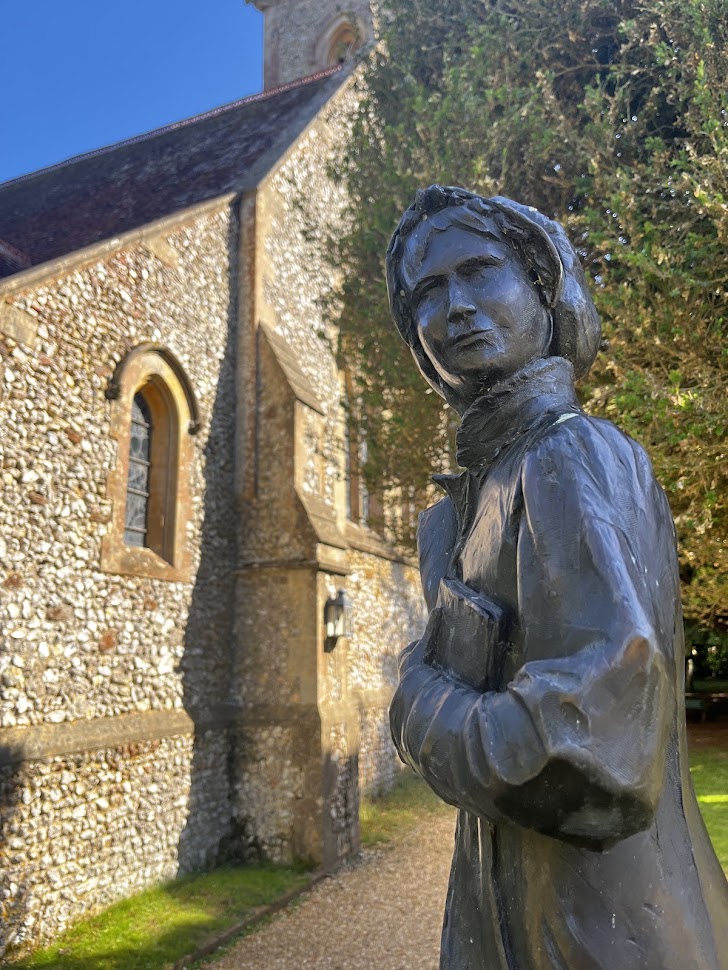
Recently, walking through the countryside around Chawton, I found myself thinking about Jane Austen.

There is something about that landscape that makes her books feel less abstract. The lanes, hedgerows, fields, wooded paths and gently rolling countryside provide a physical world in which her characters seem entirely at home. Walking through what is called Jane Austen country, one begins to understand why this particular landscape could have nourished such a precise observer of human nature.

Austen did not simply write about people. She wrote about people in relationship to place—houses, estates, gardens, villages, drawing rooms, roads and landscapes. Social life and landscape were inseparable.

And perhaps that is true of creativity generally.

Think of the painters who were transformed by particular landscapes, the poets who returned again and again to the same hills or rivers, composers like Bach who found inspiration in the countryside, or the writers like Dickens who needed to walk before they could write.

Maybe the landscape doesn’t simply provide a backdrop but participates.

There is an old idea that certain places are “charged” with something greater. We might describe that in religious language, psychological language, ecological language or simply as a heightened sensitivity to beauty and history.

I am increasingly comfortable leaving the question open.

For me, pilgrimage is partly about learning to enter that openness.

When you walk, you surrender some of your usual control. You move at the speed of your feet. You become attentive to weather, trees, birdsong, stone walls, ancient paths and the changing light. You begin to sense that the landscape is not merely scenery through which you are passing.

It becomes a participant in the journey.

And occasionally, without quite knowing why, you enter a place and feel something shift within you.

The world seems a little more spacious. The mind becomes quieter and the heart feels lighter.

Nothing has necessarily changed, except the capacity to be more present.

Perhaps that is what a thin place really is.

Not necessarily a place where heaven breaks through into earth, but a place where you become thin enough to notice what has always been there.

Reino Gevers – Host of the LivingToBe podcast

P.S: If you enjoyed this article, you might be interested in reading one of my four books, available where all good books are sold.
Leave a comment

Filed under Camino de Santiago, Pilgrimage, psychology, purpose

Walking into Silence: What pilgrimage taught me about uncertainty, and trust

There are moments on a long walk when you stop thinking about where you are going and simply walk.You simply hear the rhythm of your feet. The landscape changes slowly. Your breathing settles. The noise in your head begins to diminish.I experienced something of that on a recent walk on the Pilgrims’ Way, from Winchester.

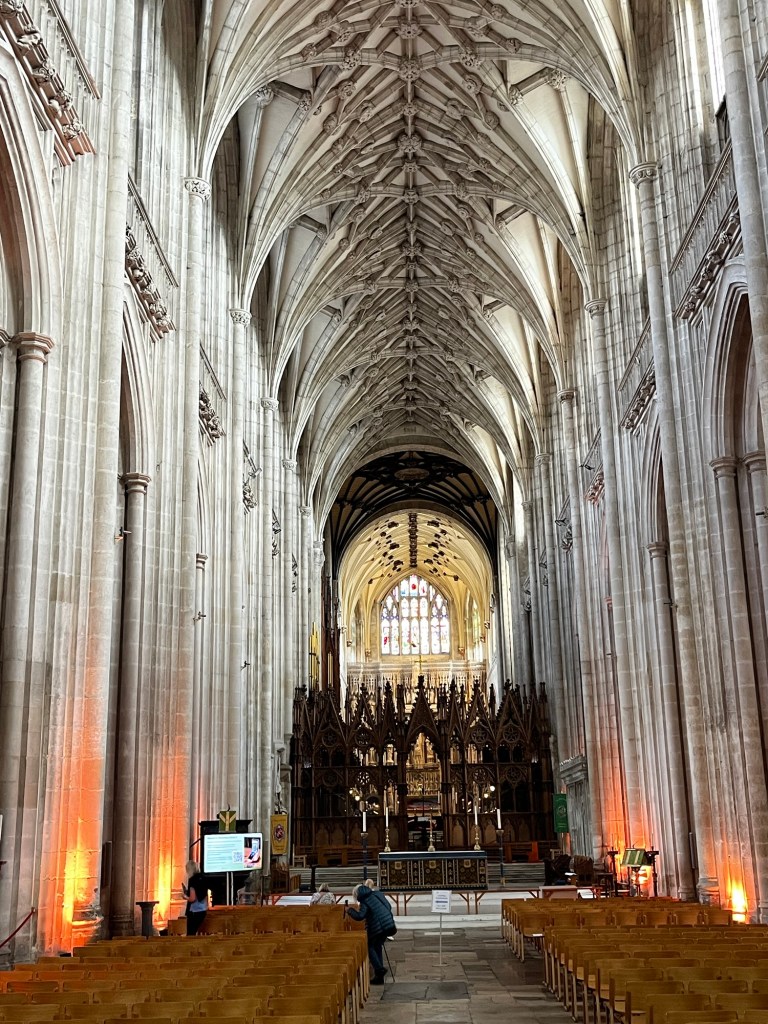
But before I took my first steps, I went into Winchester Cathedral. I sat down and was silent during a morning prayer ceremony with only a handful of people. For a few minutes I sat in that extraordinary building, surrounded by centuries of history, and thought about all the people who had come here before me.

Wonchester Cathedral

People who had stood exactly where I was standing and wondered what life meant.I set out on this walk with contemplations from the great Mystics such as Meister Eckhart and Julian of Norwich.

Julian lived in fourteenth-century England, during one of the darkest periods of European history – the Black Death.She knew all about illness, death and uncertainty. During a serious illness in 1373, when she believed she was dying, she experienced a series of visions that became the basis of her Revelations of Divine Love. And from Julian came those extraordinary words:

All shall be well, and all shall be well, and all manner of thing shall be well.”

Julian said this living in a world in which almost everything was not well, and at the same time offering hope. She was saying that we may not understand what is happening in the world but we can still trust that love is deeper than suffering.

That is a very different kind of hope. We cannot plan and control the journey. Life happens in unpredictable ways while we try to protect ourselves against uncertainty.When we’re young, we often imagine that if we make the right choices, life will eventually become predictable.

People and pets we love become ill and die. Relationships change and fail. Homes and jobs change. Your body begins to remind you that you are not going to be here forever.

You begin to realize that you cannot control the journey. You can only walk and adapt to circumstances beyond your control.That thought stayed with me during the first hours of my walk during the unspoilt Itchen valley. 

The first kilometres are always slightly deceptive. You are still thinking about the destination. You look at the map. You calculate how far you have to go.

But gradually, something changes.

You stop thinking about the end.

You begin to pay attention to the next step.

And then the step after that.

That is one of the great gifts of walking.

It brings you back into the present moment. You hear the birds. You stand in awe before ancient trees. The Pilgrims’ Way takes you through landscapes that seem to exist outside ordinary time. There are stretches where ancient trees form tunnels over the path.You walk beneath them and suddenly feel very small.

The trees don’t know your worries. They simply stand there and some of them have been standing there for hundreds of years.And I found myself wondering how many people had walked beneath those same branches.

Medieval pilgrims walked these same old paths, possibly with the same questions as pulgrims today. And now they are gone.

The trees remain and there is something humbling and comforting about that. 

In the bigger order of things one lifespan is fleetingly small. The gravestones around the chapels, some dating back to the 12th century, are a stark reminder of that. You walk into a chapel after several hours on the trail and the experience can be almost startling. Outside, the modern world continues.

Inside, time seems to have stopped. The stones are old and the light is different.

And these are the moments when the boundary between the ordinary and the sacred really does feel a little thinner.A thin place isn’t necessarily a destination to an ancient sacred site but something that happens within.

St Augustine wrote about discovering God not by endlessly looking outward but by turning inward.Meister Eckhart later spoke about becoming empty — letting go of the endless accumulation of thoughts, desires and attachments that fill the mind.

And Julian of Norwich arrives at another extraordinary insight:beneath everything is love. Three different voices pointing towards the same thing. Turn inward. Become quiet and listen.

The longer you walk, the less important the things that seemed so urgent that morning can become.

You begin to notice the magic of life. The small things. The movement of leaves, the creaking of tree branches, the smell of moist earth in the forest, the taste of juicy wild blackberries and thoughts.

Not the thoughts you are trying to manufacture, but the ones that rise naturally when the noise becomes quiet.

That, too, is pilgrimage.

  • How do you deal with uncertainty?
  • How do you live when you don’t know what happens next?
  • How do you cope with the things you cannot control?

Julian’s answer is surprisingly simple. 

Certainty says:

I know how this is going to turn out.

Trust says:

I don’t know how this is going to turn out, but I can take the next step anyway.

That may be one of the most important lessons of a pilgrimage walk.

You don’t need to see the entire road.

You only need to see enough of it to take the next step and keep walking, leaving everything behind you but they remain as memories.

Perhaps that is what happens on all journeys.

And perhaps the same is true of the people we meet, the experiences we endure and the questions we never will answer.

So I keep coming back to Julian.

“All shall be well.”

I don’t hear those words anymore as a promise that everything will work out exactly as I want it to.

I hear them as an invitation to trust.

To accept that some things will remain unresolved and that life contains suffering as well as joy.

Beneath all the noise, all the uncertainty and all the attempts to control life, there may be something much more subtle.

Not travelling towards a place where you hope to find the sacred. But discovering that the sacred has been travelling with you all along and that all shall be well just by taking the next step.

Reino Gevers – Host of the LivingToBe podcast

P.S: If you enjoyed this article, you might be interested in reading one of my four books, available where all good books are sold.
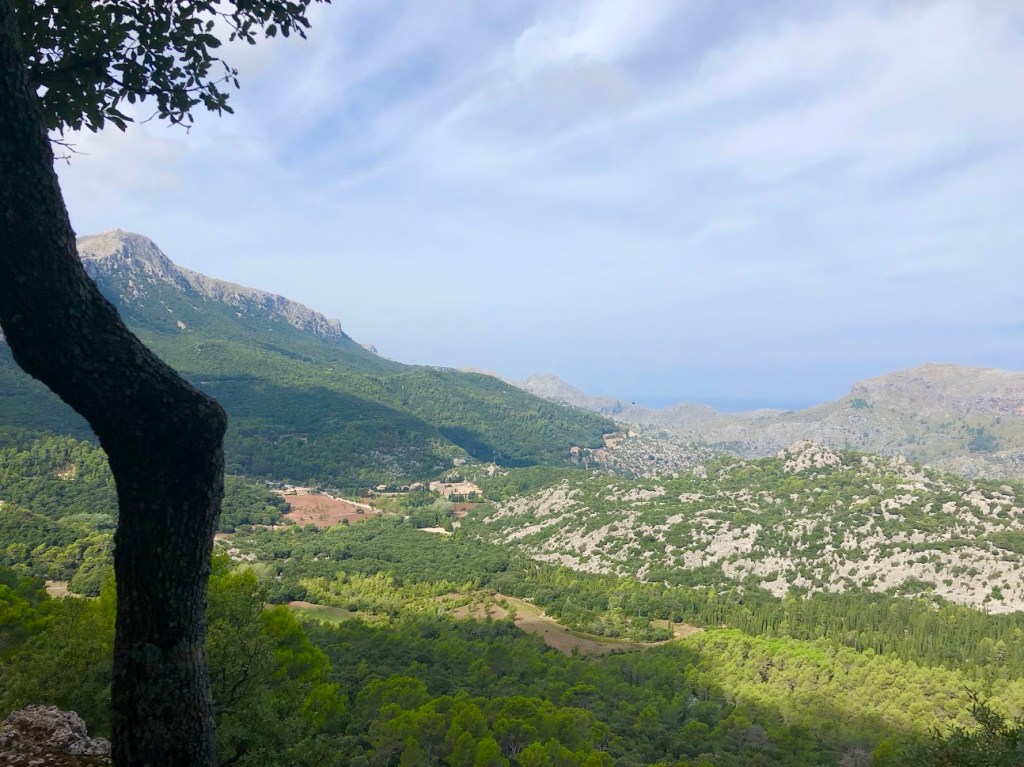
Leave a comment

Filed under Camino de Santiago, Pilgrimage, psychology, raised consciousness, religion, Uncategorized

When Things Fall Apart

The very first small things that go wrong often tell us far more than we realise. They can pinpoint the beginning of the slow decline of a company, a neighbourhood, a town or even a country.

The other day, after a walk in Dorset, we decided to stop for coffee in a nearby locality. It was by no means a bad area. In fact, we chose it precisely because it seemed quieter and less crowded than the place next door.

Perhaps that should have been our first warning sign.

We went into what appeared to be an upmarket restaurant. When we ordered coffee, the waitress asked whether takeaway cups would be acceptable because they were apparently out of clean mugs. We agreed. Then we waited. And waited. About ten minutes later, the coffee finally arrived, and the cups were only half full.

I asked for some brown sugar. The waitress returned with a straw.

They were out of spoons.

It was almost comical, but then we noticed a customer being served the wrong meal. Curious, we looked at the restaurant’s Google reviews.

That was when the pattern became apparent.

The ratings had begun falling sharply about five months earlier. The comments told a familiar story: owners apparently turning up intoxicated, increasingly long waits for food, staff arguing with one another, customers being ignored and orders repeatedly getting wrong.

None of these things, taken individually, would necessarily destroy a restaurant. A broken coffee cup, a missing spoon, a delayed meal or an unhappy employee can happen anywhere.

But collectively they tell a different story.

They are symptoms.

What struck me was how quickly a perfectly viable business can begin to unravel once small failures become normal. Standards slip. Nobody taking responsibility. Customers become frustrated. Good employees leave. Management becomes reactive rather than proactive. The remaining staff become demoralised. More things go wrong. And eventually customers stop coming.

By the time the doors finally close, the collapse may look sudden.

But it wasn’t.

It began months or perhaps years earlier, with small things that nobody considered important enough to fix.

Ernest Hemingway captured this remarkably well when he wrote:

Gradually and then suddenly.”

He was describing bankruptcy, but the observation applies to so much more than money.

Think about a neighbourhood. The first street lamp stops working and isn’t repaired. Then a pothole appears and remains for months. Rubbish begins accumulating around overflowing bins. Graffiti isn’t removed. A vacant property deteriorates. A once-busy shop closes and isn’t replaced. Public spaces become neglected.

None of these things means a neighbourhood is collapsing.

But they can be early indicators that something underneath the surface is no longer working as it should.

The same is true of companies and institutions. A missed deadline. A call that isn’t returned. A customer complaint that isn’t taken seriously. A manager who repeatedly behaves badly but is protected because of their position. A small deterioration in standards that everyone notices but nobody addresses.

Eventually, people stop expecting things to work.

And that may be the most dangerous stage of all.

We become accustomed to dysfunction. We explain it away. That’s just how things are now. We make excuses for poor behaviour. We lower our expectations. We tolerate what we would once have considered unacceptable.

And once a society, an organisation or a relationship begins lowering its standards, decline can become self-perpetuating.

Relationships are no different.

A friendship rarely ends because of one isolated irritation. More often, it is a succession of small disappointments: the phone call that never comes, the promise that isn’t kept, the insensitive remark that goes unchallenged, the recurring behaviour we keep excusing.

We tell ourselves it doesn’t matter.

Until it does.

Small resentments accumulate. They become a reservoir of unspoken anger. And then, one day, something apparently insignificant triggers an emotional outburst that brings years of accumulated frustration to the surface.

To an outsider, the reaction may seem disproportionate.

But the outburst isn’t really about the final incident.

It is about everything that came before it.

This is why we should pay more attention to the small things.

The first broken street lamp.
The first pothole left unrepaired.
The first customer complaint ignored.
The first promise broken.
The first time someone behaves badly and we decide it isn’t worth confronting.

These are not necessarily signs of impending collapse. But they are signals.

And signals are useful precisely because they give us a chance to act before the damage becomes irreversible.

Things rarely fall apart all at once.

First, something stops working.

Then another thing.

Then another.

We adapt. We excuse. We tolerate.

And eventually we look back and wonder how everything changed so completely.

The frightening thing about decline is that it is often almost invisible while it is happening.

The hopeful thing is that the same is true of repair.

A pothole can be fixed. A lamp can be replaced. A customer can be listened to. An apology can be made. A standard can be restored.

Sometimes the difference between decline and renewal is simply whether somebody notices the first small thing that has gone wrong, and cares enough to do something about it before its too late.

Reino Gevers – Host of the LivingToBe podcast

P.S: If you enjoyed this article, you might be interested in reading one of my four books, available where all good books are sold.
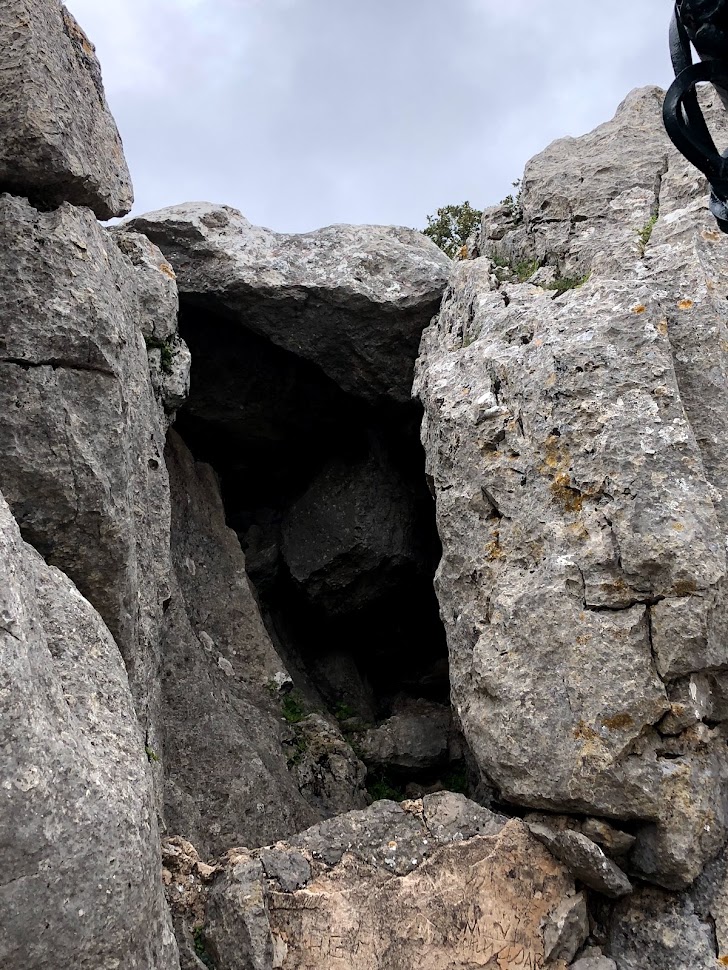
Leave a comment

Filed under organisational structure, personal choice and happiness, psychology, self-development, Uncategorized