I have often been asked why I feel the need to go on a pilgrimage nearly every year. Why leave the comforts of home, carry everything I need in a small backpack, and spend weeks walking day after day along dusty paths, through forests, across mountains, and into unfamiliar landscapes? What is it that draws me back, time and again, to this seemingly simple act of putting one foot in front of the other?
The answer is not always easy to explain, because the most important things that happen on a deep walk are experiential and difficult to put into words. They are not necessarily found in the places visited or in the distance covered but in the gradual transformation of the relationship to the self on the one hand and the external world on the other.
During the first few days of a pilgrimage, my mind is often still occupied by the noise of the outside world. Thoughts about unfinished tasks, personal concerns, news headlines, and the countless demands of everyday life follow me onto the trail. Even though I may be walking through a beautiful landscape, I barely notice it. My attention remains fixed on the path immediately ahead, on the kilometers still to be covered, the next village, or the place where I will spend the night. My body is walking, but my mind would be elsewhere.
Then, almost imperceptibly, something begins to change.
After several days of walking, the constant chatter of the mind starts to subside. Nature starts moving closer. The landscape that had seemed little more than a backdrop gradually comes alive. I begin to hear the clicking of grasshoppers in the grass and the gentle buzzing of bees among the wildflowers. I no longer merely hear the birds; I begin to see them, to recognize their movements, and sometimes to identify their songs. A robin appears on a low branch, a skylark rises and hovers in the open sky, and a blackbird searches for food ahead of me.
I start noticing the different formations of clouds drifting across the blue sky, the changing contours of the mountains, and the distinct character of the peaks ahead. The air carries the scent of damp earth, wild herbs, and freshly mown grass. I become aware of the warmth of the sun on my skin, the coolness of a forest path, and the rhythm of my own footsteps. My breathing gradually settles into a natural cadence, and I begin to feel my body again. It is not something to be managed or pushed through the day but becomes an integral part of the world in which I am moving.
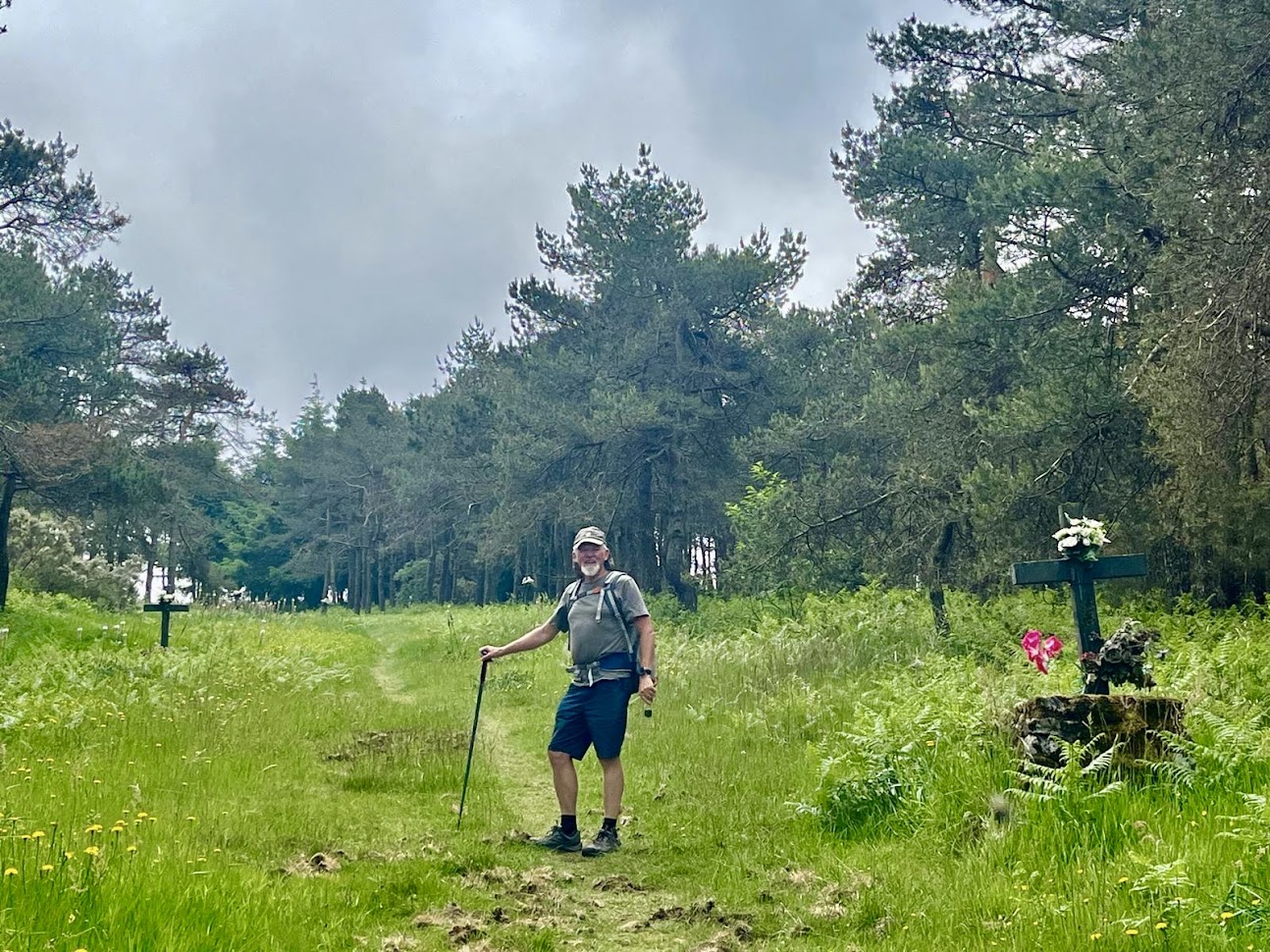
Nothing extraordinary has happened to the landscape. It is my perception that has changed.
The world has not suddenly become more beautiful. I have simply become more available to its beauty.
Perhaps this transformation is comparable to the experience of reading a good book. When we read, our imagination creates an inner world of images, voices, landscapes, and emotions. Each reader brings something unique to the experience, drawing upon memories, feelings, and associations that no filmmaker could entirely reproduce. This is why we are sometimes disappointed when a favorite book is adapted for the screen. The images presented to us may be compelling, even beautiful, but they cannot fully replace the private world that our own imagination has created and experienced.
A deep walk offers something similar. It allows an inner world to emerge, not through the images we consume, but through the attention we give to what is already there. The more fully we attend to the world, the more it reveals itself. We begin to see what was always present but remained unnoticed because the mind was elsewhere.
Perhaps this is one of the great paradoxes of modern life: we have access to more information, images, and experiences than any generation before us, yet we often struggle to be fully present to the miracle of life unfolding directly in front of us. We are physically here but mentally somewhere else, anticipating the future, revisiting the past, comparing ourselves with others, or reacting to a continuous stream of events over which we have little control.
A pilgrimage interrupts this pattern. For a few weeks, the familiar structures of everyday life fall away. There are fewer decisions to make, fewer possessions to maintain, and fewer distractions demanding our attention. Life becomes simpler. You walk, eat, rest and sleep. You encounter other people, sometimes sharing a conversation, sometimes exchanging no more than a greeting. You learn to accept the weather, the terrain, and the limits of the body. You cannot always control what the day brings, but you can learn to meet it as it comes.
This simplicity creates the space where you can begin to hear what has been drowned out by the noise of ordinary life.
I have come to understand that living fully is, in many ways, an act of deep presence. It is not enough to pass through the days, completing tasks and accumulating experiences. You must also be available to them. You must allow yourself to feel the warmth of the sun, to listen without immediately responding, to look without needing to name or judge everything you see, and to recognize the quiet movements of your inner life.
For me, this quality of presence is difficult to sustain in everyday surroundings. I can practice it at home, on a familiar walk, or during a moment of silence, but the habits of daily life have a way of reclaiming my attention. The mind returns to its familiar concerns, and the world becomes a collection of things to accomplish rather than a reality to encounter.
That is why I return to the pilgrimage trail. Walking for several weeks gives me the time and space to move beyond the surface of my habitual thoughts. It feels like a kind of detoxification of the mind. It is not an escape from the world but a gradual release from the compulsive need to react to it. As the mental noise recedes, something begins to realign. My priorities become clearer. What matters and what does not matter quite so much become easier to distinguish. I find myself less concerned with controlling life and more willing to participate in it.
And sometimes, in those moments of stillness that emerge through movement, I sense something for which I have never found an entirely satisfactory name.
It is as though a narrow crack begins to open onto a deeper dimension of existence, a window into what I might call the soul. I do not mean this in any necessarily religious sense. I mean the possibility of experiencing life beyond the familiar boundaries of the thinking mind and the separate self, the part that is so occupied with defining, evaluating, and defending itself that it can lose sight of its connection with everything else.
The more you train your attention to rest in the present moment, the wider this opening seems to become. You begin to experience yourself not merely as an individual moving through a landscape, but as a participant in a complex living whole. The wind, the earth, the trees, the birds and your breathing are no longer entirely separate but different expressions of the same unfolding reality.
When I walk long enough, and with sufficient openness, I sometimes begin to feel this truth rather than merely think about it.
That, ultimately, is why I keep walking. Not to arrive somewhere, but to become more fully present to the life that has always been there and is carrying me along.
This does not mean that the boundaries between ourselves and the world disappear. Rather, those boundaries become less absolute. For a moment, we no longer feel like isolated observers standing outside nature and looking in. We recognise that we belong to it. We have always belonged to it.
Perhaps this is what draws me back to the Camino year after year. It is not simply the physical challenge, the beauty of the landscapes, or the encounters with fellow pilgrims, although all of these have their place. It is the opportunity to rediscover a way of being that is easily lost amid the demands and distractions of modern life. Walking reminds me that I do not need to travel somewhere extraordinary to encounter something sacred. I need to become sufficiently present to recognize what is already here.
My greatest realization has been that spending time in nature can open our senses to a presence far greater than our individual concerns. Whether we call it the sacred, the mystery of existence, the natural order of things, or simply life itself is perhaps less important than the experience. We are not separate from this greater whole. We are one part of it, inseparably woven into its fabric.
And when I walk long enough, quietly enough, and with sufficient openness, I sometimes begin to feel this truth rather than merely think about it.
That, ultimately, is why I keep walking. Not to arrive somewhere, but to become more fully present to the life that is already carrying me along.
Reino Gevers – Host of the LivingToBe podcast
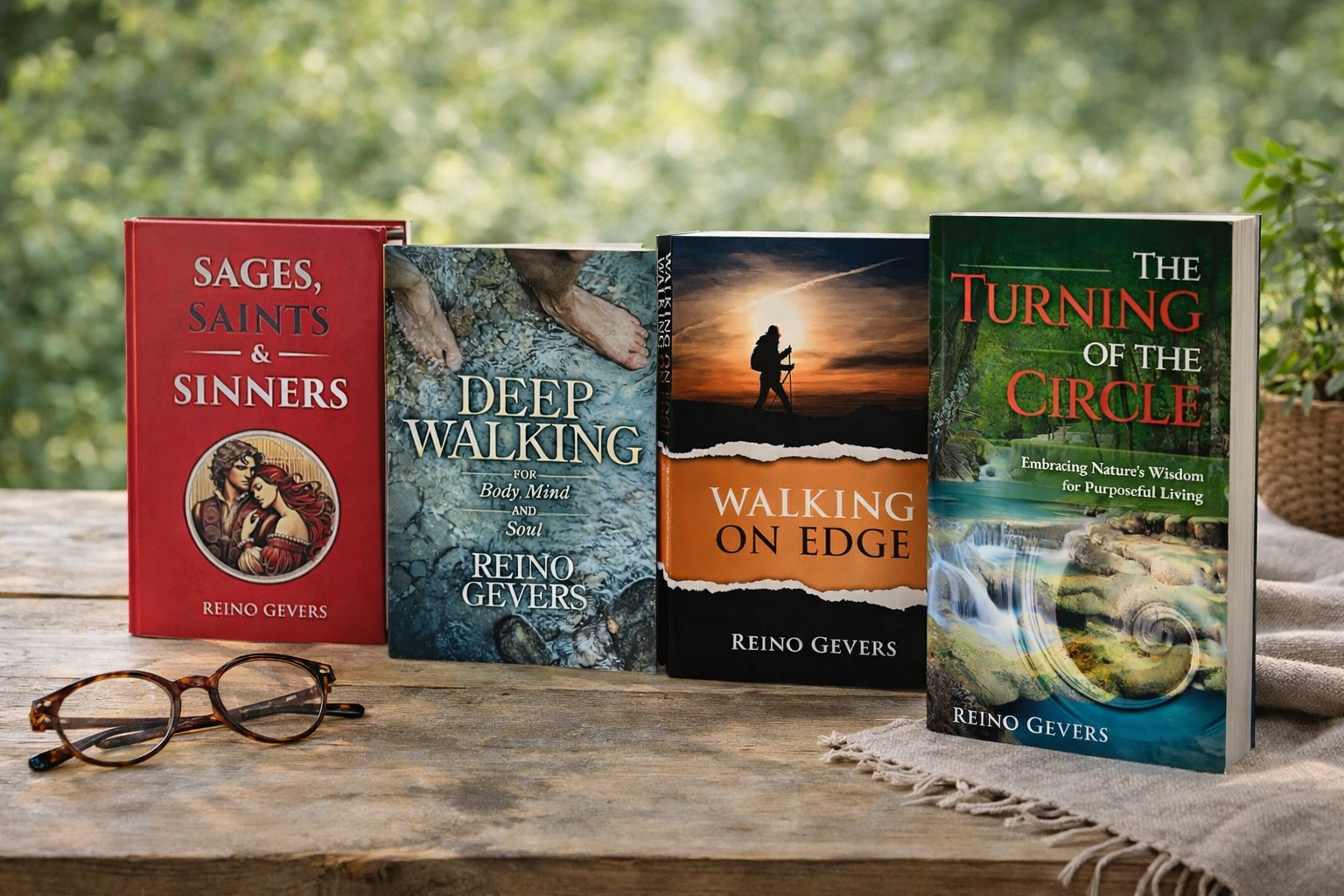
P.S: If you enjoyed this article, you might be interested in reading one of my four books, available where all good books are sold.