The Dalai Lama once said that what surprised him most about the human condition was that “Man sacrifices his health in order to make money. Then he sacrifices money to recuperate his health. And then he is so anxious about the future that he does not enjoy the present; the result being that he does not live in the present or the future; he lives as if he is never going to die, and then dies having never really lived.”
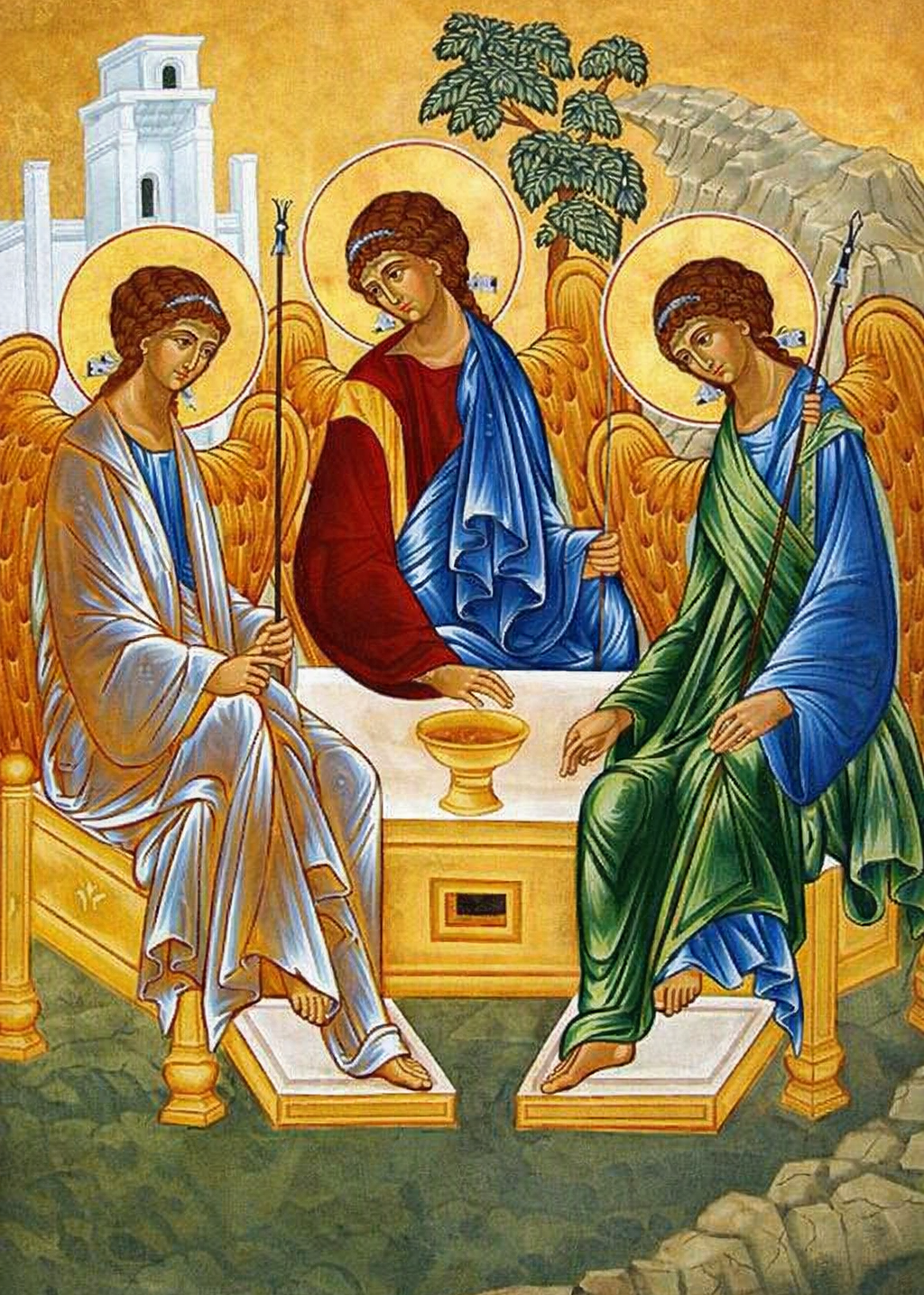
The German mystic Meister Eckhart, writing seven centuries earlier, arrived at something similar from the opposite direction. For Eckhart, death was not an event waiting for us at the end of life but a practice for the whole of it: “If you want the kernel, you must break the shell.” He meant that the self we cling to — our roles, our possessions, our five-year plans — is the shell. Only by letting it crack, again and again, do we get near the kernel, which he called the ground of the soul. A person who has never rehearsed that letting-go meets death, when it finally comes, as a stranger.
Confronting our mortality is anathema in Western culture. We don’t talk about it, and when a loved one dies, we’re expected to “get over it” and function again as soon as possible. Cultural icons are expected to stay forever young. The dying are outsourced to hospitals and hospices, and the dead are buried in well-manicured cemeteries far off the beaten track.
I had an intense conversation with Catherine Duncan, author and hospice chaplain, on the LivingToBe podcast this week. She has guided hundreds of people during the last moments of their journey on earth. What stands out is the same pattern that repeats itself over and over again. What was deemed as important in life such as money, status and possessions falls away. What remains is only peace, love and forgiveness. Death can teach us what is important in life such as those magical moments that we often do not recognize in the business of life.
Confronting mortality head-on
One of the reasons behind our mental health crisis and addiction epidemic is that we don’t confront our mortality head-on. Instead we compare ourselves to the Joneses next door and wait for the “happy” life to arrive — when we retire, when we get rich, when we find the perfect partner, when we have that luxury car or that beautiful home.
Eckhart had a word for this waiting: he called it living for the sake of a reward rather than living itself. He preached that people who work only “in order to get” something — heaven, wealth, peace of mind — never actually arrive, because their attention stays fixed on the getting. The people of Bhutan seem to have found the alternative he was pointing to.
There’s a reason the people of the small southeast Asian country of Bhutan are regarded as among the happiest and most contented in the world. As in the world of our ancestors, death is part of everyday reality there.
The Buddhist country encourages its people to think about death for a few minutes each day. Paintings, artwork, and house decorations often feature death. Funerals are elaborate three-week events, with the body kept in the home before being slowly cremated over fragrant juniper wood in front of hundreds of friends and relatives.
In Bhutan, death is seen simply as a transition to another dimension. The spiritual disconnect in Western culture has left no place for death, or for the rituals that once surrounded it. I’ve lost a good share of family and friends over the past five years — each loss has jolted me back to the age-old question: what am I doing with the days I have left?
Because death is the elephant in the room, we lurch into collective grief when a well-known figure suddenly dies. The University of Oxford Centre for Suicide Research found that the overall suicide rate in England and Wales rose by 17 percent in the four weeks after Princess Diana’s funeral in September 1997, compared with the average for that period over the four previous years.
A review of these cases suggested that Diana’s death worked largely through “amplification of personal losses and exacerbation of existing distress” — grief for a stranger unlocking grief that was already there, unaddressed.
History shows that when catastrophe strikes, faith tends to move in one of three directions. Some people become more rigid and fearful, reaching for certainty in the middle of chaos. Others lose faith entirely, unable to reconcile suffering with belief in a loving God. And some find a deeper faith — one rooted not in easy answers, but in compassion, humility, and solidarity with others. Which direction we take often depends on whether we’ve already done the work of facing mortality, or whether death arrives as an ambush.

Talking about the human condition
We need to talk about the human condition — about death, our mortality, and the fact that life as we know it ends. My work is helping people reclaim enough vitality and energy to live the life they’re meant to live, rather than the one they’ve settled for.
Eckhart’s shell-and-kernel image is useful here, because he wasn’t just talking about the moment of dying. He meant it as daily practice: letting go of the version of yourself built from job title, bank balance, and other people’s opinions, so that something truer underneath has room to breathe. “The eye with which I see God,” he wrote, “is the same eye with which God sees me.” Strip away enough of the shell, he’s saying, and the distance between the seer and the seen collapses. That’s a hard sentence to sit with, but it’s also a way of saying: stop postponing yourself.
Are you living the life you’re destined to live?
Are you merely existing, or living the life you’re destined to live? Are you stuck in a job or relationship that drains most of your energy? Are you waiting for the day you can finally start living?
Procrastination and fear are the biggest obstacles to raising consciousness and growing spiritually. When you’re doing what’s in alignment with your soul’s purpose, you will — to quote Rumi — feel a river moving in you with joy.
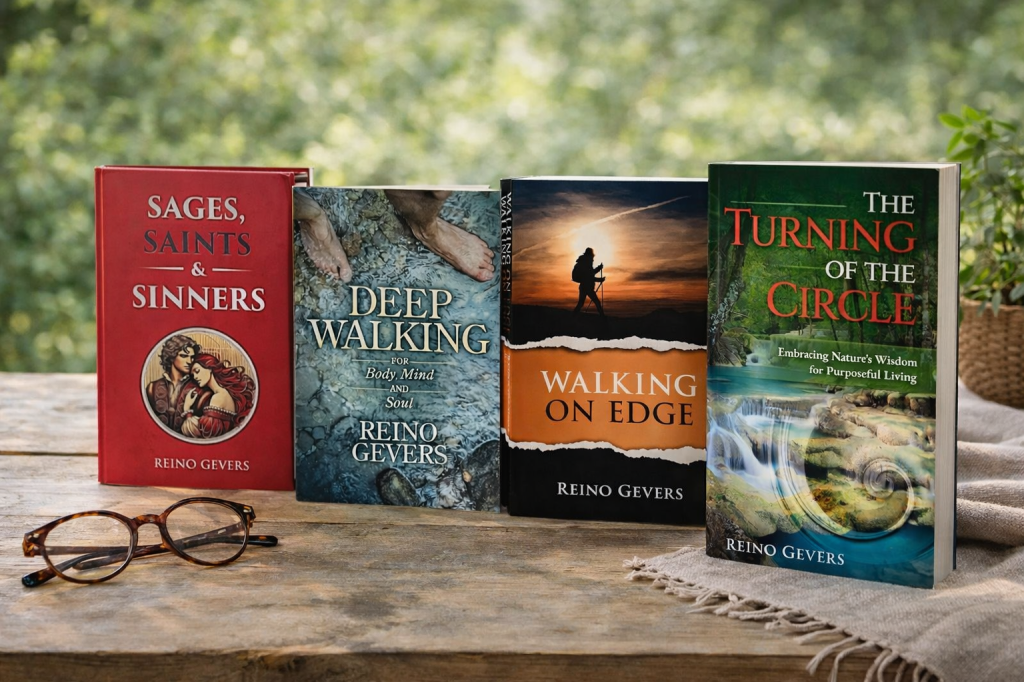
If these questions stay with you, you might find their sharpest form in my novel Sages, Saints and Sinners, set during the Black Death — a time when an entire society was forced to confront mortality on a mass scale, with no hospitals or hospices to look away to. It follows what happens to people, faith, and community when death can no longer be outsourced or postponed.
Reino Gevers – Host of the LivingToBe podcast