Tag Archives: spirituality

The Trinity and Love

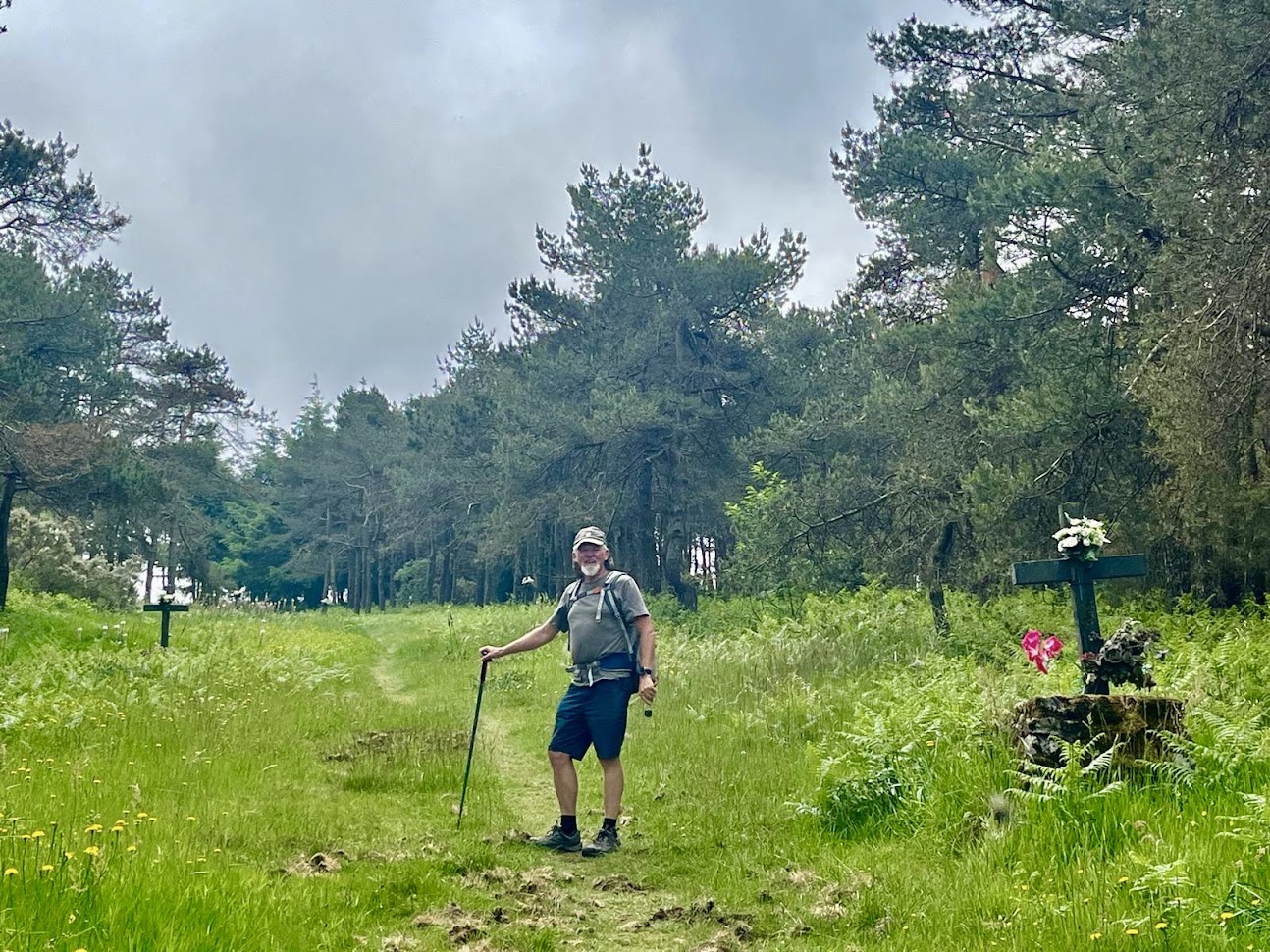
Over the years, I have walked thousands of kilometres on pilgrimage routes across Europe, often finding myself stepping off the trail into small churches and ancient chapels. Sometimes I entered simply to escape the midday heat. Sometimes to rest tired legs. Often there was no one else inside. The silence itself became a companion.

I would sit for a while and let my eyes wander over faded frescoes, carved crucifixes, stained-glass windows, and centuries-old icons. I rarely tried to analyse what I was seeing. Instead, I simply allowed the artwork to speak. Those precious moments became as much a part of the pilgrimage as the walking itself.

Walking a pilgrimage is not only about moving through landscapes; it is about allowing the landscape of the soul to change. The art in those ancient sanctuaries invited me to slow down, to become present, and to notice the subtle movements of the heart that are easily drowned out by the noise of everyday life. There are paintings we admire for their beauty. There are others we appreciate for their historical importance. And then there are a rare few that seem to look back at us, inviting us into a conversation that transcends words.

For more than six centuries, pilgrims, monks, artists, and seekers have returned again and again to Andrei Rublev’s The Trinity. Many consider it the greatest icon ever painted—not because of its artistic perfection, but because of the quiet mystery it reveals.

Most religious art portrays God as distant, enthroned, or judging from above. Rublev offers an altogether different vision. Three figures sit around a simple table beneath the shade of an oak tree. Their bodies incline gently towards one another. Their gaze moves in an endless circle of mutual love. There is no struggle for dominance, no assertion of rank, no hint of rivalry.

Everything about the icon whispers that the deepest reality of existence is relationship.

Rublev’s The Trinity embodies that same invitation.

At the front of the table there is an empty place.

It is impossible to ignore once you see it.

That space has been left open intentionally.

It is your place.

Icons were never intended simply to decorate churches or illustrate theology. In the Eastern Christian tradition, they are often called windows into heaven. Their purpose is not merely to tell us something about God but to draw us into an encounter with the Divine.

This is the difference between knowing about the sacred and experiencing it.

Modern culture encourages you to gather information, formulate opinions, and seek certainty. Yet the deepest spiritual experiences often arise when you stop trying to master the mystery and allow the mystery to embrace you instead.

That, for me, is the gift of pilgrimage.

Walking hour after hour strips away the unnecessary. There comes a point when the questions become more important than the answers, when silence speaks more eloquently than words, and when simply sitting in an ancient chapel can become a profound act of prayer. The journey teaches that God is encountered less through explanation than through attention—through learning to be fully present to the present moment.

When you sit quietly before Rublev’s icon, something subtle begins to happen. The image ceases to be an object we observe. Instead, it becomes a mirror. It reveals where lives have become fragmented, where fear has replaced trust, where ambition has overshadowed compassion, where you have forgotten that you belong to something infinitely larger than yourself.

The invitation is not to acquire another belief.

It is to enter the circle.

The early Christian mystics spoke of the Trinity as an eternal movement of self-giving love—a divine dance in which each person exists for the other. Creation itself flows from that love. Humanity is not called merely to admire it but to participate in it. It reminds me of the African philosophy of Ubuntu – that you become who you are through interaction with others.

Seen in this light, spirituality is no longer about escaping the world or accumulating religious knowledge. It becomes a way of seeing. A way of listening. A way of walking through ordinary life with an awakened awareness that every encounter can become sacred.

The empty place at the table reminds you that you are already included.

You do not earn your seat through achievement, moral perfection, or religious certainty but in simply accepting the invitation.

Perhaps this explains why The Trinity continues to move people after more than six hundred years. In a world marked by polarisation, tribalism, and the relentless pursuit of status and power, Rublev reminds us that the deepest reality of the universe is not domination but communion. Not fear, but love. Not exclusion, but belonging.

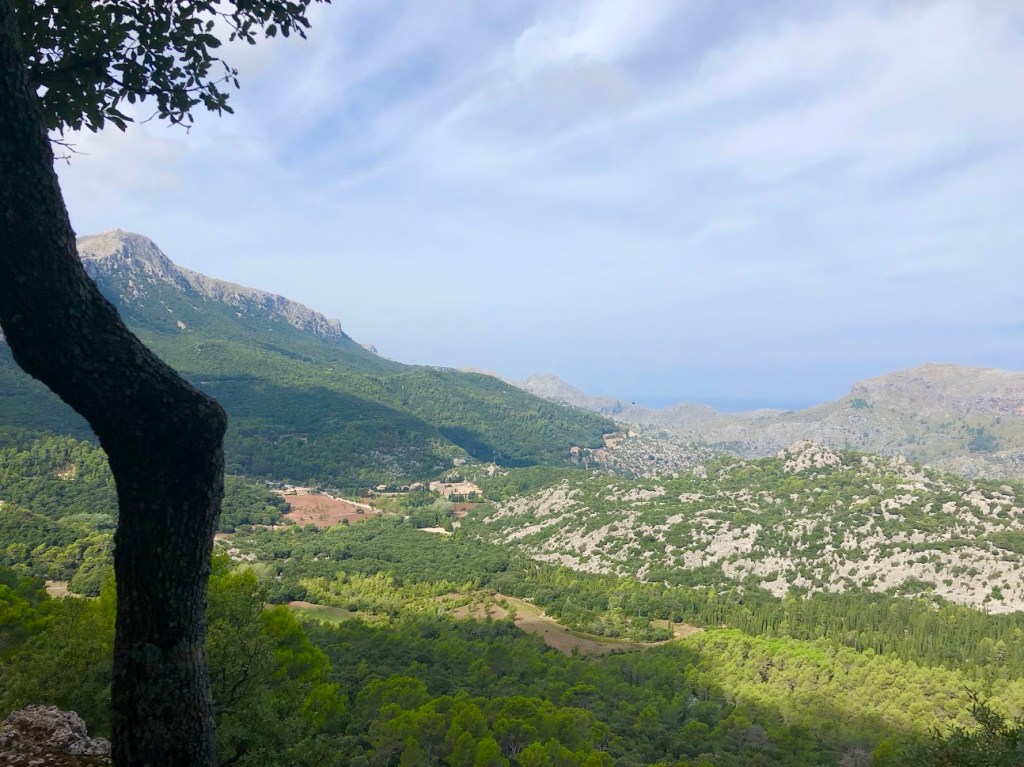
Every time I leave a quiet church or chapel on pilgrimage, shoulder my backpack, and return to the path, I carry something invisible with me. Not a new doctrine or a fresh certainty, but a deeper awareness that the sacred is never confined to the sanctuary. It walks with us along dusty paths, through forests and villages, in conversations with strangers, and in the silence between footsteps.

Perhaps that is the greatest lesson Rublev’s icon has to teach. The spiritual journey is not about climbing towards God.

It is about awakening to the astonishing possibility that God has been making room for us all along.

And perhaps, having taken our place at the table, our calling is to leave an empty chair in our own lives—for the stranger, the wounded, the forgotten, and those with whom we disagree.

For love always makes room.

Reino Gevers – Host of the LivingToBe podcast

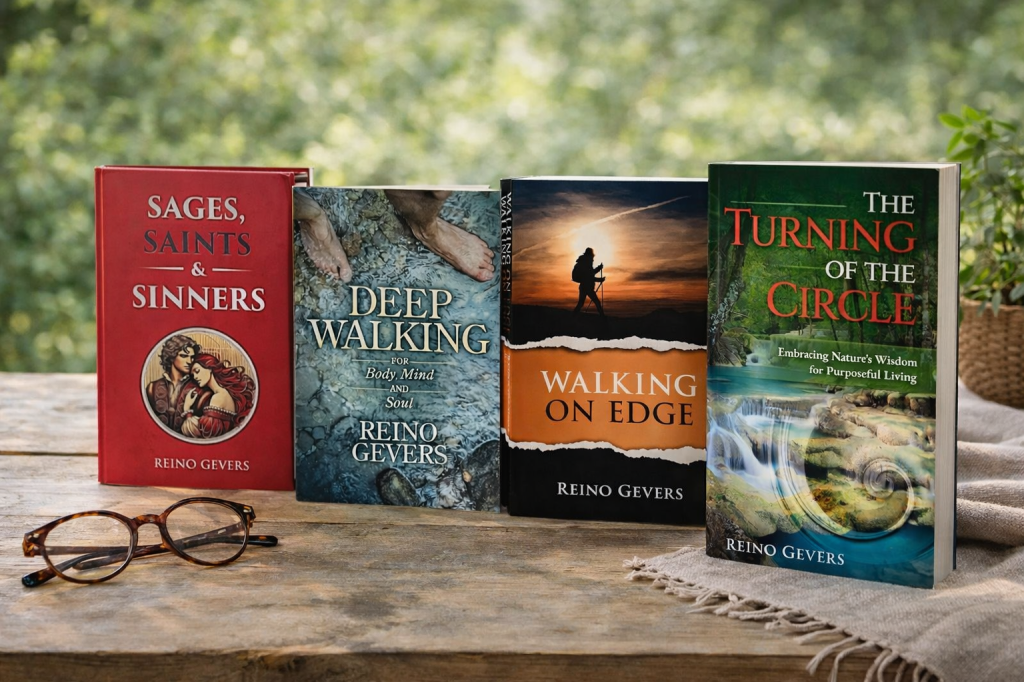
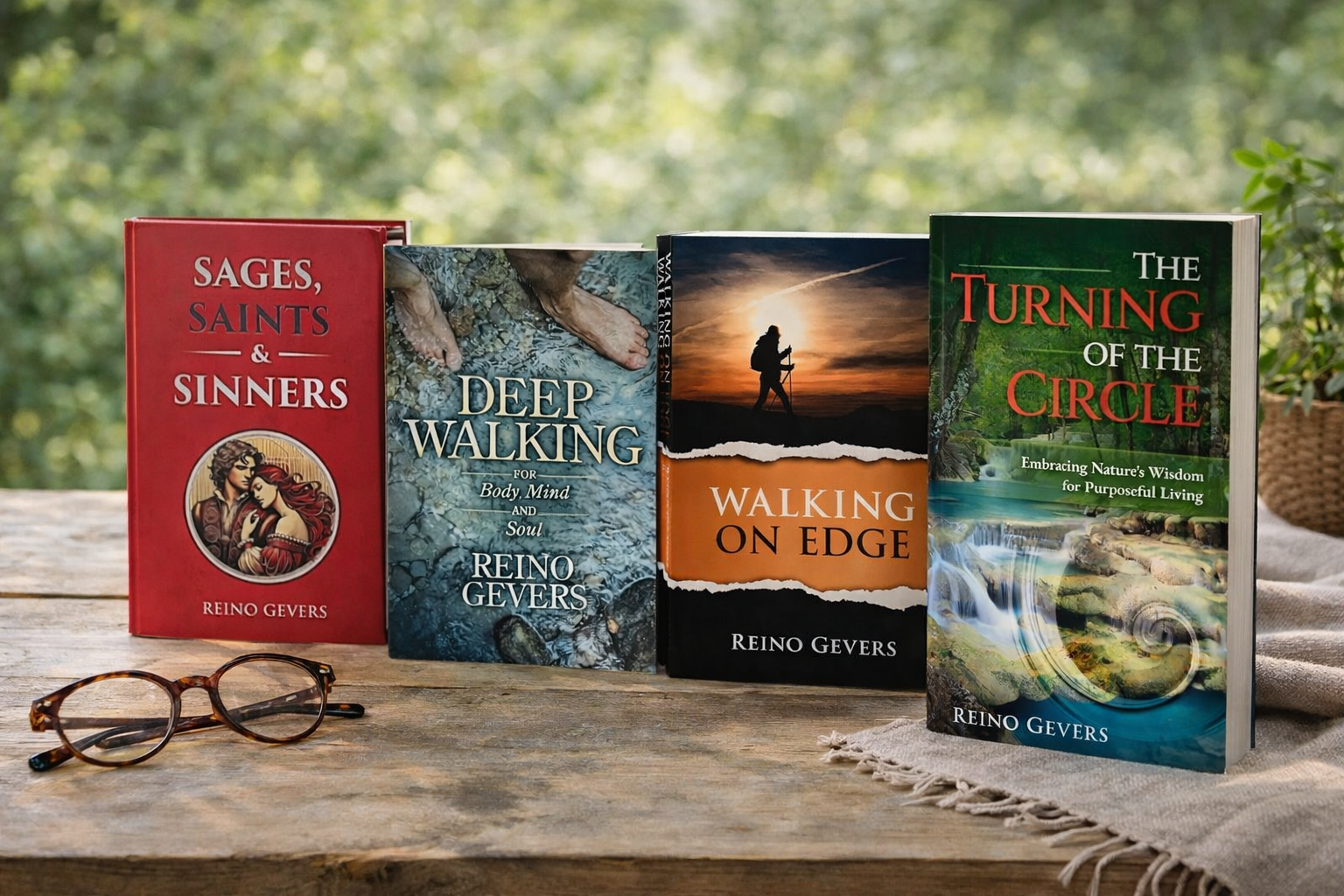
P.S: If you enjoyed this article, you might be interested in reading one of my four books, available where all good books are sold.

Leave a comment

Filed under Camino de Santiago, happiness, spirituality

How We Stopped Reading and Started Believing Slogans

With each passing year, fewer people finish reading a book, with public discourse getting s a little dumber. This is not a coincidence. The two trends are moving in lockstep because they’re the same trend. Thinking in complexities comes from sustained reading. What’s replacing it is faster, louder, and easier to produce than to challenge. The decline of reading appears to be ushering in a less rational, less analytical, less sophisticated mode of thought, and it’s threatening democracy.

Reading long-form prose trains the mind to hold several ideas in tension at once, to follow an argument through its qualifications and counterpoints, to sit with ambiguity rather than resolve it prematurely. A dense paragraph forces you to track a claim across several clauses, weigh a caveat against the point it qualifies, and keep revising your understanding as new information arrives.

Take that engagement away, and the muscle in the brain doesn’t just go unused. It starts working against you. Attention spans shorten. Patience for a slow-building argument gives way to a need for the payoff up front. Ambiguity starts to register as failure rather than as a feature of anything worth understanding properly. And because nuanced thinking is effortful, its absence leaves a preference for whatever requires the least effort. It is the argument that confirms what you already believed, the explanation that fits in a headline. The mind doesn’t stay idle in the space reading used to occupy. It fills that space with something more crude.

Simplicity and emotional charge are rewarded

Algorithms accelerate the drift, rewarding simplicity, outrage, and emotional charge over complexity, nuance, and rigour. Ideas that fit folk theories of politics — all leaders are equally corrupt, immigrants steal jobs, every policy problem has an easy, commonsense fix — spread further than the findings of subject-matter experts ever will.

Joshua Meyrowitz explored this territory in No Sense of Place, predicting that the decline of print and the rise of electronic media would eventually push people toward populist leaders. “You name an enemy and you polarize the public,” he said. “You don’t allow for nuance, because nuance is just a confusion when you’re in a power struggle.”

That power struggle is where the erosion stops being an abstract concern about attention spans and becomes a question about how democracy functions. Elections depend on voters weighing trade-offs. A policy might help one group while burdening another, that a leader’s strengths come bundled with real weaknesses, and that most hard problems don’t have a clean fix.

Surrendering the mind to sloganeering

Slogans work by stripping all of that away. “Drain the swamp” or “take back control” asks nothing of the listener except agreement. A white paper on institutional reform asks for time, patience, and tolerance for uncertainty, which most people no longer have. When the electorate’s capacity for the second kind of thinking shrinks, the first kind isn’t just more appealing — it becomes the only kind that can win.

The result is a selection pressure on political leadership itself. Candidates who traffic in complexity and qualification lose ground to those who traffic in certainty and enemies, not because voters are unintelligent, but because the cognitive infrastructure of nuance has been allowed to run down. Over enough election cycles, that pressure doesn’t just change who wins. It changes what kind of person even attempts to run, and what kind of promises get made. A politics built on slogans breeds politicians who speak only in them.

Reino Gevers – Host of the LivingToBe podcast

P.S: If you enjoyed this article, you might be interested in reading one of my four books, available where all good books are sold.
Leave a comment

Filed under happiness, meditation, mental health

What We Lose When We Stop Reading

I recently came across a thought-provoking article in The Atlantic that stopped me in my tracks. It reported that, in 2022, fewer than half of all adults in the United States read a single book of any kind. Even more striking, the proportion of Americans who read for pleasure on any given day has fallen dramatically—from 28 per cent in 2004 to just 16 per cent in 2023.

These figures tell a story that extends far beyond changing reading habits. It invites the question: What happens to a society when it loses the habit of sustained attention, deep reflection, and the companionship of books?

The decline in reading cuts across every age group, gender, and education level. The result: basic reading skills are eroding. In an era of information overload, short text messages and textual fragments, our capacity for sustained attention — the kind longer, complex works demand — is shrinking.

The article quotes Maryanne Wolf, a cognitive neuroscientist at UCLA, who argues that people aren’t forgetting how to decode words. What they’re losing are the higher-order skills of comprehension and synthesis — the ability to hold a complicated argument in mind long enough to weigh it.

Why reading matters

This isn’t just about nostalgia. Deep reading trains a particular kind of mind. Following an argument across three hundred pages — tracking its turns, holding contradictions in tension, revising your judgement as new evidence appears — is a rehearsal for democratic life itself. It’s the same muscle you need to weigh competing claims in an election, or sit with a problem that has no easy answer. Skimming a headline or a ten-second video trains the opposite reflex: snap judgement, then move on. A society that reads less doesn’t just know less. It loses practice in the patient, the uncomfortable work of changing its mind.

Reading also builds something harder to measure: the habit of inhabiting another consciousness. A good novel forces you to live inside a character’s way of thinking for hours at a stretch — to feel why they act as they do, even when you’d choose differently. That’s a rehearsal for empathy that no summary or excerpt can substitute for. Lose the habit, and you don’t just lose stories. You lose the practice in imagining anyone unlike yourself.

Are we, then, entering a post-literate society — one growing less able to grasp complex issues, and, in plain language, more susceptible to loud, brash voices peddling simple answers to complicated problems?

Is a free, democratic society itself at risk when a growing number of people become functionally illiterate, or simply hand the work of thinking in complexity over to someone else?

Photo by Nitin Arya on Pexels.com

Literacy forms the foundation of a free society

For most of human history, literacy belonged to a small educated elite that ruled over the masses. The ability to read and write opened up a whole world to millions and became the foundation of a free society. It changed consciousness. It changed the political order.

“More than any other single invention, writing has transformed human consciousness,” wrote Walter J. Ong, the historian and Jesuit priest. Neil Postman went further, arguing that reading and writing were the preconditions for philosophy, modern science, history, and academic life as we know them.

I’ve been fascinated by books since childhood. I grew up in South Africa in the early 1960s, in a country without television, where a trip to the cinema was a rare event. In that rigid, joyless world inhabited by Calvinist doctrine, I found refuge in books.

They became my escape, carrying me far beyond the streets of my hometown in rural KwaZulu-Natal. I must have read King Solomon’s Mines half a dozen times, wandering in imagination through the vast African interior.

Later, it was the classics that held me — thanks to our English teacher, Andy Towert. He had a gift for breathing life into prescribed texts and for setting essay questions that were anything but safe. His entrance into the classroom was a performance in itself: he’d toss his bag into the air, sending it into a perfect somersault before it landed square on the desk. From that moment, he had our full attention.

Towert didn’t just teach literature — he ignited it. He made us believe that books weren’t relics of the past but living voices, speaking directly into our own lives. Those hours were never mere diversions. They were seeds of a lifelong calling, planted quietly within the narrow conformities of a small-town childhood.

Some books have changed my life outright. Paulo Coelho’s The Pilgrimage sent me on my first walk to Santiago and more than a dozen pilgrimages since. Eckhart Tolle’s A New Earth and John O’Donohue’s Anam Cara reshaped how I think about lived, experiential spirituality.

Early reading and teachers like Andy Towert planted the seeds of my own writing life. Having just finished the manuscript of my fifth book, I can’t imagine stopping. While writing my novel Sages, Saints and Sinners, I became so immersed in the two central characters and their love story that I fell for them myself — and was almost sorry to have to bring their story to an end.

So pick up a book. I did, once, in a small town with nothing else to offer — and it changed everything.

Reino Gevers – Host of the LivingToBe podcast

P.S: If you enjoyed this article you might be interested in reading one of my four books, available where all good books are sold.
Leave a comment

Filed under happiness, humanity, mental health, psychology, purpose

The Crisis We Rarely Speak About

Across much of the world, we are witnessing a resurgence of tribalism, nationalism, and narrow ideologies. From my native South Africa to Europe and the United States, minorities are increasingly blamed for society’s frustrations.

History offers a familiar pattern here. A narrative that thrives on fear sows confusion and division, and while people are distracted by imagined enemies, fundamental freedoms are quietly eroded. The message is almost always the same: you have never been worse off, you are no longer safe, and the past was somehow better.

Materially speaking, most people today enjoy opportunities, technology, and healthcare that previous generations could scarcely have imagined. Yet trust in our major institutions—government, the media, religious organizations, and the judiciary—has seldom been lower.

Every crisis, however, carries within it the seeds of a new beginning. The illusion that our happiness depends on external institutions or circumstances is beginning to crumble.

Lasting fulfilment does not arise from the external world, but from the transformation that begins within.

So the deeper crisis lies elsewhere. It is a spiritual one—a growing loss of purpose, meaning, and connection.

Many traditional religious institutions no longer offer the answers people are looking for. More and more, people sense that the church, synagogue, temple, or mosque is not the same thing as the Divine itself. Religion teaches us what to believe and how to behave. At its best, it offers community, wisdom, and sanctuary. At its worst, it becomes an instrument of guilt, shame, or political power.

Spirituality begins somewhere deeper. It is a slow awakening.

As I write this from my home in Spain, the hypnotic chorus of Mediterranean cicadas fills the air. Their rhythmic song has become a daily reminder that creation itself is alive with mystery. Nature isn’t somewhere we escape to—it’s a living invitation to rediscover who we truly are.

When we learn to listen deeply, the subtle vibrations of life remind us that our greatest challenge isn’t political, financial, or technological. It’s the loss of our sense of purpose.

That’s precisely the insight in Romans 1:20: creation itself bears witness to the reality, power, and divine nature of God. If we open ourselves, we can perceive beauty, wonder, and mystery everywhere.

Paul writes that although God is invisible, His “eternal power and divine nature” can be clearly perceived through creation. Nature doesn’t reveal everything about God, nor does it replace spiritual revelation—it points beyond itself, toward its Source. Put simply: the universe is not just a collection of objects. It’s a living testimony, inviting us to recognise a transcendent Source expressed through both the visible and the invisible.

Seen this way, wonder becomes a doorway to faith. Beauty, order, complexity, and even our deepest longings all point beyond the material world. The real question isn’t whether there’s evidence—it’s whether we’re willing to respond to what creation is already revealing.

Paul’s larger argument is that humanity has always had access to an awareness of the Divine through creation, yet we repeatedly exchange that awareness for idols—things we choose to worship instead of the Source itself.

The Jewish mystic Rabbi Schneur Zalman put it beautifully: every soul “naturally yearns to separate itself from the body in order to unite with its origin and source…the fountainhead of all life.”

To receive these moments of awakening, we have to stay attentive—to learn how to become present. The novelist Boris Pasternak captured this with extraordinary simplicity: “When a great moment knocks on the door of your life, it is often no louder than the beating of your heart, and it is very easy to miss it.”

Perhaps the greatest spiritual practice of our time is simply learning to hear that quiet knock.

If these reflections resonate with you, I’d love for you to join Letters from the Threshold—my Inner Circle of readers exploring purpose, spirituality, and the deeper currents shaping our lives. Members receive exclusive essays, personal reflections, and an invitation to our monthly online gathering, where we explore the questions that matter most, together.

If you’re looking not just for information, but for transformation, I’d be delighted to welcome you.

Reino Gevers – Host of the LivingToBe podcast

P.S. Here you can find out more about my books on similar themes

Leave a comment

Filed under Pilgrimage, purpose, religion, spirituality

On Abundance and the Squeeze

Over the past few months, I have been squeezed by the Spanish tax authority in a way I can only describe as grossly unjust. An anonymous bureaucracy can be exceptionally cruel and indifferent — arbitrary decisions handed down by people who will never see your face, in a process over which you have no control. Amid the anger and frustration, I found myself asking the universe what lessons this situation holds for me personally, sorely testing my own faith over fear.

The first thing I am beginning to understand is that abundance is not a reward for good behaviour. The universe does not withhold it because you have done something wrong. What I am experiencing — this feeling of being squeezed from the outside — is one of the oldest initiations on the spiritual path. The Celts would say you are standing at a thin place, that permeable boundary between what was and what is trying to be born.

Money is one of the most misunderstood subjects in spiritual teaching. The familiar saying that “money is the root of all evil” is a misquotation. What Paul actually wrote in his first letter to Timothy is that the love of money is the root of all evil — a crucial distinction. Jesus himself did not condemn wealth. He pointed, again and again, to the danger of attachment. “Where your treasure is,” he said, “there your heart will be also.” When the heart anchors itself to external resources for its sense of safety, it has already lost its freedom. The lesson, then, is rarely about money itself, which is merely an exchange commodity. It is almost always about trust.

Where does your sense of safety and trust live?

Ask honestly: where does your sense of safety live? If it lives in the balance of an account, the universe — in its ruthless compassion — will go directly to that place and shake it. Not to punish, but to show you that the house was built on sand, and that there is rock underneath if you are willing to dig.

The Celtic teacher John Philip Newell, drawing on the deep well of the Iona tradition, speaks of the soul as something that cannot be diminished by what is done to us from the outside. Peregrine monks — those early Celtic wanderers who cast themselves onto the sea without oars — understood that security was never found in possessions or permanence. Their freedom came precisely from having so little to lose. That is a radical kind of abundance.

Injustice, when it arrives, asks a question beneath all the noise: Am I willing to hold my integrity and my peace even when the external world behaves badly? That is not passivity. That is spiritual sovereignty.

Abundance, in its deepest sense, is a state of inner orientation before it is ever an outer condition. The mystics did not teach prosperity. They taught permeability — the capacity to remain open when everything in you wants to contract and defend. This does not mean surrendering the fight. What deserves to be contested should be contested, with clarity and persistence. But the fight must not become all-consuming, must not cloud the mind with bitterness or corrode the spirit with anger.

It is about returning, again and again, to that inner temple that cannot be taxed — and remembering that true abundance has always lived there.

Reino Gevers – Host of the LivingToBe podcast

P.S. In the coming days, I’ll share more about Letters from the Threshold, a Sunday letter where I explore many of these themes in greater depth. For those who find value in thoughtful reflection and deeper inquiry, there will soon be an opportunity to subscribe.

Leave a comment

Filed under Uncategorized

The Age of Everything—and the Hunger for Meaning

We live in an age saturated with ideologies.

Whether political, cultural, religious, or social, ideology is always trying to tell you who you should be and how you should behave. It defines identity by drawing boundaries between those who belong and those who do not. In a world that feels fragmented, uncertain, and complex, ideology offers certainty—but usually at the cost of curiosity, nuance, and human connection.

Almost every ideology shares another trait: it idealises the past.

The drumbeat is that there was once a golden age when people were happier, communities were stronger, society was safer, and life was somehow better. History tells a different story.

As I write this from London on a beautiful summer day, the sky is blue, the air is fresh, and birds are singing in the park outside my window. It is easy to forget that only fifty years ago, many of Europe’s great cities were shrouded in traffic fumes and industrial smog.

Go back further, and the contrast becomes starker still. Few of us would choose to live in the Middle Ages, when life expectancy was dramatically lower, disease was widespread, famine was common, and countless women died in childbirth while men perished in wars or from illnesses that are now treatable.

By many measurable standards, humanity is living through an era of extraordinary progress. Millions have been lifted out of poverty. Freedom has expanded across much of the world. Medical science stands on the threshold of breakthroughs that may one day conquer diseases such as cancer.

And yet something seems deeply unsettled.

Why does grievance feel so widespread? Why do anxiety, loneliness, and depression continue to rise? Why do so many people feel disconnected in the most interconnected age in history?

Perhaps because meaning cannot be manufactured by prosperity alone.

A healthy life is not one without difficulty. It is the capacity to navigate life’s inevitable cycles of gain and loss, joy and sorrow, certainty and doubt. Yet the world around us constantly sends a different message—that happiness depends on external validation, social approval, achievement, possessions, or carefully curated identities.

At the same time, many of the institutions that once offered a framework for meaning have lost credibility or struggle to speak in ways that resonate with contemporary life.

Deeper questions surface as a result:

  • Where have I come from?
  • Where am I going with the years I have left?
  • Who am I beyond my career, income, gender, age, or social status?
  • What remains when the labels fall away?

These questions have come up repeatedly in my podcast conversations, workshops, and personal encounters over recent months. Beneath the noise of current events, I sense a growing hunger—not for more information, but for wisdom. Not for certainty, but for deeper understanding.

Reino Gevers – Host of the LivingToBe podcast

P.S. In the coming weeks, I’ll share more about Letters from the Threshold, a Sunday letter where I explore many of these themes in greater depth. For those who find value in thoughtful reflection and deeper inquiry, there will soon be an opportunity to subscribe.

Leave a comment

Filed under ideology, life vision, psychology, Uncategorized

The Marketplace of Meaning

For most of human history, meaning was inherited. People were born into a family, a culture, a faith tradition, and a set of expectations. Whether one agreed with them or not, there was a framework.

Today, meaning has become a marketplace where thousands of voices compete for your attention. Coaches, influencers, therapists, spiritual teachers, political commentators, podcasters, and self-help experts all offer explanations for why you might feel lost and promises for how to find your way.

Many provide genuine value. Some are insightful guides. But the sheer volume of competing narratives creates a new problem: paralysis. When everyone claims to possess the answer, how do you know whom to trust?

The Seduction of Certainty

Human beings have always been uncomfortable with uncertainty in times of rapid social change, economic instability, political division, and technological disruption; certainty becomes a highly desirable product. But the individuals who gain the largest audiences are often not those who ask the best questions but those who provide the simplest answers.

Complexity rarely goes viral. Certainty does. Yet history repeatedly demonstrates that simplistic explanations rarely survive contact with reality. The world is too nuanced, human beings too contradictory, and life too unpredictable to fit neatly into slogans and soundbites. Discernment and depth require patience.

The Difference Between Guidance and Dependency

There is nothing wrong with seeking wisdom from teachers, mentors, therapists, or spiritual guides. The problem arises when guidance turns into dependence. A good teacher helps people think for themselves. A dangerous teacher trains people to stop thinking altogether and to blindly follow.

One of the quiet tragedies of modern life is watching intelligent, capable people gradually surrender their own judgment. Every decision must be approved by the guru. Every life choice must be interpreted through the framework of the therapist. Every uncertainty requires external validation. The result is often a dangerous form of mind captivity.

The same pattern can often be observed in dysfunctional relationships, where one partner gradually surrenders their independence and begins to define their identity entirely through the other. Decisions, values, and even self-worth become filtered through the relationship. What may initially appear as devotion can ultimately become a loss of self, replacing personal agency with emotional dependence

Outsourcing the Work of Living

Perhaps the greatest temptation of our age is to outsource the difficult work of self-examination. It is easier to follow a celebrity’s life than to confront your own. Easier to consume endless content than to sit quietly with uncomfortable questions. Easier to adopt someone else’s beliefs than to wrestle honestly with your own doubts and issues of faith.

Yet purpose is not something another person can hand to you on a silver platter. No influencer, teacher, author, or spiritual leader can ultimately answer the questions that belong uniquely to your own life. That is something you can only discover.

They can illuminate the path, but nobody can walk it for you.

Living With Questions

I suspect that wisdom is less about possessing answers and more about developing the capacity to live with important questions.

  • Who am I becoming?
  • What matters most?
  • What kind of life is worth living?

These questions can only be revisited repeatedly throughout life. Perhaps maturity begins when you stop searching for someone who will think for you and start cultivating the courage to think deeply for yourself. Not in isolation, but with humility. Not with certainty, but with curiosity. Not seeking a guru to follow, but seeking the wisdom to discern.

Reino Gevers – Host of the LivingToBe podcast

P.S. In the coming weeks, I’ll share more about Letter from the Threshold, a Sunday letter where I explore many of these themes in greater depth. For those who find value in thoughtful reflection and deeper inquiry, there will soon be an opportunity to subscribe.

Leave a comment

Filed under psychology, purpose, raised consciousness, religion, Uncategorized

Embracing Self-Love on the Camino de Santiago

While walking the Camino de Santiago, I sometimes encountered pilgrims who seemed to confuse pilgrimage with an act of self-punishment. Despite their bodies sending unmistakable signals—painful blisters, swollen joints, and deep exhaustion—that it was time to rest, they would continue pushing forward. Determined to conquer the path at all costs, they ignored their physical limits until, inevitably, they were forced to abandon their journey altogether.

There is a saying I learned from another pilgrim on the way. “If you don’t learn to approach the path with humility, it will teach you humility.”

Others approached the Camino very differently. I remember older pilgrims, some well into their eighties, who walked slowly and with intention. They moved at their own pace, stopping occasionally to admire the landscape, sitting quietly in contemplation, or choosing to walk only half a stage in a day. Rather than measuring success by distance covered, they seemed to delight in the journey itself. Remarkably, many of these pilgrims completed the entire 800-kilometre route to Santiago. Even more striking was the vitality they radiated. They appeared youthful, not because of physical strength alone, but because they had learned the wisdom of walking in harmony with themselves.

Pilgrimage offers many lessons about life, but one of its most important teachings is the often misunderstood art of self-love.

Modern psychology increasingly confirms what many spiritual traditions have taught for centuries: self-love is not a luxury but a necessity for human flourishing. Research on self-compassion, pioneered by psychologist Dr Kristin Neff, shows that people who treat themselves with kindness during times of difficulty tend to be more resilient, emotionally balanced, and motivated than those who constantly criticise themselves.

Contrary to popular belief, harsh self-judgment, especially negative self-talk, does not produce stronger or more successful people. Instead, it often leads to anxiety, burnout, perfectionism, and emotional exhaustion.

Self-love, in psychological terms, means relating to oneself with the same care and understanding that one would naturally offer a good friend. It involves recognising one’s limitations without shame and acknowledging one’s worth without needing constant external validation. Such an attitude fosters emotional well-being and enables people to respond more constructively to life’s inevitable challenges.

These findings resonate deeply with the teachings of the 13th-century mystic Meister Eckhart. Eckhart believed that what turns human beings into compulsive graspers—unable to let go of possessions, status, relationships, or beliefs—is ultimately a lack of trust. Beneath our attachments lies a profound insecurity, a fear that we are somehow incomplete or unworthy.

For Eckhart, self-love and trust in the divine are inseparable. Compassion arises from confidence in the goodness that lies at the heart of existence, while compulsive striving grows from the belief that we are fundamentally lacking or flawed. The person who learns to “let be” and at the same time allows themselves to be is expressing a deep confidence in the creative source of life.

Eckhart writes: If you do not know how to love yourself, how is it possible that you will love God? There can be no love of neighbour without love of self.” To love oneself, in his understanding, is not an obstacle to spiritual growth but one of its essential foundations.

Such ideas were controversial in Eckhart’s time. Many theologians were preoccupied with sin, moral regulation, and the strict enforcement of doctrine. God was often portrayed as an authoritarian ruler who rewarded obedience and punished transgression. Shame and guilt became powerful tools of religious instruction—a dynamic that continues to influence some religious traditions today.

The divine potential in every person

Yet Eckhart offered a radically different vision. Rather than beginning with fear, he began with trust. Rather than emphasising human depravity, he pointed toward the divine potential present within every person.

This brings us to an important distinction: self-love is not the same as ego.

The ego seeks validation, superiority, and control. It constantly compares itself with others and measures its worth through achievement, status, or recognition. Ego asks, “How can I become more important?” Self-love asks, “How can I become more fully myself?”

The ego is rooted in insecurity and therefore always needs more. Self-love arises from a deeper acceptance and therefore has nothing to prove. The ego separates; self-love connects. The ego grasps; self-love releases. The ego seeks to protect an image; self-love nurtures a living reality.

Far from encouraging selfishness, genuine self-love often leads to greater compassion. People who are at peace with themselves generally have a greater capacity to listen, empathise, forgive, and care for others. They are not depleted by the endless struggle to earn their own worth.

The spiritual path, whether on the Camino or in everyday life, invites you to confront your fears, loosen your attachments, and ultimately learn the difficult art of letting go. This includes letting go of the false stories you tell yourself about who you should be.

At the heart of Eckhart’s teaching is a beautiful image. The essence of the divine, he says, is “birthing”—a continual process of creation and emergence. Life is not a static state to be achieved but an ongoing unfolding into what we are meant to become. We are not passive observers of this process but active participants in it.

Perhaps this is one of the Camino’s greatest lessons. The journey is not won by those who push themselves the hardest. It is completed by those who learn to walk with wisdom, humility, and kindness toward themselves. In learning to love yourself, you discover that you are not separate from the sacred journey but part of its unfolding.

Reino Gevers – Host of the LivingToBe podcast

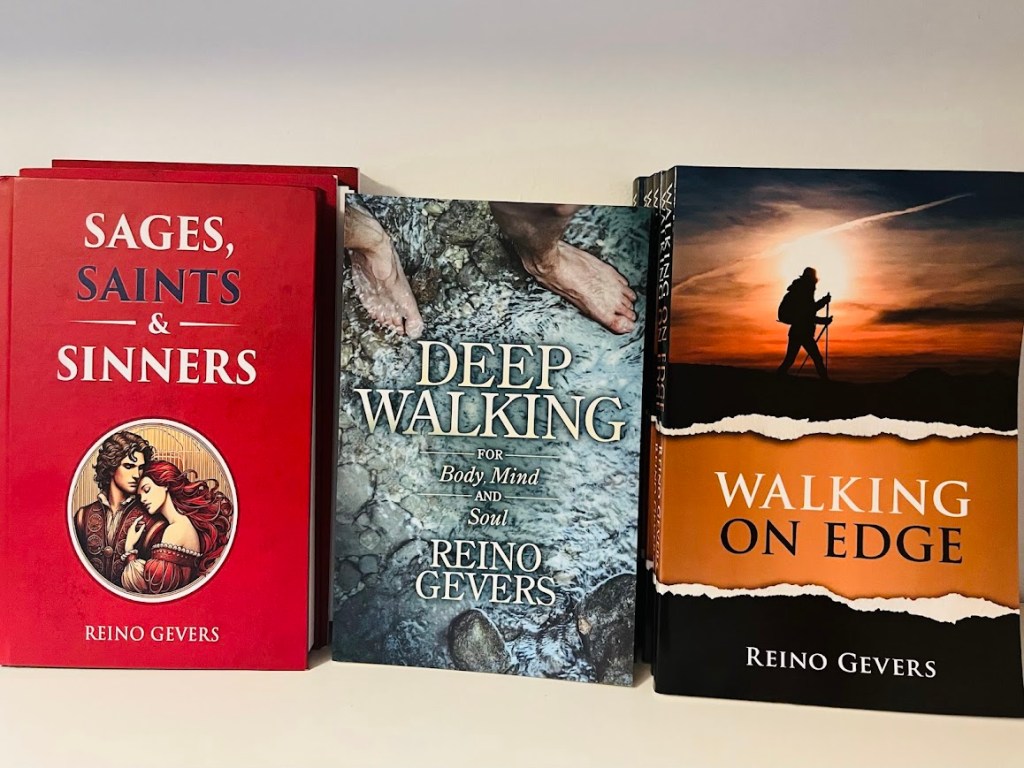
P.S. Over the years, my own Camino journeys have inspired two books exploring the deeper inner dimension of pilgrimage and transformational walking: Deep Walking for Body, Mind and Soul and the newly revised edition of Walking on Edge. Both reflect on the Camino not merely as a physical journey, but as a path of inner change, reflection, and rediscovery.

Leave a comment

Filed under Camino de Santiago, psychology, spirituality

Why the Camino de Santiago is Captivating Today’s Seekers

A lost ritual once firmly embedded in medieval Europe has found new life among modern burned-out souls and those disillusioned with institutional religion. Walking the same ancient paths travelled by pilgrims centuries ago has become, for hundreds of thousands of people, a modern route to purpose, silence, healing, and experiential spirituality.

During the Middle Ages, a vast network of pilgrimage routes stretched across Europe — from Warsaw in Poland, Oslo in Norway, and Walsingham in England to Einsiedeln in Switzerland, Cologne in Germany, Rome and Assisi in Italy, and the Via Tolosana, or Arles Route, in France. These paths eventually converged toward some of Christianity’s most revered destinations, especially Santiago de Compostela in Spain and Rome in Italy.

For medieval pilgrims, it was common to leave directly from one’s doorstep and walk for months across mountains, forests, and foreign territories. The journey was often undertaken as an act of penance, spiritual devotion, or thanksgiving. In some cases, one member of a family would walk on behalf of the entire household.

Pilgrimage was never easy. Even in medieval times, it required considerable resources, endurance, and courage. Pilgrims faced illness, disease, hunger, harsh weather, and the constant danger of robbery. Many never returned home. Yet despite the risks, historians estimate that by the late Middle Ages, millions of people had travelled these sacred routes, making pilgrimage one of the defining spiritual practices of medieval Europe.

Pilgrimage also became deeply woven into the economic and cultural fabric of the continent. Pilgrims needed food, shelter, clothing, medical care, and transport. Inns, monasteries, bridges, hospitals, and marketplaces flourished along the routes. Wealthier travellers journeying on horseback or in carriages relied on blacksmiths and craftsmen for repairs and supplies.

But the pilgrimage routes were far more than economic arteries. They became channels for the exchange of ideas, languages, customs, art, and knowledge. Along these roads, Europe slowly developed a shared cultural consciousness.

One important spiritual centre on the Camino route was the monastery of San Juan de la Peña near Jaca in northern Spain. According to medieval tradition, the monastery housed the Holy Grail for several centuries — the cup believed to have been used by Jesus at the Last Supper. Beyond its religious significance, San Juan de la Peña also became an important centre of scholarship and monastic learning during the Middle Ages.

By the 18th century, however, much of the great pilgrimage tradition had declined. The Protestant Reformation, the suppression of monasteries, political upheaval, changing religious attitudes, and centuries of war dramatically reduced pilgrimage across Europe. In England, King Henry VIII dissolved the monasteries between 1536 and 1541 and effectively outlawed many traditional pilgrimage practices.

Then, in the late 20th century, something remarkable happened.

In the early 1980s, the Spanish priest Father Elías Valiña Sampedro became convinced that the ancient Camino de Santiago could live again. Armed with cans of yellow paint and driving his small Citroën 2CV through rural northern Spain, he began marking forgotten sections of the route with the now-famous yellow arrows that guide pilgrims to this day.

Father Elías was far more than a parish priest. He was a respected scholar who had completed a doctoral thesis on the Camino de Santiago in the 1960s, long before the modern revival began. At the time, very few people could have imagined that the Camino would once again attract pilgrims from across the world.

When I first walked the Camino in 2006, around 100,000 pilgrims received the Compostela certificate in Santiago annually. Most were students, retirees, or spiritual seekers with the time to undertake such a journey. Since then, the numbers have grown dramatically. In 2024, more than 446,000 pilgrims officially received the Compostela in Santiago de Compostela, and the real number of walkers is believed to be substantially higher, since many people complete sections of the Camino without registering officially.

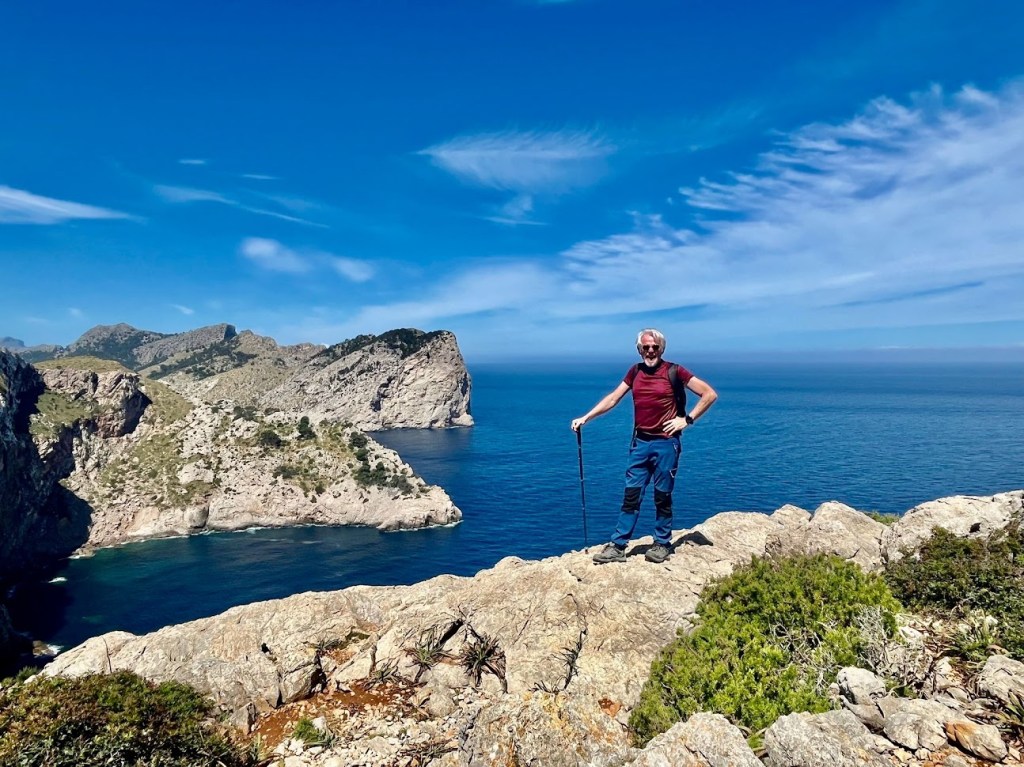
Over the years I have walked more than a dozen Camino routes through Germany, Switzerland, France, Italy, and Spain, speaking to hundreds of pilgrims along the way. My overwhelming impression is that many people walking these ancient paths are searching for something they are no longer finding within institutional religion alone.

Pilgrims come from every imaginable background, age group, profession, and nationality. Many are standing at a crossroads in life. Some are grieving the death of a loved one. Others are recovering from divorce, burnout, illness, or emotional exhaustion. Some arrive carrying deep spiritual questions they can no longer ignore.

Few people return home unchanged.

Stepping away from the noise and acceleration of modern life for several weeks affects body, mind, and soul in profound ways. Long days of walking create space for reflection rarely possible in ordinary life. Many pilgrims return home and change careers, relationships, priorities, or even countries after realizing that a life centred on Being feels fundamentally different from a life driven primarily by external achievement and accumulation.

What we are witnessing may be more than the revival of an ancient tradition. It may reflect a broader transformation in humanity’s understanding of spirituality itself.

Increasingly, people are questioning whether spiritual meaning can be mediated exclusively through institutions, doctrines, or systems of belief. The modern pilgrimage speaks to a growing hunger for direct experience — for silence, mystery, transcendence, and inner transformation.

Experiential spirituality cannot simply be inherited intellectually. It must be encountered.

And perhaps that is why so many people are becoming pilgrims again.

Reino Gevers – Host of the LivingToBe podcast

P.S. Over the years, my own Camino journeys have inspired two books exploring the deeper inner dimension of pilgrimage and transformational walking: Deep Walking for Body, Mind and Soul and the newly revised edition of Walking on Edge. Both reflect on the Camino not merely as a physical journey, but as a path of inner change, reflection, and rediscovery.

Leave a comment

Filed under Camino de Santiago, purpose, religion

The Lost Art of Stillness: Awakening Your Inner Self

In an age shaped by scrolling screens and shrinking attention spans, something profound is happening beneath the surface. Recent studies suggest that nearly two-thirds of young people struggle to remain engaged with content lasting longer than a minute. Yet, paradoxically, this same generation is searching intensely for meaning, transcendence, and spiritual grounding. The hunger for depth has not disappeared. If anything, it has become more urgent.

The difficulty is that our modern world is designed for speed rather than contemplation. We are conditioned to expect instant answers, simplified narratives, and constant stimulation. But the deepest truths of existence cannot be reduced to sound bites or algorithms. Mystery does not reveal itself in haste.

The ancient mystics understood this well. They approached the human soul with reverence, knowing that the divine cannot be encountered amid endless distraction and noise. The sacred unfolds quietly. Only in silence, solitude, and contemplation does the veil begin to lift, allowing fleeting glimpses of a reality greater than yourself.

As the 14th-century mystic Meister Eckhart wrote:

Nothing in all creation is so like God as stillness.”

Those words may be more relevant now than ever before.

You did not arrive here by accident. Your very existence is astonishingly improbable. Consider how different your life might have been had you been born in another country, another culture, another language, another body, or another century. None of those things were within your control. And yet, within the boundaries of circumstance, you have been given the extraordinary freedom to choose how you respond to life.

Your external conditions shape you, but they do not define the deepest essence of who you are.

It is by fully entering the depth of life’s journey that you awaken to purpose, resilience, and meaning. But this awakening becomes difficult when the mind is continually fragmented by external distraction. Much of the anxiety and emotional exhaustion of modern life emerges from this loss of alignment — a growing disconnect between the soul and its deeper calling.

We lose ourselves when we settle for the illusion of safety in mediocrity, silencing the inner voice that calls toward courage, creativity, and transformation. In doing so, there is a drift away from the very source of vitality.

Nature has always offered a path back.

The silence of mountains, forests, rivers, and open skies reveals something ancient and expansive. Birdsong, wind through trees, flowing water — all of it speaks of an intricate web of interconnectedness that modern life often obscures. In nature, you are reminded that you belong to something far greater than your schedules, anxieties, and ambitions.

It is no coincidence that many of humanity’s sacred places are found in forests, caves, deserts, and mountain summits. Nature slows our breathing, quiets stress, restores attention, and gently reconnects you to the rhythm of being itself.

Perhaps this is why time spent in nature often feels less like escape and more like remembrance.

To live well is not merely to chase future goals or external validation. It is to recover the lost art of presence — to live not only to achieve, but Living to BE.

And perhaps, in the stillness that you so often avoid, you may rediscover the deeper purpose for which you were born.

Reino Gevers – Host of the LivingToBe podcast

P.S: If you enjoyed this article you might be interested in reading: Sages, Saints and Sinners Get it today on Amazon, Barnes & Noble and where all good books are sold.
1 Comment

Filed under meditation, psychology, spirituality