Tag Archives: inspiration

Lessons from the 14th Century Plague

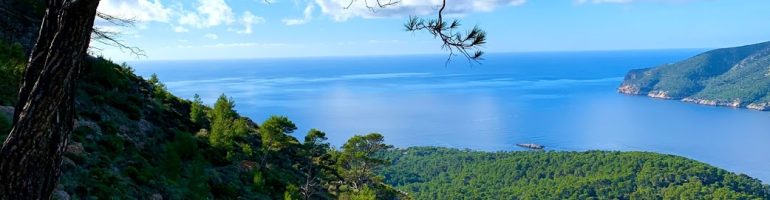
There are places where history feels very present and where the emotional residue of another age still clings to stone and air. Puig de Maria, rising above the town of Pollença, on the Mediterranean island of Mallorca is one such place. It is not simply an old monastery, but built as a human answer to a dark time.

In 1348, as the Black Death swept across Europe. Suffocating fear was everywhere. Death arrived without logic or mercy, dismantling the illusion of control that underpinned medieval life. It is in this context that Puig de Maria was conceived: not as an architectural ambition, but as a cry to the divine.

The decision to build a sanctuary on a mountain summit high above the town was not accidental. It carried symbolic weight. To ascend is to separate—from contagion, from chaos, from the unbearable proximity of suffering. But it is also to draw nearer to God, to meaning, to the possibility that fear can be held within something larger than itself.

In Sages, Saints and Sinners, I return to a question that refuses to stay buried: what becomes of us when certainty collapses? When the structures we trusted—faith, order, meaning—no longer hold, who do we become? Set against the desolation of the 14th-century plague, a time when vast stretches of Europe fell silent and entire communities vanished, the novel steps into that rupture. It is not only a story of loss, but of what emerges in its wake—of the fragile, defiant ways human beings rediscover courage, meaning, and even love when everything familiar has been stripped away.

Some retreat into despair. Others are in denial. But there is a third path, rarer and more demanding—the transmutation of fear into courage, and anxiety into love.

Puig de Maria stands as a physical manifestation of that third path.

The people who built it were not free of fear. They were defined by it. And yet, instead of allowing fear to contract their world, they expanded it vertically. They climbed. They carried stone up a mountain in the midst of plague, and in doing so, enacted a radical defiance: fear would not have the final word.

There is a discipline in the refusal to be mentally captured by catastrophe.

The monastery that emerged—first a chapel, then a place of ongoing devotion—became more than a sanctuary. It became a container. Within its walls, fear was transformed. Ritual, prayer, and community gave structure to what would otherwise have been overwhelming. The unknown was met not with paralysis, but with presence.

This is the essence of transmutation. Not the removal of darkness, but its reworking into something that can sustain life.

Walking up to Puig de Maria today, the path winds in steady, deliberate curves. It is not a punishing climb, but it demands attention. There is a rhythm to it—step, breath, step—that mirrors something older than the path itself. Pilgrimage is never only about arrival. It is about what is shed along the way.

Halfway up, the town below begins to recede. Perspective shifts. What felt immediate loosens its grip. By the time you reach the summit, something subtle but unmistakable has occurred: distance has been created, not just physically, but internally.

This is the overlooked power of sacred geography. It externalises an inner movement.

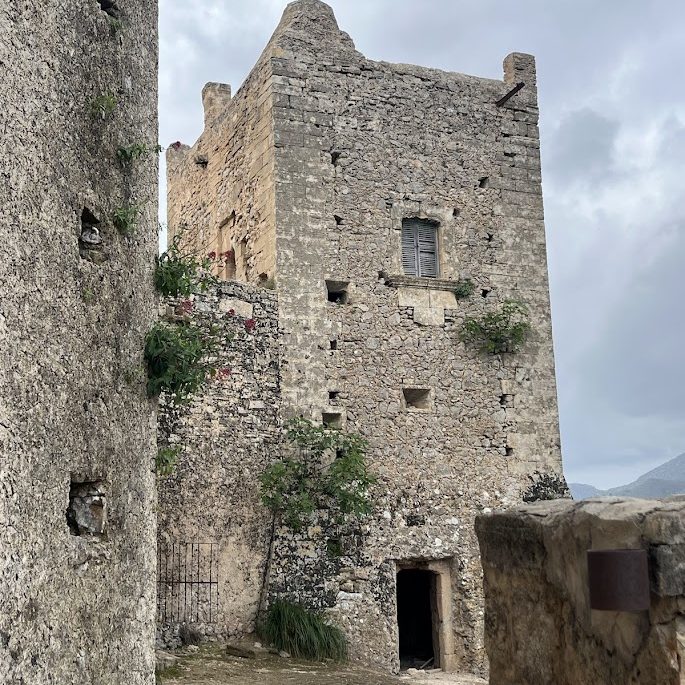
At the top, the monastery remains austere. A tower and thick walls. A chapel that holds silence rather than spectacle. There is no excess here, no attempt to impress. It was never meant for comfort in the modern sense. It was meant for clarity.
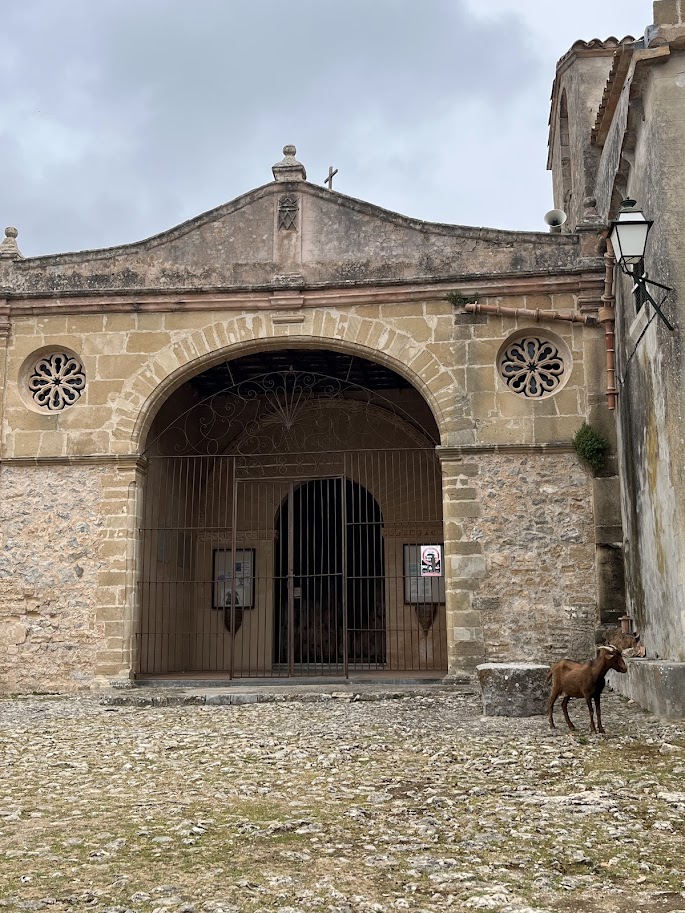
And clarity, in times of crisis, is everything.

In our own age, fear has taken on different forms, but its structure remains familiar. Uncertainty, fragmentation, and a sense that the ground is less stable than we were led to believe. The temptation is the same as it was in the 14th century: to collapse inward, to narrow, to protect.

But Puig de Maria offers another template.

Climb.

Not away from reality, but toward a broader vantage point. Build—not necessarily in stone, but in practice—structures that can hold anxiety without being defined by it. Create spaces, inner and outer, where fear can be acknowledged, but not enthroned.

The plague did not end because a monastery was built. Suffering was not avoided. But meaning was forged in the midst of it.

And meaning is what allows endurance to become transformation.

In Sages, Saints and Sinners, the figures who endure are not those who escape fear, but those who metabolise it. They refuse its finality. They insist, against all evidence, that love and courage remain alive.

Puig de Maria asks a question that is as relevant now as it was then:

When fear rises, will you descend into it—or will you climb?

Reino Gevers – Host of the LivingToBe podcast

P.S: If you enjoyed this article you might be interested in reading: Sages, Saints and Sinners Get it today on Amazon, Barnes & Noble and where all good books are sold.

Leave a comment

Filed under Pilgrimage, psychology, spirituality

Transitioning the winter seasons of life

Approaching the winter solstice in the northern hemisphere, we find ourselves amidst the longest, darkest, and coldest nights. Likewise, the human experience encounters its winters – stages in life marked by desolation, loss, and lack of purpose. Yet, within these seemingly barren chapters of life, a profound opportunity for introspection arises.

Much like the dormant earth cultivating the potential for rebirth beneath its frozen surface, our personal winters serve as a crucible for critical self-reflection, sowing the seeds of renewal and elevation of consciousness.

Photo by Pixabay on Pexels.com

Loss, disappointment, and regret come from cause and effect. Something was avoided, or not done during the previous seasons. Going into the blame game by attributing your situation entirely to external circumstances is the procrastination trap.

The blame game inevitably leads to a vicious cycle of wallowing in self-pity that makes everyone around you want to run. Seizing the opportunity in a “flat on the ground” situation is accepting responsibility, redefining purpose, and fine-tuning wisdom and knowledge.

The winter of life makes you resilient in accepting the impermanence of any given state. Life is a never-ending cycle of birth and rebirth, night and day, recuperation and active engagement. Winter is a time to reconnect to the root ancestral energy embedded within. There are several ways of how to build resilience during the winter season:

The law of nature demands rest and recuperation

The body needs at least seven to eight hours of sleep for a healthy immune system. A power nap of 10 to 15 minutes during the low-energy afternoon period of the day will work wonders to boost your mental and physical performance.

Exercise: All pelvic floor exercises that strengthen the bladder and kidney. The bladder has the longest meridian in the body on either side of the spinal cord. The kidney meridian starts at the base of the foot. Typical yoga poses are the cat, boat, and big toe poses. All basic Taiji movements are excellent

Nutrition: Drink lots of good water. Start your day by boiling half a lemon for five minutes just after rising from bed to boost hydration. The lemon peel contains numerous nutrients and enzymes, including Vitamin C. A salty taste is typical for the water element and crucial for kidney balance. But table salt should be avoided as much as possible as it weakens the body. Use natural sea and Himalayan salts with a high mineral content. Typical water-element foods are asparagus, beets, black rice, kelp, wakame, blackberries, blueberries, black grapes, watermelon, scallops, oysters, and mussels.

Breathing

One of the simplest and most natural ways of reducing your stress level is by simply thinking about how you’re breathing.

Inhaling and exhaling naturally through the nose is what you should be doing. As you inhale, the nose warms and moisturizes the air. Your nose releases nitric oxide, which widens the blood vessels, allowing for better transportation of oxygen to vital organs. Your breathing will be deeper and slower, increasing the volume of your lungs and diaphragm.

Elevating your stress resilience becomes a powerful force shaping not only your response mechanisms but also your ability to navigate the winters of life.

How you cultivate self-love intricately weaves into the fabric of all your relationships and how you relate to events in the external world. It’s crucial to distinguish genuine self-nurturing behavior from the misconceived notion of narcissism, which darkens the purity of self-love. The unraveling of harmony often begins with a detachment from the authentic self when you are pulled into the abyss of external distractions.

With a modest investment of effort, you can position yourself far better to weather turbulent times, enabling you to make better decisions with a tranquil mindset. This shift not only empowers you to weather the storm but also to emerge from it all the wiser.

Reino Gevers – Author – Mentor – Speaker

P.S. I’m excited to announce the release of my latest book, “The Turning of the Circle: Embracing Nature’s Wisdom for Purposeful Living.” If you enjoy it, you might also be interested in my previous works, “Deep Walking for Body, Mind and Soul” and “Walking on Edge: A Pilgrimage to Santiago.” You can find all of these titles at reputable bookstores near you.

Leave a comment

Filed under mental health, mental-health, self-development

One world One consciousness

Nelson Mandela once reflected that one of the most difficult things is not to change society but to change yourself.

I’ve given much thought these days on why my home country South Africa is falling apart.

Fortunately, Mandela was spared from witnessing the complete erosion of moral integrity among his successors. Essential components of infrastructure, including harbors, roads, railways, hospitals, schools, and electricity supply, are deteriorating due to incompetence, crime, and corruption.

A government-funded food scheme, which feeds over 9 million schoolchildren countrywide of which the majority come from poor households, has been thrown into disarray by funds gone missing. Transparency International‘s 2022 Corruption Perceptions Index scored South Africa at 43 on a scale from 0 (“highly corrupt”) to 100 (“very clean”). 

Present-day leaders, ensconced in a cocoon of privilege sustained by nepotism and political favoritism, adamantly deny accountability for their shortcomings. Astonishingly, they continue to attribute their catastrophic failures to a regime ousted from power three decades ago.

It appears that they are replicating the very behavior they once decried, abandoning the principles they once championed. Instead of serving society, they exploit their positions for personal gratification, echoing the very actions of those they once decried as the enemy.

Meanwhile, America and many other Western democracies are being torn apart by divisiveness, and political extremism.

Photo by Pixabay on Pexels.com

What is happening?

The political landscape serves as a mirror reflecting the intricacies of society and individual behavior. Regardless of the adversities presented by the external world, the onus lies squarely on every individual for their response, attitude, actions, and overall sense of happiness.

In my latest Living to BE podcast, Scott White tells of his mission in planting one seed of positivity at a time. Every good day can be made into an even better day by changing the perspective with the antidote of gratitude, kindness, and self-deprecating humor.

How many of us are stuck in regret, pain, hurt, and anger toward an ex-partner, parent, employer, or neighbor.

When unaware it‘s easy to be pulled into the maelstrom of the same fear and anger you are exposed to.

Grievance culture complains about everything from the weather to the postman coming late. It is the lowest vibrational energy that feeds on scarcity, limitation, and neediness.

Even the best solution you offer to these people is met with a „but…“, „that will never work“ or „can‘t do that.“

You literally feel the energy sucked out of you as they go into their rant, making everyone else responsible for their misery.

When a person radiating on a high vibrational frequency enters a room, a transformative shift occurs. You sense your own energy expanding, drawn by a magnetic power that not only inspires but also generates positive change. This influence becomes the defining factor between fear and courage, scarcity and abundance, love versus hate, and kindness prevailing over moody grumpiness.

From this elevated plane of consciousness emerges creativity, inspiration, and confidence. It is from this heightened state that even the most entrenched problems of humanity can find solutions.

There are no shortcuts to the inner work.

Cutting through the veil of adversity, toxic emotions and the monkey mind of dancing thoughts is the spiritual exercise, the gateway to happiness.

Quoting the spiritual teacher Ram Dass:

„One consciousness. That is the way the world could right itself. Start with your peace, your love. your compassion, and go from there … walk each other home.“

Reino Gevers – Author – Mentor – Speaker

P.S. I’m excited to announce the release of my latest book, “The Turning of the Circle: Embracing Nature’s Wisdom for Purposeful Living.” If you enjoy it, you might also be interested in my previous works, “Deep Walking for Body, Mind and Soul” and “Walking on Edge: A Pilgrimage to Santiago.” You can find all of these titles at reputable bookstores near you.

Leave a comment

Filed under mental health, mental-health, psychology, Uncategorized

Now and Then

“Musical training is a more potent instrument than any other because rhythm and harmony find their way into the inward places of the soul.” – Plato

It appears to be no mere coincidence that music has spearheaded profound social and political transformations throughout history. Powerful lyrics that strike the tune of the time seem to penetrate an unseen realm, resonating with the deepest chords of human experience.

It’s almost a miracle that we can enjoy today the crisp and clear voice of John Lennon in the newly released Beatles song “Now and Then” with machine learning technology managing to extract the deceased band member’s vocals from a poor 1970s cassette recording.

The new song triggers memories of the famously successful, “Eleanor Rigby” with the introductory lyrics: “Ah, look at all the lonely people!” The theme of loneliness and isolation was a clear departure from earlier Beatles love songs into a new genre.

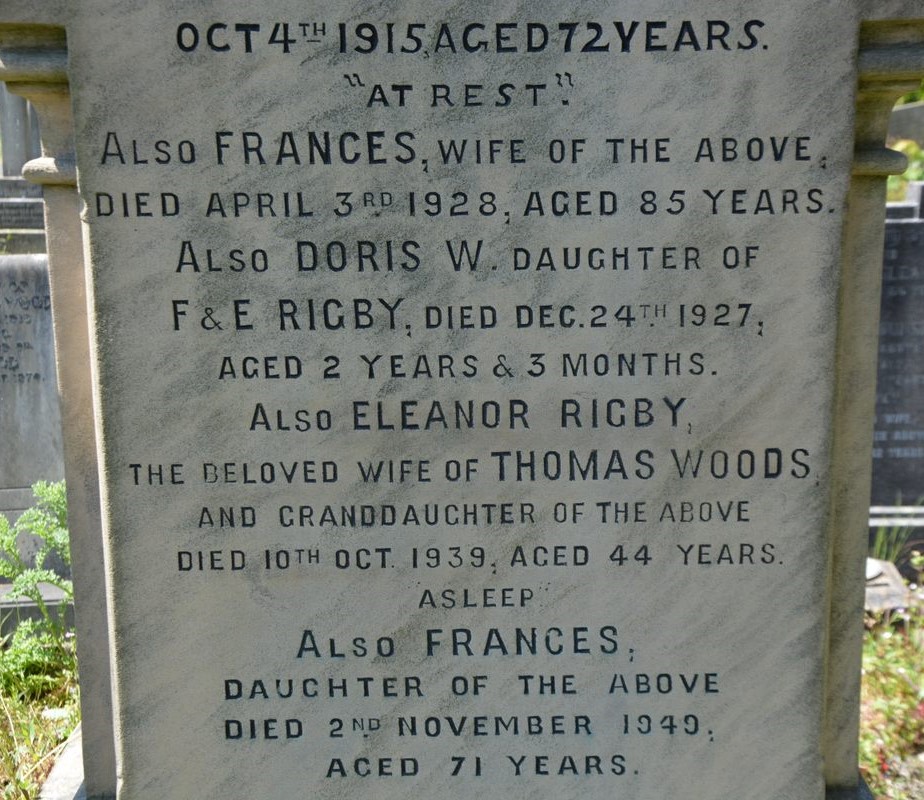
It is the only song where none of the Beatles plays an instrument. There is an eery aspect with the name “Eleanor Rigby” found on a gravestone at St. Peter’s Parish Church, in Woolten, Liverpool where Paul McCartney and John Lennon first met as teenagers in 1957.

The real Eleanor Rigby

It tells the story of a lonely woman named Eleanor Rigby, and the gravestone allegedly served as the inspiration for Paul McCartney when writing the song. The actual grave belongs to a woman named Eleanor Rigby, who died in 1939 at the age of 44.

In a 2021 article for the New Yorker, McCartney writes that after being introduced to John Lennon they most certainly wandered about in the churchyard talking about their future. But McCartney writes that he couldn’t consciously recall having seen the gravestone.

“I don’t remember seeing the grave there, but I suppose I might have registered it subliminally.”

McCartney goes on to write that several coincidental meetings led to the formation of the band: “All these small coincidences had to happen to make the Beatles happen, and it does feel like some kind of magic. It’s one of the wonderful lessons about saying yes when life presents these opportunities to you. You never know where they might lead.”

During its time Eleanor Rigby struck a chord with many people perceiving and feeling the “social isolation” that comes with living in large cities, geographically distant from close family and friends with limited opportunities for social interactions apart from the workplace.

It is no coincidence either that the Beatles arrived at a time in the 1960s when a new generation yearned to break free from the suffocating morality of the 1950s. Music has played a pivotal role in driving change throughout history, giving a voice to the simmering social undercurrent.

Songwriters and musicians have shared sentiments about a mysterious, almost mystical process of creating music. McCartney mentioned in several interviews how some of their most famous songs seemed to flow effortlessly as if the melodies and lyrics were already there, waiting to be discovered.

Joni Mitchell describes the art of creative songwriting as a form of channeling, arriving from a place she can’t fully explain, almost as if they are given to her.

Leonard Cohen said: “If I knew where the good songs came from, I’d go there more often.”

Bob Dylan describes his songwriting process as tapping into something beyond his conscious mind, often coming to him almost fully formed, as if he’s a conduit for something greater than himself.

Bach: Infused by spirituality

One of the greatest composers of all time, Johann Sebastian Bach, infused his music with his deep spiritual beliefs. His music is timeless and continues to inspire millions across all national, cultural, and religious boundaries. The complexity of Bach’s compositions and emotional resonance has scholars citing it as evidence of a profound connection to something beyond the human realm.

Deep walking in solitude over long distances, undeniably also influenced Bach’s compositions. Walking between his home and a parish that did a first performance, he would often refine and adapt the composition. Walking has a natural rhythm, that might have influenced Bach’s sense of musical rhythm.

In 1705 the young Bach made a 400-kilometer journey on foot from Arnstadt to Lübeck in northern Germany to learn from the then-famous organist Dietrich Buxtehude.

Ludwig von Beethoven took daily walks in nature. Many of his best ideas came to him during walks in the country, including his ‘pastoral’ Symphony No. 6. Completed in 1808.

Lennon’s last words to McCartney were reportedly: “Think about me every now and then, old friend,” which makes “Now and Then” seem almost like a message from the beyond. The song is the final official Beatles farewell. There are only two surviving members – McCartney and Ringo Starr both now in their 80s.

Reino Gevers – Author – Mentor – Speaker

P.S. I’m excited to announce the release of my latest book, “The Turning of the Circle: Embracing Nature’s Wisdom for Purposeful Living.” If you enjoy it, you might also be interested in my previous works, “Deep Walking for Body, Mind and Soul” and “Walking on Edge: A Pilgrimage to Santiago.” You can find all of these titles at reputable bookstores near you.

.

Leave a comment

Filed under longevity, mental health, self-development, spirituality, Uncategorized