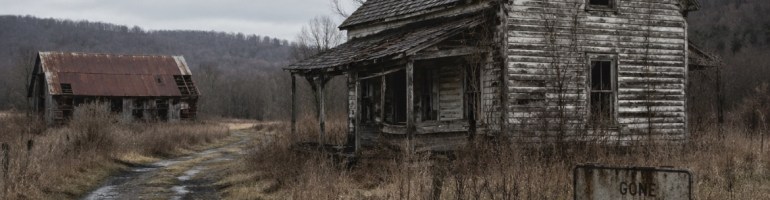
I recently drove through rural South Africa on my way to a school reunion—one of those rare gatherings where time folds in on itself and five decades seem like yesterday. The landscape should have been familiar: wide horizons, scattered farmsteads, towns that once pulsed with industry. But what struck me most was not recognition—it was absence.
Roads pitted with potholes slowed the journey, but it was the towns that told the deeper story. Buildings sagged under neglect. Shopfronts stood empty or half-occupied. Once pristine and well-kept, towns seemed to have been abandoned to time. This was not just decay. It was a withdrawal. A slow draining away of people, energy, and purpose.
In my hometown of Dundee in KwaZulu-Natal alone, the closure of a sweets factory, a glass plant, and several coal mines has, over the years, stripped away thousands of jobs. At the reunion, I learned that the impact reached even further: a steelworks in the neighbouring town of Newcastle had also shut down, costing another 3,000 livelihoods.
And this is not a uniquely South African story.
Across the United States, the United Kingdom, Spain, and Germany, I have witnessed similar patterns unfold. Rural communities hollow out as younger generations leave in search of education, employment, and opportunity in cities. What remains are aging populations, shrinking tax bases, and a fraying social fabric. The causes are well documented—economic centralization, mechanization of agriculture, the pull of urban opportunity—but the consequences run deeper than statistics.
Dislocation Without Language
For those who leave, the move to the city often brings material improvement: better jobs, better services, broader networks. But something less tangible is lost.
Rural life, at its best, offers continuity. It binds identity to place. You are not just an individual; you are someone’s neighbor, someone’s history, part of a shared narrative that stretches across generations. When people leave, that continuity fractures.
In cities, identity becomes more fluid—but also more fragile. Relationships are often transactional, time-bound, and contingent. Community must be constructed rather than inherited. For many, this produces a subtle but persistent sense of dislocation: a feeling of being nowhere in particular.
The question then arises: are people happier?
The answer is not straightforward. Urban environments tend to score higher on measures of economic well-being and access to services. But they also correlate with higher levels of loneliness, anxiety, and social isolation. Rural areas, despite economic hardship, often report stronger social cohesion and a greater sense of belonging—at least where communities remain intact.
So the trade-off is not simply between poverty and prosperity. It is between different forms of wealth—material and relational.
The Social Cost
When rural areas decline, society loses more than population density. It loses balance.
Healthy societies depend on a diversity of spaces: urban centers of innovation, suburban zones of stability, and rural regions that anchor culture, tradition, and food production. When one of these weakens, the system becomes distorted.
Depopulated rural areas often enter a downward spiral. As people leave, services close—schools, clinics, shops. This, in turn, makes the area less viable for those who remain, accelerating further out-migration. Political attention shifts elsewhere. Infrastructure deteriorates. Eventually, these regions become peripheral not just geographically, but economically and politically.
This has consequences for social cohesion. When large segments of the population feel left behind, trust erodes—both in institutions and in the broader social contract. The divide between “somewhere” and “anywhere” populations widens: those rooted in place versus those who are mobile and globally connected. This divide increasingly shapes political outcomes across many countries.
The Cultural Loss: Memory Without Custodians
Rural communities are not just economic units; they are repositories of memory.
They carry dialects, customs, ways of life that cannot be easily transplanted into urban settings. When these communities empty out, cultural knowledge dissipates. Traditions survive as fragments—revived occasionally for tourism or nostalgia—but lose their lived context.
What disappears is not just heritage, but a particular way of understanding the world: slower, more cyclical, more attuned to land and season. In its place emerges a more standardized, globalized culture—efficient, connected, but often detached.
Can the Trend Be Reversed?
There are attempts—some promising, many insufficient.
Remote work has reopened the possibility of living outside cities, at least for certain professions. Targeted investment in infrastructure—digital connectivity, transport, healthcare—can make rural areas viable again. Policies that support local enterprise, sustainable agriculture, and decentralized energy systems can stabilize regional economies.
More fundamentally, the question is one of value: what do we, as societies, choose to preserve?
If rural areas are seen merely as economically inefficient, their decline will continue. If, however, they are recognized as essential to social resilience, cultural continuity, and even psychological well-being, then their renewal becomes a strategic priority rather than a sentimental one.
Returning, Briefly
At the reunion, conversations drifted—as they always do—between memory and present reality. Some had stayed. Many have scattered to all parts of the world. Each carried a different version of the same story.
Driving back, the landscape remained unchanged. But the question lingered:
What happens to a society when its margins begin to disappear?
Not all decline is reversible. But not all loss is inevitable either.
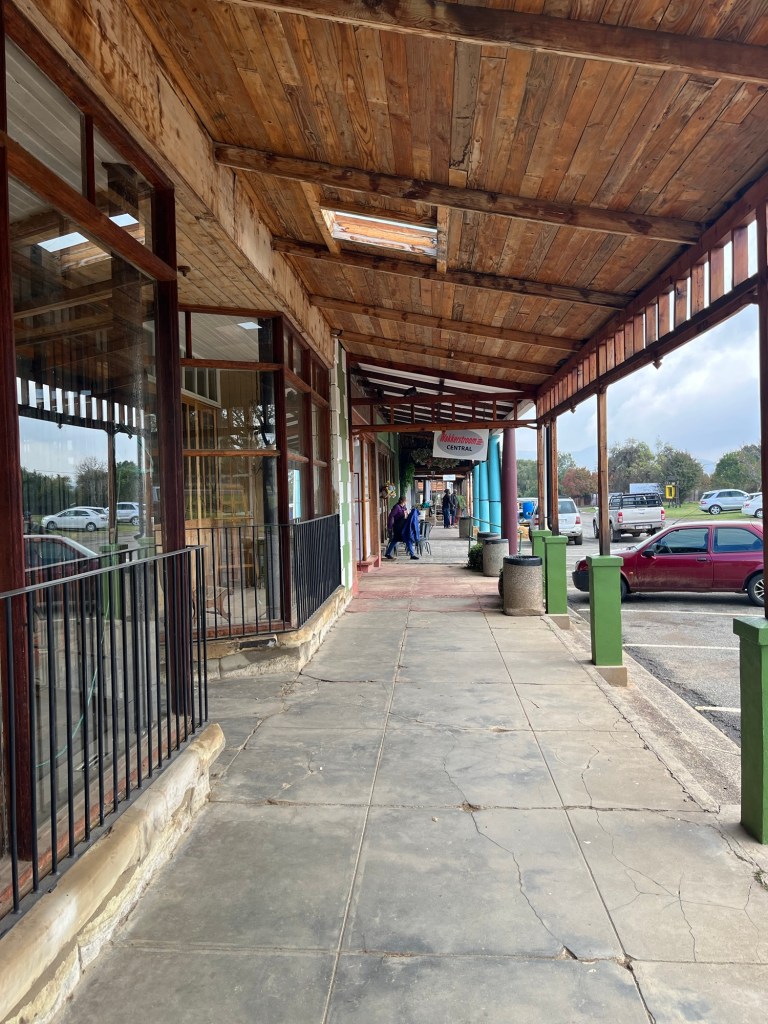
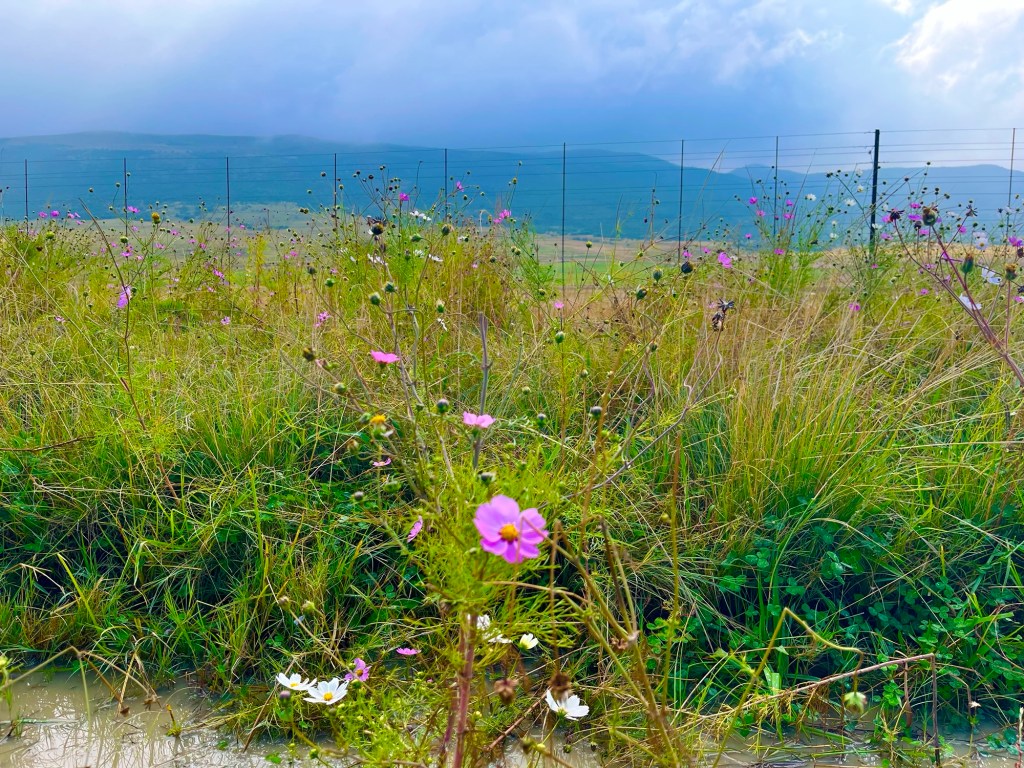
A welcome spark of hope on my return journey came with a stop in the village of Wakkerstroom. This rural gem has been thoughtfully revived: old homes and shopfronts carefully restored, now housing curios, excellent local food, and gateways to nature. It has become a magnet for artists and for those seeking a return to the sanctuary and sense of community that rural life can still offer.
The condition of rural places is not just a reflection of economic trends—it is a mirror. It shows us what we prioritize, what we neglect, and ultimately, what we are willing to let go.
And perhaps the more uncomfortable question is this:
In our pursuit of better opportunities, have we mistaken movement for progress—and in doing so, lost something we do not yet know how to measure?
Reino Gevers – Host of the LivingToBe podcast
P.S: If you enjoyed this article you might be interested in reading: Sages, Saints and Sinners Get it today on Amazon, Barnes & Noble and where all good books are sold.


