Tag Archives: psychology

Walking into Silence: What pilgrimage taught me about uncertainty, and trust

There are moments on a long walk when you stop thinking about where you are going and simply walk.You simply hear the rhythm of your feet. The landscape changes slowly. Your breathing settles. The noise in your head begins to diminish.I experienced something of that on a recent walk on the Pilgrims’ Way, from Winchester.

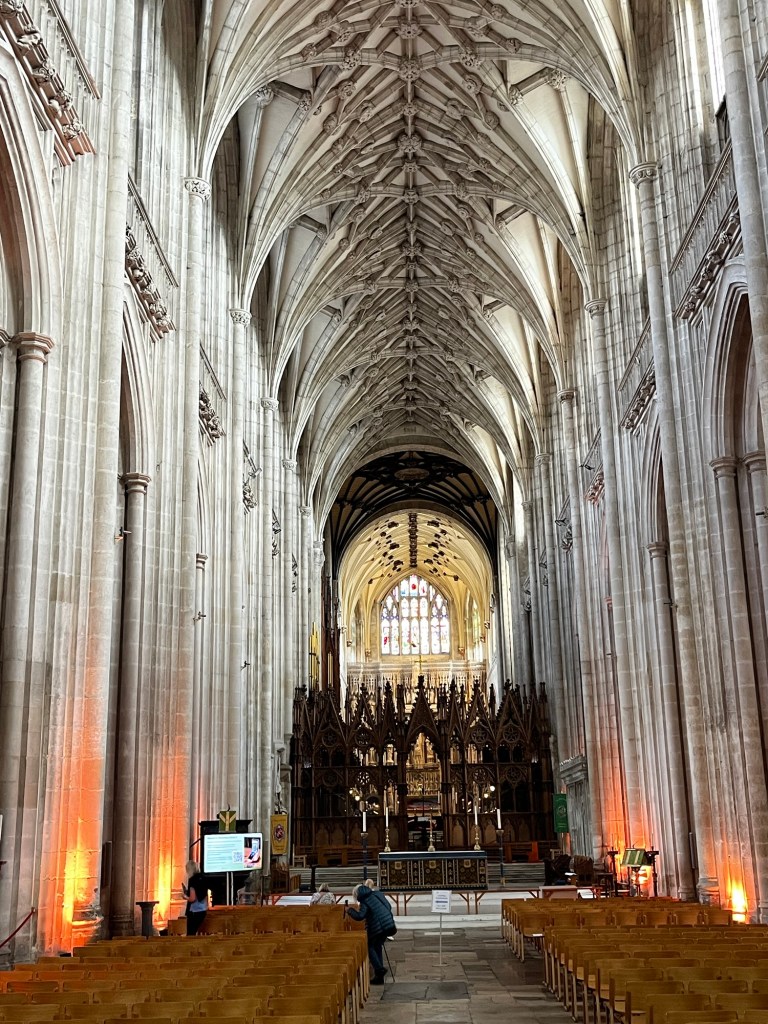
But before I took my first steps, I went into Winchester Cathedral. I sat down and was silent during a morning prayer ceremony with only a handful of people. For a few minutes I sat in that extraordinary building, surrounded by centuries of history, and thought about all the people who had come here before me.

Wonchester Cathedral

People who had stood exactly where I was standing and wondered what life meant.I set out on this walk with contemplations from the great Mystics such as Meister Eckhart and Julian of Norwich.

Julian lived in fourteenth-century England, during one of the darkest periods of European history – the Black Death.She knew all about illness, death and uncertainty. During a serious illness in 1373, when she believed she was dying, she experienced a series of visions that became the basis of her Revelations of Divine Love. And from Julian came those extraordinary words:

All shall be well, and all shall be well, and all manner of thing shall be well.”

Julian said this living in a world in which almost everything was not well, and at the same time offering hope. She was saying that we may not understand what is happening in the world but we can still trust that love is deeper than suffering.

That is a very different kind of hope. We cannot plan and control the journey. Life happens in unpredictable ways while we try to protect ourselves against uncertainty.When we’re young, we often imagine that if we make the right choices, life will eventually become predictable.

People and pets we love become ill and die. Relationships change and fail. Homes and jobs change. Your body begins to remind you that you are not going to be here forever.

You begin to realize that you cannot control the journey. You can only walk and adapt to circumstances beyond your control.That thought stayed with me during the first hours of my walk during the unspoilt Itchen valley. 

The first kilometres are always slightly deceptive. You are still thinking about the destination. You look at the map. You calculate how far you have to go.

But gradually, something changes.

You stop thinking about the end.

You begin to pay attention to the next step.

And then the step after that.

That is one of the great gifts of walking.

It brings you back into the present moment. You hear the birds. You stand in awe before ancient trees. The Pilgrims’ Way takes you through landscapes that seem to exist outside ordinary time. There are stretches where ancient trees form tunnels over the path.You walk beneath them and suddenly feel very small.

The trees don’t know your worries. They simply stand there and some of them have been standing there for hundreds of years.And I found myself wondering how many people had walked beneath those same branches.

Medieval pilgrims walked these same old paths, possibly with the same questions as pulgrims today. And now they are gone.

The trees remain and there is something humbling and comforting about that. 

In the bigger order of things one lifespan is fleetingly small. The gravestones around the chapels, some dating back to the 12th century, are a stark reminder of that. You walk into a chapel after several hours on the trail and the experience can be almost startling. Outside, the modern world continues.

Inside, time seems to have stopped. The stones are old and the light is different.

And these are the moments when the boundary between the ordinary and the sacred really does feel a little thinner.A thin place isn’t necessarily a destination to an ancient sacred site but something that happens within.

St Augustine wrote about discovering God not by endlessly looking outward but by turning inward.Meister Eckhart later spoke about becoming empty — letting go of the endless accumulation of thoughts, desires and attachments that fill the mind.

And Julian of Norwich arrives at another extraordinary insight:beneath everything is love. Three different voices pointing towards the same thing. Turn inward. Become quiet and listen.

The longer you walk, the less important the things that seemed so urgent that morning can become.

You begin to notice the magic of life. The small things. The movement of leaves, the creaking of tree branches, the smell of moist earth in the forest, the taste of juicy wild blackberries and thoughts.

Not the thoughts you are trying to manufacture, but the ones that rise naturally when the noise becomes quiet.

That, too, is pilgrimage.

  • How do you deal with uncertainty?
  • How do you live when you don’t know what happens next?
  • How do you cope with the things you cannot control?

Julian’s answer is surprisingly simple. 

Certainty says:

I know how this is going to turn out.

Trust says:

I don’t know how this is going to turn out, but I can take the next step anyway.

That may be one of the most important lessons of a pilgrimage walk.

You don’t need to see the entire road.

You only need to see enough of it to take the next step and keep walking, leaving everything behind you but they remain as memories.

Perhaps that is what happens on all journeys.

And perhaps the same is true of the people we meet, the experiences we endure and the questions we never will answer.

So I keep coming back to Julian.

“All shall be well.”

I don’t hear those words anymore as a promise that everything will work out exactly as I want it to.

I hear them as an invitation to trust.

To accept that some things will remain unresolved and that life contains suffering as well as joy.

Beneath all the noise, all the uncertainty and all the attempts to control life, there may be something much more subtle.

Not travelling towards a place where you hope to find the sacred. But discovering that the sacred has been travelling with you all along and that all shall be well just by taking the next step.

Reino Gevers – Host of the LivingToBe podcast

P.S: If you enjoyed this article, you might be interested in reading one of my four books, available where all good books are sold.

Leave a comment

Filed under Camino de Santiago, Pilgrimage, psychology, raised consciousness, religion, Uncategorized

When Things Fall Apart

The very first small things that go wrong often tell us far more than we realise. They can pinpoint the beginning of the slow decline of a company, a neighbourhood, a town or even a country.

The other day, after a walk in Dorset, we decided to stop for coffee in a nearby locality. It was by no means a bad area. In fact, we chose it precisely because it seemed quieter and less crowded than the place next door.

Perhaps that should have been our first warning sign.

We went into what appeared to be an upmarket restaurant. When we ordered coffee, the waitress asked whether takeaway cups would be acceptable because they were apparently out of clean mugs. We agreed. Then we waited. And waited. About ten minutes later, the coffee finally arrived, and the cups were only half full.

I asked for some brown sugar. The waitress returned with a straw.

They were out of spoons.

It was almost comical, but then we noticed a customer being served the wrong meal. Curious, we looked at the restaurant’s Google reviews.

That was when the pattern became apparent.

The ratings had begun falling sharply about five months earlier. The comments told a familiar story: owners apparently turning up intoxicated, increasingly long waits for food, staff arguing with one another, customers being ignored and orders repeatedly getting wrong.

None of these things, taken individually, would necessarily destroy a restaurant. A broken coffee cup, a missing spoon, a delayed meal or an unhappy employee can happen anywhere.

But collectively they tell a different story.

They are symptoms.

What struck me was how quickly a perfectly viable business can begin to unravel once small failures become normal. Standards slip. Nobody taking responsibility. Customers become frustrated. Good employees leave. Management becomes reactive rather than proactive. The remaining staff become demoralised. More things go wrong. And eventually customers stop coming.

By the time the doors finally close, the collapse may look sudden.

But it wasn’t.

It began months or perhaps years earlier, with small things that nobody considered important enough to fix.

Ernest Hemingway captured this remarkably well when he wrote:

Gradually and then suddenly.”

He was describing bankruptcy, but the observation applies to so much more than money.

Think about a neighbourhood. The first street lamp stops working and isn’t repaired. Then a pothole appears and remains for months. Rubbish begins accumulating around overflowing bins. Graffiti isn’t removed. A vacant property deteriorates. A once-busy shop closes and isn’t replaced. Public spaces become neglected.

None of these things means a neighbourhood is collapsing.

But they can be early indicators that something underneath the surface is no longer working as it should.

The same is true of companies and institutions. A missed deadline. A call that isn’t returned. A customer complaint that isn’t taken seriously. A manager who repeatedly behaves badly but is protected because of their position. A small deterioration in standards that everyone notices but nobody addresses.

Eventually, people stop expecting things to work.

And that may be the most dangerous stage of all.

We become accustomed to dysfunction. We explain it away. That’s just how things are now. We make excuses for poor behaviour. We lower our expectations. We tolerate what we would once have considered unacceptable.

And once a society, an organisation or a relationship begins lowering its standards, decline can become self-perpetuating.

Relationships are no different.

A friendship rarely ends because of one isolated irritation. More often, it is a succession of small disappointments: the phone call that never comes, the promise that isn’t kept, the insensitive remark that goes unchallenged, the recurring behaviour we keep excusing.

We tell ourselves it doesn’t matter.

Until it does.

Small resentments accumulate. They become a reservoir of unspoken anger. And then, one day, something apparently insignificant triggers an emotional outburst that brings years of accumulated frustration to the surface.

To an outsider, the reaction may seem disproportionate.

But the outburst isn’t really about the final incident.

It is about everything that came before it.

This is why we should pay more attention to the small things.

The first broken street lamp.
The first pothole left unrepaired.
The first customer complaint ignored.
The first promise broken.
The first time someone behaves badly and we decide it isn’t worth confronting.

These are not necessarily signs of impending collapse. But they are signals.

And signals are useful precisely because they give us a chance to act before the damage becomes irreversible.

Things rarely fall apart all at once.

First, something stops working.

Then another thing.

Then another.

We adapt. We excuse. We tolerate.

And eventually we look back and wonder how everything changed so completely.

The frightening thing about decline is that it is often almost invisible while it is happening.

The hopeful thing is that the same is true of repair.

A pothole can be fixed. A lamp can be replaced. A customer can be listened to. An apology can be made. A standard can be restored.

Sometimes the difference between decline and renewal is simply whether somebody notices the first small thing that has gone wrong, and cares enough to do something about it before its too late.

Reino Gevers – Host of the LivingToBe podcast

P.S: If you enjoyed this article, you might be interested in reading one of my four books, available where all good books are sold.

Leave a comment

Filed under organisational structure, personal choice and happiness, psychology, self-development, Uncategorized

How Language Shapes  Mind, Body and Soul

The other day, I came across a wonderful initiative that gives children something far more valuable than a toy: books and the opportunity to discover the power of words from an early age.

Through Dolly Parton’s Imagination Library, registered children receive a free, age-appropriate book every month from birth until their fifth birthday. It is a simple but powerful idea—helping children develop a love of reading while giving them access to a richer world of language, imagination, and ideas.

It also made me reflect on something we often underestimate: The words we hear, read, speak and repeat influence how we think, how we feel, how we relate to others, and, increasingly, research suggests, how our bodies respond to stress and emotion.

From the first stories we hear as children to the language that surrounds us as adults, the words we live with help shape our lives.

When leaders normalise belittling, insulting, humiliating or threatening language, they give their followers permission to do the same. We can see the consequences particularly clearly on social media, where emotionally charged discussions can deteriorate rapidly into personal attacks, contempt and hostility. A disagreement about an idea becomes an attack on the person.

This matters because language is not psychologically neutral. The words we repeatedly encounter and use influence attention, interpretation, and emotional responses. 

Stress, anger, and hostility can activate physiological systems involved in the body’s stress response, while positive emotions, social connection, and a sense of meaning can support psychological resilience.

Repetition of negative language

Repeated exposure to words and messages associated with anger, fear and hostility can reinforce particular patterns of attention and interpretation. Over time, this may contribute to a more threatening or pessimistic perception of the world.

There is an important distinction, however: words do not automatically cause disease, and the science is more nuanced than the popular claim that simply hearing a negative word raises cortisol or damages the body. What matters is the broader psychological response—particularly when threatening or hostile language becomes persistent, personally meaningful and part of a chronic environment of stress.

A landmark 2015 study published in Psychological Science analysed millions of Twitter messages from 1,347 U.S. counties. Researchers found that county-level use of language expressing anger, anxiety, negative relationships and disengagement was associated with higher rates of atherosclerotic heart-disease mortality, while positive-emotion and engagement language showed protective associations. The researchers reported that their language-based model predicted cardiovascular mortality better than a model combining ten conventional demographic, socioeconomic and health variables.

These findings were striking—but they should not be interpreted as proof that negative words themselves cause heart disease. The study was observational and conducted at the community level, and subsequent methodological criticism has questioned how robust and generalisable the associations are. What the research does support is a fascinating possibility: the emotional language circulating within a community may act as a window into its collective psychological climate.

Other research provides a more direct connection between stress and language. Experimental studies have found that people experiencing greater physiological stress—including higher cortisol and heart-rate responses—tend to produce less cognitively complex speech. More recent research is also exploring whether characteristics of speech can themselves be used as indicators of stress.

The potential of positive language

The opposite is also worth cultivating. Kindness, gratitude, appreciation, compassion and encouragement can change the quality of our interactions and strengthen social bonds. And strong social relationships are among the most important resources we have for psychological resilience and wellbeing.

Research on self-affirmation offers an interesting insight into how constructive language can work. In laboratory studies, reflecting on personally important values activated brain regions involved in self-related processing and positive valuation. In one study, these neural responses were subsequently associated with changes in sedentary behaviour.

This does not mean that repeating positive words is a magical cure. Nor does it mean that we should suppress difficult emotions or pretend that everything is wonderful. Healthy language can acknowledge suffering while still leaving room for possibility:

I am struggling—but I can seek help.

I disagree with you—but I can still respect you.

This is difficult—but it is not necessarily hopeless.

Such language does something important: it creates psychological space. Instead of narrowing our attention around threat, blame and fear, it can help us recognise choices, relationships and possibilities.

Words, mantras and prayer

This may help explain why human beings across cultures have used mantras, prayers, chants and contemplative phrases for thousands of years.

The benefit may not lie simply in the meaning of the words. Repetition slows attention, reduces distraction and can be accompanied by rhythmic breathing. Studies of contemplative practices have found associations with changes in autonomic regulation, including heart-rate variability, although the evidence varies considerably according to the practice and study design.

Research into music and prayer has also suggested that slow rhythmic structures can influence cardiovascular rhythms. Work examining musical tempo and autonomic responses has highlighted the role of slow breathing and rhythm in producing calming physiological effects.

This offers a more scientifically cautious way of understanding the experience many people report when listening to or singing something such as Ave Maria, whether in the settings of Schubert, Gounod or other classical arrangements. The combination of familiar words, melody, repetition, breath, memory and spiritual meaning can create a profound sense of calm and emotional safety.

For a person of faith, there is an additional dimension that science cannot easily measure: prayer can provide a sense of relationship, trust, meaning and transcendence. These subjective experiences may themselves be important sources of psychological resilience.

Read good words

There is another simple way of nourishing our inner vocabulary: read books.

In an age dominated by short posts, headlines, notifications and rapidly changing fragments of information, sustained reading offers something very different. A book asks you to remain with an idea, follow an argument, inhabit another person’s experience and encounter words in context.

Reading also exercises language itself. It exposes you to a richer vocabulary, more complex sentence structures, metaphors, stories and unfamiliar perspectives. This matters not only intellectually but potentially for healthy ageing.

A 14-year longitudinal study found that older adults who reported reading at least weekly were less likely to experience cognitive decline over six, ten and fourteen years than those who read less frequently. The association remained after adjustment for relevant covariates.

A separate 2024 study of older Japanese adults found an association between childhood availability of books and cognitive function later in life, particularly among participants with lower educational attainment. The researchers also identified an association involving the volume of the left superior temporal cortex, an area important for language and related cognitive functions. Because this was an observational study, it cannot establish that books themselves caused the difference—but it adds to the growing evidence that a life rich in reading and language may be beneficial for cognitive ageing.

Perhaps, then, we should think of vocabulary as a kind of mental landscape.

If your daily diet consists largely of words such as threat, enemy, stupid, hate, crisis, failure and fear, you are repeatedly exposing your attention to a narrow emotional vocabulary.

But if you also make room for words such as curiosity, courage, gratitude, wonder, forgiveness, possibility, beauty, compassion, stillness, love and hope, you give the mind more possibilities with which to interpret experience.

The goal is not to eliminate negative words. Anger can alert to injustice. Fear can protect from danger. Grief gives expression to loss. Difficult words have their rightful place.

The deeper question is:

What kind of language do you want to live with within?

And perhaps an equally important for everyone is:

What kind of emotional climate are your words creating for the people around you?

Words are small things. But repeated millions of times, they can become attitudes, attitudes can become behaviours, and behaviours can become culture.

Choose them carefully.

Reino Gevers – Host of the LivingToBe podcast

P.S: If you enjoyed this article, you might be interested in reading one of my four books, available where all good books are sold.

Leave a comment

Filed under cortisol, meditation, mental health

The Age of Everything—and the Hunger for Meaning

We live in an age saturated with ideologies.

Whether political, cultural, religious, or social, ideology is always trying to tell you who you should be and how you should behave. It defines identity by drawing boundaries between those who belong and those who do not. In a world that feels fragmented, uncertain, and complex, ideology offers certainty—but usually at the cost of curiosity, nuance, and human connection.

Almost every ideology shares another trait: it idealises the past.

The drumbeat is that there was once a golden age when people were happier, communities were stronger, society was safer, and life was somehow better. History tells a different story.

As I write this from London on a beautiful summer day, the sky is blue, the air is fresh, and birds are singing in the park outside my window. It is easy to forget that only fifty years ago, many of Europe’s great cities were shrouded in traffic fumes and industrial smog.

Go back further, and the contrast becomes starker still. Few of us would choose to live in the Middle Ages, when life expectancy was dramatically lower, disease was widespread, famine was common, and countless women died in childbirth while men perished in wars or from illnesses that are now treatable.

By many measurable standards, humanity is living through an era of extraordinary progress. Millions have been lifted out of poverty. Freedom has expanded across much of the world. Medical science stands on the threshold of breakthroughs that may one day conquer diseases such as cancer.

And yet something seems deeply unsettled.

Why does grievance feel so widespread? Why do anxiety, loneliness, and depression continue to rise? Why do so many people feel disconnected in the most interconnected age in history?

Perhaps because meaning cannot be manufactured by prosperity alone.

A healthy life is not one without difficulty. It is the capacity to navigate life’s inevitable cycles of gain and loss, joy and sorrow, certainty and doubt. Yet the world around us constantly sends a different message—that happiness depends on external validation, social approval, achievement, possessions, or carefully curated identities.

At the same time, many of the institutions that once offered a framework for meaning have lost credibility or struggle to speak in ways that resonate with contemporary life.

Deeper questions surface as a result:

  • Where have I come from?
  • Where am I going with the years I have left?
  • Who am I beyond my career, income, gender, age, or social status?
  • What remains when the labels fall away?

These questions have come up repeatedly in my podcast conversations, workshops, and personal encounters over recent months. Beneath the noise of current events, I sense a growing hunger—not for more information, but for wisdom. Not for certainty, but for deeper understanding.

Reino Gevers – Host of the LivingToBe podcast

P.S. In the coming weeks, I’ll share more about Letters from the Threshold, a Sunday letter where I explore many of these themes in greater depth. For those who find value in thoughtful reflection and deeper inquiry, there will soon be an opportunity to subscribe.

Leave a comment

Filed under ideology, life vision, psychology, Uncategorized

The Hidden Costs of Rural Decline

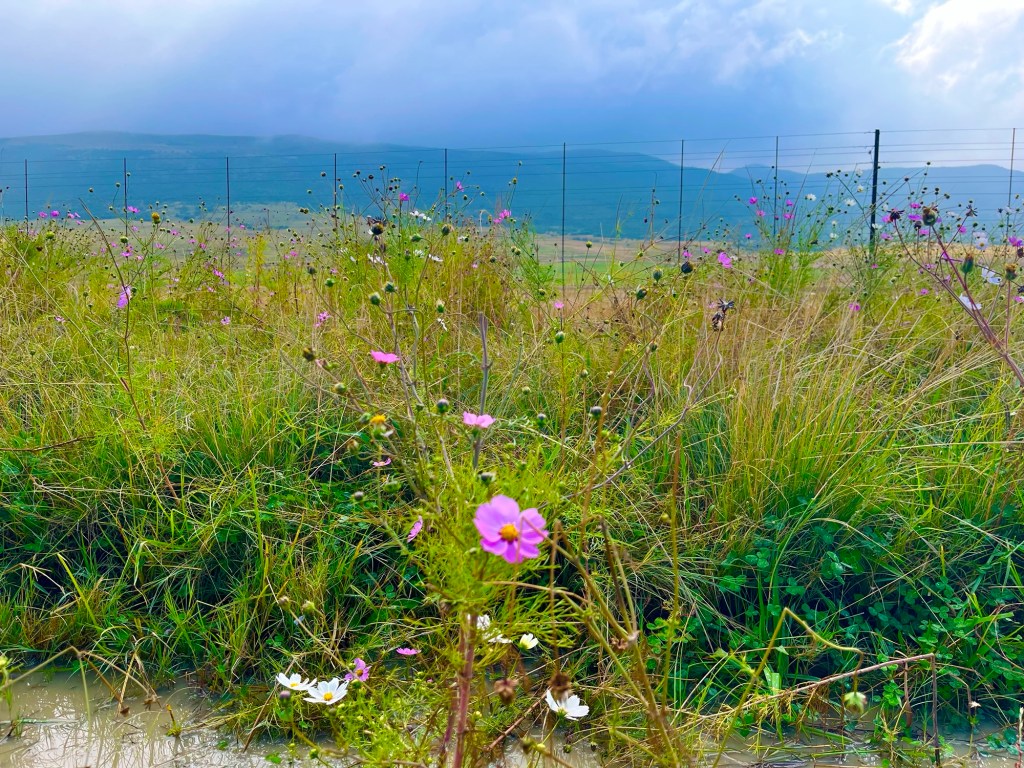
I recently drove through rural South Africa on my way to a school reunion—one of those rare gatherings where time folds in on itself and five decades seem like yesterday. The landscape should have been familiar: wide horizons, scattered farmsteads, towns that once pulsed with industry. But what struck me most was not recognition—it was absence.

Roads pitted with potholes slowed the journey, but it was the towns that told the deeper story. Buildings sagged under neglect. Shopfronts stood empty or half-occupied. Once pristine and well-kept, towns seemed to have been abandoned to time. This was not just decay. It was a withdrawal. A slow draining away of people, energy, and purpose.

In my hometown of Dundee in KwaZulu-Natal alone, the closure of a sweets factory, a glass plant, and several coal mines has, over the years, stripped away thousands of jobs. At the reunion, I learned that the impact reached even further: a steelworks in the neighbouring town of Newcastle had also shut down, costing another 3,000 livelihoods.

And this is not a uniquely South African story.

Across the United States, the United Kingdom, Spain, and Germany, I have witnessed similar patterns unfold. Rural communities hollow out as younger generations leave in search of education, employment, and opportunity in cities. What remains are aging populations, shrinking tax bases, and a fraying social fabric. The causes are well documented—economic centralization, mechanization of agriculture, the pull of urban opportunity—but the consequences run deeper than statistics.

Dislocation Without Language

For those who leave, the move to the city often brings material improvement: better jobs, better services, broader networks. But something less tangible is lost.

Rural life, at its best, offers continuity. It binds identity to place. You are not just an individual; you are someone’s neighbor, someone’s history, part of a shared narrative that stretches across generations. When people leave, that continuity fractures.

In cities, identity becomes more fluid—but also more fragile. Relationships are often transactional, time-bound, and contingent. Community must be constructed rather than inherited. For many, this produces a subtle but persistent sense of dislocation: a feeling of being nowhere in particular.

The question then arises: are people happier?

The answer is not straightforward. Urban environments tend to score higher on measures of economic well-being and access to services. But they also correlate with higher levels of loneliness, anxiety, and social isolation. Rural areas, despite economic hardship, often report stronger social cohesion and a greater sense of belonging—at least where communities remain intact.

So the trade-off is not simply between poverty and prosperity. It is between different forms of wealth—material and relational.

The Social Cost

When rural areas decline, society loses more than population density. It loses balance.

Healthy societies depend on a diversity of spaces: urban centers of innovation, suburban zones of stability, and rural regions that anchor culture, tradition, and food production. When one of these weakens, the system becomes distorted.

Depopulated rural areas often enter a downward spiral. As people leave, services close—schools, clinics, shops. This, in turn, makes the area less viable for those who remain, accelerating further out-migration. Political attention shifts elsewhere. Infrastructure deteriorates. Eventually, these regions become peripheral not just geographically, but economically and politically.

This has consequences for social cohesion. When large segments of the population feel left behind, trust erodes—both in institutions and in the broader social contract. The divide between “somewhere” and “anywhere” populations widens: those rooted in place versus those who are mobile and globally connected. This divide increasingly shapes political outcomes across many countries.

The Cultural Loss: Memory Without Custodians

Rural communities are not just economic units; they are repositories of memory.

They carry dialects, customs, ways of life that cannot be easily transplanted into urban settings. When these communities empty out, cultural knowledge dissipates. Traditions survive as fragments—revived occasionally for tourism or nostalgia—but lose their lived context.

What disappears is not just heritage, but a particular way of understanding the world: slower, more cyclical, more attuned to land and season. In its place emerges a more standardized, globalized culture—efficient, connected, but often detached.

Can the Trend Be Reversed?

There are attempts—some promising, many insufficient.

Remote work has reopened the possibility of living outside cities, at least for certain professions. Targeted investment in infrastructure—digital connectivity, transport, healthcare—can make rural areas viable again. Policies that support local enterprise, sustainable agriculture, and decentralized energy systems can stabilize regional economies.

More fundamentally, the question is one of value: what do we, as societies, choose to preserve?

If rural areas are seen merely as economically inefficient, their decline will continue. If, however, they are recognized as essential to social resilience, cultural continuity, and even psychological well-being, then their renewal becomes a strategic priority rather than a sentimental one.

Returning, Briefly

At the reunion, conversations drifted—as they always do—between memory and present reality. Some had stayed. Many have scattered to all parts of the world. Each carried a different version of the same story.

Driving back, the landscape remained unchanged. But the question lingered:

What happens to a society when its margins begin to disappear?

Not all decline is reversible. But not all loss is inevitable either.

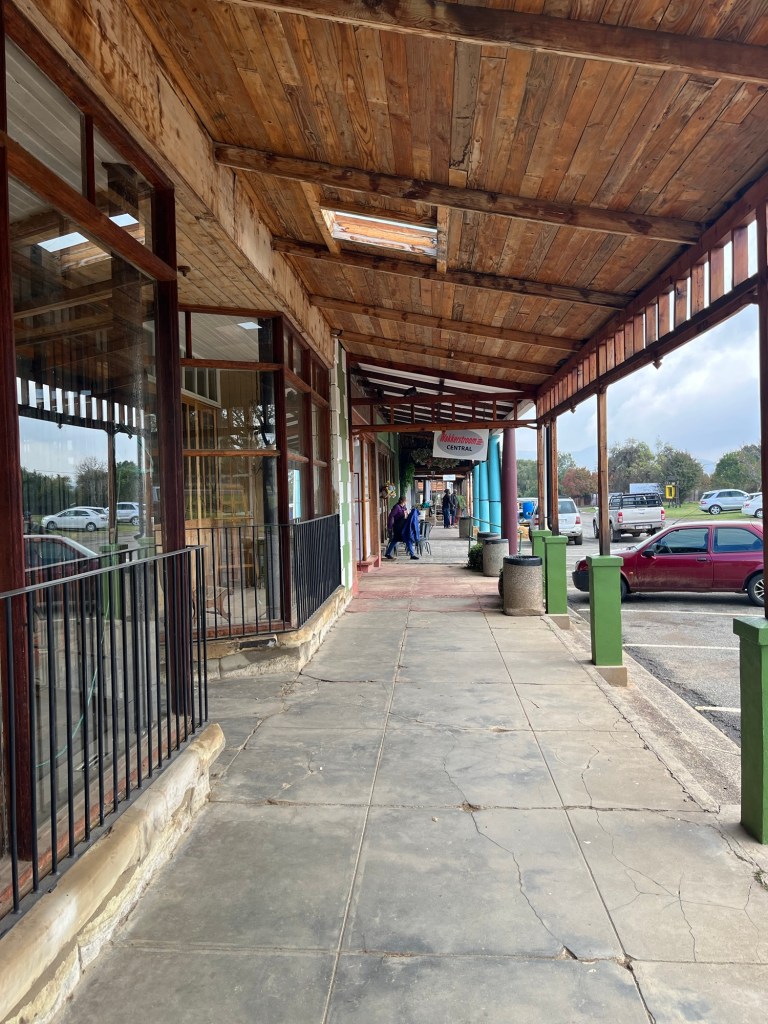
A welcome spark of hope on my return journey came with a stop in the village of Wakkerstroom. This rural gem has been thoughtfully revived: old homes and shopfronts carefully restored, now housing curios, excellent local food, and gateways to nature. It has become a magnet for artists and for those seeking a return to the sanctuary and sense of community that rural life can still offer.

Wakkerstroom
Rural KwaZulu Natal

The condition of rural places is not just a reflection of economic trends—it is a mirror. It shows us what we prioritize, what we neglect, and ultimately, what we are willing to let go.

And perhaps the more uncomfortable question is this:

In our pursuit of better opportunities, have we mistaken movement for progress—and in doing so, lost something we do not yet know how to measure?

Reino Gevers – Host of the LivingToBe podcast

P.S: If you enjoyed this article you might be interested in reading: Sages, Saints and Sinners Get it today on Amazon, Barnes & Noble and where all good books are sold.
Leave a comment

Filed under happiness, happiness research, mental health

When the Crowd Roars: Why Independent Thinking Matters

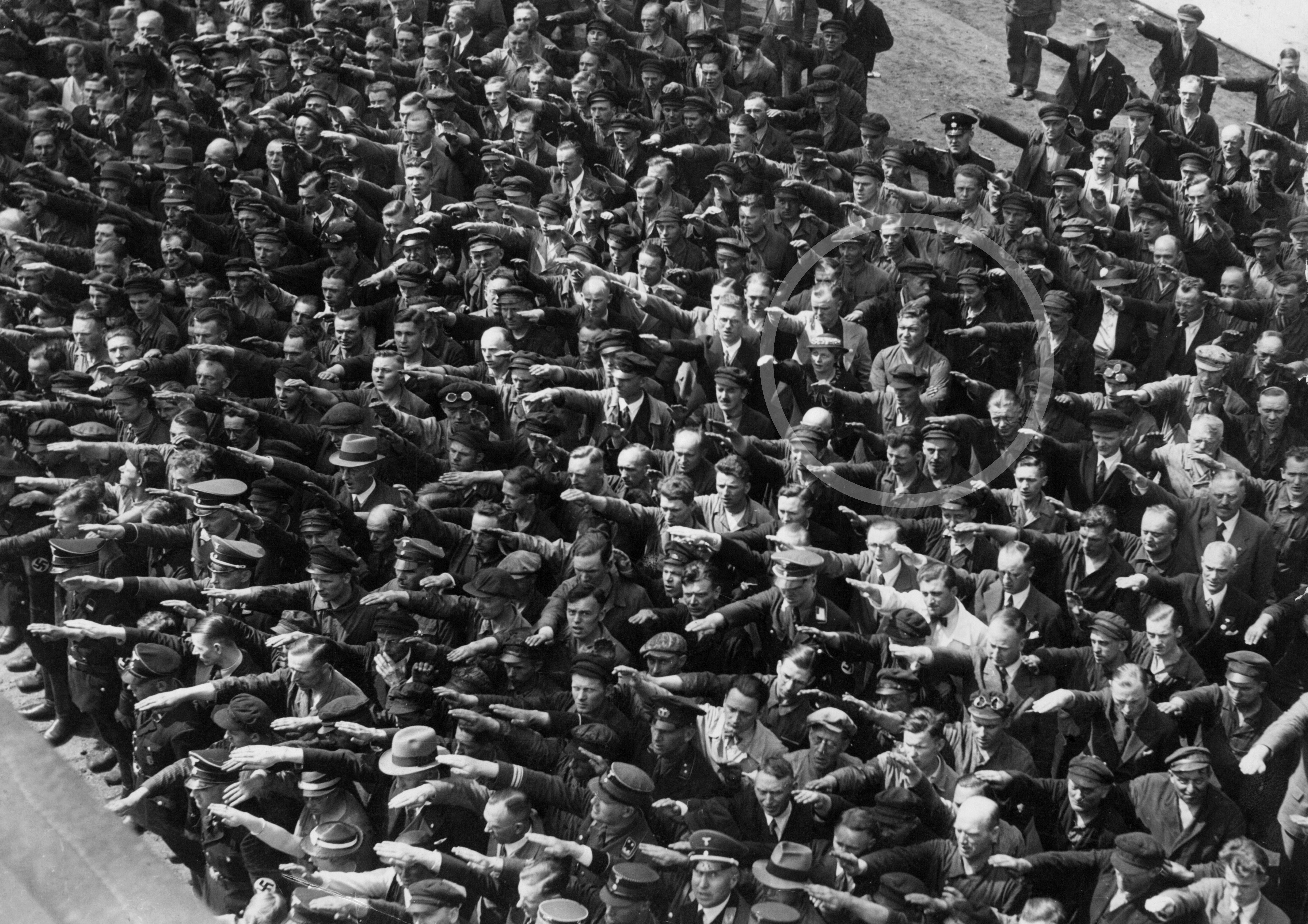
There is a single man standing with his arms crossed in defiance while surrounded by a sea of German dockworkers raising their arms in the Nazi salute. The image was taken on 13 June 1936 in the port of Hamburg and rediscovered decades later, in 1991, when it quickly spread around the world.

The man was later identified as August Landmesser.

The occasion was the launch of a naval training vessel attended by Adolf Hitler—a ceremony designed to project unity, obedience, and ideological conformity. Against this backdrop, Landmesser’s refusal to salute stands out as an act of rare moral clarity. It was a small gesture, almost understated, yet it carried immense personal risk—and ultimately, tragic consequences.

The individual who stood against the crowd

Landmesser’s story is not one of abstract heroism but of lived contradiction. He had joined the Nazi Party in 1931, reportedly to secure employment. Yet his life took a decisive turn when he fell in love with Irma Eckler, a Jewish woman.

Under the racial laws of the regime, their relationship was forbidden. He was expelled from the party. Still, they remained together and had a daughter in 1935. Their refusal to separate led to their arrest in 1938. Landmesser was imprisoned, later conscripted into a penal military unit, and is believed to have died in action. Eckler was deported and murdered in the Ravensbrück concentration camp in 1942.

Seen in this light, the photograph is no longer simply symbolic—it is deeply personal. Landmesser’s defiance was not ideological theatre. It was the visible expression of a man whose life had already been shattered by the system he refused to endorse.

The individual mind versus the herd mind

The image endures because it captures a perennial tension: the individual conscience set against the force of the collective.

Crowds possess psychological gravity. Individuals who, in isolation, might act with restraint and judgment can become unrecognizable when absorbed into a mass. We have seen modern echoes of this dynamic in events such as the January 6 United States Capitol attack, where ordinary citizens were swept into a collective surge that overrode personal responsibility.

Western societies place a high value on individual freedom and self-expression. Yet beneath this, there often lies a spiritual disconnect that makes the pull of belonging all the more powerful. Identification with political movements, brands, cultural tribes, or even sports teams can take on a “religious” intensity. The need to belong can, under certain conditions, eclipse the capacity to think.

When consciousness gives way to the collective

The Swiss psychiatrist Carl Gustav Jung, who studied the psychological undercurrents of totalitarianism, drew a sharp distinction between the individuated mind and what he termed the collective unconscious.

He warned that as groups enlarge, consciousness tends to diminish. The ethical and reflective capacities of the individual are diluted, replaced by something more primitive, more reactive. In his words, the psychology of large crowds tends to descend to a more instinctual, even “animal” level. What emerges is not an elevation of shared wisdom, but often a regression into emotional contagion.

This is not merely a historical observation. It is a recurring human pattern.

The modern amplification of the herd

We are living through a period of accelerated change where vigilance and discernment are no longer optional—they are essential.

The digital ecosystem has intensified the dynamics Jung described. Large segments of mass media and social platforms no longer function primarily as vehicles of information, but as engines of emotional activation. Content is optimized not for truth, but for engagement—often by triggering fear, outrage, or tribal loyalty.

Distortion, simplification, and conspiracy narratives thrive in such environments. The line between information and manipulation has become increasingly blurred.

There are early indications that major platforms are beginning to acknowledge their role in this landscape. But structural incentives remain largely unchanged.

A practical line of resistance

Landmesser’s gesture invites a question that is as relevant now as it was then: what does it take to remain inwardly independent in the face of collective pressure?

A useful starting point is deceptively simple:

When you encounter a piece of information that provokes an immediate emotional reaction—pause.

Ask yourself:

  • What is the source of this reaction?
  • What intention might the communicator be pursuing?
  • Does this information serve clarity—or does it seek to agitate?

These questions create a small but decisive space between stimulus and response. In that space, the individual mind can reassert itself.
Sometimes it simply takes courage to refuse to roar like the crowd, to stand still, and refuse to follow.

Reino Gevers – Host of the LivingToBe podcast

P.S: If you enjoyed this article you might be interested in reading more in “Deep Walking for Body, Mind and Soul” published by Morgan James, New York. Get it today on Amazon, Barnes & Noble and where all good books are sold.

Leave a comment

Filed under psychology, purpose, religion

2026: Finding Meaning in Uncertain Times

At the start of a New Year, we find ourselves living in a time of heightened global tension. Multiple conflicts, political instability, and rapid social change have left many people feeling uncertain, anxious, and unmoored.

The quote: „We are living in interesting times,“ often attributed to the British statesman Sir Austin Chamberlain in the 1920s, encapsulates what many feel today.

The Changing World Order

I recently delved into the book by Ray Dalio „The Changing World Order – Why Nations Succeed and Fail.“

He analyzed why nations appear to follow recurring long-term cycles of growth and decline driven by economics, politics, and human nature.

Seen through a spiritual and moral lens, Ray Dalio’s message is less about markets and the decline of empires but more about the inner condition of a society.

Why nations rise and fall

Nations rise when they cultivate humility, discipline, fairness, and responsibility. Education and science is one of the keys to successful economies. But along with technical skill comes the moral formation; productivity flows from a shared sense of purpose, common values and trust.

Money is a reflection of values: when wealth is earned through contribution, innovation, and stewardship, it strengthens the whole.

Decline begins when a nation forgets its limits and loses its moral compass. Excessive debt mirrors spiritual debt—living off tomorrow rather than honoring today. Inequality widens when the common good is replaced by self-interest. Arrogance replaces gratitude; entitlement replaces service.

The decline begins when institutions are hollowed out not only because of bad policy, but because of character and moral erosion.

Internal conflict grows when people lose a sense of shared belonging. The “other” becomes an enemy rather than a neighbor. From a moral standpoint, this is the deepest danger: separation from one another and from transcendent meaning.

History shows that societies disintegrate when power is pursued without wisdom, and freedom without responsibility.

External conflict revealing a deeper crisis

External conflict, in Dalio’s cycle, reflects a deeper spiritual struggle: fear versus trust. Rising powers test declining ones not only materially, but morally. Violence and domination appear when dialogue, humility, and restraint have already failed.

But cycles also imply renewal. Collapse is not punishment but karmic consequence. Societies can realign when they recover timeless virtues such as truthfulness, stewardship, compassion, and reverence for what is larger than the self.

In spiritual terms, Dalio’s insight echoes an ancient teaching:

What a nation gains by losing its soul is never truly wealth and what it saves by recovering its soul can outlast empires.

In this liminal season of transition, we are called to clear the waters clouded by deception, obfuscation, and endless distraction. The longing for truth is no longer abstract; it has become a spiritual and human necessity—quite literally, a matter of survival.

Reino Gevers – Host of the LivingToBe podcast

P.S.: If you enjoyed this article, you might be interested in my latest book, Sages, Saints, and Sinners. Get it today on Amazon, Barnes & Noble, and wherever good books are sold.

Leave a comment

Filed under psychology, purpose, spirituality, Uncategorized

Your Superpower in a Loud Society

Knowing yourself is the beginning of all wisdom.”— Aristotle

Standing guard at the doorway of your mind has become essential to maintaining spiritual and mental health in an age where our minds are drowning in information but thirsting for wisdom.

What you feed your mind, you ultimately become. A few careless minutes scrolling on your smartphone can trigger a cascade of emotions that can shape your entire day.

If you are reading this, you are likely one of the few who is actively reflecting on what is happening to us collectively.

Conflict and social disruption will always be part of the human condition—we are imperfect beings, after all. But we also carry within us the profound power of choice.

When the fringe becomes the megaphone

My impression is that the darker impulses of humanity are being amplified through the very technology meant to connect us. Fanatical fringe groups and those consumed by malice spend countless hours attacking others with hate-filled messages. Social media companies do little to halt this simply because emotionally charged content fuels engagement—and engagement fuels profit.

We may believe we are in control of what enters our minds, but for most people this is not true. Social media and search engine algorithms quietly track our behavior and serve up the content we are most likely to consume. In doing so, they shape not only our preferences, but our thinking.

Echo chambers of belief

Beliefs and opinions are constantly being reaffirmed within separate realities—information bubbles where each group hears only the echoes of its own worldview. Families, friendships, communities, and even congregations are fracturing along these invisible but powerful dividing lines.

What we need is a collective pushback from the quiet majority: the rational, thoughtful, grounded people who do not fall for emotional manipulation. That resistance begins by asking simple but profound questions:

Is this information expanding my energy or diminishing it?

Is it helping me grow, evolve, and reach my full potential?

A common misconception is that knowledge, information, and education alone equal wisdom. Yet many highly intelligent people refuse to learn from their mistakes, cling to fixed mindsets, and resist deeper reflection—never realizing they have been backing the wrong horse all along.

The power of who and what you surround yourself with

True wisdom is innate knowledge shaped through experience. It is the quiet confidence of intuition and higher consciousness. When you choose to surround yourself with wise friends, nourish your mind with spiritual teachings, and seek guidance from grounded mentors, you naturally grow in wisdom.

Equally essential is practicing self-care by setting firm boundaries with people, media, and environments that deplete your mind, body, and soul. Self-care is not indulgence—it is alignment. It is taking time for silence, contemplation, and reconnection with your inner life.

Choosing this path gradually fills your life with greater happiness and contentment because you begin building a bridge to your soul. Your actions shift from serving the ego to serving the greater whole.

Reino Gevers – Host of the LivingToBe podcast

P.S.: If you enjoyed this article, you might be interested in my latest book, Sages, Saints, and Sinners. Get it today on Amazon, Barnes & Noble, and wherever good books are sold.

Leave a comment

Filed under meditation, mental health, psychology, purpose, spirituality, Uncategorized

From Burnout into Becoming who you really are

Have you ever felt like you’re just running on empty, and feeling emotionally exhausted that comes from carrying too much, too often, and for too long? You’re not alone.

At some point, most of us find ourselves stuck in the burnout spiral by juggling responsibilities, absorbing too much information on social media, and feeling the quiet weight of stress pressing in from every side. It’s easy to lose your sense of calm, purpose, and energy when overwhelm takes hold.

You might feel disconnected from what is ultimately your journey into becoming who you really are.

But here’s the truth: You don’t need a dramatic life reset to feel better.
Small, intentional steps can help you rebuild your energy and resilience. Doable practices that can help you restore your strength from the inside out.

Acknowledge the Overwhelm

“Let’s start with honesty: Are you constantly running on empty?” The difference between normal stress vs. chronic overwhelm. Common sources: caregiving, decision fatigue, emotional burnout, information overload.

The Science

The body has a natural defence mechanism when under duress. The hormone cortisol puts you into fight, flight or freeze mode. Your breathing becomes fast and shallow as all your senses go into survival mode. Your cognitive functions, the ability to find creative solutions is impaired. At the same time all your vital body organs do not get the nutrients they need, steadily breaking down your immune system. We are simply not designed to cope with permanent stress over long periods of time.

Common misconceptions on building resilience

A common misconception about building resilience is to “toughen it out.” But it’s not about swimming against the tide and bouncing back as before. It’s more about integrating the experience and adapting accordingly.

Micro-Shifts That Build Strength

Simple routines and mind habits can restore control. Your intuition will tell you that you are not aligned if what you are doing is inevitably causing fatigue and exhaustion. Learning to say „no“ and setting healthy boundaries to people who deplete your energy takes practice. Pause for a moment and breathe before reacting. In this way you are building space between stimulus and response.

The Role of Faith and Belief

Integrating faith can be pivotal in providing an anchor of guidance during stormy times. It could be a morning meditation or prayer that aligns you with your authentic self. Several studies have confirmed that taking a walk in the green and blue spaces of nature and opening the senses to the sights, sounds, and smells of nature reduces the stress hormones in your body significantly.

Building a Resilience Toolbox

Stress is not necessarily harmful. It can help you focus on the task at hand. But too much of it is harmful. The key is finding a good sprint and recovery system. Practices such as breathwork, walks in nature, digital breaks, gratitude reflection and nurturing positive relationships are just some examples. What and who grounds you? Mental reframing: “Is this pressure pointing to a shift I need? What is life throwing at me from which I can learn?“ You can ask for help without guilt. Learn to sit with discomfort without shutting down.

What’s one small choice you can make this week to calm the overwhelm? It could be a simple question such as: “When I feel overwhelmed, I want to remember…”

Reino Gevers – Author – Mentor –Speaker

P.S.: If you enjoyed this article, you might be interested in my latest book, Sages, Saints, and Sinners. Get it today on Amazon, Barnes & Noble, and wherever good books are sold.

Leave a comment

Filed under exercise mental health, stress, stress hormones, Uncategorized

Art as a Lens: Exploring History and Human Experience

Great artists possess the rare ability to pierce through the veil of the ordinary, revealing the deeper truths that lie beneath life’s surface. In times when power distorts reality and fear stifles truth, their work becomes a courageous act of revelation.

A few days ago, I was vividly reminded of this while visiting the Tate Britain gallery in London. Entrance to most of London’s famous galleries is free, and it’s a great way to spend a few quiet hours in a big city.

I was particularly struck by the works of the late 17th and 18th centuries. The expanding British Empire was marked by conflict, built by the sacrifices of soldiers and the toil of slaves and factory workers. Child labour was common, and women were condemned to giving birth and running the household.

Subtle hints beneath the surface

Artists were often commissioned to glorify the king and the empire, yet beneath the surface of landscape paintings, market scenes, and depictions of mixed-status couples, subtle traces of class divisions and social tensions quietly emerge.

The tumultuous times of the late 18th and 19th centuries, along with global wars, came at a huge cost, marked by massive taxation for ordinary people, widening wealth gaps, poverty, and unemployment. Artists responded by painting dramatic battle scenes or images that either evoke a Romantic past or feelings of awe and terror.

Art and spirituality

Much of religious art was commissioned by monasteries in medieval times to convey the gospel because most people were illiterate. In contemplation of the art, the individual had a unique gateway to experiential spirituality.

Apocalyptic imagery from the Book of Revelation reflects the deep anxieties of a time when rapid technological and social upheaval left many feeling unmoored. Long-held certainties, norms, and values were beginning to crumble. In many ways, these ancient fears echo our own and mirror the disruptions in today’s world.

Artists sensing underlying tensions

Major social and political shifts are often preceded by conflict and upheaval. Artists sense these underlying tensions long before they burst into the open ,but also give some cues to a brighter future.

Art offers us a unique lens through which to view the past, revealing not just historical waymarkers but the deeper rhythms of human experience.

History moves in cycles. Out of hardship and resilience emerges renewal and growth, only to give way once more to seasons of disruption and decline. Yet, from each winter of decay, a new spring is born, reminding us that regeneration is woven into the very fabric of life.

Reino Gevers – Author – Mentor –Speaker

P.S: If you enjoyed this article you might be interested in my very latest book: Sages, Saints and Sinners Get it today on Amazon, Barnes & Noble and where all good books are sold.

Leave a comment

Filed under art, Uncategorized