Tag Archives: religion

The Lost Art of Stillness: Awakening Your Inner Self

In an age shaped by scrolling screens and shrinking attention spans, something profound is happening beneath the surface. Recent studies suggest that nearly two-thirds of young people struggle to remain engaged with content lasting longer than a minute. Yet, paradoxically, this same generation is searching intensely for meaning, transcendence, and spiritual grounding. The hunger for depth has not disappeared. If anything, it has become more urgent.

The difficulty is that our modern world is designed for speed rather than contemplation. We are conditioned to expect instant answers, simplified narratives, and constant stimulation. But the deepest truths of existence cannot be reduced to sound bites or algorithms. Mystery does not reveal itself in haste.

The ancient mystics understood this well. They approached the human soul with reverence, knowing that the divine cannot be encountered amid endless distraction and noise. The sacred unfolds quietly. Only in silence, solitude, and contemplation does the veil begin to lift, allowing fleeting glimpses of a reality greater than yourself.

As the 14th-century mystic Meister Eckhart wrote:

Nothing in all creation is so like God as stillness.”

Those words may be more relevant now than ever before.

You did not arrive here by accident. Your very existence is astonishingly improbable. Consider how different your life might have been had you been born in another country, another culture, another language, another body, or another century. None of those things were within your control. And yet, within the boundaries of circumstance, you have been given the extraordinary freedom to choose how you respond to life.

Your external conditions shape you, but they do not define the deepest essence of who you are.

It is by fully entering the depth of life’s journey that you awaken to purpose, resilience, and meaning. But this awakening becomes difficult when the mind is continually fragmented by external distraction. Much of the anxiety and emotional exhaustion of modern life emerges from this loss of alignment — a growing disconnect between the soul and its deeper calling.

We lose ourselves when we settle for the illusion of safety in mediocrity, silencing the inner voice that calls toward courage, creativity, and transformation. In doing so, there is a drift away from the very source of vitality.

Nature has always offered a path back.

The silence of mountains, forests, rivers, and open skies reveals something ancient and expansive. Birdsong, wind through trees, flowing water — all of it speaks of an intricate web of interconnectedness that modern life often obscures. In nature, you are reminded that you belong to something far greater than your schedules, anxieties, and ambitions.

It is no coincidence that many of humanity’s sacred places are found in forests, caves, deserts, and mountain summits. Nature slows our breathing, quiets stress, restores attention, and gently reconnects you to the rhythm of being itself.

Perhaps this is why time spent in nature often feels less like escape and more like remembrance.

To live well is not merely to chase future goals or external validation. It is to recover the lost art of presence — to live not only to achieve, but Living to BE.

And perhaps, in the stillness that you so often avoid, you may rediscover the deeper purpose for which you were born.

Reino Gevers – Host of the LivingToBe podcast

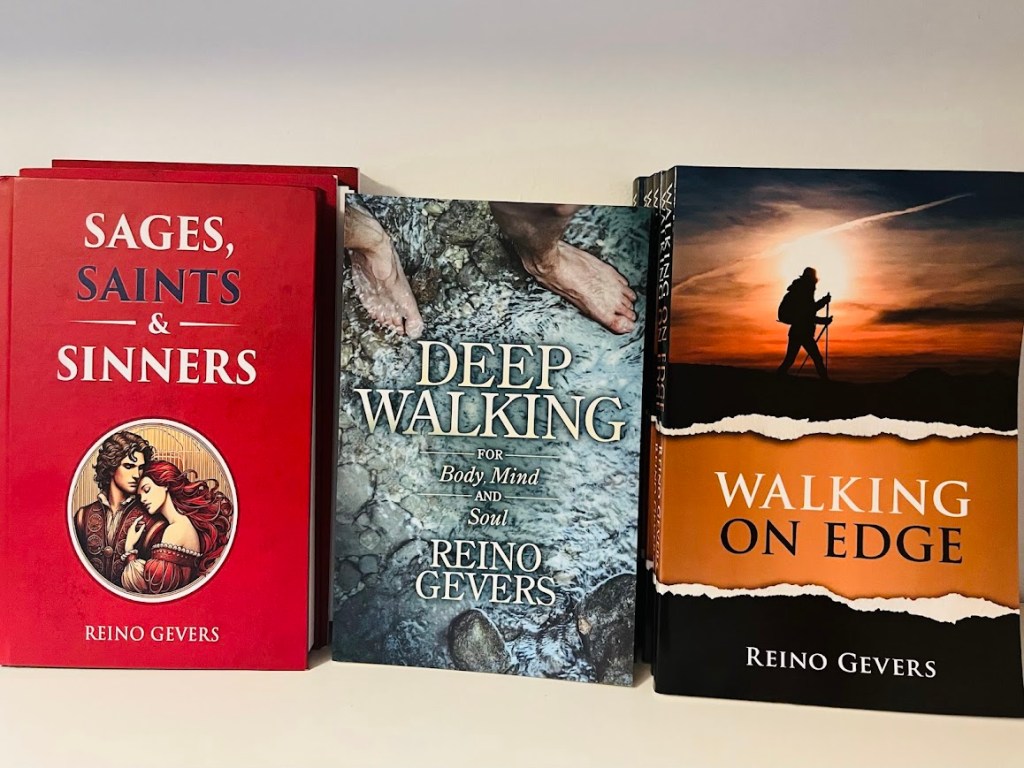
P.S: If you enjoyed this article you might be interested in reading: Sages, Saints and Sinners Get it today on Amazon, Barnes & Noble and where all good books are sold.

Leave a comment

Filed under meditation, psychology, spirituality

Finding Spiritual Connection in Modern Society

Last week, we reflected on what is lost when people leave their village, their small town, and the familiar rhythms of communal life. Across the modern world, millions have moved toward cities in search of opportunity, freedom, and economic survival. Yet in the process, something profound has often been left behind.

Life in cities can be exciting and liberating, but it is also frequently anonymous. One can live among millions and still feel unseen. Modern urban life often disconnects people from land, ancestry, ritual, and the shared memory of community. Relationships become fragmented and transactional. The old structures that once held human life together slowly weaken.

In villages and rural communities, identity was traditionally formed through belonging. A person was known not only by occupation, but by family, neighbourliness, participation, and place. There were rhythms to life: births, marriages, funerals, feast days, seasons of mourning, prayer at certain hours, bells ringing across a valley at dusk. Human beings lived within a larger story.

Research into the so-called Blue Zones — regions of the world where people consistently live longer and healthier lives — reveals something deeply important. Longevity is not simply linked to diet or exercise. It is also connected to a healthy social network, purpose, ritual, intergenerational connection, and spiritual belonging. In many of these communities, faith and communal life remain deeply intertwined.

Historically, the church stood at the center of this communal structure. Whatever its failures — and history certainly contains many — churches often provided sanctuary during times of grief, illness, uncertainty, and poverty. Sacred spaces gave language to suffering and meaning to mortality. The repetition of prayer, liturgy, candle-lighting, silence, chanting, kneeling, and ritual anchored people psychologically and spiritually.

Today, in much of the Western world, institutional religion has lost moral authority for millions of people. Financial scandals, abuse, political entanglement, shaming, and rigid dogmatism have left deep wounds. Many have walked away from organized religion altogether.

Yet the deeper human hunger has not disappeared.

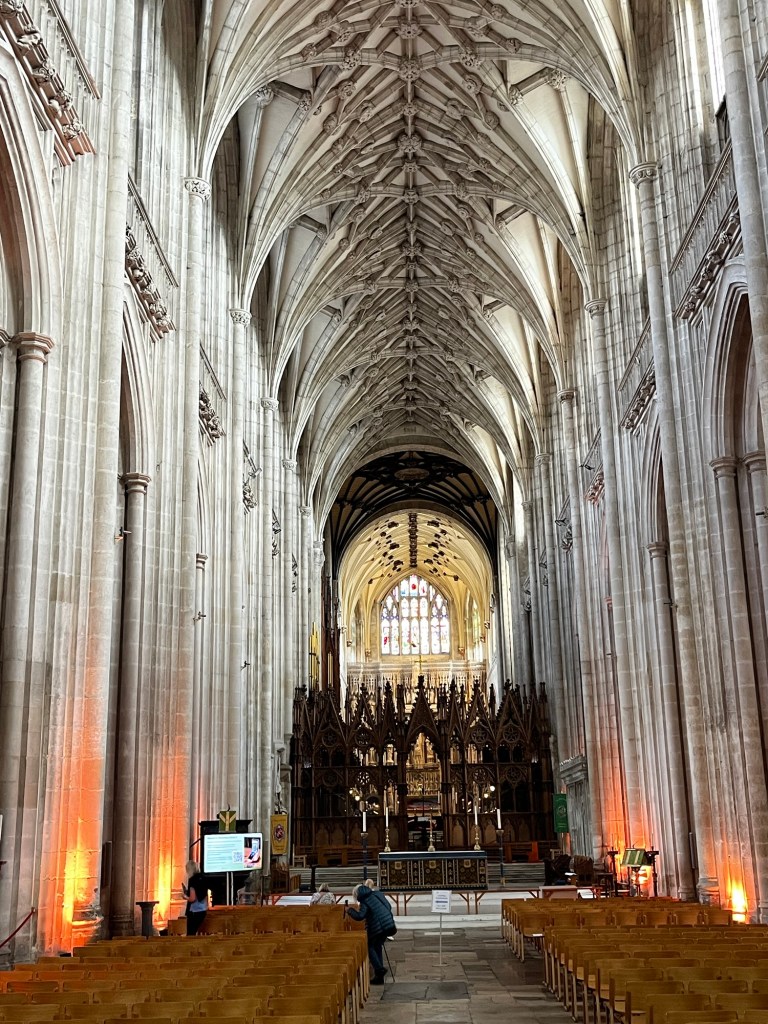
People continue searching for meaning, transcendence, stillness, and connection. Even those who no longer identify as religious are often drawn toward pilgrimage routes, monasteries, ancient cathedrals, contemplative prayer, meditation, sacred music, or moments of silence in old churches. Something within the human spirit still longs for an encounter with the mystery of the divine.

The medieval Christian mystic Meister Eckhart once wrote:

“The soul grows by subtraction, not by addition.”

It is a remarkable insight for our age of endless stimulation and accumulation. Modern life constantly tells us to consume more information, more possessions, more experiences, more noise. Yet many people remain inwardly exhausted and spiritually empty.

Ritual and contemplative practice offer another path.

When prayer is repeated daily at a particular hour, in a sacred place, with intention and rhythm, it slowly becomes embedded in consciousness. Over time, the body itself begins to remember stillness. Ritual becomes less about performance and more about orientation. It provides structure when life feels chaotic and uncertain.

Modern neuroscience increasingly confirms what ancient spiritual traditions long understood intuitively: repetition calms the nervous system. Sacred ritual regulates emotional states. Silence and contemplative practice can reduce anxiety and restore psychological balance. The body responds to rhythm, breath, chant, and sacred attention.

But perhaps the deeper issue is existential rather than merely psychological.

A life disconnected from spiritual depth can begin to feel strangely hollow. Human beings do not live by productivity and consumption alone. Usually in moments of crisis or solitude, deeper questions emerge.

What happens when life ends?

What is the soul?

What gives suffering meaning?

What remains when certainty collapses?

These questions often arrive quietly — at three in the morning, during illness, after loss, while sitting beside a hospital bed, or in the strange silence that accompanies aging. Technology cannot answer them. Wealth cannot remove them. Distraction only postpones them.

Perhaps this is why sacred places, like walking ancient pilgrimage routes, still matter.

Even now, many people instinctively lower their voices when entering an ancient church or monastery. Something within us recognizes sacred space before the intellect has framed it. In the lighting of a candle, the sound of distant bells, or the quiet repetition of prayer, we remember something modern life easily forgets:

You are not just an economic creature.

You are also a spiritual being searching for meaning, belonging, and connection to something greater than yourself.

Reino Gevers – Host of the LivingToBe podcast

P.S: If you enjoyed this article you might be interested in reading: Sages, Saints and Sinners Get it today on Amazon, Barnes & Noble and where all good books are sold.

Leave a comment

Filed under Uncategorized

Does God Punish Humanity? Lessons from the Black Death and Modern Pandemics

When disaster strikes on a massive scale, people instinctively ask the same ancient question:

Is this God’s judgment?

It is a question that has echoed throughout human history.

In the 14th century, as the Black Death swept across Europe, entire populations believed they were witnessing divine punishment. Churches filled with desperate prayers. Some people turned toward deeper faith. Others lost their faith entirely.

Centuries later, during the COVID-19 pandemic, that same question quietly resurfaced.

What happens to faith when the world believes God’s judgment has arrived?

Fear, Faith, and the Flagellants

During the Black Death, fear spread as quickly as the disease itself. Many believed the plague was a punishment for humanity’s sins.

Across Europe, bands of penitents known as flagellants marched from town to town, whipping themselves in public acts of penance. They believed that if humanity suffered enough, God might show mercy.

Crowds gathered to watch them.

Some saw them as holy reformers.

Others saw them as dangerous fanatics.

It was faith under extreme pressure.

The Quiet Courage of Compassion

Yet there was another response to the plague.

While many fled cities in terror, others stayed behind to care for the sick and dying. Monks, nuns, and priests often remained when everyone else ran.

Historians estimate that in some regions nearly half the clergy died while caring for plague victims.

For these people, faith did not mean explaining suffering.

Faith meant standing beside those who suffered.

When Catastrophe Shakes Belief

But the plague also shook belief at its foundations.

People began asking difficult questions:

  • Why would a loving God allow such devastation?
  • Why did the devout die alongside the corrupt?
  • Why did prayers not stop the disease?

These questions gradually reshaped Europe’s intellectual landscape, eventually contributing to major religious transformations, including the Protestant Reformation.

Faith did not disappear.

But it began to evolve.

How Faith Responds to Crisis

History shows that when a catastrophe strikes, faith often moves in three different directions.

Some people become more rigid and fearful, searching for certainty in times of chaos.

Others lose faith entirely, unable to reconcile suffering with belief in a loving God.

And some discover a deeper, quieter faith—one rooted not in easy answers, but in compassion, humility, and solidarity with others.

What Did Jesus Say About Suffering?

In the teachings of Jesus Christ, suffering is rarely presented as punishment directed at specific individuals.

Instead, suffering often becomes an invitation to reflect on how we live and how we treat one another.

The focus shifts away from blame and toward compassion, mercy, and moral transformation.

The Inspiration Behind Sages, Saints and Sinners

These were the questions that fascinated me when I began writing my historical novel Sages, Saints and Sinners.

I wanted to explore what happens to ordinary people when the world around them collapses and they believe that God’s judgment has arrived.

In many ways, the questions raised during the recent pandemic helped inspire that exploration.

Set during the Black Death, Sages, Saints and Sinners explores love, faith, and spiritual conflict in the midst of an existential crisis.

What do people hold onto when everything begins to collapse?

The novel tells a story of faith, doubt, and forbidden love in a time when many believed the end of the world had come.

If these questions intrigue you, you may enjoy the novel that grew out of them.

Sages, Saints and Sinners is available on Amazon, and all good bookshops.

What Pandemics Reveal About Us

History reminds us that pandemics do more than challenge our health.

They challenge our beliefs.
They challenge our assumptions.
And they challenge our understanding of God.

Perhaps the deepest question is not whether suffering is punishment.

Perhaps the real question is this:

Do moments of crisis invite us to rediscover compassion, courage, and faith?

Reino Gevers – Author – Mentor –Speaker

P.S: If you enjoyed this article you might be interested in reading: Sages, Saints and Sinners Get it today on Amazon, Barnes & Noble and where all good books are sold.

Leave a comment

Filed under purpose, religion, spirituality

The Spiritual Meaning of Christmas: Hope Is Born in the In-Between Time

Just because you have walked through a dark past does not mean your story ends there. Christmas carries a deep and enduring message of hope.

The ancient mystics understood that time is an illusion, teaching full presence as eternity touching the present moment.

The days between Christmas and the New Year were honoured as the in-between time where endings soften and new beginnings quietly form.

Christmas is an invitation into this holy simplicity. The birth of Christ did not take place in a palace but in an unremarkable shelter, rough with straw and shadow. Yet kings traveled great distances to kneel there and pay homage.

This is the great paradox of Christmas: divinity arrives hidden in the ordinary. Love reveals itself not in grandeur, but in humility. The sacred is often found exactly where you least expect it.

In this season, you are gently reminded of your own worth. You are worthy of love. You can learn to love yourself, even the parts shaped by fear and survival. When you dare to face your fears with compassion, you begin to gather the tools for healing and growth. Peace is uncovered from within.

The Christmas story is also a story of clearing space. The stable had to be emptied and prepared to receive new life. In the same way, this season invites you  to release old entanglements, to lay down burdens that are no longer of service, and to allow the soul to breathe.

As you learn to care for yourself with gentleness, you become more capable of caring for others in the wider human family. 

This is the quiet miracle of Christmas: when love is born within, it radiates outward, warming a broken world in need of hope.

Reino Gevers – Host of the LivingToBe podcast

P.S.: If you enjoyed this article, you might be interested in my latest book, Sages, Saints, and Sinners. Get it today on Amazon, Barnes & Noble, and wherever good books are sold.

Leave a comment

Filed under spirituality, Uncategorized

Finding Meaning in a Nihilistic World

Nihilism is the despair that comes when all higher meaning collapses and life is reduced to emptiness

  – Sören Kierkegaard­ –

The world sometimes feels as if it is unraveling before our eyes. Truth is no longer truth, values are mocked, and meaning itself is up for debate. Kierkegaard warned of this kind of despair and the disease that spreads when a higher purpose is abandoned. In this hollow space, populist narratives rush in, manipulating with outrage, stripping away nuance, and discarding the responsibility for a common humanity.

University of Virginia sociologist James Davison Hunter warns that a new common culture is emerging that is chillingly nihilistic. He defines this culture with the drive to destroy, observing how fear, demonization, and rigid divisions dominate political life, leaving many unable or unwilling to negotiate, compromise, or even recognize shared humanity.

“A nihilistic culture is defined by the drive to destroy, by the will to power. And that definition now describes the American nation,” Hunter writes.

Hunter points out that a politicized identity “is formed and sustained by way of negation. Its emergence as well as its persistence depend on an active and hostile enemy. What naturally follows is rage, hatred, and a thirst for “a capable and wide revenge” that, in a twisted way, becomes a source of meaning—a raison d’être—for those who see themselves as victims.”

In the same vein, Noam Chomsky emphasizes that meaning in life is built through lived experience and collective responsibility. Acts that reduce suffering, preserve dignity, or advance freedom create meaning in a world that can otherwise feel void. For Chomsky, moral clarity stems from recognizing our shared humanity and universal ethical standards, while moral responsibility entails choosing to act on them. Nihilism, despair, or relativism, in his view, are excuses that allow people to avoid this work.

He has also criticized postmodernism for being obscure, relativistic, and politically disengaged—warning that societies risk moral collapse if they lose sight of truth and responsibility.

Modern life compounds these challenges. Constant information, endless obligations, and persistent anxieties can erode spirit and energy. The solution isn’t hustling harder; it’s pausing, reflecting, and breathing deeply. It’s grounding yourself in love and acceptance, trusting that you are guided and protected by reconnecting with your spiritual self.

Recently, the words of American monk and author Brother David Steindl-Rast came to mind. He doesn’t argue against nihilism like philosophers do; he simply invites us to notice this: “It is not joy that makes us grateful; it is gratitude that makes us joyful.” Gratitude, he reminds us, doesn’t depend on joy—it creates it.

In his book Gratefulness: The Heart of Prayer, Steindl-Rast describes gratefulness as “the inner gesture of giving meaning to our life by receiving life as a gift.” It begins with simple surprise—a rainbow, a warm smile, the sound of a bird—opening the door to joy. Being thankful awakens us to the blessings around us and becomes the linchpin of a life animated by faith, lifted by hope, and nurtured by love.

In an age dominated by nihilism, gratitude is an act of resistance. It stitches meaning back into life.

Here’s a simple, actionable antidote to nihilism:

Each morning or evening, pause and reflect on three things from the past 24 hours for which you are truly grateful. Feel the gratitude fully. Notice what shifts in your heart and mind. Watch how even small moments of appreciation counteract negativity, restore meaning, and reconnect you to the life that surrounds you.

Gratitude is more than a practice—it’s a rebellion against emptiness, a return to purpose, and a daily homecoming for the soul.

Reino Gevers – Host of the LivingToBe podcast

P.S.: If you enjoyed this article, you might be interested in my latest book, Sages, Saints, and Sinners. Get it today on Amazon, Barnes & Noble, and wherever good books are sold.

Leave a comment

Filed under happiness, psychology, purpose, religion

The Sacred Principle of Diversity

There’s something quietly profound about spending time in a natural landscape that hasn’t been tamed or touched by human hands. Whether it’s in the African bush, a lonely walk in the Galician mountains, or on a mundane path in the Meseta. What strikes me every time is how life insists on diversity. Every insect, tree, bird, and creature is somehow interconnected in a grand, mysterious harmony. Nature doesn’t strive for sameness. It thrives because of its differences.

And I’ve come to believe the same is true for humanity.

Every different culture, cuisine, language, and spiritual tradition feels like a distinct fingerprint of life, carrying its own wisdom, colors, and cadence. They’re not threats to one another but complementary parts of a much larger whole.

When we try to flatten the world into one belief system, one way of being, one “truth,” we violate a deep principle embedded in creation itself.

So many of the “isms” we’ve inherited, such as nationalism, tribalism, and certain flavors of extreme patriotism, tend to dehumanize those who don’t fit neatly into the mold. When difference becomes a threat instead of a teacher, it often escalates into exclusion, oppression, and even violence.

And yet, the ancient sages and mystics remind us: under all these differences, there is unity.

The Baha’i Faith teaches that all religions stem from the same divine source, evolving like chapters in one great story of spiritual awakening with the great spiritual teachers from different religions appearing at a certain chosen time and place.

Mahayana Buddhism tells us that all beings possess Buddha-nature, regardless of the path they walk; the light within is the same.

In Christian Mysticism, creation is declared “good,” and every human made in the image of God, each of us carrying a unique spark of divine purpose. Meister Eckhart, the 13th-century mystic, wrote:

“The eye through which I see God is the same eye through which God sees me; my eye and God’s eye are one eye, one seeing, one knowing, one love.”

Another echo of this truth comes from the writings inspired by Julian of Norwich (c. 1342 – after 1416), an English woman who lived in quiet prayer and seclusion:

“Each soul is a unique expression of God’s love, as varied and wondrous as the colors in creation.”

This isn’t just theology. It’s a call to practice. A spiritual responsibility. If diversity is sacred, then how I relate to it matters. Am I listening? Am I open? Am I willing to be changed by what I don’t yet understand?

This can become a daily transformative spiritual practice:

  • What can I learn from the differences I perceive in others?
  • What is it that provokes my discomfort, anger, or fear?
  • Why am I drawn to some cultures and landscapes, and repelled by others?

These questions may serve as an invitation into a deeper clarity and humility.

In a world increasingly shaped by division, choosing to honor diversity is a form of sacred resistance. It’s a return to the original design of creation: not uniformity, but unity through difference. And when you lean into that, something holy begins to take shape both around you and within.

Reino Gevers – Host of the LivingToBe podcast

P.S.: If you enjoyed this article, you might be interested in my latest book, Sages, Saints, and Sinners. Get it today on Amazon, Barnes & Noble, and wherever good books are sold.

Leave a comment

Filed under raised consciousness, religion, spirituality

The peril of rigid belief

Throughout history, one of the most potent catalysts of conflict and war has been humanity’s deep-seated addiction to rigid concepts and beliefs, particularly those rooted in religion, ideology, and political affiliation. These mental fixations often block the path to growth, empathy, and the elevation of consciousness.

While society rightly highlights the dangers of substance addictions like alcohol and drugs, we often overlook an equally destructive force: the psychological and emotional dependence on fixed worldviews. This addiction becomes especially visible during periods of rapid social upheaval and crisis. In such times, people often cling even more tightly to their beliefs, seeking certainty in a world that feels uncertain.

At the heart of these belief systems lies a refusal to entertain alternative perspectives. Even when faced with overwhelming evidence or scientific data, those entrenched in ideological thinking will often reject reason itself. For many, admitting they might be wrong is more terrifying than death. They become prisoners of their own convictions.

Scapegoating and misinformation

The COVID-19 pandemic offered a sobering modern example. As the virus swept across the globe, so too did a parallel wave of conspiracy theories, scapegoating, and misinformation. Rational discourse was drowned out by fanaticism. In many places, especially the United States, this led to deepening political polarization and extremism. Civil debate between differing political camps has become virtually impossible.

During the lockdown, I delved into the social consequences of previous pandemics. One of the most harrowing was the Black Plague of the 14th century, which devastated Europe and left cities and countrysides empty for decades. Faced with unimaginable death, people sought easy answers. In Strasbourg, a vicious rumor claimed Jews had poisoned the water wells, leading to the massacre of the city’s Jewish population. Those who were different—whether in religion, race, or opinion—were blamed.

In my latest book, Sages, Saints and Sinners, I explore how two central characters respond to such a crisis. While some individuals rise to the occasion with compassion and courage, others descend into violence and hatred. This story, rooted in historical truth, offers a mirror to our turbulent times. I encourage you to read it as a call to self-reflection.

Just like substance addiction, ideological addiction often stems from unresolved trauma and fear. In times of economic uncertainty or personal crisis, people gravitate toward simple answers to complex problems. This is the moment when deceivers step in, offering an easy scapegoat: You are not the problem—it’s “them.” The others. The outsiders. Those who think, look, or believe differently from you.

This narrative is tragically familiar. It has fueled genocides, invasions, land thefts, torture, witch hunts, and pogroms. History is littered with the consequences of belief systems weaponized against fellow human beings.

Healing begins within

Ideological fixation poisons the mind. The path to healing begins with honest inner reflection. We must each ask:


What lies beneath my anger, my sadness, my resentment?
How can I transmute these emotions into love, compassion, and understanding?

The responsibility rests with each of us. Our highest calling and our divine purpose is to cultivate and spread love. Love that transcends division. Love that sees the humanity in all beings. Love that embraces life in its fullness.

This is the true revolution. And it begins within.

Reino Gevers – Author – Mentor –Speaker

P.S: If you enjoyed this article you might be interested in my very latest book: Sages, Saints and Sinners Get it today on Amazon, Barnes & Noble and where all good books are sold.

Leave a comment

Filed under psychology, religion, self-development, spirituality

When Life Hurts, Purpose Heals

Everything can be taken from a man but one thing: the last of the human freedoms—to choose one’s attitude in any given set of circumstances, to choose one’s own way.” Victor Frankl

In just nine days after being liberated from a Nazi death camp, Viktor Frankl poured his unimaginable ordeal into one of the most profound testaments to human resilience and the indomitable spirit ever written.

Upon his return to Vienna he found that his wife and almost entire family had died in concentration camps.

Most people would have been broken by such devastating pain, but Frankl managed to turn his suffering into a powerful pschological and spiritual mission.

His book: Man‘s Search for Meaning serves as a powerful guideline for all people currently experiencing almost insurmountable difficulties.

Frankl firmly believed that meaning can be found even in the most harsh conditions.

Purpose

Essential for Frankl was a firm belief in the Why.

Knowing your „why” helped people survive even the most brutal conditions, Frankl found. For him, it was the hope of seeing his wife again and the desire to rewrite his lost manuscript on his logotherapy psychological theory.

Detachment

He learned to detach from his suffering by focusing on memories, nature, and moments of beauty or spiritual reflection. He found that even in the camps, one could choose a different mindset—what he called the “last of human freedom.

Helping Others

As a psychiatrist, Frankl often counseled fellow prisoners, helping them find meaning and hope. This act of service gave him a sense of dignity and reinforced his own resilience.

Focusing on the Present

Frankl adapted to the harsh camp routines by focusing on small daily tasks and not letting himself be overwhelmed by fear of the future.

Belief

Recent groundbreaking studies reveal that individuals who anchor their lives in the belief in a higher power demonstrate significantly greater resilience in navigating and transforming adversity.

Evil has a persistent way of manifesting itself, sometimes infecting entire nations and societies—as seen in Nazi Germany. It can appear all-powerful, overwhelming any hope for goodness to prevail.

Yet, history shows that in the darkest hours, seeds of light and righteousness are quietly sown, preparing the way for a new dawn. Evil, by its nature, violates the deeper laws of creation. It tends to overreach—and in doing so, ultimately sows the seeds of its own destruction.

Reino Gevers – Author – Mentor –Speaker

If you enjoyed this article you might be interested in my very latest book: Sages, Saints and Sinners Get it today on Amazon, Barnes & Noble and where all good books are sold.

Leave a comment

Filed under mental health, psychology, purpose, spirituality, Uncategorized

Spiritual Resilience and Life’s Challenges

Throughout my life, I have grappled with the tension between religion and spirituality. Organized belief systems can so easily devolve into intolerance, hypocrisy, and hatred of those who look, think, or act differently. Ideology in all its forms fractures societies, breeding division and animosity.

Yet, creation thrives in diversity. God’s garden is a vibrant spectrum of colors and forms, each plant and flower enhancing the other in a harmonious beauty that can only be fully appreciated when seen in its entirety.

At its best, religion provides meaning and purpose to life. It offers solace and sanctuary during life’s most challenging moments—times of grief, loss, despair, and seemingly insurmountable obstacles.

Religion at its best and at its worst

Religion can unify communities, fostering a spirit of collective goodwill that transcends individual needs. Throughout history, faith-based inspiration has unleashed humanity’s most profound creativity in art, music, philosophy, and architecture. The masterpieces of Michelangelo, the compositions of Bach and Beethoven, and the enduring grandeur of centuries-old cathedrals and temples stand as testaments to the power of faith to inspire and elevate. At their core, all major religions share a universal message of love, compassion, kindness, and peace.

Yet, at its worst, religion has been wielded as a tool for manipulation and abuse. It has perpetuated discrimination, financial exploitation, fraud, and instilled fear and shame in innocent victims, leaving lifelong scars.

Over centuries, countless lives have been lost in wars waged over dogma, with individuals persecuted or executed for deviating from “the true gospel.” Such hypocrisy has driven millions to turn away from institutionalized and denominational religion, creating a vacuum often filled by a trash culture of alternate ideologies, political extremism, or addictions to external gratification. The consequences of this disconnection are evident in the growing epidemic of depression and spiritual emptiness.

How spirituality creates resilience against life’s challenges

Recent research highlights a significant link between spiritual belief and resilience to depression. Those who believe in a higher power are often better equipped to navigate life’s challenges, finding balance and purpose more easily than those disconnected from spiritual practice.

Experiential spirituality, unlike externally imposed beliefs, emerges as a deeply personal “knowing.” As Carl Gustav Jung famously stated when asked if he believed in God: “I don’t believe. I know.” This kind of spirituality arises intuitively, often in moments of awe—walking in nature, contemplating a masterpiece, listening to music, or engaging in creative flow.

This prompts profound questions: Is religion merely a pathway to spirituality, or is it an end in itself? Are we transitioning into a post-religious era? How can we bridge the divide between organized religion and personal spirituality to cultivate deeper, more authentic connections with the divine?

Reino Gevers – Author – Mentor – Speaker

P.S. If you enjoyed this article you will be interested in my books available where all good books are sold.
Leave a comment

Filed under meditation, psychology, self-development, spirituality, Uncategorized

Minds captured by Fanaticism

A right-wing media ecosystem fueled by resentment and anger is capturing millions of minds with a steady stream of alternate realities, stoking division, and delivering a daily narrative designed to reinforce grievance and distrust.

Social media is becoming an even more integral part of daily life, particularly for younger generations, as highlighted by Pew Research. While extremist platforms like Rumble remain smaller than giants like YouTube, they still attract millions of followers, spreading a wide array of conspiracy theories and disinformation.

Driven by a core message of fear and anxiety, these “hate entrepreneurs” pin blame for personal and collective challenges on a shifting cast of internal and external enemies, further exacerbating divisions.

Doom prophecies have long been a typical playbook of cults and populist political leaders.

It appears that once a person has invested huge time and energy resources in a particular belief, it becomes part of their identity. Even the best argument or scientific study will not dissuade the person from adopting a different perspective. They become locked in a particular mindset. Different perspectives or beliefs are radically rejected and some even turn to violent behavior to defend their mindset.

During medieval times when the black plague decimated much of the European population, rumor and superstition spread just as fast. A rumor that the Jews were responsible for the plague by poisoning water wells led to a mass pogrom in the French city of Strasbourg. About 2,000 Jews were burned alive on a platform constructed in a Jewish cemetery on Valentine’s Day in 1349.

Leon Festinger, a social psychologist, made groundbreaking contributions in the 1950s to understanding belief systems. He based much of his findings on studying a cult led by Dorothy Martin (alias Marian Keech), who claimed to receive messages from extraterrestrial beings about a catastrophic flood that would destroy the Earth on a specific date.

In some of his key findings he found that members of the cult were so committed to their belief that they abandoned jobs, loved ones and possessions in preparation for the flood. When the prophecy failed, instead of abandoning their belief, the cult members rationalized the failure by claiming that their prayers had “saved the world.”


Festinger found that cognitive dissonance was highest among those who had made the most significant personal sacrifices for the cult, doubling down on their belief and reinforcing their fanaticism.

In a digital world it becomes far easier for cults and extremist groups to maintain cohesion by withdrawing into information silos that cement beliefs such as:

  • Climate change denial
  • Vaccines are a conspiracy by the pharmaceutical industry
  • The “chemtrails” conspiracy theory posits that the condensation trails left by aircraft—are chemicals intentionally sprayed into the atmosphere for nefarious purposes. The rumor has persisted since the early 1990s despite the lack of clear scientific evidence.

Fixed belief and fanaticism ultimately creates a toxic emotional state, blending fear, anxiety, and anger. It fosters dehumanization, deepens political polarization, and fractures social cohesion.

On a personal level, it becomes a significant barrier to self-growth and spiritual evolution. In a rapidly changing world, adapting is essential for survival. Clinging to rigid beliefs not only limits personal transformation but also blinds you to the new opportunities and possibilities the universe continually offers.

Reino Gevers – Author – Mentor – Speaker

P.S. If you enjoyed this article you will be interested in my books available where all good books are sold.
Leave a comment

Filed under mass media, mental health, psychology, raised consciousness, self-development, social media, Uncategorized