Monthly Archives: May 2026

The Lost Art of Stillness: Awakening Your Inner Self

In an age shaped by scrolling screens and shrinking attention spans, something profound is happening beneath the surface. Recent studies suggest that nearly two-thirds of young people struggle to remain engaged with content lasting longer than a minute. Yet, paradoxically, this same generation is searching intensely for meaning, transcendence, and spiritual grounding. The hunger for depth has not disappeared. If anything, it has become more urgent.

The difficulty is that our modern world is designed for speed rather than contemplation. We are conditioned to expect instant answers, simplified narratives, and constant stimulation. But the deepest truths of existence cannot be reduced to sound bites or algorithms. Mystery does not reveal itself in haste.

The ancient mystics understood this well. They approached the human soul with reverence, knowing that the divine cannot be encountered amid endless distraction and noise. The sacred unfolds quietly. Only in silence, solitude, and contemplation does the veil begin to lift, allowing fleeting glimpses of a reality greater than yourself.

As the 14th-century mystic Meister Eckhart wrote:

Nothing in all creation is so like God as stillness.”

Those words may be more relevant now than ever before.

You did not arrive here by accident. Your very existence is astonishingly improbable. Consider how different your life might have been had you been born in another country, another culture, another language, another body, or another century. None of those things were within your control. And yet, within the boundaries of circumstance, you have been given the extraordinary freedom to choose how you respond to life.

Your external conditions shape you, but they do not define the deepest essence of who you are.

It is by fully entering the depth of life’s journey that you awaken to purpose, resilience, and meaning. But this awakening becomes difficult when the mind is continually fragmented by external distraction. Much of the anxiety and emotional exhaustion of modern life emerges from this loss of alignment — a growing disconnect between the soul and its deeper calling.

We lose ourselves when we settle for the illusion of safety in mediocrity, silencing the inner voice that calls toward courage, creativity, and transformation. In doing so, there is a drift away from the very source of vitality.

Nature has always offered a path back.

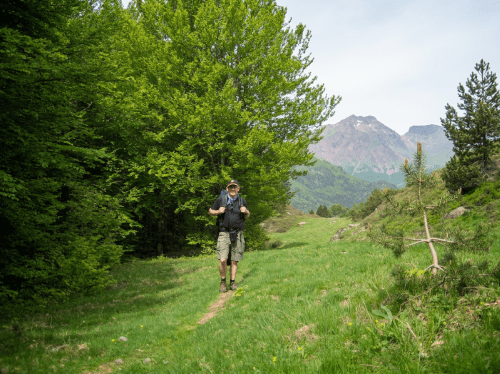
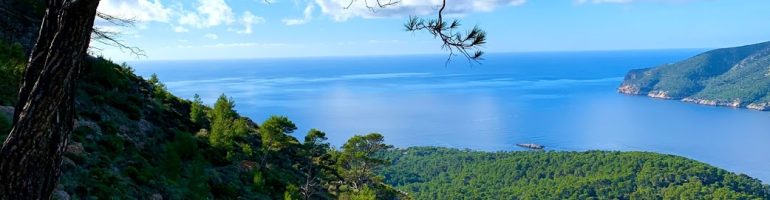
The silence of mountains, forests, rivers, and open skies reveals something ancient and expansive. Birdsong, wind through trees, flowing water — all of it speaks of an intricate web of interconnectedness that modern life often obscures. In nature, you are reminded that you belong to something far greater than your schedules, anxieties, and ambitions.

It is no coincidence that many of humanity’s sacred places are found in forests, caves, deserts, and mountain summits. Nature slows our breathing, quiets stress, restores attention, and gently reconnects you to the rhythm of being itself.

Perhaps this is why time spent in nature often feels less like escape and more like remembrance.

To live well is not merely to chase future goals or external validation. It is to recover the lost art of presence — to live not only to achieve, but Living to BE.

And perhaps, in the stillness that you so often avoid, you may rediscover the deeper purpose for which you were born.

Reino Gevers – Host of the LivingToBe podcast

P.S: If you enjoyed this article you might be interested in reading: Sages, Saints and Sinners Get it today on Amazon, Barnes & Noble and where all good books are sold.

Leave a comment

Filed under meditation, psychology, spirituality

Finding Spiritual Connection in Modern Society

Last week, we reflected on what is lost when people leave their village, their small town, and the familiar rhythms of communal life. Across the modern world, millions have moved toward cities in search of opportunity, freedom, and economic survival. Yet in the process, something profound has often been left behind.

Life in cities can be exciting and liberating, but it is also frequently anonymous. One can live among millions and still feel unseen. Modern urban life often disconnects people from land, ancestry, ritual, and the shared memory of community. Relationships become fragmented and transactional. The old structures that once held human life together slowly weaken.

In villages and rural communities, identity was traditionally formed through belonging. A person was known not only by occupation, but by family, neighbourliness, participation, and place. There were rhythms to life: births, marriages, funerals, feast days, seasons of mourning, prayer at certain hours, bells ringing across a valley at dusk. Human beings lived within a larger story.

Research into the so-called Blue Zones — regions of the world where people consistently live longer and healthier lives — reveals something deeply important. Longevity is not simply linked to diet or exercise. It is also connected to a healthy social network, purpose, ritual, intergenerational connection, and spiritual belonging. In many of these communities, faith and communal life remain deeply intertwined.

Historically, the church stood at the center of this communal structure. Whatever its failures — and history certainly contains many — churches often provided sanctuary during times of grief, illness, uncertainty, and poverty. Sacred spaces gave language to suffering and meaning to mortality. The repetition of prayer, liturgy, candle-lighting, silence, chanting, kneeling, and ritual anchored people psychologically and spiritually.

Today, in much of the Western world, institutional religion has lost moral authority for millions of people. Financial scandals, abuse, political entanglement, shaming, and rigid dogmatism have left deep wounds. Many have walked away from organized religion altogether.

Yet the deeper human hunger has not disappeared.

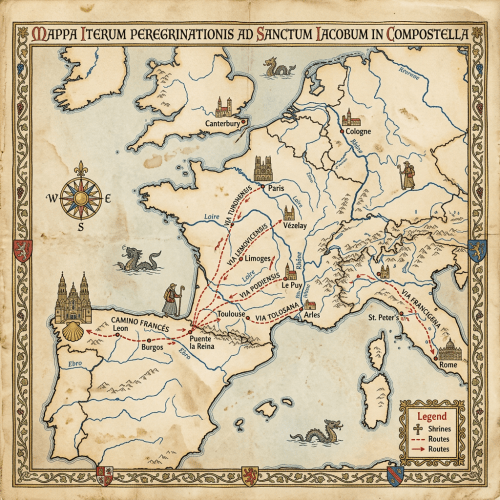
People continue searching for meaning, transcendence, stillness, and connection. Even those who no longer identify as religious are often drawn toward pilgrimage routes, monasteries, ancient cathedrals, contemplative prayer, meditation, sacred music, or moments of silence in old churches. Something within the human spirit still longs for an encounter with the mystery of the divine.

The medieval Christian mystic Meister Eckhart once wrote:

“The soul grows by subtraction, not by addition.”

It is a remarkable insight for our age of endless stimulation and accumulation. Modern life constantly tells us to consume more information, more possessions, more experiences, more noise. Yet many people remain inwardly exhausted and spiritually empty.

Ritual and contemplative practice offer another path.

When prayer is repeated daily at a particular hour, in a sacred place, with intention and rhythm, it slowly becomes embedded in consciousness. Over time, the body itself begins to remember stillness. Ritual becomes less about performance and more about orientation. It provides structure when life feels chaotic and uncertain.

Modern neuroscience increasingly confirms what ancient spiritual traditions long understood intuitively: repetition calms the nervous system. Sacred ritual regulates emotional states. Silence and contemplative practice can reduce anxiety and restore psychological balance. The body responds to rhythm, breath, chant, and sacred attention.

But perhaps the deeper issue is existential rather than merely psychological.

A life disconnected from spiritual depth can begin to feel strangely hollow. Human beings do not live by productivity and consumption alone. Usually in moments of crisis or solitude, deeper questions emerge.

What happens when life ends?

What is the soul?

What gives suffering meaning?

What remains when certainty collapses?

These questions often arrive quietly — at three in the morning, during illness, after loss, while sitting beside a hospital bed, or in the strange silence that accompanies aging. Technology cannot answer them. Wealth cannot remove them. Distraction only postpones them.

Perhaps this is why sacred places, like walking ancient pilgrimage routes, still matter.

Even now, many people instinctively lower their voices when entering an ancient church or monastery. Something within us recognizes sacred space before the intellect has framed it. In the lighting of a candle, the sound of distant bells, or the quiet repetition of prayer, we remember something modern life easily forgets:

You are not just an economic creature.

You are also a spiritual being searching for meaning, belonging, and connection to something greater than yourself.

Reino Gevers – Host of the LivingToBe podcast

P.S: If you enjoyed this article you might be interested in reading: Sages, Saints and Sinners Get it today on Amazon, Barnes & Noble and where all good books are sold.

Leave a comment

Filed under Uncategorized

Lessons from the 14th Century Plague

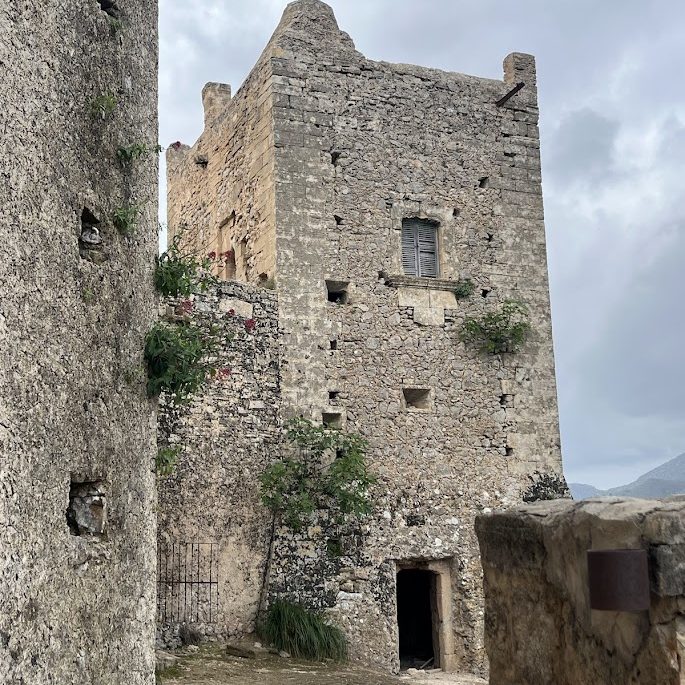
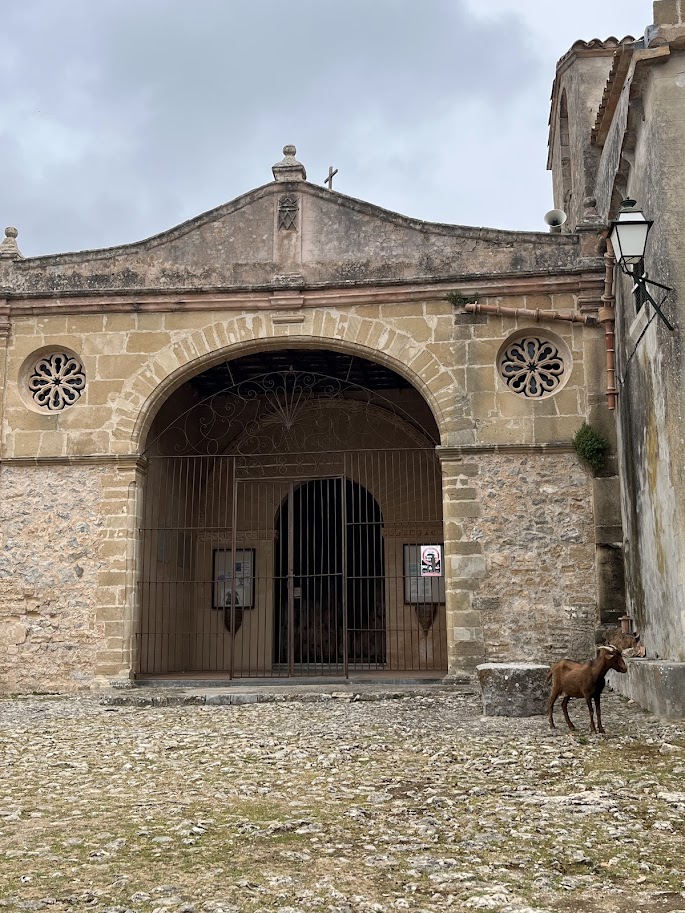
There are places where history feels very present and where the emotional residue of another age still clings to stone and air. Puig de Maria, rising above the town of Pollença, on the Mediterranean island of Mallorca is one such place. It is not simply an old monastery, but built as a human answer to a dark time.

In 1348, as the Black Death swept across Europe. Suffocating fear was everywhere. Death arrived without logic or mercy, dismantling the illusion of control that underpinned medieval life. It is in this context that Puig de Maria was conceived: not as an architectural ambition, but as a cry to the divine.

The decision to build a sanctuary on a mountain summit high above the town was not accidental. It carried symbolic weight. To ascend is to separate—from contagion, from chaos, from the unbearable proximity of suffering. But it is also to draw nearer to God, to meaning, to the possibility that fear can be held within something larger than itself.

In Sages, Saints and Sinners, I return to a question that refuses to stay buried: what becomes of us when certainty collapses? When the structures we trusted—faith, order, meaning—no longer hold, who do we become? Set against the desolation of the 14th-century plague, a time when vast stretches of Europe fell silent and entire communities vanished, the novel steps into that rupture. It is not only a story of loss, but of what emerges in its wake—of the fragile, defiant ways human beings rediscover courage, meaning, and even love when everything familiar has been stripped away.

Some retreat into despair. Others are in denial. But there is a third path, rarer and more demanding—the transmutation of fear into courage, and anxiety into love.

Puig de Maria stands as a physical manifestation of that third path.

The people who built it were not free of fear. They were defined by it. And yet, instead of allowing fear to contract their world, they expanded it vertically. They climbed. They carried stone up a mountain in the midst of plague, and in doing so, enacted a radical defiance: fear would not have the final word.

There is a discipline in the refusal to be mentally captured by catastrophe.

The monastery that emerged—first a chapel, then a place of ongoing devotion—became more than a sanctuary. It became a container. Within its walls, fear was transformed. Ritual, prayer, and community gave structure to what would otherwise have been overwhelming. The unknown was met not with paralysis, but with presence.

This is the essence of transmutation. Not the removal of darkness, but its reworking into something that can sustain life.

Walking up to Puig de Maria today, the path winds in steady, deliberate curves. It is not a punishing climb, but it demands attention. There is a rhythm to it—step, breath, step—that mirrors something older than the path itself. Pilgrimage is never only about arrival. It is about what is shed along the way.

Halfway up, the town below begins to recede. Perspective shifts. What felt immediate loosens its grip. By the time you reach the summit, something subtle but unmistakable has occurred: distance has been created, not just physically, but internally.

This is the overlooked power of sacred geography. It externalises an inner movement.

At the top, the monastery remains austere. A tower and thick walls. A chapel that holds silence rather than spectacle. There is no excess here, no attempt to impress. It was never meant for comfort in the modern sense. It was meant for clarity.

And clarity, in times of crisis, is everything.

In our own age, fear has taken on different forms, but its structure remains familiar. Uncertainty, fragmentation, and a sense that the ground is less stable than we were led to believe. The temptation is the same as it was in the 14th century: to collapse inward, to narrow, to protect.

But Puig de Maria offers another template.

Climb.

Not away from reality, but toward a broader vantage point. Build—not necessarily in stone, but in practice—structures that can hold anxiety without being defined by it. Create spaces, inner and outer, where fear can be acknowledged, but not enthroned.

The plague did not end because a monastery was built. Suffering was not avoided. But meaning was forged in the midst of it.

And meaning is what allows endurance to become transformation.

In Sages, Saints and Sinners, the figures who endure are not those who escape fear, but those who metabolise it. They refuse its finality. They insist, against all evidence, that love and courage remain alive.

Puig de Maria asks a question that is as relevant now as it was then:

When fear rises, will you descend into it—or will you climb?

Reino Gevers – Host of the LivingToBe podcast

P.S: If you enjoyed this article you might be interested in reading: Sages, Saints and Sinners Get it today on Amazon, Barnes & Noble and where all good books are sold.

Leave a comment

Filed under Pilgrimage, psychology, spirituality