Tag Archives: books

Lessons from the 14th Century Plague

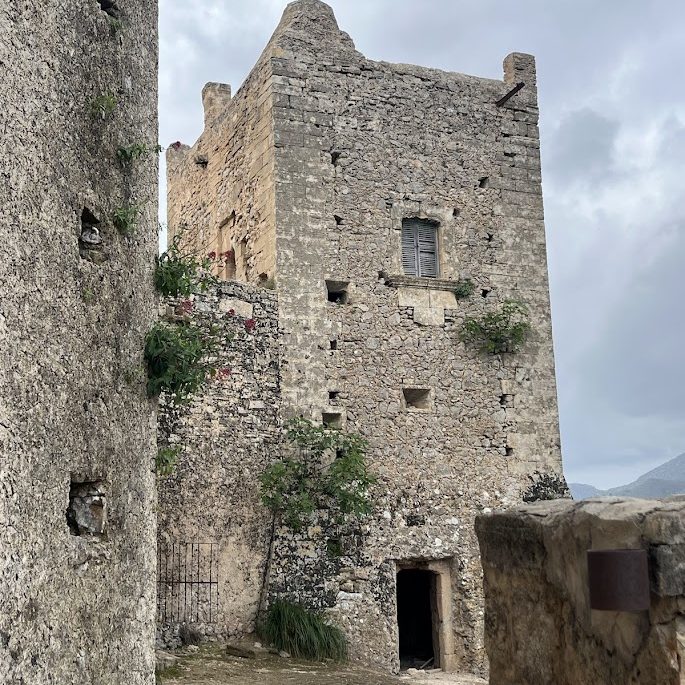
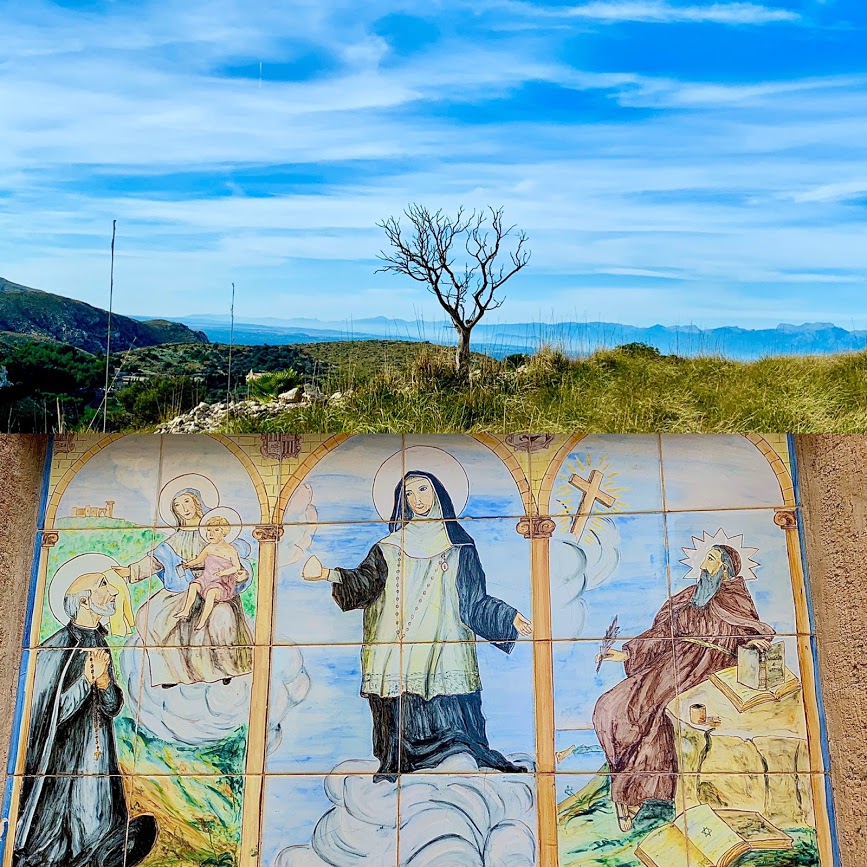
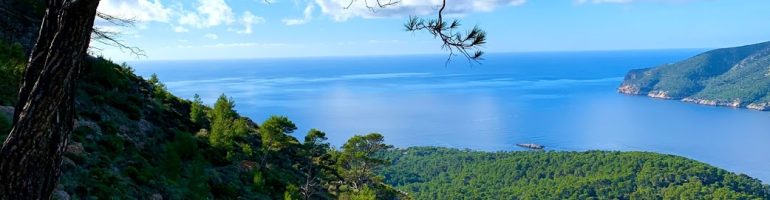
There are places where history feels very present and where the emotional residue of another age still clings to stone and air. Puig de Maria, rising above the town of Pollença, on the Mediterranean island of Mallorca is one such place. It is not simply an old monastery, but built as a human answer to a dark time.

In 1348, as the Black Death swept across Europe. Suffocating fear was everywhere. Death arrived without logic or mercy, dismantling the illusion of control that underpinned medieval life. It is in this context that Puig de Maria was conceived: not as an architectural ambition, but as a cry to the divine.

The decision to build a sanctuary on a mountain summit high above the town was not accidental. It carried symbolic weight. To ascend is to separate—from contagion, from chaos, from the unbearable proximity of suffering. But it is also to draw nearer to God, to meaning, to the possibility that fear can be held within something larger than itself.

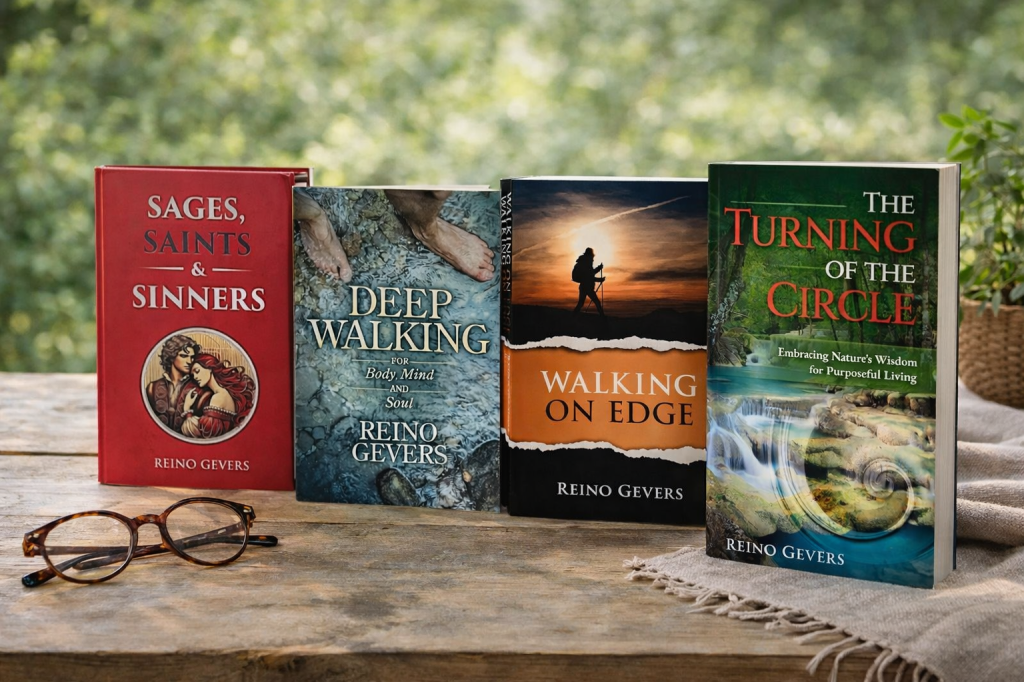
In Sages, Saints and Sinners, I return to a question that refuses to stay buried: what becomes of us when certainty collapses? When the structures we trusted—faith, order, meaning—no longer hold, who do we become? Set against the desolation of the 14th-century plague, a time when vast stretches of Europe fell silent and entire communities vanished, the novel steps into that rupture. It is not only a story of loss, but of what emerges in its wake—of the fragile, defiant ways human beings rediscover courage, meaning, and even love when everything familiar has been stripped away.

Some retreat into despair. Others are in denial. But there is a third path, rarer and more demanding—the transmutation of fear into courage, and anxiety into love.

Puig de Maria stands as a physical manifestation of that third path.

The people who built it were not free of fear. They were defined by it. And yet, instead of allowing fear to contract their world, they expanded it vertically. They climbed. They carried stone up a mountain in the midst of plague, and in doing so, enacted a radical defiance: fear would not have the final word.

There is a discipline in the refusal to be mentally captured by catastrophe.

The monastery that emerged—first a chapel, then a place of ongoing devotion—became more than a sanctuary. It became a container. Within its walls, fear was transformed. Ritual, prayer, and community gave structure to what would otherwise have been overwhelming. The unknown was met not with paralysis, but with presence.

This is the essence of transmutation. Not the removal of darkness, but its reworking into something that can sustain life.

Walking up to Puig de Maria today, the path winds in steady, deliberate curves. It is not a punishing climb, but it demands attention. There is a rhythm to it—step, breath, step—that mirrors something older than the path itself. Pilgrimage is never only about arrival. It is about what is shed along the way.

Halfway up, the town below begins to recede. Perspective shifts. What felt immediate loosens its grip. By the time you reach the summit, something subtle but unmistakable has occurred: distance has been created, not just physically, but internally.

This is the overlooked power of sacred geography. It externalises an inner movement.

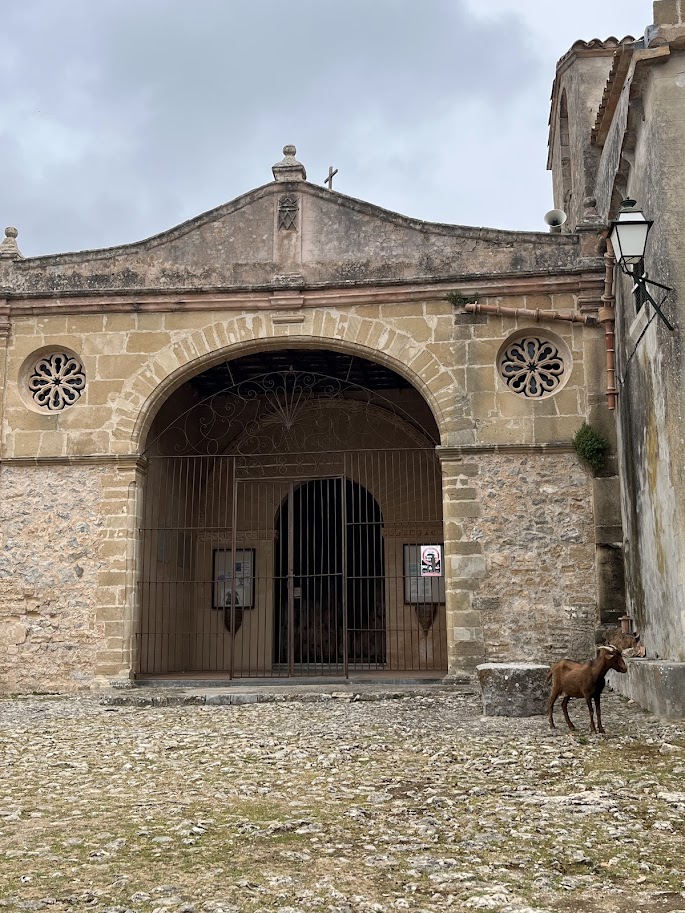
At the top, the monastery remains austere. A tower and thick walls. A chapel that holds silence rather than spectacle. There is no excess here, no attempt to impress. It was never meant for comfort in the modern sense. It was meant for clarity.

And clarity, in times of crisis, is everything.

In our own age, fear has taken on different forms, but its structure remains familiar. Uncertainty, fragmentation, and a sense that the ground is less stable than we were led to believe. The temptation is the same as it was in the 14th century: to collapse inward, to narrow, to protect.

But Puig de Maria offers another template.

Climb.

Not away from reality, but toward a broader vantage point. Build—not necessarily in stone, but in practice—structures that can hold anxiety without being defined by it. Create spaces, inner and outer, where fear can be acknowledged, but not enthroned.

The plague did not end because a monastery was built. Suffering was not avoided. But meaning was forged in the midst of it.

And meaning is what allows endurance to become transformation.

In Sages, Saints and Sinners, the figures who endure are not those who escape fear, but those who metabolise it. They refuse its finality. They insist, against all evidence, that love and courage remain alive.

Puig de Maria asks a question that is as relevant now as it was then:

When fear rises, will you descend into it—or will you climb?

Reino Gevers – Host of the LivingToBe podcast

P.S: If you enjoyed this article you might be interested in reading: Sages, Saints and Sinners Get it today on Amazon, Barnes & Noble and where all good books are sold.

Leave a comment

Filed under Pilgrimage, psychology, spirituality

Sages, Saints and Sinners

In a life-threatening global crisis, individuals are compelled to either dig deep into their inner light or succumb to their darkest shadows. This is the central theme of my upcoming book, “Sages, Saints, and Sinners,” set against the harrowing backdrop of the Black Plague, which nearly decimated the entire population of Europe in the 14th century.

Here are two contrasting excerpts:

“Amidst the stark contrast of tragedy, mortality, and chaos, beauty revealed itself in heightened clarity and depth.

A keen awareness of life’s fleeting nature permeated his being, igniting an inner yearning to embrace existence with unwavering intensity.

 He savored the earth’s pulsating rhythm beneath his feet, marveling at the majestic dance of birds of prey overhead, the delicate shimmer of sunlight on swaying blades of grass, and the harmonious symphony of nature’s myriad voices. The beauty of creation eluded possession, transcending mere ownership to encompass a profound perspective that infused every facet of existence.”

Photo by Samrat Maharjan on Pexels.com

…”Nuns and monks offered simple herbal remedies and prayers, reading from the sacraments or taking confessions from the dying.

Simple pallets with straw served as beds with local volunteers supplying food and taking away the bodies of the dead in donkey carts to be buried in a cemetery nearby.

Isabel frequently conferred with Brother Thomas on researching the possible cause of the pestilence, refusing to believe that it was an act of God.

What better place to be than the monastery where some of Europe’s best theologians, astronomers, mathematicians, and doctors were at work.

“God has blessed us with intellect and a mind to ponder. Do we not ascend through every trial, gathering wisdom along the journey?” remarked Brother Thomas.

I’ve been working on this book project for the past two years and I’m now working on the final draft. The message I want to put out there with this novel is that even in dire situations of hopelessness, life is transitory.

It is in times of difficulty, in the pain, in the suffering that consciousness can either be elevated to its highest levels or succumb to the lowest vibrational levels of toxic emotions marked by procrastination, fear, and rage.

Reino Gevers – Author – Mentor – Speaker

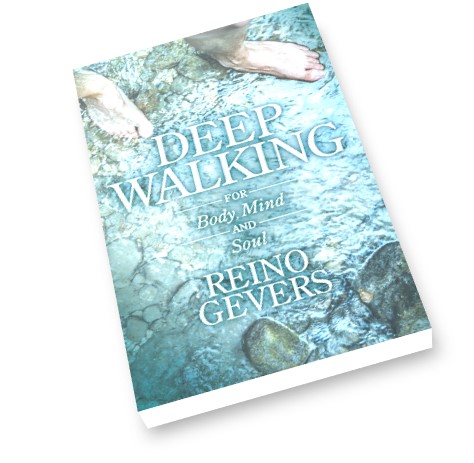
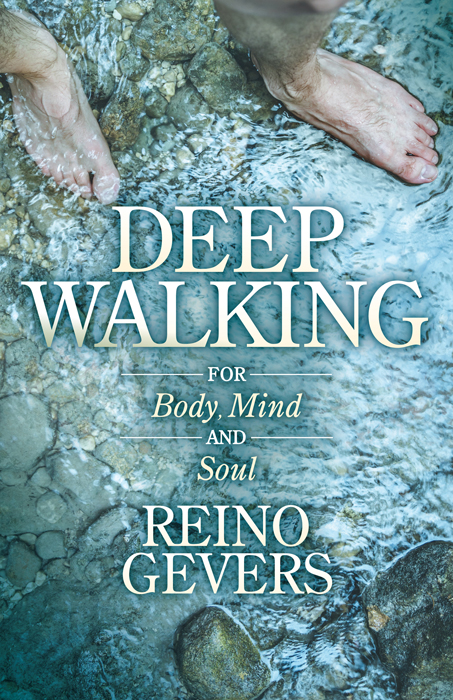
P.S. I’m excited to announce the release of my latest book, “The Turning of the Circle: Embracing Nature’s Wisdom for Purposeful Living.” If you enjoy it, you might also be interested in my previous works, “Deep Walking for Body, Mind and Soul” and “Walking on Edge: A Pilgrimage to Santiago.” You can find all of these titles at reputable bookstores near you.

Leave a comment

Filed under spirituality

Light into a world beyond

A ray of light travels into a chamber, illuminating a spiral motif representing a vortex for the dead in completion of their journey from this world into the „other world“.

The phenomenon at an ancient site in Newgrange, Ireland, is thought to date back 2800 BC and occurs every year on December 21st, marking the shortest day and longest night of the year in the northern hemisphere.

At Stonehenge, in the United Kingdom, another ancient site from the Bronze Age, the sun rises behind the entrance of a stone circle illuminating the Centre.

The lives of ancient cultures were closely intertwined with the laws of nature and the transition of the seasons and were elaborately celebrated in ritual and religious ceremony.

Modern man’s disconnect from nature and spiritual essence appears to be at the root of much of today‘s confusion and mental instability. Our modern versions of Christmas, Easter and Thanksgiving are a poor reflection of their original spiritual meaning.

The celebration of the birth of Christ in Bethlehem, comes just after the winter solstice, representing victory over darkness, rebirth, and hope over fear.

The hope of the guiding star

The guiding star that led the Magi to the birthplace of Jesus, represents hope, divine guidance, and the birth of a significant spiritual event, signifying the arrival of a special and transformative moment.

The celebration of the birth of Christ is associated with an annual inner spiritual rebirth of the “Christ within“

The ancient Mystics refer to each individual having a divine and spiritual essence connected to a higher consciousness.

In Christianity, it may be linked to the belief that Christ’s spirit resides within believers, guiding and influencing their thoughts, actions, and spiritual journey.

Connecting to the spiritual essence

In a broader sense, it can be found in various spiritual and philosophical traditions that emphasize inner enlightenment and connection to a higher reality.

The “Buddha Nature“ has the optimistic view that every individual can attain enlightenment through spiritual practice and awareness.

Defilements and obscurations that prevent enlightenment are considered temporary and removable.

The time between Christmas and New Year – a time symbolizing the transition from the old to the new – is of particular spiritual significance.

Whatever negative experience, loss and trauma you have experienced this year this quiet space can be spent for inner reflection and contemplation.

What addictive thoughts and beliefs are holding you back? What things are distracting you? What relationships are pulling you down into a lower vibrational field?

When the old can be released the path into the gateway of spiritual renewal and purpose opens.

Reino Gevers – Author – Mentor – Speaker

P.S. I’m excited to announce the release of my latest book, “The Turning of the Circle: Embracing Nature’s Wisdom for Purposeful Living.” If you enjoy it, you might also be interested in my previous works, “Deep Walking for Body, Mind and Soul” and “Walking on Edge: A Pilgrimage to Santiago.” You can find all of these titles at reputable bookstores near you.

2 Comments

Filed under raised consciousness, spirituality, Uncategorized

Transitioning the winter seasons of life

Approaching the winter solstice in the northern hemisphere, we find ourselves amidst the longest, darkest, and coldest nights. Likewise, the human experience encounters its winters – stages in life marked by desolation, loss, and lack of purpose. Yet, within these seemingly barren chapters of life, a profound opportunity for introspection arises.

Much like the dormant earth cultivating the potential for rebirth beneath its frozen surface, our personal winters serve as a crucible for critical self-reflection, sowing the seeds of renewal and elevation of consciousness.

Photo by Pixabay on Pexels.com

Loss, disappointment, and regret come from cause and effect. Something was avoided, or not done during the previous seasons. Going into the blame game by attributing your situation entirely to external circumstances is the procrastination trap.

The blame game inevitably leads to a vicious cycle of wallowing in self-pity that makes everyone around you want to run. Seizing the opportunity in a “flat on the ground” situation is accepting responsibility, redefining purpose, and fine-tuning wisdom and knowledge.

The winter of life makes you resilient in accepting the impermanence of any given state. Life is a never-ending cycle of birth and rebirth, night and day, recuperation and active engagement. Winter is a time to reconnect to the root ancestral energy embedded within. There are several ways of how to build resilience during the winter season:

The law of nature demands rest and recuperation

The body needs at least seven to eight hours of sleep for a healthy immune system. A power nap of 10 to 15 minutes during the low-energy afternoon period of the day will work wonders to boost your mental and physical performance.

Exercise: All pelvic floor exercises that strengthen the bladder and kidney. The bladder has the longest meridian in the body on either side of the spinal cord. The kidney meridian starts at the base of the foot. Typical yoga poses are the cat, boat, and big toe poses. All basic Taiji movements are excellent

Nutrition: Drink lots of good water. Start your day by boiling half a lemon for five minutes just after rising from bed to boost hydration. The lemon peel contains numerous nutrients and enzymes, including Vitamin C. A salty taste is typical for the water element and crucial for kidney balance. But table salt should be avoided as much as possible as it weakens the body. Use natural sea and Himalayan salts with a high mineral content. Typical water-element foods are asparagus, beets, black rice, kelp, wakame, blackberries, blueberries, black grapes, watermelon, scallops, oysters, and mussels.

Breathing

One of the simplest and most natural ways of reducing your stress level is by simply thinking about how you’re breathing.

Inhaling and exhaling naturally through the nose is what you should be doing. As you inhale, the nose warms and moisturizes the air. Your nose releases nitric oxide, which widens the blood vessels, allowing for better transportation of oxygen to vital organs. Your breathing will be deeper and slower, increasing the volume of your lungs and diaphragm.

Elevating your stress resilience becomes a powerful force shaping not only your response mechanisms but also your ability to navigate the winters of life.

How you cultivate self-love intricately weaves into the fabric of all your relationships and how you relate to events in the external world. It’s crucial to distinguish genuine self-nurturing behavior from the misconceived notion of narcissism, which darkens the purity of self-love. The unraveling of harmony often begins with a detachment from the authentic self when you are pulled into the abyss of external distractions.

With a modest investment of effort, you can position yourself far better to weather turbulent times, enabling you to make better decisions with a tranquil mindset. This shift not only empowers you to weather the storm but also to emerge from it all the wiser.

Reino Gevers – Author – Mentor – Speaker

P.S. I’m excited to announce the release of my latest book, “The Turning of the Circle: Embracing Nature’s Wisdom for Purposeful Living.” If you enjoy it, you might also be interested in my previous works, “Deep Walking for Body, Mind and Soul” and “Walking on Edge: A Pilgrimage to Santiago.” You can find all of these titles at reputable bookstores near you.

Leave a comment

Filed under mental health, mental-health, self-development

One world One consciousness

Nelson Mandela once reflected that one of the most difficult things is not to change society but to change yourself.

I’ve given much thought these days on why my home country South Africa is falling apart.

Fortunately, Mandela was spared from witnessing the complete erosion of moral integrity among his successors. Essential components of infrastructure, including harbors, roads, railways, hospitals, schools, and electricity supply, are deteriorating due to incompetence, crime, and corruption.

A government-funded food scheme, which feeds over 9 million schoolchildren countrywide of which the majority come from poor households, has been thrown into disarray by funds gone missing. Transparency International‘s 2022 Corruption Perceptions Index scored South Africa at 43 on a scale from 0 (“highly corrupt”) to 100 (“very clean”). 

Present-day leaders, ensconced in a cocoon of privilege sustained by nepotism and political favoritism, adamantly deny accountability for their shortcomings. Astonishingly, they continue to attribute their catastrophic failures to a regime ousted from power three decades ago.

It appears that they are replicating the very behavior they once decried, abandoning the principles they once championed. Instead of serving society, they exploit their positions for personal gratification, echoing the very actions of those they once decried as the enemy.

Meanwhile, America and many other Western democracies are being torn apart by divisiveness, and political extremism.

Photo by Pixabay on Pexels.com

What is happening?

The political landscape serves as a mirror reflecting the intricacies of society and individual behavior. Regardless of the adversities presented by the external world, the onus lies squarely on every individual for their response, attitude, actions, and overall sense of happiness.

In my latest Living to BE podcast, Scott White tells of his mission in planting one seed of positivity at a time. Every good day can be made into an even better day by changing the perspective with the antidote of gratitude, kindness, and self-deprecating humor.

How many of us are stuck in regret, pain, hurt, and anger toward an ex-partner, parent, employer, or neighbor.

When unaware it‘s easy to be pulled into the maelstrom of the same fear and anger you are exposed to.

Grievance culture complains about everything from the weather to the postman coming late. It is the lowest vibrational energy that feeds on scarcity, limitation, and neediness.

Even the best solution you offer to these people is met with a „but…“, „that will never work“ or „can‘t do that.“

You literally feel the energy sucked out of you as they go into their rant, making everyone else responsible for their misery.

When a person radiating on a high vibrational frequency enters a room, a transformative shift occurs. You sense your own energy expanding, drawn by a magnetic power that not only inspires but also generates positive change. This influence becomes the defining factor between fear and courage, scarcity and abundance, love versus hate, and kindness prevailing over moody grumpiness.

From this elevated plane of consciousness emerges creativity, inspiration, and confidence. It is from this heightened state that even the most entrenched problems of humanity can find solutions.

There are no shortcuts to the inner work.

Cutting through the veil of adversity, toxic emotions and the monkey mind of dancing thoughts is the spiritual exercise, the gateway to happiness.

Quoting the spiritual teacher Ram Dass:

„One consciousness. That is the way the world could right itself. Start with your peace, your love. your compassion, and go from there … walk each other home.“

Reino Gevers – Author – Mentor – Speaker

P.S. I’m excited to announce the release of my latest book, “The Turning of the Circle: Embracing Nature’s Wisdom for Purposeful Living.” If you enjoy it, you might also be interested in my previous works, “Deep Walking for Body, Mind and Soul” and “Walking on Edge: A Pilgrimage to Santiago.” You can find all of these titles at reputable bookstores near you.

Leave a comment

Filed under mental health, mental-health, psychology, Uncategorized

Is religious being spiritual?

What is religious and what is spiritual?  At its best religion is a ritualized expression of the spiritual. At its worst, it becomes an instrument of dehumanization and control.

While religion focuses on who you are supposed to be by abiding by certain rules of conduct and practice, spirituality is all about becoming who you really are with all your unique, individual, God-given potentials and abilities.

spirituality

Religion is a doctrine that tells you what to believe, what group you need to belong to and what rules you have to follow. Spirituality is experienced from within. You believe because you have felt and experienced. You do the “right thing” because you just know what is good and what is bad for the Greater Whole.

Most of the many fellow pilgrims I have spoken to on my walks on the Spanish Camino would describe themselves as spiritual seekers rather than followers of a certain religious doctrine.

In becoming mindful and watchful for the subtle messages of the universe transmitted in dreams, images, and symbols, life takes on an entirely different meaning. Put in a different way: God speaks to us in many different ways.

We are on the brink of another raised level of human consciousness which is non-divisive, universalist, tolerant, self-reflective and compassionate.

At the same time, elementary and revolutionary changes are always confronted with a backlash from those defending the old order.

In recent years we have seen a frightening rise of movements seeking to divide and separate with fear-instilling messages, propounded by dangerous narcissistic and ego-driven leaders.

It is the natural pendulum of the yin and the yang. Energy is wasted in the hysteria over the actions coming from the shadow.

In going with the higher frequency of the raised consciousness, the danger is that we react with the same patterns as our adversaries. We also become hateful, ranting and vengeful.

Yet when seen according to the law of opposites that is the foundation of life, a different perspective can be taken. Identity is defined in terms of the opposite and it is often when confronted with the extreme opposite that we are galvanized into action.

(This is an extract from “Deep Walking for Body, Mind and Soul”)
Reino Gevers – Author, Mentor, and Consultant

https://www.reinogevers.com

Gevers-DeepWalking CVR.indd               paperback_cover_1

Order here

applepodcast         


Leave a comment

Filed under meditation, psychology, raised consciousness, self-development, spirituality, Uncategorized

Walking your walk

Faith in the biblical sense can truly move mountains. Theresa decides to walk the Camino in an act of defiance after her doctor tells her that the cancer in her body will reduce her lifespan to six months at the most and that she should settle her affairs.

She walks the Camino with soft feet, sending her backpack ahead to the next town with a taxi. She completes her walk and returns home a different woman.

“That was five years ago,” she tells me as we drink our café con leche in one of the many bars dotting the Camino. This time she is walking the Camino the second time.

We are only in the infancy of discovering the true connection between body and mind. So many fellow pilgrims I’ve met on the Camino were told by family, friends, and associates that they would never be able to walk almost 800 kilometers over five weeks. We are capable of so much more than we think possible.

path.jpg (1)

Photo by Stephen Leonardi on Unsplash

The Austrian-born Jewish psychiatrist Victor Frankl (1905-1997) is renowned for his breakthrough research on the power of meaning. In his book Nevertheless, Say “Yes” to Life: A Psychologist Experiences the Concentration Camp, also known under the bestselling title Man’s Search for Meaning, he narrates several observations in the Nazi death camps.

While incarcerated in Auschwitz, Frankl counseled fellow prisoners with his philosophy that a striving for meaning, even in the most harrowing of circumstances, is what keeps us alive.

Inmates who gave themselves up became suicidal and died, while those who saw some meaning, like telling the world about the Holocaust after liberation, survived.

It was the “will to meaning” that looked to the future, and not to the traumatic events of the past, that sustained people.

Despite losing his wife and nearly all his family in the holocaust, Frankl refused to dwell on the past.

Even in the worst possible situation, man still has freedom of choice and the ability to seek meaning in whatever situation he finds himself in, he argued.

“Everything can be taken from a man but one thing: the last of the human freedoms—to choose one’s attitude in any given set of circumstances, to choose one’s own way,” he wrote.

It’s a simple but profound truth. It all begins in the mind.

It is why a cancer patient will very often give up when told of the diagnosis. The word itself is so loaded with fear and mortality that the patient sees no hope. The shocked reaction of family and friends is often not conducive to the healing process either when the patient is asked on a daily basis how “the cancer treatment is going.”

We also know from research that patients who overload their friends and family on a daily basis with all the details of their illness do much worse than those who refuse to mention by name the illness, merely telling everyone that they are in a healing process.

Most fitness and weight-loss programs fail because of a negative mindset.

After an initial loss of weight or a couple of exercise sessions, most people give up and return to old habits because they haven’t found the real reason in their mind why they want to reduce weight or get fit. Some people even end up being more obese because they have subconsciously tricked their mind into putting on more weight. “I don’t want to be fat. I don’t want to be in debt,” are a double-negative with opposite the intended effect.

Reformulating that wish into a realistic feeling that is actually felt as emotion and pictured as an ideal outcome really works.

Reino Gevers – Author, Mentor, and Consultant

https://www.reinogevers.com

Gevers-DeepWalking CVR.indd               paperback_cover_1

Order here

applepodcast         


1 Comment

Filed under Camino de Santiago, lifestyle management, Pilgrimage, psychology, spirituality, Uncategorized

A clue to happiness: How are you talking to yourself?

Humans are hard-wired to live in the past or in the future because planning and learning from the past has been crucial to the survival of our species.

Real joy comes from those magical moments of being absolutely present and experiencing spirituality, love and peace of mind.

Researchers have found that distraction, one of the major scourges of our time, is also a major cause of unhappiness.

Psychologists at Harvard University conducted a study with 2,250 volunteers, monitoring their thoughts and feelings, to find out how often they were focused on what they were doing, and what made them most happy.

thoughts

Photo by Aaron Huber on Unsplash

More than half the time people’s minds were wandering to other things. The researchers concluded that reminiscing, thinking ahead or daydreaming tends to make people more miserable, even when they are thinking about something pleasant.

Matthew Killingsworth, a doctoral student in psychology and lead author of the study, wrote in the journal Science:

“A human mind is a wandering mind and a wandering mind is an unhappy mind. The ability to think about what is not happening is a cognitive achievement that comes at an emotional cost.”

The human mind has between 60,000 – 70,000 different thought monkeys dancing through the head on one day. Becoming aware of these thoughts is the first step toward focusing on the moment.

It is an empowering thought to realize that you are in control of your thoughts and that with a little training you can regain control of these monkeys.

Thoughts are energy waves and they create reality. Where energy flows, the energy goes. The first step is to become aware of your current feeling. Is it predominantly, sad, angry, resentful, happy, or joyful? Negative emotions can sometimes be triggered by banal events, like a driver blowing his horn at you in a traffic situation. This then suddenly triggers an anger explosion that is completely out of proportion to the event. It would be one example of anger that has its roots elsewhere but hasn’t been transmuted.

Out of control emotions have a close connection to scattered thoughts and an uncentered state of mind. For me, deep walking retreats on the Camino in Spain have been a real eye-opener. While walking alone I was inevitably confronted by countless thoughts, especially during the first few days. It is part of the process of dumping old emotional garbage – some of which lie buried in the subconscious mind for years, sometimes to early childhood.

You will have made progress when you find your senses tuning in to the surroundings and becoming aware of the sights, sounds and smells around you.

What thoughts you have immediately after getting up in the morning have a major impact on your day. A dream could have stirred a negative emotion. But you are in control. You can reset your mind. You can set a positive anchor for the day with a meditation, a gratitude ritual, an exercise routine, a mantra, or a prayer.

Every time you catch yourself with a negative thought, you can train the mind to concentrate on breathing. Consciously counting the inhaling and exhaling sequence of breathing will immediately transmute that thought. If you click on my Podcast link below you will find a powerful meditation from ancient Qi Gong practice which I find enormously powerful and the effects of which can last for hours.

Reino Gevers – Author, Mentor, and Consultant

https://www.reinogevers.com

Gevers-DeepWalking CVR.indd               paperback_cover_1

Order here

applepodcast         


Leave a comment

Filed under gratitude, happiness, meditation, mental-health, psychology, self-development, spirituality, Uncategorized

2020: Our biggest challenge

In the northern hemisphere, the time between Christmas and New Year is characterized as the time of the “rough nights” with cold winds and snow battering the shutters. I like to use the time for reflecting on the blessings of the past year and working on my vision board for the year ahead.

church

One of the great highlights of my year were the unforgettable conversations with the wonderful people I met while serving as a volunteer in a pilgrims hostel on the Camino in the village of Najera, northwestern Spain.

What are you doing with the rest of the days of your life?

People from numerous different age groups countries, cultures, religions and traditions are walking the Camino with burning questions such as: What do I need to do with the rest of the days of my life?  What are the ingredients of a happy, fulfilled and contented life of bliss? What can I do to make the world a better place for my children and grandchildren? Who am I on a deep soul level beyond what the world outside there is trying to tell me who I am and what I need to believe, consume and do?

I have delved into some of these questions and lessons learned on the Camino with my new book Deep Walking for Body, Mind and Soul.

Taking time-out for reflection and alignment

The idea and purpose is to inspire readers on how valuable our time on earth really is. We need a time-out every day to perceive our inner world and one of the best ways of doing so is taking a walk in nature. It is the start of healing self and when we heal self we can start healing the world outside. The state of our world is a reflection of our inner consciousness and state of mind.

Much of the western world has lost its spiritual compass with the over-emphasis on external gratification. “Things” can never compensate for the yearnings of the heart and soul. There is a reason why depression and other mental illnesses have become a scourge of our time. We no longer know who we are? It is not surprising when we are bombarded almost non-stop with information overload, and confused by professional deceivers on social media. On the threshold to a new decade, we are faced with possibly the biggest challenge of our time:

Moving to a restorative, sustainable mindset

We need to move from the exploitative, consumerist mindset that is rapidly destroying our ecosystems and foundation of life to one of sustainability and restoration.  The firestorms and unprecedented heatwaves in many parts of the world in the past year, the tornado winds and flooding have come much earlier than the climate scientists predicted. We don’t have much time left to make the turnaround and Nature is trying to tell us something.

We need to change how we are transporting ourselves, what we are eating and what we are consuming.

The Western diet of junk and processed foods is not only ruining our individual well-being and health. Mass agriculture and animal feed production is the single largest contributor to greenhouse gas emissions. We need to eat less meat and we need to eat what comes from the local farmer.

The next decade is going to be defining in many ways. We are either going to make it or break it. Already the battle lines are drawn between raised human consciousness and the pushback from the fossil fuel-based industries and the exploitative mindset of the past.

The delusion the deceivers are putting out there is that the new consciousness wants to push us back into a poverty-stricken hunter and gatherer lifestyle.  The opposite is true. Imagine a much better carbon-free world in 2030 with cutting edge clean-energy transportation, clean air and rivers, oceans, lakes, and forests teeming with life, and foods that keep us healthy and fit.

Reino Gevers – Author, Mentor, and Consultant

https://www.reinogevers.com

Gevers-DeepWalking CVR.indd               paperback_cover_1                            applepodcast         


Leave a comment

Filed under Camino de Santiago, climate change, environment, exercise mental health, self-development, Uncategorized

Deep Walking to the inner self

Walking the Camino in Spain is a profound experience and many pilgrims have turned their daily journals into books.  Why another Camino book? It was a question I also asked myself before starting my second book on the Camino.

It is almost three decades ago that the actress Shirley Maclean chronicled her pilgrimage in “The Camino: A Journey of the Spirit.”  For Maclean, who was in her 60s at the time, the Camino was an intense spiritual and physical challenge with her journey also taking her back to past lives.

Paulo Coelho, one of the world’s most influential authors, wrote  “The Pilgrimage” in 1986 after walking to Santiago, inspiring numerous people to walk the Camino. German comedian Harpe Kerkeling’s “I’m Off Then: Losing and Finding Myself on the Camino de Santiago followed with his bestseller in 2006.

Some of the world’s greatest artists found inspiration on long walks

After walking my twelfth Camino in 2017, I delved into more research and was surprised to find that some of the world’s most creative and talented artists, including Johann Christian Bach, William Blake, and Jean-Jacques Rousseau explored their inner worlds on long walks.

jon-tyson-W5RrKW2CQoY-unsplash

When a hike turns into a pilgrimage

Several of the many pilgrims I met during my walks said that they started their journey on the Camino as a hike and ended it as a pilgrimage.

In a world of constant digital distraction, the search for new spiritual meaning by “knowing and embracing the true self has become a matter of survival.”  I hope to inspire people to explore their inner world while deep walking in nature.

Walking “things off” in releasing the shadow and hurts of the past, gradually opens the cracks to the soul. By healing the inner we heal the outer. Walking is not only the most effective and underrated form of exercise but can be a real walk to spiritual renewal.

When nature whispers to the soul

Deep Walking on a pilgrimage is not just a walk.  Walking on paths where pilgrims have walked for centuries works on many subtle levels.

A pilgrimage walk is a mindful becoming aware of the simplicity with which nature can heal and whisper to the soul.

Reino Gevers – Author, Mentor, and Consultant

(Read more on this topic in my new book “Deep Walking for Body Mind and Soul” Ebook scheduled for publication by Morgan James in New York on May 5th, 2020. Printed edition scheduled for the major outlets in August 2020)

https://www.reinogevers.com

Gevers-DeepWalking CVR.indd               paperback_cover_1                            applepodcast         


Leave a comment

Filed under healing nature, lifestyle management, meditation, Pilgrimage, psychology, spirituality, Uncategorized