Tag Archives: environment

Rediscovering the Sacred in the Natural World

Can we learn from history to restore our shattered ecosystems? This is the compelling question Sophie Yeo explores in her book Nature’s Ghosts.

Humanity has been reshaping the natural world ever since the transition from hunter-gatherer societies to agriculture, some 10,000 years ago. Forests were cleared, wetlands drained and landscapes transformed to make room for crops and permanent settlements.

What began as a gradual reshaping of our surroundings has, over millennia, evolved into an unprecedented disruption of the delicate ecosystems on which all life depends. Yet history may hold valuable clues to how we can begin to repair the damage and restore a more harmonious relationship with the natural world.

Before the agricultural revolution, human communities generally lived much closer to the rhythms of nature. Their relationship with the environment was one of immediate dependence, interaction and, in many cases, reverence. Even until relatively recent times, cultures across the world regarded trees, rivers and mountains not simply as resources but as living presences, deserving of respect and sometimes even worship.

There was an understanding, deeply embedded in many traditional belief systems, that humanity was not separate from nature but belonged to a much larger web of life.

The Earth’s climate, as Yeo’s research reminds us, has always undergone dramatic changes. Species have disappeared, others have adapted, and entire ecosystems have been transformed in response to shifting conditions. But never before has human activity altered the natural world on such an extensive scale and at such speed. The burning of fossil fuels is accelerating climate change, while plastics, nuclear waste, pesticides and countless other pollutants will remain in the environment for generations, in some cases for thousands of years.

This raises a fundamental question: why are we destroying the very environment on which our survival depends?

One explanation Yeo explores is our growing estrangement from nature. Rapid urbanisation and the transformation of modern lifestyles have gradually distanced us from the natural world. For many people, nature has become something outside ourselves: a landscape to visit, a resource to exploit or an amenity to enjoy in our leisure time. We have lost something of the awareness that we are part of nature, not separate from it.

I would take this argument a step further and describe it as a spiritual disconnect.

For me, nature is an expression of the divine. Not necessarily in a religious or institutional sense, but as an experience of something greater than ourselves: the mysterious intelligence, interconnectedness, and creative force that permeates all living things. A tree growing towards the light, the intricate balance of an ecosystem, the changing seasons or the quiet persistence of life itself can all evoke a sense of wonder and belonging.

When we begin to see ourselves as part of this larger whole, our relationship with the natural world changes. It also changes our relationship with ourselves. Self-love and self-expression acquire a different meaning when we recognise that we are not isolated individuals, but expressions of the same living world. Caring for ourselves and caring for nature are no longer separate concerns. Both become ways of honouring life.

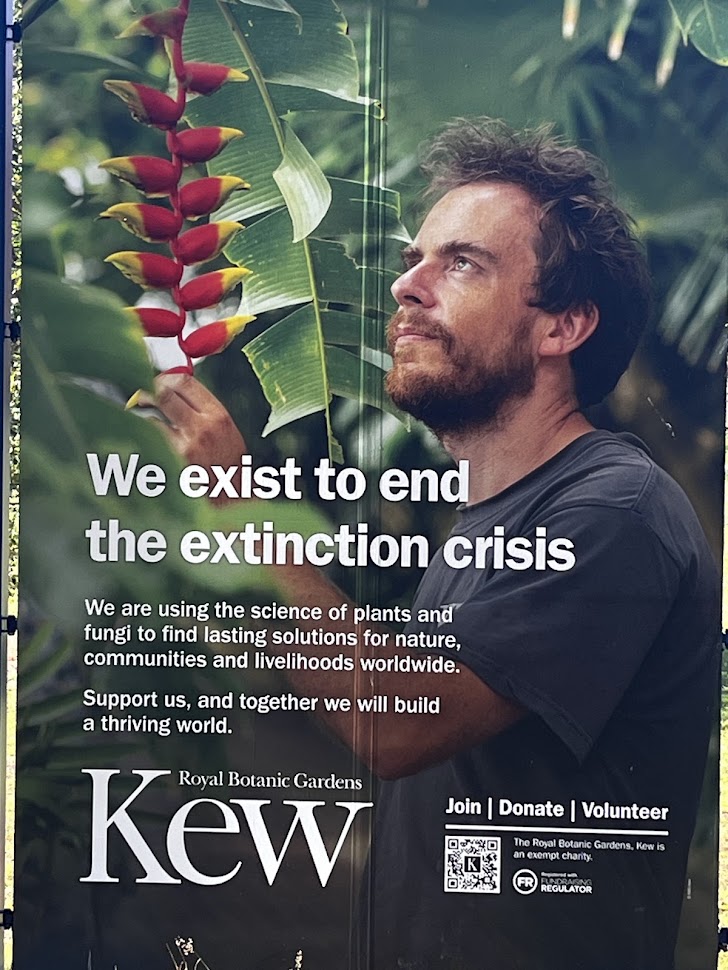
I was reminded of this during a visit to Kew Gardens in London last week. The gardens contain an extraordinary collection of endangered plants and trees from different parts of the world, many of them being carefully preserved and studied by dedicated scientists. I was particularly fascinated to learn that researchers are now using artificial intelligence to help identify and prioritise the species most at risk.
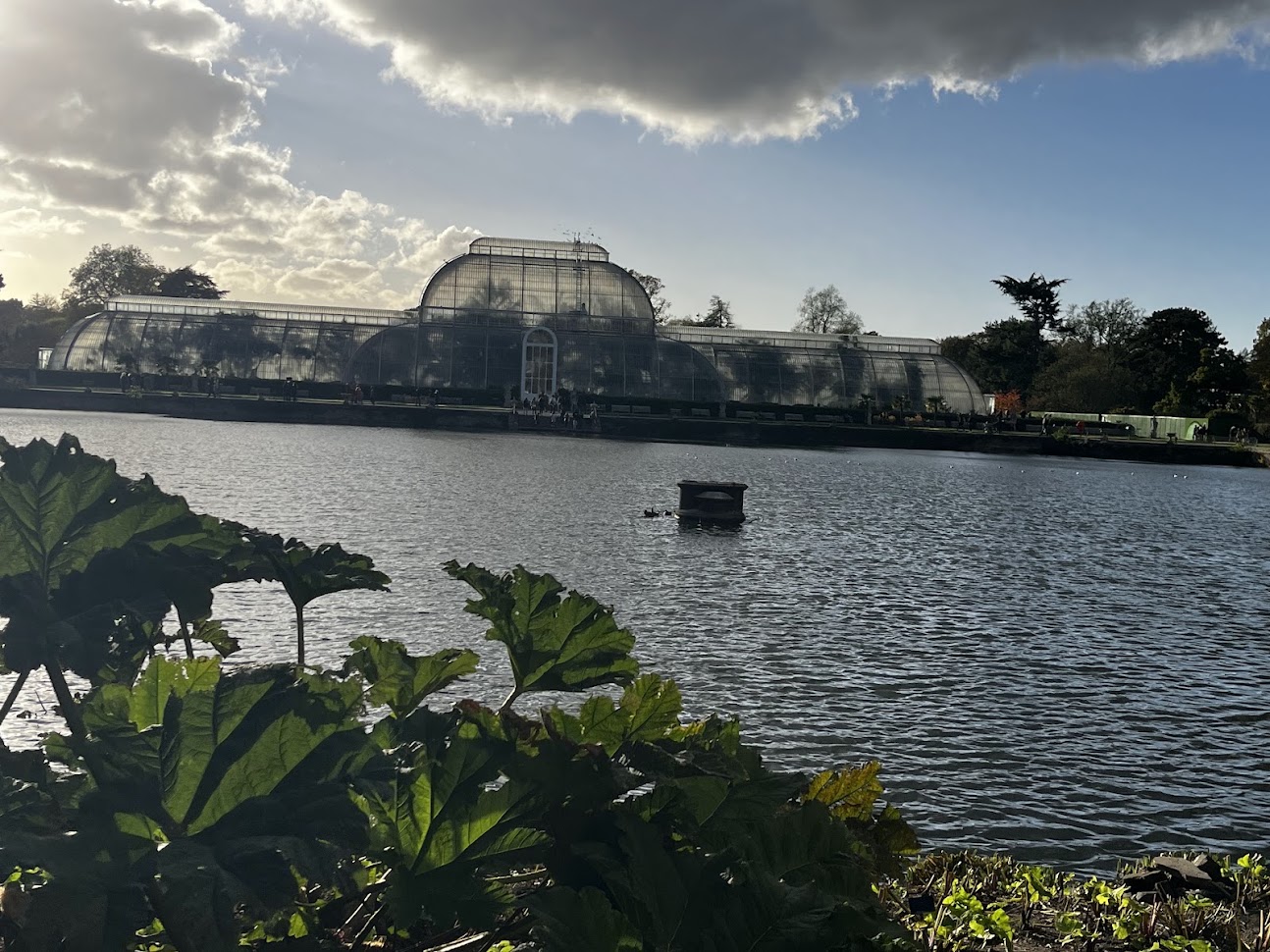
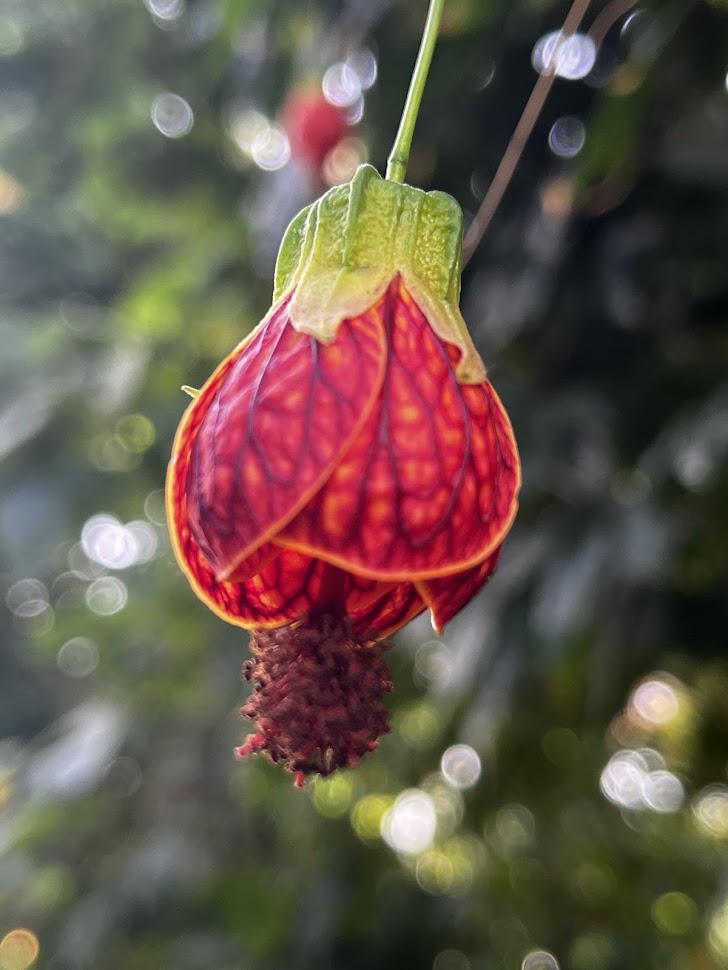
There is something deeply moving about this combination of ancient life, scientific knowledge and modern technology. It suggests that our relationship with nature need not be defined solely by exploitation and destruction. Human intelligence and ingenuity can also be placed in the service of protecting and sustaining life.

Perhaps the work at Kew Gardens points towards the kind of future Yeo envisages. One of the important lessons of ecological history is that ecosystems rarely return to precisely the state they were in before human intervention or environmental catastrophe. Once a habitat has been destroyed, the original combination of species and conditions may be impossible to recreate. But nature is remarkably resilient. It adapts, evolves and finds new ways of sustaining life.

This has important implications for how we approach environmental restoration. The challenge may not always be to recreate an idealised version of the past, but to help ecosystems adapt and flourish under changing conditions, including a warmer and increasingly unpredictable climate. History teaches us that insects, mammals and plants possess extraordinary capacities for adaptation, provided they are given the space and conditions to survive.

Perhaps the environmental movement has sometimes placed too much emphasis on apocalyptic scenarios and humanity’s role in destroying the natural world. The warnings are necessary, and the scale of the crisis should not be underestimated. But Yeo’s book also offers another perspective: human beings can be agents of restoration, not merely destruction.

We can become stewards of nature, using our knowledge, creativity and technological capabilities to protect biodiversity and help damaged ecosystems recover and transform.

Ultimately, I believe this requires more than scientific innovation, political will or changes in consumer behaviour. It calls for a shift in consciousness. We need to rediscover a sense of belonging to the natural world and recognise that its wellbeing is inseparable from our own.

Perhaps the most important lesson is also the simplest: we cannot truly care for what we perceive as separate from ourselves.

Rediscovering our spiritual connection with nature may therefore be as important to the future of our planet as the scientific and technological advances we bring to its protection.

Reino Gevers – Host of the LivingToBe podcast

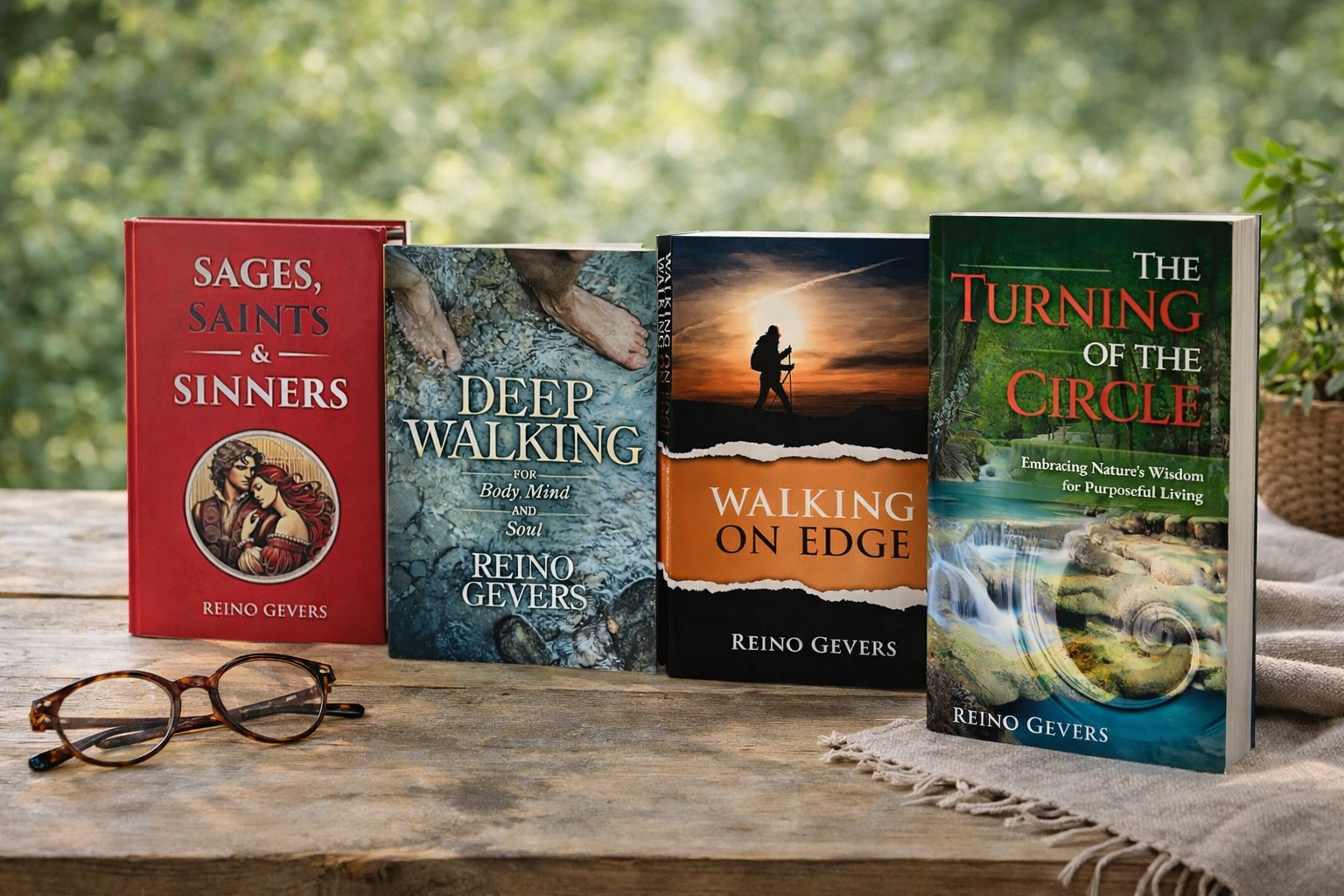
P.S: If you enjoyed this article, you might be interested in reading one of my four books, available where all good books are sold.
Leave a comment

Filed under Uncategorized

You are not alone

‘No Man is an Island’

No man is an island entire of itself; every man is a piece of the continent, a part of the main;

– John Donne – 

We realize when alone that we are not an island. During these times of crisis separation has become the watchword. It mirrors how far we have become separated in the relationship with ourselves and the natural world around us.

The writings of German philosopher Martin Buber seem particularly poignant. His most famous book “Ich und Du”, published in 1923,  roughly translates to “I and Though” with its central tenet that human life finds its purpose and meaning in relationships.

The separation from the ‘I’

Nature does not take revenge. If we go to war with nature there is merely cause and effect.  Perceiving the world, the earth, or the universe as being separate or external from the “I” is a belief-centered delusion.

Relationship is connection to Soul

Buber argues that ultimately relationship is about our connectedness to the inner soul spirit, God, or the Universe.  Ancient man and the hunter and gatherer societies are still very much aware of the connectedness of the inner spirit with the natural world.

Becoming with the Though

In the relationship with the “Though” there is a “becoming” into the wholeness of purpose and BEING. The essence of life, according to Buber, is found in the relationship with the other. With the emphasis of our culture from the “restrictions and obligations” of community” to the self-fulfillment of “individual freedom” we have fallen from one extreme to the other.

Pseudo-community or meaning is sought by the individual in pseudo-religion and the tribe affiliation to party political institutions. How else can we explain the blind following of the professional populist deceivers and the false prophets of our age?

Anybody who has gone through a divorce will know of the trauma left between two people who once loved each other. In the beginning, there is unconditional love. We see in the other, the Though, a merger or completion. Ideally, the partners support and empower each other in spiritual growth. But we often seek in the other that which has not been healed within. Disappointment is inevitable when the emotional shadows get triggered. The breakdown comes creeping slowly, respect gets lost when we see the other grappling with similar emotional issues. Communication is reduced to the mundane.

The soul journey is exploring the “Though” within. In the Gospel of St. Thomas, discovered at Nag Hammadi in Egypt in 1945, Jesus is quoted as saying:

“See the kingdom in the sky, then the birds of the sky will precede you. If they say to you. ‘It is in the sea,’ then the fish will precede you. Rather, the kingdom is inside of you, and it is outside of you. When you come to know yourselves, then you will become known, and you will realize that it is you who are the sons of the living father.” (Saying 3, p. 654.9-21).
Reino Gevers – Author, Mentor, and Consultant

https://www.reinogevers.com

Subscribeto my weekly newsletter and get my FREE Booklet, “Resilience: What makes you strong?

Gevers-DeepWalking CVR.indd               paperback_cover_1

Order here

Comments Off on You are not alone

Filed under environment, humanity, lifestyle management, psychology, self-development

Covid-19 and empty spaces

“Thirty spokes meet in the hub, but the empty space between them is the essence of the wheel.” – Lao Tse – 

In the hurried rat race of our modern culture, we have become so used to treading the treadmill of HAVING that we have forgotten all about the BEING. The spokes of the wheel are what is visible but what is really the essence is that which is invisible and holds everything together.

Foto

It is in those quiet moments of loneliness where we are finally separated from the drumbeat of distraction that we find connection.

Western culture is in a state of spiritual disconnect, expressing itself in the fraying of economic, social, religious and other institutions and the pandemic rise of mental illness. The Covid-19 pandemic was just the trigger. The foundations of the house we have been building has been on shaky ground for some time in the constant pull between externation gratification and inner soul yearning.

Resilience is built from a good sprint and recovery cycle 

A life in imbalance with high stress not compensated by recuperation periods of empty space inevitably leads to a breakdown of the body’s natural defence systems. A healthy sprint and recovery system makes a body resilient to the storms of life. Check out my booklet on Resilience: What makes you strong?

These changes are leaving people anxious, scared, disorientated and confused. The first thing people do in such situations is to find someone to blame: The Chinese having started it all with lack of safety measures in a laboratory in Wuhan, politicians not having reacted early enough or having responded too harshly.

Making the best out of the current situation

If you are a spiritually orientated person you will find that such a mindset won’t get you far and make you feel even more miserable. On a personal level you can start by reflecting on your own mindset:

  • What opportunity lies waiting in the current situation?
  • What friends and associations can I cultivate via zoom or skype?
  • What clutter needs cleared in my immediate surroundings?

On a global level the universe is telling humanity with a major jolt to wake up. We cannot continue with the ways of old. We have to question our mobility patterns and what it means for the environment. We have to move from an exploitative economic system to a sustainable, restorative system.

In terms of the ancient Five Element philosophy, which finds many of its roots in Lao Tse’s teachings, gigantic natural or political disruptions do not come from nowhere but are unavoidable when we fail to see the signs of the elements being in imbalance. Nature is merely trying to restore balance when we initially only see the burned grounds before us. But with time grow the first seedlings from the ashes.

In our HAVING culture we have tried too hard to feed the hungry ghosts, exploiting nature to such a degree that major ecosystems and our entire global climate is in danger of collapse.

Living a life of BEING is being open again for those empty spaces where soul evolution takes place. Before our eyes we are seeing our world changing. Transmuting the emotions of fear and anxiousness and seizing the moment with courage and hope is the challenge.
Reino Gevers – Author, Mentor, and Consultant

https://www.reinogevers.com

Gevers-DeepWalking CVR.indd               paperback_cover_1

Order here

Leave a comment

Filed under lifestyle management, psychology, self-development, spirituality, Uncategorized, yin and yang

2020: Our biggest challenge

In the northern hemisphere, the time between Christmas and New Year is characterized as the time of the “rough nights” with cold winds and snow battering the shutters. I like to use the time for reflecting on the blessings of the past year and working on my vision board for the year ahead.

church

One of the great highlights of my year were the unforgettable conversations with the wonderful people I met while serving as a volunteer in a pilgrims hostel on the Camino in the village of Najera, northwestern Spain.

What are you doing with the rest of the days of your life?

People from numerous different age groups countries, cultures, religions and traditions are walking the Camino with burning questions such as: What do I need to do with the rest of the days of my life?  What are the ingredients of a happy, fulfilled and contented life of bliss? What can I do to make the world a better place for my children and grandchildren? Who am I on a deep soul level beyond what the world outside there is trying to tell me who I am and what I need to believe, consume and do?

I have delved into some of these questions and lessons learned on the Camino with my new book Deep Walking for Body, Mind and Soul.

Taking time-out for reflection and alignment

The idea and purpose is to inspire readers on how valuable our time on earth really is. We need a time-out every day to perceive our inner world and one of the best ways of doing so is taking a walk in nature. It is the start of healing self and when we heal self we can start healing the world outside. The state of our world is a reflection of our inner consciousness and state of mind.

Much of the western world has lost its spiritual compass with the over-emphasis on external gratification. “Things” can never compensate for the yearnings of the heart and soul. There is a reason why depression and other mental illnesses have become a scourge of our time. We no longer know who we are? It is not surprising when we are bombarded almost non-stop with information overload, and confused by professional deceivers on social media. On the threshold to a new decade, we are faced with possibly the biggest challenge of our time:

Moving to a restorative, sustainable mindset

We need to move from the exploitative, consumerist mindset that is rapidly destroying our ecosystems and foundation of life to one of sustainability and restoration.  The firestorms and unprecedented heatwaves in many parts of the world in the past year, the tornado winds and flooding have come much earlier than the climate scientists predicted. We don’t have much time left to make the turnaround and Nature is trying to tell us something.

We need to change how we are transporting ourselves, what we are eating and what we are consuming.

The Western diet of junk and processed foods is not only ruining our individual well-being and health. Mass agriculture and animal feed production is the single largest contributor to greenhouse gas emissions. We need to eat less meat and we need to eat what comes from the local farmer.

The next decade is going to be defining in many ways. We are either going to make it or break it. Already the battle lines are drawn between raised human consciousness and the pushback from the fossil fuel-based industries and the exploitative mindset of the past.

The delusion the deceivers are putting out there is that the new consciousness wants to push us back into a poverty-stricken hunter and gatherer lifestyle.  The opposite is true. Imagine a much better carbon-free world in 2030 with cutting edge clean-energy transportation, clean air and rivers, oceans, lakes, and forests teeming with life, and foods that keep us healthy and fit.

Reino Gevers – Author, Mentor, and Consultant

https://www.reinogevers.com

Gevers-DeepWalking CVR.indd               paperback_cover_1                            applepodcast         


Leave a comment

Filed under Camino de Santiago, climate change, environment, exercise mental health, self-development, Uncategorized

Walking to the truth within

A great dilemma of our time is that we are having to deal almost continuously with the distractive pull of a culture obsessed with the immediate gratification of the senses and the illusion that an accumulation of things brings happiness.

The imbalance between wanting to fulfill the needs of the external world and bringing that into synchronicity with the inner truth and the needs of the soul creates an almost unbearable tension that many people try to suppress with substance abuse and other obsessive behaviors.

The hungry ghosts of the external world

Behind the insatiable appetite of the hungry ghosts is embedded the fear of never having enough and that someone might want to take away what I already have. It is the hungry ghosts that drive our culture into destroying our habitat for future generations and it is the hungry ghosts that create an atmosphere of xenophobia toward people who are different from us.

The state of our world is merely an expression of the turmoil within. Hope, however, springs that a small but growing minority of people are taking that walk within to their truth and spiritual authenticity.

The Camino is a symbol of the search for new spiritual meaning

The Camino pilgrimage path in northwestern Spain has become a symbol of this search for new meaning. When walking away from the distractions of the external world the inner world starts revealing itself. It is why so many people who started the walk as a hike end up walking it as a pilgrim.  Last year a total of 320,000 pilgrims walked the Camino, another record, that is likely to be broken this year.

Hope_image

Happiness is a state of mind

It is fascinating to watch first-time pilgrims very often starting their walk with too much clutter in their backpacks and then realizing after a few days that they don’t need most of the things.

One of the great blessings in walking the Camino is the realization that happiness is a state of mind that comes with the discovery of the inner authenticity, and literally walking away from the pull of the external world. A great way of starting the day is a gratitude ritual. The antidote to the pull of the hungry ghost is feeling a real appreciation for the moment and what is.

Reino Gevers – Author, Mentor, and Consultant

(Read more on this topic in my new book “Deep Walking for Body Mind and Soul” Ebook scheduled for publication by Morgan James in New York on May 5th, 2020. Printed edition scheduled for the major outlets in August 2020)

https://www.reinogevers.com

                                             applepodcast         


2 Comments

Filed under happiness, lifestyle management, outdoor coaching, psychology, self-development, spirituality, Uncategorized

Are we heading for an apocalypse?

A barrage of negative news from the mass shootings of innocent people, trade wars and the melting of the polar ice caps from the effects of global warming easily creates the impression that mankind is heading for an apocalypse. But moaning about the state of the world is no solution and creates a mindset of negativity.

Where attention goes energy flows

In the duality of what is life, we are confronted constantly with light and shadow. There is good and there is evil.  Where attention goes energy flows. The human mind is unfortunately hard-wired to perceive the negative before seeing the positive. It is part of the survival instinct of homo sapiens.

Magic of the moment

The downside is that we at the same time have the capacity to dwell constantly in the past or in the future, missing the magic or the gratitude of the moment. I just need to observe my dog, who will jump with joy, wagging her tail, when I just mention the sentence: “Time for a walk, Klara.”

LaVictoria.jpg  IMG_2619

It is particularly difficult to find the emotional shift to positivity when we are bombarded from all sides by news of negative events.  But instead of falling into the trap of wallowing in the cloud of negativity, we need to ask ourselves the question. What can I do to change it?

The emphasis on the negative puts mankind in a defeatest, “can’t do anything about it anyway” mode. The “fight climate change” campaigns have the opposite effect as intended because the problem seems so overwhelming.

Becoming pro-active

Enormous energy can be released in human beings if they feel they are doing something purposeful for the bigger whole. Ethiopia, India, and China are some of the countries that recently launched massive tree-planting campaigns to restore landscapes and to mitigate the effects of climate change.  If every human being on earth planted a tree or a shrub we would be well on our way to boosting a restorative mindset.

The world today is a better place

Life is living on the edge. Humanity has been on the brink of extinction on numerous occasions in history. But we have come a long way since the plagues of the Middle Ages, the burning of “witches” at the stake or the sacrificing of human beings in the name of religion.  In the bigger picture, humanity today is far better off than it ever was. The average middle-class family in the Western world today has a better lifestyle than any king or queen centuries ago when there was no such thing as central heating or running water.

The problem in the modern era is information overload. We are confronted with the constant pull of countless distractions that have a mainly negative message. Should we then be surprised at the enormous rise in depression and mental illness?  We need a radical reduction in the dosage of negative news and more messages that stir hope.  And, we need to seize those moments for stillness and peace of mind, creating the space for self-discovery and purpose. It is a space that every individual needs to vigorously defend. Do not let your mind be captured by apocalyptic negativity.

Reino Gevers – Author, Mentor, and Consultant

https://www.reinogevers.com

                                             applepodcast         


Leave a comment

Filed under environment, happiness, humanity, lifestyle management, spirituality, Uncategorized

Time out is crucial for your health

Most people living in an urbanized environment live highly stressful lives, spending most of their lifetime in closed indoor environments or on noisy streets. It is crucial for health and well-being to reconnect with nature and the natural rhythm of the universe.

Sprint and recovery

An integrated sprint and recovery system that integrates work and recuperation time spent outdoors in nature, should be built into our daily routine.

img_2311

In order to function as human beings we need lazy time for rest, recovery, creative play and the digestion of the countless distractions vying for our attention round the clock.  There is a huge amount of scientific evidence showing that stress factors such as high blood pressure, irregular heartbeat and high cortisol stress hormone levels begin to fall as soon as we focus our attention on the rustling of leaves in a green forest or hear the sound of ocean waves gently washing to shore.

Natural light is crucial for your body metabolism

Natural sunlight affects our bodies in many ways.  It is a catalyst for the secretion of hormones such as serotonin and melatonin. Melatonin is an important antioxidant and can neutralize some agents that damage cells and DNA that are believed to be a contributing cause of some cancers.

Indoor toxins may threaten your health

When we spend most of our lives indoors we also expose ourselves to countless indoor toxins that come in the form of mold, dust mites, fabrics and chemical compounds.

After going through a period of massive job and personal stress that left me badly fatigued, grumpy and in poor health, I went on my first pilgrimage hike in northwestern Spain some ten years ago. It changed my life and since then I’ve taken time out every year to spend between three and four weeks at a time walking in nature. I’ve interviewed numerous people from all walks of life on the Camino, who have confirmed my own observations that walking is a wonderful way of reconnecting with the universal rhythm.

Great thinkers found inspiration while walking!

During research for my new book “Deep Walking for Body, Mind and Soul”, to be published later this year by Morgan James Publishing in New York, I was surprised to discover that some of the world’s greatest writers and thinkers such as Johann Sebastian Bach, found inspiration while walking.

Henry David Thoreau wrote in his journal, “Methinks that the moment my legs begin to move, my thoughts begin to flow.

The poet William Wordsworth was said to have walked as many as a 290,000 kilometers (180,000 miles) in his lifetime. This translates to an average of six and a half miles a day starting from the age of five.

Humans are hard-wired to live in the past or in the future because planning and learning from the past has been crucial to the survival of our species.

Listen to thoughts when walking

Real joy comes from those magical moments of being absolutely present and experiencing spirituality, love and peace of mind.

It is an enlightening experience to “listen” to your own thoughts when walking. Becoming aware of your thoughts is the first step toward focusing on the moment.

Take a break, savor the nature around you by opening your sense of smell to the herbs by the wayside, open your ears to the chorus of bird song and feel that cool mountain breeze caressing your face.

Nature is the best healer!

Reino Gevers – Author, Mentor and Consultant

https://www.reinogevers.com

                                             applepodcast         

Leave a comment

Filed under cancer, cortisol, energy, environment, exercise mental health, healing nature, meditation, stress, Uncategorized

Nature and the Respect of the Sacred

Respect for that which is holy and sacred is closely aligned to respect for the self and self-love.

It is telling for humanity that the sacred house in which we live is being treated with such lack of mindfulness.

When you hike for hours along a country road you soon begin to notice the huge amount of trash such as plastic bags, tin cans, plastic bottles and cigarette butts that are carelessly thrown out of car windows by passing motorists.

IMG_2135It has a devastating effect on other living beings. I’ve seen cows munch plastic bags and hedgehogs trapped in rubbish.

Much can be attributed to the disconnect of modern man to his natural surroundings. Nature is a manifestation of God and not without reason have the wise teachers of old described time spent in nature as our best healer.

Any person who has spent alone time in the African bush or hiked alone for hours in pristine nature will soon become aware of the awesome marvel of creation and the interconnection of all living beings. God can be seen live and working in slow motion.

But never before in the history of mankind are we seeing such a rate of extinction of biological and animal species. The ocean waters are being polluted with plastics and the atmosphere brought into imbalance with excess burning of fossil fuels.

Humanity will only survive when we recognize that the sacred within is also the sacred without.

For centuries Christianity has had a false understanding of man’s role in nature based on misinterpretation of the old testament of the bible in Genesis 1:28 in which man is given the cultural mandate to subdue and rule over the earth.

The lost gospel of St. Thomas, that was discovered in Egypt in the 1940s, has a far more mystical interpretation of many of the biblical interpretations. Rather waiting for the Second Coming of the Christ, the lesson espoused here is all about nurturing and discovering the Christ Within−closely resembling what is described in Buddhism as discovering the Buddha Nature.

The Medieval interpretation of Nature was that of a harsh alien environment, that needed to be conquered. Paradise and a life of bliss could only be expected after death and resurrection.

In contrast the eastern Daoist tradition is all about the yielding to the laws of nature. The philosophy of the Five Elements in essence is about the right timing in accordance with the laws of nature. The harmony of objects and things in Feng Shui, the cultivation of the life-force energy of Chi in the body with nutrition, Qi Gong and Tai Chi and the ancient Book of Wisdom, the I Qing, all are built on these foundations.

We desperately need to revive the sacred places of old to help realign human consciousness. We need places of solitude, and places for meditation to quieten the mind. These also includes saving the sacred buildings of old that were often built at places with a high natural energy frequency.

Maps of medieval towns show how mindful our ancestors went about in planning their cities. The place of worship was always built on the highest plateau or center with all the other buildings in circular form around it. Shamans and geomancers were consulted so that the buildings conformed to the harmony principles of the universe.

We seem to have lost something elementary in sacrificing so much on the altar of materialism.

Reino Gevers – Author, Mentor and Consultant

https://www.reinogevers.com


Leave a comment

Filed under lifestyle management, meditation, nature, outdoor coaching, psychology, self-development, spirituality, Uncategorized

Dragon from the underground

While much of North America is experiencing Arctic temperatures we here on the island of Majorca are seeing the valleys below the Tramuntana mountains covered in the “snow”  of blooming almond trees that signal the  first signs of spring.

IMG_1826  IMG_1827

Chinese mythology compares spring to a gigantic dragon rising from the depths of the underground. It is symbolic of the powerful earth energy that rises from deep below, expanding and finding space to express its true beauty and power.

The Majorcan legend tells us that a king brought his beloved to the island from a snowy country. Problem was that the poor lady got very homesick, missing the snow this time of the year.  So the king went about planting almond trees all over the island that indeed look like the valleys are covered in snow when they start blooming in February.

We can learn so much from nature if we really observe and hear her whisper.  The Chinese teaching of the Five Elements, deeply rooted in Daoist philosophy, is all about the yielding to nature, and finding the right time and place for every action.

Spring is the time of year when energies are expanding, and action is called for. Any vision or dream will remain a dream if we don’t take concrete action. If we want a harvest we need to prepare the soil and plant the seeds.

In the cycle of the elements, Spring is associated with the element of wood, like a tree sucking up the juices from the roots deep below, expanding and feeding the sprouting blossoms and leaves.

If we want to become what we are destined to become, we need to have that room and space to expand. All too often the voices of parents, friends, teachers and family members want to push us into a direction that might fulfill society’s image of what success is, but not what intuition and heart desire are yearning for.

Spring is therefore a good time of the year to do check list on whether you are being true to yourself.  Look into the mirror and ask yourself:

  • Am I taking daily action, even  with small things to pursue my dream?
  • Do I have a support group of friends and family positively empowering me?
  • Am I being distracted by other things such as a job that is taking so much energy from my life that I don’t have any energy left for anything else?

Taming the dragon is about harnessing its power in moving forward in the expression of our true and unique individuality.

Reino Gevers – Author, Mentor and Consultant

https://www.reinogevers.com

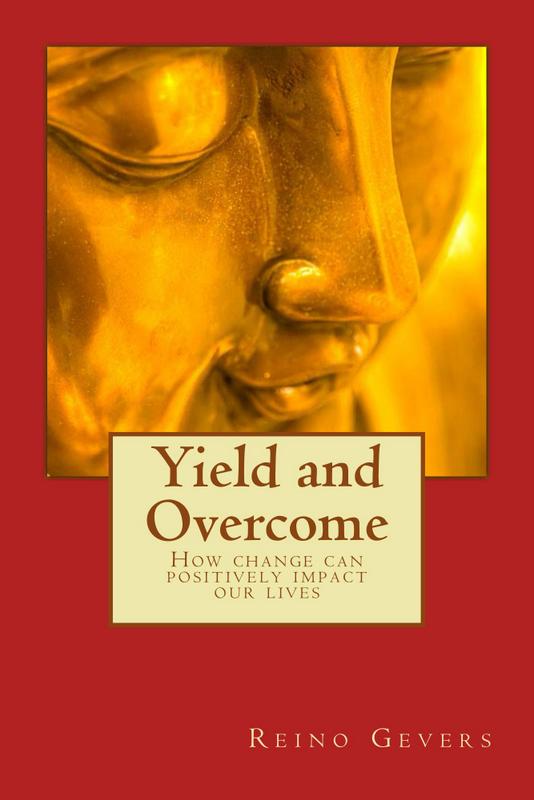
      Yield_and_Overcome_Cover_for_Kindle (2)


3 Comments

Filed under happiness, humanity, lifestyle management, self-development, spirituality, Uncategorized

Yielding to Nature

Our ancestors and the ancient tribes were firmly entrenched in the philosophy of the yielding to the forces of nature as opposed to the modern mindset of conquering and extracting from the earth.

img_1685

On some of my lengthy hikes on the Camino in Spain, the routes inevitably take you along busy country roads. Tons of rubbish including plastic bags, tin cans, plastic bottles and cigarette butts are carelessly thrown out of car windows by passing motorists.

It has a devastating effect on other living beings. I’ve seen cows and goats munch plastic bags and hedgehogs trapped in rubbish. More disturbingly sacred crosses and way markers are defaced by graffiti.
Much can be attributed to the disconnect of modern man to his natural surroundings. Nature is a manifestation of God and not without reason have the wise teachers of old described time spent in nature as our best healer.

Any person who has spent alone time in the African bush or hiked alone for hours in pristine nature will soon become aware of the awesome marvel of creation and the inter-connectedness of all living beings. God can be seen live working in slow motion.

Humanity will only survive when we recognize that the sacred within is also the sacred without.

For centuries Christianity has had a false understanding of man’s role in nature based on misinterpretation of the old testament of the bible in Genesis 1:28 in which man is given the cultural mandate to subdue and rule over the earth:

“And God blessed them, and God said unto them, be fruitful, and multiply, and replenish the earth, and subdue it: and have dominion over the fish of the sea, and over the fowl of the air, and over every living thing that (Heb. creepeth)  moveth upon the earth.”

Especially the translations of “subdue” and “dominion” from the Hebrew have different meanings. Rather than exploitation and domination the call to humanity by God is like that to a king to take care of the weak and poor in his kingdom. Man is called to preserve the natural beauty of the environment entrusted to him and to restore those places that have been harshly affected by force and hardness of rule.

The lost gospel of St. Thomas, that was discovered in Egypt in the 1940s, has a far more mystical interpretation of many of the biblical interpretations. Rather waiting for the Second Coming of the Christ, the lesson espoused here is all about nurturing and discovering the Christ Within−closely resembling what is described in Buddhism as discovering the Buddha Nature.

The Medieval interpretation of Nature was that of a harsh alien environment, that needed to be conquered. Paradise and a life of bliss could only be expected after death and resurrection.

In contrast the eastern Daoist tradition is all about the yielding to the laws of nature. The philosophy of the Five Elements in essence is about the right timing in accordance with the laws of nature. The harmony of objects and things in Feng Shui, the cultivation of the life-force energy of Chi in the body with nutrition, Qi Gong and Tai Chi and the ancient Book of Wisdom, the I Qing, all are built on the foundations of the Elements.

Likewise the Greek, Roman and Medieval cultures placed great emphasis on building their temples and cities in harmony with the natural environment. These cultures were still steeped in myth and legend while the modern world is dominated by the economic.

Modern man’s environment−often in an urban concrete jungle, is very much a contributing factor to the alienation from nature and the loss of soul purpose. It is beginning to change. As humanity moves to a raised consciousness we rediscover old teachings that were anything but primitive.

Reino Gevers – Author, Mentor and Consultant

https://www.reinogevers.com

      Yield_and_Overcome_Cover_for_Kindle (2)


Leave a comment

Filed under Camino de Santiago, environment, happiness, lifestyle management, plastic, psychology, raised consciousness, Uncategorized