When the Lights go Out

It doesn’t take a coup or a dictator to kill a democracy. Sometimes, the rot begins from within, in slow motion and in plain sight. 

Across America and other traditional democracies, the checks and balances that are foundational in free societies are being chipped away.

If history teaches us anything, it’s this: when authoritarianism rules everyone loses—freedom, dignity, truth, and the very social fabric that makes us human.

The grim reality of authoritarian rule

Envision yourself living in a country where even the mildest critique of the ruler could land you behind bars or strip you of your livelihood. The airwaves echo incessant hymns of praise for the leader, while simultaneously stoking hate towards both real and imagined adversaries. Meanwhile, your son lives in constant fear, knowing he could be conscripted at any moment into a futile war.

This is a grim reality in Russia and a growing number of countries, casting a shadow over the lives of its citizens. 

Alarmingly, this pattern could potentially spread to democracies where generations have relished unparalleled freedoms, blissfully unaware of the true implications of authoritarian rule and its pervasive influence on society.

Across the globe, we witness a gradual erosion of fundamental liberties and democratic principles. Even within Western democracies long considered bastions of stability, nefarious political factions are becoming mainstream, posing a major threat to the established order.

The Democracy Index for 2019 found that democratic backsliding across the world has led to the worst score since the index was first produced in 2006, with only 5.7 percent of the global population living in what could be considered a “full democracy.”

Rightwing extremist parties weakening entrenched democracies

A Berlin-based leading Civil liberties network has warned that the rule of law is declining across the European Union as far-right parties continue to weaken legal and democratic checks and balances. Liberties in entrenched democracies such as Sweden and Italy are in a gradual process of retreat and risk becoming systematic, according to the 2024 Liberties Rule of Law Report.

Democracy and civil liberties take many decades to be entrenched in society while it takes only one government to dismantle everything. Freedom of the press can be stifled overnight, opposition parties banned or intimidated, and judges and civil service members replaced with regime-friendly acolytes.  All this has played out in Hungary, once a democratic country but now under authoritarian rule of Victor Urban.

The frightening scenario is that the process takes place gradually and incrementally with an electorate sleepwalking into authoritarianism.

We need only to look at history to understand how quickly basic freedoms can be usurped when a society fails to heed the warning signs. Adolf Hitler’s ultimate plan to extinguish the Jewish population with a German Reich controlling all of Europe was clearly outlined in his 1925 autobiographical manifesto “Mein Kampf”, compounding existing beliefs, fears, and xenophobia.

When opinion becomes an entrenched belief when truth becomes a lie and the mind refuses to accept an alternative idea or perspective, it is but a short road to authoritarianism.

Hitler’s explicit racial theories were openly portrayed in “Mein Kampf” and in his speeches before coming to power: Jews, Slavs, and other non-Aryan groups were described as subhuman and deserving of extermination or subjugation. His vision for a racially pure society involved the systematic elimination of “undesirable” populations that eventually culminated in the Holocaust. People in the mid-1920s failed to fully comprehend Hitler’s intentions for territorial expansion (Lebensraum) and the establishment of a racially pure Aryan state.

The suppression of dissent, the elimination of political opposition, and the manipulation of propaganda to indoctrinate the German population with Nazi ideology was introduced gradually. The policy of appeasement with influential groups of Nazi sympathizers in the United States, Britain, and other countries, eventually paved the way for one of the darkest periods in human history.

Authoritarianism goes against all human dignity and essentially gives power to a single ruler or small clique that inevitably ends up enriching itself at a terrible cost to the majority of the population. It is a one-way street where everyone loses.

Democracy can only endure when it is grounded in a robust system of checks and balances, supported by a vigilant and critical civil society. The authoritarian regimes of the last century unleashed unimaginable catastrophes, including two world wars and a genocide unparalleled in human history.

At its core, democracy champions freedom of expression, individual liberty, and tolerance. It allows you to fully express and live your potential without fearing repression and control by a state. 

Democracy can be chaotic, messy and loud, allowing a platform and freedom of speech for everyone.

Yet, these very values are increasingly vulnerable to exploitation by extremists. Before we fully recognize the threat, power can fall into the hands of individuals whose sole aim is personal advantage, subjugation and control.

Authoritarianism, grounded in fixed belief and fanaticism ultimately creates a toxic emotional state, blending fear, anxiety, and anger. It fosters dehumanization, deepens political polarization, and fractures social cohesion.

On a personal level, it becomes a significant barrier to self-growth and spiritual evolution. In a rapidly changing world, adapting is essential for survival. Clinging to rigid beliefs not only limits personal transformation but also blinds you to the new opportunities and possibilities the universe continually offers.

Reino Gevers – Author –  Mentor – Speaker

P.S: If you enjoyed this article you might be interested in my very latest book: Sages, Saints and Sinners Get it today on Amazon, Barnes & Noble and where all good books are sold.

Leave a comment

Filed under humanity, ideology, psychology, Uncategorized

Can religion be an addiction?

Times of uncertainty and rapid social and economic change provide fertile ground for a proliferation of religious and political cults offering „easy solutions“ for deeper underlying issues.

In a positive sense religion can offer sanctuary for like-minded people providing a framework of meaning in a chaotic world. Codes of behavior are offered as a means of salvation from an often unbearable life in the here and now.

It becomes unhealthy where it turns into an addiction characterized by compulsive behaviors and the inability to perceive or discuss any other perspective or alternative.

Adherents might engage in activities to the point where it disrupts their daily life, relationships, work and responsibilities – common to all addictions.

It becomes a coping mechanism, deflecting an underlying past trauma, loss or hurt. Sect and cult leaders are particularly successful in recruiting individuals going through a particularly vulnerable period in their life.

Control and Isolation

The control mechanisms of a cult can be on a very subtle emotional level. Once the member has gone all-in by severing long-term relationships, it becomes very difficult to return to the old life. Few people will admit to having made a mistake or having made the wrong decision after sacrificing the best years of their life and donated all their money to the “movement” or “cause.” We are hard-wired as social beings and it gets very difficult to leave “the cult family”. Those who leave are vilified as traitors to the cause, threatened and in extreme cases harmed physically and mentally.

Group-Think, Lies and Deception

Once in the cult or religious movement you are part of the „group-think bubble“ . Members expressing the faintest doubts or engaging in a critical discourse about the objectives of the movement or the leader are shamed, coerced and brought into line. They will be told that they are “in their ego”, have sinned or strayed from the path. They will be playing on a core fear of most humans – the fear of being excommunicated from the safety of the tribe.

Financial Exploitation

A common denominator of all cults is the financial exploitation of their members. They will be asked to contribute membership fees, provide funds for a new temple, pay for the private jet or the legal fees of the cult leader. At times members would have to donate all their assets to the movement for “the common good” as a sign of their commitment and loyalty. A small portion might be channeled to real charities as a marketing ploy while the major portion will be kept by the cult leader for his personal needs.

Exploitation of vulnerabilities

The political cult and charismatic leader at its head will ensnare you if you haven’t dealt with your shadows such as anger and fear or transmuted a traumatic experience.

Addiction to a belief has to be treated like any other addiction. First and forement there is the need for an honest recognition and acceptance of the problem. What lifestyle changes, support groups and therapy are necessary? What would my life look like without the addiction? What freedoms would I be enjoying? How can I prevent relapse and find supportive friends with a higher vibrational energy?

If you are drawn to a charismatic leader with a hate-filled, and vindictive messaging, ask yourself: “What anger within me is he tapping into? What can I positively change in my life now, instead of placing my hopes in the “political messiah.”?

Walking the path of your highest calling in personal freedom and liberty is foundational to fulfilling your soul destiny and living a life of bliss. You can pick and learn from the gems and wisdom of many teachers past and present. But if you should run into that religion, sect or cult offering the one and only perfect solution, it might just sound too good to be true.

Experiential spirituality

While experiential spirituality can exist within the context of organized religions, it transcends traditional religious boundaries of what to believe, and how to behave. There is a direct personal experience of the divine, through a sacred, or transcendent state of consciousness, and cannot be defined.

Practices closely associated with experiential spirituality include meditation, prayer, music, contemplating sacred art, and deepwalking pilgrimages.

On the path of experiential spirituality, you are never truly done. You continuously grow, make mistakes, learn, and discover along the way. Rather than adhering to a fixed moral code, you develop an intuitive situational awareness that guides you toward higher or lower vibrational paths.

Once on the journey, it fosters a profound sense of connection with the cosmic order and the essence of life, kindling a deeper feeling of peace, love, and interconnectedness that transcend doctrine or belief.

In the words of 13th-century Mystic Meister Eckart:

“The knower and the known are one. Simple people imagine that they should see God as if he stood there and they here. This is not so. God and I, we are one in knowledge.”

Reino Gevers – Author – Mentor – Speaker

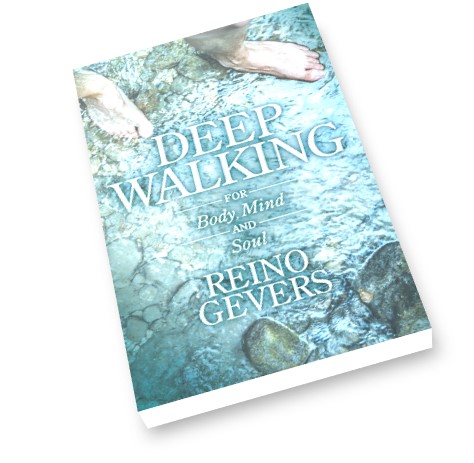
P.S. I’m excited to announce the release of my latest book, “The Turning of the Circle: Embracing Nature’s Wisdom for Purposeful Living.” If you enjoy it, you might also be interested in my previous works, “Deep Walking for Body, Mind and Soul” and “Walking on Edge: A Pilgrimage to Santiago.” You can find all of these titles at reputable bookstores near you.

Leave a comment

Filed under deep walking, meditation, mental health, nature, religion, spirituality

Truth of the Heart

Just having completed the Camino Aragonese pilgrimage route in northwestern Spain, I was deeply inspired by the diverse landscapes, rich vegetation, and the symphony of nature that emerges when human noise recedes.

Immersing oneself in nature reveals the interconnectedness of all living beings. Nature is an expression of the divine, with diversity as a fundamental principle of creation.

In times when external voices grow increasingly loud with hate-filled tribalism and ethnocentricity, the truth of the heart becomes paramount.

Monoculture is lifeless

Compare a lifeless monoculture with a meadow buzzing with the sound of birds, insects and the aroma of wild herbs and a multitude of flowers.

Thoughts and beliefs – religious, philosophical or political – have become so much part of tribalist identity that some people would rather die than admit that they have all along placed the ladder against the wrong wall.

Attachment to fanaticism in all shape and form hardens mind and body, and is one of the biggest obstacles to personal growth and elevation of consciousness.

One humanity or chaotic tribalism

Currently humanity is at the cusp of an elevation of consciousness of a one humanity or regressing into another chaotic age of divisive tribalism, nationalism, and intolerance.

There have been brief periods of enlightenment in the past when faith was more experiential in nature, with individuals gaining higher insight through contemplation, art and music.

Beautifully restored Romanesque cathedrals, especially in Jaca and Sanguesa, on the Aragonese route provided sanctuary in medieval times for quiet contemplation and inspiration from sculpture at a time when most people were illiterate.

Divinely inspired music and art

Later construction of the grand cathedrals such as Notre-Dame in Paris and Chartres, with their stunning stained glass windows inspired awe and devotion.

During the Renaissance era religious art with masterpieces by artists such as Michelangelo, Leonardo da Vinci, and Raphael communicated complex theological ideas through visual means.

Sacred music by composers such as Johann Sebastian Bach, and Beethoven created elaborate musical compositions elevating the liturgical experience and deepening the spiritual experience, connecting with the divine in profound sensory-rich ways.

When a religion degenerates into claiming the ultimate truth, subjugating its members into what to believe and how to behave, there is empty ritual and stagnation. The head-mind closes the door to the heart-mind and the whispers to the soul.

Reino Gevers – Author – Mentor – Speaker

P.S. I’m excited to announce the release of my latest book, “The Turning of the Circle: Embracing Nature’s Wisdom for Purposeful Living.” If you enjoy it, you might also be interested in my previous works, “Deep Walking for Body, Mind and Soul” and “Walking on Edge: A Pilgrimage to Santiago.” You can find all of these titles at reputable bookstores near you.

Leave a comment

Filed under deep walking, Pilgrimage, spirituality, Uncategorized

Light into a world beyond

A ray of light travels into a chamber, illuminating a spiral motif representing a vortex for the dead in completion of their journey from this world into the „other world“.

The phenomenon at an ancient site in Newgrange, Ireland, is thought to date back 2800 BC and occurs every year on December 21st, marking the shortest day and longest night of the year in the northern hemisphere.

At Stonehenge, in the United Kingdom, another ancient site from the Bronze Age, the sun rises behind the entrance of a stone circle illuminating the Centre.

The lives of ancient cultures were closely intertwined with the laws of nature and the transition of the seasons and were elaborately celebrated in ritual and religious ceremony.

Modern man’s disconnect from nature and spiritual essence appears to be at the root of much of today‘s confusion and mental instability. Our modern versions of Christmas, Easter and Thanksgiving are a poor reflection of their original spiritual meaning.

The celebration of the birth of Christ in Bethlehem, comes just after the winter solstice, representing victory over darkness, rebirth, and hope over fear.

The hope of the guiding star

The guiding star that led the Magi to the birthplace of Jesus, represents hope, divine guidance, and the birth of a significant spiritual event, signifying the arrival of a special and transformative moment.

The celebration of the birth of Christ is associated with an annual inner spiritual rebirth of the “Christ within“

The ancient Mystics refer to each individual having a divine and spiritual essence connected to a higher consciousness.

In Christianity, it may be linked to the belief that Christ’s spirit resides within believers, guiding and influencing their thoughts, actions, and spiritual journey.

Connecting to the spiritual essence

In a broader sense, it can be found in various spiritual and philosophical traditions that emphasize inner enlightenment and connection to a higher reality.

The “Buddha Nature“ has the optimistic view that every individual can attain enlightenment through spiritual practice and awareness.

Defilements and obscurations that prevent enlightenment are considered temporary and removable.

The time between Christmas and New Year – a time symbolizing the transition from the old to the new – is of particular spiritual significance.

Whatever negative experience, loss and trauma you have experienced this year this quiet space can be spent for inner reflection and contemplation.

What addictive thoughts and beliefs are holding you back? What things are distracting you? What relationships are pulling you down into a lower vibrational field?

When the old can be released the path into the gateway of spiritual renewal and purpose opens.

Reino Gevers – Author – Mentor – Speaker

P.S. I’m excited to announce the release of my latest book, “The Turning of the Circle: Embracing Nature’s Wisdom for Purposeful Living.” If you enjoy it, you might also be interested in my previous works, “Deep Walking for Body, Mind and Soul” and “Walking on Edge: A Pilgrimage to Santiago.” You can find all of these titles at reputable bookstores near you.

2 Comments

Filed under raised consciousness, spirituality, Uncategorized

The Spiritual Meaning of Christmas: Hope Is Born in the In-Between Time

Just because you have walked through a dark past does not mean your story ends there. Christmas carries a deep and enduring message of hope.

The ancient mystics understood that time is an illusion, teaching full presence as eternity touching the present moment.

The days between Christmas and the New Year were honoured as the in-between time where endings soften and new beginnings quietly form.

Christmas is an invitation into this holy simplicity. The birth of Christ did not take place in a palace but in an unremarkable shelter, rough with straw and shadow. Yet kings traveled great distances to kneel there and pay homage.

This is the great paradox of Christmas: divinity arrives hidden in the ordinary. Love reveals itself not in grandeur, but in humility. The sacred is often found exactly where you least expect it.

In this season, you are gently reminded of your own worth. You are worthy of love. You can learn to love yourself, even the parts shaped by fear and survival. When you dare to face your fears with compassion, you begin to gather the tools for healing and growth. Peace is uncovered from within.

The Christmas story is also a story of clearing space. The stable had to be emptied and prepared to receive new life. In the same way, this season invites you  to release old entanglements, to lay down burdens that are no longer of service, and to allow the soul to breathe.

As you learn to care for yourself with gentleness, you become more capable of caring for others in the wider human family. 

This is the quiet miracle of Christmas: when love is born within, it radiates outward, warming a broken world in need of hope.

Reino Gevers – Host of the LivingToBe podcast

P.S.: If you enjoyed this article, you might be interested in my latest book, Sages, Saints, and Sinners. Get it today on Amazon, Barnes & Noble, and wherever good books are sold.

Leave a comment

Filed under spirituality, Uncategorized

Redefining Masculinity: Traits Young Men Need Today

It has become a common story: a mother quietly confesses that her 30-something son is still living at home, unemployed, spending most of his days in the basement playing PC games—while his sister is thriving on every level and living the life of her dreams.

Figures from the United States, the United Kingdom, and the European Union reflect a rising trend: an estimated one in five men over 30 still lives in the parental home. Meanwhile, 63 per cent of men aged 18–29 are single, while women are surpassing their male counterparts in both education and income.

My recent Blog post on “Young Men: Angry, Isolated and Armed” touched a nerve because it captured something unfolding quietly but urgently: amid a growing mental-health crisis, young men are withdrawing into isolation or channelling their shame and frustration into outdated, hyper-aggressive role models, many of them fueled by right-wing extremist groups.

Technological and cultural shifts have opened unprecedented opportunities for young women—changes that their mothers and grandmothers could only dream of. Equal opportunity and equal pay were long overdue. But the traditional image of masculinity as the stoic provider, unflinching warrior, emotional brick wall, no longer fits into a modern world in which connection, communication, and adaptability matter more than ever.

So what are young women seeking in a partner today? And how do we define healthy masculinity in this new landscape?

Across many studies, three traits consistently appear as the most desired qualities in a long-term partner: kindness, intelligence, and confidence. They are foundational to stable relationships, but they are also widely misunderstood.

Kindness is not passivity or people-pleasing. It is emotional steadiness, especially in times of struggle or pain. It shows up in how a man treats others, especially family members, friends, and strangers. Men high in kindness respond to stress with calm problem-solving rather than withdrawal or aggression. Kindness begins with self-respect; young men must learn to accept and care for themselves before that inner stability can radiate outward.

Intelligence is not about high IQ scores or academic pedigree. It is the ability to navigate life with self-awareness, adaptability, and emotional understanding. Intelligent partners can manage their emotions, communicate clearly, listen actively, and reflect honestly on their own behaviour. They do not hide behind logic to avoid vulnerability or connection.

Confidence is perhaps the most misinterpreted trait of all. True confidence is quiet, grounded self-assurance—not the loud, performative “alpha” posturing that dominates so much online discourse. Confident men know who they are and do not need to brag, dominate, or seek constant validation. They can have difficult conversations without collapsing into defensiveness. They avoid unnecessary conflict—not from fear, but from maturity. This is where healthy masculine strength shows its true form: protective, steady, and principled.

These three traits aren’t random. Together, they form the bedrock of a healthy long-term relationship: a partner who is emotionally safe, self-aware, capable of repair, and stable during conflict.

To make this more tangible, here are some widely recognised men in entertainment who are publicly perceived as embodying kindness, intelligence, or confidence, while acknowledging we cannot know their private lives:

Keanu Reeves is often cited as the gold standard of humble, grounded kindness, giving generously without seeking credit. Tom Hanks represents steadiness and emotional warmth and is seen as approachable and gracious.

Ethan Hawke, symbolises intelligence as a deeply reflective and thoughtful artist. He writes books, directs films and speaks creatively with nuance. John Krasinski balances his humour with intelligent storytelling.

Men who symbolize grounded confidence are Idris Elba with a calm, steady presence and Mahershala Ali (Green Book) who embodies a quiet power and self-assurance.

The crisis facing young men today is not simply about a lack of economic opportunity; it is a crisis of identity. As society rapidly evolves, many young men are left without a clear model of what it means to be strong, successful, and valued in today’s world. But the path forward is not found in nostalgia for outdated roles or in reactionary anger. It lies in cultivating traits that make relationships—and communities—thrive: kindness, intelligence, and confidence grounded in self-awareness rather than ego.

If young men can embrace these qualities, they won’t just meet the expectations of a fast-changing world—they will exceed them. And in doing so, they will rediscover a masculinity that is not lost, but evolving: resilient, emotionally present, relationally strong, and profoundly needed.

Reino Gevers – Host of the LivingToBe podcast

P.S.: If you enjoyed this article, you might be interested in my latest book, Sages, Saints, and Sinners. Get it today on Amazon, Barnes & Noble, and wherever good books are sold.

Leave a comment

Filed under mental health, mental-health, psychology, purpose

Transforming Pain: Cultivating True Gratitude

You may find yourself in the midst of one of life’s more challenging chapters marked by grief, uncertainty, or loss. Then, as if on cue, a well-meaning friend offers the familiar advice: “Just be grateful.” In that moment, you might feel an angry urge to say: “You don’t understand.” And the weight grows heavier when you begin comparing your life to those who seem happier, wealthier, healthier, or younger, as if their brightness somehow dims your own.

But here’s the deeper truth: you cannot silence authentic emotions such as sadness, despair, or fear by layering them with forced gratitude. Emotional honesty is not weakness; it’s the foundation of healing. Gratitude only becomes meaningful when it arises from a place of full acceptance and when you allow yourself to feel everything that is part of you without self-judgment.

“I am feeling sad. I am disappointed. I am angry. And still, there are things I can be grateful for.”

This is where healing begins. When you make a habit of connecting the dots between past experiences and present growth, you start to see a deeper pattern.

There comes that quiet reassurance that the universe has always had your back. Even the darkest moments often conceal unexpected blessings, pushing you to tap into inner reserves of strength and begin anew.

I’ve lived through many moments of profound despair, and I suspect you have too. Relationship breakdowns, the untimely loss of loved ones, financial setbacks, and health scares. Yet in hindsight, these painful milestones have often marked the beginning of something transformative.

Technologically, humanity has made extraordinary progress in recent decades. But this advancement has come at a steep personal and environmental cost. Our lives today are faster, more connected, and paradoxically more stressed. We have more time than any generation before us, and yet time has become our most precious, elusive commodity.

This revolution forces us to confront an ancient question:

What truly makes you content and fulfilled?

The thrill of a shiny new object fades quickly. What endures is meaning and purpose.

Every extreme carries within it the seed of renewal. The technological age has amplified our left-brain — analytical, data-driven, “spreadsheet” thinking — while the right-brain, our intuitive, creative, and spiritual side, remains undernourished. Yet it is this neglected dimension that holds the key to balance.

We are not just rational beings. We are playful, imaginative, soulful creatures. Reclaiming that part of the self — and integrating both hemispheres of the mind — is the challenge of our time. Just because you are going through a dark chapter, doesn’t mean you cannot have a beautiful life. Peace comes from going all in on accepting yourself and building on the habits and tools that elevate healing and growth.

How can I do a reset?

Begin with small, intentional rituals that reconnect you to gratitude — not as a forced emotion, but as a recognition and acceptance of life’s complexity and beauty. Here are three daily practices to help you cultivate authentic gratitude:

Morning Reflection

Before reaching for your phone, take three minutes to sit quietly and ask: What is one thing I’m grateful for today — even if it’s small? It could be the warmth of a comfortable bed, the sound of birds, or simply waking up and still being alive, perhaps thanking God, or the universe for a new day.

Gratitude Journal

Each evening, write down three things that brought you comfort, joy, or insight — even if the day was difficult. Over time, this builds a reservoir of perspective and emotional resilience.

Sharing Gratitude

Make it a daily practice to express appreciation — whether through a heartfelt compliment, a sincere thank-you, or a simple kind word. When you share in someone else’s joy or gratitude, you amplify it. Gratitude shared is gratitude multiplied, and it deepens the bonds that connect us.

These rituals aren’t about denying pain or pretending everything is fine. They’re about honouring the full spectrum of your experience while gently creating space for light to return. Gratitude, when rooted in truth, becomes a quiet but potent force for healing, resilience, and renewal.

If the only prayer you ever say in your entire life is ‘thank you,’ it will be enough.”
— Meister Eckhart

This simple yet profound reminder by the great 13th-century Mystic invites you to see gratitude as a way of being and a sacred thread that weaves through joy and sorrow alike, anchoring you in the beauty of presence and opening to grace.

Reino Gevers – Host of the LivingToBe podcast

P.S.: If you enjoyed this article, you might be interested in my latest book, Sages, Saints, and Sinners. Get it today on Amazon, Barnes & Noble, and wherever good books are sold.

Leave a comment

Filed under gratitude, happiness, spirituality, Thanksgiving

Ancestry And The Power of Family Connections

I’ve just returned from a visit to my home country, South Africa, where I spent precious time with my family. In the early 1970s, my grandparents expressed a simple but profound wish: that all siblings and grandchildren gather in one place at least once a year. Remarkably, that tradition has held steady across five decades—interrupted only briefly during the COVID-19 lockdown.

In Africa, as in many traditional cultures, honoring ancestral lineage is a living practice woven into the fabric of family life.

This visit reminded me how deeply our sense of belonging is shaped by the stories, sacrifices, and silent loyalties held within our ancestral line. Knowing where we come from brings coherence to our life story. It roots us not only in a biological lineage but in a web of relationships that existed long before we were born. We carry within us more than DNA. We inherit emotional imprints, unfinished business, unspoken family secrets, but also the resilience, courage, and wisdom of those who walked before us.

Strong scientific research suggests that emotional trauma can leave detectable “marks” on our DNA via epigenetic mechanisms. One of the most well-known studies conducted in this field is by Rachel Yehuda, who analysed DNA from Holocaust victims and their children and grandchildren.

Another powerful therapeutic method in understanding inheritance from past generations is Family Constellations, developed by Bert Hellinger. Family Constellations in a therapeutic setting reveal that each one of us is part of a larger “family soul,” where the fates of earlier generations continue to echo through the lives of the living. Unresolved trauma, exclusion, or injustice in previous generations often resurfaces, seeking recognition. Not out of punishment, but out of love—an unconscious loyalty to those who were forgotten, silenced, or burdened.

Acknowledging the Past

Honouring lineage, therefore, is not about idealizing the past. It is about acknowledging it truthfully. When we make space for the full story—including the painful chapters—we interrupt patterns that no longer serve us. Family Constellations teaches that healing begins when everyone in the family system is given a rightful place, when nothing is denied, and when love can flow freely again.

My own family history bears the marks of migration, political upheaval, cultural transformation, and questions of faith stretching across continents and centuries. There are chapters full of courage and hope, and others marked by sorrow, loss, and difficult choices. These stories live in me. They shape my worldview, my fears, my strengths, and even the questions I wrestle with spiritually.

Understanding our lineage reveals patterns that help us connect with purpose, destiny, and meaning. It doesn’t require us to condone the failures or blind spots of previous generations, but to see them within the consciousness of their time. Every generation faces its own challenges and limitations. By acknowledging this, we free ourselves from repeating what no longer belongs to us and reclaim the gifts that do.

In a world where identity feels increasingly fragmented and dislocated, returning to our ancestral roots offers rootedness and sanctuary. A reminder that we are part of a much larger story—one that began long before us and will continue to echo long after we have gone.

Reino Gevers – Host of the LivingToBe podcast

P.S.: If you enjoyed this article, you might be interested in my latest book, Sages, Saints, and Sinners. Get it today on Amazon, Barnes & Noble, and wherever good books are sold.

Leave a comment

Filed under psychology, purpose, spirituality

Your Superpower in a Loud Society

Knowing yourself is the beginning of all wisdom.”— Aristotle

Standing guard at the doorway of your mind has become essential to maintaining spiritual and mental health in an age where our minds are drowning in information but thirsting for wisdom.

What you feed your mind, you ultimately become. A few careless minutes scrolling on your smartphone can trigger a cascade of emotions that can shape your entire day.

If you are reading this, you are likely one of the few who is actively reflecting on what is happening to us collectively.

Conflict and social disruption will always be part of the human condition—we are imperfect beings, after all. But we also carry within us the profound power of choice.

When the fringe becomes the megaphone

My impression is that the darker impulses of humanity are being amplified through the very technology meant to connect us. Fanatical fringe groups and those consumed by malice spend countless hours attacking others with hate-filled messages. Social media companies do little to halt this simply because emotionally charged content fuels engagement—and engagement fuels profit.

We may believe we are in control of what enters our minds, but for most people this is not true. Social media and search engine algorithms quietly track our behavior and serve up the content we are most likely to consume. In doing so, they shape not only our preferences, but our thinking.

Echo chambers of belief

Beliefs and opinions are constantly being reaffirmed within separate realities—information bubbles where each group hears only the echoes of its own worldview. Families, friendships, communities, and even congregations are fracturing along these invisible but powerful dividing lines.

What we need is a collective pushback from the quiet majority: the rational, thoughtful, grounded people who do not fall for emotional manipulation. That resistance begins by asking simple but profound questions:

Is this information expanding my energy or diminishing it?

Is it helping me grow, evolve, and reach my full potential?

A common misconception is that knowledge, information, and education alone equal wisdom. Yet many highly intelligent people refuse to learn from their mistakes, cling to fixed mindsets, and resist deeper reflection—never realizing they have been backing the wrong horse all along.

The power of who and what you surround yourself with

True wisdom is innate knowledge shaped through experience. It is the quiet confidence of intuition and higher consciousness. When you choose to surround yourself with wise friends, nourish your mind with spiritual teachings, and seek guidance from grounded mentors, you naturally grow in wisdom.

Equally essential is practicing self-care by setting firm boundaries with people, media, and environments that deplete your mind, body, and soul. Self-care is not indulgence—it is alignment. It is taking time for silence, contemplation, and reconnection with your inner life.

Choosing this path gradually fills your life with greater happiness and contentment because you begin building a bridge to your soul. Your actions shift from serving the ego to serving the greater whole.

Reino Gevers – Host of the LivingToBe podcast

P.S.: If you enjoyed this article, you might be interested in my latest book, Sages, Saints, and Sinners. Get it today on Amazon, Barnes & Noble, and wherever good books are sold.

Leave a comment

Filed under meditation, mental health, psychology, purpose, spirituality, Uncategorized

Regression or Awakening?

Is humanity sliding back into conflict and cultural regression or are we standing at the threshold of, an era of peace, prosperity, and progress on every level?

I’ve been reading The Changing World Order by Ray Dalio, whose research into the cyclical rise and fall of empires is both sobering and fascinating. History, it’s said, never repeats itself—but patterns do. And for thousands of years, they have shaped the destiny of nations and civilizations.

Today, we find ourselves in a remarkable moment. Humanity is literally creating a parallel intelligence through AI—an evolution that will profoundly transform our world. Since the 19th century, the global economy has gone through repeated waves of disruption, followed by bursts of innovation and rapid growth.

According to Dalio, those who recognize these cycles early tend to emerge stronger, while those clinging to the past often struggle. History shows that generations shaped by hardship and resilience create wealth and progress—only for their descendants, raised in comfort, to grow complacent and begin the downward turn. The result? Rising inequality, social unrest, political polarization, and eventual fragmentation. Sound familiar?

The good news, as Dalio notes, is that downward cycles tend to be shorter than the long upward phases of creativity, optimism, and expansion. Each decline, though painful, clears the way for renewal.

So how can we prepare on a personal level?

Embrace change. Disruption is often a cleansing force, clearing the old to make space for the new. Shift your mindset. See the universe as working for you, not against you. Trust the seasons. Nature teaches us that endings are never final—they are part of a larger rhythm of rebirth and growth.

If we learn to move with the current rather than resist it, we may discover that what looks like decline is really transformation. Go with the flow of the river—and you’ll find yourself carried forward into the next great awakening.

Reino Gevers – Host of the LivingToBe podcast

P.S.: If you enjoyed this article, you might be interested in my latest book, Sages, Saints, and Sinners. Get it today on Amazon, Barnes & Noble, and wherever good books are sold.

Leave a comment

Filed under organisational structure, psychology, Uncategorized

The Sacred Bond Between Dogs and Humans

Yesterday, I had to make a very difficult decision in letting go of my beloved Dalmatian, Klara, who has been a faithful companion through the seasons of my life for over fourteen and a half years. Her gentle presence, unwavering loyalty, and unconditional love have been a constant reminder of the sacred bond that exists between dogs and their humans.

Dogs are spiritual beings. Their devotion and ability to love without condition form a bridge between the seen and the unseen, assisting us on our soul’s journey in ways we often only begin to understand when they are gone.

Every dog owner who has shared a deep bond with their four-legged friend will tell you that dogs can sense our emotions long before we consciously recognize them ourselves. They seem to perceive energy fields and emotional undercurrents that go beyond human understanding.

The Science Behind Emotional Connection

Interestingly, modern science is beginning to confirm what dog lovers have always known in their hearts. There’s now solid scientific evidence that dogs can detect and respond to human emotions through scent.

Studies using physiological measures — such as cortisol levels, heart rate, and fMRI brain scans — reveal that dogs can literally smell our emotional states. These scent cues influence their own behavior and even their stress responses.

  • A 2018 study published in Animal Cognition exposed dogs to sweat samples from humans who had watched either a scary or a neutral video. Dogs who sniffed “fear sweat” showed higher heart rates, sought comfort from their owners, and avoided strangers.
  • A 2022 study at Queen’s University Belfast trained dogs to distinguish between stress-related sweat and breath samples versus neutral ones. Astonishingly, the dogs identified the “stress” samples correctly 94% of the time after just a few trials.

These findings show that dogs can detect emotions such as fear, anxiety, sadness, and happiness through subtle chemical shifts tied to hormones like cortisol and adrenaline. They use this information to adjust their behavior — offering comfort, staying close, or becoming cautious — depending on what we’re feeling.

Dogs as Mirrors of Our Inner World

Beyond their empathy, dogs often mirror aspects of our own nature that invite us to grow.

  • A dog that shows exceptional love may be teaching us to open our hearts more fully.
  • A stubborn dog might be reminding us to loosen our own rigidity.
  • A loyal dog teaches us the deep beauty of steadfastness.

When I had a Rhodesian Ridgeback, it taught me the power of focus and presence. If my mind wandered during our walks, my dog would sense it immediately, pulling in all directions or breaking free to chase a rabbit. The lesson was clear: stay present.

Dogs even reflect us in surprising physical ways. Some adopt the walking gait of their owners — and there are remarkable stories of dogs developing a limp to mirror an injured owner, even walking on three legs in solidarity.

Timeless Companionship

When I was a teenager, I had a fox terrier named Stompie who would wait by the gate each day precisely at the moment I returned from school. Decades later, Klara — who lost her hearing two years ago — would still be waiting on the terrace just minutes before my arrival, somehow sensing I was on my way home. That intuitive bond transcends logic; it belongs to the language of love and connection that dogs seem to speak fluently.

The Neurology of Love

Recent studies show that the dog–owner relationship activates brain regions similar to those seen in the infant–mother bond. In dogs, the reward center of the brain responds more strongly to their owner’s voice than to that of a familiar person. More attached dogs show even greater neural activity when hearing their owner’s praise — evidence that the emotional connection runs deep on both sides.

At Harvard University, researchers are now studying how social bonds between children and their pet dogs develop over time — exploring whether these relationships can help reduce stress for both child and dog alike. The answers may help us better understand what many of us already know intuitively: love shared with a dog is healing, grounding, and transformative.

Klara’s passing has left a void in my home and in my heart but also a profound gratitude for the years we shared. Her spirit, like so many beloved companions before her, reminds me that love never truly leaves. It simply changes form, waiting patiently for us, just as our dogs always have.

Reino Gevers – Host of the LivingToBe podcast

P.S.: If you enjoyed this article, you might be interested in my latest book, Sages, Saints, and Sinners. Get it today on Amazon, Barnes & Noble, and wherever good books are sold.

Leave a comment

Filed under mental health, mental-health, psychology, purpose, Uncategorized

When a Society Loses its Mind

“It is not famine, not earthquakes, not microbes, not cancer, but man himself who is man’s greatest danger to man, for the simple reason that there is no adequate protection against psychic epidemics, which are infinitely more devastating than the worst of natural catastrophes.”
— Carl Gustav Jung, “The Undiscovered Self” (1957)

There’s a virus spreading faster than any we’ve seen before. It doesn’t attack the body, but the mind.
It’s called collective insanity, where whole groups of people begin to share the same irrational beliefs, emotions, and behaviors, drifting further and further from reality.

This kind of madness takes hold when critical thinking collapses and a free press is silenced or controlled. When truth becomes inconvenient, emotion and ideology take over. Falsehoods repeated often enough start to sound like truth, and soon, everyone is echoing the same slogans without stopping to ask, “Does this make sense?”

Collective insanity usually begins in times of deep economic and social uncertainty. The world feels unstable and frightening. During social unrest, war, economic turmoil, or disease, people crave certainty. They long for simple answers to complex problems, and for someone who promises to make everything right again.

That’s when a charismatic leader often appears, offering clear, emotionally charged explanations that seem to restore order. Dictators like Hitler, Mao, and Mussolini understood this perfectly. They demanded total obedience, convincing millions to surrender personal freedom, conscience, and judgment.

Strong emotions like anger, hate, and retribution spread quickly, almost like an infection of the soul.
We “catch” emotions from one another through something psychologists call emotional contagion. The more a narrative is repeated, the more real it begins to feel.

In authoritarian systems or cult-like movements, people learn to silence their doubts. To question is to risk punishment or exclusion, and so they conform. In time, they begin to believe the very lies they once only pretended to accept. (Experiments have shown this again and again, most famously by Solomon Asch, who proved that people will deny what they see if everyone around them disagrees.)

Collective insanity thrives where access to truth is restricted. It becomes especially dangerous when a small handful of billionaires control the flow of information or when social media algorithms feed us only what confirms our existing beliefs. These echo chambers create entire worlds of illusion, each reinforcing its own version of “truth.”

And once a society defines an enemy — witches, heretics, another race, or “the corrupt elite” — violence begins to feel justified, even noble. We see this pattern today in the growing attacks on politicians, judges, and journalists who dare to hold opposing views. The moral compass spins wildly when truth and empathy are lost.

The Way Out

History shows us that collective insanity inevitably ends, but often only after great suffering and when the truth finally comes out. The cult leader is exposed when there is no longer any denying of his sexual abuse. There is no longer any denying the authoritarian leader’s corruption, inept leadership and personal enrichment.
In Germany, the delusion collapsed when the war was lost, millions of lives had been lost, and the truth could no longer be denied. Putin’s Russia is possibly facing a similar scenario.
In South Africa, the Truth and Reconciliation Commission forced the nation to face the horrors of apartheid, allowing confession, grief, and healing to begin.

The path back to sanity always begins with truth-telling and with courage.
It takes brave souls, compassionate communities, and civic action groups to speak truth, even when it’s unpopular or dangerous. It takes emotional honesty and the willingness to face the grief, guilt, and fear without turning away.

When this is done collectively, something powerful happens. Healing begins.
We rediscover our shared humanity. Sanity and peace begin in the heart of each person who chooses truth, faith, and courage over fear.

Reino Gevers – Host of the LivingToBe podcast

P.S.: If you enjoyed this article, you might be interested in my latest book, Sages, Saints, and Sinners. Get it today on Amazon, Barnes & Noble, and wherever good books are sold.

Leave a comment

Filed under happiness, humanity, mass media, mental health, psychology, purpose

The COVID-19 Legacy: Social Fragmentation and Healing

Two years ago, the World Health Organization (WHO) declared that the COVID-19 pandemic was no longer a public health emergency. Yet its psychological and social aftershocks continue to ripple through societies, fragmenting communities once gripped by fear and fueling political extremism.

Several studies have now confirmed what many suspected: the pandemic and ensuing lockdowns had a profound impact on mental health worldwide. For the first time in history, scientists were able to observe the effects of collective fear on a truly global scale.

The Emotional Toll

While experiences varied across regions and communities, several broad patterns emerged:

  • Prolonged uncertainty, isolation, and fear led to widespread anxiety, depression, and burnout.
  • Eroding trust became a defining feature, as people grew confused and skeptical toward governments, media, and even science amid rapidly shifting information.
  • Collective grief settled over the world, a mourning not only for lost lives, but also for lost time, normalcy, and connection.

Shifting Social Landscapes

Communities fractured along new fault lines with differing views on vaccines, lockdowns, and mask mandates dividing families, friends, and neighbors.
Technology became both a lifeline and a liability: it kept people connected yet deepened isolation, fatigue, and exposure to misinformation and conspiracy theories.

The Mind–Body Connection

Emotional stress is one of the most significant threats to both mental and physical health. Neuroscience and medical research have long shown that chronic activation of the body’s stress response can harm nearly every system, especially the immune and cardiovascular systems.

  • The Whitehall Studies in the U.K. found that chronic job stress increases the risk of heart disease.
  • The Adverse Childhood Experiences (ACE) Study revealed that early-life emotional trauma elevates the risk of chronic illness in adulthood.

The link between mind and body is undeniable—but so too is our capacity for resilience.

Cultivating Resilience

Research shows that stress resilience or the ability to recover from emotional adversity can buffer these effects. Protective factors include:

  • Strong social connections
  • Spiritual or faith practices
  • Mindfulness and meditation
  • Regular exercise and restorative sleep
  • A deep sense of purpose or meaning

A Shared Awakening

The pandemic also ignited a global period of reflection on mortality, interdependence, and renewal. Many rediscovered spirituality, nature, and the quiet power of mindfulness. For perhaps the first time in modern memory, humanity was united by a shared awareness of its own fragility.

A Creative Rebirth

For me personally, the lockdown became a period of unexpected inspiration. It was during this time that I began writing my novel Sages, Saints and Sinners. In my research, I discovered haunting parallels between our modern experience and the Black Death of medieval times, echoing the same fear, isolation, and uncertainty, followed ultimately by rebirth.

Reino Gevers – Host of the LivingToBe podcast

P.S.: If you enjoyed this article, you might be interested in my latest book, Sages, Saints, and Sinners. Get it today on Amazon, Barnes & Noble, and wherever good books are sold.

Leave a comment

Filed under mental health, mental-health, powerbodymind, psychology, spirituality

The Death of Truth in the Age of Outrage

In the early days of my journalism career, truth was sacred. Senior editors drilled into us one golden rule: get your facts straight. Every story passed through three rigorous gateways before it ever saw the light of day. And still, errors slipped through. But at least we tried. Accuracy was our north star.

Fast forward to today, and the landscape looks unrecognizable. In this noisy digital wilderness, truth no longer leads the conversation, struggling to be heard at all. The media ecosystem is thick with half-truths, deception, and outright hate. It’s as if honesty has been shoved into the backseat while outrage grabs the wheel.

Outrage sells more than sex

There was a time when the media industry lived by the motto “sex sells.” Not anymore. The new currency is outrage. Social media giants have learned that anger drives engagement, and engagement drives profit. So, the algorithms are tuned to reward the most divisive, shocking, and hate-fueled content. The more we rage, the more we stay online, and the more the profit margin rises.

And the result? We see it all around us. Acts of kindness, respect, and compassion are drowned out by cruelty and contempt. Civil disagreement has been replaced by digital warfare. When hate becomes the loudest voice in the room, it doesn’t just poison our feeds. It poisons the mind. It reshapes how we think, speak, and treat one another, leaving empathy gasping for breath.

I’ve often pondered how individuals can fabricate and obscure with such unwavering conviction that one might almost be inclined to believe them. It dawned on me that evil isn’t merely a religious concept but a stark reality, inhabited by individuals devoid of all moral compass, whose behavior lies far beyond what society deems ethical or humane.

In the murky waters of social media, these purveyors of malicious messaging are easy to spot if we care to look more closely. They lack empathy and have no qualms about causing harm or suffering. They are masters of manipulation, twisting language and gaslighting their audiences until truth itself becomes unrecognizable. They crave control, using pressure, humiliation, and intimidation to assert dominance.

Externally, they often appear charismatic. They draw people in, earning trust while quietly advancing their own self-serving agendas. We see this pattern time and again, especially among political demagogues and religious cult leaders.

And here’s the uncomfortable truth: if you haven’t confronted your own inner darkness, your fear, anger, shame, and resentment, you are easy prey. These manipulators will tell you that your pain is someone else’s fault: the fault of those who look different, think differently, or believe differently. Once that narrative takes hold, it’s only a short step to blind allegiance, and then to violence.

Blind obedience is the enemy of truth. That’s why authoritarians always seek to destroy a free press — through lawsuits, legislation, imprisonment, torture, and finally murder, as we see in today’s Russia. Subservience and blind allegiance are the death knell of progress.

A free media and a free mind demand curiosity, nuance, and the courage to look between the lines. Authoritarianism thrives on division, drawing sharp lines between “us” and “them,” demanding loyalty to one story, one truth, one voice. But when we surrender our capacity for critical thought, we surrender reality itself. We live not in truth but in illusion.

In diverse societies like South Africa, the United States, Israel, or India, this danger is magnified. Each tribe, religion, or political party clings to its own version of truth, incapable of hearing another’s. From there, it becomes frighteningly easy to dehumanize the “other” — to see them as enemy, not neighbor. And from that poisoned soil, violence grows.

In Kabbalistic thought, this distortion is known as sheker — falsehood. It narrows our vision until reality itself bends and fractures. Truth, emet, by contrast, is expansive. It invites balance, curiosity, and humility. To tell the truth is not merely to report facts — it is to resist illusion and to participate in the divine work of sustaining and healing the world.

Because emet, truth, is eternal. Even when forgotten or ignored, it does not vanish. The truths we speak — the words we write, the stories we tell — become sparks of light woven into creation itself. Speaking truth is sacred labor. It matters, even when no one listens, even when the world seems to have moved on.

One of our most radical acts is to keep telling the truth, steadily, humbly, and with love. To quote the great 13th-century Mystic Meister Eckhart:

Truth is something so noble that if God could turn aside from it, I could keep the truth and let God go.”

Reino Gevers – Host of the LivingToBe podcast

P.S.: If you enjoyed this article, you might be interested in my latest book, Sages, Saints, and Sinners. Get it today on Amazon, Barnes & Noble, and wherever good books are sold.

Leave a comment

Filed under social media, spirituality