Monthly Archives: November 2026

The Difficult Art of Forgiveness: Why Letting Go of Hatred Is an Act of Liberation

The Christian concept of forgiveness, particularly the teaching of Jesus to “love your enemies”, is among the most profound and most frequently misunderstood teachings in the spiritual tradition. For many people, it sounds almost impossible. Is it truly possible to forgive someone who has committed a grave injustice against you? What about perpetrators of horrific crimes, abuse or violence? Does forgiveness mean overlooking what they have done, excusing their behaviour or abandoning the pursuit of justice?

These questions go to the heart of one of the most difficult challenges of spiritual life.

A recent interview with Donald Trump brought this dilemma into sharp focus. In a conversation with 60 Minutes correspondent Ross Douthat, Trump was asked whether he could forgive his political enemies, including James Comey and Nancy Pelosi, if doing so were necessary to enter paradise after death.

His answer was strikingly unambiguous: “No, because I do hate some of my enemies and I always will.”

It was an extraordinary admission, particularly from someone who describes himself as a religious person. Yet, beyond the political implications, his response raises a much more universal question: What happens to us when we allow hatred to become a permanent part of our identity?

In an essay in The Atlantic, Peter Wehner reflects on the exchange and argues that hatred ultimately corrodes not only our relationships with others but also our own capacity for joy, intimacy and compassion. He suggests that Trump’s public embrace of resentment illustrates how hatred, once indulged, can become self-perpetuating.

There is an important spiritual lesson here. Forgiveness is not primarily about the other person. It is about your own inner liberation and the freedom to live without being imprisoned by the injuries of the past.

What Jesus Actually Meant

When Jesus spoke about loving one’s enemies, he was not advocating passive submission to injustice or asking victims to excuse evil. His teachings were aimed at something much deeper: the transformation of the human heart.

In the Sermon on the Mount, Jesus challenges his followers to step outside the familiar cycle of retaliation and revenge. His message was radical because it challenged the assumption that wrongdoing must always be answered with further wrongdoing.

Violence and revenge create an endless chain reaction in which each generation inherits the anger and grievances of the previous one. The teaching to love one’s enemies is essentially an invitation to break that chain.

Forgiveness does not deny that a crime or injustice occurred. Nor does it remove the responsibility of the perpetrator to acknowledge the harm and face its consequences. Rather, it prevents the injury from becoming the defining force in our lives.

It is an invitation to respond differently, even when we have every reason to feel hurt, angry or betrayed.

The Danger of Cheap Forgiveness

There is, however, an important distinction between genuine forgiveness and the superficial version sometimes preached in religious communities.

In his essay, Wehner draws on the theologian Dietrich Bonhoeffer’s concept of “cheap grace” to describe what might be called cheap forgiveness: the expectation that we should simply forgive and move on, without properly confronting the pain that has been inflicted.

This is an important point.

Forgiveness cannot be forced, and it should not be rushed. To forgive someone immediately, without having acknowledged the depth of the injury, may simply mean that we have suppressed our feelings rather than worked through them.

The Christian psychiatrist Curt Thompson makes a related observation: genuine forgiveness requires remembering, not forgetting. We must be willing to revisit the experience, acknowledge what happened and allow the memory to be reshaped through reflection and, where possible, the support of others.

Otherwise, forgiveness can become a form of enabling. It may allow those responsible for causing harm to avoid accountability, remorse and the difficult work of changing their behaviour.

When South Africa confronted its brutal past during apartheid, a Truth and Reconciliation Commission was established. The deal was that victims had to be heard, and perpetrators were only granted amnesty if they appeared before the commission and admitted to their crimes. Archbishop Desmond Tutu, who chaired the hearings, understood very well that the nation could only move forward if it was not held captive by the past.

There is nothing spiritually enlightened about pretending that an injustice did not happen.

True forgiveness begins with honesty. It requires us to acknowledge the wound before we can begin to release its hold on us.

The Wisdom of the Mystics

Christian mystics and spiritual teachers throughout history have understood that resentment is not only a moral issue but also an emotional and spiritual burden.

When we cling to hatred, we imprison ourselves in a narrative that continually reopens old wounds. Our thoughts become consumed by the person who harmed us, and our emotional lives remain tied to an event that may have happened many years ago.

The person who caused the injury may have moved on, perhaps without remorse or even awareness of the damage. Yet we continue to carry the burden.

For the mystics, forgiveness was therefore a form of inner freedom. It meant releasing the emotional poison associated with the memory of an injustice and refusing to allow another person’s actions to dictate the state of our soul.

The medieval mystic Meister Eckhart spoke often about the necessity of inner detachment as a path towards spiritual freedom. In one of his teachings, he wrote:

“All that God asks you most pressingly is to go out of yourself… and let God be God in you.”

Eckhart’s insight points to something profound. As long as we cling to resentment, anger and the stories of our injuries, we remain trapped within the narrow confines of the wounded ego.

Forgiveness, in the mystical sense, is a form of letting go of that inner prison.

This does not mean denying the pain or pretending that something terrible did not happen. It means making a conscious choice not to allow bitterness to dominate your life.

The Cycle of Revenge

History offers countless examples of how easily those who have suffered oppression can become oppressors themselves when resentment and the desire for retribution go unchecked.

The French Revolution, which began with ideals of liberty and equality, descended into the violence of the Reign of Terror. The Russian and Chinese revolutions promised liberation from oppressive systems but ultimately produced new forms of brutality under Lenin and Mao Zedong.

In South Africa, the Afrikaner community, which had experienced British imperial domination and the trauma of the Anglo-Boer War, eventually became the dominant force behind an apartheid system that subjected millions of others to institutionalised racial oppression.

These examples are not historically identical, and the circumstances of each were different. Yet they illustrate a recurring danger: the belief that past suffering gives us the moral right to inflict suffering on others.

The same pattern can occur on a deeply personal level. A child who grows up experiencing abuse may, without recognising it, repeat similar patterns of behaviour as an adult. Someone raised in a household dominated by addiction may later struggle with the same destructive tendencies.

Trauma does not inevitably produce repetition, but unresolved pain can influence how we relate to ourselves and others.

Breaking these cycles requires more than justice alone. It requires awareness, accountability and, ultimately, inner transformation.

Forgiveness Is Not Reconciliation

One of the greatest misconceptions about forgiveness is the belief that it means excusing wrongdoing or restoring a relationship with the offender.

It does not.

Forgiveness does not require you to trust someone who has proven untrustworthy. It does not mean returning to a harmful relationship, abandoning personal boundaries or exposing yourself to further abuse.

Nor does it mean that justice should be sacrificed in the name of compassion.

You can forgive someone and still insist that they take responsibility for their actions. You can release your resentment while maintaining your distance. You can wish someone no harm without wanting them back in your life.

Reconciliation requires something more. It generally involves acknowledgement, remorse, accountability and a willingness on both sides to rebuild trust.

Forgiveness, by contrast, can be an entirely personal process. It does not depend on the participation or even the awareness of the person who caused the harm.

You may never see that person again. They may even be long deceased. Yet the anger, shame or pain associated with the experience can remain alive within you.

Forgiveness allows you to reclaim that inner space.

The Freedom to Let Go

The greatest obstacle to forgiveness is that we mistake letting go of resentment for surrendering our sense of justice. We fear that if we release our anger, we are somehow diminishing the seriousness of the wrong committed against us. But this is a false choice. We can demand accountability, defend those who have been harmed and oppose injustice without allowing hatred to take possession of our hearts.

The exchange between Trump and Douthat is revealing precisely because it exposes this dilemma so starkly. To declare that you will always hate your enemies is to make hatred part of your identity. It is to give the people you despise a permanent place within your inner life, allowing their actions to determine who you become.

James Baldwin once observed that people sometimes cling to hatred because they fear that, once it disappears, they will have to confront the pain beneath it. This is where the real work of forgiveness begins: not with the person who has wronged us, but with the courage to face our own suffering.

The teaching of Jesus to love our enemies was never an invitation to tolerate cruelty or abandon justice. It was a radical challenge to humanity to rise above the instinct for retaliation and recognise that hatred, however justified it may initially seem, ultimately diminishes the person who carries it.

Meister Eckhart’s teaching on inner detachment points in the same direction. Spiritual freedom requires us to release our attachment to the wounded ego and make room for something greater than our grievances.

Forgiveness does not erase the past. Nor does it guarantee reconciliation, restore trust or absolve the perpetrator of responsibility. It simply means that we refuse to allow yesterday’s injustice to dictate tomorrow’s life.

This is what Jesus was ultimately pointing towards in the Sermon on the Mount: not an impossible demand for moral perfection, but an invitation to a different way of being human.

The deepest act of forgiveness may not be to set another person free from the consequences of their actions, but to set yourself free from the hold those actions have over you. And that is where the journey towards inner peace begins.

Reino Gevers – Host of the LivingToBe podcast

P.S: If you enjoyed this article, you might be interested in reading one of my four books, available where all good books are sold.

Leave a comment

Filed under religion, self-development, spirituality

When did you last change your mind?

When did you last change your mind about something that you felt was really important to you?

Was it because somebody persuaded you to, or because it was convenient? Or did you experience something that made you question what you had always believed?

This can be surprisingly difficult for most people. One reason is that we often confuse opinion with identity.

Throughout your life, you construct an understanding of the world. Your beliefs and opinions are shaped, often in ways you are barely conscious of, by the families, communities and cultural environments in which you grow up.

They provide you with identity, security and a sense of belonging. They help distinguish right from wrong, friend from foe, and what you consider to be truth from what you reject.

But what happens when the beliefs that have shaped your understanding of the world are themselves fundamentally flawed?

When changing your mind takes courage

I grew up in apartheid South Africa, where racial separation was government policy. The country was divided into designated areas for different racial groups, a system sanitised by the authorities under the label of ‘separate development’.

As white children, we grew up knowing remarkably little about the lives of those outside our own sheltered world. The system was built on fear, suspicion and the oppression of people simply because they were different. Even more disturbing was the way apartheid was justified through religion, using biblical interpretations to legitimise racial discrimination.

Yet one man I had the privilege of meeting on several occasions found the courage to break away from this system with extraordinary moral clarity.

Beyers Naudé was a Dutch Reformed Church minister who had initially defended apartheid and its theological justification. But as he began questioning what he had been taught, his understanding changed. He came to recognise that apartheid theology had no legitimate biblical foundation and that his loyalty to the Gospel could no longer be reconciled with his loyalty to the church and the political establishment.

When he began speaking out, he was vilified by many of his former supporters as a traitor. He lost friendships, faced hostility and paid a considerable personal price for his convictions.

In October 1977, following the government’s banning of the Christian Institute, which he had founded, Naudé himself was subjected to a banning order. He was confined to his Johannesburg home and surrounding area, prohibited from preaching, meeting more than one person at a time and being quoted in public.

His story is a powerful reminder that changing your mind can require far more than intellectual flexibility. Sometimes it demands moral courage, particularly when doing so means turning away from the beliefs and institutions that have defined your life.

History offers other examples of people who displayed similar courage. Dietrich Bonhoeffer, the German theologian who resisted the Nazi regime, was executed in April 1945, only weeks before the end of the Second World War. In more recent times, Russian opposition figures Alexei Navalny and Boris Nemtsov paid with their lives for challenging the authoritarian political establishment.

These individuals could have chosen to remain silent and follow the prevailing consensus. What distinguished them was their willingness to look beyond the accepted narratives of their time, question what they had been taught and act according to a deeper sense of moral responsibility.

They remind us that sometimes the greatest act of courage is not to defend what we have always believed, but to recognise when it is wrong.

The comfort and danger of certainty

One of the greatest obstacles to personal growth is not ignorance, but the conviction that we already know.

When we become too attached to our opinions, we close ourselves off to alternative perspectives. We begin to see the world in binary terms: right or wrong, us or them, friend or enemy.

This way of thinking has deep roots in our evolutionary history. For much of human existence, belonging to a group offered protection, while strangers and outsiders could represent potential threats. Although the circumstances of our lives have changed enormously, some of these tribal instincts remain deeply embedded in our behaviour.

In today’s interconnected world, we are constantly exposed to different cultures, identities, beliefs and competing versions of the truth. Yet instead of becoming more open-minded, many people retreat into increasingly rigid positions.

Social media and digital algorithms can reinforce this tendency by surrounding us with opinions that confirm what we already believe. We become more entrenched in our own intellectual and ideological comfort zones, often interpreting disagreement as a threat rather than an opportunity to learn.

Clinging to familiar beliefs may provide a temporary sense of security in a rapidly changing world. But does it really make us happier, wiser or better equipped to understand one another?

Perhaps the opposite is true. The more rigidly we defend our convictions, the less room we leave for personal growth.

There is a profound difference between knowing about life and allowing ourselves to be transformed by living it.

The wisdom of not knowing

One of the most intriguing ideas in the writings of the 13th-century German mystic Meister Eckhart is that our understanding of the divine may depend less on what we know than on what we are prepared to let go of.

This is a radical idea because most of us approach life by accumulating knowledge. We develop beliefs, construct explanations and build an understanding of the world that gives us a sense of certainty.

But Eckhart recognised a paradox: sometimes the very things we believe we know become obstacles to deeper understanding.

His teaching of Gelassenheit is particularly relevant here. The German word conveys the idea of letting go, releasement and non-attachment.

Eckhart suggested that we must release not only our attachment to material things, but also our attachment to our ideas, expectations and even our concepts of God.

We create an image of God based on our upbringing, religious traditions, cultural assumptions and personal experiences. Yet we risk mistaking that image for the reality itself.

Eckhart’s mystical approach invites us to let go of these preconceived images and become receptive to something beyond our intellectual understanding.

His famous expression, often translated as ‘the eye with which I see God is the same eye with which God sees me’, points towards an extraordinary intimacy between human consciousness and the divine.

The underlying message is that our ideas about ultimate reality should never be confused with ultimate reality itself.

This insight extends well beyond religion. We do something similar with our understanding of other people, cultures and even ourselves. We construct mental images and assumptions, then mistake them for the whole truth.

Perhaps wisdom begins when we recognise the limitations of these assumptions and become willing to look again.

From knowing to becoming

This raises an interesting question: is wisdom something we acquire, or something we become?

We tend to measure knowledge by what we have learned, how much information we possess and how well we can explain the world around us.

Wisdom, however, is rather different.

A person may know a great deal about compassion without actually being compassionate. They may understand the philosophy of forgiveness without being able to forgive. They may have studied spirituality for decades without becoming more accepting, generous or peaceful.

There is a difference between understanding something intellectually and allowing it to transform the way you live.

One of the most important qualities of a wise person may therefore be the willingness to reconsider what they believe.

Intellectual humility does not mean lacking conviction or being unable to make decisions. Nor does it mean treating every opinion as equally valid.

It means recognising that our understanding is always partial, and that our experiences, upbringing and cultural conditioning influence how we interpret reality.

It means remaining curious, listening to perspectives that challenge our assumptions and having the courage to admit when we might be wrong.

Most importantly, it means being prepared to change.

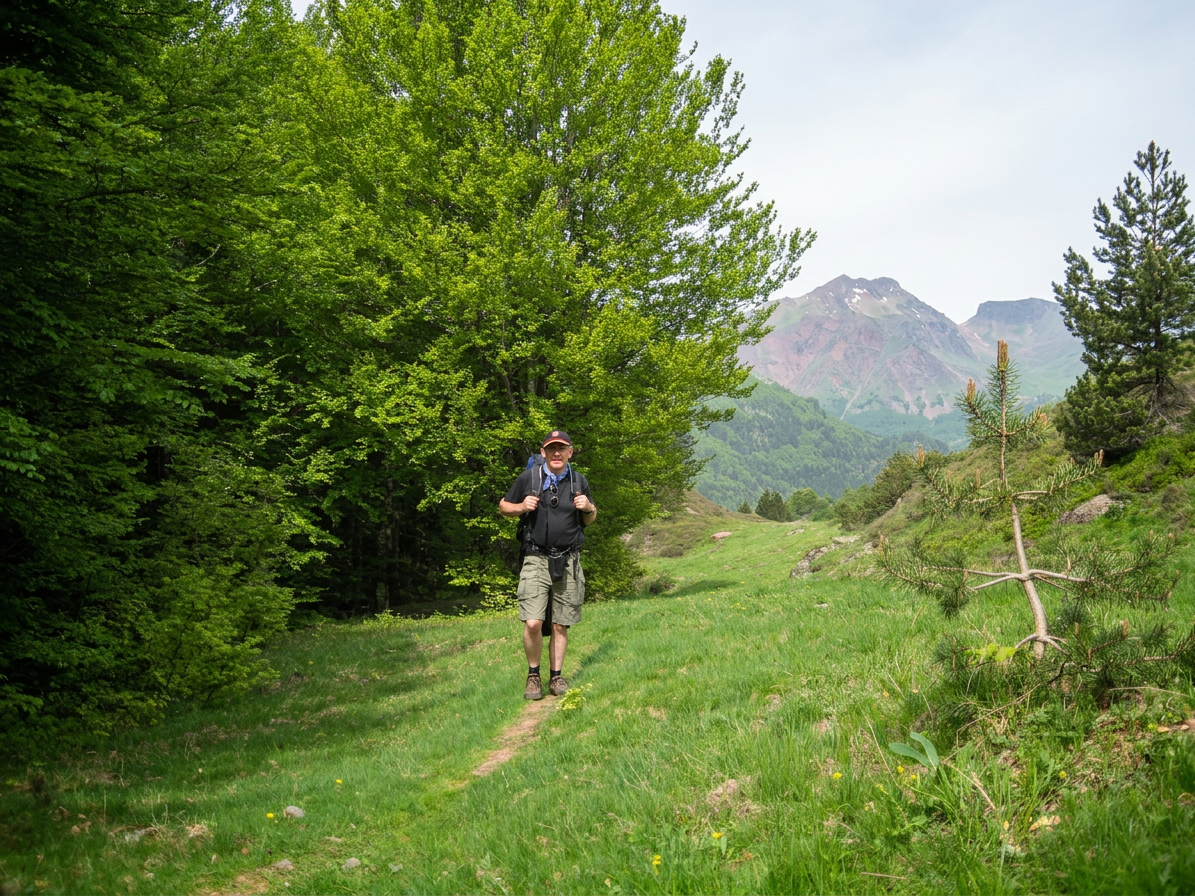
On the Camino Aragonese

The journey of becoming

We are continually shaped by relationships, encounters, disappointments, loss, travel, nature, reading and reflection. Experiences that once seemed insignificant may acquire an entirely different meaning years later.

This is something I have become increasingly aware of through my own journey, particularly after walking thousands of kilometres on the Camino de Santiago and immersing myself in the natural world.

Walking has taught me that understanding does not always come from seeking answers. Sometimes it emerges through the experience itself: the solitude, the unexpected encounters, the physical challenges and the simple act of being present.

Many of the ideas and convictions I held so firmly at 30 began to look different at 50, and different again now, in my late sixties.

I don’t necessarily regard this as evidence that everything I once believed was wrong. Rather, my understanding has deepened and, in some respects, become less rigid.

For instance, I have gradually stopped feeling the need to change other people’s opinions. I have come to accept that people see and experience the world differently, shaped by their own histories, circumstances and understanding. We do not always have to agree, nor do we need to convince one another that we are right.

There is a certain freedom in recognising that.

Perhaps the greatest paradox of the spiritual journey is that the more we learn, the more we begin to recognise how little we truly know.

For much of our lives, we search for answers. We construct belief systems, embrace philosophies and look for explanations that will make sense of the world and our place within it. There is nothing wrong with this. The search for understanding is part of what makes us human.

But there may come a time when we recognise that our beliefs, however meaningful, are only interpretations of a reality far greater than our ability to comprehend it.

The mystics understood something of this. They recognised that the journey towards deeper understanding sometimes requires us to let go of the very things we have spent a lifetime learning to hold on to.

Wisdom is not about becoming increasingly certain of what you believe, but about developing the humility to question yourself, the courage to change and the openness to embrace what remains unknown.

You may never arrive at all the answers. But perhaps that is not the point.

The journey is not simply about discovering what is true. It is about allowing what we discover to change who we become.

Reino Gevers – Host of the LivingToBe podcast

P.S: If you enjoyed this article, you might be interested in reading one of my four books, available where all good books are sold.
Leave a comment

Filed under religion, spirituality

Rediscovering the Sacred in the Natural World

Can we learn from history to restore our shattered ecosystems? This is the compelling question Sophie Yeo explores in her book Nature’s Ghosts.

Humanity has been reshaping the natural world ever since the transition from hunter-gatherer societies to agriculture, some 10,000 years ago. Forests were cleared, wetlands drained and landscapes transformed to make room for crops and permanent settlements.

What began as a gradual reshaping of our surroundings has, over millennia, evolved into an unprecedented disruption of the delicate ecosystems on which all life depends. Yet history may hold valuable clues to how we can begin to repair the damage and restore a more harmonious relationship with the natural world.

Before the agricultural revolution, human communities generally lived much closer to the rhythms of nature. Their relationship with the environment was one of immediate dependence, interaction and, in many cases, reverence. Even until relatively recent times, cultures across the world regarded trees, rivers and mountains not simply as resources but as living presences, deserving of respect and sometimes even worship.

There was an understanding, deeply embedded in many traditional belief systems, that humanity was not separate from nature but belonged to a much larger web of life.

The Earth’s climate, as Yeo’s research reminds us, has always undergone dramatic changes. Species have disappeared, others have adapted, and entire ecosystems have been transformed in response to shifting conditions. But never before has human activity altered the natural world on such an extensive scale and at such speed. The burning of fossil fuels is accelerating climate change, while plastics, nuclear waste, pesticides and countless other pollutants will remain in the environment for generations, in some cases for thousands of years.

This raises a fundamental question: why are we destroying the very environment on which our survival depends?

One explanation Yeo explores is our growing estrangement from nature. Rapid urbanisation and the transformation of modern lifestyles have gradually distanced us from the natural world. For many people, nature has become something outside ourselves: a landscape to visit, a resource to exploit or an amenity to enjoy in our leisure time. We have lost something of the awareness that we are part of nature, not separate from it.

I would take this argument a step further and describe it as a spiritual disconnect.

For me, nature is an expression of the divine. Not necessarily in a religious or institutional sense, but as an experience of something greater than ourselves: the mysterious intelligence, interconnectedness, and creative force that permeates all living things. A tree growing towards the light, the intricate balance of an ecosystem, the changing seasons or the quiet persistence of life itself can all evoke a sense of wonder and belonging.

When we begin to see ourselves as part of this larger whole, our relationship with the natural world changes. It also changes our relationship with ourselves. Self-love and self-expression acquire a different meaning when we recognise that we are not isolated individuals, but expressions of the same living world. Caring for ourselves and caring for nature are no longer separate concerns. Both become ways of honouring life.

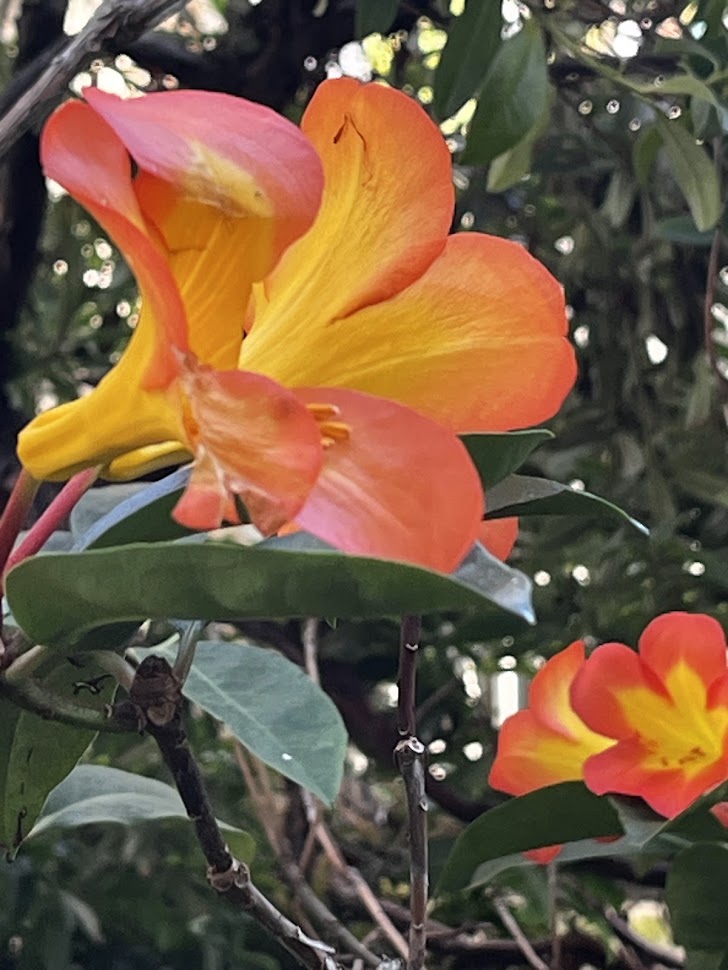
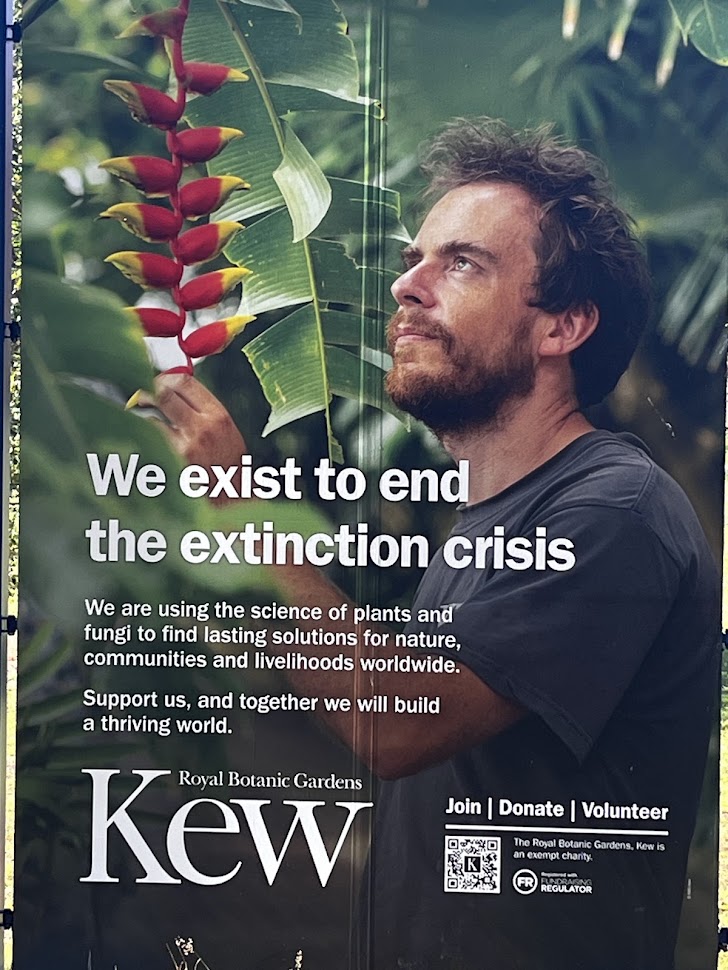
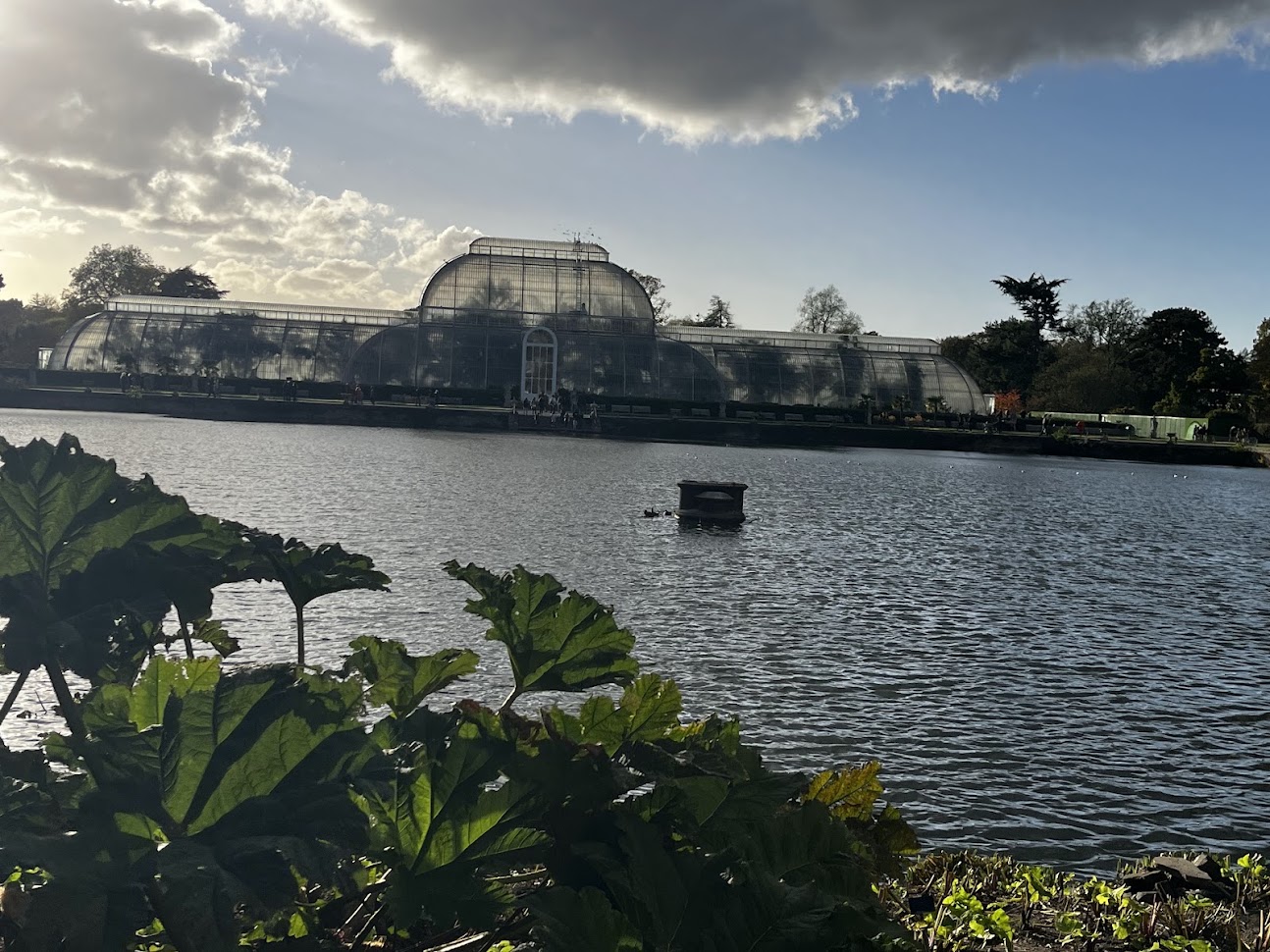
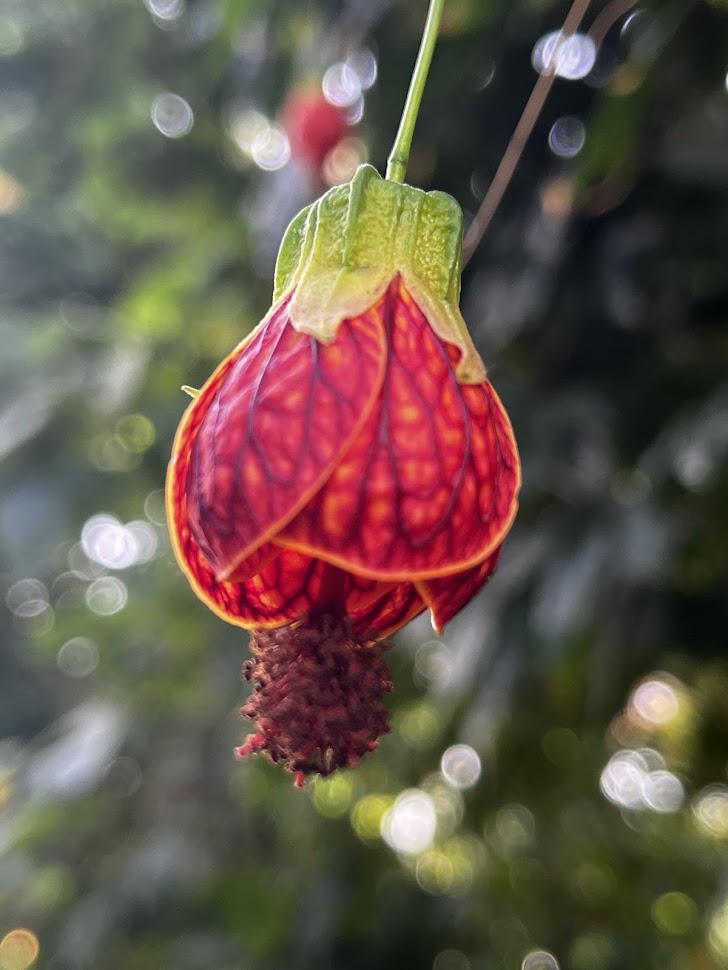
I was reminded of this during a visit to Kew Gardens in London last week. The gardens contain an extraordinary collection of endangered plants and trees from different parts of the world, many of them being carefully preserved and studied by dedicated scientists. I was particularly fascinated to learn that researchers are now using artificial intelligence to help identify and prioritise the species most at risk.

There is something deeply moving about this combination of ancient life, scientific knowledge and modern technology. It suggests that our relationship with nature need not be defined solely by exploitation and destruction. Human intelligence and ingenuity can also be placed in the service of protecting and sustaining life.

Perhaps the work at Kew Gardens points towards the kind of future Yeo envisages. One of the important lessons of ecological history is that ecosystems rarely return to precisely the state they were in before human intervention or environmental catastrophe. Once a habitat has been destroyed, the original combination of species and conditions may be impossible to recreate. But nature is remarkably resilient. It adapts, evolves and finds new ways of sustaining life.

This has important implications for how we approach environmental restoration. The challenge may not always be to recreate an idealised version of the past, but to help ecosystems adapt and flourish under changing conditions, including a warmer and increasingly unpredictable climate. History teaches us that insects, mammals and plants possess extraordinary capacities for adaptation, provided they are given the space and conditions to survive.

Perhaps the environmental movement has sometimes placed too much emphasis on apocalyptic scenarios and humanity’s role in destroying the natural world. The warnings are necessary, and the scale of the crisis should not be underestimated. But Yeo’s book also offers another perspective: human beings can be agents of restoration, not merely destruction.

We can become stewards of nature, using our knowledge, creativity and technological capabilities to protect biodiversity and help damaged ecosystems recover and transform.

Ultimately, I believe this requires more than scientific innovation, political will or changes in consumer behaviour. It calls for a shift in consciousness. We need to rediscover a sense of belonging to the natural world and recognise that its wellbeing is inseparable from our own.

Perhaps the most important lesson is also the simplest: we cannot truly care for what we perceive as separate from ourselves.

Rediscovering our spiritual connection with nature may therefore be as important to the future of our planet as the scientific and technological advances we bring to its protection.

Reino Gevers – Host of the LivingToBe podcast

P.S: If you enjoyed this article, you might be interested in reading one of my four books, available where all good books are sold.
Leave a comment

Filed under Uncategorized