When did you last change your mind about something that you felt was really important to you?
Was it because somebody persuaded you to, or because it was convenient? Or did you experience something that made you question what you had always believed?
This can be surprisingly difficult for most people. One reason is that we often confuse opinion with identity.
Throughout your life, you construct an understanding of the world. Your beliefs and opinions are shaped, often in ways you are barely conscious of, by the families, communities and cultural environments in which you grow up.
They provide you with identity, security and a sense of belonging. They help distinguish right from wrong, friend from foe, and what you consider to be truth from what you reject.
But what happens when the beliefs that have shaped your understanding of the world are themselves fundamentally flawed?
When changing your mind takes courage
I grew up in apartheid South Africa, where racial separation was government policy. The country was divided into designated areas for different racial groups, a system sanitised by the authorities under the label of ‘separate development’.
As white children, we grew up knowing remarkably little about the lives of those outside our own sheltered world. The system was built on fear, suspicion and the oppression of people simply because they were different. Even more disturbing was the way apartheid was justified through religion, using biblical interpretations to legitimise racial discrimination.
Yet one man I had the privilege of meeting on several occasions found the courage to break away from this system with extraordinary moral clarity.
Beyers Naudé was a Dutch Reformed Church minister who had initially defended apartheid and its theological justification. But as he began questioning what he had been taught, his understanding changed. He came to recognise that apartheid theology had no legitimate biblical foundation and that his loyalty to the Gospel could no longer be reconciled with his loyalty to the church and the political establishment.
When he began speaking out, he was vilified by many of his former supporters as a traitor. He lost friendships, faced hostility and paid a considerable personal price for his convictions.
In October 1977, following the government’s banning of the Christian Institute, which he had founded, Naudé himself was subjected to a banning order. He was confined to his Johannesburg home and surrounding area, prohibited from preaching, meeting more than one person at a time and being quoted in public.
His story is a powerful reminder that changing your mind can require far more than intellectual flexibility. Sometimes it demands moral courage, particularly when doing so means turning away from the beliefs and institutions that have defined your life.
History offers other examples of people who displayed similar courage. Dietrich Bonhoeffer, the German theologian who resisted the Nazi regime, was executed in April 1945, only weeks before the end of the Second World War. In more recent times, Russian opposition figures Alexei Navalny and Boris Nemtsov paid with their lives for challenging the authoritarian political establishment.
These individuals could have chosen to remain silent and follow the prevailing consensus. What distinguished them was their willingness to look beyond the accepted narratives of their time, question what they had been taught and act according to a deeper sense of moral responsibility.
They remind us that sometimes the greatest act of courage is not to defend what we have always believed, but to recognise when it is wrong.
The comfort and danger of certainty
One of the greatest obstacles to personal growth is not ignorance, but the conviction that we already know.
When we become too attached to our opinions, we close ourselves off to alternative perspectives. We begin to see the world in binary terms: right or wrong, us or them, friend or enemy.
This way of thinking has deep roots in our evolutionary history. For much of human existence, belonging to a group offered protection, while strangers and outsiders could represent potential threats. Although the circumstances of our lives have changed enormously, some of these tribal instincts remain deeply embedded in our behaviour.
In today’s interconnected world, we are constantly exposed to different cultures, identities, beliefs and competing versions of the truth. Yet instead of becoming more open-minded, many people retreat into increasingly rigid positions.
Social media and digital algorithms can reinforce this tendency by surrounding us with opinions that confirm what we already believe. We become more entrenched in our own intellectual and ideological comfort zones, often interpreting disagreement as a threat rather than an opportunity to learn.
Clinging to familiar beliefs may provide a temporary sense of security in a rapidly changing world. But does it really make us happier, wiser or better equipped to understand one another?
Perhaps the opposite is true. The more rigidly we defend our convictions, the less room we leave for personal growth.
There is a profound difference between knowing about life and allowing ourselves to be transformed by living it.
The wisdom of not knowing
One of the most intriguing ideas in the writings of the 13th-century German mystic Meister Eckhart is that our understanding of the divine may depend less on what we know than on what we are prepared to let go of.
This is a radical idea because most of us approach life by accumulating knowledge. We develop beliefs, construct explanations and build an understanding of the world that gives us a sense of certainty.
But Eckhart recognised a paradox: sometimes the very things we believe we know become obstacles to deeper understanding.
His teaching of Gelassenheit is particularly relevant here. The German word conveys the idea of letting go, releasement and non-attachment.
Eckhart suggested that we must release not only our attachment to material things, but also our attachment to our ideas, expectations and even our concepts of God.
We create an image of God based on our upbringing, religious traditions, cultural assumptions and personal experiences. Yet we risk mistaking that image for the reality itself.
Eckhart’s mystical approach invites us to let go of these preconceived images and become receptive to something beyond our intellectual understanding.
His famous expression, often translated as ‘the eye with which I see God is the same eye with which God sees me’, points towards an extraordinary intimacy between human consciousness and the divine.
The underlying message is that our ideas about ultimate reality should never be confused with ultimate reality itself.
This insight extends well beyond religion. We do something similar with our understanding of other people, cultures and even ourselves. We construct mental images and assumptions, then mistake them for the whole truth.
Perhaps wisdom begins when we recognise the limitations of these assumptions and become willing to look again.
From knowing to becoming
This raises an interesting question: is wisdom something we acquire, or something we become?
We tend to measure knowledge by what we have learned, how much information we possess and how well we can explain the world around us.
Wisdom, however, is rather different.
A person may know a great deal about compassion without actually being compassionate. They may understand the philosophy of forgiveness without being able to forgive. They may have studied spirituality for decades without becoming more accepting, generous or peaceful.
There is a difference between understanding something intellectually and allowing it to transform the way you live.
One of the most important qualities of a wise person may therefore be the willingness to reconsider what they believe.
Intellectual humility does not mean lacking conviction or being unable to make decisions. Nor does it mean treating every opinion as equally valid.
It means recognising that our understanding is always partial, and that our experiences, upbringing and cultural conditioning influence how we interpret reality.
It means remaining curious, listening to perspectives that challenge our assumptions and having the courage to admit when we might be wrong.
Most importantly, it means being prepared to change.
The journey of becoming
We are continually shaped by relationships, encounters, disappointments, loss, travel, nature, reading and reflection. Experiences that once seemed insignificant may acquire an entirely different meaning years later.
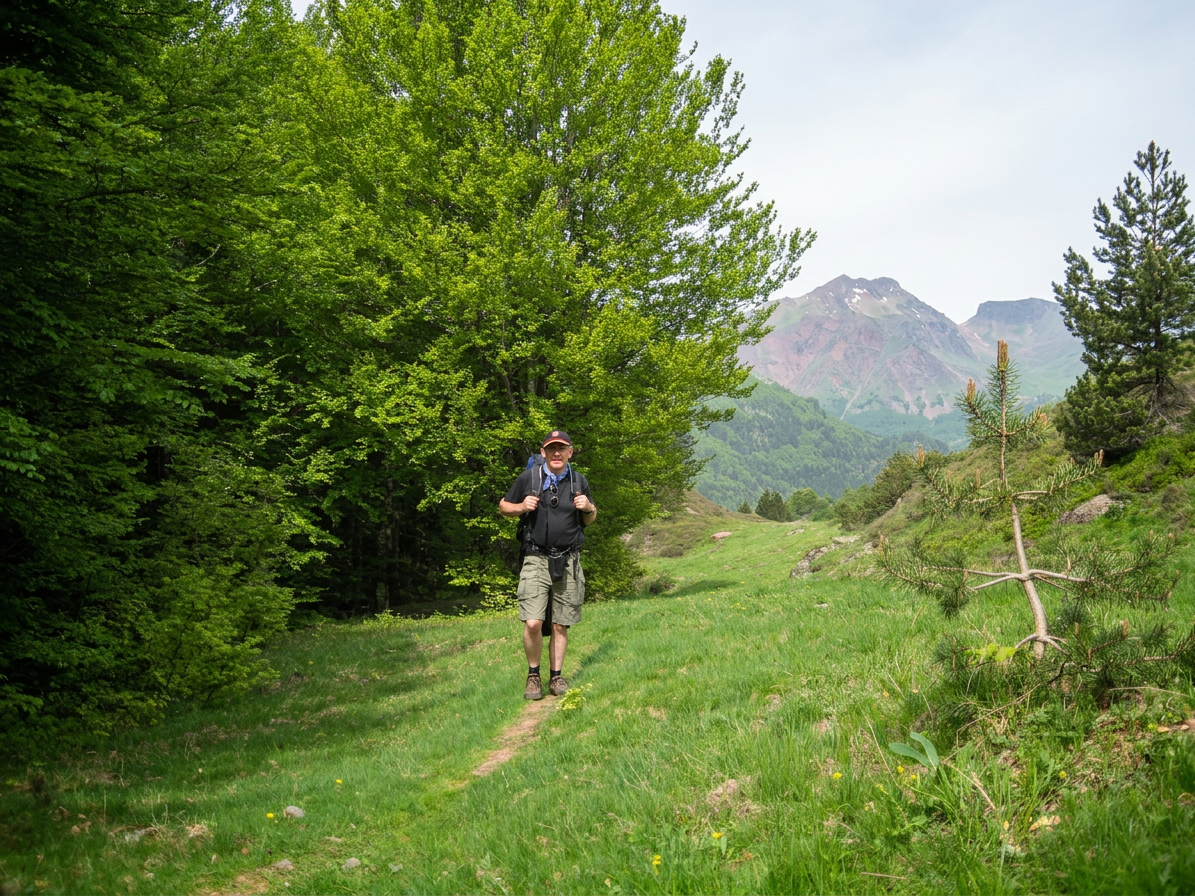
This is something I have become increasingly aware of through my own journey, particularly after walking thousands of kilometres on the Camino de Santiago and immersing myself in the natural world.
Walking has taught me that understanding does not always come from seeking answers. Sometimes it emerges through the experience itself: the solitude, the unexpected encounters, the physical challenges and the simple act of being present.
Many of the ideas and convictions I held so firmly at 30 began to look different at 50, and different again now, in my late sixties.
I don’t necessarily regard this as evidence that everything I once believed was wrong. Rather, my understanding has deepened and, in some respects, become less rigid.
For instance, I have gradually stopped feeling the need to change other people’s opinions. I have come to accept that people see and experience the world differently, shaped by their own histories, circumstances and understanding. We do not always have to agree, nor do we need to convince one another that we are right.
There is a certain freedom in recognising that.
Perhaps the greatest paradox of the spiritual journey is that the more we learn, the more we begin to recognise how little we truly know.
For much of our lives, we search for answers. We construct belief systems, embrace philosophies and look for explanations that will make sense of the world and our place within it. There is nothing wrong with this. The search for understanding is part of what makes us human.
But there may come a time when we recognise that our beliefs, however meaningful, are only interpretations of a reality far greater than our ability to comprehend it.
The mystics understood something of this. They recognised that the journey towards deeper understanding sometimes requires us to let go of the very things we have spent a lifetime learning to hold on to.
Wisdom is not about becoming increasingly certain of what you believe, but about developing the humility to question yourself, the courage to change and the openness to embrace what remains unknown.
You may never arrive at all the answers. But perhaps that is not the point.
The journey is not simply about discovering what is true. It is about allowing what we discover to change who we become.
Reino Gevers – Host of the LivingToBe podcast
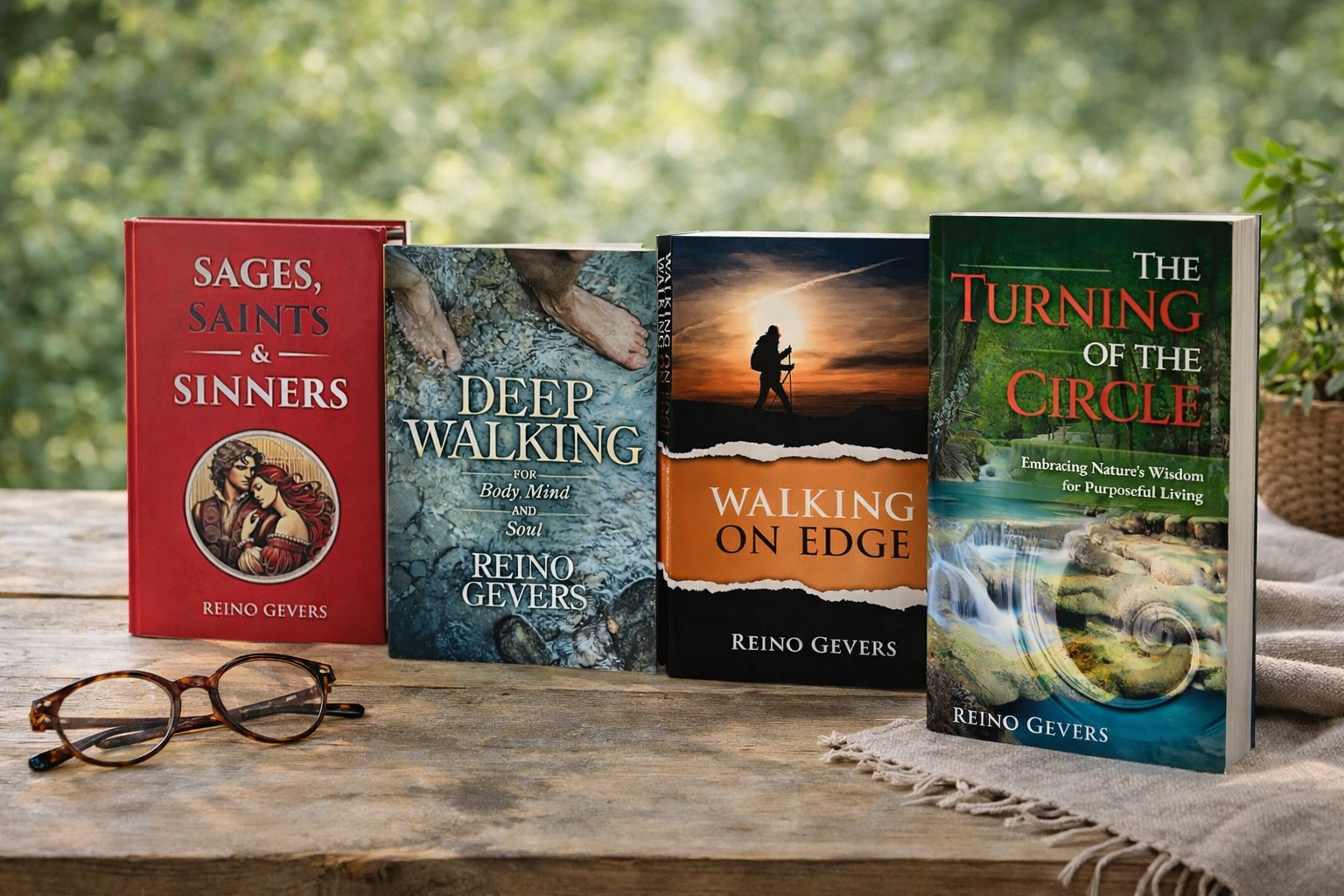
P.S: If you enjoyed this article, you might be interested in reading one of my four books, available where all good books are sold.