There are moments on a long walk when you stop thinking about where you are going and simply walk.You simply hear the rhythm of your feet. The landscape changes slowly. Your breathing settles. The noise in your head begins to diminish.I experienced something of that on a recent walk on the Pilgrims’ Way, from Winchester.
But before I took my first steps, I went into Winchester Cathedral. I sat down and was silent during a morning prayer ceremony with only a handful of people. For a few minutes I sat in that extraordinary building, surrounded by centuries of history, and thought about all the people who had come here before me.
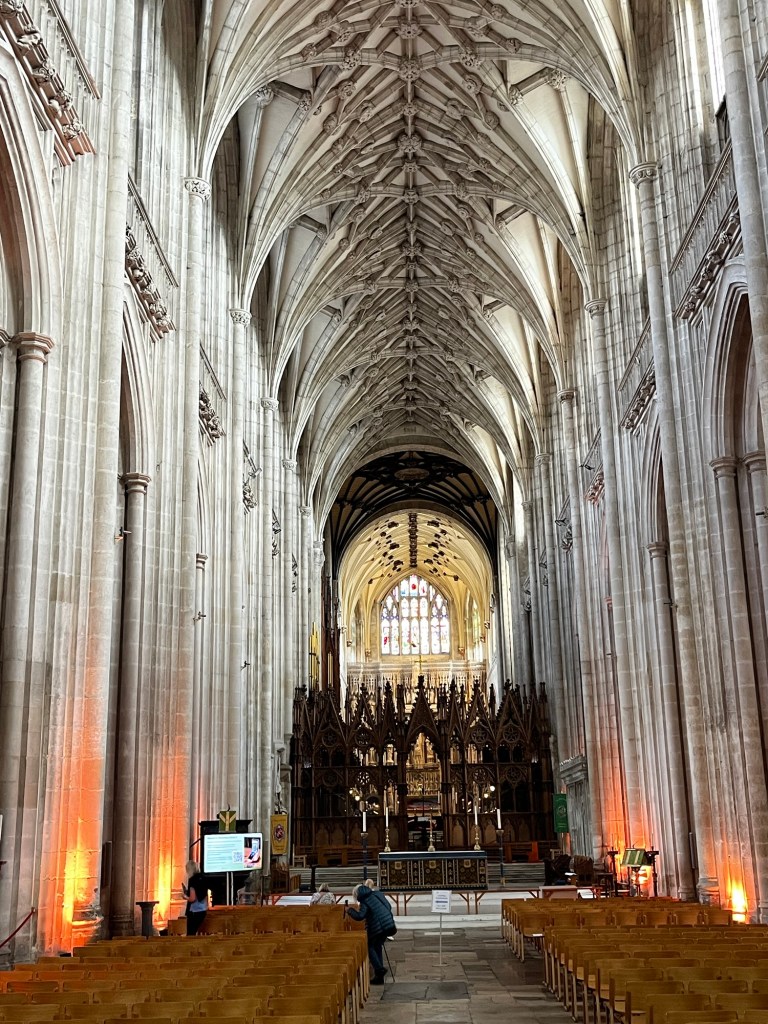
People who had stood exactly where I was standing and wondered what life meant.I set out on this walk with contemplations from the great Mystics such as Meister Eckhart and Julian of Norwich.
Julian lived in fourteenth-century England, during one of the darkest periods of European history – the Black Death.She knew all about illness, death and uncertainty. During a serious illness in 1373, when she believed she was dying, she experienced a series of visions that became the basis of her Revelations of Divine Love. And from Julian came those extraordinary words:
“All shall be well, and all shall be well, and all manner of thing shall be well.”
Julian said this living in a world in which almost everything was not well, and at the same time offering hope. She was saying that we may not understand what is happening in the world but we can still trust that love is deeper than suffering.
That is a very different kind of hope. We cannot plan and control the journey. Life happens in unpredictable ways while we try to protect ourselves against uncertainty.When we’re young, we often imagine that if we make the right choices, life will eventually become predictable.
People and pets we love become ill and die. Relationships change and fail. Homes and jobs change. Your body begins to remind you that you are not going to be here forever.
You begin to realize that you cannot control the journey. You can only walk and adapt to circumstances beyond your control.That thought stayed with me during the first hours of my walk during the unspoilt Itchen valley.
The first kilometres are always slightly deceptive. You are still thinking about the destination. You look at the map. You calculate how far you have to go.
But gradually, something changes.
You stop thinking about the end.
You begin to pay attention to the next step.
And then the step after that.
That is one of the great gifts of walking.
It brings you back into the present moment. You hear the birds. You stand in awe before ancient trees. The Pilgrims’ Way takes you through landscapes that seem to exist outside ordinary time. There are stretches where ancient trees form tunnels over the path.You walk beneath them and suddenly feel very small.
The trees don’t know your worries. They simply stand there and some of them have been standing there for hundreds of years.And I found myself wondering how many people had walked beneath those same branches.
Medieval pilgrims walked these same old paths, possibly with the same questions as pulgrims today. And now they are gone.
The trees remain and there is something humbling and comforting about that.
In the bigger order of things one lifespan is fleetingly small. The gravestones around the chapels, some dating back to the 12th century, are a stark reminder of that. You walk into a chapel after several hours on the trail and the experience can be almost startling. Outside, the modern world continues.
Inside, time seems to have stopped. The stones are old and the light is different.
And these are the moments when the boundary between the ordinary and the sacred really does feel a little thinner.A thin place isn’t necessarily a destination to an ancient sacred site but something that happens within.
St Augustine wrote about discovering God not by endlessly looking outward but by turning inward.Meister Eckhart later spoke about becoming empty — letting go of the endless accumulation of thoughts, desires and attachments that fill the mind.
And Julian of Norwich arrives at another extraordinary insight:beneath everything is love. Three different voices pointing towards the same thing. Turn inward. Become quiet and listen.
The longer you walk, the less important the things that seemed so urgent that morning can become.
You begin to notice the magic of life. The small things. The movement of leaves, the creaking of tree branches, the smell of moist earth in the forest, the taste of juicy wild blackberries and thoughts.
Not the thoughts you are trying to manufacture, but the ones that rise naturally when the noise becomes quiet.
That, too, is pilgrimage.
- How do you deal with uncertainty?
- How do you live when you don’t know what happens next?
- How do you cope with the things you cannot control?
Julian’s answer is surprisingly simple.
Certainty says:
I know how this is going to turn out.
Trust says:
I don’t know how this is going to turn out, but I can take the next step anyway.
That may be one of the most important lessons of a pilgrimage walk.
You don’t need to see the entire road.
You only need to see enough of it to take the next step and keep walking, leaving everything behind you but they remain as memories.
Perhaps that is what happens on all journeys.
And perhaps the same is true of the people we meet, the experiences we endure and the questions we never will answer.
So I keep coming back to Julian.
“All shall be well.”
I don’t hear those words anymore as a promise that everything will work out exactly as I want it to.
I hear them as an invitation to trust.
To accept that some things will remain unresolved and that life contains suffering as well as joy.
Beneath all the noise, all the uncertainty and all the attempts to control life, there may be something much more subtle.
Not travelling towards a place where you hope to find the sacred. But discovering that the sacred has been travelling with you all along and that all shall be well just by taking the next step.
Reino Gevers – Host of the LivingToBe podcast
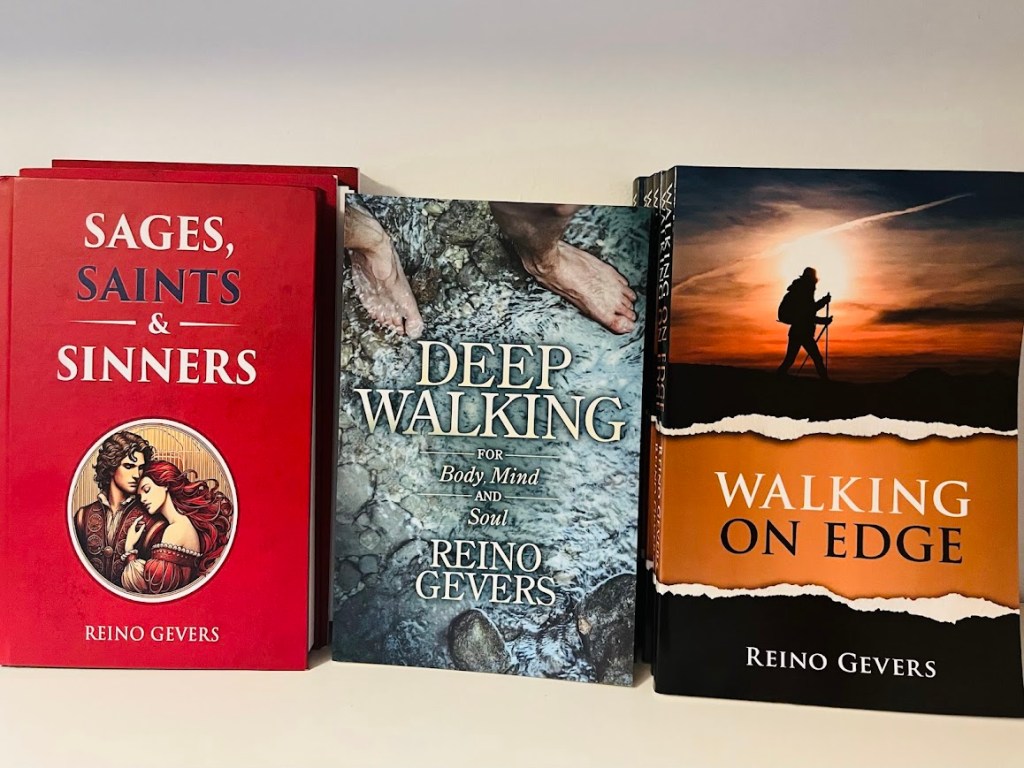
P.S: If you enjoyed this article, you might be interested in reading one of my four books, available where all good books are sold.