Tag Archives: climate change and denial

When Faith Stops Working: Are You Listening?

This summer, as Europe swelters under yet another wave of extraordinary heat, I find myself thinking about an old story I heard many years ago. It is a simple story, almost a joke. But sometimes the simplest stories contain truths we would rather avoid.

There was an old man named Angelo who lived in a small Italian village. One day, his neighbour came running to his door.

“There is a flood warning,” he told him. “The river is rising. Everyone has been told to leave the village within 24 hours.”

Angelo listened calmly.

“I will be fine,” he replied. “I trust in the Lord.”

His neighbour pleaded with him, but Angelo refused to leave.

A little later, a fire engine came through the village, its loudspeaker warning everyone to evacuate immediately.

Angelo heard it.

But he stayed.

Then the river began to rise. Water flooded the houses closest to the river, and people started fleeing for higher ground. A rescue worker came to Angelo’s door.

“You have to leave now!”

But Angelo shook his head.

“I trust in the Lord.”

Eventually, the water reached the upper floor of his house. Angelo climbed onto the roof.

Then a helicopter appeared.

A rescue worker lowered a ladder.

“Come on, Angelo! We can get you out!”

But once again Angelo refused.

“I trust in the Lord.”

The helicopter eventually disappeared.

Angelo drowned.

When he arrived at the gates of heaven, he was furious.

“I trusted you,” he said to God. “I believed you would save me. And you didn’t.”

God looked at him with sadness.

“Angelo, I sent you your neighbour. I sent you the fire engine. I sent you the rescue worker. And finally, I sent you a helicopter. What more did you expect me to do?”

Perhaps the warnings are the message

I thought about Angelo recently while walking through Wandsworth Common. Walking has become a way for me to make sense of the world. When I walk, I notice things I might otherwise miss.

This time, I noticed the grass. I noticed the bumblebee dying and the pigeon spreading its wings, trying to stay cool.
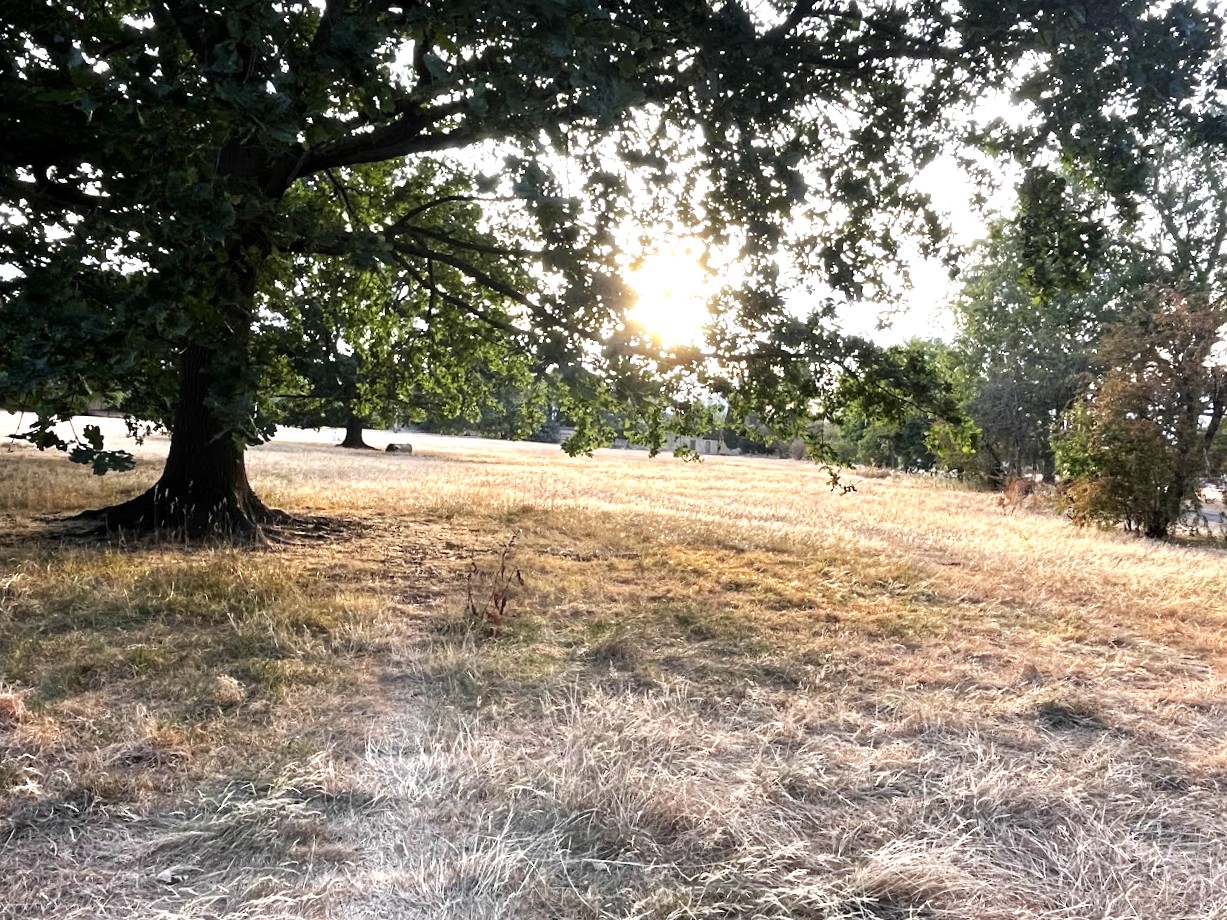
The grass should have been green. Instead, it was dry and yellow, brittle beneath my feet. Trees and shrubs were showing the strain of weeks without sufficient rain. Nature seemed tired. There was something strangely unsettling about it. Perhaps because I have lived long enough to remember summers when rain in central Europe was something we complained about rather than something we worried about.

I know that one hot summer does not prove climate change. Nor does a dry lawn. But when an isolated event becomes part of a pattern, perhaps the wise response is not to explain it away, but to ask questions, pay attention, and to listen.

And that is what keeps returning to me from the story of Angelo.

I attended one of the early United Nations climate conferences as a journalist many years ago. The scientists were warning us about the consequences of pumping ever greater quantities of carbon dioxide into the atmosphere. At the time, the future seemed comfortably distant. Climate change belonged to another generation. It would have to deal with it

What if the warnings are already the message?

But perhaps that is one of the great illusions of human beings: our tendency to imagine that the consequences of what we do will always arrive somewhere else, sometime later, and affect somebody else. Now the future has become the present. The heat, the droughts, the record-breaking summer temperatures, the fires, and the floods simply cannot be denied anymore. And yet, like Angelo, we seem strangely reluctant to leave the comfort zone of our house.

When faith becomes a way of not seeing

This is where the story touches something much deeper for me than climate change. It touches the question of faith itself. For much of my life, I have wrestled with what it means to believe.

I have become suspicious of a faith that gives us easy answers to difficult questions. A faith that tells us everything will be all right if only we trust enough. Because sometimes everything tells us that something is just not right. The river really is rising. The diagnosis is serious. A relationship is really over. The world is changing rapidly beneath our feet. The certainties we have built our lives around simply have stopped working.

Perhaps that is one of the most frightening experiences in life: discovering that the beliefs that once gave us security no longer help us make sense of what is happening. But perhaps it is also an invitation. When faith stops working, something else may be asking to emerge. It is perhaps a deeper faith that does not require you to know how everything will turn out. It is a faith that allows you to say:

I don’t know.

I am afraid.

I may have been wrong.

But I am willing to look.

Listening to what is in front of you

I am increasingly convinced that wisdom has less to do with having answers than with learning how to listen. It is listening to your body, to other people, your intuition, and to that voice that you perceive only in silence, above all in nature.

Nature does not speak to you in words. It speaks through patterns, seasons, heat, drought, rain, abundance and scarcity. Our ancestors knew very well how to interpret these signs. Their survival depended on it. But in the disconnect from the natural world, we seem to have lost that ability.

We can choose to ignore these whispers from the universe. But ignoring them does not make them disappear. That is what Angelo misunderstood. He believed that faith meant waiting for God to intervene. Perhaps the deeper truth is that God had already intervened. The neighbour was the intervention. The fire engine was the intervention. The rescue worker was the intervention. The helicopter was the intervention. Angelo simply didn’t recognise them as such.

And I wonder how often we do the same.

How many times in your life has something tried to get your attention?

A relationship that no longer feels right. A body telling you to slow down. A restlessness that cannot be explained. A recurring dream and a difficult conversation that you keep avoiding.

A landscape that no longer looks the way it once did. A world that is changing before our eyes. Perhaps these are not interruptions to our lives. Perhaps they are our lives speaking to us.

The helicopter is still there

I don’t know what the world will look like ten or fifteen years from now. I don’t know whether we will succeed in changing course quickly enough. And I certainly don’t believe that fear and denial is going to save us.

But I do believe we still have choices. That may be the most hopeful part of the story. Angelo was not a victim until the very end.

He had choices. And so do you. We are not powerless in the face of a changing world. We can change how we live. We can demand that those who govern us take reality seriously. We can consume less, waste less, protect what remains and support those working to restore what has been damaged.

But perhaps the first step is simpler.

We need to listen. To put down our certainties for a moment. To look out of the window.

To walk through a park. To notice the colour of the grass. To feel the heat and rescue the bumblebee looking for water.

To see the trees struggling.

And then to ask yourself honestly:

What is life trying to tell me?

Faith does not mean believing that someone will come and save you.

Perhaps faith means trusting yourself enough to recognise the helicopter when it arrives. And having the courage to climb aboard.

Reino Gevers – Host of the LivingToBe podcast

P.S: If you enjoyed this article, you might be interested in reading one of my four books, available where all good books are sold.
Leave a comment

Filed under climate, climate change, healing nature, spirituality

The Hidden Climate Culprits: Livestock Emissions

With temperatures soaring well over 40 degrees Celcius here on the Mediterranean island of Mallorca, local authorities have imposed water restrictions and warned people to avoid heat stroke by staying indoors for most of the day.

As climate change warms the planet, heat waves are becoming more common and lasting longer. Vulnerable population groups, especially the elderly, are exposed to life-threatening temperatures. Nature is affected by drying soils and vegetation, posing higher fire risks, according to a recent study.

Climate change is shifting entire populations

Mallorca is Europe’s main holiday destination with tourism generating most of the island’s income. The problem is that the island’s limited water resources can no longer cope with an estimated 18 million visitors this year. In the long-term tourists will be choosing cooler places to go in the northern hemisphere such as Scandinavia.

For most of us these are only the beginnings of rapid climate change. We have not been forced to leave our homes, like the millions of people in Africa, the Middle East, and Latin America who are bearing the brunt of climate change. Repeated flash floods or extreme dry seasons have destroyed large swathes of agricultural land.

Partisan politicization of climate change has muddied the waters

The warning signs and news reports of extreme weather patterns are getting louder by the day. Unfortunately, the issue of climate change has become extremely politicized and prey to America’s culture wars. The climate scientists, who in most cases have studied this field for decades, are getting increasingly alarmed that sound scientific data is being ignored or lambasted as fake.

When I attended the summit of the Intergovernmental Panel on Climate Change (IPCC) in Bonn in 1999, scientists got only one thing wrong. The climate scenarios of extreme weather patterns they had predicted by the middle of this century are already a reality in the year 2024.

Based on the annual report from NOAA’s Global Monitoring Lab, global average atmospheric carbon dioxide was 419.3 parts per million (“ppm” for short) in 2023, setting a new record high. In 1999 the rate of ppm was 367 and some of those scientists I interviewed at the time warned that the tipping point of no return was around 420 ppm.

The human mind tends to go into denial when faced with problems that seem too complex, distant, or threatening to the status quo. Climate activists may have erred in choosing the term “global warming” instead of “climate change.”

Reframing the fossil fuel debate to emphasize pollution, such as clean air, clean rivers, and biodiversity, could be more persuasive. Additionally, reliance on fossil fuels finances some of the world’s most oppressive regimes.

Climate scientists have long warned that extreme weather patterns—including hurricanes, severe winters followed by scorching summers, and flash flooding—would become increasingly common.

Mass animal production and climate change

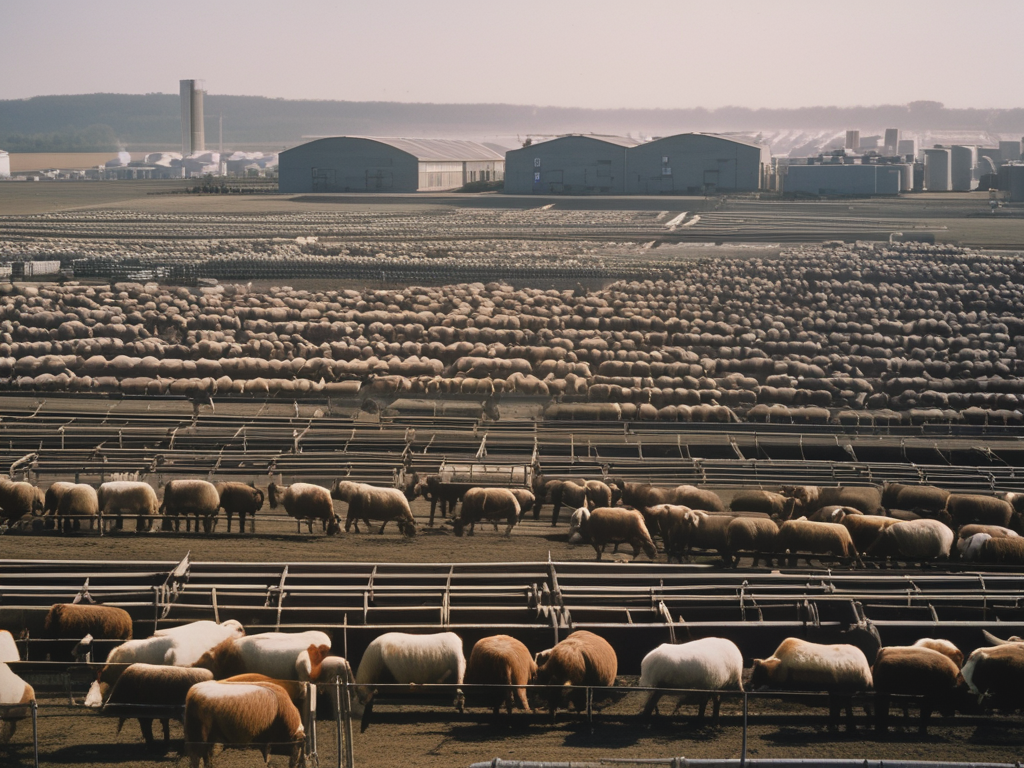
Climate activists have not done their cause any favor by targeting the airline industry and blaming motorists for most of the carbon dioxide emissions. Somehow the animal food-producing industry has managed to dodge the fact that it impacts climate change to a far greater extent than the transportation industry.

Scientists were aware that the methane produced by grazing cattle – around two-thirds of livestock emissions come from cows – was a significant chunk of the anthropogenic greenhouse gases that were heating the planet’s atmosphere. However, there had been no attempt to quantify how large a chunk it might be.

The report estimated that livestock were responsible for 18% of global greenhouse gas emissions – including nine percent of anthropogenic CO2 emissions, mostly due to deforestation for (pasture and) feed crops, 37% of anthropogenic methane emissions, largely from cow burps, 65% of anthropogenic nitrous oxides, overwhelmingly from manure and 64% of anthropogenic ammonia emissions, according to a study by Henning Steinfeld, head of the UN Food and Agriculture Organization (FAO)’s livestock policy branch.

And then there is the issue of food waste. According to a WWF report about 6%-8% of all human-caused greenhouse gas emissions could be reduced if we stop wasting food. In the US alone, the production of lost or wasted food generates the equivalent of 32.6 million cars’ worth of greenhouse gas emissions.

There is still hope. Our species has survived for so many thousands of generations because we have the ability to adapt to changing circumstances. By making conscious choices on what you buy in the grocery store and what you eat, you will not only be turning things around on your own health but also that of the planet.

There are numerous health benefits by focusing on foods that are nutrient-dense, minimally processed, and sustainably produced:

  • Opt for locally produced and seasonal products such as leafy greens, berries, carrots, tomatoes, apples, and citrus fruits.
  • Production of lentils, chickpeas, black beans, and peas have lower greenhouse gas emissions and improve soil health through nitrogen fixation.
  • Poultry generally has a lower carbon footprint than red meat. Choose organic and free-range options.
  • Steer clear of seafoods that don’t have sustainable eco-labelling. Species like sardines, anchovies, and herring are lower on the food chain and reproduce quickly, making them more sustainable options.

Processed foods often have added sugars, additives, unhealthy fats, and preservatives. Their production is resource-intensive, resulting in high transportation costs and greenhouse gas emissions. By better planning your meals, storing food properly, and using leftovers you can minimize waste.

Starting with these small changes, you can contribute to a more livable planet while enjoying a healthier life with more energy, better sleep, and mental resilience.

Reino Gevers – Author – Mentor – Speaker

P.S. If you enjoyed this article you might be interested in my books available where all good books are sold.
Leave a comment

Filed under environment, Uncategorized

Living dangerously

We live close to one of Europe’s biggest rivers, the Elbe. Only six months ago we had an emergency situation here when floodwaters where threatening to flood our town, Bleckede, which is some 80 kilometres, southeast of the northern German port city of Hamburg. For several days thousands of people, some even coming from afar as Scandinavia, helped secure the dykes with sandbags. We were fortunate because the waters eventually broke through the dyke, lower downstream , easing the pressure. Others were not so lucky. Thousands of homes in eastern Germany were flooded, agricultural lands and infra-structure destroyed.

ImageImage

In April this year a groundbreaking TV series on the experiences and personal stories of people whose lives have been touched by climate change will be aired.  Years Of Living Dangerously is an eight-part series produced by famous film-makers James Cameron, Arnold Schwarzenegger and Jerry Weintraub. It is all about how climate change is affecting people everywhere here and now.

Here is the trailer: http://vimeo.com/78162825

 Lets hope that this storytelling-series will serve as a wake-up call! It is not something we cannot change. Global warming is a result of human actions – the burning of fossil fuels, the destruction of carbon sinks such as rainforests and swamps. For almost two centuries, coinciding with the industrial revolution, the concentration of atmospheric carbon dioxide has increased dramatically.

Pre-industrial levels of carbon dioxide were about 280 parts per million (ppm), reflecting a long-term balance between natural processes that emit and that absorb carbon dioxide. This natural balance has been seriously upset. Currently the levels are at about 390 ppm and rising faster, despite efforts to bring the levels down to 1990 levels of about 350 ppm. Many people and governments out there are still in denial about climate change.

 Some very strange arguments are being put out on the Internet – that it is all fear-mongering by green activists or sunspot activity. Serious climate scientists are being attacked viciously by media sponsored by those who have most to lose, if we take the necessary steps in replacing fossil fuels with renewable energy. The “war” on climate scientists is vividly portrayed by a leading climate scientist Michael Mann in the book: “The Hockey Stick and the Climate Wars.”

 We are indeed living dangerously. According to climatologists we have less than 15 years, if that, to bring carbon dioxide levels down to below 350 ppm. And that is only to avoid the worst effects of global warming.

I see many correlations between the climate debate and personal health issues. All the information is out there. We know that we are destroying the environment for future generations. We know that if we lead a certain lifestyle that we will most likely fall ill. So why aren’t we changing our habits? Why are we so much in denial about those things that seem so starkly obvious to the normal intelligent mind?

Maybe it is just part of human-instinct to avoid imagining the worst. “So what! I’m still around and enjoying life, so stop rocking the boat and disturbing me with your bad news.” The sad thing about both issues, is that we very often don’t see the catastrophe happening. It is a very slow process. Lung cancer doesn’t come overnight and after only smoking one cigarette. It is a result of many years of heavy smoking, stress and other factors.

 When the floodwaters came to Bleckede there were also people out there, initially doubting the situation. But when the floods were actually there, when the first homes were flooded and we could actually see with our own eyes kilometres of land under water, nearly everyone was stirred into action and wanted to do something. Lets hope that the positive human spirit will prevail.

 We are just a part of the bigger whole in the unity of things. It is comparable to the different salts found in blood and body tissue which correspond exactly to the 84 elements found in salt water. How we treat our planet and its fellow inhabitants is a reflection on how we are treating ourselves.


Leave a comment

Filed under Uncategorized