
One of the reasons I‘m hooked on making an annual pilgrimage walk on the Camino de Santiago is the wonderful people you meet on the way and the celebration of community with people from very different cultures, and religious backgrounds.
It is one of the few places left on earth where you meet individuals who open their hearts, discussing intimate details of their life with you, at times only minutes after meeting for the first time.
The hospitality of the locals on the Camino plays a role. Much of rural Spain still has healthy supportive communities where people meet in cafes and bars on a daily basis to have a chat.
The owner of a bar-hotel and restaurant business confided to me that the cafe part of his business was not really profitable but „closing this place for the winter months would be like closing the local church.“
A sense of belonging
While talking to fellow pilgrims in Santiago we agreed that many spiritual seekers on the Camino were finding a community and sense of belonging on this ancient path they were no longer finding in traditional religions.
As humans, we are hard-wired as social beings. Our relationships and social connections determine who we are. Strong connections and relationships are created when we share our feelings, inner wounds, and vulnerabilities.
Many people walking the Camino have seen their lives come apart on some level. Relationships that have broken down, the death of a loved one, financial loss, or having to deal with the diagnosis of a life-threatening disease. In sharing their stories pilgrims no longer feel “alone.”
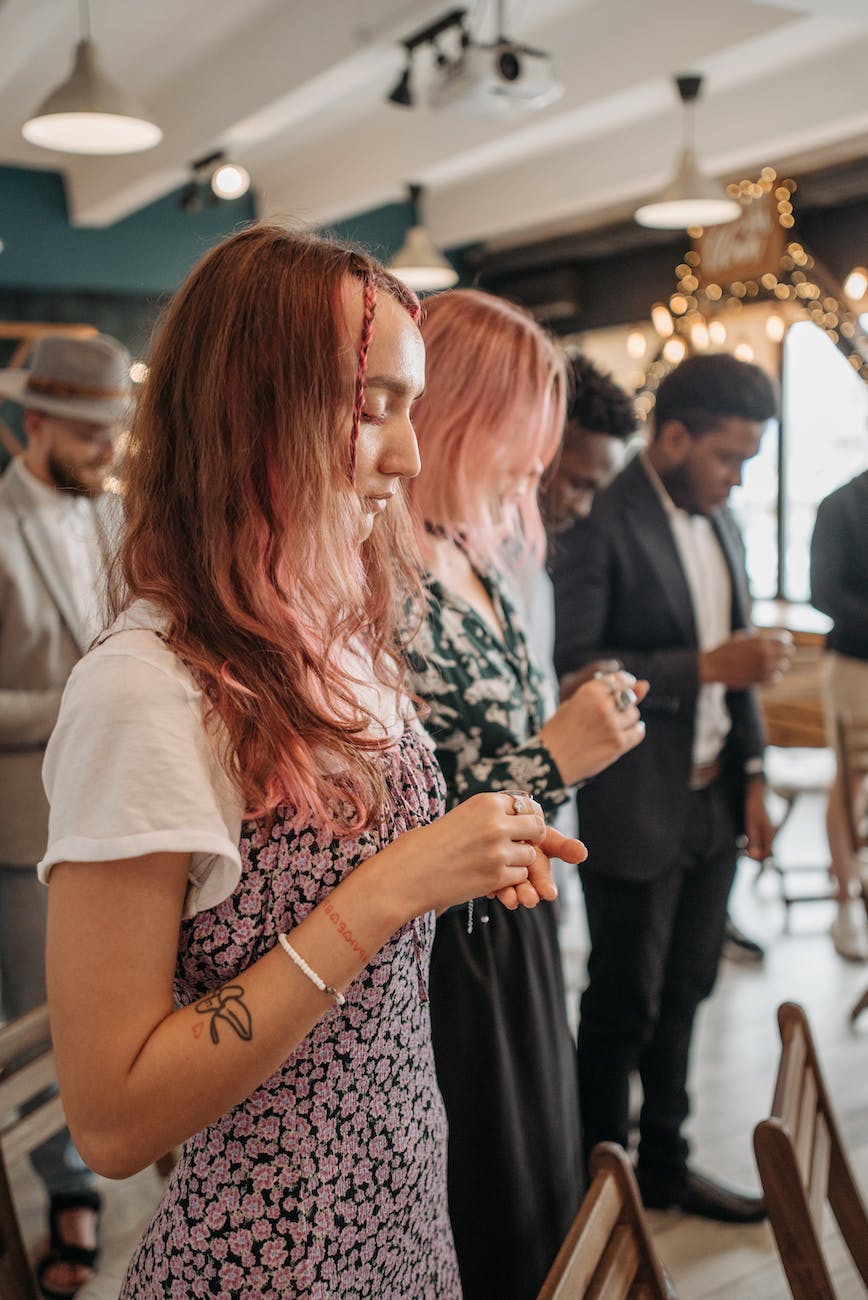
There is experiential spirituality felt in a healthy community that emanates empathy, love, and kindness. Community is not only felt in a relationship with others, a higher deity but also in a commune with nature and the world around you.
It is walking in nature and bonding with people at the same time that makes the Camino such a magnet for spiritual seekers. This year will again register a record number of pilgrims on the path.
The celebration of the communal ritual
For this reason since ancient times humanity has embedded the celebration of community in religious rituals. Communal meals or rituals involving the sharing of food and drink can be found in ancient Greek and Roman religions, where a communal meal with the gods was seen as a means of establishing a bond or connection.
The Jewish Passover festival and the holy communion ceremony in Roman Catholic, Protestant, and Orthodox religions are celebrated as rituals of sacrifice.
The word “commune” has its roots in Latin, derived from the word “communis,” meaning “common” or “shared.”
In our modern era, we are seeing an explosion of “sharing” and “connection” on social media across continents – the result of a human yearning. Urban lifestyle without connection to natural surroundings and friendly neighbors increasingly leads to individuation, self-isolation, loneliness, and mental health issues.
Online “tribes or families” can never be a replacement for the physical community where there is unconditional physical contact – the holding of hands, a hug, and a kiss on the cheek. This became acutely obvious during the recent pandemic.
Ultimately we all yearn to be seen, to be heard, and to be validated in a positive sense. We want to belong and in that belonging, we find purpose and meaning.
Reino Gevers – Author – Mentor – Speaker
One more thing...My new book “The Turning of the Circle: Embracing Nature’s Wisdom for Purposeful Living” can now be ordered on Amazon and where all good books are sold. You might also find my other books “Deep Walking for Body, Mind and Soul” and “Walking on Edge: A pilgrimage to Santiago” of interest.



 ReinosBlog