
After spending several weeks on my annual pilgrimage retreat along the Camino in northwestern Spain, I have had ample time to reflect on some pressing issues affecting our collective state of mind. I’m increasingly concerned about humanity’s tendency to retreat into tribal bubbles, becoming addicted to fixed concepts and thoughts.
Here is my theory on why the world is at real risk of tipping back into authoritarianism, intolerance, and the cult-like idealization of the “strongman” leader.
Social media thrives on toxic culture
We live in an age where any person in a dark cellar with a deranged mind can get millions of views by posting the most outlandish conspiracy theories, extremism, and anger. There are no real filters or control mechanisms in place to prevent the algorithms from blocking obviously false, distorted, and hateful information. And, there are no legal consequences for those responsible.
A preoccupation with fear, anxiety, and negativity will inevitably impact your mental and physical health. The eyes, brain, and spinal cord are intricately connected through the central nervous system (CNS), facilitating vision, sensory processing, and motor control.
The interconnection of body and mind
The eyes capture visual information and convert it into electrical signals. The optic nerve then transmits these signals to the brain which processes and interprets this information, coordinating with other sensory inputs and cognitive functions The spinal cord transmits these motor commands from the brain to the eyes and other body parts, integrating visual information to coordinate body movements.

Stress starts with negative thought
Stress hormones responsible for flight, fight, and freeze responses of the body are triggered by chronic negative thoughts. Constant worry, fear, and tension will inevitably negatively impact your daily functioning and decision-making. In extreme cases, it leads to depression, hopelessness, and loss of self-esteem.
People preoccupied with negative thoughts may resort to unhealthy coping mechanisms, such as overeating, smoking, substance abuse, or addiction to simplistic thoughts and concepts to numb their emotional pain.
Cognitive distortions, such as catastrophizing (expecting the worst), overgeneralization (viewing a single negative event as a never-ending pattern), and black-and-white thinking (seeing things as all good or all bad).
It is an open door for cult leaders, and extremist political movements offering simple solutions for complex global problems.
What is the antidote?
You have the power to make lifestyle choices, that determine whether you become a tool in the hands of manipulators or take back control over your own mental and physical health. Here are some tips:
- What you feed your brain with that you become. Monitor your time spent on social media and the consumption of negative news.
- Physical activity, a balanced diet, and adequate sleep can help mitigate the effects of stress and improve your overall feeling of well-being.
- How are you talking to yourself? Are your thoughts mainly negative or positive?
- Mindfulness practices including meditation, deep walking, yoga, tai chi, qi gong reduce the impact of negative thinking and improve awareness. These exercises also impact your body posture and how you feel about yourself.
- Techniques such as deep breathing, progressive muscle relaxation, and Cognitive Behavioral Therapy (CBT) can help identify negative thought patterns.
- Choose your friends wisely. Don’t waste your time arguing with people addicted to fixed concepts and illusions. Positively-minded and supportive friends, family, and community make all the difference.
Reino Gevers – Author – Mentor – Speaker
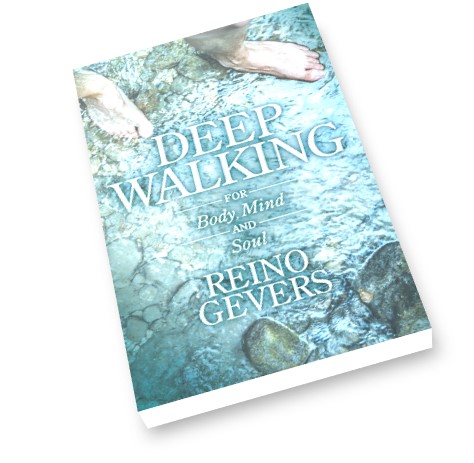
P.S. I’m excited to announce the release of my latest book, “The Turning of the Circle: Embracing Nature’s Wisdom for Purposeful Living.” If you enjoy it, you might also be interested in my previous works, “Deep Walking for Body, Mind and Soul” and “Walking on Edge: A Pilgrimage to Santiago.” You can find all of these titles at reputable bookstores near you.



 ReinosBlog