Author Archives: Reino Gevers

Reino Gevers's avatar

About Reino Gevers

Author, mentor and trainer

Venice, Climate change and denial

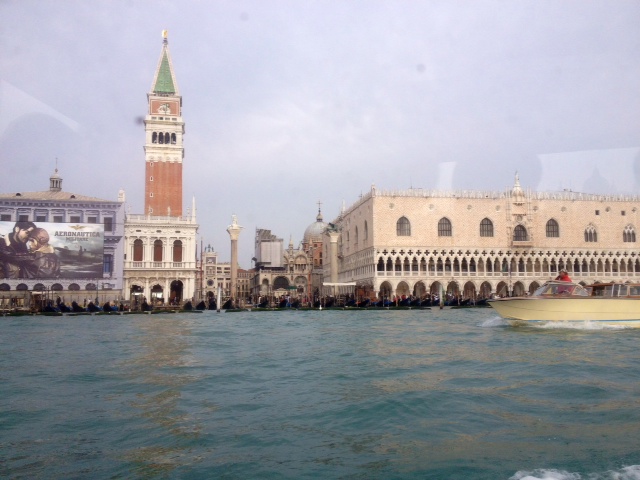
Venice is undoubtedly one of the world’s most beautiful cities. Walking these ancient streets and squares one cannot but be astounded by the architectural masterpieces built by the Venetians over the centuries.


The Basilica of San Marco overlooks one of the most beautiful squares in the world. It is the main tourist attraction and a favourite backdrop to many a movie. Unforgettable the scene from “Moonraker”: After being pursued by Drax’s henchmen down the canals in Venice, James Bond approaches St. Marks Square on a gondola. He activates a skirt on the boat, turning it into a hovercraft that allows him to travel on the square to the astonishment of everyone around.
Image 

But St. Marks Square is only one of the many wonders to be admired here. Looking across from St. Marks Square is the magnificent baroque Basilica of St. Mary of Health (Basilica di Santa Maria della Salute), a huge, domed church built on a spit between St. Mark’s Basin and the Grand Canal. It was founded in 1630 as a tribute to the Virgin Mary and took 57 years to complete. It was built as a tribute to the Virgin Mary for freeing the city from the plague. And every year on November 21 the locals pay tribute to her, praying for good health.


Venice is literally built on water and the people have learned to live with regular floods. But in recent years the frequency of those floods has increased. Last year the city was flooded several times. A group of mobile flood barriers have been constructed at the entrance to the Venice lagoon in a project started ten years ago and scheduled to be completed in 2015. http://goo.gl/axO9rb


Will it be enough?


The city once boasted several hundred thousand local inhabitants. Now it is just over 50,000. It is not only the high property prices but the cost and discomfort of having to protect your house against the flood waters that is driving the people away. The first exodus began after the catastrophic flood of November 1966 that virtually submerged the city. At the same time more than 20 million tourists came to the city every year. As a major generator of tourist income the city is worth protecting.


Meanwhile another United Nations Climate Conference is taking place in Poland of all places. The country has shown little inclination in the past to do anything about curbing carbon dioxide emissions from its coal-fired power stations. To the contrary it is taking the tack of many climate change sceptics. The outcome of this conference is predictable. Too little is being done too late and the longer we wait, the more difficult it is going to get to save cities like Venice and many low-lying island nations.


There seems to be a parallel between the denial ism in the climate debate and personal health. It is beyond doubt that smoking, junk food and lack of exercise will shorten your life. But the human being seems incapable of relating such information to the future. “So what, as long as I can enjoy my Bic Mac in front of the TV now…”


In the same way we ignore the warnings from climate scientists that if we don’t radically reduce emissions we are going to have a very hot and uncomfortable planet by the end of this century. We are playing roulette with ourselves and the future of our children. Its time to wake up!

Image


Leave a comment

Filed under Uncategorized

Playing it safe?

Playing it safe?

Leave a comment

by | November 5, 2013 · 12:55 pm

Energy of Matter

Energy of Matter

Leave a comment

by | November 4, 2013 · 3:39 pm

Happiness is where you live

What makes people or nations happier than others? The World Happiness Index released last month  lists Denmark as the world happiest country followed by Norway and Switzerland.

All these European countries are very affluent by world standards. But why are other wealthy countries like the United States  not right up there among the leading “happy nations.”

What stands out in Denmark, Norway and Switzerland is their excellent health care and education system which are regarded as a basic human right. This is sustainable development. The people, especially mothers, families and children, are seen as the most important asset, literally the golden gateway to the future.

The Happiness Report lists six other key variables that explains three-quarters of the variation in annual national average scores over time and among countries. These six factors include:

  • real GDP per capita
  • healthy life expectancy
  • someone to count on
  • perceived freedom to make life choices
  • freedom from corruption and generosity.

Another key aspect mentioned in the report is mental health:

“Some studies show mental health to be the single most important determinant of whether a person is happy or not. Yet, even in rich countries, less than a third of mentally ill people are in treatment. Good, cost-effective treatments exist for depression, anxiety disorders and psychosis, and the happiness of the world would be greatly increased if they were more widely available.”

The report goes on to say that “happy people live longer, are more productive, earn more, and are also better citizens. Well-being should be developed both for its own sake and for its side-effects.”

One other aspect needs to be noted in these “happy nations” . Corruption and crime is extremely low by international standards. All the countries renowned for their corruption and crime, sadly including my own home country South Africa, are pretty much down at the bottom of the list.

If a government cannot protect its own people from being mugged, raped or robbed, it is on a fast downward spiral. The best talents in a country are bound to emigrate to those countries where they feel safe, can live their full potential and be happy.

 Image

Some would argue that happiness is all a state of mind, wherever you live. That, I think, is too simplistic and approach. What I read from the Happiness Report is that you need some decisive preconditions that only good governance can provide:

  • You need enough material resources to provide for basic needs
  • The opportunity to live a long and healthy life with your loved ones.
  • A good education and the freedom of choice to do what you find to be your life’s purpose
  • Freedom from crime and corruption

Quoting the Dalai Lama: “The purpose of our lives is to be happy.”

Leave a comment

Filed under Uncategorized

Improve your mental health with mindfulness training

A growing number of companies are realizing that the mental health of their employees is a real issue on a competitive market, demanding maximum output and performance.


I have just come back from a creative brainstorming session with a group of people involved in corporate health management. There are really interesting developments out there.


Burnout and other psychological and social stress factors at the work place are a complex issue. But companies and individuals can do much to boost their stress resilience. So how do we deal with stress?


What is generally described as burnout often comes at the end of a long period of having to deal with the same stress situation, like having to work in a dysfunctional team. Some of us in high-powered jobs have become so accustomed to a stress situation that we have lost touch to the needs of our innermost being, the basic physical need for a rest or time-out.


Prior to a burnout, patients often withdraw behind a protective wall as they stomp the work treadmill, cutting themselves off from family and friends.


Neurological research has found, that those grey brain cells in the prefrontal cortex of our brain, that is also responsible for feelings such as empathy, are greatly affected during stress. Certain regions of the brain and body are literally switched off to mobilize all resources to combat a perceived fear or threat.


Several researchers such as molecular biologist Jon Kabat-Zinn and neuro-psychologist Rick Hanson have looked at ancient Buddhist mindfulness training techniques. What Buddhist monks have practised for centuries can be a most effective way to boost your stress resilience and train your mental state of mind to be more content and happy.


Image


Zinn has developed from Buddhist practises his Mindfulness-Based Stress Reduction (MBSR) technique. The good news is that even though stress causes a reduction of brain cells in such regions as the prefrontal cortex, techniques that make you relax enable the brain to regenerate completely. Relaxation techniques such as meditation can even help you develop new mental capacities .


It starts with self-compassion and loving yourself and your body. By treating yourself with respect and loving care, you will be more mindful of others and your surroundings. Developing more self-compassion is a powerful tool at staying mentally healthy. But in order to overcome mental patterns that have formed barriers over many years it is necessary to keep up a regular training routine. Try out the 40 day method which I wrote about in one of my recent blogs. An effective mental training routine can be followed over three steps:


  • Relaxing: Yoga, Taiji, or Qi Gong exercises help the body to relax. Especially if these exercises are accompanied by a mental image. “I feel all the weight of my mind flowing out of my head through my body and into the ground…”


  • Focusing: Sit down in a meditation position, focusing all your attention on your breath, observing what feelings and emotions come to the surface without being judgmental to yourself about them and wanting to change them, for example: “Ah, there is anger, or fear or sadness or joy.”


  • Loving meditation: With the third step you focus all your attention on yourself as an outside observer wishing you all the best of health and happiness in your life. Then you move on thinking of a special person in your life who makes your heart glow with loving warmth. Send this person all your love and good energy. Then send all that loving energy to a stranger you don’t know or might have just spotted on the subway. After that comes the hardest part, sending all that loving energy to a person you don’t like or has done you harm. End the meditation by focusing again only on your breath inhaling and exhaling. Then open your eyes and start your day.

 More information on the Five Elements in my book “Yield and Overcome”

Rick Hanson: Buddha’s Brain: The Practical Neuroscience of Happiness, Love, and Wisdom 


Leave a comment

Filed under Uncategorized

Is “stress” a myth?

ImageIf we feel and look around us we so often find ourselves “driven” by forces out of our control that we perceive as stressful. We find ourselves under pressure, in a constant state of hectic activity with no time to relax. More and more people are succumbing to these pressures with a burnout, depression or other psychological disorders.


Not a day goes by without some publication, giving us some tip on how to deal with the stresses of modern life.


In psychological terms stress is defined as a psychological and physical response of the body in reaction to changing conditions. These conditions may be real or perceived and has a powerful effect on mental functioning.


The last point is particularly poignant. Is having stress all in the mind? A lot of recent medical research is focusing on just this question. Some people obviously manage to deal much better with change than others.


Why do some people really take off when they are under pressure, finding in themselves enormous stamina and creative flow while others doing the same work under the same conditions suffer from chronic exhaustion and end up having a burnout.


I think its time to put some things into perspective. Compared to previous generations and compared to much of humanity in the so-called Third World, we in the industrialised West live a pretty comfortable life – at least in material terms. In order to get something to eat, we merely take a drive down to the next supermarket where we have a choice of foods that no other generation ever experienced. We have warm homes in winter with central heating and in the warmer areas air conditioning in summer. We have a life expectancy that is much higher on average than that of our great-grandparents.


Would you really want to go back in time to the Middle Ages when people lived in constant fear of dying in warfare, from famine or disease. The wealthiest king or queen did not have the choice and comforts of life that the average person enjoys today. So what has gone wrong? Why are we so under stress?


Today’s stress is primarily not about physical but about emotional and social survival.


When we are under stress, our sympathetic nervous system initiates a “fight or flight” reaction, restricting blood flow, raising blood pressure, releasing adrenaline and the stress hormone cortisol, slowing body functions so that all energy can be used to fight the stressor. After the perceived danger has passed, the parasympathetic system takes over, decreasing heartbeat and relaxing blood vessels.


In our modern world our stress response is activated so frequently that the nervous system doesn’t have a chance to return to normal, resulting in a state of chronic stress. There is a chronic imbalance between activity and relaxation. It is very often the same type of stress over a long period of time that takes its toll.


In my consultancy for many different types of business on corporate health issues, there appear to be several common denominators that cause negative stress among employees, leading to growing absenteeism from burnout or depression:

Here are the most common:


  • Management that fails to communicate to its employees that they are really valued as fellow human beings. Simple acts of courtesy fall by the wayside with employees merely seen as “a human resource” costing xxxx number of dollars or euros a month.

  • Performance is measured merely in individual output with social skills such as team play not being taken into consideration.

  • Total control with little or no freedom in utilising personal skills or creativity

  • Round the clock availability via email or cell phone, even during vacation time

  • Finding no meaning, vision or real perspective in the job one is doing

  • No time allowed or taken for real breaks where colleagues can communicate with each other

  • No time for relaxation or physical exercise during work time


People don’t just go to work to earn money. It is the place where they spend the largest portion of their lives, where they interact with fellow human beings, seek meaning in their lives and find the challenges that make them grow and become fully human. Companies that really understand this and train their managers to lead people rather than machines will inevitably lead the field, even in highly competitive market segments.


More information on the Five Elements in my book “Yield and Overcome”http://goo.gl/TXSgw0


Leave a comment

Filed under Uncategorized

Improve your health – try the 40-day method

On a rational level most of us are aware that we have our health under control by exercising regularly, eating the right foods and avoiding negative stress.

So why do we have such great difficulty in just doing what makes us feel better mentally and physically in extending our lifespan and overall quality of life.


Let us look at 54-year-old Harry. His wife has chased him to a doctor after many hours of persuasive argument. The doctor does some check-ups and tells Harry. “Look your cholesterol levels, blood sugar level and blood pressure are way above average. You need to change something…”


Harry of course ignores the doctors warning. “You only live once. We all have to die some day. You won’t stop me from having my smoke, enjoying my Big Mac and a good beer after work.” Some years go by. At the age of 60 Harry has double by-pass surgery to his heart and is diagnosed with diabetes. Two years later he has a stroke, is confined to a wheel chair and is forced to go into early retirement with his poor wife also having to give-up her job to take care of him.


All of us know at least one such scenario in our own family or among close friends. The food we eat, the amount of exercise we give our bodies and the balance we find between activity and rest will especially determine the quality of life you lead as you get older. So how do we motivate ourselves to do that which makes us simply enjoy life a lot more. In my previous blog I referred to the phenomenon of self-mutilation that seems prevalent among so many young folk these days. Well older folk don’t seem much better in the way they treat their bodies like machines that just need to function. If the body starts faltering, you just take some pills to keep going.


So lets get to the point. Some religions have the tradition of fasting over 40 days to detox the body both physically and spiritually. They found that such a timespan is necessary to feel a significant change taking place. In some Buddhist traditions Mantras are recited every day at a certain time over a 40-day period.


Most people have great difficulty and find they need enormous self-discipline to integrate an exercise programme in their daily routine, especially if you come home in the evening with everyone from the dog to the children demanding attention. Here are some ways of getting around those barriers:


  • Find a fixed time during the day where you are really alone and undisturbed to do your exercise routine. My wife Alyce and I have found the ideal time at 6 am in the morning. That hour of exercise in yoga, taiji and meditation gives us much more energy for the day’s challenges than that extra hour of sleep.


  • Choose an exercise routine that fits your personality and that you really enjoy.


  • Choose your food wisely. We are really what we eat. Without going into any dogma a good mixture of vegetables, fruit and a little meat or fish will do it. Ban white sugars and industrial salts from your diet.


  • Find a friend, a family member, colleagues or an exercise group so that you are not alone. We are social animals and can give each other enormous motivational support.


  • Try and keep up the routine for at least 40 days. It is the time your body needs to adapt to the change. After this time you will feel a change taking place.


You will start feeling a positive mental and physical change taking place. You will become a lot happier because you simply will start feeling much better in your body.

Image


More information on the Five Elements in my book “Yield and Overcome”: http://goo.gl/TXSgw0


What is the Dan Tien: http://en.wikipedia.org/wiki/Dantian


Leave a comment

Filed under Uncategorized

An alien pondering on strange behaviour

I sometimes wonder what a higher being or “alien” would be thinking in observing the strange goings on of those humans down there.


We believe us to be at the top of the evolutionary ladder with creative minds that bring forth more inventions and technical revolutions than any generation before. Where a few years ago we had to spend hours in the library to get the information we needed, we now have it at the tips of our fingers via smart phone.


Our 12-year-old daughter just argued with me on why she didn’t need to learn certain things at school. “One day if I might need the information I could just google it,” was her response. Strange world indeed when I consider that I grew up in rural South Africa and had my first glimpse of TV when I was 18.


I sometimes wonder however, whether this information overload is not doing more harm than good. A lot of kids seem to have great difficulty in “feeling” who they really are. As teenagers we had our forms of protest against the adult world with bell-bottoms jeans, long hair and turning up the volume of Boston or Pink Floyd. The thought would never have crossed our mind to practise the form self-mutilation currently going around.


Many a beautiful young body is being scarred for life. Often the cuttings and piercings are found on energy points (acupuncture points and meridians) that have serious long-term health effects if you look at it from a Chinese medicine perspective. Doctors are increasingly treating young patients with serious infections caused by this “fashionable trend.” One young lad literally had to be told by a doctor that his penis would “rot and fall off” if the piercing was not immediately removed and the wound treated professionally.


Self-mutilation is intrinsically linked to the issue of self-worth. How do I feel in my body? Am I proud of who I am? Do I feel and look good? Am I beautiful or ugly, fat, too big or too small? I am not surprised that many young girls are cutting themselves if their world revolves around wanting to be like those sexy, super slim ideal models staring at them from every Super Model contest and glossy magazine. Its a battle they just can’t win!


I have been talking against a wall, telling our daughter that what she is looking at is a surreal world of make-believe, that these models spend hours being manicured in studios, the pics photo-shopped or manipulated in many other ways to fit the latest trend.


In these times it is crucial to give our children the tools to remain “grounded”. I am a firm proponent of limiting the time children spend on computer games, smart phones and television per day. Obviously this is a constant battleground. But we are sticking to our guns including compulsory gardening work on weekends – sorry all you so-called progressive parents – I am really old fashioned here.


From the perspective of the Five Elements we are looking at the Element Earth which is perhaps the most important of the elements (the others being metal, water, wood and fire). Spending too much time on electronic media especially weakens the earth element. On an emotional level it can lead to preoccupation with “things” that only fulfil our needs at a very superficial level – leaving us with an empty feeling in the stomach.


In Chinese literature the partner organ to the stomach – the spleen – is often described as the “residence” of the thought and thinking process that has enormous influence on our concentration and learning capability. Chronic fatigue and low energy levels are some of the physical symptoms of a weakened spleen. In the body arts we are talking about the lower or first Dan Tien – the major energy centre of the body where our life-force is centred. Muck around with it too much and you are reducing your life-span and life-quality time.

 Image


More information on the Five Elements in my book “Yield and Overcome”: http://goo.gl/TXSgw0


What is the Dan Tien: http://en.wikipedia.org/wiki/Dantian


Leave a comment

Filed under Uncategorized

If you are trul…

Foto 02.05.12 15 08 10

If you are truly present and know how to take care of the present moment as best you can, you are doing your best for your future. The same is true about the past. The teaching and the practice of mindfulness do not forbid looking deeply into the past. But if we allow ourselves to drown in regret and sorrow concerning the past, that’s not mindfulness – Thich Nhat Hanh

Leave a comment

by | September 16, 2013 · 11:22 am

Pain – Let it pass through

I am just reading a fascinating book by Michael A. Singer “The Untethered Soul”. He goes much into why we get stuck in pain by the things that hurt us. Here is a quote that I would like to share:

“If life does something that causes a disturbance inside of you, instead of pulling away, let it pass through you like the wind. After all, things happen every day that cause inner disturbance… If you want to be free, you have to learn to stop fighting those human feelings. When you feel pain simply view it as energy.

This goes much in line with the yin-yang philosophy which teaches us to accept that we live in a world of polarity. There will always be good and there will always be bad. There will always be moments of happiness and moments of sadness.
IMG_0260 

In practising Taiji we learn to stay grounded and aligned by never confronting the force that comes at us with the same energy. If you resist you will lose your balance. If you soften your body if a hard force comes at you, you will win the battle.

Singer writes that every time you relax and release a pain inside your heart and actually dare to face it, it will pass.  It will be released and open up your heart and emotional body to new and more powerful energy…

More on yin and yang: https://reinoblog.wordpress.com/yield-and-overcome/
My book “Yield and Overcome”: http://goo.gl/TXSgw0

Leave a comment

Filed under Uncategorized