Category Archives: organisational structure

Regression or Awakening?

Is humanity sliding back into conflict and cultural regression or are we standing at the threshold of, an era of peace, prosperity, and progress on every level?

I’ve been reading The Changing World Order by Ray Dalio, whose research into the cyclical rise and fall of empires is both sobering and fascinating. History, it’s said, never repeats itself—but patterns do. And for thousands of years, they have shaped the destiny of nations and civilizations.

Today, we find ourselves in a remarkable moment. Humanity is literally creating a parallel intelligence through AI—an evolution that will profoundly transform our world. Since the 19th century, the global economy has gone through repeated waves of disruption, followed by bursts of innovation and rapid growth.

According to Dalio, those who recognize these cycles early tend to emerge stronger, while those clinging to the past often struggle. History shows that generations shaped by hardship and resilience create wealth and progress—only for their descendants, raised in comfort, to grow complacent and begin the downward turn. The result? Rising inequality, social unrest, political polarization, and eventual fragmentation. Sound familiar?

The good news, as Dalio notes, is that downward cycles tend to be shorter than the long upward phases of creativity, optimism, and expansion. Each decline, though painful, clears the way for renewal.

So how can we prepare on a personal level?

Embrace change. Disruption is often a cleansing force, clearing the old to make space for the new. Shift your mindset. See the universe as working for you, not against you. Trust the seasons. Nature teaches us that endings are never final—they are part of a larger rhythm of rebirth and growth.

If we learn to move with the current rather than resist it, we may discover that what looks like decline is really transformation. Go with the flow of the river—and you’ll find yourself carried forward into the next great awakening.

Reino Gevers – Host of the LivingToBe podcast

P.S.: If you enjoyed this article, you might be interested in my latest book, Sages, Saints, and Sinners. Get it today on Amazon, Barnes & Noble, and wherever good books are sold.

Leave a comment

Filed under organisational structure, psychology, Uncategorized

Who takes the blame?

FullSizeRender

During our recent walk on the Camino in Spain we met a young guy with a big hat on a remote mountain. Miguel was selling cold drinks and water to pilgrims and at the same time giving them an arm band with wise words written on them. I got the quote: “analyze, understand and resolve.”

Words so true and important both in a personal context and how we should deal with problems and conflicts at the organizational level.

FullSizeRender


It comes to mind that organizations in the corporate world and leaders who learn from mistakes are extremely rare. My experience: The bigger the organization the more slow and complex the decision-making process. Most managers are afraid to take the blame if something goes wrong.

It is deeply ingrained in our culture from early childhood. Admitting failure means taking the blame and living with the resulting shame and consequences. That is why so few organizations have systems in place where the potential of  learning from failure can be fully realized. The recent diesel scandal at Volkswagen is a classic example. Many of the executives and managers at top level were obviously aware that something was seriously wrong in manipulating emission requirements. But the rigid hierarchy culture at that level obviously made it very unsafe to admit and report the failure of engineers.

Failures and mistakes, especially where human interaction is involved, is inevitable. It is a by-product of a creative and experimental culture that leads to innovation. To consider them bad or avoidable is counterproductive. In fact such a culture will produce major calamities as we have seen with VW.

On a personal level we often dwell endlessly over a problem or fall into a freeze mode out of shame if we have really messed it up. We also tend to blame the situation on external factors but do the opposite when assessing the mistakes of others.

Here are some problem solving tips:

  • Analyze the reasons that led to the problem
  • Identify several possible problem solving options and write them down. This is getting clarity in understanding why something went wrong.
  • Occupy your mind with other things like taking a walk or sleeping over it for a night
  • Prioritize your options and then take a decision that leads to resolution

Reino Gevers – Mentor for Leaders and Achievers – Your Health Matters

Awakening the Fire Within – key principles of health and success. Enrolling now will give you a 25 per cent discount.

NEW RELEASE: “Walking on Edge – A Pilgrimage to Santiago” available both in Kindle and paperback.

http://www.reinogevers.com

Leave a comment

Filed under happiness, happiness research, lifestyle management, organisational structure, outdoor coaching, psychology, raised consciousness, work environment, work purpose

Following the path of the Holy Grail

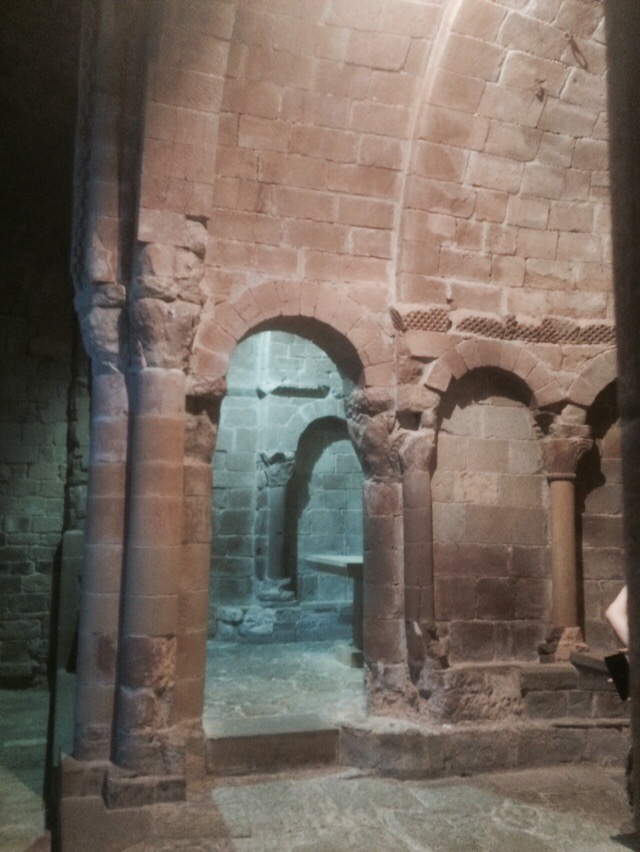
Nestled in a rock face near the Spanish city of Jaca is the ancient monastery of San Juan de la Pena. It dates back to the ninth century and by the 11th century became the spiritual and intellectual centre of the Kingdom of Aragon. According to legend the Holy Grail was kept here until the 14th century.

There is no final proof but It was believed to be the chalice used by Jesus during the Last Supper and the cup in which Joseph of Arimathea collected the Blood of Jesus on the Cross. Today the original is kept in the Cathedral of Valencia with a copy displayed on a stone altar in the old monastery.


Whether true or not, the monastery San Juan de la Pena is a mysterious and unique place. While on our recent walk on the Camino, I took a day to explore the area on the mountain from which there are spectacular views of the Pyrenees mountains in the distance.


The Monasterio Nuevo, or new monastery, further up the mountain is a much bigger complex. Its exterior has been rebuilt with a modern museum interior giving much insight on how the monks lived according to the Benedictine Order

The monastery had enormous influence not only in the ancient Kingdom of Aragon but throughout Europe of the early Middle Ages. The monks lived disciplined lives, following a daily routine of contemplation, work and study. Silence was highly cherished. The monks took a vow of silence and were only allowed to speak if it was absolutely necessary or when it was a good thought or blessing. It was obviously an atmosphere that was conducive to highly-focused study and inner spiritual work.

The exhibition in the new monastery illustrates a colorful history of rise and decay. The influence and success of this monastery in the early Middle Ages can be attributed to several factors that are good lessons for today’s corporates:

  • The monks were absolutely focused, disciplined and dedicated to their task
  • At the same time they did not exclude themselves from the outside world, honing the art of networking and relationship-building with the rulers and decision-makers of the time.
  • A charismatic abbot, or leader, was crucial in maintaining cohesion, discipline and respect
  • Basic material needs were catered for by the Kingdom with at times generous grants and donations

Its a mute point on whether the decay started in the year 1399 when the Aragonese King Martino V took the Holy Grail  to his palace in Zaragoza and when the monks asked for it back he tricked them with a replica. There were several fires that destroyed much of the monastery complex in the 17th century. Decay came in line with infighting and power struggles. Grants and privileges from the king were reduced and at times completely stopped. Loss of focus and purpose came in line with vows being broken and poor leadership.

An organisation is only as successful as long as its members are motivated to abide by the internal codes and ethics which always reflects on how it is perceived by those outside. There will always be circumstances that cannot be controlled, such as political change or upheavel. But it is how adaptable and flexible that organisation is to unpredictable changes, that will ultimately determine its survival.

Leave a comment

Filed under connection, energy, healing nature, life vision, meditation, monasteries, monks, organisational structure, powerbodymind, psychology, spirituality