Self Love – the trick to a lasting New Year resolution

How often have we started the New Year with a resolution to make some lifestyle change? Be it the will to do more exercise, stop smoking or spending less valuable life-time watching meaningless TV shows, most New Year resolutions seldom last through the first month of the year.

Very few of us seem to have the strength and the willpower to change habits that we know from a rational point are doing us harm. We then end up being frustrated and angry at ourselves for not making the change we feel is really necessary.

In principle most of us find it pretty safe to stay in a “comfort zone” because making a change requires effort and energy. Sometimes we are even afraid that the changes we implement might rock the boat too much, requiring even more energy and input. We fail to realise that such a “comfort zone” has actually become pretty uncomfortable or even painful for a long, long time.

 Experts at the Harvard Medical School believe that the chances of making lifestyle changes succeed are much greater if they are specific, measurable, achievable, realistic and time based. I would add that the factor loving self-care is just as important. The more we care for ourselves, the more this will manifest itself in our habits and dealings with our immediate surroundings.

 So lets take the idea of getting more exercise because we know from all the information out there that it improves our health on all mental and physical levels. First of all I would choose a physical activity which appeals to me and sounds like fun. If it is running, then start choosing a place where you would have fun going for a run. It should be measurable, achievable and realistic. Find a realistic time commitment which you know will have a realistic chance of working . So why not start off by going for a short run of say ten or 15 minutes with a slow walk included so that you don’t over-exert. You can always extend your routine a little as you go along.

Image

Better still: Find a friend or partner who shares your commitment or resolution. You could motivate each other and discuss a reward you would give each other for keeping at it for say two weeks, like spending a day at a spa. Keeping up a regular exercise or diet routine over 40 days has a much more lasting effect. If you have managed to keep at it for 40 days you will definitely feel a lot healthier physically and mentally. Friends or colleagues may start commenting positively on the visible change they see in you which is an additional motivation to keep up with your training programme.

 More importantly: You will notice yourself how much the quality of your life has improved. You would not want to go back to the situation most people in the industrialized world currently find themselves – an uncomfortable “inbetween-state” of not really being healthy nor really ill.

Falling into positive health habits impacts our lives more than we realize. It is enormously liberating to know that we have the freedom of choice in order to live a healthy life by looking closely at such factors as exercise, sleep, food, emotional stress factors, addictions and time management. Genes are only a small part of our destiny. Making necessary lifestyle changes has a major impact on obesity, heart disease, cancer, diabetes and many of our modern-age scourges, according to many recent studies:

Genes are not destiny – Harvard School of Public Health

Lifestyle and cancer incidence in men

The 40-day path to health

 My Book: Yield and Overcome

 Image

Leave a comment

Filed under Uncategorized

World yearns for leaders with Mandela qualities

Image

Today the world took farewell of Nelson Mandela. As a boy he herded cattle near his home in a remote rural area of South Africa to grow into one of the greatest leaders of our age, epitomising values that have become rare indeed.

Why is the world so fascinated by Mandela? When he was sentenced to life imprisonment in 1964 nine out of ten South Africans at the time probably wanted him hanged, seeing him only as a dangerous “terrorist”. For many years only a handful of people kept his memory alive. His writings were banned in South Africa. His first years of hard labour on Robben Island were especially harsh and would have broken most other people. One of the things that sustained him was the poem by William Henley:

Out of the night that covers me,

Black as the Pit from pole to pole,
I thank whatever gods may be
For my unconquerable soul.

In the fell clutch of circumstance
I have not winced nor cried aloud.
Under the bludgeonings of chance
My head is bloody, but unbowed.

Beyond this place of wrath and tears
Looms but the Horror of the shade,
And yet the menace of the years
Finds, and shall find, me unafraid.

It matters not how strait the gate,
How charged with punishments the scroll.
I am the master of my fate:
I am the captain of my soul.

When he came out prison 27 years later, he was indeed unbowed, having sacrificed everything for a common good, knowing instinctively that some day destiny would call him to duty. During my early years as a newspaper reporter in South Africa I met one of the police officers who actually arrested him outside Howick, near Pietermaritzburg in 1962. The Afrikaner policeman became very reflective when asked about Mandela. It was obvious that the man had somehow been deeply affected by this African liberator during the interrogation, for the Afrikaners too had fought a struggle against British imperialism.

Many years later I met Mandela for the first time in his home in Soweto in 1990, some months after his release. His mere presence was magical. It was not only his physical presence but something that comes from a heart or soul level. Mandela saw himself as a servant of his people, for a higher goal and destiny – he epitomised the concept of Ubuntu (humanity to others). He set an example to politicians and leaders at every level. Here are some of them:

  • An amazing self-deprecating humour that kept him grounded as a human being
  • He was everything but a leader on a godly throne, admitting that he made mistakes and was not a saint.
  • He was a mentor and mediator, bringing together disparate groups for a common goal
  • He was very disciplined. His comrades, who spent years in prison cells next to him, were woken in the morning at 5 a.m. by his skipping exercise routine. At times he could get very impatient with people around him who came late for appointments.
  • He exuded a dignity that so impressed his white prison guards that they soon resorted to calling him Mr Mandela instead of the derogatory term “kaffir”
  • He confronted his fears, strengths and weaknesses with much self-reflection
  • At the same time he was humble and down to earth. People, especially children always felt at ease around him.

Our world has a leadership problem. Whether we look at business, politics or many other levels of society. Where are the managers, CEO’s, teachers, political party leaders, heads of government with UBUNTU qualities?

Leave a comment

Filed under Uncategorized

Good foods are no longer nourishing us

Feeling exhausted, tired and listless?

A lot of it might have to do with the foods you eat or the lack of nutrients you are getting from them. Depletion of soils, acidic rain and long storage times or even cooking in microwave ovens is robbing good foods from essential nutrients. The following graph dramatically illustrates what has been happening even to our so-called “power foods” that our cells need to function properly.

Image

This simply means that a lot of the groceries you are buying in your supermarket aren’t really nourishing you. We are going back to planting our own vegetable garden;)

Source: 1985 Geigy. 1996 and 2002 Food laboratory Karlsruhe/Sanatorium Oberthal, Germany. 

Tested Vegetable

Nutrient

1985

1996

2002

Variation

in %

1985-1996


1985-2002

Broccoli


Calcium

manganese

103

24

33

18

28

11

-68

-25

-73

-55

Spinach

Magnesium

Vitamin C

62

51

19

21

15

18

-68

-58

-76

-65

Banana

Calcium

folic acid

magnesium

Vitamin B6

8

23

31

330

7

3

27

22

7

5

24

18

-12

-84

-13

-92

-12

-79

-25

-95


1 Comment

Filed under Uncategorized

Human needs or corporate values?

Germany’s two major political parties have just agreed to form a grand coalition, deciding for the first time on a countrywide minimum wage of 8.50 Euro per hour. This was one of the issues pushed through by the Social Democrats in the new coalition.

 The sad truth is that many employees in the services sector are currently earning a lot less. Many have been forced to apply, in addition to their low income, for a social welfare subsidy to pay the rent.

 The state, or taxpayer, has indirectly been subsidizing these lower paid jobs. It is one of the downsides of the German economic boom. German corporations are earning huge profits with their emphasis on exports. Domestic demand on the other hand has been stagnating at a low level for many years because the available income of middle class and lower income groups has been declining. This has largely been due to low wage increases coupled with high medical aid, tax and other social welfare fees.

 The background to such a development, not only in Germany, has been a dramatic shift in the value system: Greed has taken over. We saw the worst outgrowths of this in the banking crisis that came to a head in 2008 and that is not over yet, by far. The positive side to the story is that all the muck came to the fore. The story was out in full glare. We could finally read how customers were literally “robbed” with junk products so that bankers could cash in on their annual bonuses running into millions – in some extreme cases.


Image

Words are telling. The person responsible for staff issues is called the head of “Human Resources” as if humans can be put on the same level as material resources such as technical equipment. In the same way the customer is not seen as a human being but as a “product” that needs to be milked in every way possible and can be treated with complete disrespect. When was the last time you actually got hold of a human being on the other end of the line when trying to phone a telecommunications or other big service company? You are inevitably left waiting, listening to a computer voice and being forced to listen to horrible music while you are at it. Watch how a company treats its employees and you will find that it will be treating its customers in the same way.

 During the past ten years there has been a dramatic increase of burnout and other psychological disorders among employees in Germany. This had the German Labour Ministry so worried that they have commissioned an annual study on stress and related matters.

 One of the issues that regularly comes up is the lack of human leadership skills, empathy, inability or unwillingness on the part of managers to praise their employees for work well done. It is one of the key factors employees list as to why they feel dissatisfied or emotionally exhausted in their jobs. Bosses have been appointing bosses of their own kind with a complete lack of social skills.

 People have needs. They are social beings who interact, communicate, laugh and especially enjoy being in a team where basic human respect and recognition is the norm. People want to earn a decent wage to be able to afford basic needs but they also want to go to a job every day where they feel they can contribute to something meaningful and meet up with friends at work who are there to also support them during the natural cycles of ups-and-downs in life.

And, more importantly, they want a boss who leads by example and is a mentor in honing personal skills. He is also the person who can show genuine empathy when a child is sick at home and remembers every birthday and anniversary – like a good friend. It is not too much to expect. People simply want to be treated like humans and not like a human resource that can be extracted, manipulated and discarded.


More info in my book on the cycles of change and value systems: Yield and Overcome


Leave a comment

Filed under Uncategorized

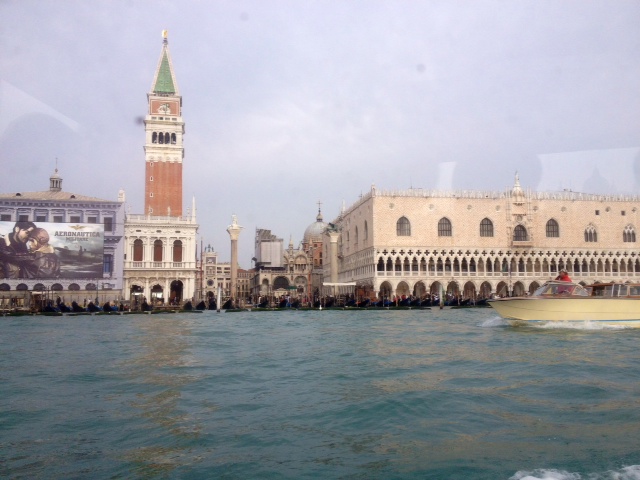
Venice, Climate change and denial

Venice is undoubtedly one of the world’s most beautiful cities. Walking these ancient streets and squares one cannot but be astounded by the architectural masterpieces built by the Venetians over the centuries.


The Basilica of San Marco overlooks one of the most beautiful squares in the world. It is the main tourist attraction and a favourite backdrop to many a movie. Unforgettable the scene from “Moonraker”: After being pursued by Drax’s henchmen down the canals in Venice, James Bond approaches St. Marks Square on a gondola. He activates a skirt on the boat, turning it into a hovercraft that allows him to travel on the square to the astonishment of everyone around.

Image 

But St. Marks Square is only one of the many wonders to be admired here. Looking across from St. Marks Square is the magnificent baroque Basilica of St. Mary of Health (Basilica di Santa Maria della Salute), a huge, domed church built on a spit between St. Mark’s Basin and the Grand Canal. It was founded in 1630 as a tribute to the Virgin Mary and took 57 years to complete. It was built as a tribute to the Virgin Mary for freeing the city from the plague. And every year on November 21 the locals pay tribute to her, praying for good health.


Venice is literally built on water and the people have learned to live with regular floods. But in recent years the frequency of those floods has increased. Last year the city was flooded several times. A group of mobile flood barriers have been constructed at the entrance to the Venice lagoon in a project started ten years ago and scheduled to be completed in 2015. http://goo.gl/axO9rb


Will it be enough?


The city once boasted several hundred thousand local inhabitants. Now it is just over 50,000. It is not only the high property prices but the cost and discomfort of having to protect your house against the flood waters that is driving the people away. The first exodus began after the catastrophic flood of November 1966 that virtually submerged the city. At the same time more than 20 million tourists came to the city every year. As a major generator of tourist income the city is worth protecting.


Meanwhile another United Nations Climate Conference is taking place in Poland of all places. The country has shown little inclination in the past to do anything about curbing carbon dioxide emissions from its coal-fired power stations. To the contrary it is taking the tack of many climate change sceptics. The outcome of this conference is predictable. Too little is being done too late and the longer we wait, the more difficult it is going to get to save cities like Venice and many low-lying island nations.


There seems to be a parallel between the denial ism in the climate debate and personal health. It is beyond doubt that smoking, junk food and lack of exercise will shorten your life. But the human being seems incapable of relating such information to the future. “So what, as long as I can enjoy my Bic Mac in front of the TV now…”


In the same way we ignore the warnings from climate scientists that if we don’t radically reduce emissions we are going to have a very hot and uncomfortable planet by the end of this century. We are playing roulette with ourselves and the future of our children. Its time to wake up!

Image


Leave a comment

Filed under Uncategorized

Playing it safe?

Playing it safe?

Leave a comment

by | November 5, 2013 · 12:55 pm

Energy of Matter

Energy of Matter

Leave a comment

by | November 4, 2013 · 3:39 pm

Happiness is where you live

What makes people or nations happier than others? The World Happiness Index released last month  lists Denmark as the world happiest country followed by Norway and Switzerland.

All these European countries are very affluent by world standards. But why are other wealthy countries like the United States  not right up there among the leading “happy nations.”

What stands out in Denmark, Norway and Switzerland is their excellent health care and education system which are regarded as a basic human right. This is sustainable development. The people, especially mothers, families and children, are seen as the most important asset, literally the golden gateway to the future.

The Happiness Report lists six other key variables that explains three-quarters of the variation in annual national average scores over time and among countries. These six factors include:

  • real GDP per capita
  • healthy life expectancy
  • someone to count on
  • perceived freedom to make life choices
  • freedom from corruption and generosity.

Another key aspect mentioned in the report is mental health:

“Some studies show mental health to be the single most important determinant of whether a person is happy or not. Yet, even in rich countries, less than a third of mentally ill people are in treatment. Good, cost-effective treatments exist for depression, anxiety disorders and psychosis, and the happiness of the world would be greatly increased if they were more widely available.”

The report goes on to say that “happy people live longer, are more productive, earn more, and are also better citizens. Well-being should be developed both for its own sake and for its side-effects.”

One other aspect needs to be noted in these “happy nations” . Corruption and crime is extremely low by international standards. All the countries renowned for their corruption and crime, sadly including my own home country South Africa, are pretty much down at the bottom of the list.

If a government cannot protect its own people from being mugged, raped or robbed, it is on a fast downward spiral. The best talents in a country are bound to emigrate to those countries where they feel safe, can live their full potential and be happy.

 Image

Some would argue that happiness is all a state of mind, wherever you live. That, I think, is too simplistic and approach. What I read from the Happiness Report is that you need some decisive preconditions that only good governance can provide:

  • You need enough material resources to provide for basic needs
  • The opportunity to live a long and healthy life with your loved ones.
  • A good education and the freedom of choice to do what you find to be your life’s purpose
  • Freedom from crime and corruption

Quoting the Dalai Lama: “The purpose of our lives is to be happy.”

Leave a comment

Filed under Uncategorized

Improve your mental health with mindfulness training

A growing number of companies are realizing that the mental health of their employees is a real issue on a competitive market, demanding maximum output and performance.


I have just come back from a creative brainstorming session with a group of people involved in corporate health management. There are really interesting developments out there.


Burnout and other psychological and social stress factors at the work place are a complex issue. But companies and individuals can do much to boost their stress resilience. So how do we deal with stress?


What is generally described as burnout often comes at the end of a long period of having to deal with the same stress situation, like having to work in a dysfunctional team. Some of us in high-powered jobs have become so accustomed to a stress situation that we have lost touch to the needs of our innermost being, the basic physical need for a rest or time-out.


Prior to a burnout, patients often withdraw behind a protective wall as they stomp the work treadmill, cutting themselves off from family and friends.


Neurological research has found, that those grey brain cells in the prefrontal cortex of our brain, that is also responsible for feelings such as empathy, are greatly affected during stress. Certain regions of the brain and body are literally switched off to mobilize all resources to combat a perceived fear or threat.


Several researchers such as molecular biologist Jon Kabat-Zinn and neuro-psychologist Rick Hanson have looked at ancient Buddhist mindfulness training techniques. What Buddhist monks have practised for centuries can be a most effective way to boost your stress resilience and train your mental state of mind to be more content and happy.


Image


Zinn has developed from Buddhist practises his Mindfulness-Based Stress Reduction (MBSR) technique. The good news is that even though stress causes a reduction of brain cells in such regions as the prefrontal cortex, techniques that make you relax enable the brain to regenerate completely. Relaxation techniques such as meditation can even help you develop new mental capacities .


It starts with self-compassion and loving yourself and your body. By treating yourself with respect and loving care, you will be more mindful of others and your surroundings. Developing more self-compassion is a powerful tool at staying mentally healthy. But in order to overcome mental patterns that have formed barriers over many years it is necessary to keep up a regular training routine. Try out the 40 day method which I wrote about in one of my recent blogs. An effective mental training routine can be followed over three steps:


  • Relaxing: Yoga, Taiji, or Qi Gong exercises help the body to relax. Especially if these exercises are accompanied by a mental image. “I feel all the weight of my mind flowing out of my head through my body and into the ground…”


  • Focusing: Sit down in a meditation position, focusing all your attention on your breath, observing what feelings and emotions come to the surface without being judgmental to yourself about them and wanting to change them, for example: “Ah, there is anger, or fear or sadness or joy.”


  • Loving meditation: With the third step you focus all your attention on yourself as an outside observer wishing you all the best of health and happiness in your life. Then you move on thinking of a special person in your life who makes your heart glow with loving warmth. Send this person all your love and good energy. Then send all that loving energy to a stranger you don’t know or might have just spotted on the subway. After that comes the hardest part, sending all that loving energy to a person you don’t like or has done you harm. End the meditation by focusing again only on your breath inhaling and exhaling. Then open your eyes and start your day.

 More information on the Five Elements in my book “Yield and Overcome”

Rick Hanson: Buddha’s Brain: The Practical Neuroscience of Happiness, Love, and Wisdom 


Leave a comment

Filed under Uncategorized

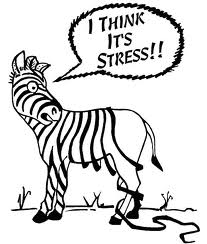
Is “stress” a myth?

ImageIf we feel and look around us we so often find ourselves “driven” by forces out of our control that we perceive as stressful. We find ourselves under pressure, in a constant state of hectic activity with no time to relax. More and more people are succumbing to these pressures with a burnout, depression or other psychological disorders.


Not a day goes by without some publication, giving us some tip on how to deal with the stresses of modern life.


In psychological terms stress is defined as a psychological and physical response of the body in reaction to changing conditions. These conditions may be real or perceived and has a powerful effect on mental functioning.


The last point is particularly poignant. Is having stress all in the mind? A lot of recent medical research is focusing on just this question. Some people obviously manage to deal much better with change than others.


Why do some people really take off when they are under pressure, finding in themselves enormous stamina and creative flow while others doing the same work under the same conditions suffer from chronic exhaustion and end up having a burnout.


I think its time to put some things into perspective. Compared to previous generations and compared to much of humanity in the so-called Third World, we in the industrialised West live a pretty comfortable life – at least in material terms. In order to get something to eat, we merely take a drive down to the next supermarket where we have a choice of foods that no other generation ever experienced. We have warm homes in winter with central heating and in the warmer areas air conditioning in summer. We have a life expectancy that is much higher on average than that of our great-grandparents.


Would you really want to go back in time to the Middle Ages when people lived in constant fear of dying in warfare, from famine or disease. The wealthiest king or queen did not have the choice and comforts of life that the average person enjoys today. So what has gone wrong? Why are we so under stress?


Today’s stress is primarily not about physical but about emotional and social survival.


When we are under stress, our sympathetic nervous system initiates a “fight or flight” reaction, restricting blood flow, raising blood pressure, releasing adrenaline and the stress hormone cortisol, slowing body functions so that all energy can be used to fight the stressor. After the perceived danger has passed, the parasympathetic system takes over, decreasing heartbeat and relaxing blood vessels.


In our modern world our stress response is activated so frequently that the nervous system doesn’t have a chance to return to normal, resulting in a state of chronic stress. There is a chronic imbalance between activity and relaxation. It is very often the same type of stress over a long period of time that takes its toll.


In my consultancy for many different types of business on corporate health issues, there appear to be several common denominators that cause negative stress among employees, leading to growing absenteeism from burnout or depression:

Here are the most common:


  • Management that fails to communicate to its employees that they are really valued as fellow human beings. Simple acts of courtesy fall by the wayside with employees merely seen as “a human resource” costing xxxx number of dollars or euros a month.

  • Performance is measured merely in individual output with social skills such as team play not being taken into consideration.

  • Total control with little or no freedom in utilising personal skills or creativity

  • Round the clock availability via email or cell phone, even during vacation time

  • Finding no meaning, vision or real perspective in the job one is doing

  • No time allowed or taken for real breaks where colleagues can communicate with each other

  • No time for relaxation or physical exercise during work time


People don’t just go to work to earn money. It is the place where they spend the largest portion of their lives, where they interact with fellow human beings, seek meaning in their lives and find the challenges that make them grow and become fully human. Companies that really understand this and train their managers to lead people rather than machines will inevitably lead the field, even in highly competitive market segments.


More information on the Five Elements in my book “Yield and Overcome”http://goo.gl/TXSgw0


Leave a comment

Filed under Uncategorized