Tag Archives: childhoodtrauma

The Power of Forgiveness: Doing it the Right Way

The weak can never forgive. Forgiveness is the attribute of the strong.

– Mahatma Gandhi-

Many misconceptions surround the act of forgiveness, especially when it involves those who have caused you the most pain. However, when practiced with true intention, forgiveness is not about excusing harm but about freeing yourself from the emotional weight of resentment and anger. By embracing forgiveness the right way, you elevate your vibrational energy, fostering inner peace, and a greater sense of emotional and spiritual well-being.

Holding onto a grudge, hate or resentment creates stress while forgiveness creates inner peace and restores the trust in human connections.

Most spiritual traditions emphasize forgiveness as a path to enlightenment, inner peace, and a sense of purpose but there are many misconceptions about forgiveness, often amplified by religious doctrine.

Studies show that forgiveness can lower blood pressure, improve heart health, and reduce chronic stress. The body and mind are deeply connected, and forgiveness can lead to measurable health improvements.

It does not mean that you have to restore a relationship with the person who has caused you much pain but releasing yourself from the toxic emotions related to that incident.

Common misconceptions about forgiveness are that you are excusing the behavior of the person who has hurt you or that you must reconcile with the offender. Forgiveness is not weakness but takes takes strength and courage in facing your own shadow.

In a recent conversation on my Living to BE podcast with forgiveness expert Katharine Giovanni we delved into the typical misconceptions about forgiveness, many of them stemming from early childhood patterns. The key takeaways from her new book “The Ultimate Path to Forgiveness”:

  • Emotional freedom and harmony is a long-term process
  • Forgiveness is a step-by-step process that can transform the soul
  • You can practice forgiveness without physically meeting the person who has caused you pain and even with those who have long passed.

Reino Gevers – Author – Mentor – Speaker

P.S. If you enjoyed this article you will be interested in my books available where all good books are sold.

You can watch the podcast interview with Katharine Giovanni here and also on the Youtube channel Living to BE

Leave a comment

Filed under happiness, mental health, mental-health, psychology, religion, spirituality

Evil is created, not born

Russian President Vladimir Putin’s unprovoked invasion of Ukraine has inflicted devastation upon millions of lives and dramatically altered geopolitical realities. Analysts speculate that Putin’s actions may be rooted in a traumatic childhood, a common denominator of some of the world’s most brutal dictators.

Adverse childhood experiences and trauma are sometimes passed on for generations, and if not transmuted can create particularly destructive adults who are incapable of showing compassion, empathy, or love.

Putin himself is probably unaware that his behavior is driven by unresolved “inner childhood” trauma but his convoluted argument on national television that the invasion of Ukraine was justified to fight “Nazis” offer some clues to his actions.

Ukraine is led by a Jewish leader and Putin’s argument that the country’s government is led by Nazis is absurd. Lately, the argument of fighting “Nazis” in Ukraine has been changed into a fight against the West as a whole “intent on destroying Russia.”

Putin, judging from his many unhinged statements in state-controlled media, obviously feels threatened and considers himself the victim seemingly oblivious to the suffering he has unleashed.

A former profiler from the U.S. Central Intelligence Agency (CIA), Dr. Jerrold Post, who later became a professor of psychiatry has suggested that Putin’s anxieties possibly stemmed from his early experiences in life.

Putin grew up as a street kid in a rough neighborhood of Leningrad, a city devastated by the Nazis during World War II. Most of the population died in the war and Putin’s father was badly injured, inheriting from his parents their wartime trauma. Growing up without any loving adults around him, Putin was forced to fend for himself on the streets and was badly bullied by other children.

It produced a macho personality, deep distrust of others, unpredictability, and a man willing to advance his own power agenda walking over killing fields in the process. Putin has had his most vocal opponents assassinated or imprisoned, started wars in several neighboring countries, and is sowing division and hate with an information war of fake news on a global level. We are seeing evil at play on multiple levels.

Photo by Keira Burton on Pexels.com

Dr. Post explained in an essay that Putin’s steely surface is directly linked to being bullied as a child which led him to take up martial arts.

“He (Putin) took up martial arts so as not to be pushed around by other kids. We are seeing the same behavior in his leadership,” Post wrote.

The psychologist Alice Miller writes that there “is no confirmation of the widespread assertion that there are people who are born evil. On the contrary. The deciding factor is the reception they were given when they came into the world and the way they were treated later.”

Her summary of how evil is created and what she learned from the common denominator of childhoods from dictators is particularly poignant:

“These children will tend to glorify the violence inflicted upon them and later take advantage of every possible opportunity to exercise such violence, possibly on a gigantic scale. Hitler, Stalin, and Mao all had particularly traumatic childhoods during which they were repeatedly beaten and shamed by adults.

“Children learn by imitation. Their bodies do not learn what we try to instill in them through words but what they have experienced physically. Battered, injured children will learn to batter and injure others; sheltered, respected children will learn to respect and protect those weaker than themselves. Children have nothing else to go on but their own experiences.”

Our responsibility as a society therefore is to instill in children from an early childhood love, respect, understanding, kindness, and warmth.

The healthier a child’s relationships are at a later stage in life, the higher the possibility of recovery and resilience from trauma.

When a childhood trauma can be resolved at an early stage, there is a greater chance of healing and less risk that a destructive behavior pattern is repeated in adult life.

Related articles:

Reino Gevers – Author – Mentor – Speaker

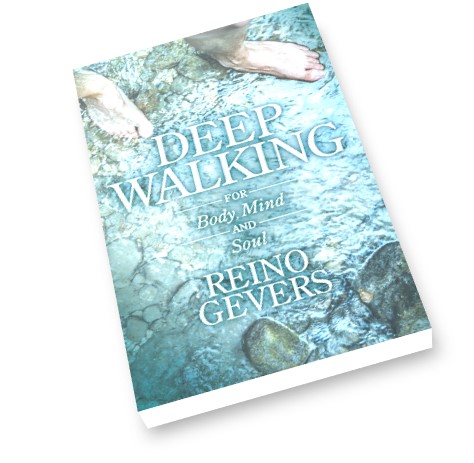
P.S. I’m excited to announce the release of my latest book, “The Turning of the Circle: Embracing Nature’s Wisdom for Purposeful Living.” If you enjoy it, you might also be interested in my previous works, “Deep Walking for Body, Mind and Soul” and “Walking on Edge: A Pilgrimage to Santiago.” You can find all of these titles at reputable bookstores near you.

Leave a comment

Filed under psychology, self-development, spirituality, Uncategorized