Author Archives: Reino Gevers

Reino Gevers's avatar

About Reino Gevers

Author, mentor and trainer

Why nobody is safe from a cult

Have you asked yourself why decent, educated, and well-meaning people are pulled into the dragnet of a dangerous cult? Do you think you are immune to making the same mistake? All it takes for them to capture your mind is to push certain emotional triggers and feelings.

Times of uncertainty and rapid change impact personal lives in multiple ways. The world’s getting more complex. We are seeking easy answers and simple solutions. If you are at an especially vulnerable point in your life. If you haven’t done the self-work in transmuting archaic fears, anxieties, and anger issues, you are at risk.

Historians and psychologists to this day ask themselves why a highly civilized nation that brought forth some of the world’s greatest philosophers, writers, and inventors could literally “worship” in masses a madman demagogue like Adolf Hitler. Cult leaders in different variations are malignant narcissists, display psychotic personality disorders, and carry an extreme personal grievance.

Hitler perfectly epitomized and tapped into the collective humiliation and undercurrent seething anger Germans felt after losing a war and suffering hunger and poverty during the economic meltdown of the 1930s. With a rising number of extremist groups coming to the fore in once unshakeable democracies, scholars and historians are seeing dangerous parallels and comparisons to the 1930s and the rise of fascism that culminated in the catastrophe of World War II.

An “us-versus-them” mentality

Cult movements typically have an “us versus them” mentality, providing a “safe haven” for individuals who have suffered a personal loss or humiliation. The “tribe” in the form of an organization, religion or political movement with a charismatic leader at its head perceives all outsiders of the movement as a threat. They will pound the message of “exceptionalism” of their leader or group. The “non-believers” and especially minority groups are vilified and dehumanized. Followers of the cult inevitably break off contact with family, and friends who do not belong or refuse “to see the light.”

Control and Isolation

The control mechanisms of a cult can be on a very subtle emotional level. Once the member has gone all-in by severing long-term relationships, it becomes very difficult to return to the old life. Few people will admit to having made a mistake or the wrong decision after sacrificing the best years of their lives and donating all their money to the “movement” or “cause.” We are hard-wired as social beings and it gets very difficult to leave “the cult family”. Those who leave are vilified as traitors to the cause, threatened, and in extreme cases harmed physically and mentally.

Photo by Luis Dalvan on Pexels.com

Group-Think, Lies and Deception

Once in the movement you inevitably become part of “group-think.” Members expressing the faintest doubts, who engage in a critical discourse or ask the wrong questions are shamed, coerced, and brought into line by the cult leader or his lieutenants. The critics will be told that they are “in their ego” or have strayed from the path – a favorite one in the religious cults. They will be playing on a core fear of most humans – the fear of being excommunicated from the safety of the tribe. Meanwhile, the real objectives and the financial dealings of the movement can be shrouded in mystery. The leader is always right. Excuses will be made over and over again as to why the leader could never be responsible for sexual misconduct, overspending on luxury items, or committing a serious crime.

Financial Exploitation

A common denominator of all cults is the financial exploitation of their members. They will be asked to contribute high membership fees, provide funds for a new temple, and pay for the private jet or the legal fees of the cult leader. At times members would have to donate all their assets to the movement for “the common good” as a sign of their commitment and loyalty. A small portion might be channeled to real charities as a marketing ploy while the major part will be kept by the cult leader for his personal needs.

Exploitation of vulnerabilities

You might say: “This can’t happen to me.” But cults and sects are masters at exploiting human vulnerabilities and emotions. Nobody is safe. A religious sect with a therapeutic New Age touch might catch you during an especially vulnerable point in your life when you are lonely and in need of social support and love, have just gone through a divorce, lost a loved one, or have a spiritual crisis.

The political cult and charismatic leader at its head will ensnare you if you haven’t dealt with your darkest toxic emotions such as anger and fear. You are functioning on “automatic” in the fight and flight mode of your reptilian mind, separated from the prefrontal cortex of your brain responsible for critical and logical thought.

Addiction to a cult has to be treated like any other addiction. First and foremost there is the need for an honest recognition and acceptance of the problem. Concrete action has to be taken like leaving the cult, breaking all contact with its members, and possibly leaving town. What lifestyle changes, support groups, and therapy are necessary? What would my life look like without the addiction? What freedoms would I be enjoying? How can I prevent relapse and find supportive friends with a higher vibrational energy?

If you are drawn to a charismatic leader with a hate-filled, and vindictive message, ask yourself: “What anger within me is he tapping into? What can I positively change in my life, instead of delegating action to the “political messiah.”?

Walking the path of your highest calling in personal freedom and liberty is foundational to fulfilling your soul destiny and living a life of bliss. By becoming subservient to a cult you are surrendering your unique God-given authenticity and weakening your self-esteem.

You have instead a wonderful opportunity to build on self-development from the gems and wisdom of many teachers past and present who have transcended the temptations of power and ego. If you should run into that “guru” offering a seemingly perfect solution or the only path to enlightenment – you had better run.

Reino Gevers – Author – Mentor – Speaker

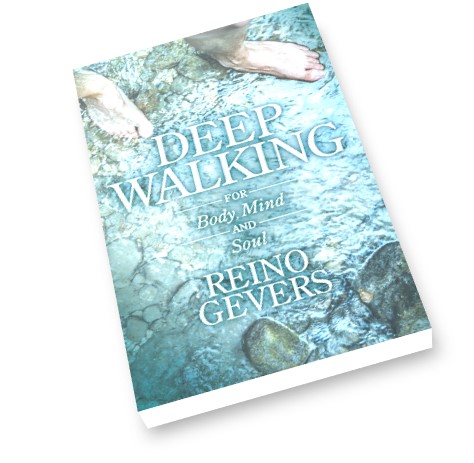
P.S. My new book “The Turning of the Circle: Embracing Nature’s Wisdom for Purposeful Living” has just been published. You might also find my other books “Deep Walking for Body, Mind and Soul” and “Walking on Edge: A Pilgrimage to Santiago” of interest. They are available where all good books are sold.

Leave a comment

Filed under humanity, mental health, mental-health, psychology, self-development, spirituality

A time to reap your rewards

If you want to enjoy the rainbow you must be prepared to take the journey through pain

In our culture, there is a festering poison of feeling entitled to special benefits or privileges without having made any effort to attain them. If you haven’t invested in the pain and walked the burn that brought you success you will never fully appreciate what you have and risk losing all.

In the ancient Taoist philosophy of the Five Element late summer is associated with the Element Earth. Using the analogy from farming: If you have invested wisely in seeds and fertilizer to plant your crop in spring, and diligently irrigated and weeded your fields in the summer, you will most likely be in the fortunate position of reaping a good crop in late summer.

Every sports star knows that you have to be disciplined and train for several hours every day for several years to reach the top league. Learning a new language requires learning on a regular basis. If you start a new business you have to invest money first, risk failure and maybe start all over again before finally making it.

Investing more than the average

The most successful people constantly push their boundaries and do much more than the average. It not only demands thinking creatively, breaking free from self-imposed limitations, and pursuing ambitious dreams, but putting in the work and the effort.

An entitled person will only see the rewards and compare. “Why can’t I have the same? I’m after all more beautiful, more intelligent …” It is the mindset that spends more than it earns. It is reaping the crop before it has ripened. There is an old English proverb: “Cheat the earth and it will cheat you.”

Falling into the trap of the blame game

Unconscious people are in the blame game and weak because they are victims of everything. Instead of taking complete responsibility as the captain, they think everyone else is responsible for their unhappy condition.

It’s so easy then to accuse the government, other nations, other races, business competitors, parents, siblings, and other people of the situation we find ourselves in. Few people are capable of taking full responsibility for whatever happens in their lives.

The crop will never bear fruit and grow to its full potential if the field is overgrown with weeds. Bugs only thrive in an unbalanced environment.

We subconsciously accumulate customs, habits, and opinions from the people we surround ourselves with and the information with which we feed our brains.

In the book of Wisdom, the I Ging, the earth is described as the receptive, receiving, and softer energy of the female or yin. It is the counterpart, but not the opposing force of the creative Yang. The enormous and receptive force of Yin needs the Yang force to exert and channel the force.

In much the same way, the heroic leader studies the situation at hand, responding accordingly. Action is never taken without a clear grounding and the realization of what path needs to be taken.

Mother Earth provides life. She provides nutrition and room for all beings, be they of a good or bad predisposition. To illustrate this particular importance in comparison to the other elements, many of the ancient writings and drawings have the earth element positioned centrally with the other elements around it. It also emphasizes the importance that at the end of each change cycle, we go full circle back to earth—to the source.

We need thought processes and thinking to accomplish tasks and to give room to our ideas and creativity. The challenge is to get a feeling about when we cross our own boundaries and those of others.

Do I have enough resources to go ahead with plans? Do I make provision for more or for less? Do I have enough in reserve? Or do I live from too much-borrowed energy, becoming indebted to other people and borrowing money?

These are the questions that need to be asked in almost any life situation where the need for change or turnaround is called for, especially if we are feeling constant fatigue after surrounding ourselves with certain people or are met with constant obstacles.

The balanced earth person is trustworthy, generous, and of a stable temperament. They sometimes are slow to respond, but will be thinking things over carefully before giving you a reply. This could be very irritating for an imbalanced pumped-up person expecting a machine-gun reply.

Symbolically, he would be the plump, pot-bellied, sitting Buddha at peace with himself, centered with the universe, and observing calmly while everything around him is falling into loud chaos. They are the steadfast rock in the ocean storm.

In the philosophy of the Five Elements, the Earth is described as being gracious and filled with abundance for all that life has to offer. On the other hand, it demands respect and the absolute maintenance of ethical standards that encompass all living beings. If these are violated, the consequences can be merciless. What is my true motivation? What effect does it have on others? Am I orientated to fulfilling my own greedy needs, or do I have a broader picture in mind?

Reino Gevers – Author – Mentor – Speaker

P.S. This is an extract from “The Turning of the Circle: Embracing Nature’s Wisdom for Purposeful Living” which has just been published. You might also find my other books “Deep Walking for Body, Mind and Soul” and “Walking on Edge: A Pilgrimage to Santiago” of interest – available where all good books are sold.

2 Comments

Filed under mental health, mental-health, Uncategorized

Self-worth and finding purpose and meaning

As you walk the path of life with its up-and-down cycles of dealing with the loss of a loved one, a significant health issue, or financial challenges it is easy to lose self-esteem, passion, and your sense of purpose and meaning.

At the core of how you feel and care for yourself is how you define your place in the world. Are you passionately enjoying what you are doing? Are you a grateful and happy person when you get up in the morning?

What we call a “midlife crisis” can also be a time to redefine purpose and meaning. You might be finding yourself in an unfulfilling job or engaging in repetitive and monotonous routines that suck away your life energy. But you lack the courage or are too fearful to make the necessary changes.

Photo by Spencer Selover on Pexels.com

A once fulfilling or loving relationship has degenerated into hate and recrimination. A job that was aligned with your values and purpose has changed so much that it has just become emotionally and physically exhausting.

Loss of meaning and purpose shows itself in negative thinking, constant bickering, and irritability. You will be compensating the search for existential meaning with addictions to bad foods, alcohol, substance abuse, or digital entertainment. This lack of self-love and self-esteem will inevitably manifest itself in body shape and appearance.

Major life transitions, such as a job loss, retirement, or a divorce, can lead to shifts in identity and purpose. Goals, purpose, and meaning need to be redefined.

A healthy sense of self-worth can be cultivated with the three pillars: body, mind and soul.

  • Looking after your body by doing regular exercise is key. Only 4,000 steps a day of active walking in nature will already significantly boost your metabolism, bone density and mental health, according to latest research. Avoid processed foods, sugars, artificial sweeteners and soda drinks. A mainly Mediterranean diet of fresh fruit, vegetables, olive oil, fish, and a little meat not only feeds your body with vital nutrients but also your brain.
  • Feed your mind with positive thoughts. Replace a negative thought with a positive thought. What is going well? What is good in your life? Stop comparing yourself with others. There will always be people who appear to be wealthier, more successful, and happier than you. Read good books and train your mind by solving puzzles, learn a new skill or language.
  • Soul purpose, meaning, and validation are often found in a community or a tribe sharing the same values, and ideals. Experiential spirituality comes from within. Practices such as meditation, deep walking, mindfulness training can open the gateway to a profound spiritual experience, characterized by a sense of union with the divine, and a feeling of being interconnected with all of existence.

In essence. you have to define or redefine your purpose every new day. Be grateful to be alive. Every new day offers a new perspective and new opportunity. When on your authentic soul path, you will be evolving and growing until the day you die.

Reino Gevers – Author – Mentor – Speaker

P.S. If you’ve found this article of interest you might want to read more in my books. “The Turning of the Circle: Embracing Nature’s Wisdom for Purposeful Living” has just been published. You might also find my other books “Deep Walking for Body, Mind and Soul” and “Walking on Edge: A Pilgrimage to Santiago” of interest – available where all good books are sold.

Leave a comment

Filed under mental health, mental-health, Uncategorized

Are you a “no” person?

Are you finding yourself trapped in self-talk emphasizing all that is not possible when the universe is constantly sending you messages on how you can escape the negativity trap and live a life of purpose and meaning?

The story goes that a village in the Italian Alps was hit by floodwaters with all the locals quickly heeding warnings from rescue workers to leave in buses for shelters on higher ground. All but one man refused to leave. Eventually, the rescue workers came by in speed boats with the waters rising rapidly. Again the villager refused to leave saying: “God will look after me.”

Failing to get the message

As the waters rose the villager had to eventually climb onto his rooftop. A rescue helicopter swooped low offering help. Again the villager refused help: “I’m staying. I’m putting my trust in God to help me.”

The inevitable happened. The man drowned. Reaching heaven’s gate, he accused God of ignoring his prayers. “What do you mean?” God responded kindly. “First I sent buses to the village to rescue everyone, then I sent the rescue workers in speed boats and finally I sent the helicopter and you still refused to get the message.”

When trapped in a spiral of negativity or in the sadness of that which once was and is no more, you will never perceive the whispers of the universe, offering you new opportunities in the ever-turning cyclical spiral of life.

The message from the universe could come in a casual word dropped by a passenger in a train, an image on a billboard or in a book full of wisdom that puts you on a completely different trajectory.

Photo by Jacub Gomez on Pexels.com

The underlying fear and trauma

If you have a partner, a dear friend or a family member who responds with a “no” to everything you are suggesting, then you might consider the following. There might be underlying fears and trauma for their negativity. They might be in the process of transmuting these fears and trauma by taking a necessary painful walk over the hot coals.

They might respond with “no” because they are stressed out and feeling emotionally drained. You will see with great clarity an opportunity for them, while they are not seeing it at all, making you angry for wasting your time with them. You can only react with patient communication and active listening in breaking down the barrier.

Stepping out of the comfort zone

Stepping out of the comfort zone takes courage. Most people would rather suffer all their life in quiet misery than make the change that could completely transform their life. One of the major reasons why people are risk-averse is that they fear the shame of failure and loss if things go wrong. Staying in the comfort zone provides a certain sense of predictability and control. Meanhwhile, the mental imposter feeds low self-esteem and lack of self-confidence with negative self-talk: “That’s impossible. I’ll never manage that. I can’t do that. I don’t have the skills, money, and talent that others have.”

The seeds of low self-esteem are often sown in early childhood with the constant criticism from parents, siblings, teachers and peer groups far outweighing tangible and positive reinforcement. Especially those individuals who are different or highly talented will feel the pressure to conform to the lowest common denominator of the tribe.

Meanwhile opportunity has been waiting all along at the other end of the smokescreen. Overcoming the fear of walking an unknown path involves acknowledging these fears, taking it one step at a time, building self-confidence by acknowledging those steps, and practicing self-compassion. The first steps are a painful walk in leaving well-known territory, and the “protection” of the tribe

But ultimately the walk into authenticity is highly rewarding. By facing and embracing new challenges consciousness and personal growth are elevated. You increase your resilience by facing all the storms of life.

There is no satisfaction greater than the realisation that the universe is sculpturing you into the person you were always meant to be.

Reino Gevers – Author – Mentor – Speaker

P.S. If you’ve found this article of interest you might want to read more in my books. “The Turning of the Circle: Embracing Nature’s Wisdom for Purposeful Living” has just been published. You might also find my other books “Deep Walking for Body, Mind and Soul” and “Walking on Edge: A Pilgrimage to Santiago” of interest – available where all good books are sold.

Leave a comment

Filed under mental health, mental-health, Uncategorized

The dragnet of regret

How often have you caught yourself going back into the past with the feeling of regret on the opportunities missed, the words you wished you had never said, and the things you would do differently if you could turn back the clock?

At times the feeling of regret can be so overwhelming that it’s like a dragnet pulling you down into a dark abyss of unhappiness. But according to author Daniel H. Pink regret is a fundamental part of our lives and can help us make smarter and better decisions in the future.

Based on the World Regret Survey, Pink has identified four core regrets.

Foundation regrets. These are regrets on the human need for some form of stability. Pink quotes Jason who says: “I regret not saving money diligently ever since I started working. It’s nearly crushing every day to think about how hard I’ve worked for the last twenty-five years or so, but financially I have nothing to show for it.”

Boldness regrets. Over time we are much more likely to regret the chances we didn’t take than the chances we did, whether its work choices, education or the choice of a partner. Foregone opportunities can be especially haunting during times of stress and pain.

Moral regrets. Most people wish to be seen as good people. But over time morally dubious decisions can be gnawing such as swindling in a business or cheating on a spouse.

Connection regrets. According to Pink fractured or unrealized relationships with spouses, partners, parents, friends, and all other close relationships constitute the largest deep structure category of regret.

Photo by Liza Summer on Pexels.com

We can set very high standards to the self and are at times our own worst critic. The melancholy sadness and regret over that which was and is no more is not only debilitating but prevents you from moving forward. Many of our regrets can in fact be undone by making amends, reversing bad choices, and taking a different perspective by posing the questions: What did I need to learn and how can I make a better choice in moving forward? If I’ve harmed others, can I make amends through an apology or some form of emotional or material restitution?

Was the regret merely an unpleasant incident in your life or does it define your life? Practicing self-care and self-compassion can neutralize some of those feelings if you treat yourself like you would be treating your best friend.

You forge your identity with the story that you tell yourself. The first step is acceptance of that feeling or emotion of regret and replacing it with a positive thought moving forward. “I made a bad decision. I feel terrible about it. But I lovingly accept myself the way I am. I am harvesting from the rich experience and moving positively forward.”

In loving yourself you build the ability to nurture and better serve your relationships. The lesson of a door slammed shut is to do better next time.

Reino Gevers – Author – Mentor – Speaker

P.S. If you’ve found this article of interest you might want to read more in my books. “The Turning of the Circle: Embracing Nature’s Wisdom for Purposeful Living” has just been published. You might also find my other books “Deep Walking for Body, Mind and Soul” and “Walking on Edge: A Pilgrimage to Santiago” of interest – available where all good books are sold.

Leave a comment

Filed under mental health, mental-health, Uncategorized

Fire out of control: A lesson from nature

A warrior finds a sharp stone, which he uses to sharpen the tip of an arrow. The stone slips hits another stone, and causes a spark that ignites the dry grass around. The warrior stares in fascination at the stone in his hand, then at the fire.

Like many inventions that heralded a new dawn in the evolution of mankind, the art of making fire probably resulted by accident.

Those people who could use stones to make fire made enormous headway. They could migrate to colder and darker areas of the world. Some developed a communication system with smoke signals, enabling them to control large tracts of land.

The art of making fire, at any place and time, and the smelting of iron, triggered numerous other inventions. Woodland was burned to make way for agricultural land.

Other people let the fire burn uncontrolled, destroying everything in their wake. Numerous myths, legends, and stories originated around fire. If left to its own devices, fire could indeed become a dangerous demon indeed.

In the Chinese teaching of the Five Elements, the fire element is where the heart, perikard, and small intestine are at play on both the physical and mental levels. People with balanced fire energy are good communicators and express themselves with vitality.

Inspirational leaders with heart energy

Some of the world’s great personalities stand out with a balanced heart energy, serving the greater whole and ideal rather than selfish needs: Jeanne d’Arc, Mahatma Gandhi, Florence Nightingale, Nelson Mandela, and the Dalai Lama, just to mention a few.

Much more mundane is constant irritability, disappointment with life, and apportioning blame to everyone else but the self for the miserable condition one feels. People who are unaware of their heart wish, because they are bombarded with the noise of the external world, often have an imbalanced heart element.

The fire element is much in imbalance when we see the rocketing numbers of people falling into mental and physical exhaustion with burnout. Stress starts with a thought and is a flight-or-fight survival mechanism ingrained in our DNA. It is indicative also of the epidemic numbers in cardiac diseases.

Humans are responsible for heating the atmosphere

On the macro level, we are depleting our natural resources as if there is no tomorrow. At the same time, we are putting the body and mind under constant stress, and robbing it of vital nutrients.

Looking at the broader macroscopic level, the fire element has, in the recent past, brought huge changes to our planet. Extracting fossil fuels that have been in the ground for millions of years and “burning” them in an unprecedented scale over the past two centuries has led to a massive increase of carbon dioxide concentration in the atmosphere. The science is sobering and will make the planet uninhabitable for humans within a generation if nothing is done.

Photo by Pixabay on Pexels.com

Today’s global warming is happening at a much faster rate today than it did in the warm periods between ice ages over the last million years. The massive forest fires in northern America and in southern Europe with summer temperatures averaging over 40 degrees Celcius this year is telling. The Fire Element is out of balance. In terms of the Five Element Philosophy nature always seeks a balance between the elements of wood, fire, earth, metal, and water. Interestingly we are experiencing flash flooding in other parts of the world at the same as the heat waves. Water is the balancing and controlling element of fire.

In Chinese mythology, the god of fire is called Hu Shun. Shu and Hu are the lightning. When it strikes, creating light amid chaos, new life is created. Images of the god of fire paint him with flowing long red hair and a beard, sweeping through the streets at night and seeking out the next house to be burned.

Because this God of fire is rather forgetful, he carries a list in his left hand of all the houses that are to be burned. In his right hand, he bears a fiery ball that unleashes the flaming terror. Picturing such an awesome figure, there was only one thing left to do. This god had to be pacified, come what may.

The scientist James Lovelock described our planet as a complex interacting and living organism in his Gaia hypothesis. In his book, A New Look at Life on Earth, Lovelock explores the theory that the Earth’s living matter—air, ocean, and land surfaces—forms a complex system that has the capacity to keep Earth a place fit for life.

“The self-regulation of climate and chemical composition is a process that emerges from the rightly coupled evolution of rocks, air, and the ocean—in addition to that of organisms. Such interlocking self-regulation, while rarely optimal—consider the cold and hot places of the earth, the wet and the dry—nevertheless keeps the Earth a place fit for life,” he writes. Lovelock argues that “if we see the world as a super organism of which we are a part—not the owner, nor the tenant, not even a passenger—we could have a long time ahead of us and our species might survive for its ‘allotted span’

Reino Gevers – Author – Mentor – Speaker

P.S. This is an extract from “The Turning of the Circle: Embracing Nature’s Wisdom for Purposeful Living” which has just been published. You might also find my other books “Deep Walking for Body, Mind and Soul” and “Walking on Edge: A Pilgrimage to Santiago” of interest – available where all good books are sold.

Leave a comment

Filed under mental health, mental-health

Are you enough?

Once upon a time, there was a poor farmer who owned just one goose. But then one day the goose laid an egg made entirely of gold. Overjoyed by his newfound wealth, the farmer sold the golden egg and became rich overnight.

The next day, the goose laid another golden egg, and the farmer continued selling them and accumulating wealth until the farmer’s greed began to consume him. What he had was not enough. He compared himself to other farmers who were much wealthier than he was.

Believing that the goose contained a treasure trove of gold inside her, the farmer decided to slaughter the goose and cut her open. To his dismay, he found that the goose was just like any other, with no gold inside. In his foolishness, the farmer lost both his source of wealth and his beloved goose.

The earliest written version of “The Goose that Laid the Golden Eggs” can be traced back to ancient Greek and Roman times and is timeless in its moral relevance.

Photo by Pixabay on Pexels.com

Especially our modern consumerist culture thrives on the notion that you are never enough. Your old iPhone might still be working perfectly but the hype is out there that you will be needing the new iPhone 15 expected to cost well over 1000 dollars. Few things destroy personal assets as much as buying a brand-new car. It is worth several thousand dollars less as soon as you drive it out of the salesroom.

When you have been hypnotized with the notion that you “are not enough”, you will be constantly comparing yourself with others who seemingly have happier marriages, bigger cars, bigger houses, and vacations in more exotic places.

The “never enough” culture feeds on basic human fears and insecurities. “Why can’t I have… Why can’t I be like … If only I had … everything will be good. The dark void resulting from a lack of self-worth, self-love, and inner self-care is compensated with a material wish list. The truth is that the novelty of the new thing is short-lived. The emptiness creeps in again, even regret of having spent so much money on something you don’t really need.

If you want to live a happier, more fulfilling, and joyful life you have to do the inner work.

What is your reason to wake up in the morning?

The Japanese Ikigai philosophy on purpose and meaning in life essentially teaches that satisfaction and fulfillment are achieved when there is an alignment of your personal passion, values, and skills with the bigger needs of the world.

In a similar vein, the Japanese concepts of Mono and Wabi-sabi emphasize the appreciation and acknowledgment of the impermanence of all things. It is the exploration of the beauty in the imperfection, in the brokenness, the transience of nature, and the patina of age.

The Zen Buddhist concept of Muga refers to the “selfless self” that is an interconnected part of the whole, transcending the ego and self-centered desires. Meaning and purpose are found in serving others and cultivating compassion and wisdom.

Reino Gevers – Author – Mentor – Speaker

P.S. If you’ve found this article of interest you might want to read more in my books. “The Turning of the Circle: Embracing Nature’s Wisdom for Purposeful Living” has just been published. You might also find my other books “Deep Walking for Body, Mind and Soul” and “Walking on Edge: A Pilgrimage to Santiago” of interest – available where all good books are sold.

Leave a comment

Filed under mental health, mental-health

Defining your authentic purpose

“Each of us is an artist of our days; the greater our integrity and awareness, the more original and creative our time will become.” – John O’Donohue

Being successful and living a purposeful life is not the same thing. Success is often counted in the external trappings of wealth, fame, and youth but you could still miss the mark of what you were destined to become when you were born.

The disconnect between external and internal needs will inevitably trigger a pain often drowned in the addiction to short-lived gratifications and distractions. This is why taking time to reflect, digest, and reassess personal values and needs is so important.

Humanity is collectively transitioning to higher consciousness

The meaning of life and purpose differs for every individual but at the same time, humanity is collectively transitioning to an ever-changing evolution of consciousness. The global crisis situations we are experiencing at the moment are the very nature of the transition between the old and the new.

Austrian psychiatrist and Holocaust survivor Viktor Frankl describes the journey of creating and doing, experiencing and encountering, and cultivating a different perspective on pain and suffering. 

For eons, the largest part of humanity has essentially struggled to provide basic needs such as food, shelter, and reproduction. Our ability to walk on two legs and use our hands to shape, mold, and exploit our environment has honed exceptional survival skills, even in the harshest environments.

As social beings, humans have in communities, villages, and cities made major technological advances through division of labor. Individuals were able to specialize in skills such as carpentry, clothing manufacturing, or food production while others could spend their time studying or working on new inventions.

Moving from a culture of exploitation to one of restoration and sustainability

The downside is that we have become so successful that we are threatening the foundations not only of our own future but of most other species on Earth. Since the incremental industrialization of the 19th century natural resources have been extracted, exploited, and destroyed. The burning of fossil fuels is the foundation of our transportation and manufacturing industries but it has heated the atmosphere to such an extent that if nothing is done, life on earth will become uninhabitable for humans.

We should not be nostalgic about outmoded structures and institutions but work on new initiatives which reconnect us in search of common goals and help restore the natural balance of nature.

There is no silver arrow in finding a life of meaning and purpose. One stage of life often is a training ground for the next stage. The skillset acquired in one discipline serves another but in a different way. Growth and meaning are found where we perceive the flow of where we can engage actively with our unique abilities and creativity.

The pain and trauma of the past can either be a burden pulling you back or it was that “walk over the hot coals” that instilled the burning desire, providing the fuel that catapulted you forward into a new future.

In a spiritual context, we as individuals have been bestowed with Grace by a divine entity. We have been given unique individual talents and were born into circumstances that have put us on the trajectory of becoming who we really are.

The soul path is always edging toward fulfillment but often this path is clouded, confused, and distracted. Yet in those most extreme moments of pain and joy, there is alignment with soul purpose. You become aware that the universe is minding your back and that you are being guided into your authenticity.

Life is a constant process of learning, adapting, realigning, and ultimately growing as spiritual beings in human form. While deep walking through life, the soul is harvesting from all of life’s experiences and becoming whole.

Reino Gevers – Author – Mentor – Speaker

P.S. In my new book “The Turning of the Circle: Embracing Nature’s Wisdom for Purposeful Living” I go into more detail on this topic. It is available on Amazon and where all good books are sold. You might also find my other books “Deep Walking for Body, Mind and Soul” and “Walking on Edge: A Pilgrimage to Santiago” of interest.

Leave a comment

Filed under meditation, mental health

Celebrating community on a pilgrimage

One of the reasons I‘m hooked on making an annual pilgrimage walk on the Camino de Santiago is the wonderful people you meet on the way and the celebration of community with people from very different cultures, and religious backgrounds.

It is one of the few places left on earth where you meet individuals who open their hearts, discussing intimate details of their life with you, at times only minutes after meeting for the first time.

The hospitality of the locals on the Camino plays a role. Much of rural Spain still has healthy supportive communities where people meet in cafes and bars on a daily basis to have a chat.

The owner of a bar-hotel and restaurant business confided to me that the cafe part of his business was not really profitable but „closing this place for the winter months would be like closing the local church.“

A sense of belonging

While talking to fellow pilgrims in Santiago we agreed that many spiritual seekers on the Camino were finding a community and sense of belonging on this ancient path they were no longer finding in traditional religions.

As humans, we are hard-wired as social beings. Our relationships and social connections determine who we are. Strong connections and relationships are created when we share our feelings, inner wounds, and vulnerabilities.

Many people walking the Camino have seen their lives come apart on some level. Relationships that have broken down, the death of a loved one, financial loss, or having to deal with the diagnosis of a life-threatening disease. In sharing their stories pilgrims no longer feel “alone.”

Photo by Pavel Danilyuk on Pexels.com

There is experiential spirituality felt in a healthy community that emanates empathy, love, and kindness. Community is not only felt in a relationship with others, a higher deity but also in a commune with nature and the world around you.

It is walking in nature and bonding with people at the same time that makes the Camino such a magnet for spiritual seekers. This year will again register a record number of pilgrims on the path.

The celebration of the communal ritual

For this reason since ancient times humanity has embedded the celebration of community in religious rituals. Communal meals or rituals involving the sharing of food and drink can be found in ancient Greek and Roman religions, where a communal meal with the gods was seen as a means of establishing a bond or connection.

The Jewish Passover festival and the holy communion ceremony in Roman Catholic, Protestant, and Orthodox religions are celebrated as rituals of sacrifice.

The word “commune” has its roots in Latin, derived from the word “communis,” meaning “common” or “shared.”

In our modern era, we are seeing an explosion of “sharing” and “connection” on social media across continents – the result of a human yearning. Urban lifestyle without connection to natural surroundings and friendly neighbors increasingly leads to individuation, self-isolation, loneliness, and mental health issues.

Online “tribes or families” can never be a replacement for the physical community where there is unconditional physical contact – the holding of hands, a hug, and a kiss on the cheek. This became acutely obvious during the recent pandemic.

Ultimately we all yearn to be seen, to be heard, and to be validated in a positive sense. We want to belong and in that belonging, we find purpose and meaning.

Reino Gevers – Author – Mentor – Speaker

One more thing...My new book “The Turning of the Circle: Embracing Nature’s Wisdom for Purposeful Living” can now be ordered on Amazon and where all good books are sold. You might also find my other books “Deep Walking for Body, Mind and Soul” and “Walking on Edge: A pilgrimage to Santiago” of interest.

Leave a comment

Filed under Camino de Santiago, mental health, mental-health, Uncategorized

Beyond Religion?

Membership of Christian churches and attendance of services is falling dramatically in many countries. But does that mean that more people are becoming agnostic, atheist or have lost their belief in a God or the divine?

On my current pilgrimage walk on the Camino de Santiago in northwestern Spain, we passed through several villages and towns on a Sunday. All these beautiful and ancient temples of worship, some dating back to Celtic times and early Christianity, had their doors shut.

One church did happen to be open but a man shooed us pilgrims away, making it clear that we were not welcome to have a look inside. I do normally enjoy sitting in these sacred places, meditating and feeling into the powerful energy fields that they emanate.

It hit a sore point to be rudely turned away. It symbolized for me everything that has gone wrong with conventional religion, fixated on empty external ritual, and controlling doctrine.

Churches and temples should be open for people of all denominations as long as they show respect, giving everyone sanctuary seeking a quiet space from the noisy and distractive pull of the external world.

For centuries religions from all the major faiths have vilified, ostracized, burned at the stake and shamed those that did not conform or belong. At the same time the hypocrisy of the clergy regarding sexual abuse, financial misdemeanors and interference in politics is laid bare like a festering open wound.

Jesus never had plans to establish an institution or a church. His criticism of the Pharisees, the clergy, and their hypocrisy was especially directed at those leaders burdening the faithful with strict rules and regulations while showing little love, mercy and compassion to those in need.

There is a saying that religion is for those who fear hell while spirituality is for those who have been there. On my more than a dozen walks on the Camino I have met countless people who have gone through the hell of losing loved ones, confronted life-threatening illnesses, the dark holes of depression, financial ruin and relationship breakdown. What I can say about all of them is that these life-changing events made them come out stronger and forced them into deep introspection on the purpose and meaning of life.

Experiential spirituality is a process whereby the shutters of the soul window are gradually opened up. It is a feeling of connection with the divine, and the mystery of creation. The great scientist Albert Einstein once said that the religion of the future will be cosmic in nature. 

“The most beautiful and deepest experience a man can have is the sense of the mysterious. It is the underlying principle of religion as well as all serious endeavor in art and science. He who never had this experience seems to me, if not dead, then at least blind,” Einstein is quoted as saying.

The Dalai Lama, the spiritual leader of Tibetan Buddhism, encourages individuals to go beyond the superficial differences among religions and recognize the deeper essence of spirituality and morality that can be found in all faith traditions. 

The fundamental principles of compassion, love, and ethics are not limited to any particular religious tradition or belief system. These principles, the Dalai Lama believes, are universal.

Among the hundreds of thousands of people who walk the Camino each year there are devout Catholics and people of all faiths but also manyspiritual seekers asking the age old question:

Where do I come from? Where am I going? What am I doing with the rest of the days of my life?

Reino Gevers – Author – MentorSpeaker

Leave a comment

Filed under Camino de Santiago, deep walking, self-development, Uncategorized