Category Archives: powerbodymind

The COVID-19 Legacy: Social Fragmentation and Healing

Two years ago, the World Health Organization (WHO) declared that the COVID-19 pandemic was no longer a public health emergency. Yet its psychological and social aftershocks continue to ripple through societies, fragmenting communities once gripped by fear and fueling political extremism.

Several studies have now confirmed what many suspected: the pandemic and ensuing lockdowns had a profound impact on mental health worldwide. For the first time in history, scientists were able to observe the effects of collective fear on a truly global scale.

The Emotional Toll

While experiences varied across regions and communities, several broad patterns emerged:

  • Prolonged uncertainty, isolation, and fear led to widespread anxiety, depression, and burnout.
  • Eroding trust became a defining feature, as people grew confused and skeptical toward governments, media, and even science amid rapidly shifting information.
  • Collective grief settled over the world, a mourning not only for lost lives, but also for lost time, normalcy, and connection.

Shifting Social Landscapes

Communities fractured along new fault lines with differing views on vaccines, lockdowns, and mask mandates dividing families, friends, and neighbors.
Technology became both a lifeline and a liability: it kept people connected yet deepened isolation, fatigue, and exposure to misinformation and conspiracy theories.

The Mind–Body Connection

Emotional stress is one of the most significant threats to both mental and physical health. Neuroscience and medical research have long shown that chronic activation of the body’s stress response can harm nearly every system, especially the immune and cardiovascular systems.

  • The Whitehall Studies in the U.K. found that chronic job stress increases the risk of heart disease.
  • The Adverse Childhood Experiences (ACE) Study revealed that early-life emotional trauma elevates the risk of chronic illness in adulthood.

The link between mind and body is undeniable—but so too is our capacity for resilience.

Cultivating Resilience

Research shows that stress resilience or the ability to recover from emotional adversity can buffer these effects. Protective factors include:

  • Strong social connections
  • Spiritual or faith practices
  • Mindfulness and meditation
  • Regular exercise and restorative sleep
  • A deep sense of purpose or meaning

A Shared Awakening

The pandemic also ignited a global period of reflection on mortality, interdependence, and renewal. Many rediscovered spirituality, nature, and the quiet power of mindfulness. For perhaps the first time in modern memory, humanity was united by a shared awareness of its own fragility.

A Creative Rebirth

For me personally, the lockdown became a period of unexpected inspiration. It was during this time that I began writing my novel Sages, Saints and Sinners. In my research, I discovered haunting parallels between our modern experience and the Black Death of medieval times, echoing the same fear, isolation, and uncertainty, followed ultimately by rebirth.

Reino Gevers – Host of the LivingToBe podcast

P.S.: If you enjoyed this article, you might be interested in my latest book, Sages, Saints, and Sinners. Get it today on Amazon, Barnes & Noble, and wherever good books are sold.

Leave a comment

Filed under mental health, mental-health, powerbodymind, psychology, spirituality

Following the path of the Holy Grail

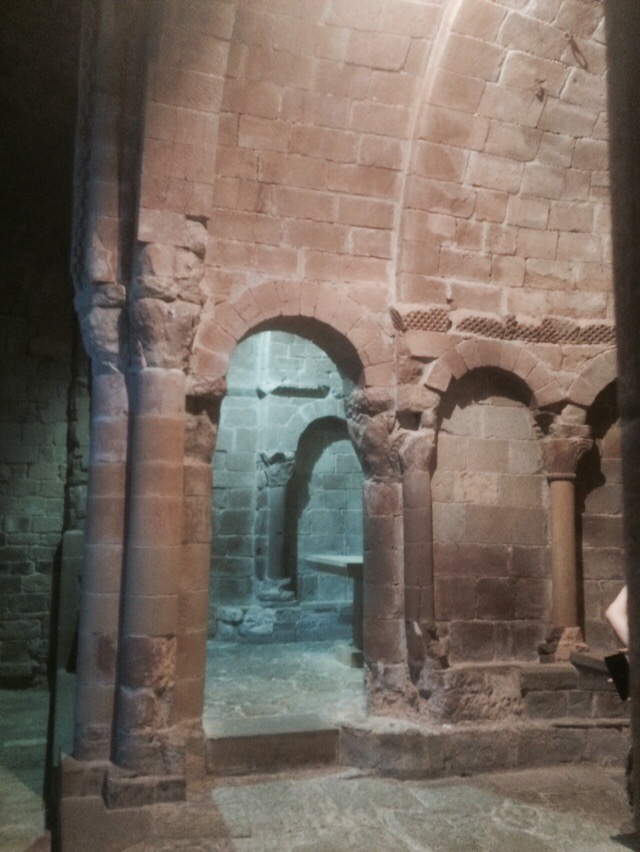
Nestled in a rock face near the Spanish city of Jaca is the ancient monastery of San Juan de la Pena. It dates back to the ninth century and by the 11th century became the spiritual and intellectual centre of the Kingdom of Aragon. According to legend the Holy Grail was kept here until the 14th century.

There is no final proof but It was believed to be the chalice used by Jesus during the Last Supper and the cup in which Joseph of Arimathea collected the Blood of Jesus on the Cross. Today the original is kept in the Cathedral of Valencia with a copy displayed on a stone altar in the old monastery.


Whether true or not, the monastery San Juan de la Pena is a mysterious and unique place. While on our recent walk on the Camino, I took a day to explore the area on the mountain from which there are spectacular views of the Pyrenees mountains in the distance.


The Monasterio Nuevo, or new monastery, further up the mountain is a much bigger complex. Its exterior has been rebuilt with a modern museum interior giving much insight on how the monks lived according to the Benedictine Order

The monastery had enormous influence not only in the ancient Kingdom of Aragon but throughout Europe of the early Middle Ages. The monks lived disciplined lives, following a daily routine of contemplation, work and study. Silence was highly cherished. The monks took a vow of silence and were only allowed to speak if it was absolutely necessary or when it was a good thought or blessing. It was obviously an atmosphere that was conducive to highly-focused study and inner spiritual work.

The exhibition in the new monastery illustrates a colorful history of rise and decay. The influence and success of this monastery in the early Middle Ages can be attributed to several factors that are good lessons for today’s corporates:

  • The monks were absolutely focused, disciplined and dedicated to their task
  • At the same time they did not exclude themselves from the outside world, honing the art of networking and relationship-building with the rulers and decision-makers of the time.
  • A charismatic abbot, or leader, was crucial in maintaining cohesion, discipline and respect
  • Basic material needs were catered for by the Kingdom with at times generous grants and donations

Its a mute point on whether the decay started in the year 1399 when the Aragonese King Martino V took the Holy Grail  to his palace in Zaragoza and when the monks asked for it back he tricked them with a replica. There were several fires that destroyed much of the monastery complex in the 17th century. Decay came in line with infighting and power struggles. Grants and privileges from the king were reduced and at times completely stopped. Loss of focus and purpose came in line with vows being broken and poor leadership.

An organisation is only as successful as long as its members are motivated to abide by the internal codes and ethics which always reflects on how it is perceived by those outside. There will always be circumstances that cannot be controlled, such as political change or upheavel. But it is how adaptable and flexible that organisation is to unpredictable changes, that will ultimately determine its survival.

Leave a comment

Filed under connection, energy, healing nature, life vision, meditation, monasteries, monks, organisational structure, powerbodymind, psychology, spirituality

You are the average of the five people you spend the most time with

The quote above by author Jim Rohn take a similar vein to a poem by the 16th century English poet and cleric John Donne “No Man is and Island”. We are nothing more than a summary of influences from the people around us.

We are born into this world as completely helpless beings, dependent on parental nourishment and protection. In essence nobody is self-sufficient. We all rely on each other in one way or another.

So who are you spending most of your time with? Are you surrounding yourself with people with a mainly negative and destructive outlook on life. Are you one of those people who predominantly look on the dark side of life and see the world as a bad place. Do you see only the negative aspects of people around you?

Or are you a shining light of optimism. You have an enormous ability of blocking off any negative energy that might come your way and have found a way of side-stepping people with a “vampire energy”. You find life beautiful, easy and full of joy.

We most likely have phases in life where we find ourselves in either of the two camps, depending on what challenges we face in life at a particular moment in time or whether we have just fallen in love or won in the lottery.

All great teachers of Mysticism will tell you that the art of happiness is the ability and wisdom to accept life’s preciousness in the here and now. Impermanence is one of life’s great lessons. Ask anyone who has suddenly lost a loved one or been confronted with an event that has changed everything that was thought a moment earlier to be true, safe or a permanent-given.

cloud twirl

The only truth is that life is a constant flow of yin and yang, birth and death, light and shadow, good and evil, expansion and withdrawal. Sorrow, grief and despair are as much part of life as happiness, joy and exultation or loss and abundance. Discipline of the inner mind and thought process by means of meditation, the body arts or other rituals will help us deal with this ebb and flow.

What we can control is the choice of the people we surround ourselves with and how much time we choose to spend with them. It is an interesting exercise to reflect on those five people in your life who have had the most impact,were or are your most important teachers and made you into that wonderful person who you are today.

No Man is an Island

No man is an island entire of itself; every man

is a piece of the continent, a part of the main;

if a clod be washed away by the sea, Europe

is the less, as well as if a promontory were, as

well as any manner of thy friends or of thine

own were; any man’s death diminishes me,

because I am involved in mankind.

And therefore never send to know for whom

the bell tolls; it tolls for thee.

MEDITATION XVII

Devotions upon Emergent Occasions

John Donne

Leave a comment

Filed under body arts, energy, life vision, meditation, powerbodymind, psychology, yin and yang