Category Archives: spirituality

Doing or Being?

Some years ago I was not in a very good place stuck in a dysfunctional relationship and a stressed-out job. My thoughts revolved around starting to live at some point in the distant future. A friend who took pity on me advised me to walk the famous pilgrimage route, the Camino de Santiago in northwestern Spain.

Like many first-time walkers on the Camino, I was obsessed about reaching my destination at a certain time in order to secure my place in a bunk bed in a pilgrims’ hostel. The Camino is in so many ways an analogy of life which is why it has become such a popular destination for modern-day spiritual seekers.

Walking too fast and missing the waymarker

With a backpack much too heavy, poor-quality hiking boots, and a hurting foot I was battling both physically and emotionally. There is a saying that if you walk the Camino like a hiker with physical intent it will force you into humility. While walking too fast, I missed the waymarkers and got horribly lost. At one point I had to seek refuge in a grotto during a heavy thunderstorm in the Pyrenees mountains, far off my route.
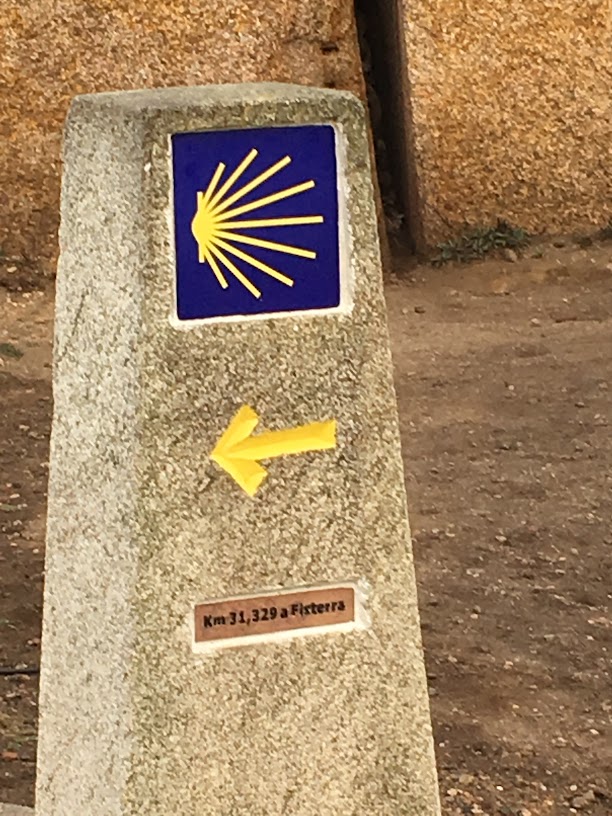
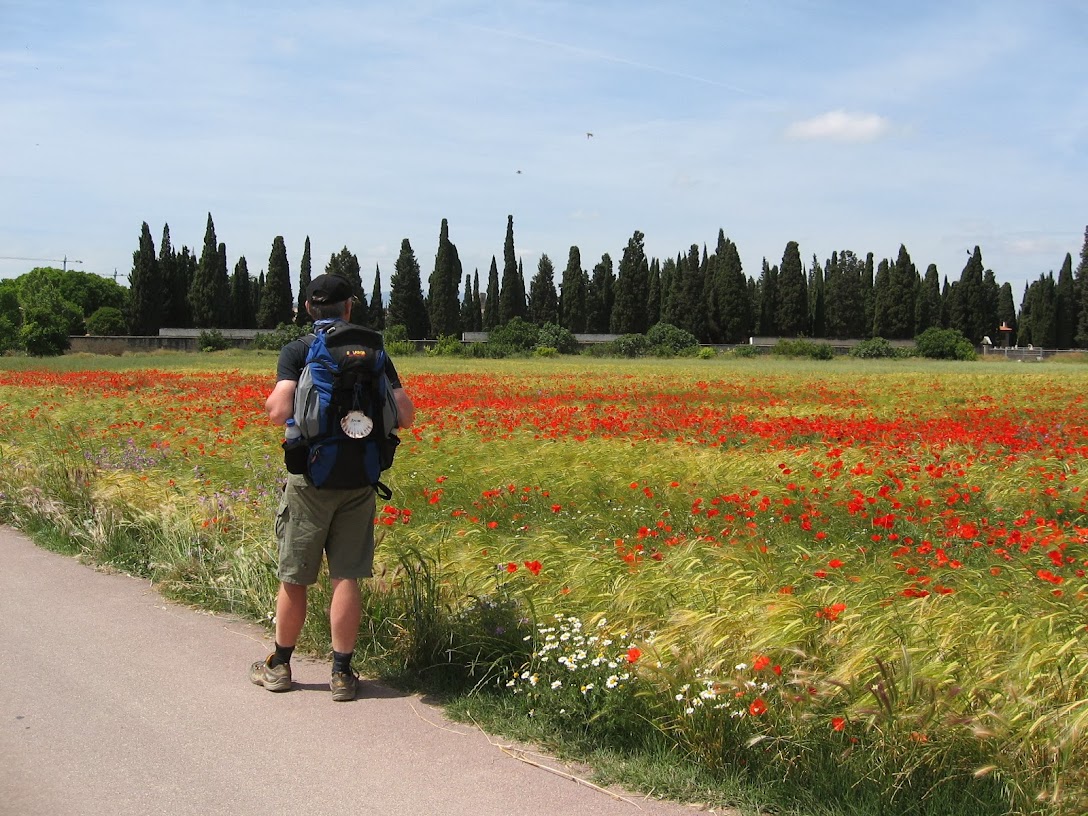
How many times in life does the universe send warning whispers that we have missed a waymarker and are on the wrong path? How obsessed are we with things we think we need but insist on keeping them in our backpack?

Forced to go much slower, I gradually felt my senses reawakening to the magic of the moment. I started inhaling the aroma of wild thyme, rosemary and oregano. I added mint to my water bottle. A singing blackbird followed me for part of the way. I befriended stray dogs and cats and met wonderful people who are still friends today. For the first time in many years, I felt an aliveness and vibrancy in my body.

Trapped in doing rather than BEING

Over the years, I’ve observed other pilgrims going through the same process. Hikers would pride themselves on the number of kilometers they had done that day. People doing the route on a bicycle would go into tunnel vision, oblivious to the sights and sounds around them. If you are trapped in the rat race of doing rather than BEING it is difficult to push the reset button overnight. At the end of the day, slow and mindful walkers would converse on the magical experiences they had that day while those in a race would look at them in disbelief.

So much of our lives are wasted carrying the weight of the past, and living in some distant future working for time-off at the weekend, the annual vacation, and the years when we can start living when retiring from a job we always hated. When the day finally comes, we live the final years of our life in regretful grumpiness of what was and is no more.

It helps to train your awareness that life is finite and that you will die one day. With your last breath, you will leave this earth into formlessness. You won’t be taking any of your precious earthly possessions with you. All that remains will be consciousness.

So you might as well stick around a little longer and enjoy the moment. Practicing mindfulness is ideally done in the stillness of nature.

  • Focus your attention on your breath. Observe your thoughts and sensations without judgment. By consistently practicing mindfulness, you can cultivate a heightened sense of awareness and presence in your everyday life.
  • Engage Your Senses: Pause and notice the sights, sounds, smells, tastes, and physical sensations around you. Fully immerse yourself in the present moment by bringing awareness to the details of your sensory experiences.
  • Slow Down and pay attention: Challenge yourself to slow down and be fully present in each moment. Whether you’re eating, walking, or engaging in any other daily activity, do it with intention and attentiveness.

Reino Gevers – Author – Mentor – Speaker

One more thing...If you have found this article interesting you might want to subscribe with the “follow” button above or recommend my FREE weekly Blog to friends and family. My books can be ordered at all places that sell good books in both paperback and kindle.

Leave a comment

Filed under Camino de Santiago, mental health, mental-health, self-development, spirituality

Moving beyond religion

One of the greatest obstacles to the elevation of consciousness is a mindset cemented into the “isms” of fixed belief, ideology, religion, or philosophy. It has been the root cause of much human suffering over the centuries.

With much of traditional religions having succumbed to the practice of empty rituals, the spiritual vacuum is being filled by political preachers and ideologues fanning the flames of fanaticism.

If the shutters to the mind remain closed there is no sunlight that can penetrate the inner room. The mind is captured in the conceptual prison of a one-sided truth. All the others are wrong, belong to the wrong crowd, the wrong tribe, and the wrong race, gender, or religion. There is a disconnect with soul authenticity.

Yet, innately we are spiritual beings living in a human form.

In a famous 1959 BBC interview, Carl Gustav Jung was asked whether he believed in God. The pioneering psychiatrist and psychoanalyst responded: “I don’t need to believe, I know.”

At the time the remark caused some controversy because Jung did not subscribe to a particular religion or doctrine but viewed spirituality as a fundamental aspect of human nature that could be explored through personal experience.

In a similar vein, the great scientist Albert Einstein was skeptical of organized religion and the concept of a personal God, but had great respect nevertheless for the ethical teachings of especially Buddhism and Judaism.

In Ideas and Opinions Einstein stated, “In their struggle for the ethical good, teachers of religion must have the stature to give up the doctrine of a personal God, that is, give up that source of fear and hope which in the past placed such vast power in the hands of priests.”

The human mind is too small to grasp the universe

According to Einstein, the universe is vastly complex and the concept of “God”, as explained by religion, far too simplistic.

“The human mind, no matter how highly trained, cannot grasp the universe. We are in the position of a little child, entering a huge library whose walls are covered to the ceiling with books in many different tongues. The child knows that someone must have written those books. It does not know who or how. It does not understand the languages in which they are written.

“The child notes a definite plan in the arrangement of the books, a mysterious order, which it does not comprehend, but only dimly suspects. That, it seems to me, is the attitude of the human mind, even the greatest and most cultured, toward God. We see a universe marvelously arranged, obeying certain laws, but we understand the laws only dimly. Our limited minds cannot grasp the mysterious force that sways the constellations.”

Einstein was convinced that everything was determined by forces over which we have no control, all of creation from the insect, to the human being and the stars dancing “to a mysterious tune, intoned in the distance by an invisible piper.”

Religion has for eons imposed it’s view of God and creation on humanity, most often using it as an instrument of control and manipulation. Those who did not conform to conventional doctrine and dogma were at times and still today in some countries are brutally persecuted.

A unifying force permeating creation

Many of the Mystic teachers tend to avoid using the term “God” because of the many misunderstandings this has caused.

Instead of a judgmental deity, they rather speak of a unifying force that permeates all of creation. Rather than believing in dogma or theology imposed externally by a religion they believe that “God” can be experienced through contemplative practices such as meditation, prayer, and mindfulness practices such as deep encounters with nature, art, and music.

Einstein’s hope was that the “religion” of the future would be “a cosmic religion” liberated from dogma and theology.

“Everything is energy and that is all there is to it. Match the frequency of the reality you want and you cannot help but get that reality. It can be no other way. This is not philosophy. This is physics.”

The parallels between the thinking of physicists such as Einstein and the Mystics of the early Middle Ages is profound.

The 13th-century Mystic Meister Eckart believed that God was beyond all form and creation and that the ultimate goal of the spiritual path was to transcend the limitations of the physical world and attain union with the divine. God was present in all things, and everything in creation was a reflection of the divine, the physical world an expression of the spiritual realm.

To put it simply creation is constantly changing form in an endless cycle of birth, life, death, and rebirth. Our purpose in life is to grow and evolve into ever higher consciousness.

The spiritual teacher and author Richard Rohr emphasizes the importance of recognizing the divine in all people, regardless of their background or beliefs. He believes that love and compassion are the most important aspects of spirituality and that they should be expressed through service to others and a commitment to social justice.

The Irish, poet, philosopher, and priest John O’Donohue describes the beautiful complexity of growth in consciousness within the human soul:

“It is helpful to visualize the mind as a tower of windows. Sadly, many people remain trapped at the one window, looking out every day at the same scene in the same way. Real growth is experienced when we draw back from that one window, turn, and walk around the inner tower of the soul and see all the different windows that await your gaze. Through these different windows, you can see new vistas of possibility, presence, and creativity. Complacency, habit, and blindness often prevent you from feeling your life.”

Reino Gevers – Author – Mentor – Speaker

One more thing...If you have found this article interesting you might want to subscribe with the “follow” button above or recommend my FREE weekly Blog to friends and family. My books can be ordered at all places that sell good books in both paperback and kindle.

Leave a comment

Filed under meditation, mental health, mental-health, spirituality

The Mystery of Easter and the Shroud of Turin

The Shroud of Turin believed to depict an image of Jesus continues to baffle researchers. Neither a painting nor a photograph, its origins remain unclear. Scientists have undertaken rigorous research, employing methods such as short bursts of ultraviolet light and laser technology to unravel its secrets. At the same time, it continues to keep believers in awe.

The impossibility of recreating a forgery

The scientists managed to re-create a small section of the cloth with some of the properties at a microscopic level, concluding that “some form of electromagnetic energy” such as a flash of light created the image.   Ultraviolet lasers were not available to medieval forgers thus opening the possibility that the Shroud is actually Jesus’ burial cloth, with the image created at the point of resurrection.

Some ancient paintings depict the Roman soldiers guarding the grave of Jesus being blinded by a flash of lightning as he rises from the grave but there is no mention of this in the biblical scriptures. The story of the crucifixion and the resurrection is the reason why we celebrate Easter in the Christian tradition.

Why we celebrate Easter

The exact details of the events after Jesus’ crucifixion vary slightly. After dying on the cross his followers wrapped him in a cloth and buried him in a tomb. A group of women went to the tomb on the third day to anoint his body with spices. When they arrived, they found the stone covering the entrance to the tomb had been rolled away and the tomb was empty. An angel appeared to them and told them that Jesus had risen from the dead.

Later that same day, Jesus appeared to two of his followers on the road to Emmaus, and then to the rest of his disciples, who were gathered in a locked room. He showed them his wounds and ate with them to prove that he was not a ghost, but had risen bodily from the dead.

One of the Italian scientists who examined the shroud, Professor Paolo Di Lazzaro, said:

“When one talks about a flash of light being able to color a piece of linen in the same way as the shroud, discussion inevitably touches on things like miracles and resurrection. But as scientists, we were concerned only with verifiable scientific processes. We hope our results can open up a philosophical and theological debate but we will leave the conclusions to the experts, and ultimately to the conscience of individuals.”

Carbon dating tests conducted in 1988 indicated that the shroud was created between 1260 and 1390 AD, leading many to conclude that it was a medieval forgery. However, these results have been disputed by other researchers who argue that if it was a forgery it would have to be possible to replicate it easily with modern methods.

Fake or forgery?

During the Middle Ages, the trade in Christian relics was a thriving industry that involved the buying, selling, and exchanging of objects that were believed to have belonged to saints, martyrs, or other holy figures. These objects included fragments of bone, pieces of clothing, and other personal items, which were often housed in ornate reliquaries and venerated by believers as objects of spiritual power. The Crown of Thorns that was placed on Jesus’ head as a means of torture was housed in the Notre-Dame Cathedral in Paris, where it has been on public display since the 19th century and dramatically rescued during the fire of April 2019.

The bones that are believed to be those of St. James the Apostle, also known as Santiago, are kept in the Cathedral of Santiago de Compostela in Spain. According to tradition, the remains of St. James were discovered in the 9th century by a hermit named Pelagius, who saw a bright light shining over a field near the town of Iria Flavia. The discovery of the bones led to the establishment of the shrine in the Cathedral of Santiago which has become one of the most important pilgrimage sites in Europe.

Trade in religious relics goes back to the earliest times. Relics were considered sacred objects imbued with spiritual powers, possessing a direct connection to the divine and serving as a conduit for blessings, healing protection, and power.

Is it important whether the bones of St. James are real or whether the Shroud of Turin is an authentic image of Jesus? What we do know is that some of the world’s most beautiful architectural creations have been built to house relics. As long as there is a mysterious aura about them we will continue to be stimulated by them on a deep spiritual level.

For most of the tens of thousands of pilgrims who have rediscovered the ancient pilgrimage route to Santiago, it is unimportant whether the apostle ever lived or was buried in Spain. The shared experience of veneration, the common search for meaning, and the individual spiritual experience while walking on an ancient path is of greater significance.

Likewise, the Shroud of Turin with the life-size image of the man with stains of blood on the cloth, appearing to be consistent with the wounds that Jesus suffered on the cross, will continue to fascinate. Believers feel a deep sense of awe and reverence, leading to peace, comfort, and inspiration during difficult times. More than ever we need those quiet places of power to explore the inner world of who we really are.

Reino Gevers – Author – Mentor – Speaker

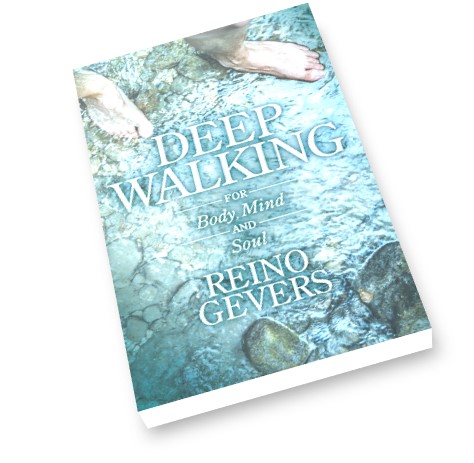
P.S. I’m excited to announce the release of my latest book, “The Turning of the Circle: Embracing Nature’s Wisdom for Purposeful Living.” If you enjoy it, you might also be interested in my previous works, “Deep Walking for Body, Mind and Soul” and “Walking on Edge: A Pilgrimage to Santiago.” You can find all of these titles at reputable bookstores near you.

Leave a comment

Filed under spirituality, Uncategorized

Escaping the treadmill of the monkey mind

One of the tragedies of the human condition is being stuck in the „monkey mind“ that is dancing in thoughts of what was and is no more and the fear and anxiety of what the future might hold. 

Thoughts trigger emotions and emotions trigger reactions that inevitably have a major impact on your vibrational frequency that will in turn inevitably attract what you emanate.

If your mind is focused on scarcity you will see around you only scarcity and attract the same. If you are primarily a person in gratitude and abundance you will live in abundance and see abundance everywhere. It‘s what we call the magnetism in the law of attraction.

Our culture’s predominant messaging is external gratification which inevitably nurtures a scarcity mindset. However, just by putting this age in which humanity finds itself, in a historical perspective we are experiencing unprecedented abundance. If you are reading this you would very likely have internet access, a stove, a fridge, and a supermarket in the vicinity offering a multitude of foods. You are living the life the kings and queens of the 14th or 15th century could only have dreamed of. Hygiene, health care, transportation, and almost every level of human existence have made immense strides over just the past 100 years.

Tremendous technological progress has however stunted spiritual growth. We are so fixated on immediate gratification that we are losing our minds. Buddhists call it the attachment to the 10,000 things. We are only confronted with mortality when a close loved one has passed, and otherwise prefer to banish illness, frailty, and death to hospitals and old age homes. 

In the Middle Ages, death was a constant reality. Fatal diseases were rampant. What we would today term a simple injury could rob the life of a young person within days. Men died in battles and women during pregnancy or childbirth. You were one of the lucky ones if you survived until your mid-40s. This inevitably focused people‘s attention on the eternal. Some of the greatest artwork and architectural masterpieces were dedicated to the divine and inspire us to this day. Philosophical thought and the teachings of the sages and mystics were timeless in their wisdom.

Meister Eckhart, a 13th-century Mystic and Dominican monk, quotes an unknown sage with the words: „World and time are small things. Unless you transcend world and time, you will not see God. “

Finding a connection to soul

The French 17th-century mathematician Blaise Pascal said: „All of humanity’s problems stem from man’s inability to sit quietly in a room alone.”  The disconnect from the yearnings of the soul manifests itself in the craving and attachment to form that is always transitory. 

Stress always starts with the thought of wanting to be in someplace other than where you are currently finding yourself.

To find alignment with soul you have to detach from the illusory distractions of the external world. Focusing your mind on the gentle flow of your inhaling and exhaling breath is just one form of meditation. Humming the OM, a prayer, or a mantra first thing in the morning or just before closing your day at bedtime is another. Practicing some form of meditation daily has multiple positive effects on body, mind and soul.

Move your body

Physically moving your body unsticks the mind. Your body posture and physiology are an authentic expression of your mindset. Anybody can see whether a person is sad, angry, kind, happy or exuberant. Take a walk in nature, and open your senses to the sights, smells, and sounds of your surroundings. The green and blue spaces of nature will instill in you the feeling of connectedness and BEING.

Service for others

Preoccupation with the needs of the ego is a hallmark of our narcissistic culture. Individual needs are prioritized over the needs of the community. Fellow living beings and the environment are sacrificed for short-term human needs. Extraction of natural resources is prioritized over preservation and recuperation for future generations. Nationalism, tribalism, factionalism, and other forms of fundamentalism define themselves in the separateness from the „other“. 

All the wise sages of old teach us that living a life of service is the recipe for happiness, soul connection, and purpose. The higher we rise in this understanding the higher we rise „in the connection to God“, according to Eckhart. The soul „returns to God through good and divine works.“

Study

The 33rd U.S. President Harry Truman said: „Not all readers are leaders, but all leaders are readers.” What you feed your mind with that you become. The German poet Rainer Maria Rilke wrote that „the dream of your life has been dreamed from eternity.“ Your life is meant to grow and to become one part of humanity that also is destined to evolve and become on a collective level. Learning and studying the teachings of the wise will make you wise and give you the skillset for your life in service.

The spiritual teachings of the mystics emphasize the inseparability of body, mind, and spirit, and finding discipline in the daily training of meditation/prayer, and exercise of the body so that you have the strength and power to serve. Procrastination would be a disservice to your higher self. 

Reino Gevers – Author – Mentor – Speaker

One more thing...If you have found this article interesting you might want to subscribe with the “follow” button above or recommend my FREE weekly Blog to friends and family. My books can be ordered at all places that sell good books in both paperback and kindle.

Leave a comment

Filed under mental health, mental-health, spirituality, Uncategorized

The power of self-love

The first principle is that you must not fool yourself and you are the easiest person to fool.”

Richard P. Feynman

The need for self-love as the precondition to giving love is a key to many spiritual teachings. At the heart of much self-destructive behavior, and the addiction problems we see in the world today are the rejection and contempt of self.

You cannot love and accept yourself without unconditionally accepting the shadows within. You have to learn to accept that you are an incomplete human being.


The hypocrisy that often underlies institutionalized religion stems from the notion that those who don’t believe and behave the same way that we do are in some way inferior and lesser human beings. When you are in denial of your own inadequacies and weaknesses you will see them more pronounced in others.

The beginning of forgiveness


The beginning of forgiveness begins with the forgiving of self. The seeds of inadequacy and lack of self-esteem are planted early in life by social norms or misguided parental pressure.


Failure and missteps are part of the human condition. As the sages and Mystics teach us: They are the stepping stones to self-awareness and self-love. By learning to forgive yourself you can accept and learn to forgive others.

The scriptures teach us that “If you forgive others their sins, they are indeed forgiven. If you withhold forgiveness from one another, they are held bound.” (John 20:23).

Photo by cottonbro studio on Pexels.com


The more addicted we become to a preferred self-image the more judgemental we become. But it is precisely the relationship difficulties, conflict situations, failures, and disappointments of life that mirror the shadow aspects within. These are the aspects in need of acceptance or transformation that help elevate you to a higher vibrational energy, your inner power, and strength.

Surrendering to life


Surrendering to life is complete surrender to that which is greater than any image of self and the essence of what is the vulnerability of body, mind, and soul. It is what Paula D’Arcy describes as “God comes to us disguised as our life.”


As the spiritual teacher, priest, and author Richard Rohr explains: “Surrender is not giving up, as we tend to think, nearly as much as it is a giving to the moment, the event, the person, and the situation.”

Life happens. You cannot change what has happened in the past. Taking a different perspective can transmute feelings of pain and guilt. A personal mantra of forgiveness could be:

“I release at this moment the attachment to the pain and the melancholy sadness to that which was and is no more. I love and accept myself the way I am. I love and accept my true soul nature. I am in loving care and kindness to myself and others.

Reino Gevers – Author – Mentor – Speaker

One more thing...If you have found this article interesting you might want to subscribe with the “follow” button above or recommend my FREE weekly Blog to friends and family. My books can be ordered at all places that sell good books in both paperback and kindle.

Leave a comment

Filed under meditation, mental health, mental-health, spirituality, Uncategorized

You are a magnet for …

Anger is a hot coal that you hold in your hand while waiting to throw it at someone else.” —Buddhist teaching


Life is seasonal and when times get rough you might just be one of those rare individuals who discover inner strengths beyond measure while the crowd sinks into the shadow world of grievance culture. Minorities, the weakest, and all those in society who don’t fit the norm are targeted.

When toxic emotions and fear rule the mind, there is a disconnect from authentic soul nature. The demons of hate, xenophobia, and intolerance take hold.

Within the soul is embedded all knowledge

According to Plato and spiritual teachers such as St. Augustine, your soul has within her all knowledge and wisdom. What you practice outwardly acts like a magnet to your innermost being.

What you emanate you attract. If you are surrounded by negative and angry people ask yourself: „What is it in me that attracts such people? What do I need to change within to attract kindness, empathy, thoughtfulness, generosity, and gratitude?

Blaise Pascal said: „All of humanity’s problems stem from man’s inability to sit quietly in a room alone.”

It is stopping to reflect: Where do  I come from and where am I going? A walk in nature, meditating in stillness, and finding solace in solitude are those precious moments of reconnection to the wisdom of the soul.

The 13th-century Dominican Mystic Meister Eckhart quotes a sage with the words: „Unless you transcend world and time, you will not see God. “

According to these ancient Mystics, God is embedded in the heart of the soul. God is unseparated from all things.

Photo by Pixabay on Pexels.com

Evolution and consciousness

The purpose of all creation and soul nature is evolution of consciousness. It happens in the adaptation and interplay between the outward and the inward. How this works is best understood in studying nature that constantly moves in the polarity between the Yin and Yang, yet ultimately in a spiral of completion and change. God finds expression in nature.

On another level. The evil that we see and experience in the world exists at the same time that there is goodness, innocence, and purity. We have been given the power of choice, choosing at every junction one or the other. Meister Eckart writes that the soul must return to God by „means of good and divine works“, in service of peace, justice, and wisdom.“

Especially during these times when we witness unimaginable atrocities of war and terror in Ukraine, we ask ourselves why an omnipotent God is not intervening. Why does he allow this to happen?

Evil in its harshest form also means complete disconnect and absence from God.  Its only purpose is to serve as a clarion call into action of what is the opposite of destruction and hate.

It is a small yet comforting thought that in terms of nature’s law of the seasons the flowers of spring inevitably come, even after the harshest and coldest of winters.

Reino Gevers – Author – Mentor – Speaker

One more thing...If you have found this article interesting you might want to subscribe with the “follow” button above or recommend my FREE weekly Blog to friends and family. My books can be ordered at all places that sell good books in both paperback and kindle.

Leave a comment

Filed under mental health, mental-health, spirituality

What is your unique thumbprint?

„The meaning of life is to find your gift. The purpose of life is to give it away.”

-Pablo Picasso-

There is an ancient story that tells us of the wanderer, who after a long journey arrives in a town. First he comes across a crippled and blind beggar, then he sees an old woman being beaten, and a funeral procession. Witnessing all this suffering in succession, the wanderer runs out into the desert in desperation, screaming at God: “Why, if you are so powerful do you allow all this suffering and pain? Why don’t you do something?”

After a long silence, the wanderer finally hears the words of the Divine: “I did do something. I created you.”

The story is revealing in that what we see and what we hear is often determined by our current state of .consciousness. In our world of polarity with the constant pull between yin and yang, light and shadow, beauty and ugliness, violence and peace it is easy to make judgmental statements that are seldom congruent with the true facts.

Photo by Pixabay on Pexels.com

You have been born with a unique gift

It is part of human nature to make the Divine or any other entity responsible for all the misery of one’s own state of affairs or that of the world. According to the ancient Mystics we have each been born with a divine purpose, and been handed the gift of a free will.

Surrendering control to external forces for one’s circumstances is one of the big fallacies of our time. We are to a great extent shaped by the culture and place where we are born. But at the same time we must take responsibility for our thoughts and actions.

The true calling often lies in the wounds of the past that have sculptured us into the human beings that we are destined to become. When reflecting on the past it often becomes obvious how the pain, and the obstacles that we have had to overcome gave us the skillset needed to fulfill divine purpose.

The Hero’s Journey is riddled with obstacles

The Hero’s journey through life is riddled by failures, making the wrong decisions and losing the way on the wrong path.  At the point of complete surrender, when we are completely empty, when we choose to give up everything that once defined identity, we become open to the whispers from the Divine.

It is at this juncture that we can forgive those people that have wronged us or inflicted great pain onto us. When we transmute our “enemies” into positive agents that have catapulted us toward major transformational change and elevation of consciousness, it is much easier to forgive.

Getting stuck in the grievances and the sorrow over that which once was and is no more, is the root cause of much of the collective anger we see currently being played out on the political stage. It is also symbolic of the disconnect between external and internal needs. External gratification is never fulfilling when it is out of line with soul purpose.

What is your unique song?

How we share our unique talents and abilities with the world, is as diverse as creation itself. We each carry the seed pf a divine song within that is awaiting to play its part in the concert hall of creation.

It is what moves and inspires you, to which you are magically drawn and where you fell in rhythm with the heartbeat of the universe. It is what Rumi describes as surrendering to that “deeper pull of what you truly love.”

Reino Gevers – Author – Mentor – Speaker

One more thing...If you have found this article interesting you might want to check out our courses, retreats and books and ask others to also subscribe to this Blog.

1 Comment

Filed under spirituality

Lessons from the Camino

Walking the Camino in northwestern Spain and Portugal this year was in many respects very different from previous walks on this ancient pilgrimage path that has been massively impacted by the repercussions of the pandemic.

First and foremost the Camino has lost nothing of its magic that has become for hundreds of thousands of modern-day pilgrims, a path of introspection, healing and transformation. About half as many people arrive at the destination in Santiago de Compostela compared to normal years. The good news is that with good planning you can still walk it!

We walked from Porto in Portugal to Santiago, alternating between the coastal and central routes, but booking our accommodation two to three days in advance as most pilgrims’ hostels are still closed and will possibly only reopen next year. Unless you are walking the less popular routes cheap accommodation is very limited for pilgrims with a limited budget.

Can you still stay in a pilgrims’ hostel?

Staying overnight in a pilgrims’ hostel is so much part of the Camino experience where stories are shared over a meal cooked together and often lasting friendships are formed. Although a little more expensive than the municipal albergues, some of the better private albergues are a definite must.

We had one of our most enjoyable evenings with fellow pilgrims at Casa da Fernanda with dancing, singing, great food and good conversations. This was all on a donation basis. Certainly one of the most beautifully run private albergues is the La Cala Pilgrims Inn in Oia run by Tanya Valdes. Tanya is a lovely soul from the U.S. who moved to Spain, fulfilling a heart wish in serving pilgrims in her beautifully renovated albergue, overlooking the monastery in Oia.

The chilling effects of the pandemic

Having had to break off last year’s walk on the Via Francigena in Italy because of another lockdown, walking the Camino Portugues was the first longer walk since 2019. It was at times a chilly experience walking through the small villages where public notice boards bear portraits of locals who have died from Covid and bypassing dozens of closed pilgrims’ hostels, restaurants and curio shops.

Families in the local villages along the Camino route have for centuries earned their income from passing pilgrims and obviously many small businesses have not survived the pandemic. Some had invested all their funds in the expectation of a boom on the Camino for this year’s holy year.

The revival of the Camino pilgrimage in modern days can be largely attributed to Don Elías (1929-1989), the parish priest in O Cebreiro near Lugo. Up to the early 1980s only dozens of pilgrims at the most walked the Camino. But Don Elías had a dream that one day tens of thousands of pilgrims would again be walking the Camino. According to the story Don Elías drove across the whole north of Spain in his old  Citroën packed with tins of yellow paint, marking arrows leading to Santiago.

We were very much aware that this year we were also walking the Camino on behalf of the many pilgrims from other countries who could not walk the path this year because of Covid-related travel restrictions. The Camino can become an addictive ritual and many walkers on the Camino have been doing it several times over. Many pilgrims, who have been unable to walk this year, have been reliving their past walks in the popular Camino forums and social media groups.

Arriving in Santiago

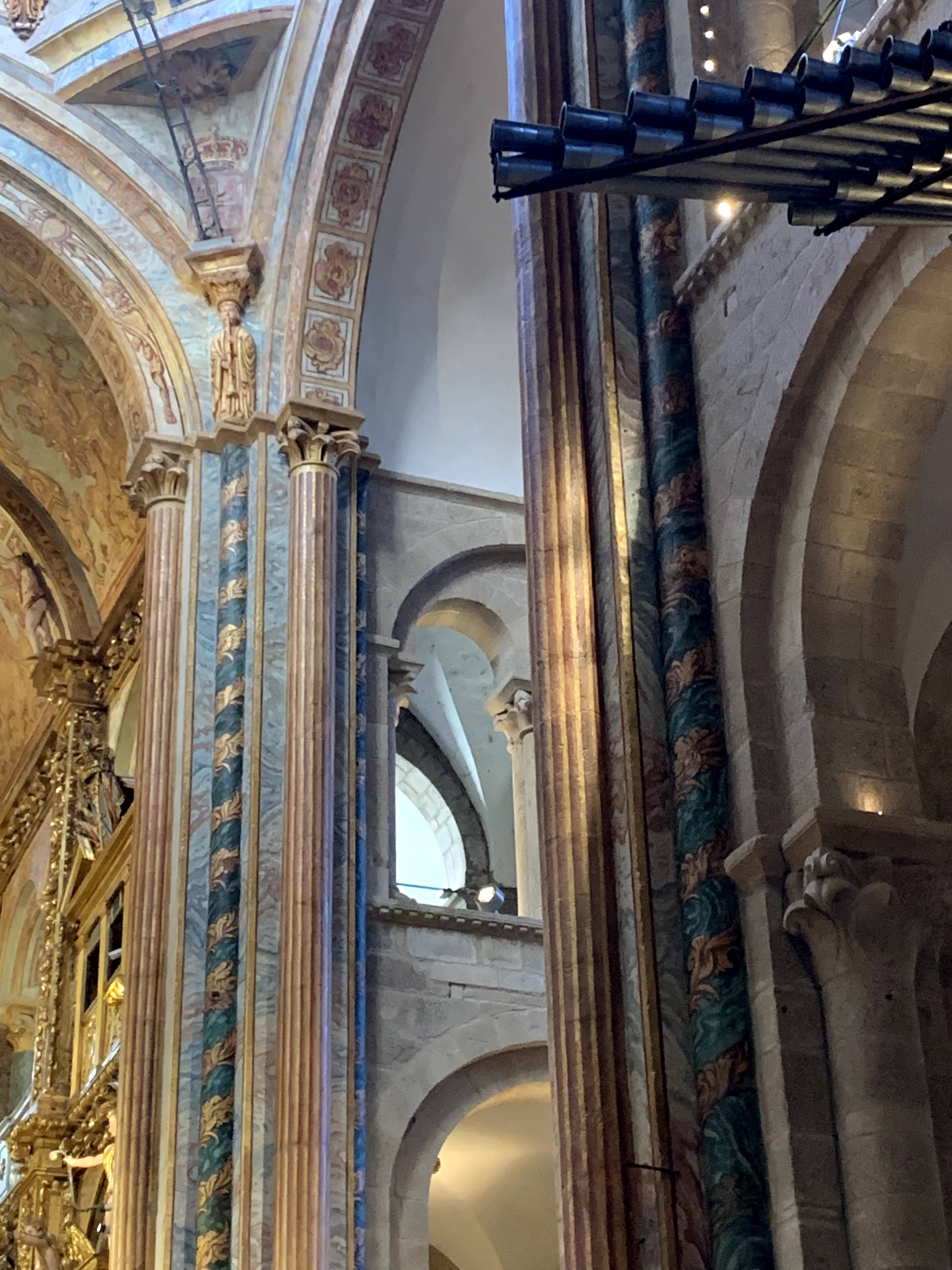
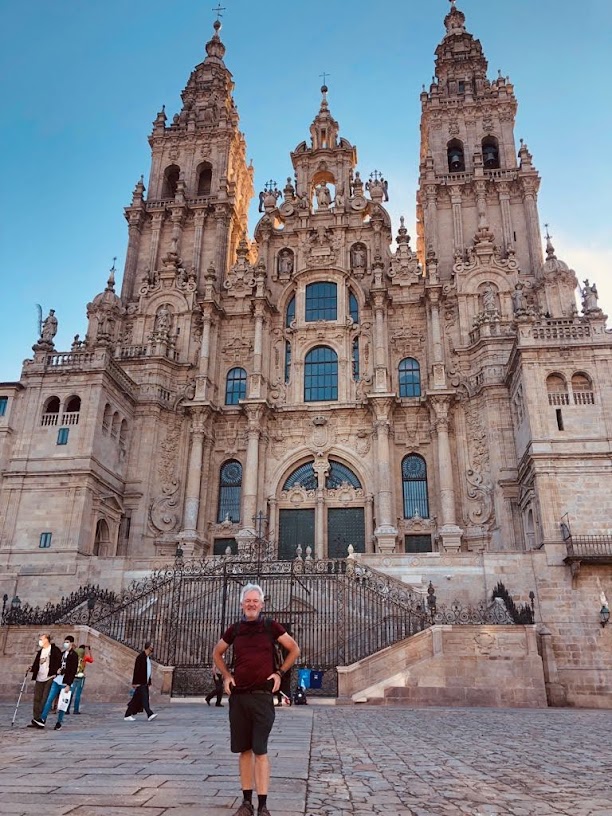
Arriving at the destination in Santiago is always a special occasion. The Cathedral can be seen in all its glory with most of exterior scaffolding removed after years of painstaking renovation work. The interior is especially stunning: Based on the candle-light from medieval times the naves, transept and the Pórtico de la Gloria have been fitted with new lighting. Social distancing still applies and the number of visitors are limited.

The journey begins after the journey

Every journey at some point has to end. You return home but you will not be the same person. A pilgrimage on the Camino takes months to digest. The real transformation begins at home. Life takes on a different meaning when you are in a different rhythm and feel connected to your higher-self. As Marcel Proust is quoted as saying: “My destination is no longer a place, rather a new way of seeing.”

Reino Gevers – Author – Mentor – Speaker

One more thing...If you have found this article interesting you might want to check out our courses, retreats and books and ask others to also subscribe to this Blog.

2 Comments

Filed under Camino de Santiago, mental health, mental-health, spirituality, Uncategorized

You are not your opinion

The English writer and philosopher Aldous Huxley once pointed out that “at least two thirds of our miseries spring from human stupidity, human malice and those great motivators and justifiers of malice and stupidity, idealism, dogmatism and proselytizing zeal on behalf of religious or political idols.”

It pretty much describes the current Zeitgeist where “tribal bubbles” confront each other on almost every major issue of our time. Its either true or false, black or white, red or blue with a nuanced debate taking cognizance of the complexity of most issues becoming almost impossible. It is causing the break-up of families, friendships and relationships. What you may be asking is happening?

What we see and believe is selective reality

An opinion or belief is mostly based on a past experience that does not necessarily conform to the true events and is colored by perception of what we believe to have been reality. We know from numerous psychological studies that we humans have the tendency to believe what we want to believe.

What we see and what information we select can be very selective as Daniel Simons and Christopher Chabris revealed and their classic test of the gorilla walking through the room.

The platforms offered by social media are fodder for the ego-mind which needs constant validation and attention. An ego-mind is rooted in all the external trappings that come with status, fame, personality, titles and wealth. We fail to grow and expand because the ego-mind has built an image of the self that is an illusion. Opinions and beliefs merge with the personality. Anything that threatens such a carefully crafted “avatar” of the self is seen as a threat. Tribal survival instincts are triggered. Its “us or them” and all sense of a common humanity gets lost as the battle lines are drawn. Fixed belief and opinion is the reason people slide into that fatal abyss of fanaticism and ultimately engage in violence and war.

Ego-mind versus heart-mind

Political and religious demagogues are extremely adept at stoking the underlying fears and insecurities of the ego-mind. An ego-mind refuses to look inward, refuses to take responsibility for self-inflicted wounds and projects all its own shortcomings in fanatic rage onto those opposites that reflect the weaknesses. No rational argument or scientific fact on the ground will persuade the ego-mind from changing its opinion. It is too proud to come down from that ladder once it has been positioned firmly against a wall.

We are seeing at a global dramatic changes on all levels that is very scary for the ego-minded personality. Deep down the ego-mind desperately wants to hold onto an illusion, a world, that was and is no more. Religious dogma prescribes certain doctrines, obligations and rules of obedience that can be particularly attractive to persons battling with the uncertainties and up-and-down cycles of life.

The heart-minded person however sees change as opportunity for growth, and transition into new consciousness.

It is rooted in a child-like humility. It is why Jesus rebuked his disciples when they tried to prevent the children from seeing him, saying: “Let the children come to me; do not hinder them, for to such belongs the kingdom of God”

He was making his disciples aware that spiritual elevation, finding the Kingdom of God, could only be attained through a childlike humility. Just prior to becoming aware of the self, children are still free from an agenda in a down to earth honesty before pride and position come into play as personality takes shape.

A key principle of creation is diversity with the universe in a constant spiral of expansion and growth. If we are to survive as a species we will have to learn from nature which is an expression of God. Throughout the eons only those species that have learned to adapt quickly to changing circumstances have survived.

We are spiritual beings having a human experience

An inward-looking heart-mind is mindful of the impermanence of all things external and the eternity of soul. The French philosopher, paleontologist, and Jesuit priest Teilhard de Chardin is quoted as saying that “we are not human beings having a spiritual experience; we are spiritual beings having a human experience.”

In those quiet moments of reflection and meditation we can reconnect with soul nature, that divine spark within and the remembrance of the eternal.

Experiential spirituality is an individual path of exploration and discovery. It is a reconnection to the soul where unconditional love, compassion, harmony, forgiveness, peace and joy reside. From within the true nature is crafted that tool for divine intention and the humility and acceptance that we are born into this life to walk a pilgrimage path of constant growth, creativity, adventure and new insight.

Reino Gevers – Author – Mentor – Speaker

One more thing...If you have found this article interesting you might want to check out our courses, retreats and books

and ask others to also subscribe to this Blog.

Leave a comment

Filed under mental health, mental-health, spirituality

Your sacred path

All the people you have met throughout your life and the experiences you have had up to this moment in time have made you into the person who you are today. Yet, there still might be that inner voice whispering that there is more to life than you have been taught or have learned.

Caroline Myss is quoted as saying that “as a vital part of a larger, universal spirit, we each have been put here on earth to fulfill a sacred contract that enhances our personal spiritual growth while contributing to the evolution of the entire global soul.”

Connecting with the global soul

Our individual souls are connected to a global soul comprising all life on the planet. Each person has a unique destiny and soul purpose and it’s not about what kind of job you are doing or the things you own. These might be a manifestation of what you become in the becoming of who you really are.

It is almost essential to find alone time for contemplation and inner reflection and to walk your sacred path alone. The urge to walk a pilgrimage first starts as a whisper and becomes ever more louder. The need to go on this soul adventure is sometimes met with strong resistance by the loved ones or family members around you. They will sense that you are in a process of shifting your consciousness and will confront you with all sorts of arguments to dissuade you from walking.

The universe will test your willpower

In a way it is the universe testing your willpower but the sad truth is also that most people are too afraid to make the changes necessary to improve their lives. Family members or partners want you to stay in the tribe and share the same beliefs, mannerisms and habits. Often they will be projecting their own fears onto you if you decide to go on a journey of untrodden paths. Partners in this way often block each other instead of lending support and encouragement to the other.

On the Camino Aragonese between Jaca and Puenta La Reina, Spain

In a few days time I will start my 14th pilgrimage walk, walking for the second time from Porto in Portugal to Santiago and then to Cabo Finisterre, the westernmost point of the Iberian Peninsular. Each walk has been different, and unique. Looking back these walks have proven to be truly transformational not only in the way they have led me in making major changes to my external life but what has happened on a spiritual level. My two books on the Camino in essence tell this story that began in early 2007.

When I served in a pilgrims’ hostel as a volunteer in 2019 I had the opportunity of literally talking to hundreds of pilgrims from all walks of life and nationalities on what motivated them to walk this ancient path that at times can be truly challenging both emotionally and physically.

Why do people go on a pilgrimage walk?

Some people start the Camino as a sporting adventure that then turns into a spiritual journey.  An American pilgrim I walked with some years ago said to me: “If you don’t approach the Camino with humility it will humiliate you.”

The Camino is telling you that this journey is not about accomplishing something but in un-becoming from everything that you thought you were and touching that place deep in the soul who you are truly meant to be.

Is the Camino part of the bigger journey of humanity seeking a common spirituality that transcends the boundaries of religious dogma?

The Camino is an analogy of life

The Camino is in many ways an analogy of life. If you can deal with the roller-coaster of the walk’s trials and tribulations, you will be steeled for whatever challenges life throws at your feet in the acceptance of the impermanence of all things.

I’ve heard stories from pilgrims who have suffered terrible personal hurt and tragedy. Others were walking while defying a life threatening medical diagnosis or who had just survived cancer.

Experiential spirituality reveals itself in helping and supportive hands, in the recognition of fellow souls going through tough trials and tribulations. There is a deep sense of that one truth that we are all one humanity.

Reino Gevers – Author – Mentor – Speaker

One more thing...If you have found this article interesting you might want to check out our courses, retreats and books

Leave a comment

Filed under Camino de Santiago, deep walking, Pilgrimage, self-development, spirituality