Category Archives: spirituality

The Killer in the Kremlin

“Silence in the face of evil is itself evil: God will not hold us guiltless. Not to speak is to speak. Not to act is to act.” – Dietrich Boenhoeffer (German theologian killed by the Nazis)

A couple of days back, a startling headline lit up my screen: Russian dissident Alexei Navalny had been assassinated. The news shook me to my core, leaving me appalled at the apparent depths to which Russian leader Vladimir Putin would stoop, fully aware of the shockwaves it would send worldwide.

Navalny’s murder snuffed out a beacon of hope in the oppressive landscape of Putin’s Russia. When a leader turns to such brutal tactics, it reveals not strength but profound weakness. Navalny epitomized everything the autocrat in the Kremlin was not.

It is the nature of dictatorial regimes that they bring forth the best and the worst extremes in mankind. South Africa’s apartheid regime had shining examples of courage and humanity in Nelson Mandela, Archbishop Desmond Tutu, Steve Biko, and many others. Nazi Germany had Dietrich Boenhoeffer and dissidents such as Sophie Scholl. Czechoslovakia had Vaclav Havel and Poland Lech Walesa.

Navalny’s assassination, probably directly ordered by Putin, is one of many in today’s Russia including opposition politicians, journalists, businessmen, and academics who dared speak out about the corruption, cruelty, and nepotism.

We discover who we are in confronting evil and at the same time the darkness and the light within. The external is a reflection of that which is within. Evil manifests itself where there is a complete absence of what is good and pure.

Failure to engage in self-reflection, transmuting one’s own shadows, and speaking out against evil renders one vulnerable to the influence of evil. This truth was starkly realized by figures such as Dietrich Bonhoeffer and Winston Churchill during World War II. Attempting to placate, appease, or negotiate with evil proves futile, as it perceives such actions as weaknesses, stemming from a consciousness devoid of moral values.

In Greek mythology, the evil Goddess Eris has the only purpose of sowing discord. She causes a conflict among the Goddesses Athena, Hera, and Aphrodite by throwing a golden apple among them with the words: “to the fairest”.

No other God wanted to be put on the receiving end of the wrath of the three Goddesses by choosing one of them as the fairest. The Goddesses then ask the mortal prince of Troy Paris to do it for them. Each tries to bribe him by pledging great gifts, and Paris then gives the apple to Aphrodite who had promised to make the most beautiful woman on earth fall in love with him.

The woman chosen was Helen, the queen of Sparta and wife to Menelaus. When Paris eloped off with her, Menelaus declared war on Troy, rallying all the Greek kings, and triggering the Trojan War.

Another Greek Goddess, Enyo, delighted in war and destruction, bloodshed, and the ransacking of cities.

The fallen angel and the lure of power

Christianity describes the devil, Satan, as a fallen angel and the very personification of evil. He was expelled from Heaven at the beginning of time after attempting to become equal to God.

The archetypal motif of the fallen angel or Lucifer is found in Summerian folklore, Roman mythology, Germanic tribes, and the Vedas.

In popular culture, we find Darth Vader, a fictional character in the Star Wars series. He is the dark father and the personification of evil in popular culture, serving the empire as its chief enforcer.

The windows to the soul

Eyes are said to be the windows to the soul with the bible quoting several passages in this vein. “The eye is the lamp of the body. So, if your eye is healthy, your whole body will be full of light,” (Matthew 6:22). “But if your eye is bad, your whole body will be full of darkness. If then the light in you is darkness, how great is the darkness!” (Matthew 6:23).

Photo by wendel moretti on Pexels.com

I remember very well when my elderly German neighbor, who had experienced the horrors of World War II, remarked on Vladimir Putin’s ascension to power in 1999. “You can’t trust him. His eyes are cold like those of a wolf.”

U.S. President Joe Biden told Putin during a closed-door meeting in 2011: “I looked in your eyes and I don’t think you have a soul,’ and [he] looked back at me, he said, ‘We understand each other.'”

For all those millions of people in the West who blindly follow the Russian narrative of lies, deception and fake news, I highly recommend the book: “The Killer in the Kremlin”, an explosive account and exposure of Putin’s tyranny and sinister ambitions by award-winning journalist John Sweeney.

Often evil disguises its real intentions behind a smokescreen of lies, disinformation, and false flag operations. It is the playbook of such Lords of Evil as Adolf Hitler, Slobodan Milosevic, Joseph Stalin, and Mao Zedong. In our lifetime we have to face the truth. We have another Lord of Evil in Vladimir Putin. Over decades he has not only duped western politicians but much of the rest of the world. Let’s connect the dots just to illustrate how much this Lord of Evil has sown destruction and discord.

  • Under Putin, Soviet-era repression has given way to a marriage between kleptocracy and organized crime, turning Russia into a “Mafia state”.. Organized crime has become an outgrowth of the political machine. Mafia cells have undertaken assassinations, facilitated coercion, and extortion. Outspoken Putin critics such as Garry Kasparov have all the while warned and revealed the true nature of the monster.
  • During a closed-door meeting in the year 2000, Putin is said to have offered the wealthiest Russian oligarchs a deal: Surrender to my authority, and you can keep your mansions, and multibillion-dollar corporations. Those oligarchs who reneged on this deal and undermined Putin were thrown into prison or died under mysterious circumstances. Putin’s wealth is a secret but it can be safely assumed that he has used the oligarchs as a major source of his hidden assets.
  • Turning Russia into a Mafia-type state has given Putin huge resources to weaken Western democracies. Putin has repeatedly voiced his disgust for the multi-culturalism, sexual diversity, and free speech which he sees as a direct threat to his authoritarian and 19th-century imperialist dreams. Over the years he has funneled huge resources to rightwing and extremist groups in western countries, spreading lies and disinformation on social media through Russian state-funded bots.
  • And then the Lord of Evil decides to invade Ukraine, the world’s breadbasket, triggering the largest refugee crisis in Europe since World War II and possibly the deaths of millions of people in Third World countries due to famine. Meanwhile, we have become almost emotionally immune to the daily bombardment of playgrounds, hospitals, and residential buildings in Ukraine as Putin wages a war against innocent civilians.

What does humanity have to learn from all this?

We need the enemy, and the opposite perspective to gain clarity on our own core values and choices. Often the question is asked: “If there is a God, why does he allow evil?”

But we have been given the power of choice. We cannot blame dysfunctional human actions on the Creator. God has often been seen as a strict father figure punishing his flock for sinful or bad behavior. The Mystics in contrast view God, the universal creator or the divine as “a state of Being” – the connection to pure love, kindness, and compassion. The manifestation of evil would therefore be the opposite condition – the state of complete absence of God.

Napoleon Hill once said that every evil carries within it the flames of self-destruction. It was a warning by the famous mentor to his students, political and business leaders to reflect carefully on their actions and goals. When they are not in sync with the universe and designed for the benefit of all, those flames will come back to burn you.

Sometimes those flames can come in the form of such deep disgust and regret with the “Self” that it manifests in self-destructive behavior such as addiction or serious illness.

The tragedy is that the character once held by the stranglehold of the shadow demons finds himself incapable of self-reflection.

Most suffering that we experience in our personal lives or that we witness in the external world is a result of bad human choices and actions carried out from a low level of spiritual disconnect.

The word “evil” is often used in a confusing context to blame, vilify or distract.

The wisdom of the ancient Mystics can be a good guideline. Basic human nature has not changed much over the centuries. There will always be a segment of people who don’t give any regard to the outcome of their actions. Meister Eckhart, the great Dominican friar of the early fourteenth century, warned against those whose “sole concern is how to gain honors, wealth, and pleasure.”

These people, according to Eckart, are those who lack all sense of humility by “running in front of God.” Inevitably their lives will be haunted by what they call bad luck or a bad hand. They will be blaming God, fate, people different from themselves, and basically everyone for what has gone wrong in their lives. They are filled with hate, resentment, and anger. They are the malignant narcissists of our age who seek only personal validation and glory.

As the Lord of Evil and his followers spin the narrative of hate, division, and destruction some comfort can be taken from the fact that evil ultimately destroys itself because it is out of sync with the laws of the universe. The thoughts, actions, and energy you send out inevitably come back to you.

In the same way, the path of light which is that of kindness, unconditional love, compassion, unity, tolerance, gratitude, and acceptance will bless you in a multitude of ways. You will be living a happy and blissful life if you make yourself an instrument of divine purpose.

Reino Gevers – Author – Mentor – Speaker

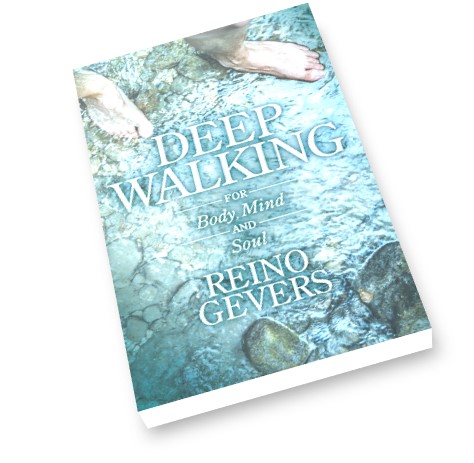
P.S. I’m excited to announce the release of my latest book, “The Turning of the Circle: Embracing Nature’s Wisdom for Purposeful Living.” If you enjoy it, you might also be interested in my previous works, “Deep Walking for Body, Mind and Soul” and “Walking on Edge: A Pilgrimage to Santiago.” You can find all of these titles at reputable bookstores near you.

Leave a comment

Filed under humanity, spirituality, Uncategorized

The truth be told

“Three things cannot be long hidden: the sun, the moon, and the truth.” – Buddha

In my early days as a news reporter covering the ‘court beat’ and witnessing some of humanity’s worst crimes, it was disheartening to see how many criminals, even when faced with undeniable evidence, would contort the truth, painting their victims as the villains.”

In the tumultuous public information space, truth finds itself relegated to the backseat, drowned out by a cacophony of lies, deception, and hate speech. The manipulation of truth isn’t solely the domain of petty criminals; it’s a tool wielded with equal fervor by autocrats, dictators, and cult leaders.

I’ve often pondered how individuals can fabricate and obscure with such unwavering conviction that one might almost be inclined to believe them. It dawned on me that evil, or Satan isn’t merely a religious concept but a stark reality, inhabited by individuals devoid of a moral compass and exhibiting behavior far removed from what society deems normal and ethical.

In the increasingly muddied water of social media, we need to call out the purveyors of evil messaging. They are easily identifiable:

  • They lack complete empathy and have no qualms in causing harm and suffering to others.
  • They are masters at manipulating words. Their tools are deception and gaslighting. Their lies and twisting of the truth will make you doubt your own sanity.
  • They seek complete control. They will pressure, intimidate, and coerce. They demean, humiliate, or degrade others as a means of asserting power and dominance.
  • Charisma. Externally they are sometimes charismatic, outgoing, and charming personalities. But they have an agenda. They are trying to gain your trust while secretly pursuing their own selfish agenda – typical among religious and political cult leaders.
  • Emotional manipulation. If you have not transmuted your own dark emotions of fear, anxiety, hate, and shame you are easy prey. They will tell you that all your “bad feelings” have been caused by “others” – people of other faiths, cultural origins, and political beliefs. By this stage, you will be willing to follow them unconditionally all the way into the darkest of dungeons.

The good news is that God has given us the power of choice. Our primary purpose on earth is to elevate consciousness. You ultimately have the power to transcend limited perspectives, biases, and conditioned beliefs, gaining greater clarity, empathy, and interconnectedness with the broader world of existence.

By engaging in simple acts of service, kindness, and altruism you will cultivate a sense of purpose, fulfillment, and connection to something greater than yourself.

By learning to love yourself you will cultivate empathy and compassion towards others, fostering a greater sense of connection and understanding of the human experience.

Explore and study spiritual and philosophical traditions that promote personal growth, self-discovery, and a sense of interconnectedness with higher consciousness.

To quote Robert Frost: “Two roads diverged in a wood, and I took the one less traveled by, and that has made all the difference.”

Reino Gevers – Author – Mentor – Speaker

P.S. I’m excited to announce the release of my latest book, “The Turning of the Circle: Embracing Nature’s Wisdom for Purposeful Living.” If you enjoy it, you might also be interested in my previous works, “Deep Walking for Body, Mind and Soul” and “Walking on Edge: A Pilgrimage to Santiago.” You can find all of these titles at reputable bookstores near you.

1 Comment

Filed under raised consciousness, self-development, spirituality, Uncategorized

Do what you love

You must never think of the whole street at once, understand? You must only concentrate on the next step, the next breath, the next stroke of the broom, and the next, and the next. Nothing else.”

– Michael Ende, Momo

Are you finding yourself on a frustrating treadmill of doing a job that you hate and counting the years until retirement? There are millions of people out there wasting the most precious years of their lives for all the wrong reasons.

On average about half of your lifetime will be spent working, assuming you retire in your mid-60s and have a typical lifespan between 70 and 80. It therefore makes sense that you spend your best years doing what you love and what you are passionate about.

If you are stuck in grievance culture, unhappy in your job, or your relationship, and have problems with your self-esteem the universe will be sending you many signs that you need to change direction.

A job environment with constant high-stress levels will not only cause mental and physical exhaustion but eventually lead to a host of other health problems that will severely impact your lifespan and quality of life. Some typical red flags:

  • Your personal values are no longer in alignment with the values of the organization
  • All your efforts go unnoticed or unappreciated
  • You feel undervalued and underpaid for what you are doing
  • You have reached a dead end in personal growth. The job lacks growth opportunity, meaning, and purpose.

You might have started a particular career or job with a passion, but it has meanwhile outlived its purpose. It has become a grinding chore and is exhausting you physically and mentally. That might be the time for you to move on. One path is often the stepping stone or learning curve for you to move on to another path.

In doing what you love, you will discover that the true richness of life is not just in the paycheck, but in the fulfillment of your soul. When you are doing what you are passionate about your higher vibrational frequency will automatically attract all the abundance and the money you need.

Photo by Riya Kumari on Pexels.com

Even in carrying out the most mundane tasks your mindset and perspective are key, according to the 13th-century Mystic Meister Eckhart. Being in alignment is the discovery of mysticism in all of your activities in a “joyful experiential presence”.

Eckart’s formula for happiness was liberation from attachment and complete surrender to “dedication” in giving yourself wholeheartedly to a cause, person, or activity. This, he argues, is only possible if you create space for contemplative “emptiness”.

The more in alignment “the more powerful, dignified, useful, commendable, and perfect is the prayer and the work,” Eckart writes in one of his sermons.

Similarly, Zen Buddhism encourages practitioners to cultivate mindfulness, which involves paying full attention to each moment, fully immersing yourself in the present experience, and extending to all activities whether it’s walking, eating, working, or any other daily task.

Mindful activity involves being fully present in the current moment, paying attention to thoughts, feelings, and sensations without becoming entangled by attachment or judgment. Developing a kind and compassionate attitude is integral to the spiritual path.

In a busy world, you are constantly being pulled into a thousand different directions, becoming a playball for social media and the “glitter of the shiny things.” Distraction and addiction are trying to stifle the voice of your soul yearning to accomplish that which it was destined to bring forth and create from the day you were born.

Reino Gevers – Author – Mentor – Speaker

P.S. I’m excited to announce the release of my latest book, “The Turning of the Circle: Embracing Nature’s Wisdom for Purposeful Living.” If you enjoy it, you might also be interested in my previous works, “Deep Walking for Body, Mind and Soul” and “Walking on Edge: A Pilgrimage to Santiago.” You can find all of these titles at reputable bookstores near you.

2 Comments

Filed under psychology, self-development, spirituality, Uncategorized

Can you be a divine messenger?

In ancient oral traditions saints and prophets are often said to return as angels in disguise after departing from their earthly existence, assisting those in desperate need of help, but sometimes unwittingly you too can become a divine messenger by imparting one word or deed that can completely change the trajectory of a person’s life.

Several stories reflect the universal theme of saints and prophets in the afterlife intervening in human affairs, in unexpected and unassuming forms.

Guidance and healing at crucial junctions

In ancient Greek mythology, the deity Asclepius is associated with healing and is said to have returned to the mortal world in disguise offering healing and guidance.

In the Islamic tradition, Khizr is often associated with the archetype of a wise and immortal figure who appears in challenging times, disguised as an ordinary person.

In Slavic folklore, the supernatural being Baba Yaga comes in disguise to test individuals and those who treat her kindly are well rewarded.

According to Jewish-Christian legend the Prophet Elijah intervened at several crucial junctions of human history. During the Battle of Las Navas de Tolosa in 1212 the Christian forces in Spain faced a formidable opponent against the soldiers of the Almohad Caliphate. The Christian army was about to be defeated when a mysterious knight wielding a white banner with a red cross appeared on the battlefield, believed to have been Elijah in disguise, and providing the crucial assistance that turned the tide.

The red cross against a white background is today a familiar symbol on the scallop shell worn by pilgrims walking the Camino de Santiago, many of them probably unaware of its origins. In my novel “Walking on Edge” I refer to several mysterious encounters with strangers that the main character Jake has on the Camino. Some of these accounts are based on real stories that I came across on my own pilgrimage walks.

It is common for pilgrims to have a really low moment while on the Camino, where they are at the point of giving up. I’ve met several people who reported having an epiphany after overhearing a conversation or having a chance encounter with a stranger, giving them the courage to continue.

You should never underestimate the impact your words and deeds could have on a fellow human being. Sometimes you also need to be cruel to be kind.

A teacher or parent might implement a policy of no-nonsense adherence to deadlines and assignments to prepare the student for the obstacles they might encounter in future professional environments, instilling a sense of responsibility and discipline, even though momentarily demanding.

If you have a family member or friend suffering from an addiction problem, the only way you are going to help them is by setting clear boundaries and deadlines where they can get professional help.

But sometimes a simple gesture or act of kindness can leave an everlasting imprint on a person’s memory.

In Charles Dickens’ novella “A Christmas Carol,” the miserly and bitter old man Scrooge is transformed with a child’s kindness that serves as a catalyst for his redemption, reminding him of the joy and warmth associated with Christmas and the importance of human connection.

It costs absolutely nothing to be kind. You never know what impact that could have on a fellow human being. The exact right words and actions might resonate with another person more than you realize.

Reino Gevers – Author – Mentor – Speaker

P.S. I’m excited to announce the release of my latest book, “The Turning of the Circle: Embracing Nature’s Wisdom for Purposeful Living.” If you enjoy it, you might also be interested in my previous works, “Deep Walking for Body, Mind and Soul” and “Walking on Edge: A Pilgrimage to Santiago.” You can find all of these titles at reputable bookstores near you.

Leave a comment

Filed under Camino de Santiago, spirituality, Uncategorized

Light into a world beyond

A ray of light travels into a chamber, illuminating a spiral motif representing a vortex for the dead in completion of their journey from this world into the „other world“.

The phenomenon at an ancient site in Newgrange, Ireland, is thought to date back 2800 BC and occurs every year on December 21st, marking the shortest day and longest night of the year in the northern hemisphere.

At Stonehenge, in the United Kingdom, another ancient site from the Bronze Age, the sun rises behind the entrance of a stone circle illuminating the Centre.

The lives of ancient cultures were closely intertwined with the laws of nature and the transition of the seasons and were elaborately celebrated in ritual and religious ceremony.

Modern man’s disconnect from nature and spiritual essence appears to be at the root of much of today‘s confusion and mental instability. Our modern versions of Christmas, Easter and Thanksgiving are a poor reflection of their original spiritual meaning.

The celebration of the birth of Christ in Bethlehem, comes just after the winter solstice, representing victory over darkness, rebirth, and hope over fear.

The hope of the guiding star

The guiding star that led the Magi to the birthplace of Jesus, represents hope, divine guidance, and the birth of a significant spiritual event, signifying the arrival of a special and transformative moment.

The celebration of the birth of Christ is associated with an annual inner spiritual rebirth of the “Christ within“

The ancient Mystics refer to each individual having a divine and spiritual essence connected to a higher consciousness.

In Christianity, it may be linked to the belief that Christ’s spirit resides within believers, guiding and influencing their thoughts, actions, and spiritual journey.

Connecting to the spiritual essence

In a broader sense, it can be found in various spiritual and philosophical traditions that emphasize inner enlightenment and connection to a higher reality.

The “Buddha Nature“ has the optimistic view that every individual can attain enlightenment through spiritual practice and awareness.

Defilements and obscurations that prevent enlightenment are considered temporary and removable.

The time between Christmas and New Year – a time symbolizing the transition from the old to the new – is of particular spiritual significance.

Whatever negative experience, loss and trauma you have experienced this year this quiet space can be spent for inner reflection and contemplation.

What addictive thoughts and beliefs are holding you back? What things are distracting you? What relationships are pulling you down into a lower vibrational field?

When the old can be released the path into the gateway of spiritual renewal and purpose opens.

Reino Gevers – Author – Mentor – Speaker

P.S. I’m excited to announce the release of my latest book, “The Turning of the Circle: Embracing Nature’s Wisdom for Purposeful Living.” If you enjoy it, you might also be interested in my previous works, “Deep Walking for Body, Mind and Soul” and “Walking on Edge: A Pilgrimage to Santiago.” You can find all of these titles at reputable bookstores near you.

2 Comments

Filed under raised consciousness, spirituality, Uncategorized

Humanity at the crossroads

As we end an old year and enter another new year in the 21st century it is worth reflecting of where we stand as a humanity. We have witnessed in 2023 two major wars traumatizing millions of people, a world grappling with a climate and environmental crisis and and a resurgance of authoritarianism.

Humanity stands at the cusp of forging a new earth characterized by elevated vibrational energy and heightened consciousness, fostering an unprecedented era of abundance, tolerance, and peace. Alternatively, there is the ominous prospect of regressing into another dark age, replete with conflicts fueled by tribalist fears, anxieties, and hatred.

Regrettably, a significant portion of humanity appears to operate on autopilot, blissfully ignorant that their responses are dictated by emotions and feelings rooted in obsessive thoughts and beliefs, steeped in the shadows of past traumas or programmed by mass media.

Photo by Pixabay on Pexels.com

These ingrained thoughts and beliefs wield a potency akin to that of substance addiction. A vehement denial of this addiction persists, the grip so formidable that they prefer to die rather than acknowledging that their beliefs and perspectives rest on a flawed foundation.

Beliefs and thoughts impacting cell expression

In his book “The Biology of Belief”, the cell biologist Dr. Bruce Lipton, argues that beliefs and thoughts have an influence on our gene expression and have a profound effect on our health and physical well-being.

Lipton argues that positive beliefs can contribute to health and healing, while negative beliefs can potentially lead to illness. The good news is that by becoming aware of the shadow, your thought patterns and emotions, you have then power of choice and become a co-creator on a collective level in transmuting these beliefs, ultimately living a happier and healthier life.

The power of words and thoughts

Words and sound have a vibrational energy that affects your body and mind. Research conducted on 700 million words and phrases used on Facebook by the University of Warwick, United Kingdom, in 2013 revealed some astonishing facts.

Neurotic people disproportionately used the phrase “sick of” and the word “depressed”. Research conducted by Eichstedt et al. in 2015 found a correlation between language used on Twitter accounts and heart disease in U.S. counties where words expressing anger, hate, and resentment were predominantly used.

In this week’s “Living to BE” podcast I interview an expert on the subject, Janet Schmidt, explains her own path into creating a life of abundance after losing nearly all her money, and becoming aware of her own ancestral program of scarcity. We delve on the subjects of healing trauma and limiting beliefs, building a prosperity mindset and reprogramming for success.

Why do some people procrastinate in victimhood and the “blame game” while others develop an emotional resilience that catapults them into a life they have always dreamed of with happy relationships, material abundance, and a healthy mind and body?

What are you feeding your mind with?

What you feed your mind and body with is one of the keys of reprogramming. Avoid toxic people poisoning your mind with their prejudices, fears and hate. Be mindful of what books, social media feeds and news channels you feed your mind with.

Are you still in control or are you a member of the ranting crowd addicted to grievance culture? Who are you really? What is your purpose in life? If you choose to create a space for solitude, for example by taking a walk in the green and blue spaces of nature, you will reconnect to the awe inspiring gift from the universe and the bigger whole. You will start to perceive the faint whispers from the universe, revealing the waymarkers of your authentic path of destiny.

If you find yourself caught in the rabbit hole of toxic emotions try the method of emotional shifting. Replace the word “fear” with “courage”, “hate” with “love and compassion”, “anxiety” with “confidence and trust”, “scarcity” with “abundance”, “melancholy sadness”, with “happiness and gratitude.”

There are some powerful mantras and prayers that elevate into a higher vibrational field. Examples are the Buddhist mantra: Om Mani Padme Hum, the Christian Catholic prayer song: “Ave Maria” and the Lord’s Prayer in the original Aramaic version.

The purpose in life is to find synchronicity with divine purpose. What the Buddhists call the “Buddha nature” and the Christian mystics the “Christ within” is evolution of spiritual consciousness that begins with practising kindness and compassion with the self that emanates into all your relationships making the world a better place – one step at a time.

Reino Gevers – Author – Mentor – Speaker

P.S. I’m excited to announce the release of my latest book, “The Turning of the Circle: Embracing Nature’s Wisdom for Purposeful Living.” If you enjoy it, you might also be interested in my previous works, “Deep Walking for Body, Mind and Soul” and “Walking on Edge: A Pilgrimage to Santiago.” You can find all of these titles at reputable bookstores near you.

Leave a comment

Filed under mental health, mental-health, self-development, spirituality

Autumn and the time to let go

Here in the northern hemisphere, autumn unfolds its colorful spectacle. Trees shed their leaves as a brisk breeze weaves through bare branches. A nimble squirrel gracefully navigates from one tree to another, scouting for the optimal spot to hibernate through the coming winter.

Autumn marks a period of natural slowdown, where the vibrancy of summer yields to the quieter preparation for the colder months ahead. Yet, within this apparent tranquility, there exists a wild and unpredictable quality. A gentle, warm wing might whisper promises of impending spring, only to be followed by tempestuous storms.

In observing autumn’s dichotomy, we find a reflection of our own complexities. It teaches you the art of conserving energy for the inevitable challenges, mirroring nature’s rhythmic dance between repose and upheaval.

In studying nature you inevitably embark on a journey of self-discovery, unraveling the intricacies of your own existence in the ever-changing seasons of life.

We often forget that we are part of the bigger matrix. Your entire body is a composition of the elements around you. In the ancient Chinese philosophy of the Five Elements, autumn is associated with the element of metal. By getting into alignment with nature, you will recognize your innate and authentic nature.

Thus autumn is a time for introspection. These are questions you could ask:

What was really good this year?

What was a mistake and should be avoided in the future?

Life can be hard in teaching you the lessons you need to learn, especially when you fail to heed the whispers from the universe that tell you where to walk. It could be the advice from a total stranger, a sentence you coincidentally pick up in a conversation. A sudden inclination or feeling, a strong symbol from a dream, or a work of art you are observing.

Like the falling leaves of autumn, this is a time to let go of relationships, beliefs, and concepts that no longer serve you.

Harmonizing the inner and outer worlds is a major challenge in a world where attention is constantly being pulled at by external distractions.

Your breathing pattern is a reflection of your inner state of mind

Being aware of your breathing pattern plays a key role in relaxing your mind. Shamans and yogis have for centuries used breathing techniques to explore new realms of consciousness. In studying your breathing and improving on it, you become aware of hidden emotions and feelings. Fear, for instance, expresses itself with a flat breathing pattern and clogged feeling in the throat. A symptom of stress is strained breathlessness coming from shallow breathing from the upper chest.

A tense and stressed body finds no solace. Worries, fears, and other emotions create an imbalance that makes it susceptible to illness.

Recognizing the shadow aspect, such as your fears, your anger, your hurt, your shame, envy, or greed, is the first step in transmuting those negative emotions.

In a reflection of the metal aspect of the personality, we would look at the following questions:

Is there an old melancholy sadness that binds my spirit from making a move forward? Can I really admit to that sadness that is still there? Could it be that I should set a boundary toward certain people and make a healthy separation? Are my immediate surroundings, like my home and job, still fulfilling?

Are there too many superficial distractions in my life that prevent me from going on the path of my true destiny? Am I in the position of letting go of old concepts, ideas, or other so-called truths that have outlived their value for me?

Is my basic outlook on life of a positive or negative nature? Do I perceive tension and looming conflict situations in my immediate surroundings before they actually erupt? Do I have enough room to breathe? What is preventing me from exploring new avenues? Where are the boundaries set by myself or others? Could it be that I am also crossing the boundaries of others without realizing this?

The unique, authentic self only manifests itself when you liberate yourself from the magnetic pull of countless distractions, selling images, wants, and needs.

We need a truly strong metal element to preserve that space of true authenticity. When we are authentic with the true self, we are immune to mental and physical exhaustion that mostly comes from playing with the images of the false self.

Reino Gevers – Author – Mentor – Speaker

P.S. I’m excited to announce the release of my latest book, “The Turning of the Circle: Embracing Nature’s Wisdom for Purposeful Living.” If you enjoy it, you might also be interested in my previous works, “Deep Walking for Body, Mind and Soul” and “Walking on Edge: A Pilgrimage to Santiago.” You can find all of these titles at reputable bookstores near you.

Leave a comment

Filed under mental health, mental-health, spirituality, Uncategorized

How worthy are you?

Practicing full self-acceptance with all the pain, trauma, and shame from the past are the building stones of resilience against grievance culture feeding on the toxicity of anger and fear.

Much of the dysfunctional behaviors prevalent in our contemporary society can be traced back to an inflated Ego-Mind and a prevailing narcissistic culture, rooted in poor self-worth.

Negative thought patterns inevitably lead to negative actions and an endless cycle of suffering until the cycle is broken with a heightened state of awareness.

Narcissism is often an overcompensation for an underlying feeling of inadequacy. The need for constant admiration and validation from others is driven by an inner void.

There might be an inner voice telling you: “I’m too fat, too thin, too short, too old, and have an ugly nose.” The thoughts and voices that often come from programming stem from hurts inflicted during early childhood.

Photo by nicollazzi xiong on Pexels.com

The mantra of self-acceptance

You can transmute that inner voice with a new mantra: “I unconditionally love and accept myself the way I am. I am so happy and grateful to my body that has served me so well. I am healthy and I am strong.”

Self-love should not be confused with narcissism. You can only serve your higher purpose if you are no longer at war with yourself. The more you practice self-compassion, self-love, and self-acceptance the more you will attract this in the external world.

Life is a constant cycle of ups and downs. It is part of life that you have at times messed up, been disappointed, faced trauma, loss, and real “down on the ground moments.” During these times you might have neglected self-care like proper nutrition, exercise, and adequate sleep.

When you dig deep into your inner resources

But on deeper reflection, these dark nights of the soul have very often forced you into introspection and to dig deep into your inner resources. Once you start feeding your body with high-nutrient foods, exercising regularly, and programming your mind with positive thoughts, you start moving into a higher vibrational field.

Spiritual growth and soul elevation very seldom come during those times when you are feeling high and on top of the world. The pain can be the path where the light begins to shine. You will have greater ease in transitioning from challenges and adversity when you are in the awareness that every chapter in life has a season and that “this too shall pass.”

Reino Gevers – Author – Mentor – Speaker

P.S. I’m excited to announce the release of my latest book, “The Turning of the Circle: Embracing Nature’s Wisdom for Purposeful Living.” If you enjoy it, you might also be interested in my previous works, “Deep Walking for Body, Mind and Soul” and “Walking on Edge: A Pilgrimage to Santiago.” You can find all of these titles at reputable bookstores near you.

Leave a comment

Filed under mental health, self-development, spirituality

Now and Then

“Musical training is a more potent instrument than any other because rhythm and harmony find their way into the inward places of the soul.” – Plato

It appears to be no mere coincidence that music has spearheaded profound social and political transformations throughout history. Powerful lyrics that strike the tune of the time seem to penetrate an unseen realm, resonating with the deepest chords of human experience.

It’s almost a miracle that we can enjoy today the crisp and clear voice of John Lennon in the newly released Beatles song “Now and Then” with machine learning technology managing to extract the deceased band member’s vocals from a poor 1970s cassette recording.

The new song triggers memories of the famously successful, “Eleanor Rigby” with the introductory lyrics: “Ah, look at all the lonely people!” The theme of loneliness and isolation was a clear departure from earlier Beatles love songs into a new genre.

It is the only song where none of the Beatles plays an instrument. There is an eery aspect with the name “Eleanor Rigby” found on a gravestone at St. Peter’s Parish Church, in Woolten, Liverpool where Paul McCartney and John Lennon first met as teenagers in 1957.

The real Eleanor Rigby

It tells the story of a lonely woman named Eleanor Rigby, and the gravestone allegedly served as the inspiration for Paul McCartney when writing the song. The actual grave belongs to a woman named Eleanor Rigby, who died in 1939 at the age of 44.

In a 2021 article for the New Yorker, McCartney writes that after being introduced to John Lennon they most certainly wandered about in the churchyard talking about their future. But McCartney writes that he couldn’t consciously recall having seen the gravestone.

“I don’t remember seeing the grave there, but I suppose I might have registered it subliminally.”

McCartney goes on to write that several coincidental meetings led to the formation of the band: “All these small coincidences had to happen to make the Beatles happen, and it does feel like some kind of magic. It’s one of the wonderful lessons about saying yes when life presents these opportunities to you. You never know where they might lead.”

During its time Eleanor Rigby struck a chord with many people perceiving and feeling the “social isolation” that comes with living in large cities, geographically distant from close family and friends with limited opportunities for social interactions apart from the workplace.

It is no coincidence either that the Beatles arrived at a time in the 1960s when a new generation yearned to break free from the suffocating morality of the 1950s. Music has played a pivotal role in driving change throughout history, giving a voice to the simmering social undercurrent.

Songwriters and musicians have shared sentiments about a mysterious, almost mystical process of creating music. McCartney mentioned in several interviews how some of their most famous songs seemed to flow effortlessly as if the melodies and lyrics were already there, waiting to be discovered.

Joni Mitchell describes the art of creative songwriting as a form of channeling, arriving from a place she can’t fully explain, almost as if they are given to her.

Leonard Cohen said: “If I knew where the good songs came from, I’d go there more often.”

Bob Dylan describes his songwriting process as tapping into something beyond his conscious mind, often coming to him almost fully formed, as if he’s a conduit for something greater than himself.

Bach: Infused by spirituality

One of the greatest composers of all time, Johann Sebastian Bach, infused his music with his deep spiritual beliefs. His music is timeless and continues to inspire millions across all national, cultural, and religious boundaries. The complexity of Bach’s compositions and emotional resonance has scholars citing it as evidence of a profound connection to something beyond the human realm.

Deep walking in solitude over long distances, undeniably also influenced Bach’s compositions. Walking between his home and a parish that did a first performance, he would often refine and adapt the composition. Walking has a natural rhythm, that might have influenced Bach’s sense of musical rhythm.

In 1705 the young Bach made a 400-kilometer journey on foot from Arnstadt to Lübeck in northern Germany to learn from the then-famous organist Dietrich Buxtehude.

Ludwig von Beethoven took daily walks in nature. Many of his best ideas came to him during walks in the country, including his ‘pastoral’ Symphony No. 6. Completed in 1808.

Lennon’s last words to McCartney were reportedly: “Think about me every now and then, old friend,” which makes “Now and Then” seem almost like a message from the beyond. The song is the final official Beatles farewell. There are only two surviving members – McCartney and Ringo Starr both now in their 80s.

Reino Gevers – Author – Mentor – Speaker

P.S. I’m excited to announce the release of my latest book, “The Turning of the Circle: Embracing Nature’s Wisdom for Purposeful Living.” If you enjoy it, you might also be interested in my previous works, “Deep Walking for Body, Mind and Soul” and “Walking on Edge: A Pilgrimage to Santiago.” You can find all of these titles at reputable bookstores near you.

.

Leave a comment

Filed under longevity, mental health, self-development, spirituality, Uncategorized

Building resilience in turbulent times

Humanity is about to embark on a journey marked by monumental shifts and unprecedented disruptions, unlike anything we have seen before. It will impact every aspect of our lives, creating a ripple effect that will affect us on multiple levels.

This is the conclusion reached in a workshop we had recently in a German monastery. The participants included experts from finance, research, health, and education – all of them having delved deeply into philosophy, religion, and spirituality.

A tumultuous shift into a new era inevitably comes with disruptions in the form of wars, breakdown of institutions and industries, extremism, and social changes. Some notable examples of the past include the industrial revolutions of the 18th and 19th centuries, the Great Depression of the 1930s, the two world wars, the end of the Cold War in the early 1990s, and the digital revolution of the late 20th century.

We can expect in the next five years an unprecedented leap in quantum computing, biotechnology, genetic engineering, robotics, and artificial intelligence automation. The ability to enhance, alter, or transfer consciousness raises profound existential and ethical questions about identity, mortality, and the human experience.

During times of uncertainty, we are seeing a retreat into political extremism and religious fanaticism. Fear is what fuels the radicals, exploiting emotions to sow discord and chaos. Millions will find themselves on the losing end, navigating the turbulent waters of change.

The winners who embrace change

Yet, amidst these challenges, there will emerge a resilient group of individuals and communities who seize the opportunity. Winners not only adapt to change but have the innate ability of turning adversity into an advantage. They embody the human spirit’s ability to innovate and flourish during times of uncertainty.

Building resilience

The more you build your mental, spiritual, and physical resilience at this point in time the easier it will be for you to navigate the disruptions of the future.

In my new book “The Turning of the Circle: Embracing Nature’s Wisdom for Purposeful Living”, I emphasize the point that all of life underlies a seasonal principle of natural and spontaneous changes. Evolutionary change, sometimes disruptive, is an elementary aspect of the universal intelligence, of God, or the divine.

Embedded within the fabric of all things lies a divine essence, a source that intricately connects us all within a vast and intricate cosmic matrix. This profound interconnectedness is in perpetual motion, constantly evolving, adapting, and striving toward refinement. Within this intricate tapestry, God finds expression through the awe-inspiring wonders of nature.

Creation, in all its diverse and manifold forms, is a testament to the boundless creativity of the divine. It is a dynamic masterpiece, never at a standstill, but rather, continuously in motion and unfolding in the exquisite dance of creation.

The purpose of life is life itself

With the sunrise of another day, the delicate bloom and aroma of a flower, the melodious song of a bird, and the fleeting touch of the wind, you hear the divine whispering to the soul. The everyday miracles of nature serve as reminders of the eternal dance of existence, illuminating the path of endless growth and the limitless opportunities that dwell within the universe’s vast and loving embrace.

While the external world will continue to focus on the distractions of the 10,000 things and short-term material and sensory gratification, the spiritual teachings of the ancient Mystic teachers become more relevant than ever, providing a haven of comfort and resilience during times of uncertainty.

Happiness and contentment can ultimately only be found in alignment with the vertical dimension of the spiritual.

The term “spiritual” traces its roots back to the Greek word “pneumatikos,” later translated to “spiritualis” in Latin. Unlike religion, it stands apart from rigid doctrines and defined systems of belief. Instead, it inherently signifies an exploration of the inner essence, a journey towards the core or spark of the “holy spirit,” integrating the life force in connection with divine energy. It embodies a sacred communion that transcends the boundaries of organized faith, emphasizing the personal and transformative relationship between the individual and the divine.

Lifting the veil to fulfillment and life purpose entails uncovering your individual creative niche within the vast tapestry of God’s creation. The purpose of life is life itself.

The choice is between embracing a bright future of hope and purpose or heading for the pitfalls of negativity laid by the forces of darkness.

Reino Gevers – Author – Mentor – Speaker

P.S. I’m excited to announce the release of my latest book, “The Turning of the Circle: Embracing Nature’s Wisdom for Purposeful Living.” If you enjoy it, you might also be interested in my previous works, “Deep Walking for Body, Mind and Soul” and “Walking on Edge: A Pilgrimage to Santiago.” You can find all of these titles at reputable bookstores near you.

.

Leave a comment

Filed under mental health, mental-health, spirituality, Uncategorized