Category Archives: spirituality

Building resilience in turbulent times

Humanity is about to embark on a journey marked by monumental shifts and unprecedented disruptions, unlike anything we have seen before. It will impact every aspect of our lives, creating a ripple effect that will affect us on multiple levels.

This is the conclusion reached in a workshop we had recently in a German monastery. The participants included experts from finance, research, health, and education – all of them having delved deeply into philosophy, religion, and spirituality.

A tumultuous shift into a new era inevitably comes with disruptions in the form of wars, breakdown of institutions and industries, extremism, and social changes. Some notable examples of the past include the industrial revolutions of the 18th and 19th centuries, the Great Depression of the 1930s, the two world wars, the end of the Cold War in the early 1990s, and the digital revolution of the late 20th century.

We can expect in the next five years an unprecedented leap in quantum computing, biotechnology, genetic engineering, robotics, and artificial intelligence automation. The ability to enhance, alter, or transfer consciousness raises profound existential and ethical questions about identity, mortality, and the human experience.

During times of uncertainty, we are seeing a retreat into political extremism and religious fanaticism. Fear is what fuels the radicals, exploiting emotions to sow discord and chaos. Millions will find themselves on the losing end, navigating the turbulent waters of change.

The winners who embrace change

Yet, amidst these challenges, there will emerge a resilient group of individuals and communities who seize the opportunity. Winners not only adapt to change but have the innate ability of turning adversity into an advantage. They embody the human spirit’s ability to innovate and flourish during times of uncertainty.

Building resilience

The more you build your mental, spiritual, and physical resilience at this point in time the easier it will be for you to navigate the disruptions of the future.

In my new book “The Turning of the Circle: Embracing Nature’s Wisdom for Purposeful Living”, I emphasize the point that all of life underlies a seasonal principle of natural and spontaneous changes. Evolutionary change, sometimes disruptive, is an elementary aspect of the universal intelligence, of God, or the divine.

Embedded within the fabric of all things lies a divine essence, a source that intricately connects us all within a vast and intricate cosmic matrix. This profound interconnectedness is in perpetual motion, constantly evolving, adapting, and striving toward refinement. Within this intricate tapestry, God finds expression through the awe-inspiring wonders of nature.

Creation, in all its diverse and manifold forms, is a testament to the boundless creativity of the divine. It is a dynamic masterpiece, never at a standstill, but rather, continuously in motion and unfolding in the exquisite dance of creation.

The purpose of life is life itself

With the sunrise of another day, the delicate bloom and aroma of a flower, the melodious song of a bird, and the fleeting touch of the wind, you hear the divine whispering to the soul. The everyday miracles of nature serve as reminders of the eternal dance of existence, illuminating the path of endless growth and the limitless opportunities that dwell within the universe’s vast and loving embrace.

While the external world will continue to focus on the distractions of the 10,000 things and short-term material and sensory gratification, the spiritual teachings of the ancient Mystic teachers become more relevant than ever, providing a haven of comfort and resilience during times of uncertainty.

Happiness and contentment can ultimately only be found in alignment with the vertical dimension of the spiritual.

The term “spiritual” traces its roots back to the Greek word “pneumatikos,” later translated to “spiritualis” in Latin. Unlike religion, it stands apart from rigid doctrines and defined systems of belief. Instead, it inherently signifies an exploration of the inner essence, a journey towards the core or spark of the “holy spirit,” integrating the life force in connection with divine energy. It embodies a sacred communion that transcends the boundaries of organized faith, emphasizing the personal and transformative relationship between the individual and the divine.

Lifting the veil to fulfillment and life purpose entails uncovering your individual creative niche within the vast tapestry of God’s creation. The purpose of life is life itself.

The choice is between embracing a bright future of hope and purpose or heading for the pitfalls of negativity laid by the forces of darkness.

Reino Gevers – Author – Mentor – Speaker

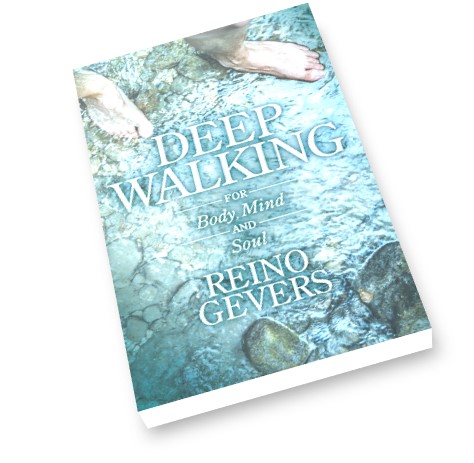
P.S. I’m excited to announce the release of my latest book, “The Turning of the Circle: Embracing Nature’s Wisdom for Purposeful Living.” If you enjoy it, you might also be interested in my previous works, “Deep Walking for Body, Mind and Soul” and “Walking on Edge: A Pilgrimage to Santiago.” You can find all of these titles at reputable bookstores near you.

.

Leave a comment

Filed under mental health, mental-health, spirituality, Uncategorized

Liberating the mind from attachment

Go into your own ground and learn to know yourself there. The outward man is the swinging door; the inner man is the still hinge – Meister Eckhart

Life is a rollercoaster of natural and spontaneous changes constantly forcing us to tread unknown paths. While some people may excitedly embrace a new beginning others retreat into fixed belief and ideology, providing the illusion of a safety cacoon in a world of “turmoil.”

But resistance to the natural flow of life and attachment to fixed thoughts, beliefs, and things is one of the greatest causes of human suffering and misery. Staying in the moment and finding peace in the acceptance of reality is thus at the core of the Taoist and Mystic teachings.

Throughout history, wise prophets have faced vilification and persecution for their courage in exposing the hypocrisy of religions based on firm behavior rules, fearlessly shedding light on the discrepancies and contradictions inherent in entrenched beliefs. They especially questioned the existence of an authoritarian Father God figure “out there in heaven” who, like a strict parent, would punish his children for bad behavior. All natural or personal calamities were attributed to punishment by God “for sinful behavior.”

Meister Eckhart, a 14th-century Dominican monk whose writings are more topical today than ever, had to answer charges of heresy before an Inquisition in 1326. He barely escaped a death sentence. His writings were banned. Other Mystics of the time like Giordano Bruno and Marguerite Poret were not so lucky. They were executed or burned at the stake.

Straying from religious doctrine and liberating the mind from externally imposed belief was a dangerous undertaking in the Middle Ages. In modern times political beliefs, sometimes using religion as a cover, tend to vilify opposing beliefs as a threat to justify all means in destroying the “enemy.”

Fanaticists of the political and religious nature see the world only in black and white. The belief becomes closely intertwined with the Ego mind and identity. A different or multi-layered interpretation is perceived as a direct threat to the self.

Words in ancient languages such as Aramaic, the lingua franca during the time of Jesus, allowed much room for individual interpretation. The word for God “Abwun” could mean “Our Father” but also the absolute, pure oneness, creation, source of all power and flow of blessing.

One of the most powerful messages in the Bible is found in the Gospel of John 1:1. “In the beginning was the Word, and the Word was with God, and the Word was God”. When replacing the “word” with “consciousness” the text is filled with a much broader meaning.

“In the beginning was Consciousness, and Consciousness was with God, and Consciousness was God”.

Eckart describes a process of spiritual transformation when the divine spark within transcends its individuality or Ego and enters into a state of divine consciousness.

It’s a moment of pure presence when the soul feels at One with something much greater than the self.

Aligning with divine consciousness is opening the heart to the universe and detaching from worldly attachments. It is beyond conceptualized thinking and complete immersion in a state of oneness.

“You should know that true detachment is nothing else but a mind that stands unmoved by all accidents of joy or sorrow, honor, shame or disgrace, as a mountain of lead stands unmoved by a breath of wind. This immovable detachment brings a man into the greatest likeness to God,” according to Eckart.

In a world feeding on the messaging of negativity, it becomes a challenge to train the mind to stay the course of positivity. We can easily be pulled into the abyss of grievance culture when emotions such as anger, anxiety, and fear can be triggered in millions of people by one message on social media.

Modern man has largely been disconnected from what can be described as the divine expression through nature of which he is an essential part. Places worshipped as sacred by ancient peoples have been conceptualized as things that could be harvested, exploited, and destroyed. The void is trying to be filled with the addiction to short-term gratifications: Accumulating more things, more food, more kinky sex, and more substance abuse.

Where is your passion?

Is it a surprise that depression has reached epidemic levels on a global level? But in the pain of suffering more and more people are searching for new meaning and purpose. Where do I come from and where am I going? What excites me and drives my passion? What elevates my consciousness and boosts my vibrational energy.

The author Michael Gladwell describes in his book “The Tipping Point” that it takes only a small number of people to initiate social change. We are currently experiencing both a global environmental and mental health crisis. History has proven that such crisis situations can galvanize people into action.

We are at the tipping point of realizing on a spiritual level that the crisis we are finding ourselves in has not been created by a punishing external father God figure for bad behavior. It is a direct result of our own actions and behaviors and we have the power to change those actions and behaviors.

We as a collective humanity have dug our own rabbit hole. We need to liberate the mind from fixated false belief structures and start doing the inner work. More and more people are awakening to awareness through meditation and other disciplines of the mind. There is a growing realization that every thought comes from a state of consciousness, turns into a thought, a word, and then into an action.

When you are no longer at war with yourself you will emanate compassion, love, empathy, and trust, aligning with divine consciousness.

The “word” in John 1:1 refers to the union with the Inner Christ or what the Buddhists call “Buddha Nature” – the inherent, untainted “seed” that resides in all things. Seeking the Inner Christ or Buddha Nature is the path of the spiritual seeker.

Reino Gevers – Author – Mentor – Speaker

P.S. I’m excited to announce the release of my latest book, “The Turning of the Circle: Embracing Nature’s Wisdom for Purposeful Living.” If you enjoy it, you might also be interested in my previous works, “Deep Walking for Body, Mind and Soul” and “Walking on Edge: A Pilgrimage to Santiago.” You can find all of these titles at reputable bookstores near you.

Leave a comment

Filed under mental health, mental-health, self-development, spirituality

Connecting to your inner wisdom

Understanding and managing your emotions is key to achieving personal growth and accessing a higher vibrational energy. You can only tap into your inner wisdom by transmuting the charge of your toxic emotions such as fear, shame, anger, and grievance.

This poses a particular challenge during a time when social media and the political narrative feeds on negativity and our darkest toxic emotions.

Your body is the most authentic recording device of everything that has happened in your life. You will dream of events that happened decades ago because those memories are stored away somewhere in the depths of your body cells.

When you dream of when you were a seven-year-old and stole the cookies from Grandma’s closet, you have in some way not closed with that incident emotionally.

Your head-mind probably made up all sorts of reasons why taking those cookies was in order, while your sub-conscious heart-mind knew very well that what you did was stealing and that you hurt Grandma because you lied to her.

A tension or dissonance between head-mind and heart-mind, like acting against a gut feeling or doing something where all the alarm bells are running at a heart level, are just those things that the body will always remember.

Training your “heart-mind” to be emotionally mature is one of the reasons we are here on earth. We humans are imperfect beings, and probably the most disconnected of species from ourselves and our natural environment.

We have incarnated as souls to use our bodies as instruments of learning.

The heart is not merely an organ of the cardiovascular system that transports nutrients, oxygen and hormones throughout the body and removes metabolic waste. In the spiritual sense the heart is described as the “seat of the soul.” It is the first organ that develops in the fetus and is the connection between our physical and non-physical (soul) selves.

Impulses or thoughts flow first from the heart and then to the brain. The brain dissects, rationalizes and analyzes. The “heart-mind” is authentic and closest to the true self or soul purpose. Knowing the difference between “head-mind” and “heart-mind” is the spiritual learning part.

Our body is constantly sending us signals about what we need to hear and work on. The problem is that we are so caught up in the world of distraction that we mostly fail to listen until the body gets really angry and calls a time-out with some illness or malady. It is no surprise that cardiovascular diseases top the list in much of the Western world.

Regaining the connection

Regaining that connection to the “heart-mind” comes mostly during times of solitude, during meditation, prayer and deep walking. That is when we become aware of our emotional state of being. Some of the “emotional memories” stored in the body could go back many years or even decades.

These energies can be transmuted very well with the ancient body arts of tai chi, qi gong and yoga that were developed and refined by spiritual masters over many generations.

It is only fairly recent that these ancient arts have reached the Western world. One of the great tai chi masters, Cheng Mang Ching, was ostracized by the Chinese community in New York when he began teaching tai chi for the first time to Western students in the early 1960s.

If you walk the main Camino Frances, you will be walking for five weeks or longer. After two or three weeks on the road you realize that the Camino is much more than a mere physical exercise.

Not only does the body start detoxing, but I have noticed on my walks that dreams, childhood events, and memories of traumatic relationships that occurred many years ago return with a particular clarity.

These are particularly precious healing moments when old trauma is released to open up the channels for a flow of new energy.

Whatever the heart-mind hasn’t transmuted emotionally will at some stage come back to haunt you. It is why the mother on her death bed has that last wish before dying to reconcile with the son she hasn’t spoken to for years.

Volunteers and therapists companioning the dying have told me that the deepest regret is most often not having made amends with innermost family members. A peaceful death then only comes when that “something” has been dealt with.

What Chinese medicine has known for centuries, modern medicine is confirming with latest research. Many a serious illness has its origins in emotional baggage stored in the body-mind.

There is a particularly poignant passage in the third Beatitude of the Bible: “Blessed are the meek, for they shall inherit the earth.”

In the original Aramaic language, spoken by Jesus, the meaning is more subtle: “Tubwehun l’ makiche d’hinnon nertun arha.” This roughly translates to: “Renewal to those in emotional turmoil and blessed are those who can soften that which has hardened in their bodies.”

While walking in solitude you will inevitably be confronted by the same phenomenon as when lying alone awake at night: Hundreds of thoughts will be passing through your mind of past and future things.

One thought chases the next as you wind yourself up and down in a spiral of dancing monkeys in the head.

You won’t control those thoughts by practicing mind control methods. The mind does become aware of what it is thinking about and can extract itself with an accusatory finger of “why can’t I think of something else? Why can’t I let go of these worrying concerns in my head?”

You will notice that as the body releases tension during your walk, those dancing monkeys gradually start disappearing as you begin the descent from the head into feeling the body.

This is best done by aligning to the present moment by focusing on your breathing and counting the inhaling and exhaling of breaths.

You can also start by feeling each step touching the ground, feeling the ground and how the energy of the earth moves from your foot up your legs, spinal cord, neck and the crown of your head. Start by walking very slowly, aware of the present moment, just concentrating on these small things to liberate your mind.

Our ancestors practiced ceremony and rituals to transmute trauma on a body level. Animals still have this mechanism intact. A herd of antelope will run apparently haphazardly in all directions when one of them has been killed by a predator. Their bodies shiver and shake, but minutes later all has passed and they will resume grazing as if nothing has happened.

Calming mind and body

Transitioning from the depths of our lowest emotional frequencies, such as anger, shame, resentment, hate, greed, fear, and anxiety, towards the pinnacle of human evolution involves embracing the transformative power of compassion, love, empathy, gratitude, peace, and serenity.

Even as you ascend the ladder of higher consciousness, the complete liberation from toxic emotions and feelings remains an elusive goal; you are, after all, only human. However, through unwavering commitment and diligent practice, you can expedite your exit from the rabbit hole of negativity.

It will empower you to savor extended periods of vitality, hope, and inner tranquility, enhancing your overall well-being and vibrational frequency. It is the recipe for longevity and good health.

Reino Gevers – Author – Mentor – Speaker

P.S. This is an extract from “Deep Walking for Body, Mind and Soul. All my books are available on Kindle, and paperback where all good books are sold. If you would like to order in batch to gift to friends, family and employees you can contact me by DM for a special discount.

Leave a comment

Filed under mental health, mental-health, spirituality, Uncategorized

Why nobody is safe from a cult

Have you asked yourself why decent, educated, and well-meaning people are pulled into the dragnet of a dangerous cult? Do you think you are immune to making the same mistake? All it takes for them to capture your mind is to push certain emotional triggers and feelings.

Times of uncertainty and rapid change impact personal lives in multiple ways. The world’s getting more complex. We are seeking easy answers and simple solutions. If you are at an especially vulnerable point in your life. If you haven’t done the self-work in transmuting archaic fears, anxieties, and anger issues, you are at risk.

Historians and psychologists to this day ask themselves why a highly civilized nation that brought forth some of the world’s greatest philosophers, writers, and inventors could literally “worship” in masses a madman demagogue like Adolf Hitler. Cult leaders in different variations are malignant narcissists, display psychotic personality disorders, and carry an extreme personal grievance.

Hitler perfectly epitomized and tapped into the collective humiliation and undercurrent seething anger Germans felt after losing a war and suffering hunger and poverty during the economic meltdown of the 1930s. With a rising number of extremist groups coming to the fore in once unshakeable democracies, scholars and historians are seeing dangerous parallels and comparisons to the 1930s and the rise of fascism that culminated in the catastrophe of World War II.

An “us-versus-them” mentality

Cult movements typically have an “us versus them” mentality, providing a “safe haven” for individuals who have suffered a personal loss or humiliation. The “tribe” in the form of an organization, religion or political movement with a charismatic leader at its head perceives all outsiders of the movement as a threat. They will pound the message of “exceptionalism” of their leader or group. The “non-believers” and especially minority groups are vilified and dehumanized. Followers of the cult inevitably break off contact with family, and friends who do not belong or refuse “to see the light.”

Control and Isolation

The control mechanisms of a cult can be on a very subtle emotional level. Once the member has gone all-in by severing long-term relationships, it becomes very difficult to return to the old life. Few people will admit to having made a mistake or the wrong decision after sacrificing the best years of their lives and donating all their money to the “movement” or “cause.” We are hard-wired as social beings and it gets very difficult to leave “the cult family”. Those who leave are vilified as traitors to the cause, threatened, and in extreme cases harmed physically and mentally.

Photo by Luis Dalvan on Pexels.com

Group-Think, Lies and Deception

Once in the movement you inevitably become part of “group-think.” Members expressing the faintest doubts, who engage in a critical discourse or ask the wrong questions are shamed, coerced, and brought into line by the cult leader or his lieutenants. The critics will be told that they are “in their ego” or have strayed from the path – a favorite one in the religious cults. They will be playing on a core fear of most humans – the fear of being excommunicated from the safety of the tribe. Meanwhile, the real objectives and the financial dealings of the movement can be shrouded in mystery. The leader is always right. Excuses will be made over and over again as to why the leader could never be responsible for sexual misconduct, overspending on luxury items, or committing a serious crime.

Financial Exploitation

A common denominator of all cults is the financial exploitation of their members. They will be asked to contribute high membership fees, provide funds for a new temple, and pay for the private jet or the legal fees of the cult leader. At times members would have to donate all their assets to the movement for “the common good” as a sign of their commitment and loyalty. A small portion might be channeled to real charities as a marketing ploy while the major part will be kept by the cult leader for his personal needs.

Exploitation of vulnerabilities

You might say: “This can’t happen to me.” But cults and sects are masters at exploiting human vulnerabilities and emotions. Nobody is safe. A religious sect with a therapeutic New Age touch might catch you during an especially vulnerable point in your life when you are lonely and in need of social support and love, have just gone through a divorce, lost a loved one, or have a spiritual crisis.

The political cult and charismatic leader at its head will ensnare you if you haven’t dealt with your darkest toxic emotions such as anger and fear. You are functioning on “automatic” in the fight and flight mode of your reptilian mind, separated from the prefrontal cortex of your brain responsible for critical and logical thought.

Addiction to a cult has to be treated like any other addiction. First and foremost there is the need for an honest recognition and acceptance of the problem. Concrete action has to be taken like leaving the cult, breaking all contact with its members, and possibly leaving town. What lifestyle changes, support groups, and therapy are necessary? What would my life look like without the addiction? What freedoms would I be enjoying? How can I prevent relapse and find supportive friends with a higher vibrational energy?

If you are drawn to a charismatic leader with a hate-filled, and vindictive message, ask yourself: “What anger within me is he tapping into? What can I positively change in my life, instead of delegating action to the “political messiah.”?

Walking the path of your highest calling in personal freedom and liberty is foundational to fulfilling your soul destiny and living a life of bliss. By becoming subservient to a cult you are surrendering your unique God-given authenticity and weakening your self-esteem.

You have instead a wonderful opportunity to build on self-development from the gems and wisdom of many teachers past and present who have transcended the temptations of power and ego. If you should run into that “guru” offering a seemingly perfect solution or the only path to enlightenment – you had better run.

Reino Gevers – Author – Mentor – Speaker

P.S. My new book “The Turning of the Circle: Embracing Nature’s Wisdom for Purposeful Living” has just been published. You might also find my other books “Deep Walking for Body, Mind and Soul” and “Walking on Edge: A Pilgrimage to Santiago” of interest. They are available where all good books are sold.

Leave a comment

Filed under humanity, mental health, mental-health, psychology, self-development, spirituality

Doing or Being?

Some years ago I was not in a very good place stuck in a dysfunctional relationship and a stressed-out job. My thoughts revolved around starting to live at some point in the distant future. A friend who took pity on me advised me to walk the famous pilgrimage route, the Camino de Santiago in northwestern Spain.

Like many first-time walkers on the Camino, I was obsessed about reaching my destination at a certain time in order to secure my place in a bunk bed in a pilgrims’ hostel. The Camino is in so many ways an analogy of life which is why it has become such a popular destination for modern-day spiritual seekers.

Walking too fast and missing the waymarker

With a backpack much too heavy, poor-quality hiking boots, and a hurting foot I was battling both physically and emotionally. There is a saying that if you walk the Camino like a hiker with physical intent it will force you into humility. While walking too fast, I missed the waymarkers and got horribly lost. At one point I had to seek refuge in a grotto during a heavy thunderstorm in the Pyrenees mountains, far off my route.

How many times in life does the universe send warning whispers that we have missed a waymarker and are on the wrong path? How obsessed are we with things we think we need but insist on keeping them in our backpack?

Forced to go much slower, I gradually felt my senses reawakening to the magic of the moment. I started inhaling the aroma of wild thyme, rosemary and oregano. I added mint to my water bottle. A singing blackbird followed me for part of the way. I befriended stray dogs and cats and met wonderful people who are still friends today. For the first time in many years, I felt an aliveness and vibrancy in my body.

Trapped in doing rather than BEING

Over the years, I’ve observed other pilgrims going through the same process. Hikers would pride themselves on the number of kilometers they had done that day. People doing the route on a bicycle would go into tunnel vision, oblivious to the sights and sounds around them. If you are trapped in the rat race of doing rather than BEING it is difficult to push the reset button overnight. At the end of the day, slow and mindful walkers would converse on the magical experiences they had that day while those in a race would look at them in disbelief.

So much of our lives are wasted carrying the weight of the past, and living in some distant future working for time-off at the weekend, the annual vacation, and the years when we can start living when retiring from a job we always hated. When the day finally comes, we live the final years of our life in regretful grumpiness of what was and is no more.

It helps to train your awareness that life is finite and that you will die one day. With your last breath, you will leave this earth into formlessness. You won’t be taking any of your precious earthly possessions with you. All that remains will be consciousness.

So you might as well stick around a little longer and enjoy the moment. Practicing mindfulness is ideally done in the stillness of nature.

  • Focus your attention on your breath. Observe your thoughts and sensations without judgment. By consistently practicing mindfulness, you can cultivate a heightened sense of awareness and presence in your everyday life.
  • Engage Your Senses: Pause and notice the sights, sounds, smells, tastes, and physical sensations around you. Fully immerse yourself in the present moment by bringing awareness to the details of your sensory experiences.
  • Slow Down and pay attention: Challenge yourself to slow down and be fully present in each moment. Whether you’re eating, walking, or engaging in any other daily activity, do it with intention and attentiveness.

Reino Gevers – Author – Mentor – Speaker

One more thing...If you have found this article interesting you might want to subscribe with the “follow” button above or recommend my FREE weekly Blog to friends and family. My books can be ordered at all places that sell good books in both paperback and kindle.

Leave a comment

Filed under Camino de Santiago, mental health, mental-health, self-development, spirituality

Moving beyond religion

One of the greatest obstacles to the elevation of consciousness is a mindset cemented into the “isms” of fixed belief, ideology, religion, or philosophy. It has been the root cause of much human suffering over the centuries.

With much of traditional religions having succumbed to the practice of empty rituals, the spiritual vacuum is being filled by political preachers and ideologues fanning the flames of fanaticism.

If the shutters to the mind remain closed there is no sunlight that can penetrate the inner room. The mind is captured in the conceptual prison of a one-sided truth. All the others are wrong, belong to the wrong crowd, the wrong tribe, and the wrong race, gender, or religion. There is a disconnect with soul authenticity.

Yet, innately we are spiritual beings living in a human form.

In a famous 1959 BBC interview, Carl Gustav Jung was asked whether he believed in God. The pioneering psychiatrist and psychoanalyst responded: “I don’t need to believe, I know.”

At the time the remark caused some controversy because Jung did not subscribe to a particular religion or doctrine but viewed spirituality as a fundamental aspect of human nature that could be explored through personal experience.

In a similar vein, the great scientist Albert Einstein was skeptical of organized religion and the concept of a personal God, but had great respect nevertheless for the ethical teachings of especially Buddhism and Judaism.

In Ideas and Opinions Einstein stated, “In their struggle for the ethical good, teachers of religion must have the stature to give up the doctrine of a personal God, that is, give up that source of fear and hope which in the past placed such vast power in the hands of priests.”

The human mind is too small to grasp the universe

According to Einstein, the universe is vastly complex and the concept of “God”, as explained by religion, far too simplistic.

“The human mind, no matter how highly trained, cannot grasp the universe. We are in the position of a little child, entering a huge library whose walls are covered to the ceiling with books in many different tongues. The child knows that someone must have written those books. It does not know who or how. It does not understand the languages in which they are written.

“The child notes a definite plan in the arrangement of the books, a mysterious order, which it does not comprehend, but only dimly suspects. That, it seems to me, is the attitude of the human mind, even the greatest and most cultured, toward God. We see a universe marvelously arranged, obeying certain laws, but we understand the laws only dimly. Our limited minds cannot grasp the mysterious force that sways the constellations.”

Einstein was convinced that everything was determined by forces over which we have no control, all of creation from the insect, to the human being and the stars dancing “to a mysterious tune, intoned in the distance by an invisible piper.”

Religion has for eons imposed it’s view of God and creation on humanity, most often using it as an instrument of control and manipulation. Those who did not conform to conventional doctrine and dogma were at times and still today in some countries are brutally persecuted.

A unifying force permeating creation

Many of the Mystic teachers tend to avoid using the term “God” because of the many misunderstandings this has caused.

Instead of a judgmental deity, they rather speak of a unifying force that permeates all of creation. Rather than believing in dogma or theology imposed externally by a religion they believe that “God” can be experienced through contemplative practices such as meditation, prayer, and mindfulness practices such as deep encounters with nature, art, and music.

Einstein’s hope was that the “religion” of the future would be “a cosmic religion” liberated from dogma and theology.

“Everything is energy and that is all there is to it. Match the frequency of the reality you want and you cannot help but get that reality. It can be no other way. This is not philosophy. This is physics.”

The parallels between the thinking of physicists such as Einstein and the Mystics of the early Middle Ages is profound.

The 13th-century Mystic Meister Eckart believed that God was beyond all form and creation and that the ultimate goal of the spiritual path was to transcend the limitations of the physical world and attain union with the divine. God was present in all things, and everything in creation was a reflection of the divine, the physical world an expression of the spiritual realm.

To put it simply creation is constantly changing form in an endless cycle of birth, life, death, and rebirth. Our purpose in life is to grow and evolve into ever higher consciousness.

The spiritual teacher and author Richard Rohr emphasizes the importance of recognizing the divine in all people, regardless of their background or beliefs. He believes that love and compassion are the most important aspects of spirituality and that they should be expressed through service to others and a commitment to social justice.

The Irish, poet, philosopher, and priest John O’Donohue describes the beautiful complexity of growth in consciousness within the human soul:

“It is helpful to visualize the mind as a tower of windows. Sadly, many people remain trapped at the one window, looking out every day at the same scene in the same way. Real growth is experienced when we draw back from that one window, turn, and walk around the inner tower of the soul and see all the different windows that await your gaze. Through these different windows, you can see new vistas of possibility, presence, and creativity. Complacency, habit, and blindness often prevent you from feeling your life.”

Reino Gevers – Author – Mentor – Speaker

One more thing...If you have found this article interesting you might want to subscribe with the “follow” button above or recommend my FREE weekly Blog to friends and family. My books can be ordered at all places that sell good books in both paperback and kindle.

Leave a comment

Filed under meditation, mental health, mental-health, spirituality

The Mystery of Easter and the Shroud of Turin

The Shroud of Turin believed to depict an image of Jesus continues to baffle researchers. Neither a painting nor a photograph, its origins remain unclear. Scientists have undertaken rigorous research, employing methods such as short bursts of ultraviolet light and laser technology to unravel its secrets. At the same time, it continues to keep believers in awe.

The impossibility of recreating a forgery

The scientists managed to re-create a small section of the cloth with some of the properties at a microscopic level, concluding that “some form of electromagnetic energy” such as a flash of light created the image.   Ultraviolet lasers were not available to medieval forgers thus opening the possibility that the Shroud is actually Jesus’ burial cloth, with the image created at the point of resurrection.

Some ancient paintings depict the Roman soldiers guarding the grave of Jesus being blinded by a flash of lightning as he rises from the grave but there is no mention of this in the biblical scriptures. The story of the crucifixion and the resurrection is the reason why we celebrate Easter in the Christian tradition.

Why we celebrate Easter

The exact details of the events after Jesus’ crucifixion vary slightly. After dying on the cross his followers wrapped him in a cloth and buried him in a tomb. A group of women went to the tomb on the third day to anoint his body with spices. When they arrived, they found the stone covering the entrance to the tomb had been rolled away and the tomb was empty. An angel appeared to them and told them that Jesus had risen from the dead.

Later that same day, Jesus appeared to two of his followers on the road to Emmaus, and then to the rest of his disciples, who were gathered in a locked room. He showed them his wounds and ate with them to prove that he was not a ghost, but had risen bodily from the dead.

One of the Italian scientists who examined the shroud, Professor Paolo Di Lazzaro, said:

“When one talks about a flash of light being able to color a piece of linen in the same way as the shroud, discussion inevitably touches on things like miracles and resurrection. But as scientists, we were concerned only with verifiable scientific processes. We hope our results can open up a philosophical and theological debate but we will leave the conclusions to the experts, and ultimately to the conscience of individuals.”

Carbon dating tests conducted in 1988 indicated that the shroud was created between 1260 and 1390 AD, leading many to conclude that it was a medieval forgery. However, these results have been disputed by other researchers who argue that if it was a forgery it would have to be possible to replicate it easily with modern methods.

Fake or forgery?

During the Middle Ages, the trade in Christian relics was a thriving industry that involved the buying, selling, and exchanging of objects that were believed to have belonged to saints, martyrs, or other holy figures. These objects included fragments of bone, pieces of clothing, and other personal items, which were often housed in ornate reliquaries and venerated by believers as objects of spiritual power. The Crown of Thorns that was placed on Jesus’ head as a means of torture was housed in the Notre-Dame Cathedral in Paris, where it has been on public display since the 19th century and dramatically rescued during the fire of April 2019.

The bones that are believed to be those of St. James the Apostle, also known as Santiago, are kept in the Cathedral of Santiago de Compostela in Spain. According to tradition, the remains of St. James were discovered in the 9th century by a hermit named Pelagius, who saw a bright light shining over a field near the town of Iria Flavia. The discovery of the bones led to the establishment of the shrine in the Cathedral of Santiago which has become one of the most important pilgrimage sites in Europe.

Trade in religious relics goes back to the earliest times. Relics were considered sacred objects imbued with spiritual powers, possessing a direct connection to the divine and serving as a conduit for blessings, healing protection, and power.

Is it important whether the bones of St. James are real or whether the Shroud of Turin is an authentic image of Jesus? What we do know is that some of the world’s most beautiful architectural creations have been built to house relics. As long as there is a mysterious aura about them we will continue to be stimulated by them on a deep spiritual level.

For most of the tens of thousands of pilgrims who have rediscovered the ancient pilgrimage route to Santiago, it is unimportant whether the apostle ever lived or was buried in Spain. The shared experience of veneration, the common search for meaning, and the individual spiritual experience while walking on an ancient path is of greater significance.

Likewise, the Shroud of Turin with the life-size image of the man with stains of blood on the cloth, appearing to be consistent with the wounds that Jesus suffered on the cross, will continue to fascinate. Believers feel a deep sense of awe and reverence, leading to peace, comfort, and inspiration during difficult times. More than ever we need those quiet places of power to explore the inner world of who we really are.

Reino Gevers – Author – Mentor – Speaker

P.S. I’m excited to announce the release of my latest book, “The Turning of the Circle: Embracing Nature’s Wisdom for Purposeful Living.” If you enjoy it, you might also be interested in my previous works, “Deep Walking for Body, Mind and Soul” and “Walking on Edge: A Pilgrimage to Santiago.” You can find all of these titles at reputable bookstores near you.

Leave a comment

Filed under spirituality, Uncategorized

Escaping the treadmill of the monkey mind

One of the tragedies of the human condition is being stuck in the „monkey mind“ that is dancing in thoughts of what was and is no more and the fear and anxiety of what the future might hold. 

Thoughts trigger emotions and emotions trigger reactions that inevitably have a major impact on your vibrational frequency that will in turn inevitably attract what you emanate.

If your mind is focused on scarcity you will see around you only scarcity and attract the same. If you are primarily a person in gratitude and abundance you will live in abundance and see abundance everywhere. It‘s what we call the magnetism in the law of attraction.

Our culture’s predominant messaging is external gratification which inevitably nurtures a scarcity mindset. However, just by putting this age in which humanity finds itself, in a historical perspective we are experiencing unprecedented abundance. If you are reading this you would very likely have internet access, a stove, a fridge, and a supermarket in the vicinity offering a multitude of foods. You are living the life the kings and queens of the 14th or 15th century could only have dreamed of. Hygiene, health care, transportation, and almost every level of human existence have made immense strides over just the past 100 years.

Tremendous technological progress has however stunted spiritual growth. We are so fixated on immediate gratification that we are losing our minds. Buddhists call it the attachment to the 10,000 things. We are only confronted with mortality when a close loved one has passed, and otherwise prefer to banish illness, frailty, and death to hospitals and old age homes. 

In the Middle Ages, death was a constant reality. Fatal diseases were rampant. What we would today term a simple injury could rob the life of a young person within days. Men died in battles and women during pregnancy or childbirth. You were one of the lucky ones if you survived until your mid-40s. This inevitably focused people‘s attention on the eternal. Some of the greatest artwork and architectural masterpieces were dedicated to the divine and inspire us to this day. Philosophical thought and the teachings of the sages and mystics were timeless in their wisdom.

Meister Eckhart, a 13th-century Mystic and Dominican monk, quotes an unknown sage with the words: „World and time are small things. Unless you transcend world and time, you will not see God. “

Finding a connection to soul

The French 17th-century mathematician Blaise Pascal said: „All of humanity’s problems stem from man’s inability to sit quietly in a room alone.”  The disconnect from the yearnings of the soul manifests itself in the craving and attachment to form that is always transitory. 

Stress always starts with the thought of wanting to be in someplace other than where you are currently finding yourself.

To find alignment with soul you have to detach from the illusory distractions of the external world. Focusing your mind on the gentle flow of your inhaling and exhaling breath is just one form of meditation. Humming the OM, a prayer, or a mantra first thing in the morning or just before closing your day at bedtime is another. Practicing some form of meditation daily has multiple positive effects on body, mind and soul.

Move your body

Physically moving your body unsticks the mind. Your body posture and physiology are an authentic expression of your mindset. Anybody can see whether a person is sad, angry, kind, happy or exuberant. Take a walk in nature, and open your senses to the sights, smells, and sounds of your surroundings. The green and blue spaces of nature will instill in you the feeling of connectedness and BEING.

Service for others

Preoccupation with the needs of the ego is a hallmark of our narcissistic culture. Individual needs are prioritized over the needs of the community. Fellow living beings and the environment are sacrificed for short-term human needs. Extraction of natural resources is prioritized over preservation and recuperation for future generations. Nationalism, tribalism, factionalism, and other forms of fundamentalism define themselves in the separateness from the „other“. 

All the wise sages of old teach us that living a life of service is the recipe for happiness, soul connection, and purpose. The higher we rise in this understanding the higher we rise „in the connection to God“, according to Eckhart. The soul „returns to God through good and divine works.“

Study

The 33rd U.S. President Harry Truman said: „Not all readers are leaders, but all leaders are readers.” What you feed your mind with that you become. The German poet Rainer Maria Rilke wrote that „the dream of your life has been dreamed from eternity.“ Your life is meant to grow and to become one part of humanity that also is destined to evolve and become on a collective level. Learning and studying the teachings of the wise will make you wise and give you the skillset for your life in service.

The spiritual teachings of the mystics emphasize the inseparability of body, mind, and spirit, and finding discipline in the daily training of meditation/prayer, and exercise of the body so that you have the strength and power to serve. Procrastination would be a disservice to your higher self. 

Reino Gevers – Author – Mentor – Speaker

One more thing...If you have found this article interesting you might want to subscribe with the “follow” button above or recommend my FREE weekly Blog to friends and family. My books can be ordered at all places that sell good books in both paperback and kindle.

Leave a comment

Filed under mental health, mental-health, spirituality, Uncategorized

The power of self-love

The first principle is that you must not fool yourself and you are the easiest person to fool.”

Richard P. Feynman

The need for self-love as the precondition to giving love is a key to many spiritual teachings. At the heart of much self-destructive behavior, and the addiction problems we see in the world today are the rejection and contempt of self.

You cannot love and accept yourself without unconditionally accepting the shadows within. You have to learn to accept that you are an incomplete human being.


The hypocrisy that often underlies institutionalized religion stems from the notion that those who don’t believe and behave the same way that we do are in some way inferior and lesser human beings. When you are in denial of your own inadequacies and weaknesses you will see them more pronounced in others.

The beginning of forgiveness


The beginning of forgiveness begins with the forgiving of self. The seeds of inadequacy and lack of self-esteem are planted early in life by social norms or misguided parental pressure.


Failure and missteps are part of the human condition. As the sages and Mystics teach us: They are the stepping stones to self-awareness and self-love. By learning to forgive yourself you can accept and learn to forgive others.

The scriptures teach us that “If you forgive others their sins, they are indeed forgiven. If you withhold forgiveness from one another, they are held bound.” (John 20:23).

Photo by cottonbro studio on Pexels.com


The more addicted we become to a preferred self-image the more judgemental we become. But it is precisely the relationship difficulties, conflict situations, failures, and disappointments of life that mirror the shadow aspects within. These are the aspects in need of acceptance or transformation that help elevate you to a higher vibrational energy, your inner power, and strength.

Surrendering to life


Surrendering to life is complete surrender to that which is greater than any image of self and the essence of what is the vulnerability of body, mind, and soul. It is what Paula D’Arcy describes as “God comes to us disguised as our life.”


As the spiritual teacher, priest, and author Richard Rohr explains: “Surrender is not giving up, as we tend to think, nearly as much as it is a giving to the moment, the event, the person, and the situation.”

Life happens. You cannot change what has happened in the past. Taking a different perspective can transmute feelings of pain and guilt. A personal mantra of forgiveness could be:

“I release at this moment the attachment to the pain and the melancholy sadness to that which was and is no more. I love and accept myself the way I am. I love and accept my true soul nature. I am in loving care and kindness to myself and others.

Reino Gevers – Author – Mentor – Speaker

One more thing...If you have found this article interesting you might want to subscribe with the “follow” button above or recommend my FREE weekly Blog to friends and family. My books can be ordered at all places that sell good books in both paperback and kindle.

Leave a comment

Filed under meditation, mental health, mental-health, spirituality, Uncategorized

You are a magnet for …

Anger is a hot coal that you hold in your hand while waiting to throw it at someone else.” —Buddhist teaching


Life is seasonal and when times get rough you might just be one of those rare individuals who discover inner strengths beyond measure while the crowd sinks into the shadow world of grievance culture. Minorities, the weakest, and all those in society who don’t fit the norm are targeted.

When toxic emotions and fear rule the mind, there is a disconnect from authentic soul nature. The demons of hate, xenophobia, and intolerance take hold.

Within the soul is embedded all knowledge

According to Plato and spiritual teachers such as St. Augustine, your soul has within her all knowledge and wisdom. What you practice outwardly acts like a magnet to your innermost being.

What you emanate you attract. If you are surrounded by negative and angry people ask yourself: „What is it in me that attracts such people? What do I need to change within to attract kindness, empathy, thoughtfulness, generosity, and gratitude?

Blaise Pascal said: „All of humanity’s problems stem from man’s inability to sit quietly in a room alone.”

It is stopping to reflect: Where do  I come from and where am I going? A walk in nature, meditating in stillness, and finding solace in solitude are those precious moments of reconnection to the wisdom of the soul.

The 13th-century Dominican Mystic Meister Eckhart quotes a sage with the words: „Unless you transcend world and time, you will not see God. “

According to these ancient Mystics, God is embedded in the heart of the soul. God is unseparated from all things.

Photo by Pixabay on Pexels.com

Evolution and consciousness

The purpose of all creation and soul nature is evolution of consciousness. It happens in the adaptation and interplay between the outward and the inward. How this works is best understood in studying nature that constantly moves in the polarity between the Yin and Yang, yet ultimately in a spiral of completion and change. God finds expression in nature.

On another level. The evil that we see and experience in the world exists at the same time that there is goodness, innocence, and purity. We have been given the power of choice, choosing at every junction one or the other. Meister Eckart writes that the soul must return to God by „means of good and divine works“, in service of peace, justice, and wisdom.“

Especially during these times when we witness unimaginable atrocities of war and terror in Ukraine, we ask ourselves why an omnipotent God is not intervening. Why does he allow this to happen?

Evil in its harshest form also means complete disconnect and absence from God.  Its only purpose is to serve as a clarion call into action of what is the opposite of destruction and hate.

It is a small yet comforting thought that in terms of nature’s law of the seasons the flowers of spring inevitably come, even after the harshest and coldest of winters.

Reino Gevers – Author – Mentor – Speaker

One more thing...If you have found this article interesting you might want to subscribe with the “follow” button above or recommend my FREE weekly Blog to friends and family. My books can be ordered at all places that sell good books in both paperback and kindle.

Leave a comment

Filed under mental health, mental-health, spirituality