
“No man ever steps in the same river twice, for it’s not the same river and he’s not the same man. Time is a game played beautifully by children.”—Heraclitus.
The seasons of life are in a constant state of expansion and contraction. Like the systolic and diastolic beating of a heart, we cannot escape the impermanence of life. During spring there is birth, growth in the summer, harvest in fall, and withdrawal in winter.
The notion that we are an integral part of nature and its natural laws was never questioned by the hunter and gatherer societies, and even so-called “primitive” societies today.
The ancient Chinese teaching of the Five Elements is very much about yielding to and synchronizing with the natural cycle of the seasons. The tenets of this philosophy is rooted in Taoist philosophy, dating back thousands of years when humanity did not see the world around us as a separate entity.
Timing with nature’s seasonal cycles
Great respect was given to the timing and expressed in elaborate ritual. There was a time to plant, a time to harvest, and a time to rest. This is still applicable today even though the necessity is clouded by the demands of modern life and its luring distractions.

Modern man has severed his ties to the natural order of things in his mad striving for material wealth and prosperity. Cut off from his spiritual roots and the natural order of things, he is filled with a deep sense of loneliness and fear, which seeks compensation for that void in boundless greed and substance abuse.
We know from numerous neurological studies that the sounds of nature, green meadows, and trees, or the gentle sound of waves breaking on the shore calm the mind.
The permanent hum of traffic noise in cities and crowded living conditions in the concrete jungles of an urban environment is alien to the human condition.
So what has led us to today’s disconnect? Paradoxically, religion, which is meant to align us with God or the universal intelligence has been abused in large parts by the institutions.
The Role of concept-based religion
A misunderstood Christianity has played a huge role in the estrangement of man from the natural world. The mystical part of Christianity was exorcised in the Council of Nicaea in AD 325. Roman Emperor Constantine I presided over the Council which defined the Christian belief and doctrine. While the mystical part of early Christianity left much room for individual spiritual experience, the doctrine clearly defined what had to be believed and what religious rules had to be followed. One of the consequences is that for centuries Christianity has had a false understanding of man’s role in nature based on the misinterpretation of the Old Testament in Genesis 1:28, in which man is given the cultural mandate to subdue and rule over the earth.
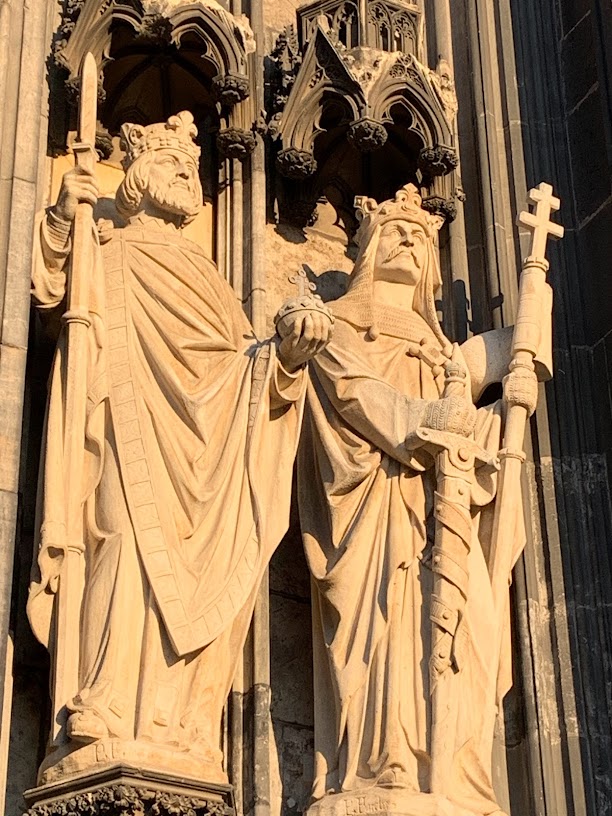
As in ancient Chinese philosophy, the old Greek, Egyptian, and Roman worlds, applied nature’s golden rule in the arts, architecture, and many other endeavors, striving to create synchronicity with nature.
On a collective level, we have to face the question of whether we have enough time to transform a system based on greed and exploitation, where only a small minority reap the rewards, into a value-based restorative nature-based system that serves the betterment of all living beings.
Reino Gevers – Author – Mentor – Speaker
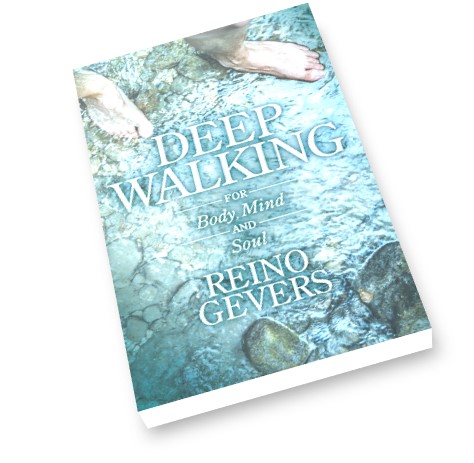
One more thing...This article is an extract from my new book “The Turning of the Circle: Embracing Nature’s Wisdom for Purposeful Living”. You can preorder a Kindle edition on Amazon. Both Kindle and Paperback versions will be available in July 2023.






 ReinosBlog