Tag Archives: community

Why we need each other: The longevity secret

“Consuming things does not satisfy our longing for meaning. We’ve learned that piling up material goods cannot fill the emptiness of lives which have no confidence or purpose.” Jimmy Carter

We’ve never been more connected and more alone. In the race for success, self-expression, and consumerism, something vital has been lost: deep, meaningful community relationships.

Active participation in a community can add years to your life and improve your overall well-being. Humans thrive when they feel at home in communities that serve each other.

Former U.S. president Jimmy Carter was well aware of this, serving his community well into old age and reminding us of our true strength and values.

Meanwhile, depression and anxiety rates are rising significantly in urban areas. Research shows that people in cities are more likely to suffer from mental health issues compared to those in rural areas.

In big cities such as Stockholm, Berlin, and London about half the population live in single-households with high density housing, and transient populations of students and professionals leading to weaker social bonds.

The “Blue Zones” and community bonds

However, in those parts of the world, the so-called “blue zones”, where people live the longest strong community bonds are a common denominator.

In Okinawa, Japan, the elders have moais or tight-knit social circles that provide lifelong support. In Sardinia, Italy and many other southern European regions, inter-generational living keeps elders socially engaged.

The Harvard Study of Adult Development, which has been running for over 80 years, consistently finds that close relationships and strong social bonds are the most significant predictors of long-term health and happiness.

On my more than a dozen pilgrimage walks through rural northwestern Spain I have repeatedly witnessed the strong community spirit in the villages and towns. Regular religious and cultural festivals are held to celebrate local saints or historical events. People of all generations are strongly engaged in these events, providing purpose and meaning.

The Power of Social Connection

  • Studies show that strong social ties can increase lifespan by up to 50 percent compared to those with weak social connections.
  • Loneliness and isolation are as harmful to health as smoking 15 cigarettes a day.
  • Close relationships help reduce stress, improve mental health, and boost the immune system.

Cultivating strong social ties is one of the most effective ways to enhance health and happiness over time. Faith, purpose, and community engagement are particularly strong factors for resilience and longevity. When people look after each other they are more likely to stay physically active, eat healthier, and seek medical care when needed.

Reino Gevers – Author – Mentor –Speaker

If you enjoyed this article you might be interested in my latest book: Sages, Saints and Sinners to be launched globally on April 8th, 2025.
Leave a comment

Filed under mental health, psychology, purpose

Mindful walking

Najera, northwestern Spain – Preparation for a lengthy pilgrimage walk is essential.  After eight days of walking many pilgrims are arriving at the Municipal Albergue in Najera with badly blistered feet and hurting knees.


bunkbeds

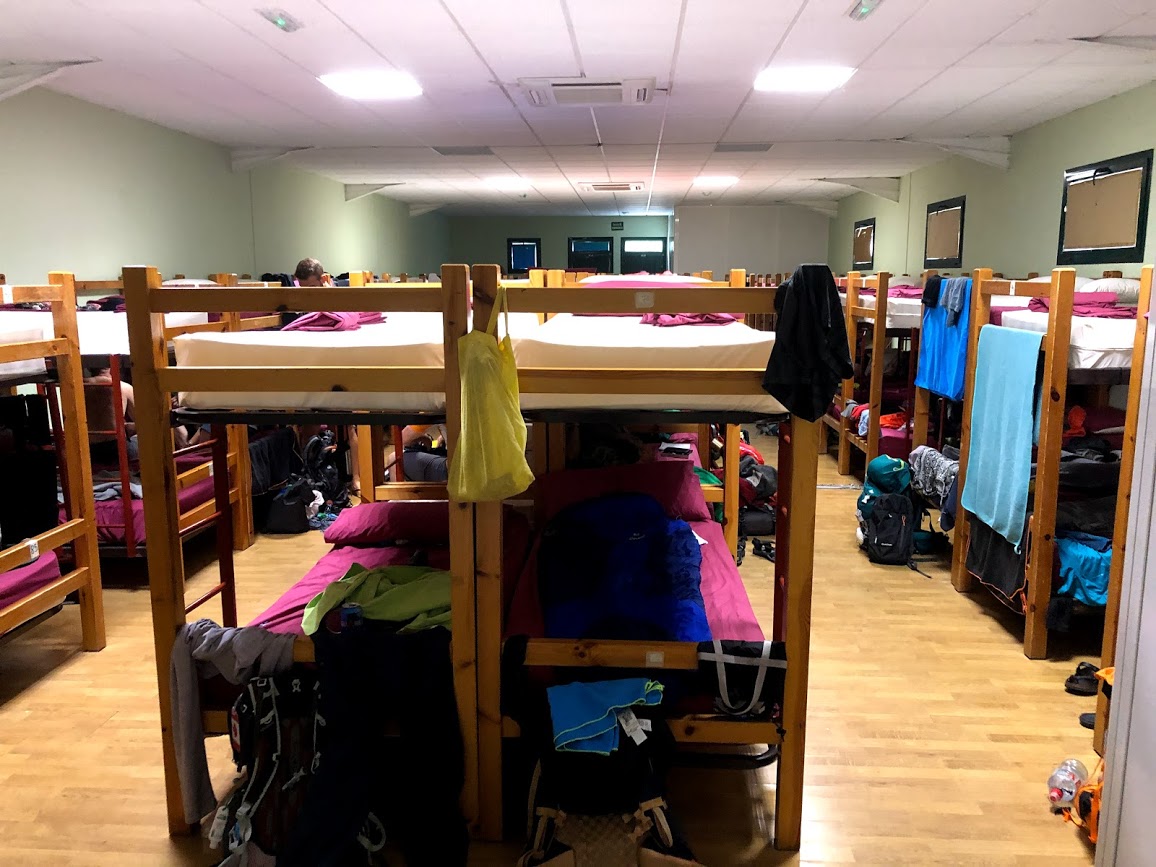
Bunk beds for 90 pilgrims in the Municipal Albergue in Najera 

Most people, who walk the Camino Frances to Santiago de Compostela, start in the French town of Saint-Jean-Pied-de-Port.  It takes the hiker up a steep climb of the Pyrenees mountains to the Spanish town of Roncesvalles.  It is a good 24 kilometer or seven to nine-hour walk. Even for trained hikers, this is no mean feat.


However, if you are wearing new boots and carrying a backpack full of unnecessary clutter, your walk will soon become a chore. The Camino is not only a physical challenge but even more so an emotional challenge. Much of the first few days of walking can rekindle old stuff you thought you had dealt with years ago. It is then comforting to know that there will always be other pilgrims walking with you, going through much of the same process.

bunkbeds.2

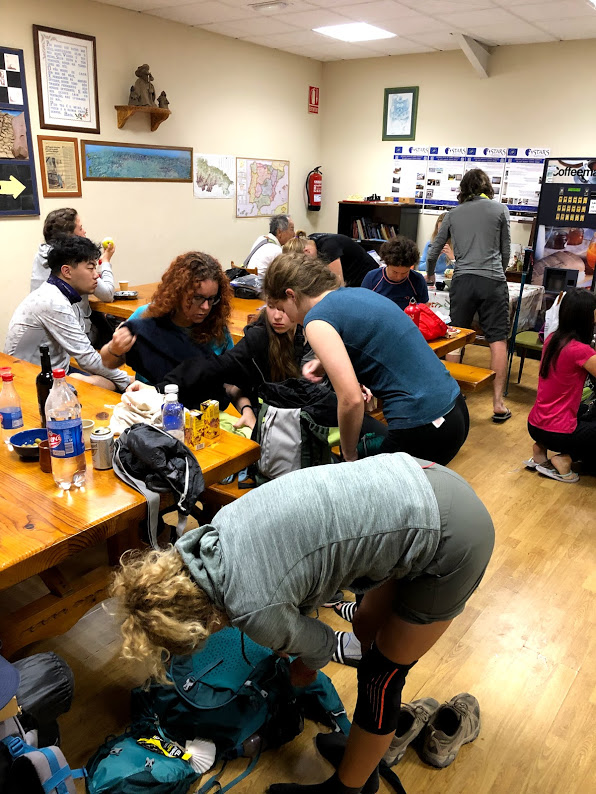
Getting ready for the day’s walk. The hostel has to be empty by 7.30 am latest

Three parts of the Camino

Some hikers describe the first stage of the Camino as the “path of crucifixion”, the second as the transition or the walk through the “valley of death” in the heat and dust of the Meseta between Burgos and Leon.  Several guide books describe this section as boring and recommend that the hiker skip the section by taking a bus. Most people who have walked it, however, describe it as a crucial part of the Camino that they would want to have missed. A absolutely agree.

A path of rebirth

I would describe the first two sections as the mindful preparation for the last section-the “path of rebirth or resurrection”.  It is when the pilgrim has moments of absolute euphoria, gratitude, and joy. It is the feeling of accomplishment after transmuting the old stuff into revived energy.  The three parts of the Camino however, can be experienced in some form or other each day. Getting up early in the morning after a bad night’s sleep in a crowded Albergue is a challenge where the mood can be at rock bottom.  This could all change an hour later when experiencing a beautiful sunrise on a mountain top with a bird of prey circling overhead.

Having walked the Camino more than a dozen times, I decided this year to give something back in serving as a volunteer in an Albergue or pilgrims’ hostel for two weeks.  There are between 50-70 pilgrims arriving here each day. It is an enormous privilege to hear the stories of why and how they are doing the Camino. Some are doing the path the third, fourth or fifth time. Most are walking the Camino for the first time.

It is a joy to observe people from many different nationalities and cultural backgrounds bond in this shared experience of the Camino. They mostly don’t understand each other’s language. But the language of shared experience shared meals, and shared emotional ups-and-downs are universal.

Reino Gevers – Author, Mentor, and Consultant

https://www.reinogevers.com

                                             applepodcast         

Leave a comment

Filed under Camino de Santiago, lifestyle management, meditation, Pilgrimage, psychology, Uncategorized

Are you living in a tribal bubble?

Our world is becoming dangerously fractured into tribal bubbles and we are losing our sense of a common humanity along the way.

As our world becomes more globally connected on a digital level, there is a growing tendency to align with a “tribe” that thinks, dresses, talks and believes in the same things that we do.

surya-prakosa-306484-unsplash

Photo by Surya Prakosa on Unsplash

Tribes have a tendency to build defensive walls against all those who are not members of the same community.  It is then only a small step away to see them as the enemy targeting our watering holes.

The divisive narrative on both sides of the political spectrum in the current politics is symptomatic. Extremist leaders whose narrative is threatening the very fabric of societies are being democratically elected.

We desperately need such wise leaders as Nelson Mandela, Mahatma Gandhi , Theodore Roosevelt and Dag Hammarskjöld who were multi-lateral and holistic in their thinking. Their narrative was one of serving a common humanity rather than a political ideology.

When wise leaders are at the helm,  the rest follow and an immense sense for the common good and higher purpose can result.

The western mind has very much lost its way. When there is a spiritual vacuum, loss of purpose and direction, it is fertile ground for demagogues. They fill the void in playing the “angst” game with nationalist or tribal rhetoric. Its us against them!  Political ideology has all the trappings of a pseudo-religion. Its black or white. A religious cult has the philosophy of either you believe what we tell you to or you will suffer eternal damnation.

An innate spirituality is liberated from belief.  It intuitively feels rather than believes itself connected to what is the fabric and the web that holds everything together on a different level.

When you live in a tribal bubble you will listen only to those people, and media outlets that share your opinion. You have a fixed belief and it becomes part of the ego and the self. Different opinions, irrefutable evidence and scientific fact are slated as “fake news” because they might threaten the image of a false identity that has been created.

If there is no willingness to even listen or to discern between the opinion and the humanity of the other, the inevitable result is confusion about those root cohesive and common values that solidify society.

Reino Gevers – Author, Mentor and Consultant

https://www.reinogevers.com


Leave a comment

Filed under ideology, lifestyle management, meditation, nature, psychology, purpose, self-development, Uncategorized

Following the path of the Holy Grail

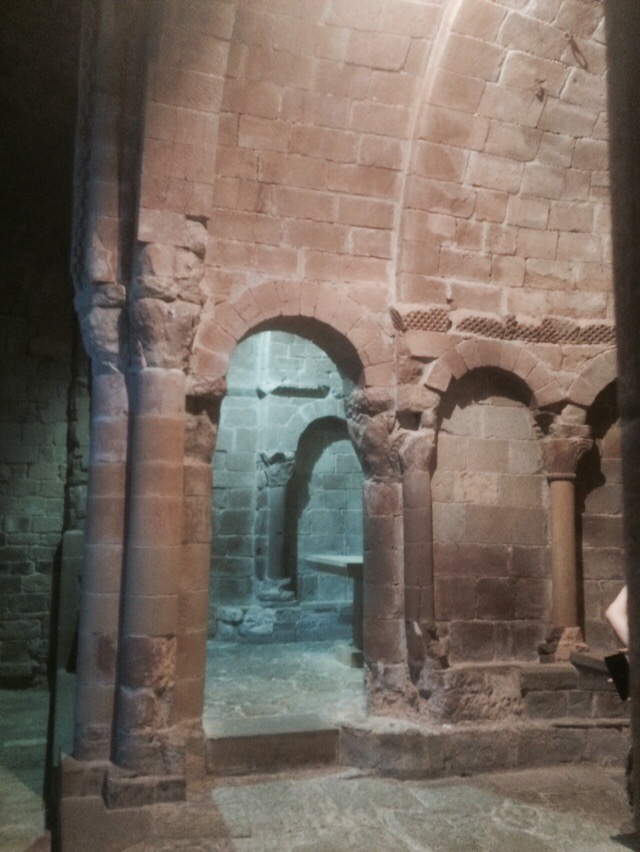
Nestled in a rock face near the Spanish city of Jaca is the ancient monastery of San Juan de la Pena. It dates back to the ninth century and by the 11th century became the spiritual and intellectual centre of the Kingdom of Aragon. According to legend the Holy Grail was kept here until the 14th century.

There is no final proof but It was believed to be the chalice used by Jesus during the Last Supper and the cup in which Joseph of Arimathea collected the Blood of Jesus on the Cross. Today the original is kept in the Cathedral of Valencia with a copy displayed on a stone altar in the old monastery.


Whether true or not, the monastery San Juan de la Pena is a mysterious and unique place. While on our recent walk on the Camino, I took a day to explore the area on the mountain from which there are spectacular views of the Pyrenees mountains in the distance.


The Monasterio Nuevo, or new monastery, further up the mountain is a much bigger complex. Its exterior has been rebuilt with a modern museum interior giving much insight on how the monks lived according to the Benedictine Order

The monastery had enormous influence not only in the ancient Kingdom of Aragon but throughout Europe of the early Middle Ages. The monks lived disciplined lives, following a daily routine of contemplation, work and study. Silence was highly cherished. The monks took a vow of silence and were only allowed to speak if it was absolutely necessary or when it was a good thought or blessing. It was obviously an atmosphere that was conducive to highly-focused study and inner spiritual work.

The exhibition in the new monastery illustrates a colorful history of rise and decay. The influence and success of this monastery in the early Middle Ages can be attributed to several factors that are good lessons for today’s corporates:

  • The monks were absolutely focused, disciplined and dedicated to their task
  • At the same time they did not exclude themselves from the outside world, honing the art of networking and relationship-building with the rulers and decision-makers of the time.
  • A charismatic abbot, or leader, was crucial in maintaining cohesion, discipline and respect
  • Basic material needs were catered for by the Kingdom with at times generous grants and donations

Its a mute point on whether the decay started in the year 1399 when the Aragonese King Martino V took the Holy Grail  to his palace in Zaragoza and when the monks asked for it back he tricked them with a replica. There were several fires that destroyed much of the monastery complex in the 17th century. Decay came in line with infighting and power struggles. Grants and privileges from the king were reduced and at times completely stopped. Loss of focus and purpose came in line with vows being broken and poor leadership.

An organisation is only as successful as long as its members are motivated to abide by the internal codes and ethics which always reflects on how it is perceived by those outside. There will always be circumstances that cannot be controlled, such as political change or upheavel. But it is how adaptable and flexible that organisation is to unpredictable changes, that will ultimately determine its survival.

Leave a comment

Filed under connection, energy, healing nature, life vision, meditation, monasteries, monks, organisational structure, powerbodymind, psychology, spirituality