Tag Archives: faith

Bridging Religion and Spirituality

“God is at home. It is we who have gone out for a walk.” – Meister Eckart

I have always struggled with taking the teachings of the Bible literally. Once, when I voiced my doubts to a pastor, he replied, “You just have to believe.” This answer left me unsatisfied, deepening my questions and nudging me further from conventional faith. Today, I see myself more as a spiritual seeker than a believer.

After much soul-searching, including walking many pilgrimage paths in northwestern Spain, I’ve come to feel and experience something profoundly vast and mysterious, far beyond the simplified image or concept of a personal “God.”

I find it hard to reconcile the notion of an all-powerful, loving God with the existence of suffering and a deity who punishes or abandons those who disobey or fail to believe. The God of the Old Testament is often portrayed as a father figure, demanding absolute obedience to doctrines meant to provide stability, certainty, and structure. Within this framework, dissenting interpretations and questioning of these truths were rarely tolerated and brutally suppressed.

Diversity as a core principle of creation

In my time spent contemplating nature, I have come to see diversity as a core principle of creation itself. In nature, every being continuously changes, adapts, and evolves. Those that resist adaptation ultimately fade, making space for species better suited to survive. To me, this endless process of growth and refinement mirrors experiential spiritual growth, which, unlike fixed belief, is fluid. Here, understanding is shaped by direct experience, reflection, and openness to change.

Different religions, like different races, and cultures are like a garden meant to complement and enrich each other. South Africa’s Archbishop Desmond Tutu pointedly once described it as:

“God’s dream is that you and I and all of us will realize that we are family, that we are made for togetherness, for goodness, and for compassion. God’s garden is diverse, with many colors and cultures, and all are precious in His sight.”

Creating peace through mutual respect and compassion

Embracing and accepting the diversity of cultures, faiths, and perspectives as a divine gift is the essential foundation for lasting peace in our world. When we see this diversity not as a source of division but as a beautiful, intentional expression of creation, we open ourselves to mutual respect, compassion, and understanding.

Each unique tradition, belief, and background can contribute its own wisdom, enriching the broader human experience. True peace arises from recognizing that our differences are not obstacles but opportunities to grow, connect, and celebrate a shared humanity within the wholeness of creation. .

Bridging science and religion

Albert Einstein, in his efforts to bridge science and spirituality, described a “cosmic religious feeling”—a deep awe at the order, beauty, and mystery of the universe. For him, this feeling didn’t arise from belief in a personal God but from reverence for something grand and beyond human comprehension. He didn’t see God as a being who intervenes, rewards, or punishes but as a metaphor for the universe’s profound mysteries. While he respected religion’s role in human ethics, he believed morality is a human endeavor rather than a divine dictate.

Spiritual understanding, I feel, is something that grows and adapts with experience, often diverging from the intended path to reveal unexpected landscapes. Such growth may not even be a choice. Sometimes we are forced onto the path of spiritual awakening by profound loss, pain or hardship.

Fixed beliefs can offer a foundation, while experiential spirituality allows expansion, reinterpretation, and deepening of understanding. The former might be expressed in ritual, prayer, and sacrament, while the latter can be found in meditation, contemplation, deep communion with nature, or service to others. Yet, the two need not be in opposition; instead, they can enrich each other.

As the 13-century Mystic Meister Eckart once reflected: “The most powerful prayer, one well-nigh omnipotent and the worthiest of all, is the outcome of a quiet mind. The quieter it is, the more powerful, the worthier, the deeper, the more telling, and more perfect the prayer is.”

Reino Gevers – Author – Mentor – Speaker

P.S. If you enjoyed this article you will be interested in my books available where all good books are sold.

Leave a comment

Filed under Uncategorized

Is religion stifling spiritual growth?

During my childhood in South Africa, I started having my first doubts about religion when clergy defended from the pulpit the abhorrent policy of apartheid and prevented a devout black priest from attending a church ceremony.

The message of salvation failed to resonate in the obligatory Sunday services which I found to be extraordinarily melancholy and joyless occasions, steeped in empty ritual. It did however serve the purpose of sending me onto a path of intensive ongoing spiritual exploration.

If you are one of those people who left the church in frustration after being shamed for thinking differently or questioning doctrine, then welcome to the club.

For centuries religious institutions have stifled spiritual growth and prevented people from living their divine purpose by telling them how to behave, what to believe, and even what politicians to vote for. This, for me at least, is the ultimate sin for which the church needs to take responsibility.

Spiritual but not religious

Especially younger people in Western countries are seeing through the hypocrisy and leaving the church in droves. But does that mean that more people are becoming agnostic, atheist, or have lost their belief in the divine?

Seven out of ten Americans describe themselves as spiritual in some way including 22 percent who say they are spiritual but not religious.

Even the first Christian communities were often divided between legalistic interpretations of the Gospel and experiential spirituality. There is a lovely passage in Galatians 5 of the New Testament of the Bible where St. Paul criticizes an early church in today’s Turkey.

Paul underscores the centrality of the Gospel, calling on the faithful to practice love, joy, peace, patience, kindness, goodness, faithfulness, gentleness, and self-control as opposed to the legalism of what foods to eat and what could and could not be done on a Sabbath.

Jesus, the ultimate revolutionary

Some 2,000 years ago Jesus broke all religious conventions by healing the sick on the Sabbath. He was eventually crucified when openly exposing the hypocrisy of the clergy, by dining with sinners, tax collectors, prostitutes, and other outcasts – who were excluded from the Temple.

Jesus never had plans to establish an institution or a church and would probably be horrified by what people are saying and practicing in his name today. When someone starts confronting me with the words: “Have you found the real Jesus?” it is for me a signal to run.

Temples, churches, and places of worship could be turned into sanctuaries of peace by opening their doors to people of all faiths. Many Christian churches however are stuck in tribalistic doctrine, especially when it comes to who is entitled to holy communion, abortion, or whether women can be ordained as priests.

Thriving churches, however, are vibrant meeting places for people joyfully dancing, singing, praying, and sharing meals together. In a positive sense, they can cement the community spirit, especially in urban environments where we have an epidemic of isolation and loneliness. These church members practice a living faith by visiting the aged, providing comfort to prison inmates, and refugees, and establishing food banks for the hungry.

Spiritual growth comes from a place of brokenness

There is a saying that religion is for those who fear hell while spirituality is for those who have been there. The seeds of spiritual growth come from a place of brokenness.

On my more than a dozen walks on the Camino in Spain I have met countless people who have gone through the hell of losing loved ones, confronted life-threatening illnesses, the dark holes of depression, financial ruin, and relationship breakdown. What I can say about all these people I’ve met on the Camino is that such life-changing events made them come out stronger, forcing them into deep introspection on the purpose and meaning of life.

A cosmic religion of the future

Experiential spirituality is a process whereby the shutters of the soul window are opened. It is a feeling of connection with the divine, and the mystery of creation. The great scientist Albert Einstein once said that the religion of the future will be cosmic in nature. 

“The most beautiful and deepest experience a man can have is the sense of the mysterious. It is the underlying principle of religion as well as all serious endeavors in art and science. He who never had this experience seems to me, if not dead, then at least blind,” Einstein is quoted as saying.

The Dalai Lama, the spiritual leader of Tibetan Buddhism, encourages individuals to go beyond the superficial differences among religions and recognize the deeper essence of spirituality and morality that can be found in all faith traditions. 

The fundamental principles of compassion, love, and ethics are not limited to any particular religious tradition or belief system. These principles, the Dalai Lama believes, are universal.

Already early into this year, a record number of pilgrims are walking the Camino. All share the common quest that has resonated through the ages:

“From whence do I hail? Whither do I journey? What purpose guides my days ahead?”

In echoing the ancient Sages and Mystics, emphasizing the innate spirit of man: Where there is a lighthearted spirit of joy, peace, positivity, and kindness, negativity and darkness recede.

Reino Gevers – Author – Mentor – Speaker

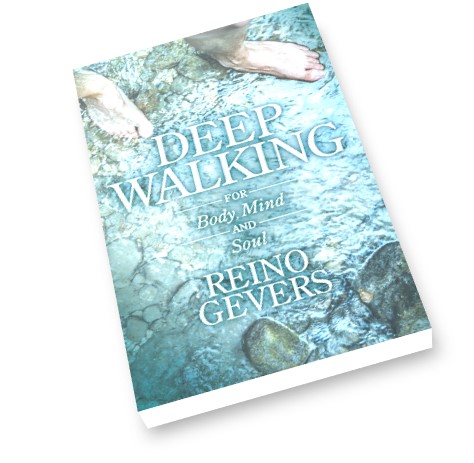
P.S. I’m excited to announce the release of my latest book, “The Turning of the Circle: Embracing Nature’s Wisdom for Purposeful Living.” If you enjoy it, you might also be interested in my previous works, “Deep Walking for Body, Mind and Soul” and “Walking on Edge: A Pilgrimage to Santiago.” You can find all of these titles at reputable bookstores near you.

Leave a comment

Filed under Camino de Santiago, happiness, humanity, meditation, mental health, psychology, self-development, spirituality