Tag Archives: lifestyle

The dragnet of regret

How often have you caught yourself going back into the past with the feeling of regret on the opportunities missed, the words you wished you had never said, and the things you would do differently if you could turn back the clock?

At times the feeling of regret can be so overwhelming that it’s like a dragnet pulling you down into a dark abyss of unhappiness. But according to author Daniel H. Pink regret is a fundamental part of our lives and can help us make smarter and better decisions in the future.

Based on the World Regret Survey, Pink has identified four core regrets.

Foundation regrets. These are regrets on the human need for some form of stability. Pink quotes Jason who says: “I regret not saving money diligently ever since I started working. It’s nearly crushing every day to think about how hard I’ve worked for the last twenty-five years or so, but financially I have nothing to show for it.”

Boldness regrets. Over time we are much more likely to regret the chances we didn’t take than the chances we did, whether its work choices, education or the choice of a partner. Foregone opportunities can be especially haunting during times of stress and pain.

Moral regrets. Most people wish to be seen as good people. But over time morally dubious decisions can be gnawing such as swindling in a business or cheating on a spouse.

Connection regrets. According to Pink fractured or unrealized relationships with spouses, partners, parents, friends, and all other close relationships constitute the largest deep structure category of regret.

Photo by Liza Summer on Pexels.com

We can set very high standards to the self and are at times our own worst critic. The melancholy sadness and regret over that which was and is no more is not only debilitating but prevents you from moving forward. Many of our regrets can in fact be undone by making amends, reversing bad choices, and taking a different perspective by posing the questions: What did I need to learn and how can I make a better choice in moving forward? If I’ve harmed others, can I make amends through an apology or some form of emotional or material restitution?

Was the regret merely an unpleasant incident in your life or does it define your life? Practicing self-care and self-compassion can neutralize some of those feelings if you treat yourself like you would be treating your best friend.

You forge your identity with the story that you tell yourself. The first step is acceptance of that feeling or emotion of regret and replacing it with a positive thought moving forward. “I made a bad decision. I feel terrible about it. But I lovingly accept myself the way I am. I am harvesting from the rich experience and moving positively forward.”

In loving yourself you build the ability to nurture and better serve your relationships. The lesson of a door slammed shut is to do better next time.

Reino Gevers – Author – Mentor – Speaker

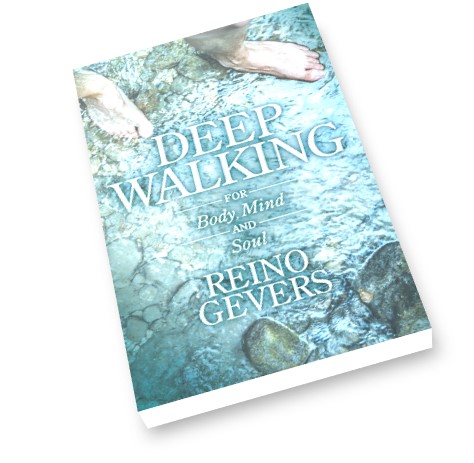
P.S. If you’ve found this article of interest you might want to read more in my books. “The Turning of the Circle: Embracing Nature’s Wisdom for Purposeful Living” has just been published. You might also find my other books “Deep Walking for Body, Mind and Soul” and “Walking on Edge: A Pilgrimage to Santiago” of interest – available where all good books are sold.

Leave a comment

Filed under mental health, mental-health, Uncategorized

The biggest threat to humanity is not what you think

In terms of the public narrative humanity is very much threatened by external threats such as the environmental crisis and a potential nuclear war, failing to pinpoint the major underlying cause why the vast number of human beings appear to be unaware and unable to solve the problems threatening our species.

Stress lies at the core of many relationship breakdowns, health problems, financial woes, and preoccupation with drama. The weight of past and current emotional stress is preventing millions of people from living their full potential and elevating human consciousness to another level.

Grievance culture spread by mass media is amplifying the twin shadows of anger and melancholy sadness. A person under mental and physical stress with emotions running out of control has literally lost his mind. This is what happens:

The oldest part of the brain the Amygdala, also known as the reptilian brain, is responsible for the fight or flight response that is triggered immediately when we are under duress. We feel increased anxiety, fear, or anger. Impulse control or rational thinking that we find in the prefrontal cortex of the brain is shut down.

Elevated levels of stress hormones in the body such as cortisol can further impair emotional response. Trauma from the past can be triggered by a mere thought if we have not learned how to transmute that thought.

How many adults in the world are living in the bodies of the hurt inner child?

Carl Gustav Jung, the notable Swiss psychiatrist, and psychoanalyst, often referred to these unconscious aspects of the human psyche that collectively posed the greatest threat to humanity. A repressed hurt or denied aspect of the “shadow” of the human personality could manifest in destructive behaviors on a larger scale.

A repressed feeling or hurt can be a boiling cauldron just waiting to explode as we have seen and are seeing in many tyrants and authoritarian rulers.

Many historians believe that the roots of Adolf Hitler’s cruelty were buried in his childhood. An abusive father and several other personal humiliations following Germany’s defeat in World War I may have contributed to Hitler’s deep-seated anger, resentment, and desire for power and control.

But while some abused children end up being angry and resentful adults others manage to transmute such trauma into something positive. A mind at peace has learned to reconcile itself with the past.

How do you create peace of mind?

It is still somewhat of a mystery why some people learn and grow from adversity while others succumb to the blame game and stay stuck in the quagmire of grievance culture.

One of the key factors appears to be the capacity of self-reflection and willingness to engage in personal growth. Persons willing to examine their thoughts, beliefs, and behaviors gain valuable insights into their patterns and make necessary changes. It involves the humility of taking responsibility for one’s actions, and actively seeking out personal development resources, such as therapy, counseling or mentoring.

You are never done in the self-healing and self-development process. The higher you develop your spiritual consciousness and leadership skills, the higher will be your challenges but also your opportunity for further growth. Zen masters encourage practitioners to embrace adversity as an essential part of life’s journey. They teach that difficult circumstances provide opportunities for growth, self-discovery, and spiritual development. Adversity can be a catalyst to dig deep into inner resources and wisdom.

Take a walk in nature

Some of the world’s greatest writers, philosophers, and musicians spent alone time walking in nature to realign and stimulate their creativity. Meanwhile, several studies conclude that natural sounds such as the flowing waters of a creek, bird song, and the blue and green spaces significantly help reduce stress hormones in the body, lowers blood pressure, and improve heart variability.

The mere act of walking can release endorphins, reduce stress, and improve your mood, which can, in turn, enhance cognitive function and creative thinking. By stepping away from the distractions and demands of daily life, you can enjoy a sense of freedom and foster a deeper connection to the higher self.

Henry David Thoreau, the renowned American writer, philosopher, and naturalist said: “In wildness is the preservation of the world. Every tree sends its fibers forth in search of the wild. The cities import it at any price. Men plow and sail for it. From the forest and wilderness come the tonics and barks which brace mankind.”

Reino Gevers – Author – Mentor – Speaker

One more thing...If you have found this article interesting you might want to subscribe with the “follow” button above or recommend my FREE weekly Blog to friends and family. My books can be ordered at all places that sell good books in both paperback and kindle.

Leave a comment

Filed under meditation, mental health, mental-health

Doing or Being?

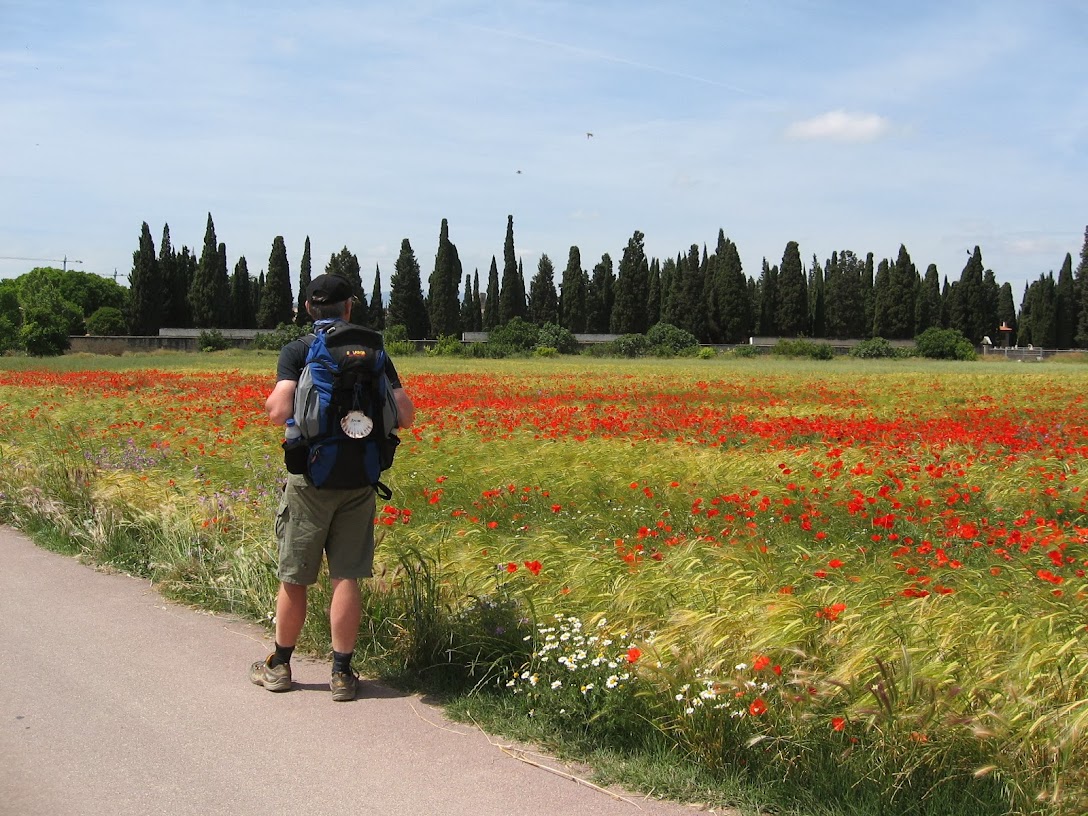
Some years ago I was not in a very good place stuck in a dysfunctional relationship and a stressed-out job. My thoughts revolved around starting to live at some point in the distant future. A friend who took pity on me advised me to walk the famous pilgrimage route, the Camino de Santiago in northwestern Spain.

Like many first-time walkers on the Camino, I was obsessed about reaching my destination at a certain time in order to secure my place in a bunk bed in a pilgrims’ hostel. The Camino is in so many ways an analogy of life which is why it has become such a popular destination for modern-day spiritual seekers.

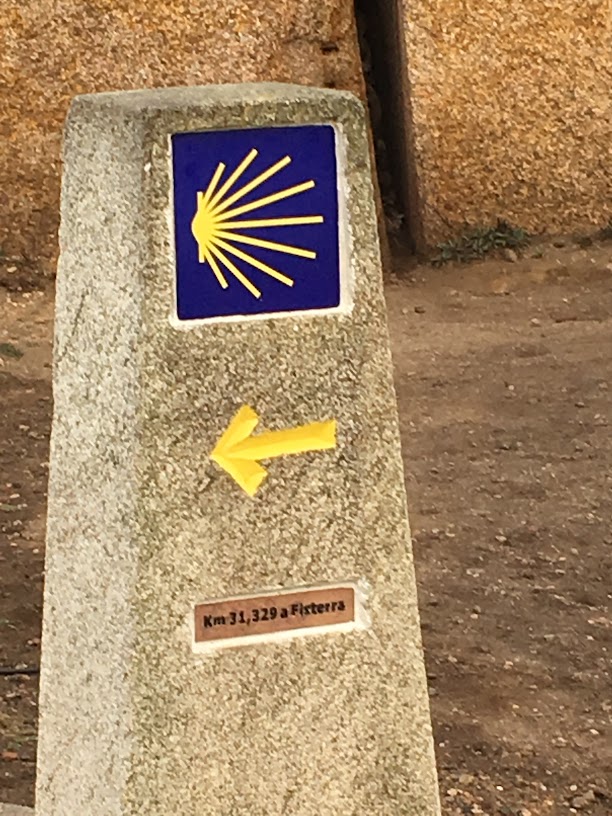
Walking too fast and missing the waymarker

With a backpack much too heavy, poor-quality hiking boots, and a hurting foot I was battling both physically and emotionally. There is a saying that if you walk the Camino like a hiker with physical intent it will force you into humility. While walking too fast, I missed the waymarkers and got horribly lost. At one point I had to seek refuge in a grotto during a heavy thunderstorm in the Pyrenees mountains, far off my route.

How many times in life does the universe send warning whispers that we have missed a waymarker and are on the wrong path? How obsessed are we with things we think we need but insist on keeping them in our backpack?

Forced to go much slower, I gradually felt my senses reawakening to the magic of the moment. I started inhaling the aroma of wild thyme, rosemary and oregano. I added mint to my water bottle. A singing blackbird followed me for part of the way. I befriended stray dogs and cats and met wonderful people who are still friends today. For the first time in many years, I felt an aliveness and vibrancy in my body.

Trapped in doing rather than BEING

Over the years, I’ve observed other pilgrims going through the same process. Hikers would pride themselves on the number of kilometers they had done that day. People doing the route on a bicycle would go into tunnel vision, oblivious to the sights and sounds around them. If you are trapped in the rat race of doing rather than BEING it is difficult to push the reset button overnight. At the end of the day, slow and mindful walkers would converse on the magical experiences they had that day while those in a race would look at them in disbelief.

So much of our lives are wasted carrying the weight of the past, and living in some distant future working for time-off at the weekend, the annual vacation, and the years when we can start living when retiring from a job we always hated. When the day finally comes, we live the final years of our life in regretful grumpiness of what was and is no more.

It helps to train your awareness that life is finite and that you will die one day. With your last breath, you will leave this earth into formlessness. You won’t be taking any of your precious earthly possessions with you. All that remains will be consciousness.

So you might as well stick around a little longer and enjoy the moment. Practicing mindfulness is ideally done in the stillness of nature.

  • Focus your attention on your breath. Observe your thoughts and sensations without judgment. By consistently practicing mindfulness, you can cultivate a heightened sense of awareness and presence in your everyday life.
  • Engage Your Senses: Pause and notice the sights, sounds, smells, tastes, and physical sensations around you. Fully immerse yourself in the present moment by bringing awareness to the details of your sensory experiences.
  • Slow Down and pay attention: Challenge yourself to slow down and be fully present in each moment. Whether you’re eating, walking, or engaging in any other daily activity, do it with intention and attentiveness.

Reino Gevers – Author – Mentor – Speaker

One more thing...If you have found this article interesting you might want to subscribe with the “follow” button above or recommend my FREE weekly Blog to friends and family. My books can be ordered at all places that sell good books in both paperback and kindle.

Leave a comment

Filed under Camino de Santiago, mental health, mental-health, self-development, spirituality

Blinded by the glare of the things

“The five colors blind the eye; The five tones deafen the ear; The five flavors dull the taste. Racing and hunting madden the mind; Precious things lead one astray.” – Lao Tzu

We are living in an age where technological progress has generated prosperity for a vast number of people and created a lifestyle for the average person that the most powerful kings and queens in the Middle Ages could not ever have imagined. Life expectancy, health care, mobility, and hygiene are at unprecedented levels in human history.

Individual self-realization, self-interest, and ambition have been powerful motivators for societal progress. But it appears we are at a tipping point where technological leaps are far greater than the mental capacity to deal with these changes. The unchecked pursuit of wealth and extraction of natural resources are threatening the survival of our species.

We have become blinded by the glare of the 10,000 things. We are drowning in information and misinformation and starving in wisdom that promotes a culture of spiritual awareness, empathy, fairness, and social responsibility.

The biblical story of the dance around the golden calf is timeless in its relevance. The Israelites had become impatient living in the desert, losing their trust in God. They then fashioned a golden calf with jewelry collected from the people, worshipping and dancing around the calf in revelry while their leader Moses was away in the mountains receiving the ten commandments from God.

Photo by Pixabay on Pexels.com

The story serves as a warning against losing the moral compass and placing worldly desires above a genuine relationship with the divine, the true self. and purpose in life. Underlying the insatiable desire for new things is the misconception that power and wealth are equal to happiness. The predominant messaging of our culture is consumerism, social status, and material wealth.

There is nothing wrong in enjoying material abundance and prosperity. But making it the primary objective in your life, and becoming overly attached to “things” will inevitably lead to suffering and pain. The perspective changes completely for people suddenly confronting a life-threatening disease or facing the fear of losing a loved one.

The antidote to greed is the reconnection to our interconnectedness with all things living.

Reconnecting with interconnectedness involves recognizing and embracing the understanding that all beings and elements in the world are interconnected and interdependent. Building wisdom is like building a muscle. It’s an ongoing process. Key points to consider:

  • Awareness and Mindfulness: Practice being fully attentive to the present moment, observing the connections between yourself and your surroundings. You can do this by focusing consciously on your inhaling and exhaling breaths. Meditation practices, journaling, gratitude rituals and other self-care habits will help cultivate care for others. ,
  • Deep Walking: Deep walking is more than a hike. It is a spiritual experience where you develop a deeper connection to the natural world, observing the intricate interdependence between yourself, plants, animals, and the environment. By spending more time in the green and blue spaces of nature you extract yourself from the rat race of external distractions. Finding these moments of stillness will make you aware that life is finite. You cannot take your material possessions with you into the afterlife.
  • Compassion and kindness: Cultivate compassion and empathy towards others. Recognize that every person you encounter is connected to you in some way, sharing the same basic human experiences and emotions.
  • Relationships: Recognize that your actions, thoughts, and emotions have an impact on those around you, just as their actions, thoughts, and emotions affect you. Nurture and foster positive connections with others. The five people you spend most of your time with have a major impact on your value system, mannerisms, and state of mind.
  • Service and community: By helping others, you are contributing to the greater interconnected whole. Engaging in acts of altruism and service can deepen your understanding of interconnectedness by experiencing the positive ripple effects of your actions.

Reino Gevers – Author – Mentor – Speaker

One more thing...If you have found this article interesting you might want to subscribe with the “follow” button above or recommend my FREE weekly Blog to friends and family. My books can be ordered at all places that sell good books in both paperback and kindle.

Leave a comment

Filed under mental health, mental-health

The lucky farmer?

Once upon a time, a farmer lived in a small village in China with his only son. He was a poor man because he had only one horse.

One day the horse disappeared and the farmer no longer had a horse to help him plow his field.

The other villagers came to the farmer, expressing their sympathy. „We feel so sorry for you. This is such bad luck.“

„We’ll see,“ said the farmer. „Good luck or bad luck. Time will tell.“

Some weeks later, the horse returned in the company of several other horses.

Astounded the villages came to the farmer. „You are so lucky. Now you have many horses and are a rich man.“

The farmer listened to them thoughtfully. „We‘ll see. Good luck or bad luck. Time will tell.“

Photo by Baru0131u015f Karagu00f6z on Pexels.com

Soon afterward his son fell from one of the horses and broke his leg.

Again the villagers came to express their sympathies, „such bad luck,“ they said. „Now you have nobody to help you.“

„We‘ll see,“ said the farmer. „Good luck or bad, time will tell.“

The next day, the Emperor’s army came to the village to conscript all able-bodied young men for the war, but the farmer’s son was exempted because of his broken leg. 

Again, the villagers came to the farmer and congratulated him on his good fortune, but the farmer simply replied, “We’ll see.”

As it turned out, the war was a disaster for the Emperor’s army, and all the young men who had been conscripted were killed. Once again, the villagers came to the farmer and praised him for his good luck, but the farmer simply replied, “We’ll see.”

The story’s moral is that good luck can often turn out to be bad luck and vice versa. 

The Taoist teachers telling this story advise their students to remain free from attachment. Wealth or poverty, death or birth, fortune or misfortune are often intertwined with everything underlying the law of impermanence.

If you are currently in a bad spot, be assured that this too shall pass. If you are currently rolling high, enjoy the moment as it lasts but don‘t get attached.

Millions of people playing the lottery each week think all their problems will be over if they win the jackpot. Many of those who indeed then win the lottery end up being miserable and even committing suicide because they haven‘t solved the underlying issue that is torturing their soul. Here you will find more information on the bankrupt statistics of lottery winners.

Or, are you one of the people counting the months and years until you can finally retire and start to live? 

Be appreciative and mindful of life’s small miracles in the here and now. Focus your mind more on BEING rather than HAVING.

Ultimately everything is grace. From the day you were born, you began a journey to becoming who you really are.

Reino Gevers – Author – Mentor – Speaker

One more thing...If you have found this article interesting you might want to subscribe with the “follow” button above or recommend my FREE weekly Blog to friends and family. My books can be ordered at all places that sell good books in both paperback and kindle.

Leave a comment

Filed under mental health, mental-health

The things blocking you from living your soul purpose

“The purpose of life is not to be happy. It is to be useful, to be honorable, to be compassionate, to have to make some difference that you have lived and lived well.” – Ralph Waldo Emerson

The ancient mystic teachers believed that the ultimate purpose of the human cycle was to become whole, emphasizing that each person has a unique mission to play in the cosmic order. But with the pull of external distractions, you might feel estranged from this sense of purpose and will need to take concrete action.

Energy-depleting habits can creep into your life and you would have to react with a clear structure to realign body, mind, and spirit.

There is a general misconception that happiness equals external validation of material success and fame. The search for soul purpose is stuck in the “I” as opposed to the “we”. It’s the reason why many of the world’s most “successful” people are successful on one level but terribly unhappy on a soul level. A few of these exceptional individuals have however transmuted this unhappiness into causes that serve the greater good.

One of the most gifted men on the tennis court, Andre Agassi struggled with addiction for most of his professional career, which he details in his autobiography “Open”. He in reality hated tennis but then realized that his fame as a tennis player could be a platform to do greater good.

Coming back after brokenness

He established the Andre Agassi Foundation for Education, which focuses on improving the education system in the United States. The creation of the foundation stemmed from Agassi’s own personal experiences of feeling lost and unprepared for life after tennis. He recognized that many children in the United States faced similar challenges, particularly those from underserved communities, and wanted to help provide them with the tools and resources they needed to succeed in life.

“You can’t spread who you are without being broken first. Sometimes, when you’ve been broken into pieces, you come back and give much more to people. You can see my scars and they’re key to me making a difference in other lives now,” he said in an interview.

Soul purpose is a journey. The whole of life is a discovering journey of your soul purpose. Often the end of one journey, the death of one “life” is the initiation process into another life, yet ultimately a journey of growth, redemption, rectification, and wholeness.

Photo by Krivec Ales on Pexels.com

The obstacles of procrastination and distraction

Implementing a daily structure into your life is key to preventing procrastination and distraction, which can be the two biggest obstacles to realigning with your soul purpose. With every year passing you realize that life is finite and that you need to do something to live a life that is more fulfilling, healthier, and happier.

But most New Year resolutions fail after only a few short weeks because the plan you made is too ambitious. Start with a few small steps that are achievable. If you want to write a book start by writing a few words each day. If you want to exercise more start by doing a five-minute routine first and then gradually increasing it day by day. If you want more abundance in your life start by making a mental note of all the small miracles and blessings in your life right now.

We are often the harshest critics of ourselves. The inner voice telling you: “I’m not good enough. I’m not deserving. It’s not worth trying. I will get a no anyway.” The kinder and more loving you are of yourself, and the more you speak to yourself in a positive sense, the more this will reflect in the external world. There are no shortcuts. You have to do the inner work. By understanding and loving yourself you will be in a much better position to do the same for others.

You can boost your vibrational level with the following daily routine:

  • Exercise: Any physical activity lasting more than 15 minutes will boost your metabolism and mood
  • Spend time in nature: Study after study confirms that spending time meditating in the blue and green spaces of nature will reduce stress levels and open your senses to the whispers of the universe.
  • Train the mind: Read good books that will feed your mind with knowledge and wisdom. Make a habit of reading a chapter each day.
  • Understand yourself by journaling and making notes of the key lessons you have learned during the past 24 hours.
  • Gratitude: Implement a gratitude ritual before the start of each day. It is the small miracles of life that really count.
  • Community: Join a community and engage in voluntary work that will connect you to the feeling that your are here to do something for greater good.

Why not just have fun and enjoy the journey in the here and now.

Reino Gevers – Author – Mentor – Speaker

One more thing...If you have found this article interesting you might want to subscribe with the “follow” button above or recommend my FREE weekly Blog to friends and family. My books can be ordered at all places that sell good books in both paperback and kindle.

Leave a comment

Filed under mental health, mental-health

Healing the inner wound

When heartbroken or in pain every feeling is sharper. You are more sensitive and will be opening the gateway to your intuition. It is an opportunity of connecting to your soul. Yet we often prefer to numb these feelings by fleeing into distractions.

Life happens and a loss can be very painful to deal with. Society will be indoctrinating you with the mantra that you should just deal with it and you put on that false smile to the external world.

It‘s the reason why most „selfies“ and postings on social media share primarily happy moments or a false identity. You don‘t want to hear about the breakups, the deaths, the financial travails, and mental challenges.

But the body always keeps the score. Suppressed feelings and trauma seek other avenues. It is one of the many reasons why psychosomatic and mental illnesses are skyrocketing with an estimated 800 million people worldwide suffering from some type of mental health disorder.

When an inner wound has not healed it is also all too easy to numb that wound with addiction. These could be anything from alcohol, overeating, shopping sprees, and spending hours watching Netflix. A powerful addiction is to a false sense of self that goes into war mode each time it feels threatened by a different opinion, belief, or mindset. 

Suppressed inner feelings and emotions will inevitably seek an avenue where the body or the personality is the weakest.

A seemingly insignificant event on the other end of the world might trigger a deep sadness. An inconvenience such as a delayed flight or someone „stealing“ your parking causes an angry outburst far in disproportion to the incident.

Worse still, the suppressed emotional wound finds expression in a life-threatening disease.

Photo by Rodolfo Quiru00f3s on Pexels.com

Whatever loss you have suffered you need to acknowledge that anger, that sadness, that feeling of emptiness or self-blame. It is the first step in the healing process. The famous psychotherapist Elisabeth Kübler-Ross describes five stages of dealing with the pain and loss of a loved one: Denial, anger, bargaining, depression, and finally acceptance.

It is much easier to transition and transmute a difficult situation if you seek a professional who can guide you through the process. He or she could offer tools that enable you to take a different perspective.

In retrospect, many of the most difficult chapters in your life can turn out to be an education in higher consciousness or have made you a more compassionate understanding human being. 

Awareness to the truth of your human vulnerability, weaknesses, fault lines, and authentic identity and at the same time practicing self-love will make you immune to the pull of external manipulation.

Showing vulnerability will connect you more deeply to your fellow human being. They are the building blocks of healthy friendships and relationships. Elementary, empathic human connection is ultimately the most important element in living a quality life of bliss.

As John Lennon dreams in his song “Imagine”:  “Imagine all the people living life in peace. You may say I’m a dreamer, but I’m not the only one. I hope someday you’ll join us, and the world will be as one.”

Reino Gevers – Author – Mentor – Speaker

One more thing...If you have found this article interesting you might want to subscribe with the “follow” button above or recommend my FREE weekly Blog to friends and family. My books can be ordered at all places that sell good books in both paperback and kindle.

Leave a comment

Filed under mental health, mental-health

Moving beyond religion

One of the greatest obstacles to the elevation of consciousness is a mindset cemented into the “isms” of fixed belief, ideology, religion, or philosophy. It has been the root cause of much human suffering over the centuries.

With much of traditional religions having succumbed to the practice of empty rituals, the spiritual vacuum is being filled by political preachers and ideologues fanning the flames of fanaticism.

If the shutters to the mind remain closed there is no sunlight that can penetrate the inner room. The mind is captured in the conceptual prison of a one-sided truth. All the others are wrong, belong to the wrong crowd, the wrong tribe, and the wrong race, gender, or religion. There is a disconnect with soul authenticity.

Yet, innately we are spiritual beings living in a human form.

In a famous 1959 BBC interview, Carl Gustav Jung was asked whether he believed in God. The pioneering psychiatrist and psychoanalyst responded: “I don’t need to believe, I know.”

At the time the remark caused some controversy because Jung did not subscribe to a particular religion or doctrine but viewed spirituality as a fundamental aspect of human nature that could be explored through personal experience.

In a similar vein, the great scientist Albert Einstein was skeptical of organized religion and the concept of a personal God, but had great respect nevertheless for the ethical teachings of especially Buddhism and Judaism.

In Ideas and Opinions Einstein stated, “In their struggle for the ethical good, teachers of religion must have the stature to give up the doctrine of a personal God, that is, give up that source of fear and hope which in the past placed such vast power in the hands of priests.”

The human mind is too small to grasp the universe

According to Einstein, the universe is vastly complex and the concept of “God”, as explained by religion, far too simplistic.

“The human mind, no matter how highly trained, cannot grasp the universe. We are in the position of a little child, entering a huge library whose walls are covered to the ceiling with books in many different tongues. The child knows that someone must have written those books. It does not know who or how. It does not understand the languages in which they are written.

“The child notes a definite plan in the arrangement of the books, a mysterious order, which it does not comprehend, but only dimly suspects. That, it seems to me, is the attitude of the human mind, even the greatest and most cultured, toward God. We see a universe marvelously arranged, obeying certain laws, but we understand the laws only dimly. Our limited minds cannot grasp the mysterious force that sways the constellations.”

Einstein was convinced that everything was determined by forces over which we have no control, all of creation from the insect, to the human being and the stars dancing “to a mysterious tune, intoned in the distance by an invisible piper.”

Religion has for eons imposed it’s view of God and creation on humanity, most often using it as an instrument of control and manipulation. Those who did not conform to conventional doctrine and dogma were at times and still today in some countries are brutally persecuted.

A unifying force permeating creation

Many of the Mystic teachers tend to avoid using the term “God” because of the many misunderstandings this has caused.

Instead of a judgmental deity, they rather speak of a unifying force that permeates all of creation. Rather than believing in dogma or theology imposed externally by a religion they believe that “God” can be experienced through contemplative practices such as meditation, prayer, and mindfulness practices such as deep encounters with nature, art, and music.

Einstein’s hope was that the “religion” of the future would be “a cosmic religion” liberated from dogma and theology.

“Everything is energy and that is all there is to it. Match the frequency of the reality you want and you cannot help but get that reality. It can be no other way. This is not philosophy. This is physics.”

The parallels between the thinking of physicists such as Einstein and the Mystics of the early Middle Ages is profound.

The 13th-century Mystic Meister Eckart believed that God was beyond all form and creation and that the ultimate goal of the spiritual path was to transcend the limitations of the physical world and attain union with the divine. God was present in all things, and everything in creation was a reflection of the divine, the physical world an expression of the spiritual realm.

To put it simply creation is constantly changing form in an endless cycle of birth, life, death, and rebirth. Our purpose in life is to grow and evolve into ever higher consciousness.

The spiritual teacher and author Richard Rohr emphasizes the importance of recognizing the divine in all people, regardless of their background or beliefs. He believes that love and compassion are the most important aspects of spirituality and that they should be expressed through service to others and a commitment to social justice.

The Irish, poet, philosopher, and priest John O’Donohue describes the beautiful complexity of growth in consciousness within the human soul:

“It is helpful to visualize the mind as a tower of windows. Sadly, many people remain trapped at the one window, looking out every day at the same scene in the same way. Real growth is experienced when we draw back from that one window, turn, and walk around the inner tower of the soul and see all the different windows that await your gaze. Through these different windows, you can see new vistas of possibility, presence, and creativity. Complacency, habit, and blindness often prevent you from feeling your life.”

Reino Gevers – Author – Mentor – Speaker

One more thing...If you have found this article interesting you might want to subscribe with the “follow” button above or recommend my FREE weekly Blog to friends and family. My books can be ordered at all places that sell good books in both paperback and kindle.

Leave a comment

Filed under meditation, mental health, mental-health, spirituality

Debunking the myths on job burnout

Burnout is a state of complete mental and physical exhaustion after prolonged exposure to emotional or physical stressors. It can affect entire institutions and wreak havoc on personal lives to the extent that individuals in extreme cases are no longer able to cope with the challenges of a normal life.

But there appear to still be many myths around the topic, especially in the corporate world where those affected by job burnout are regarded as lacking in stress resilience.

Chronic burnout can include a high level of stress hormones such as glucocorticoids, catecholamines, and prolactin. These are needed for the body’s natural fight and flight response but if you have too much of them it can lead to serious health problems and even life-threatening diseases because vital organs don’t get the necessary nutrients.

Having spent more than half of my life in an employment capacity in the media industry, I went through the complete cycle of passionately enjoying my job to utter frustration and pulling the plug shortly before burnout.

One of the most common myths is that job burnout is related to work stress caused by short deadlines, overly high productivity demands, and unrealistic management or customer demands.

This is only part of the story. If you are passionate about your job and have a high degree of independence in deciding when to do what and for him, you will not perceive stress as such. Instead, you will feel pumped up, and energetically vibrant. We all know that feeling, of having accomplished something in a game or sporting event. It is the same feeling you will be getting if you truly feel that you are doing something that is aligned with your soul purpose.

The modern-day working place has become essentially dehumanized

Most corporate jobs have been dehumanized to such an extent that individuals find themselves stuck in big offices with several hundred other people. Furnishings are standardized and employees are prohibited from decorating their desk with personal items such as pics of their loved ones. Employees don’t burn out overnight. It is mostly a process lasting several years where employees consistently lose the sense of meaning for what they are doing and their personal value system is in disconnect from the values of the company.

In my case, I became a journalist in apartheid South Africa, feeling the need to give a voice to those suffering discrimination. Later , after joining an international news agency in Germany I was able to write extensively on topics close to my heart such as Third World and environmental issues. Journalism, in some media at least, was tasked with informing, educating and acting as a watchdog over those in power. The disillusion began when more and more media shifted from education to entertainment of the worst kind. Today we witness the absurdity of mass media clouding the minds of millions with information trash and gossip. It is much the same disconnect when a nurse or doctor is prescribed how much time they can spend with a patient or a social worker or a priest spends more time dealing with bureaucracy than with real people in need.

The body tells the truth

At some point your inner soul truth will send out warning signals that you have climbed up the wrong ladder. Your body reacts with sleepless nights, digestive problems or other ailments. But you will ignore those early warning signs and push them away until you can no longer ignore them or you have a life-threatening diagnosis that acts as a wake-up call where you change everything.

Photo by Sachin C Nair on Pexels.com

Stress always starts with a thought until the thought gets trapped in the treadmill of the monkey mind in constant fear of what might happen in the future like losing your job. Work should be one of the most enjoyable things you do because you spend most of your life working. It makes an enormous difference to your overall happiness if you are working for a living or really enjoying what you are doing. In some cultures spared from the industrial revolution, people still work sixteen-hour days. But it could also be argued that they never work. Daily chores, family life, and free time are closely intertwined.

According to Mihaly Csikszentmihalyi, author of “Flow: The Psychology of Optimal Experience” the more a job inherently resembles a game – “with variety, appropriate and flexible challenged, clear goals, and immediate feedback – the more enjoyable it will be regardless of the worker’s level of development.”

As human beings we evolve and grow with the challenge, the resistance, the problems and the transmuting thereof.

Mental and physical exhaustion seems to lie more in the employee’s relation to the job, how he/she perceives personal goals in relation to it.

Burnout and shift in consciousness

Burnout can be addressed with a shift in consciousness. Conflict at the workplace often arises when there is poor leadership. Employees are not trusted in doing what they can as best as they can. Better communication, better organization, delegation of responsibility and improved self-care habits can do much to alleviate internal and external stressors.

If you spend most of your leisure time in the passive consumption of negativity on mass media, it will absorb a large portion of your lifeblood and energy. You will be much more happy and content in spending quality time with good friends, family and community.

At the job many people experience the opportunity of using their skillset. They are challenged and validated and this will make them feel happy, strong and satisfied. Paradoxically while spending their free time these same people will feel sad, weak and dull because of the way they are spending their time.

Reino Gevers – Author – Mentor – Speaker

One more thing...If you have found this article interesting you might want to subscribe with the “follow” button above or recommend my FREE weekly Blog to friends and family. My books can be ordered at all places that sell good books in both paperback and kindle.

Leave a comment

Filed under mental health, mental-health, Uncategorized

Your community: A key to healthy living

When scientists first published their studies on the earth’s five blue zones where people live the longest most follow-up reports picked up on the nutritional aspect. But a common denominator less debated was that people in all the five regions felt a strong sense of belonging and purpose within healthy and supportive communities.

We are hard-wired as social beings. The people we surround ourselves with have a much higher impact on our health and happiness than previously thought. Your tribe can either pull you down or lift you up. (see my previous blog)

Creating strong social networks

Strong community ties are key to longevity, according to Dan Buettner, author of “The Blue Zones”. The five blue zones were identified as communities living in Okinawa, Japan; Sardinia, Italy; Nicoya, Costa Rica; Ikaria, Greece; and Loma Linda, California.

The Okinawans, for example, are known to create strong social networks that provide financial and emotional support to their community members.  

Good communities prescribe healthy habits

People in longevity cultures socialize with one another, reinforcing prescribed behaviors such as adopting good nutritional habits and exercise.

Sardinians and many Mediterranean cultures end their day in the local bar where they meet friends and family. Village festivals and harvests require all members of the community to participate.

Professor Lisa Berkman of Harvard University did a nine-year study in which she found that the impact of marital status, friendships, and the level of voluntary work in clubs or associations all had an impact on how well people age.

Photo by Pixabay on Pexels.com

But how do I identify and become a member of a healthy tribe:

  • The people you most associate with in your inner circle should be people who uplift, validate, and support you emotionally.
  • Avoid people who are notoriously focused on the negative and emanate permanent grumpiness. Buettner writes in “The Blue Zones. “Of the centenarians interviewed there wasn’t a grump in the bunch… Likable old people are more likely to have a social network, frequent visitors, and de facto caregivers.”
  • Spending time together each day with a positive activity such as walking can make a hugely positive impact on your life. Frédéric Gros, a professor of walking, says: “Walking is exploring the mystery of presence. Presence to the world, to others and to yourself… You discover when you walk that it emancipates you from space and time, from… vitesse.” So-called “philosophy walks” are designed to stimulate deeper thinking while out walking in nature. 

Some people might argue that maintaining a strong family bond is good for you. But for some people sharing time with their biological families makes them feel unhappy, stressed, and unhappy. Human families are extremely complex and interactive.

Whether it’s your biological family or your chosen tribe or community. It should give you a sense of fulfillment, happiness, and a generally positive feeling of being liked and accepted just as you are with all your light, shadow, and uniqueness.

Reino Gevers – Author – Mentor – Speaker

One more thing...If you have found this article interesting you might want to subscribe with the “follow” button above or recommend my FREE weekly Blog to friends and family. My books can be ordered at all places that sell good books in both paperback and kindle.

Leave a comment

Filed under mental health, mental-health, Uncategorized