
“Be willing to let go of who you are, for who you are becoming.” – Meister Eckhart (13th-Century Mystic)
There are moments in life when moving forward feels impossible. The way ahead seems blocked, not by one clear obstacle, but by a quiet accumulation of losses, disappointments, and unanswered questions. Something has ended. Something hurts in a way that cannot be easily fixed. And in those moments, it can feel as though nothing is happening at all.
Yet beneath the surface, something is quietly stirring. What looks like stillness is often a deep, unseen movement and a reordering that cannot be rushed or explained. This is not stagnation, but a subtle turning of the soul.
We are quick to judge these seasons as failures or weaknesses. We tell ourselves we should be coping better, moving faster, knowing more. But what if pain and failure are not signs that we have lost our way? What if they are threshold moments—gentle, demanding invitations into a new beginning, or into a deeper way of seeing and being?
Henry James, often regarded as a founding voice in American philosophy, spoke to this hidden depth when he wrote that life is “always more divine than it seems, and hence we can survive degradations and despairs which otherwise must engulf us.”
The Threshold Moment
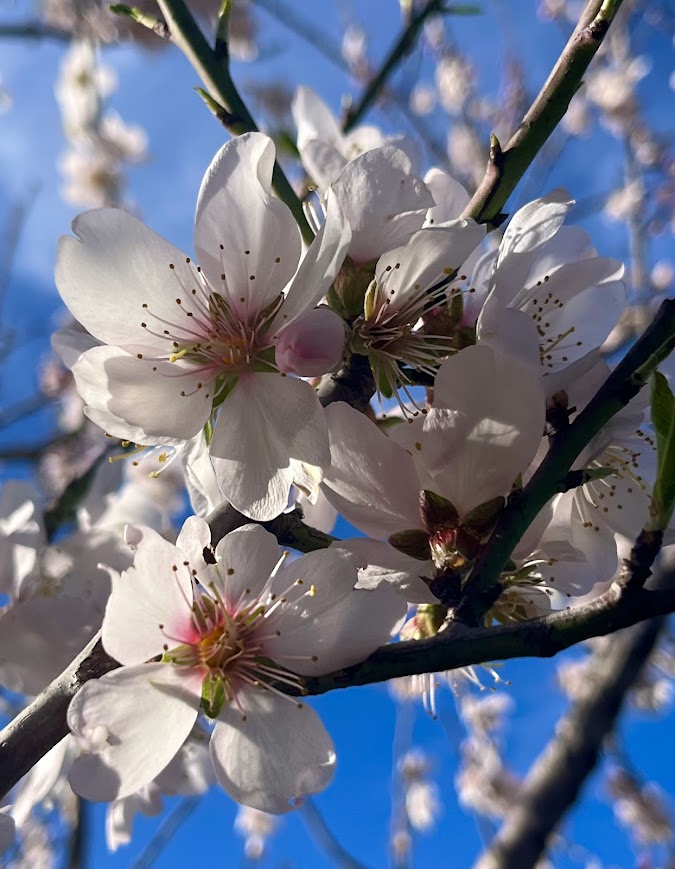
A threshold is not a destination. It is not even a clear path. It is a space between: between what has been and what is becoming. It is coming out of a dark, cold winter with the seeds of spring waiting to sprout.
In threshold moments, the old story—the one that once made sense, gave structure, identity, or safety—begins to loosen its grip. It no longer fits. Yet the new story has not arrived fully formed. There are no clear instructions, and there is primarily uncertainty.
This in-between space can feel deeply uncomfortable. It often comes with grief, fatigue, confusion, or a quiet panic that whispers, “I should be further along by now.”
But thresholds are not failures of progress.
They are pauses of transformation.
When Pain Is Asking for Attention, Not Erasure
Pain has a bad reputation. There is a tendency to push it away, a rush to numb it with distractions, and explain it away. Yet pain often carries a message that can’t be accessed in any other way. It forces you to dig deep into your inner resources. It is asking you to slow down and pay attention to what is happening.
Failure, too, has a voice. It may be saying: This path has run its course. Or: This version of you has served its purpose.
Letting the Old Story End
Endings rarely announce themselves cleanly. More often, they fray at the edges. Motivation fades. Joy drains away. What once felt purposeful now feels heavy or hollow. It could be anything from a job, a location, a home, or even a long-term relationship. This should not be seen as betrayal or weakness, but something new unfolding slowly.
The courage of a threshold moment lies not in forcing clarity, but in allowing uncertainty to do its work in trusting that not knowing is sometimes the most honest spiritual posture.
You don’t need to rush to define the next chapter. You only need to be present enough to notice what is loosening—and what is quietly insisting on staying alive.
A Gentle Practice for the Threshold
Rather than trying to solve or transcend this moment, you might sit with it. Breathe with it. Let it speak. Found more moments of solitude so that the voice within can be perceived.
Ask yourself, without urgency or judgment:
- What am I being asked to release?
A role? An expectation? A belief or particular self-sabotaging talk? - What feels unfinished, yet still alive?
A longing? A truth you haven’t yet honored? A call that has been whispering rather than shouting?
Staying with the Becoming
Thresholds are sacred precisely because they are uncomfortable. They strip away certainty and invite you into a deeper honesty. They teach you that meaning is not only found in arrival, but in the courage to stay present while becoming. They force you to look more closely in the darkness.
If you find yourself here—tired, unsure, grieving something you can’t quite name—know this:
You are not broken. You are not behind. You are standing at a doorway.
And sometimes, the most honest thing you can do is wait with open hands until the new story is ready to unfold.
If you find yourself standing in such a threshold—sensing that something has ended, but not yet knowing what comes next—you don’t have to walk this terrain alone. A Pilgrimage to New Beginnings is a gentle online journey created by me for moments just like this: a spacious, reflective path for those navigating endings, listening for what wants to be born, and learning to trust the wisdom of the in-between. If this speaks to where you are, you are warmly invited to join us on March 4th and take the next few steps—slowly, honestly, and in your own time.
Reino Gevers – Host of the LivingToBe podcast


 ReinosBlog