Tag Archives: mental health

The biggest obstacle to living your destiny

Just prior to the year 2000 there was a strange phenomenon spanning the globe with large groups of people believing that a catastrophic event would extinguish all life on earth at the turn of the clock into the new millennium.

There was the rumor, that the Y2K computer bug would cause major power outages and computer breakdowns across the world as the calender rolled over into the year 2000. Some Christian sects saw in the year 2000 the Apocalypse and the Second Coming of Christ.

In the end, the year 2000 came and went without much incident. The cults of course found various explanations why things didn’t turn out as they predicted. The calculations were slightly off and the apocalypse would occur at a later date or the reason it didn’t happen was a result of the faith and intensive prayers of the followers. Some followers downplayed the significance of the failed prediction or quietly forgot their predictions.

Fixed belief can completely derail you from your destiny

The event was however very revealing of how a fixed belief can completely derail and capture the minds of millions of people. We are seeing the same phenomenon in the drumbeat of political propaganda and fake news. Once a mind has been locked into a belief. There is no rational argument that will persuade the person to change his or her mind. It is wasted energy to engage with a person who is unwilling to listen or possibly see things from a different perspective.

While the term “sin” in the religious context is often equated with moral transgressions, the deeper spiritual meaning is more complex. It could be explained as a disruption of spiritual harmony, causing harm to the self, and straying from the path of your destiny.
The universe finds expression in nature

A principle in nature is constant flow, adaptation, and evolution. The universe, or God, finds expression in nature. And, we humans are very much part of the interaction with all living beings.

In the coming decades, humanity is at the cusp of making a major leap in the evolution of consciousness. But it can also go the other way with a major breakdown in civilization as we know it if we fail to do the internal and external work.

Internally we need to confront the demon of addiction. It is the addiction to the immediate gratifications, like substance and food abuse but especially the fixation to limiting political or religious beliefs. The new spirituality is cosmic by nature, emphasizing a deep, interconnected relationship between the individual and the universe as a whole. It transcends traditional religious boundaries and is characterized by a sense of awareness and awe for the natural world around us.

This is the stepping stone to the external transformation. Since the industrial-revolution humanity has seen the earth as a material object that needed to be exploited, in contrast to the ancient traditions that saw the divine in every object and living thing. The earth itself was seen as the Mother, a living entity. Certain places were pinpointed as locations with a high-energy vortex and portals to the hereafter. They were chosen for ritual and worship.

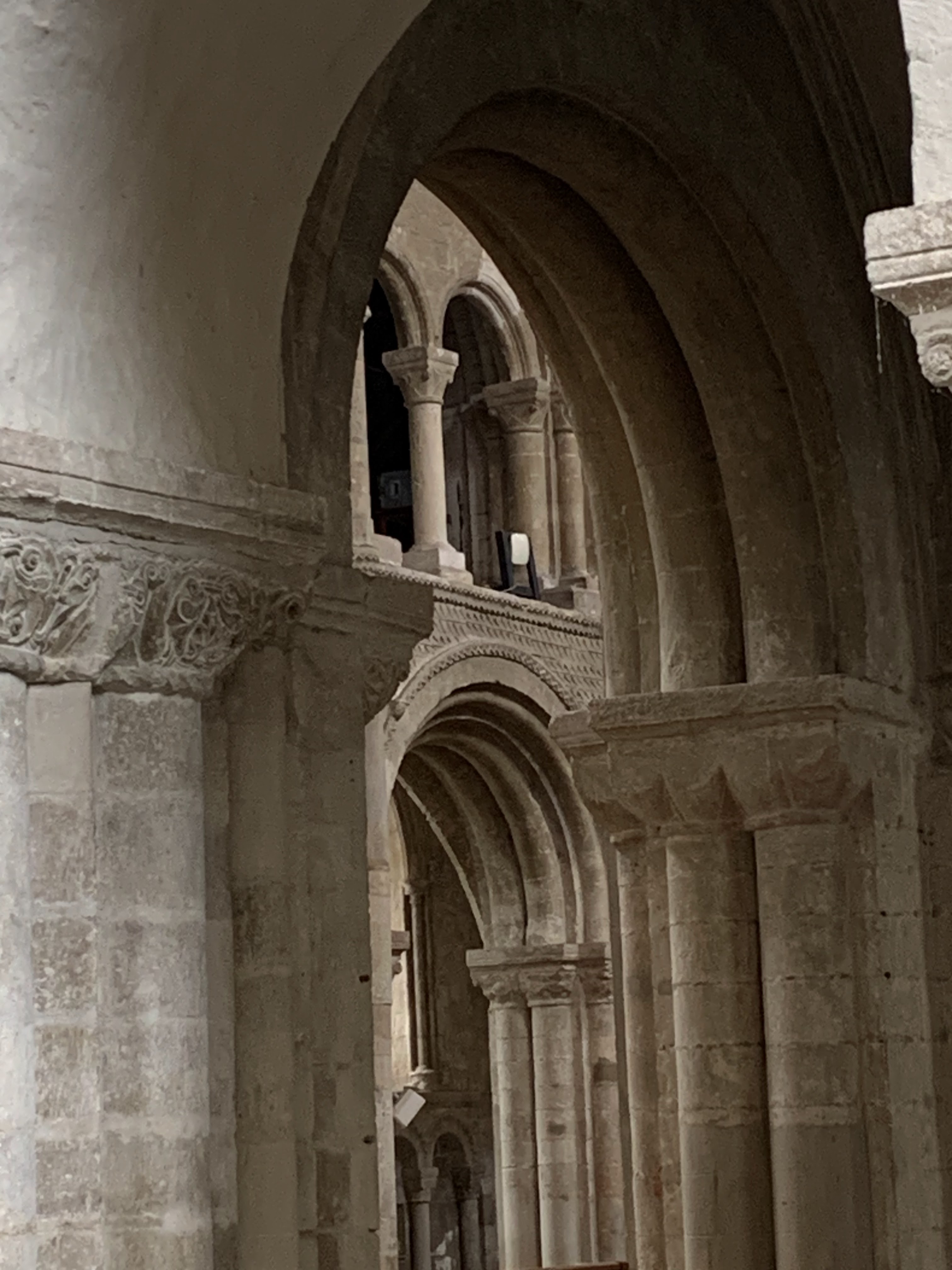
The cathedrals, chapels, and churches in Europe were often built on such ancient locations which is why these quiet spaces offer particular sanctuary for quiet stillness.

Especially during times of stress, uncertainty, and emotional turmoil time spent in solitude or in nature will calm the mind and open the senses to the whispers of the soul. When surrounded by the beauty, sights sounds, and smells of nature you become realigned with the bigger whole.

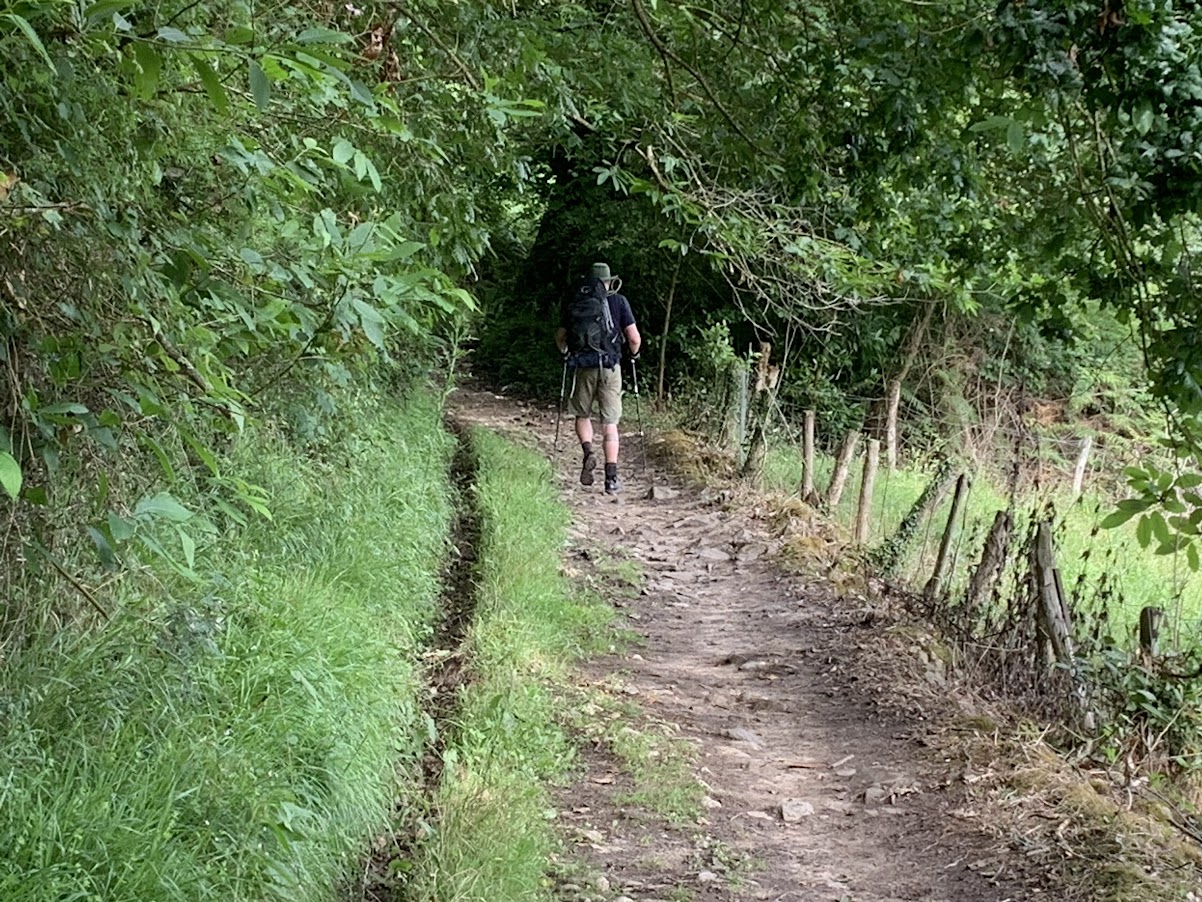
Allowing the mind to recover from stress and mental fatigue in nature helps restore cognitive functions and clarity. When you practice deep walking in nature you will regain your natural pace and rhythm.

Exposure to sunlight and the natural day-night cycle can help regulate and improve sleep patterns. Adequate sleep is essential for mental well-being. Sunlight plays a crucial role in the production of Vitamin D in the body, essential for bone density, muscle function, immune support, and cardiovascular health.

A principle of nature is constant change

A principle of nature is the cycle of change. Plants, animals and insects are constantly adapting to changing environmental conditions and seasonal cycles. Part of God’s evolutionary plan is constant refinement and perfection. By embracing nature’s wisdom you rediscover purpose and meaning.

The disconnect from our natural environment is responsible for much of the emotional turmoil and imbalance we see around us. With the pull of technology and digital distraction becoming ever greater, it is becoming more important than ever to take a time-out in nature to rediscover who you really are and who you are destined to become.

Reino Gevers – Author – Mentor – Speaker

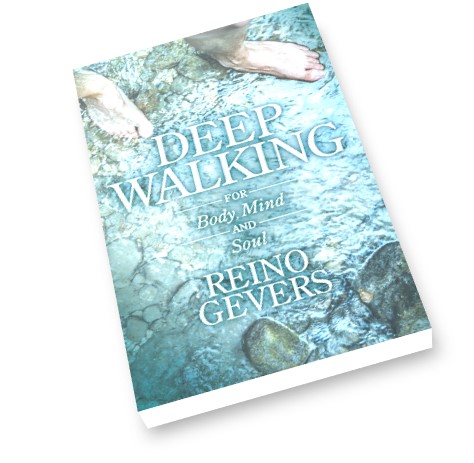
P.S. My new book “The Turning of the Circle: Embracing Nature’s Wisdom for Purposeful Living” has just been published. You might also find my other books “Deep Walking for Body, Mind and Soul” and “Walking on Edge: A Pilgrimage to Santiago” of interest. They are available where all good books are sold.

Leave a comment

Filed under mental health, mental-health, nature, Uncategorized

Connecting to your inner wisdom

Understanding and managing your emotions is key to achieving personal growth and accessing a higher vibrational energy. You can only tap into your inner wisdom by transmuting the charge of your toxic emotions such as fear, shame, anger, and grievance.

This poses a particular challenge during a time when social media and the political narrative feeds on negativity and our darkest toxic emotions.

Your body is the most authentic recording device of everything that has happened in your life. You will dream of events that happened decades ago because those memories are stored away somewhere in the depths of your body cells.

When you dream of when you were a seven-year-old and stole the cookies from Grandma’s closet, you have in some way not closed with that incident emotionally.

Your head-mind probably made up all sorts of reasons why taking those cookies was in order, while your sub-conscious heart-mind knew very well that what you did was stealing and that you hurt Grandma because you lied to her.

A tension or dissonance between head-mind and heart-mind, like acting against a gut feeling or doing something where all the alarm bells are running at a heart level, are just those things that the body will always remember.

Training your “heart-mind” to be emotionally mature is one of the reasons we are here on earth. We humans are imperfect beings, and probably the most disconnected of species from ourselves and our natural environment.

We have incarnated as souls to use our bodies as instruments of learning.

The heart is not merely an organ of the cardiovascular system that transports nutrients, oxygen and hormones throughout the body and removes metabolic waste. In the spiritual sense the heart is described as the “seat of the soul.” It is the first organ that develops in the fetus and is the connection between our physical and non-physical (soul) selves.

Impulses or thoughts flow first from the heart and then to the brain. The brain dissects, rationalizes and analyzes. The “heart-mind” is authentic and closest to the true self or soul purpose. Knowing the difference between “head-mind” and “heart-mind” is the spiritual learning part.

Our body is constantly sending us signals about what we need to hear and work on. The problem is that we are so caught up in the world of distraction that we mostly fail to listen until the body gets really angry and calls a time-out with some illness or malady. It is no surprise that cardiovascular diseases top the list in much of the Western world.

Regaining the connection

Regaining that connection to the “heart-mind” comes mostly during times of solitude, during meditation, prayer and deep walking. That is when we become aware of our emotional state of being. Some of the “emotional memories” stored in the body could go back many years or even decades.

These energies can be transmuted very well with the ancient body arts of tai chi, qi gong and yoga that were developed and refined by spiritual masters over many generations.

It is only fairly recent that these ancient arts have reached the Western world. One of the great tai chi masters, Cheng Mang Ching, was ostracized by the Chinese community in New York when he began teaching tai chi for the first time to Western students in the early 1960s.

If you walk the main Camino Frances, you will be walking for five weeks or longer. After two or three weeks on the road you realize that the Camino is much more than a mere physical exercise.

Not only does the body start detoxing, but I have noticed on my walks that dreams, childhood events, and memories of traumatic relationships that occurred many years ago return with a particular clarity.

These are particularly precious healing moments when old trauma is released to open up the channels for a flow of new energy.

Whatever the heart-mind hasn’t transmuted emotionally will at some stage come back to haunt you. It is why the mother on her death bed has that last wish before dying to reconcile with the son she hasn’t spoken to for years.

Volunteers and therapists companioning the dying have told me that the deepest regret is most often not having made amends with innermost family members. A peaceful death then only comes when that “something” has been dealt with.

What Chinese medicine has known for centuries, modern medicine is confirming with latest research. Many a serious illness has its origins in emotional baggage stored in the body-mind.

There is a particularly poignant passage in the third Beatitude of the Bible: “Blessed are the meek, for they shall inherit the earth.”

In the original Aramaic language, spoken by Jesus, the meaning is more subtle: “Tubwehun l’ makiche d’hinnon nertun arha.” This roughly translates to: “Renewal to those in emotional turmoil and blessed are those who can soften that which has hardened in their bodies.”

While walking in solitude you will inevitably be confronted by the same phenomenon as when lying alone awake at night: Hundreds of thoughts will be passing through your mind of past and future things.

One thought chases the next as you wind yourself up and down in a spiral of dancing monkeys in the head.

You won’t control those thoughts by practicing mind control methods. The mind does become aware of what it is thinking about and can extract itself with an accusatory finger of “why can’t I think of something else? Why can’t I let go of these worrying concerns in my head?”

You will notice that as the body releases tension during your walk, those dancing monkeys gradually start disappearing as you begin the descent from the head into feeling the body.

This is best done by aligning to the present moment by focusing on your breathing and counting the inhaling and exhaling of breaths.

You can also start by feeling each step touching the ground, feeling the ground and how the energy of the earth moves from your foot up your legs, spinal cord, neck and the crown of your head. Start by walking very slowly, aware of the present moment, just concentrating on these small things to liberate your mind.

Our ancestors practiced ceremony and rituals to transmute trauma on a body level. Animals still have this mechanism intact. A herd of antelope will run apparently haphazardly in all directions when one of them has been killed by a predator. Their bodies shiver and shake, but minutes later all has passed and they will resume grazing as if nothing has happened.

Calming mind and body

Transitioning from the depths of our lowest emotional frequencies, such as anger, shame, resentment, hate, greed, fear, and anxiety, towards the pinnacle of human evolution involves embracing the transformative power of compassion, love, empathy, gratitude, peace, and serenity.

Even as you ascend the ladder of higher consciousness, the complete liberation from toxic emotions and feelings remains an elusive goal; you are, after all, only human. However, through unwavering commitment and diligent practice, you can expedite your exit from the rabbit hole of negativity.

It will empower you to savor extended periods of vitality, hope, and inner tranquility, enhancing your overall well-being and vibrational frequency. It is the recipe for longevity and good health.

Reino Gevers – Author – Mentor – Speaker

P.S. This is an extract from “Deep Walking for Body, Mind and Soul. All my books are available on Kindle, and paperback where all good books are sold. If you would like to order in batch to gift to friends, family and employees you can contact me by DM for a special discount.

Leave a comment

Filed under mental health, mental-health, spirituality, Uncategorized

The dragnet of regret

How often have you caught yourself going back into the past with the feeling of regret on the opportunities missed, the words you wished you had never said, and the things you would do differently if you could turn back the clock?

At times the feeling of regret can be so overwhelming that it’s like a dragnet pulling you down into a dark abyss of unhappiness. But according to author Daniel H. Pink regret is a fundamental part of our lives and can help us make smarter and better decisions in the future.

Based on the World Regret Survey, Pink has identified four core regrets.

Foundation regrets. These are regrets on the human need for some form of stability. Pink quotes Jason who says: “I regret not saving money diligently ever since I started working. It’s nearly crushing every day to think about how hard I’ve worked for the last twenty-five years or so, but financially I have nothing to show for it.”

Boldness regrets. Over time we are much more likely to regret the chances we didn’t take than the chances we did, whether its work choices, education or the choice of a partner. Foregone opportunities can be especially haunting during times of stress and pain.

Moral regrets. Most people wish to be seen as good people. But over time morally dubious decisions can be gnawing such as swindling in a business or cheating on a spouse.

Connection regrets. According to Pink fractured or unrealized relationships with spouses, partners, parents, friends, and all other close relationships constitute the largest deep structure category of regret.

Photo by Liza Summer on Pexels.com

We can set very high standards to the self and are at times our own worst critic. The melancholy sadness and regret over that which was and is no more is not only debilitating but prevents you from moving forward. Many of our regrets can in fact be undone by making amends, reversing bad choices, and taking a different perspective by posing the questions: What did I need to learn and how can I make a better choice in moving forward? If I’ve harmed others, can I make amends through an apology or some form of emotional or material restitution?

Was the regret merely an unpleasant incident in your life or does it define your life? Practicing self-care and self-compassion can neutralize some of those feelings if you treat yourself like you would be treating your best friend.

You forge your identity with the story that you tell yourself. The first step is acceptance of that feeling or emotion of regret and replacing it with a positive thought moving forward. “I made a bad decision. I feel terrible about it. But I lovingly accept myself the way I am. I am harvesting from the rich experience and moving positively forward.”

In loving yourself you build the ability to nurture and better serve your relationships. The lesson of a door slammed shut is to do better next time.

Reino Gevers – Author – Mentor – Speaker

P.S. If you’ve found this article of interest you might want to read more in my books. “The Turning of the Circle: Embracing Nature’s Wisdom for Purposeful Living” has just been published. You might also find my other books “Deep Walking for Body, Mind and Soul” and “Walking on Edge: A Pilgrimage to Santiago” of interest – available where all good books are sold.

Leave a comment

Filed under mental health, mental-health, Uncategorized

Beyond Religion?

Membership of Christian churches and attendance of services is falling dramatically in many countries. But does that mean that more people are becoming agnostic, atheist or have lost their belief in a God or the divine?

On my current pilgrimage walk on the Camino de Santiago in northwestern Spain, we passed through several villages and towns on a Sunday. All these beautiful and ancient temples of worship, some dating back to Celtic times and early Christianity, had their doors shut.

One church did happen to be open but a man shooed us pilgrims away, making it clear that we were not welcome to have a look inside. I do normally enjoy sitting in these sacred places, meditating and feeling into the powerful energy fields that they emanate.

It hit a sore point to be rudely turned away. It symbolized for me everything that has gone wrong with conventional religion, fixated on empty external ritual, and controlling doctrine.

Churches and temples should be open for people of all denominations as long as they show respect, giving everyone sanctuary seeking a quiet space from the noisy and distractive pull of the external world.

For centuries religions from all the major faiths have vilified, ostracized, burned at the stake and shamed those that did not conform or belong. At the same time the hypocrisy of the clergy regarding sexual abuse, financial misdemeanors and interference in politics is laid bare like a festering open wound.

Jesus never had plans to establish an institution or a church. His criticism of the Pharisees, the clergy, and their hypocrisy was especially directed at those leaders burdening the faithful with strict rules and regulations while showing little love, mercy and compassion to those in need.

There is a saying that religion is for those who fear hell while spirituality is for those who have been there. On my more than a dozen walks on the Camino I have met countless people who have gone through the hell of losing loved ones, confronted life-threatening illnesses, the dark holes of depression, financial ruin and relationship breakdown. What I can say about all of them is that these life-changing events made them come out stronger and forced them into deep introspection on the purpose and meaning of life.

Experiential spirituality is a process whereby the shutters of the soul window are gradually opened up. It is a feeling of connection with the divine, and the mystery of creation. The great scientist Albert Einstein once said that the religion of the future will be cosmic in nature. 

“The most beautiful and deepest experience a man can have is the sense of the mysterious. It is the underlying principle of religion as well as all serious endeavor in art and science. He who never had this experience seems to me, if not dead, then at least blind,” Einstein is quoted as saying.

The Dalai Lama, the spiritual leader of Tibetan Buddhism, encourages individuals to go beyond the superficial differences among religions and recognize the deeper essence of spirituality and morality that can be found in all faith traditions. 

The fundamental principles of compassion, love, and ethics are not limited to any particular religious tradition or belief system. These principles, the Dalai Lama believes, are universal.

Among the hundreds of thousands of people who walk the Camino each year there are devout Catholics and people of all faiths but also manyspiritual seekers asking the age old question:

Where do I come from? Where am I going? What am I doing with the rest of the days of my life?

Reino Gevers – Author – MentorSpeaker

Leave a comment

Filed under Camino de Santiago, deep walking, self-development, Uncategorized

Blinded by the glare of the things

“The five colors blind the eye; The five tones deafen the ear; The five flavors dull the taste. Racing and hunting madden the mind; Precious things lead one astray.” – Lao Tzu

We are living in an age where technological progress has generated prosperity for a vast number of people and created a lifestyle for the average person that the most powerful kings and queens in the Middle Ages could not ever have imagined. Life expectancy, health care, mobility, and hygiene are at unprecedented levels in human history.

Individual self-realization, self-interest, and ambition have been powerful motivators for societal progress. But it appears we are at a tipping point where technological leaps are far greater than the mental capacity to deal with these changes. The unchecked pursuit of wealth and extraction of natural resources are threatening the survival of our species.

We have become blinded by the glare of the 10,000 things. We are drowning in information and misinformation and starving in wisdom that promotes a culture of spiritual awareness, empathy, fairness, and social responsibility.

The biblical story of the dance around the golden calf is timeless in its relevance. The Israelites had become impatient living in the desert, losing their trust in God. They then fashioned a golden calf with jewelry collected from the people, worshipping and dancing around the calf in revelry while their leader Moses was away in the mountains receiving the ten commandments from God.

Photo by Pixabay on Pexels.com

The story serves as a warning against losing the moral compass and placing worldly desires above a genuine relationship with the divine, the true self. and purpose in life. Underlying the insatiable desire for new things is the misconception that power and wealth are equal to happiness. The predominant messaging of our culture is consumerism, social status, and material wealth.

There is nothing wrong in enjoying material abundance and prosperity. But making it the primary objective in your life, and becoming overly attached to “things” will inevitably lead to suffering and pain. The perspective changes completely for people suddenly confronting a life-threatening disease or facing the fear of losing a loved one.

The antidote to greed is the reconnection to our interconnectedness with all things living.

Reconnecting with interconnectedness involves recognizing and embracing the understanding that all beings and elements in the world are interconnected and interdependent. Building wisdom is like building a muscle. It’s an ongoing process. Key points to consider:

  • Awareness and Mindfulness: Practice being fully attentive to the present moment, observing the connections between yourself and your surroundings. You can do this by focusing consciously on your inhaling and exhaling breaths. Meditation practices, journaling, gratitude rituals and other self-care habits will help cultivate care for others. ,
  • Deep Walking: Deep walking is more than a hike. It is a spiritual experience where you develop a deeper connection to the natural world, observing the intricate interdependence between yourself, plants, animals, and the environment. By spending more time in the green and blue spaces of nature you extract yourself from the rat race of external distractions. Finding these moments of stillness will make you aware that life is finite. You cannot take your material possessions with you into the afterlife.
  • Compassion and kindness: Cultivate compassion and empathy towards others. Recognize that every person you encounter is connected to you in some way, sharing the same basic human experiences and emotions.
  • Relationships: Recognize that your actions, thoughts, and emotions have an impact on those around you, just as their actions, thoughts, and emotions affect you. Nurture and foster positive connections with others. The five people you spend most of your time with have a major impact on your value system, mannerisms, and state of mind.
  • Service and community: By helping others, you are contributing to the greater interconnected whole. Engaging in acts of altruism and service can deepen your understanding of interconnectedness by experiencing the positive ripple effects of your actions.

Reino Gevers – Author – Mentor – Speaker

One more thing...If you have found this article interesting you might want to subscribe with the “follow” button above or recommend my FREE weekly Blog to friends and family. My books can be ordered at all places that sell good books in both paperback and kindle.

Leave a comment

Filed under mental health, mental-health

The lucky farmer?

Once upon a time, a farmer lived in a small village in China with his only son. He was a poor man because he had only one horse.

One day the horse disappeared and the farmer no longer had a horse to help him plow his field.

The other villagers came to the farmer, expressing their sympathy. „We feel so sorry for you. This is such bad luck.“

„We’ll see,“ said the farmer. „Good luck or bad luck. Time will tell.“

Some weeks later, the horse returned in the company of several other horses.

Astounded the villages came to the farmer. „You are so lucky. Now you have many horses and are a rich man.“

The farmer listened to them thoughtfully. „We‘ll see. Good luck or bad luck. Time will tell.“

Photo by Baru0131u015f Karagu00f6z on Pexels.com

Soon afterward his son fell from one of the horses and broke his leg.

Again the villagers came to express their sympathies, „such bad luck,“ they said. „Now you have nobody to help you.“

„We‘ll see,“ said the farmer. „Good luck or bad, time will tell.“

The next day, the Emperor’s army came to the village to conscript all able-bodied young men for the war, but the farmer’s son was exempted because of his broken leg. 

Again, the villagers came to the farmer and congratulated him on his good fortune, but the farmer simply replied, “We’ll see.”

As it turned out, the war was a disaster for the Emperor’s army, and all the young men who had been conscripted were killed. Once again, the villagers came to the farmer and praised him for his good luck, but the farmer simply replied, “We’ll see.”

The story’s moral is that good luck can often turn out to be bad luck and vice versa. 

The Taoist teachers telling this story advise their students to remain free from attachment. Wealth or poverty, death or birth, fortune or misfortune are often intertwined with everything underlying the law of impermanence.

If you are currently in a bad spot, be assured that this too shall pass. If you are currently rolling high, enjoy the moment as it lasts but don‘t get attached.

Millions of people playing the lottery each week think all their problems will be over if they win the jackpot. Many of those who indeed then win the lottery end up being miserable and even committing suicide because they haven‘t solved the underlying issue that is torturing their soul. Here you will find more information on the bankrupt statistics of lottery winners.

Or, are you one of the people counting the months and years until you can finally retire and start to live? 

Be appreciative and mindful of life’s small miracles in the here and now. Focus your mind more on BEING rather than HAVING.

Ultimately everything is grace. From the day you were born, you began a journey to becoming who you really are.

Reino Gevers – Author – Mentor – Speaker

One more thing...If you have found this article interesting you might want to subscribe with the “follow” button above or recommend my FREE weekly Blog to friends and family. My books can be ordered at all places that sell good books in both paperback and kindle.

Leave a comment

Filed under mental health, mental-health

The things blocking you from living your soul purpose

“The purpose of life is not to be happy. It is to be useful, to be honorable, to be compassionate, to have to make some difference that you have lived and lived well.” – Ralph Waldo Emerson

The ancient mystic teachers believed that the ultimate purpose of the human cycle was to become whole, emphasizing that each person has a unique mission to play in the cosmic order. But with the pull of external distractions, you might feel estranged from this sense of purpose and will need to take concrete action.

Energy-depleting habits can creep into your life and you would have to react with a clear structure to realign body, mind, and spirit.

There is a general misconception that happiness equals external validation of material success and fame. The search for soul purpose is stuck in the “I” as opposed to the “we”. It’s the reason why many of the world’s most “successful” people are successful on one level but terribly unhappy on a soul level. A few of these exceptional individuals have however transmuted this unhappiness into causes that serve the greater good.

One of the most gifted men on the tennis court, Andre Agassi struggled with addiction for most of his professional career, which he details in his autobiography “Open”. He in reality hated tennis but then realized that his fame as a tennis player could be a platform to do greater good.

Coming back after brokenness

He established the Andre Agassi Foundation for Education, which focuses on improving the education system in the United States. The creation of the foundation stemmed from Agassi’s own personal experiences of feeling lost and unprepared for life after tennis. He recognized that many children in the United States faced similar challenges, particularly those from underserved communities, and wanted to help provide them with the tools and resources they needed to succeed in life.

“You can’t spread who you are without being broken first. Sometimes, when you’ve been broken into pieces, you come back and give much more to people. You can see my scars and they’re key to me making a difference in other lives now,” he said in an interview.

Soul purpose is a journey. The whole of life is a discovering journey of your soul purpose. Often the end of one journey, the death of one “life” is the initiation process into another life, yet ultimately a journey of growth, redemption, rectification, and wholeness.

Photo by Krivec Ales on Pexels.com

The obstacles of procrastination and distraction

Implementing a daily structure into your life is key to preventing procrastination and distraction, which can be the two biggest obstacles to realigning with your soul purpose. With every year passing you realize that life is finite and that you need to do something to live a life that is more fulfilling, healthier, and happier.

But most New Year resolutions fail after only a few short weeks because the plan you made is too ambitious. Start with a few small steps that are achievable. If you want to write a book start by writing a few words each day. If you want to exercise more start by doing a five-minute routine first and then gradually increasing it day by day. If you want more abundance in your life start by making a mental note of all the small miracles and blessings in your life right now.

We are often the harshest critics of ourselves. The inner voice telling you: “I’m not good enough. I’m not deserving. It’s not worth trying. I will get a no anyway.” The kinder and more loving you are of yourself, and the more you speak to yourself in a positive sense, the more this will reflect in the external world. There are no shortcuts. You have to do the inner work. By understanding and loving yourself you will be in a much better position to do the same for others.

You can boost your vibrational level with the following daily routine:

  • Exercise: Any physical activity lasting more than 15 minutes will boost your metabolism and mood
  • Spend time in nature: Study after study confirms that spending time meditating in the blue and green spaces of nature will reduce stress levels and open your senses to the whispers of the universe.
  • Train the mind: Read good books that will feed your mind with knowledge and wisdom. Make a habit of reading a chapter each day.
  • Understand yourself by journaling and making notes of the key lessons you have learned during the past 24 hours.
  • Gratitude: Implement a gratitude ritual before the start of each day. It is the small miracles of life that really count.
  • Community: Join a community and engage in voluntary work that will connect you to the feeling that your are here to do something for greater good.

Why not just have fun and enjoy the journey in the here and now.

Reino Gevers – Author – Mentor – Speaker

One more thing...If you have found this article interesting you might want to subscribe with the “follow” button above or recommend my FREE weekly Blog to friends and family. My books can be ordered at all places that sell good books in both paperback and kindle.

Leave a comment

Filed under mental health, mental-health

Healing the inner wound

When heartbroken or in pain every feeling is sharper. You are more sensitive and will be opening the gateway to your intuition. It is an opportunity of connecting to your soul. Yet we often prefer to numb these feelings by fleeing into distractions.

Life happens and a loss can be very painful to deal with. Society will be indoctrinating you with the mantra that you should just deal with it and you put on that false smile to the external world.

It‘s the reason why most „selfies“ and postings on social media share primarily happy moments or a false identity. You don‘t want to hear about the breakups, the deaths, the financial travails, and mental challenges.

But the body always keeps the score. Suppressed feelings and trauma seek other avenues. It is one of the many reasons why psychosomatic and mental illnesses are skyrocketing with an estimated 800 million people worldwide suffering from some type of mental health disorder.

When an inner wound has not healed it is also all too easy to numb that wound with addiction. These could be anything from alcohol, overeating, shopping sprees, and spending hours watching Netflix. A powerful addiction is to a false sense of self that goes into war mode each time it feels threatened by a different opinion, belief, or mindset. 

Suppressed inner feelings and emotions will inevitably seek an avenue where the body or the personality is the weakest.

A seemingly insignificant event on the other end of the world might trigger a deep sadness. An inconvenience such as a delayed flight or someone „stealing“ your parking causes an angry outburst far in disproportion to the incident.

Worse still, the suppressed emotional wound finds expression in a life-threatening disease.

Photo by Rodolfo Quiru00f3s on Pexels.com

Whatever loss you have suffered you need to acknowledge that anger, that sadness, that feeling of emptiness or self-blame. It is the first step in the healing process. The famous psychotherapist Elisabeth Kübler-Ross describes five stages of dealing with the pain and loss of a loved one: Denial, anger, bargaining, depression, and finally acceptance.

It is much easier to transition and transmute a difficult situation if you seek a professional who can guide you through the process. He or she could offer tools that enable you to take a different perspective.

In retrospect, many of the most difficult chapters in your life can turn out to be an education in higher consciousness or have made you a more compassionate understanding human being. 

Awareness to the truth of your human vulnerability, weaknesses, fault lines, and authentic identity and at the same time practicing self-love will make you immune to the pull of external manipulation.

Showing vulnerability will connect you more deeply to your fellow human being. They are the building blocks of healthy friendships and relationships. Elementary, empathic human connection is ultimately the most important element in living a quality life of bliss.

As John Lennon dreams in his song “Imagine”:  “Imagine all the people living life in peace. You may say I’m a dreamer, but I’m not the only one. I hope someday you’ll join us, and the world will be as one.”

Reino Gevers – Author – Mentor – Speaker

One more thing...If you have found this article interesting you might want to subscribe with the “follow” button above or recommend my FREE weekly Blog to friends and family. My books can be ordered at all places that sell good books in both paperback and kindle.

Leave a comment

Filed under mental health, mental-health

Walking like a pilgrim

Ancient cultures and religions for thousands of years worshipped nature as an expression of the divine. With technological progress has come a disconnect with mankind primarily seeing the external world as a means of exploitation and subjugation.

In order to survive as a species we need to reconnect to nature and our spiritual purpose. One of the most underestimated and effective means of realigning body, mind and soul is by taking a walk.

You could either see a walk as a daily physical activity to stay fit or alternatively go for a deep walk with a higher intention. Or, you could go on a meditative pilgrimage walk lasting several weeks with deep spiritual significance.

A hike is generally goal orientated. You are aiming to reach a certain destination, walk a number of steps a day or just carry out a recreational activity.

Over the years on my pilgrimage walks on the Camino de Santiago in northwestern Spain it is interesting to observe people starting the 500-mile (800-kilometer) walk as hikers purely as a physical endeavor or adventure and then transitioning into pilgrims.

There is a deep mystery about these ancient pilgrimage paths and walking in the footsteps of people who have walked these paths for hundreds of years. Their collective traces and memories seem etched into the cobblestones, waymarkers, dusty paths, and old chapels.

“It doesn’t take long for the Camino to start walking you,” a pilgrim said to me on one of my first walks.

As you find your natural rhythm and walk off the distractions of the “monkey-mind” caught in thoughts of the past or the future, you become increasingly connected to the natural world around you.

Photo by Akshaya Premjith on Pexels.com

Walking like a pilgrim

You don’t have to walk long distances to walk like a pilgrim. Instead of being goal-orientated it is all about walking with mindfulness, taking in the aroma of herbs along the path through your nostrils, hearing the water of a creek in the distance, enjoying the morning song of a blackbird, feeling the warmth of the sun on your skin and opening your eyes to what you see around you.

A pilgrimage walk is a destination with meaning, like walking from the magnificent 14th-century Wells Cathedral, Somerset England, to Glastonbury Tor – a significant spiritual place of worship since the time of the Celtics. But it could also be walking between an ancient oak tree and a bridge crossing a river.

It can also be a walk to resolve a particular question, an unresolved problem, or to say a prayer of gratitude. You could ask the universe for an answer as you do your walking and open yourself to the whispers from the universe in the form of signs and symbols. Sometimes the answer would come in a casual remark made by a stranger.

Many philosophers, writers, artists, and poets have found inspiration while walking. According to legend the Greek philosopher Aristotele taught his students while walking. The composer Johan Sebastian Bach in 1705 walked 205 miles from Arnstadt to Lübeck along the Baltic coast to find inspiration. The great Persian philosopher Rumi said about walking:

“Keep walking, though there is no place to get to. Don’t try to see through the distances. That’s not for human beings. Move within. But don’t move the way fear makes you move.”

Reino Gevers – Author – Mentor – Speaker

One more thing...If you have found this article interesting you might want to subscribe with the “follow” button above or recommend my FREE weekly Blog to friends and family. My books can be ordered at all places that sell good books in both paperback and kindle.

Leave a comment

Filed under mental health, mental-health

Life is not meant to be easy

“It’s the difficult years that make you ready for a phenomenal life.”
― Hiral Nagda

Our culture is obsessed with youth, happiness, and distraction. Much pain and suffering are caused when we compare ourselves with the “wonderful” lives most people seem to be leading when we read their posts on social media. Very few people admit publicly that they are going through a rough time.

Like the law of nature’s seasons, life goes through cycles of birth, maturity, decay, and death. Conflict, suffering, pain, problems and difficulties are as much part of life as bliss, joy, happiness and abundance.

Our ideas of suffering and pain stem much from religion. Most church-practiced Christianity, today has lost its way into an empty ritual. The earliest of Christian, Buddhist, Taoist, Judaic and other teachings were rooted in an archetypical reality and experiential spirituality.

Moving away from empty ritual

Post-reformation Christian teachings particularly emphasize the inherently “sinful” ways of man with Jesus having to sacrifice himself on the cross for the ultimate salvation of all of mankind. Unfortunately, it has led to some denominations and religions causing incalculable harm to the self-worth of many an individual with their definition of “sin” fixated on how to behave and what to believe.

In the archetypical and mystical traditions, the cross itself is deeply symbolic linking life on earth with the non-physical heavenly dimension. The above and below, the left and the right conjoined in the center signify the number five in numerology. The number 5 in the biblical sense symbolizes God’s grace, goodness, and favor toward humans. It is mentioned 318 times in the bible. In Judaism, there are five books of the Torah and the commandments were written five each on two tablets.

The deeper meaning of the crucifixion

The image of Jesus’ death on the Cross in a metaphysical sense represents the dying of personality and ego consciousness attached to form and the transition into Christ-consciousness of the immortal, the dissolving of the physical body into the resurrected spiritual body. It is a powerful image of a complete cleansing of the ego mind during suffering.

It is during these “flat-on-the-ground” moments, in the complete surrender of the mind that the gateway to the soul is ripped wide open. We are forced by the pain, the suffering, and the despair into deep introspection. Procrastination, lethargy, and comfort zones inevitably lead to stagnation, decay, and melancholy fixation on what was and is no more.

The Camino de Santiago: An analogy of life

The ancient pilgrimage route, the Camino de Santiago in northwestern Spain, has become so popular in recent years because more and more people are seeking a new spiritual truth. The 500-mile route traversed by pilgrims for centuries is very much an analogy of life. In the solitude of lonely walks, the climbing of mountains, and the physical and emotional pains experienced on the route many a pilgrim – after experiencing the trauma of divorce, loss, health crisis, or job burnout – finds liberation from all attachment and new purpose and meaning while walking. Sometimes the revelation happens on the path, sometimes months after the walk.

Leading French thinker and philosopher Frédéric Gros writes that “walking is exploring the mystery of presence. Presence to the world, to others, and to yourself… You discover when you walk that it emancipates you from space and time…”

Abraham Lincoln is quoted as saying: “I am a slow walker, but I never walk back.”

You are passaging your path on the Camino of life “paso a paso” – step by step. On this path, you will be experiencing bad days and good days, realizing in that moment of crisis when you feel lonely, tired, and exhausted that “this too shall pass.” Ultimately you will be losing the fear of death when form passes into formlessness.

Reino Gevers – Author – Mentor – Speaker

One more thing...If you have found this article interesting you might want to subscribe with the “follow” button above or recommend my FREE weekly Blog to friends and family. My books can be ordered at all places that sell good books in both paperback and kindle.

1 Comment

Filed under Camino de Santiago, mental health, mental-health