
For centuries, organized religion shaped people’s beliefs, provided meaning, and defined purpose in life. However, in today’s increasingly secular world, political parties are stepping into this void, offering a “gospel” that vilifies and divides.
Genuine political debate and the exchange of ideas have taken a back seat, as leaders of political movements are elevated to “cult” status, portrayed as messianic figures who claim to hold the ultimate truth.
Political cults manipulate and coerce
Many self-proclaimed religious prophets and sects inevitably faded into obscurity amid financial scandals and sexual abuse. Political cults meanwhile seem to have a field day seek in coercing followers into submission while draining them of their material resources.
Cult members are notorious for defending and excusing the misdeeds, bad behavior, and extravagance of their leaders. Devotion becomes an addiction to belief. Identity is entirely tied to cult membership.
It is only after a long process of “detoxification” that individuals may realize that true happiness cannot be outsourced. No one else is responsible for creating your happiness or unhappiness—ultimately, it is the choices you make that shape a fulfilling life..
The similarities between organized religion and political parties with a cult-like following are compelling. They both provide members with community, identity and a sense of belonging. Membership of a “tribe” shapes your friendships and beliefs. Political ideologies can become just as dogmatic as religious orthodoxy, with little room for compromise or divergent views.
The political cult uses party symbols, flags, and slogans in a similar way as religious iconography, reinforcing group identity and loyalty.
In the “Us vs. Them Mentality” political cults foster a binary division between “us” (the faithful) and “them” (the heretical or the non-believers). It ultimately leads to increased division and social fragmentation.
Historical parallels
In the mid 20th-century the fascist movements in Italy and Germany took on religious-like fervor. Mussolini and Hitler were literally worshipped as messianic figures, built around powerful symbols such as swastikas, chanting of slogans at mass rallies with oaths of allegiance.
History teaches us that when organized religion retreats into orthodoxy and forms a toxic alliance with political radicalism, the consequences are devastating.
The Thirty Years’ War (1618–1648) was one of the most destructive and complex conflicts in European history, involving many of the major powers and resulting in significant political, social, and religious upheavels across the continent. While starting out as an ideological conflict between Catholics and Protestants, it was also driven by political, dynastic, and territorial ambitions.
The conflict was only solved in The Peace of Westphalia treaty establishing the principle of religious tolerance within the Holy Roman Empire, effectively ending large-scale religious wars in Europe. This came after The Holy Roman Empire lost between 15-20 percent of its population. In some regions, such as Germany, where most of the fighting took place, certain areas lost up to half of their inhabitants.
Most concerning are current development in countries such as the United States and India where religious fundamentalism forms an alliance with political radicalism. There is a breakdown of democracy, intolerance of dissent, a breakdown in constructive dialogue, and ultimately social fragmentation and disintegration.
A political religion is centered on building a tribe of like-minded followers who can be swayed and manipulated by those seeking power and personal gain. While it fosters a sense of identity and community, it demands unwavering loyalty to its self-constructed ideology, silencing dissent and, in the end, stripping the followers of their freedom and happiness.
The 13th-century Mystic Meister Eckart, in warning of the false prophets, said: “Let us observe first, therefore, that there are some who follow God. These are the perfect. Others walk close by God, at His side. These are the imperfect. But there are others who run in front of God, and these are the wicked.”
The new “cosmic” religion
Albert Einstein envisioned a new “cosmic religion” not tied to any particular religious creed or doctrine. Instead of being bound to specific religious institutions or deities, the “cosmic religion” would be rooted in a sense of awe, wonder, and reverence for the universe itself—what he called the “cosmic mystery.”

Einstein felt that science, by revealing the beauty, interconnection and complexity of nature, could evoke a profound spiritual response, that could unify humanity beyond traditional religious divides. He emphasized moral responsibility, interconnectedness, and an appreciation for the mysteries of existence, without reliance on traditional religious structures or personal gods.
Experiential spirituality in contrast to organized religion is rooted in direct, personal experience of the divine, or a sense of connection to the universe. It is an inward, subjective journey where each individual seeks their own spiritual truths through spiritual practises such as meditation, deep walking in nature and personal reflection. Individual spiritual experience is the ultimate authority.
Happiness is a state of mind
Happiness is a state of mind and perspective. Most humans spend a large portion of their day thinking of that which was and is no more or in anxiousness and fear of an uncertain future. A negative mindset opens your mind to manipulation by external forces. The only reality is the present moment.
What do you have in your life for which you can be truly grateful?
Why not practice a gratitude ritual for the small blessings and miracles of life? What brings you authentic joy and happiness?
If you have electricity, clean water, a roof over your head, and food on the table, you are incredibly fortunate compared to a significant portion of humanity. These basic amenities, which many take for granted in developed parts of the world, remain out of reach for millions of people globally.
Access to these resources gives you much better economic security and educational opportunities. You have the ability to improve your life and the lives of future generations. You are fortunate to have greater freedom to pursue personal goals, education, and self-improvement, and don’t need to struggle for survival like most people on earth.
Reino Gevers – Author – Mentor – Speaker
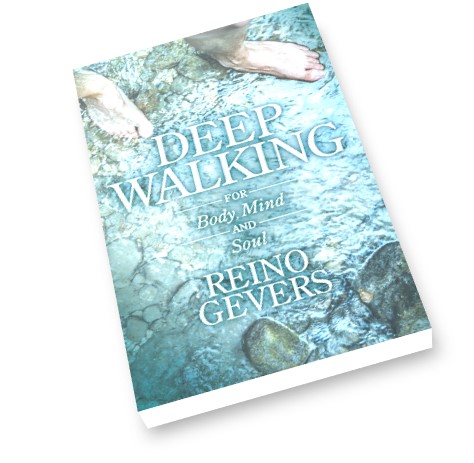
P.S. If you enjoyed this article you will be interested in my books available where all good books are sold.




 ReinosBlog