Tag Archives: spirituality

Beyond Religion?

Membership of Christian churches and attendance of services is falling dramatically in many countries. But does that mean that more people are becoming agnostic, atheist or have lost their belief in a God or the divine?

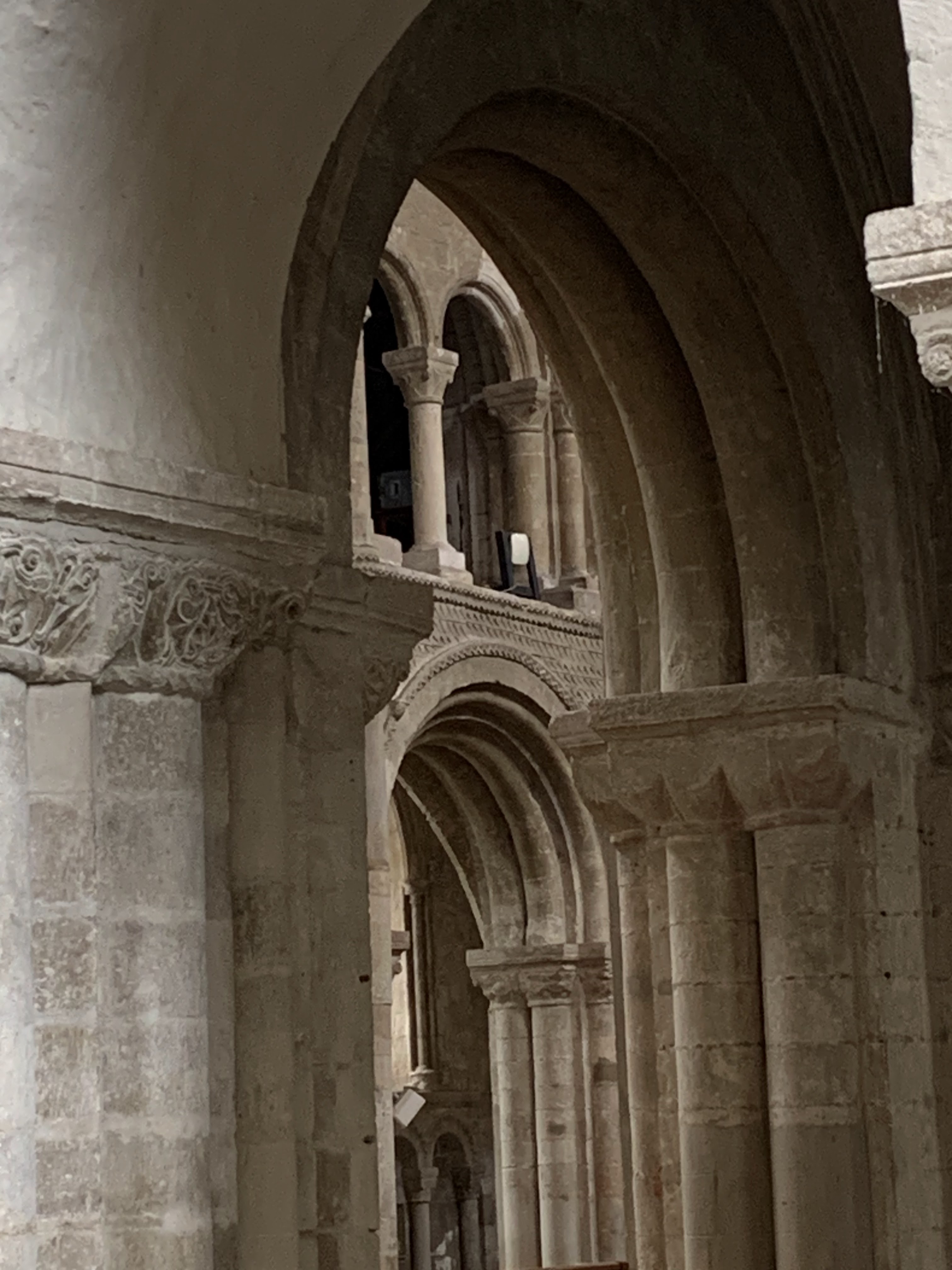
On my current pilgrimage walk on the Camino de Santiago in northwestern Spain, we passed through several villages and towns on a Sunday. All these beautiful and ancient temples of worship, some dating back to Celtic times and early Christianity, had their doors shut.

One church did happen to be open but a man shooed us pilgrims away, making it clear that we were not welcome to have a look inside. I do normally enjoy sitting in these sacred places, meditating and feeling into the powerful energy fields that they emanate.

It hit a sore point to be rudely turned away. It symbolized for me everything that has gone wrong with conventional religion, fixated on empty external ritual, and controlling doctrine.

Churches and temples should be open for people of all denominations as long as they show respect, giving everyone sanctuary seeking a quiet space from the noisy and distractive pull of the external world.

For centuries religions from all the major faiths have vilified, ostracized, burned at the stake and shamed those that did not conform or belong. At the same time the hypocrisy of the clergy regarding sexual abuse, financial misdemeanors and interference in politics is laid bare like a festering open wound.

Jesus never had plans to establish an institution or a church. His criticism of the Pharisees, the clergy, and their hypocrisy was especially directed at those leaders burdening the faithful with strict rules and regulations while showing little love, mercy and compassion to those in need.

There is a saying that religion is for those who fear hell while spirituality is for those who have been there. On my more than a dozen walks on the Camino I have met countless people who have gone through the hell of losing loved ones, confronted life-threatening illnesses, the dark holes of depression, financial ruin and relationship breakdown. What I can say about all of them is that these life-changing events made them come out stronger and forced them into deep introspection on the purpose and meaning of life.

Experiential spirituality is a process whereby the shutters of the soul window are gradually opened up. It is a feeling of connection with the divine, and the mystery of creation. The great scientist Albert Einstein once said that the religion of the future will be cosmic in nature. 

“The most beautiful and deepest experience a man can have is the sense of the mysterious. It is the underlying principle of religion as well as all serious endeavor in art and science. He who never had this experience seems to me, if not dead, then at least blind,” Einstein is quoted as saying.

The Dalai Lama, the spiritual leader of Tibetan Buddhism, encourages individuals to go beyond the superficial differences among religions and recognize the deeper essence of spirituality and morality that can be found in all faith traditions. 

The fundamental principles of compassion, love, and ethics are not limited to any particular religious tradition or belief system. These principles, the Dalai Lama believes, are universal.

Among the hundreds of thousands of people who walk the Camino each year there are devout Catholics and people of all faiths but also manyspiritual seekers asking the age old question:

Where do I come from? Where am I going? What am I doing with the rest of the days of my life?

Reino Gevers – Author – MentorSpeaker

Leave a comment

Filed under Camino de Santiago, deep walking, self-development, Uncategorized

Finding purpose by realigning with nature

Taking a walk each day and realigning with the green and blue spaces of nature is very likely to bring about multiple positive shifts in your body, mind, and spirit. We are gradually becoming aware that we have lost something essential en route to modernity.

We have reshaped the external environment with roads, cities, and buildings in a way that is in disharmony with nature and harming our own health and well-being. It is time for a major rethink.

A study of 300 cities released by North Carolina State University in 2019 revealed that there was fewer crime and aggression in city areas close to parks and green areas.

According to Lincoln Larson, assistant professor at the university, “We learned that more green space was associated with lower risk of crime across neighborhoods in all 300 cities we studied. Burglaries, larceny, auto theft, and other property crimes occur less often in greener neighborhoods in every city in our sample. Violent crimes like murder and armed robbery were also less common in greener neighborhoods in nearly all the cities we studied.”

Being closer to nature reduces stress, bringing neighbors together and creating a sense of community.

The energy of subduing and conquering nature is a hallmark of the ruling patriarch. The male energy is rational, while the female energy is receptive and more intuitive. An imbalance between the male and the female aspect, the Yin and the Yang, has been responsible for an exploitation and declaration of war on Mother Earth.

It reached its pinnacle in the Inquisition of the Middle Ages when hundreds of thousands of women were burned at the stake. Women were much more closely aligned with nature, especially if they were healers and midwives. But their secret knowledge, passed on over generations in the female lineage, obviously was a threat to the male patriarch.

At a time of great poverty, war and diseases like the plague, these women often were at the forefront of healing, comforting and helping the distressed. Fennel seeds were great at releasing cramps, digestive problems, and increasing the milk supply of breastfeeding mothers. Mint leaves were used as antidepressants and for the treatment of asthma and nausea.

By the 15th century, the church started intervening, forcing the midwives to report every birth to the local parish, especially illegitimate and retarded children.

With their knowledge of contraception, and how to terminate pregnancies, the church saw the midwives as a huge threat to their authority, and sexual morale.

The herbal healers or “witches” and midwives lived dangerous lives in the 15th century as the church started dominating every aspect of the human life from childbirth to death. The Christian cross became the symbol for the suppression and oppression of the female aspect. Women were excluded from the priesthood and holding any higher rank in the church until this day in many denominations.

Interestingly, in the Spanish province of Galicia, we find a version of the cross that finds its roots in Celtic, pre-Christian times. On the one side we find the crucified Christ, while on the other side stands the female goddess, the Madonna. We have the male and female aspects equally depicted on both sides of the cross.

The discovery of ancient Christian scripts, including the Dead Sea Scrolls and the Gospel of St. Thomas, tells us that there was a time when women were at the forefront of spreading the early Christian gospels. Mary Magdalene, one of the apostles closest to Jesus, played a major leadership role in early Christianity.

There is no historical record that Mary Magdalene was ever a former prostitute possessed by demons as claimed in some of the scriptures.

Around the period 500 AD, the male patriarch systems started throwing the Yin and Yang, the natural complementation of energy between the male and the female, seriously out of balance. It has had a profound effect on the world that we have today.

The dominating male aspect has undoubtedly led to huge technological and material advances, unimaginable to the generations before us. But it has come at a huge price where we are exploiting Mother Earth to such an extent that most species, including our own, will not survive without a major shift in human consciousness.

It’s a common belief that during times of crisis, the thin veneer of civilization collapses with most people falling into egotistical and anti-social behavior.

But Dutch philosopher Rutger Bregman, author of the bestseller Utopia for Realists: And How We Can Get There, claims that humans are fundamentally good and want to do good.

“For every panic buyer, there are a thousand nurses working as hard as they can. For every hoarder, there are a thousand civilians setting up WhatsApp groups and Facebook groups and people in the neighborhood trying to help each other. I’ve been really astonished to see this explosion of cooperation and altruism in a very short period of time,” Bregman said in an interview with Deutsche Welle.

A global crisis such as the pandemic also leads to the realization that other global issues, such as the climate crisis that affects us all, can only be solved in cooperation at a global level.

Reino Gevers – Author – Mentor – Speaker

One more thing...This is an extract from my new book “The Turning of the Circle: Embracing Nature’s Wisdom for Purposeful Living”. It can now be preordered as a Kindle edition on Amazon. Paperback and Hardback versions will be available in July 2023.

Leave a comment

Filed under mental health, mental-health, Uncategorized

Narcissism and the wounded inner child

“Many an adult is carrying within the burden of a wounded child”

I’m indeed fortunate to be living in Mallorca, one of the world’s most beautiful islands and a favorite European holiday destination. But these weeks in summer the most popular places are better avoided with some visitors showing little regard for local customs and the public space.

The partying, drinking, and drunken brawls are part of a mindset that seems to say: “I’ve come here to have fun. I will do as I please. I will throw my trash all over the place and urinate where I want to.” Local hoteliers and restaurant workers report that the behavior has never been so bad and we haven’t even reached the peak of the holiday season.

Such bad behavior not only shines a bad light on the countries these people come from but leads to increasingly restrictive local bylaws such as a ban on selling even non-alcoholic beverages or snacks at the beachside, and ever heavier spot fines. Mallorcans are renowned for their hospitality but there is now an understandably increasing pushback to clamp down on bad behavior.

I’ve often wondered why an increasing number of adults seem to lose the plot, have no situational awareness, and lack the most basic courtesy, especially when visiting a foreign country. The foundational stones of adult life are of course in many ways determined in early childhood, setting you up for success or failure in later life. But no matter what baggage from the past you are carrying on your shoulders you still have the power of choice.

Beyond the veil of much of the narcissism we find in today’s culture is the hurt inner child that has either suffered physical or emotional abuse or experienced a lack of emotional support. The narcissist suffers typically from a lack of self-esteem that constantly seeks validation in the center stage.

Emotional support, attention, and affection are crucial for a child’s healthy development. The wounded child may have been an unwanted child, having received little physical or verbal expressions of love and affection.

One or both of the caregivers may have been preoccupied, unavailable, and emotionally distant for much of the child’s life. They turn into adults who may have difficulty regulating their emotions and struggle with their interpersonal relationships or may suffer from anxiety and depression.

Self-care and healing the inner child

Healing the wounded inner child is key to unleashing your creative powers, self-esteem, and soul-driven purpose. It is never a one-off process but can be a lifetime journey of self-reflection and self-compassion.

The worst you can do is fall into the blame game, making your past responsible for all the mishaps in your life. The healing process starts by taking a different perspective and accepting the feelings and emotions from your childhood.

You can connect with your inner child by meditating on a picture of yourself at an age that was particularly hurtful or traumatic. Talk to that younger version of yourself offering parental comfort, support, and understanding that it didn’t have at the time. It is extremely helpful to start the process with the help of an experienced mentor or therapist.

Photo by JoEllen Moths on Pexels.com

Engage in activities that nurture the joy of the inner child

Even if most of your childhood was a long dark chapter, there were also moments where you experienced joy. Find out what gave you joy in the early stages of your life and whether you can expand on that in your adult life. Maybe it was playing with a favorite pet, reading a particular book, or watching a particular fairytale movie.

Setting boundaries

The hurt inner child has never learned to set healthy boundaries. Setting boundaries goes hand-in-hand with self-care. The more you start loving and practicing self-care with your inner child, the more you will become aware of what expands your energy and what sucks away at your energy level. Practice saying no to persons when you feel overwhelmed, when something doesn’t align with your values, or when you simply need your own space.

Healing the wounded inner child is a deeply personal journey, and different techniques or approaches may resonate with different individuals. Trust your instincts and the voice of your inner child.

Reino Gevers – Author – Mentor – Speaker

One more thing...My new book “The Turning of the Circle: Embracing Nature’s Wisdom for Purposeful Living” can now be preordered as a Kindle edition on Amazon. Paperback and Hardback versions will be available in July 2023.

2 Comments

Filed under mental health, mental-health, Uncategorized

Nature and purposeful living

“No man ever steps in the same river twice, for it’s not the same river and he’s not the same man. Time is a game played beautifully by children.”—Heraclitus.

The seasons of life are in a constant state of expansion and contraction. Like the systolic and diastolic beating of a heart, we cannot escape the impermanence of life. During spring there is birth, growth in the summer, harvest in fall, and withdrawal in winter.

The notion that we are an integral part of nature and its natural laws was never questioned by the hunter and gatherer societies, and even so-called “primitive” societies today.

The ancient Chinese teaching of the Five Elements is very much about yielding to and synchronizing with the natural cycle of the seasons. The tenets of this philosophy is rooted in Taoist philosophy, dating back thousands of years when humanity did not see the world around us as a separate entity.

Timing with nature’s seasonal cycles

Great respect was given to the timing and expressed in elaborate ritual. There was a time to plant, a time to harvest, and a time to rest. This is still applicable today even though the necessity is clouded by the demands of modern life and its luring distractions.

Modern man has severed his ties to the natural order of things in his mad striving for material wealth and prosperity. Cut off from his spiritual roots and the natural order of things, he is filled with a deep sense of loneliness and fear, which seeks compensation for that void in boundless greed and substance abuse.

We know from numerous neurological studies that the sounds of nature, green meadows, and trees, or the gentle sound of waves breaking on the shore calm the mind.

The permanent hum of traffic noise in cities and crowded living conditions in the concrete jungles of an urban environment is alien to the human condition.

So what has led us to today’s disconnect? Paradoxically, religion, which is meant to align us with God or the universal intelligence has been abused in large parts by the institutions.

The Role of concept-based religion

A misunderstood Christianity has played a huge role in the estrangement of man from the natural world. The mystical part of Christianity was exorcised in the Council of Nicaea in AD 325. Roman Emperor Constantine I presided over the Council which defined the Christian belief and doctrine. While the mystical part of early Christianity left much room for individual spiritual experience, the doctrine clearly defined what had to be believed and what religious rules had to be followed. One of the consequences is that for centuries Christianity has had a false understanding of man’s role in nature based on the misinterpretation of the Old Testament in Genesis 1:28, in which man is given the cultural mandate to subdue and rule over the earth.

As in ancient Chinese philosophy, the old Greek, Egyptian, and Roman worlds, applied nature’s golden rule in the arts, architecture, and many other endeavors, striving to create synchronicity with nature.

On a collective level, we have to face the question of whether we have enough time to transform a system based on greed and exploitation, where only a small minority reap the rewards, into a value-based restorative nature-based system that serves the betterment of all living beings.

Reino Gevers – Author – Mentor – Speaker

One more thing...This article is an extract from my new book “The Turning of the Circle: Embracing Nature’s Wisdom for Purposeful Living”. You can preorder a Kindle edition on Amazon. Both Kindle and Paperback versions will be available in July 2023.

Leave a comment

Filed under meditation, mental health, mental-health, Uncategorized

The biggest threat to humanity is not what you think

In terms of the public narrative humanity is very much threatened by external threats such as the environmental crisis and a potential nuclear war, failing to pinpoint the major underlying cause why the vast number of human beings appear to be unaware and unable to solve the problems threatening our species.

Stress lies at the core of many relationship breakdowns, health problems, financial woes, and preoccupation with drama. The weight of past and current emotional stress is preventing millions of people from living their full potential and elevating human consciousness to another level.

Grievance culture spread by mass media is amplifying the twin shadows of anger and melancholy sadness. A person under mental and physical stress with emotions running out of control has literally lost his mind. This is what happens:

The oldest part of the brain the Amygdala, also known as the reptilian brain, is responsible for the fight or flight response that is triggered immediately when we are under duress. We feel increased anxiety, fear, or anger. Impulse control or rational thinking that we find in the prefrontal cortex of the brain is shut down.

Elevated levels of stress hormones in the body such as cortisol can further impair emotional response. Trauma from the past can be triggered by a mere thought if we have not learned how to transmute that thought.

How many adults in the world are living in the bodies of the hurt inner child?

Carl Gustav Jung, the notable Swiss psychiatrist, and psychoanalyst, often referred to these unconscious aspects of the human psyche that collectively posed the greatest threat to humanity. A repressed hurt or denied aspect of the “shadow” of the human personality could manifest in destructive behaviors on a larger scale.

A repressed feeling or hurt can be a boiling cauldron just waiting to explode as we have seen and are seeing in many tyrants and authoritarian rulers.

Many historians believe that the roots of Adolf Hitler’s cruelty were buried in his childhood. An abusive father and several other personal humiliations following Germany’s defeat in World War I may have contributed to Hitler’s deep-seated anger, resentment, and desire for power and control.

But while some abused children end up being angry and resentful adults others manage to transmute such trauma into something positive. A mind at peace has learned to reconcile itself with the past.

How do you create peace of mind?

It is still somewhat of a mystery why some people learn and grow from adversity while others succumb to the blame game and stay stuck in the quagmire of grievance culture.

One of the key factors appears to be the capacity of self-reflection and willingness to engage in personal growth. Persons willing to examine their thoughts, beliefs, and behaviors gain valuable insights into their patterns and make necessary changes. It involves the humility of taking responsibility for one’s actions, and actively seeking out personal development resources, such as therapy, counseling or mentoring.

You are never done in the self-healing and self-development process. The higher you develop your spiritual consciousness and leadership skills, the higher will be your challenges but also your opportunity for further growth. Zen masters encourage practitioners to embrace adversity as an essential part of life’s journey. They teach that difficult circumstances provide opportunities for growth, self-discovery, and spiritual development. Adversity can be a catalyst to dig deep into inner resources and wisdom.

Take a walk in nature

Some of the world’s greatest writers, philosophers, and musicians spent alone time walking in nature to realign and stimulate their creativity. Meanwhile, several studies conclude that natural sounds such as the flowing waters of a creek, bird song, and the blue and green spaces significantly help reduce stress hormones in the body, lowers blood pressure, and improve heart variability.

The mere act of walking can release endorphins, reduce stress, and improve your mood, which can, in turn, enhance cognitive function and creative thinking. By stepping away from the distractions and demands of daily life, you can enjoy a sense of freedom and foster a deeper connection to the higher self.

Henry David Thoreau, the renowned American writer, philosopher, and naturalist said: “In wildness is the preservation of the world. Every tree sends its fibers forth in search of the wild. The cities import it at any price. Men plow and sail for it. From the forest and wilderness come the tonics and barks which brace mankind.”

Reino Gevers – Author – Mentor – Speaker

One more thing...If you have found this article interesting you might want to subscribe with the “follow” button above or recommend my FREE weekly Blog to friends and family. My books can be ordered at all places that sell good books in both paperback and kindle.

Leave a comment

Filed under meditation, mental health, mental-health

Doing or Being?

Some years ago I was not in a very good place stuck in a dysfunctional relationship and a stressed-out job. My thoughts revolved around starting to live at some point in the distant future. A friend who took pity on me advised me to walk the famous pilgrimage route, the Camino de Santiago in northwestern Spain.

Like many first-time walkers on the Camino, I was obsessed about reaching my destination at a certain time in order to secure my place in a bunk bed in a pilgrims’ hostel. The Camino is in so many ways an analogy of life which is why it has become such a popular destination for modern-day spiritual seekers.

Walking too fast and missing the waymarker

With a backpack much too heavy, poor-quality hiking boots, and a hurting foot I was battling both physically and emotionally. There is a saying that if you walk the Camino like a hiker with physical intent it will force you into humility. While walking too fast, I missed the waymarkers and got horribly lost. At one point I had to seek refuge in a grotto during a heavy thunderstorm in the Pyrenees mountains, far off my route.

How many times in life does the universe send warning whispers that we have missed a waymarker and are on the wrong path? How obsessed are we with things we think we need but insist on keeping them in our backpack?

Forced to go much slower, I gradually felt my senses reawakening to the magic of the moment. I started inhaling the aroma of wild thyme, rosemary and oregano. I added mint to my water bottle. A singing blackbird followed me for part of the way. I befriended stray dogs and cats and met wonderful people who are still friends today. For the first time in many years, I felt an aliveness and vibrancy in my body.

Trapped in doing rather than BEING

Over the years, I’ve observed other pilgrims going through the same process. Hikers would pride themselves on the number of kilometers they had done that day. People doing the route on a bicycle would go into tunnel vision, oblivious to the sights and sounds around them. If you are trapped in the rat race of doing rather than BEING it is difficult to push the reset button overnight. At the end of the day, slow and mindful walkers would converse on the magical experiences they had that day while those in a race would look at them in disbelief.

So much of our lives are wasted carrying the weight of the past, and living in some distant future working for time-off at the weekend, the annual vacation, and the years when we can start living when retiring from a job we always hated. When the day finally comes, we live the final years of our life in regretful grumpiness of what was and is no more.

It helps to train your awareness that life is finite and that you will die one day. With your last breath, you will leave this earth into formlessness. You won’t be taking any of your precious earthly possessions with you. All that remains will be consciousness.

So you might as well stick around a little longer and enjoy the moment. Practicing mindfulness is ideally done in the stillness of nature.

  • Focus your attention on your breath. Observe your thoughts and sensations without judgment. By consistently practicing mindfulness, you can cultivate a heightened sense of awareness and presence in your everyday life.
  • Engage Your Senses: Pause and notice the sights, sounds, smells, tastes, and physical sensations around you. Fully immerse yourself in the present moment by bringing awareness to the details of your sensory experiences.
  • Slow Down and pay attention: Challenge yourself to slow down and be fully present in each moment. Whether you’re eating, walking, or engaging in any other daily activity, do it with intention and attentiveness.

Reino Gevers – Author – Mentor – Speaker

One more thing...If you have found this article interesting you might want to subscribe with the “follow” button above or recommend my FREE weekly Blog to friends and family. My books can be ordered at all places that sell good books in both paperback and kindle.

Leave a comment

Filed under Camino de Santiago, mental health, mental-health, self-development, spirituality

Blinded by the glare of the things

“The five colors blind the eye; The five tones deafen the ear; The five flavors dull the taste. Racing and hunting madden the mind; Precious things lead one astray.” – Lao Tzu

We are living in an age where technological progress has generated prosperity for a vast number of people and created a lifestyle for the average person that the most powerful kings and queens in the Middle Ages could not ever have imagined. Life expectancy, health care, mobility, and hygiene are at unprecedented levels in human history.

Individual self-realization, self-interest, and ambition have been powerful motivators for societal progress. But it appears we are at a tipping point where technological leaps are far greater than the mental capacity to deal with these changes. The unchecked pursuit of wealth and extraction of natural resources are threatening the survival of our species.

We have become blinded by the glare of the 10,000 things. We are drowning in information and misinformation and starving in wisdom that promotes a culture of spiritual awareness, empathy, fairness, and social responsibility.

The biblical story of the dance around the golden calf is timeless in its relevance. The Israelites had become impatient living in the desert, losing their trust in God. They then fashioned a golden calf with jewelry collected from the people, worshipping and dancing around the calf in revelry while their leader Moses was away in the mountains receiving the ten commandments from God.

Photo by Pixabay on Pexels.com

The story serves as a warning against losing the moral compass and placing worldly desires above a genuine relationship with the divine, the true self. and purpose in life. Underlying the insatiable desire for new things is the misconception that power and wealth are equal to happiness. The predominant messaging of our culture is consumerism, social status, and material wealth.

There is nothing wrong in enjoying material abundance and prosperity. But making it the primary objective in your life, and becoming overly attached to “things” will inevitably lead to suffering and pain. The perspective changes completely for people suddenly confronting a life-threatening disease or facing the fear of losing a loved one.

The antidote to greed is the reconnection to our interconnectedness with all things living.

Reconnecting with interconnectedness involves recognizing and embracing the understanding that all beings and elements in the world are interconnected and interdependent. Building wisdom is like building a muscle. It’s an ongoing process. Key points to consider:

  • Awareness and Mindfulness: Practice being fully attentive to the present moment, observing the connections between yourself and your surroundings. You can do this by focusing consciously on your inhaling and exhaling breaths. Meditation practices, journaling, gratitude rituals and other self-care habits will help cultivate care for others. ,
  • Deep Walking: Deep walking is more than a hike. It is a spiritual experience where you develop a deeper connection to the natural world, observing the intricate interdependence between yourself, plants, animals, and the environment. By spending more time in the green and blue spaces of nature you extract yourself from the rat race of external distractions. Finding these moments of stillness will make you aware that life is finite. You cannot take your material possessions with you into the afterlife.
  • Compassion and kindness: Cultivate compassion and empathy towards others. Recognize that every person you encounter is connected to you in some way, sharing the same basic human experiences and emotions.
  • Relationships: Recognize that your actions, thoughts, and emotions have an impact on those around you, just as their actions, thoughts, and emotions affect you. Nurture and foster positive connections with others. The five people you spend most of your time with have a major impact on your value system, mannerisms, and state of mind.
  • Service and community: By helping others, you are contributing to the greater interconnected whole. Engaging in acts of altruism and service can deepen your understanding of interconnectedness by experiencing the positive ripple effects of your actions.

Reino Gevers – Author – Mentor – Speaker

One more thing...If you have found this article interesting you might want to subscribe with the “follow” button above or recommend my FREE weekly Blog to friends and family. My books can be ordered at all places that sell good books in both paperback and kindle.

Leave a comment

Filed under mental health, mental-health

The lucky farmer?

Once upon a time, a farmer lived in a small village in China with his only son. He was a poor man because he had only one horse.

One day the horse disappeared and the farmer no longer had a horse to help him plow his field.

The other villagers came to the farmer, expressing their sympathy. „We feel so sorry for you. This is such bad luck.“

„We’ll see,“ said the farmer. „Good luck or bad luck. Time will tell.“

Some weeks later, the horse returned in the company of several other horses.

Astounded the villages came to the farmer. „You are so lucky. Now you have many horses and are a rich man.“

The farmer listened to them thoughtfully. „We‘ll see. Good luck or bad luck. Time will tell.“

Photo by Baru0131u015f Karagu00f6z on Pexels.com

Soon afterward his son fell from one of the horses and broke his leg.

Again the villagers came to express their sympathies, „such bad luck,“ they said. „Now you have nobody to help you.“

„We‘ll see,“ said the farmer. „Good luck or bad, time will tell.“

The next day, the Emperor’s army came to the village to conscript all able-bodied young men for the war, but the farmer’s son was exempted because of his broken leg. 

Again, the villagers came to the farmer and congratulated him on his good fortune, but the farmer simply replied, “We’ll see.”

As it turned out, the war was a disaster for the Emperor’s army, and all the young men who had been conscripted were killed. Once again, the villagers came to the farmer and praised him for his good luck, but the farmer simply replied, “We’ll see.”

The story’s moral is that good luck can often turn out to be bad luck and vice versa. 

The Taoist teachers telling this story advise their students to remain free from attachment. Wealth or poverty, death or birth, fortune or misfortune are often intertwined with everything underlying the law of impermanence.

If you are currently in a bad spot, be assured that this too shall pass. If you are currently rolling high, enjoy the moment as it lasts but don‘t get attached.

Millions of people playing the lottery each week think all their problems will be over if they win the jackpot. Many of those who indeed then win the lottery end up being miserable and even committing suicide because they haven‘t solved the underlying issue that is torturing their soul. Here you will find more information on the bankrupt statistics of lottery winners.

Or, are you one of the people counting the months and years until you can finally retire and start to live? 

Be appreciative and mindful of life’s small miracles in the here and now. Focus your mind more on BEING rather than HAVING.

Ultimately everything is grace. From the day you were born, you began a journey to becoming who you really are.

Reino Gevers – Author – Mentor – Speaker

One more thing...If you have found this article interesting you might want to subscribe with the “follow” button above or recommend my FREE weekly Blog to friends and family. My books can be ordered at all places that sell good books in both paperback and kindle.

Leave a comment

Filed under mental health, mental-health

Moving beyond religion

One of the greatest obstacles to the elevation of consciousness is a mindset cemented into the “isms” of fixed belief, ideology, religion, or philosophy. It has been the root cause of much human suffering over the centuries.

With much of traditional religions having succumbed to the practice of empty rituals, the spiritual vacuum is being filled by political preachers and ideologues fanning the flames of fanaticism.

If the shutters to the mind remain closed there is no sunlight that can penetrate the inner room. The mind is captured in the conceptual prison of a one-sided truth. All the others are wrong, belong to the wrong crowd, the wrong tribe, and the wrong race, gender, or religion. There is a disconnect with soul authenticity.

Yet, innately we are spiritual beings living in a human form.

In a famous 1959 BBC interview, Carl Gustav Jung was asked whether he believed in God. The pioneering psychiatrist and psychoanalyst responded: “I don’t need to believe, I know.”

At the time the remark caused some controversy because Jung did not subscribe to a particular religion or doctrine but viewed spirituality as a fundamental aspect of human nature that could be explored through personal experience.

In a similar vein, the great scientist Albert Einstein was skeptical of organized religion and the concept of a personal God, but had great respect nevertheless for the ethical teachings of especially Buddhism and Judaism.

In Ideas and Opinions Einstein stated, “In their struggle for the ethical good, teachers of religion must have the stature to give up the doctrine of a personal God, that is, give up that source of fear and hope which in the past placed such vast power in the hands of priests.”

The human mind is too small to grasp the universe

According to Einstein, the universe is vastly complex and the concept of “God”, as explained by religion, far too simplistic.

“The human mind, no matter how highly trained, cannot grasp the universe. We are in the position of a little child, entering a huge library whose walls are covered to the ceiling with books in many different tongues. The child knows that someone must have written those books. It does not know who or how. It does not understand the languages in which they are written.

“The child notes a definite plan in the arrangement of the books, a mysterious order, which it does not comprehend, but only dimly suspects. That, it seems to me, is the attitude of the human mind, even the greatest and most cultured, toward God. We see a universe marvelously arranged, obeying certain laws, but we understand the laws only dimly. Our limited minds cannot grasp the mysterious force that sways the constellations.”

Einstein was convinced that everything was determined by forces over which we have no control, all of creation from the insect, to the human being and the stars dancing “to a mysterious tune, intoned in the distance by an invisible piper.”

Religion has for eons imposed it’s view of God and creation on humanity, most often using it as an instrument of control and manipulation. Those who did not conform to conventional doctrine and dogma were at times and still today in some countries are brutally persecuted.

A unifying force permeating creation

Many of the Mystic teachers tend to avoid using the term “God” because of the many misunderstandings this has caused.

Instead of a judgmental deity, they rather speak of a unifying force that permeates all of creation. Rather than believing in dogma or theology imposed externally by a religion they believe that “God” can be experienced through contemplative practices such as meditation, prayer, and mindfulness practices such as deep encounters with nature, art, and music.

Einstein’s hope was that the “religion” of the future would be “a cosmic religion” liberated from dogma and theology.

“Everything is energy and that is all there is to it. Match the frequency of the reality you want and you cannot help but get that reality. It can be no other way. This is not philosophy. This is physics.”

The parallels between the thinking of physicists such as Einstein and the Mystics of the early Middle Ages is profound.

The 13th-century Mystic Meister Eckart believed that God was beyond all form and creation and that the ultimate goal of the spiritual path was to transcend the limitations of the physical world and attain union with the divine. God was present in all things, and everything in creation was a reflection of the divine, the physical world an expression of the spiritual realm.

To put it simply creation is constantly changing form in an endless cycle of birth, life, death, and rebirth. Our purpose in life is to grow and evolve into ever higher consciousness.

The spiritual teacher and author Richard Rohr emphasizes the importance of recognizing the divine in all people, regardless of their background or beliefs. He believes that love and compassion are the most important aspects of spirituality and that they should be expressed through service to others and a commitment to social justice.

The Irish, poet, philosopher, and priest John O’Donohue describes the beautiful complexity of growth in consciousness within the human soul:

“It is helpful to visualize the mind as a tower of windows. Sadly, many people remain trapped at the one window, looking out every day at the same scene in the same way. Real growth is experienced when we draw back from that one window, turn, and walk around the inner tower of the soul and see all the different windows that await your gaze. Through these different windows, you can see new vistas of possibility, presence, and creativity. Complacency, habit, and blindness often prevent you from feeling your life.”

Reino Gevers – Author – Mentor – Speaker

One more thing...If you have found this article interesting you might want to subscribe with the “follow” button above or recommend my FREE weekly Blog to friends and family. My books can be ordered at all places that sell good books in both paperback and kindle.

Leave a comment

Filed under meditation, mental health, mental-health, spirituality

Walking like a pilgrim

Ancient cultures and religions for thousands of years worshipped nature as an expression of the divine. With technological progress has come a disconnect with mankind primarily seeing the external world as a means of exploitation and subjugation.

In order to survive as a species we need to reconnect to nature and our spiritual purpose. One of the most underestimated and effective means of realigning body, mind and soul is by taking a walk.

You could either see a walk as a daily physical activity to stay fit or alternatively go for a deep walk with a higher intention. Or, you could go on a meditative pilgrimage walk lasting several weeks with deep spiritual significance.

A hike is generally goal orientated. You are aiming to reach a certain destination, walk a number of steps a day or just carry out a recreational activity.

Over the years on my pilgrimage walks on the Camino de Santiago in northwestern Spain it is interesting to observe people starting the 500-mile (800-kilometer) walk as hikers purely as a physical endeavor or adventure and then transitioning into pilgrims.

There is a deep mystery about these ancient pilgrimage paths and walking in the footsteps of people who have walked these paths for hundreds of years. Their collective traces and memories seem etched into the cobblestones, waymarkers, dusty paths, and old chapels.

“It doesn’t take long for the Camino to start walking you,” a pilgrim said to me on one of my first walks.

As you find your natural rhythm and walk off the distractions of the “monkey-mind” caught in thoughts of the past or the future, you become increasingly connected to the natural world around you.

Photo by Akshaya Premjith on Pexels.com

Walking like a pilgrim

You don’t have to walk long distances to walk like a pilgrim. Instead of being goal-orientated it is all about walking with mindfulness, taking in the aroma of herbs along the path through your nostrils, hearing the water of a creek in the distance, enjoying the morning song of a blackbird, feeling the warmth of the sun on your skin and opening your eyes to what you see around you.

A pilgrimage walk is a destination with meaning, like walking from the magnificent 14th-century Wells Cathedral, Somerset England, to Glastonbury Tor – a significant spiritual place of worship since the time of the Celtics. But it could also be walking between an ancient oak tree and a bridge crossing a river.

It can also be a walk to resolve a particular question, an unresolved problem, or to say a prayer of gratitude. You could ask the universe for an answer as you do your walking and open yourself to the whispers from the universe in the form of signs and symbols. Sometimes the answer would come in a casual remark made by a stranger.

Many philosophers, writers, artists, and poets have found inspiration while walking. According to legend the Greek philosopher Aristotele taught his students while walking. The composer Johan Sebastian Bach in 1705 walked 205 miles from Arnstadt to Lübeck along the Baltic coast to find inspiration. The great Persian philosopher Rumi said about walking:

“Keep walking, though there is no place to get to. Don’t try to see through the distances. That’s not for human beings. Move within. But don’t move the way fear makes you move.”

Reino Gevers – Author – Mentor – Speaker

One more thing...If you have found this article interesting you might want to subscribe with the “follow” button above or recommend my FREE weekly Blog to friends and family. My books can be ordered at all places that sell good books in both paperback and kindle.

Leave a comment

Filed under mental health, mental-health