
Author Archives: Reino Gevers

Reino Gevers's avatar

About Reino Gevers

Author, mentor and trainer

Stress: A curse or a blessing?

We hear it all the time: People complaining that they are stressed out, attributing all sorts of health problems to stress. It’s a myth. Stress is not the problem – lack of rejuvenation is.

Stress hormones flooding our system are crucial to our survival instincts. Let’s just go back thousands of years to our ancestral past. Uma the hunter is out in the jungle following the tracks of an antelope that he hopes to bring home to his clan living in a cave nearby.

Then a huge tiger blocks his path. Uma freezes. Within a split second the hypothalamus in the brain   sends a message to the adrenal glands on the kidneys that instantly floods the body with the stress hormone adrenaline.

mentoring8.jpg

Adrenaline binds to receptors on the heart, arteries, pancreas, liver, muscles and fatty tissue. In effect adrenaline increases heart rate and respiration, and by binding to receptors on the pancreas, liver, muscles and fatty tissue, it inhibits the production of insulin and stimulates the synthesis of sugar and fat, which the body can use as extra energy.

Uma needs to decide for his own survival: Do I head for the nearest tree or fight the tiger?

Stress hormones enable us to focus all our energies and mental capacities to that one task that needs to be addressed. Whether the threat is real or imagined the body reaction is the same. Singers or speakers know this body reaction as stage fright, moments prior to their act. But when it comes to the actual show, they deliver a starring performance with nobody in the audience having had an inkling of what the performer went through.

Adrenaline and other stress hormones start becoming a problem when the imagined threat is more or less a permanent condition. The constant pressure on arteries weakens the heart muscle eventually leading to heart failure or a heart attack. It can also impair the brain’s memory function and weaken the kidneys. Vital nutrients are extracted from the body to feed the constant adrenaline rush, eventually leading to chronic fatigue or even skeletal problems.

Our stressful modern lives have us more or less constantly facing the tiger. After Uma frightens away the tiger with his spear, he even manages to bring home the antelope for dinner. All the hormones fall back to normal after he has had sumptuous meal and the clan has celebrated him as a hero around the fire.

Stress becomes a problem where there is no longer a balance between activity and recuperation. Even in so-called recuperation periods we often tend to go for strenuous exercise routines that don’t really bring down our stress hormone levels.  So what calms the mind and body most effectively?

Exercises that synchronize body and mind very effectively are those that calm your breathing and relax the entire muscular system from within. A daily meditation of between five and ten minutes is a good way to start. All the body arts such as yoga, qi gong or taiji have an enormously positive effect on the immune system. Even a gentle walk in the park where you concentrate on mindful breathing will bring down your stress levels.

Reino Gevers – Mentor for Leaders and Achievers – Your Health Matters

http://www.reinogevers.com

Get my free E-Booklet “Resilience: What makes us strong”.



Leave a comment

Filed under blood pressure, body arts, exercise mental health, meditation, mental-health, stress hormones, Uncategorized

Creating health to prevent disease

We are getting older but many of us are getting older with loss in quality of life as our health starts deteriorating because of poor lifestyle management – the topic of my Blog last week.

We have to go back a little in history to understand why most of us have fallen prey to the fallacy that illness is fate and that we have no control over our health. Western medicine is based on the 19th century concept of Louis Pasteur (1822-1895) that certain types of bacteria invade the body, causing infectious disease. Pasteur’s concept that disease had to be fought like a war with antibiotics, like penicillin, gave birth to today’s multi-trillion dollar antibiotics industry.

Pasteur achieved fame and fortune as the father of penicillin. Few people today remember a person called Antoine Béchamp (1816-1908)  a vigorous opponent of Pasteur. He argued that health on the cellular level is mainly determined by the biological terrain, such as the level of acidity (pH level), the electric charge, level of toxicity and the nutritional state. While Pasteur was being supported by the pharmaceutical industry Bechamp, the other great germ scientist at the time, even had his work placed on an index of prohibited books and died in obscurity.

Simply put: Béchamp was convinced that we have to create health in order to prevent disease while Pasteur was all about creating defensive walls to prevent “alien exterior agents” from entering the body.

Free happy woman enjoying nature sunset

With more and more infectious diseases becoming resistant to antibiotics and an explosion of diseases like diabetes II and cancer its worth taking a look again at the biological terrain. Another great scientist Dr. Otto Warburg, who won the Nobel Prize for Medicine in 1931, took up much of Bechamp’s theories, arguing that basically all disease, especially cancer, feed on an acidic environment.

So what is the real problem here?

Our body should have an alkaline environemnt with a pH value higher than 7.0, anything below that is considered acidic. And, most of us living on a Western diet have an acidic body because of the processed foods we eat with too much sugar and other additives that our body cannot digest.It is compounded by the high-stress levels we have to deal with in today’s fast-paced economic environment. Stress hormones like adrenaline, nodrenaline and cortisol add to an acidic environment. While under stress, our breathing is too shallow, providing our lungs with too little oxygen to supply our cells with the oxygen they need to detox.

The other big detox organ is our skin but it cannot do its job adequately because we use soaps, perfumes, shampoos and shaving creams filled with toxins including microplastics and crude oil.

As our inner terrain becomes more acidic our body’s defensive walls start to break down creating an environment for unwanted guests. In Chinese medicine health is defined as having the right balance with disease being a symptom of many things running out of control. Initial symptoms might be a series of colds and flus, headaches and allergies. Later this might be followed by loss of vitality, chronic fatigue and a more serious illness.

Interestingly,  Pasteur was quoted  on his deathbed as saying  to Professor A. Rénon who looked after him: ‘Bernard avait raison. Le germe n’est rien, c’est le terrain qui est tout.’ (‘Bernard was right. The microbe is nothing, the soil is everything.’).” He was referring to his other contemporary Claude Bernard.

Reino Gevers – Mentor for Leaders and Achievers – Your Health Matters

http://www.reinogevers.com

Get my free E-Booklet “Resilience: What makes us strong”.



Leave a comment

Filed under cancer, cortisol, lifestyle management, longevity, nutrition, stress hormones, Uncategorized

How old can we really get?

Life expectancy in most countries has increased dramatically over the past century. But the statistics reveal little about the quality of life at an old age. Yet, we could live much longer and happier lives by adopting positive lifestyle habits.

Extreme longevity with people over the age of 100 has increased steadily over the past decades, attributed mainly to vast improvements on  infectious diseases, sanitation, clean water and food.

An average of three months is being added to life expectancy every year and there are predictions estimating there could be a million centenarians across the world by 2030.

oldperson

Recent studies  however show that genetics make up only 25 per cent when it comes to longevity. The other 75 per cent are attributed to lifestyle habits. Some researchers even argue that its quite possible for the human being to live a healthy life of over 120 years and beyond if we eat the right foods and keep our body fit with exercise.

We have made huge strides on environmental issues like clean water and food. Modern medicine can also extend lives, especially relating to cardiovascular disease.  But we are sadly lacking when it comes to the other equation: The average person in the western world spends four hours a day sitting motionless before an electronic device and is overweight because of lack of exercise and eating junk foods. Modern diseases like diabetes, cancer and alzheimer are rapidly one the rise.

Our bodies are filled with toxins or byproducts from mainly processed foods that interfere with the body’s metabolic processes and which our bodies are not able to break down or excrete. This is causing havoc on the cellular level, especially as we grow older, with the cells no longer able to fulfill their function in taking-up vital nutrients and detoxing.

We are living longer but what about the quality of life at a ripe old age? Many people spend the last years of their lives suffering from numerous illnesses. In Germany’s ageing population almost three million of 82 million people are in need of care. Some 14 per cent are aged between 75-84 years and 66 per cent 89 years and older. It means that most of the older people in Germany are dependent on external help. The social system is already under strain. What is it going to be like in 10, 15 or even 20 years time? And we are talking about one of the world’s wealthiest countries.

The good news is that the body is a remarkable system. Moderate and regular physical exercise can greatly improve the life of even an 80-year-old, strengthening muscles, bones and body balance. Regular exercise also has a positive influence on metabolism.

The earlier we start the better.  Research reveals that some aspects of age-related cognitive decline begin in healthy, educated adults when they are in their 20s and 30s. So, the sooner we start replacing those bad habits with good habits and keeping at it on a daily basis the better. But you will only stay motivated if you do something you truly enjoy doing and the trick is to find the right type of exercise that is good for you. That will keep you moving without having to force yourself.

Reino Gevers – Mentor for Leaders and Achievers – Your Health Matters

http://www.reinogevers.com

Get my free E-Booklet “Resilience: What makes us strong”.


1 Comment

Filed under exercise mental health, happiness, longevity, Uncategorized

Fatigue and the food you eat

A topic that is largely underrated is that our western diet of mainly processed foods is probably responsible for a large number of the modern diseases like diabetes, cancer, alzheimer and dementia.

burnoutThere is a direct link between the lack of vital nutrients such as Omega 3 fatty acids and the modern office disease chronic fatigue or burnout.

It is thus so important to look at the food  ingredients you buy in the supermarket and here are the top offenders you should really try to avoid if you want to stay healthy:

  • Too much sugar is found in almost all processed foods from tomato sauce to pizza. Our palate has become used to it but it wreaks havoc in our body by robbing us of essential minerals. Alternatives to sugar are stevia and natural organic honey e.g in your tea or coffee.
  • Artificial sweeteners are often food in foods labelled as sugar free or “diet” such as yoghurts but contain aspartame and acesulfame potassium – substances suspected of causing numerous health issues from digestive problems to Alzheimer and Attention Deficit Syndrome (ADS). You will also find artificial sweeteners labelled as fructose, glucose or sucralose.
  • Trans fats or hydrogenated oils like the artificial sweeteners are basically a chemical compund. Mostly several naturally occurring oils such as palm, soya and corn are mixed and heated by several hundred degrees with other substances added to it, changing the molecular structure and making it closer to a plastic than to an oil! We find these trans fats in nearly all processed foods such as dressings, crackers, margarines and cookies.

A junk food diet or a diet consisting mainly of processed foods means that your body is using up a lot of energy and essential nutrients to fight-off these toxic substances, causing typical symptoms like fatigue, tiredness, lack of sleep and irritability. Almost all research done on healthy diets recommend fresh locally produced organic food.

TheIMG_0022  Mediterranean diet is one of the healthiest you can get, typically consisting of antioxidant-rich fruits and vegetables. Bread is eaten mostly by dipping it into healthy locally produced olive oil. Nuts such as almonds, cashews, pistachios and walnut, as well as the herbs and other essential oils provide all the nutrients the body needs. The Mediterranean diet also includes moderate drinking of wine with meals. Wine in moderation is known to reduce heart disease.
A rule of thumb when looking at any list of ingredients: If you don’t understand the “latin” on the label just drop it. Like so many things I recommend on this Blog. Dropping a bad habit and replacing it with a good habit can have an enormous impact on your health and quality of life.

Reino Gevers – Mentor for Leaders and Achievers – Your Health Matters

http://www.reinogevers.com

Get my free E-Booklet “Resilience: What makes us strong”.


Leave a comment

Filed under blood pressure, cancer, exercise mental health, life expectancy, lifestyle management, nutrition, Uncategorized

Major health benefits of ginger, turmeric

I’ve just had a bad bout of flu with the virus affecting a lot of people in my immediate vicinity. The immediate impulse was to take the standard medication but I remembered how my grandmother used to heal us with completetly natural substances that are being rediscovered as having huge health benefits.

The real star among them is turmeric which arguably appears to be one of the most powerful medicinal plants on the planet. It contains many healing compounds that have an anti-inflammatory effect and there are claims that it is a most effective anti-depressant.

More recently there have been reports that one of the compounds in turmeric, curcumin, is more effective than chemotherapy in treating cancer patients because of its ability to reduce tumour and the make-up of cancer cells.

In 2009, Biochemistry and Biophysical Research Communications published a study out of Auburn University that explored how supplementing with turmeric can help reverse diabetes.

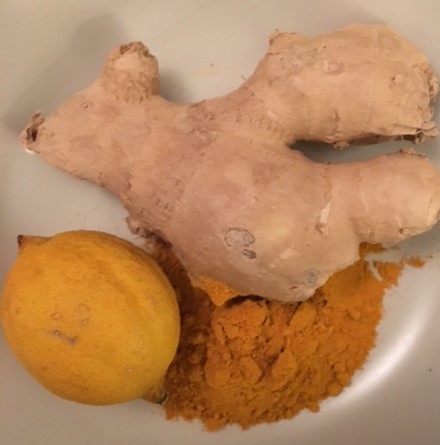
turmericA combination of turmeric, ginger and lemon in a tea with honey works wonders in boosting the immune system, especially at times when the body if fighting off an infection.


I use turmeric and ginger in my chicken soup which I have for breakfast every day. The ginger is boiled with the chicken for several hours and after taking out the meat I store the broth in the refrigerator to use over the next few days. You only need to heat the soup a little and then you add a teaspoon of this magic turmeric and a pinch of black pepper which helps to bind all those vital nutrients in the body.

Be aware that not all these super plants come from healthy sources with some of them containing pesticides. Make sure that your herbs are organic and that you get your chicken from an organic farm. Its not worth the risk.

Reino Gevers – Mentor for Leaders and Achievers – Your Health Matters

http://www.reinogevers.com


Leave a comment

Filed under cancer, exercise mental health, healing nature, immune system, lifestyle management, nutrition, stress hormones, Uncategorized

2017: Is the world a better place?

dresden

Dresden by night at the close of the year 2016

On New Year’s Eve I passed through the beautiful city of Dresden along the Elbe river in Germany.

I remember well when I first visited the city during the communist East German era in the early 1980s . It was a drab, grey, colourless place with the ruins of the famous Frauenkirche standing out like a sore thumb as a sad testimony to the allied World War II  bombings.

Today the beautiful Barock city centre with the Frauenkirche as the focal point have been restored to their former glory. Dresden and most of the former communist East Bloc today are definitely better places to live today than 25 years ago.

At the end of every year we seem to look at the mostly negative events of the year hoping the new year will bring us a better world. We live in a world of polarity and whichever side you fall on will have a major impact on your consciousness and state of well-being.

Yes, there were terrible events in the world during 2016 from the catastrophe in Aleppo to the growth of extremism in many forms, intolerance, earthquakes, climate change and other natural catastrophes.

As humanity evolves to a higher consciousness we will be seeing the pendulum sometimes sway in the opposite direction, creating the impression that humanity is moving backward. Pundits are arguing that  we have learned nothing from the fanatacism and extremism in the 1920s that led to the growth of fascism and World War II and are heading for another dark age in history. And of course it is necessary to be wary and alert. Nothing is a given.

However, I would venture to say that there is a difference to the 1920s. Never before, thanks to modern technology, have ordinary people been put into the position to spread their views and more importantly to support civic action groups in favour of just causes.

Part of the raised consciousness is the empowerment of the citizen beyond the vote once every four years for government that inevitably backtracks on its promises. Government is no longer  a major  agent of change. The world is influenced by countless other factors.

Responsibility lies with each one of us. It is precisely the crisis events of the past year that have triggered people into action. After the terrorist attack on a Christmas market in Berlin last month that claimed the lives of 12 people, Jews, Moslems, Christians and people from other faiths gathered in the nearby Kaiser-Wilhelm-Gedächtniskirche together praying for peace and reconciliation – an event that received little attention from mainstream media. The focus was all on the tragedy itself.

In South Africa we are seeing a growing number of ordinary people from all races beginning to stand up against the corruption and nepotism of their government but the main focus is again on the negative and not on the many positive things happening in country undergoing major change.

In the Himalayan mountains ordinary village people are planting thousands of trees to counteract the effects of climate change.

Media tends to focus on the negative, creating the impression that the world is going from bad to worse. Its not: If we take a larger perspective over a period of say 200-300 years humanity has in fact made huge strides forward. We have a much higher life expectancy, less disease and malnutrition, a much higher standard of living and a higher rate of literacy..

An Oxford University researcher Max Roser has collected a wealth of data on our changing world, proving with hard facts that our world is in fact getting to be a better place.  Since 1900 the global average life expectancy has more than doubled and is now approaching 70 years. No country in the world today has a lower life expectancy than the the countries with the highest life expectancy in 1800.

But in our focus and emphasis on the negative we ourselves become negative and this paradoxically results in less positive change. Lets move forward in 2017 with a positive outlook. What we perceive on the global political arena is a reflection of our mindset.

Reino Gevers – Mentor for Leaders and Achievers – Your Health Matters

http://www.reinogevers.com


1 Comment

Filed under Happiness Index, happiness research, humanity, life expectancy, mass media, mental-health, Uncategorized

Gratitude – the antidote to fear

Quantum healing energyIts the time of year when Thanksgiving is celebrated. In the U.S. Thanksgiving is a national holiday going back to the first English settlers in the new world in 1621 who would not have survived without the help of the native Americans.

In the mainly agricultural societies of the past, Thanksgiving had a far greater importance. The harvest period was celebrated in religious festivals and rituals as a tribute to a higher deity who was responsbile for sending the rain or the cycle of the seasons.

Modern man, where food flies into his mouth from the supermarket shelf, has lost this direct symbiosis with nature and with it the rituals that align with the greater universe.

Psychological research has found that keeping a daily gratitude journal can have numerous positive effects like making us happier, more successful and less self-centred. In one of the tests participants were given a week to write and then deliver a letter of gratitude in person to someone who had been especially kind to them but had never been properly thanked. Not surprisingly this had enormous positive psychological effects on the participants, especially on those who continued the test beyond the week.

More importantly gratitude is the antidote to the emotion that holds us back in almost every sphere of life – fear. Fear catapults us into paralysis whether its fear of dying from a deadly disease, fear of failure, having no money, losing a loved one. Fear has many demons and in most cases it pulls the mind into some terrible future scenario.We need only to reflect on such thoughts over the past month, year or even five years ago to know what tricks the fear demon can play on us.

I just read a report in  the paper today that a growing number of people fear the outbreak of a Third World War. Its not surprising because most mass media are echo chambers of negative emotions.

Keeping a daily gratitude journal or doing a morning meditation and focusing on just five things that you can be grateful for during the past 24 hours will pull you out of the negative spiral. Especially being grateful to ourself, helps overcome the shadow within. What are you profoundly grateful for?  You can’t be profoundly grateful for all the things that happened in your life and at the same time be fearful, angry, hurt and vengeful.

Reino Gevers – Mentor for Leaders and Achievers – Your Health Matters

http://www.reinogevers.com


Leave a comment

Filed under gratitude, happiness, Thanksgiving, Uncategorized

The choices we make

By Reino Gevers
trump__clintonIts official: Donald Trump has been chosen as the 45th U.S. president, like it or not. Here in Europe and elsewhere in the world most people woke up to the news with absolute disbelief and shock.  Only about five per cent of Germans would have voted for him, according to one opinion poll.
A lot of sincere, honest and good people I know in the U.S. have voted for Trump. I see a lot of similarity to the Brexit vote in the United Kingdom. Defying all the pollsters and predictions from political analysts, a lot of people out there are very angry and frustrated with the political establishment. It appears that a large percentage of the Trump and the Brexit voters can be found  among blue collar workers, people who have lost their jobs in once booming manufacturing industries and who are not getting by financially in new badly paid services jobs or dont have a job at all.

When societies undergo tumultuous changes, where all the old values certainties start crumbling, toxic emotions are triggered. Where fear reigns, the demagogue appealing to basic survival instincts, has easy play.

Trump is promising to make America great again and to double economic growth. Disappointment is inevitable. I remember very well the euphoria after Barack Obama was chosen as the first black American president. Did it change the lives of the ordinary working family in the U.S. or the rest of the world? And a Trump presidency won’t be working miracles either. Nor would a Hillary Clinton have worked wonders for that matter.

Its an illusion that a government,  a president, an employer, a parent or anyone else out there can make you a happier, healthier and a more contented person. Unfortunately politics is massively fuelling this deception and creating a culture of entitlement.  My take on this is that the world has become far too complex for any one government or leader to make a difference. We need a major cultural change of attitude.

Whether you become a happier, more successful, healthier and contented person is a result of the personal choices you make. And  the first step is taking over responsibility for everything that happens in your life:

  • We cannot control external events but we do control our reaction to them.
  • We do have a choice of what people we surround ourselves with. Who are your friends? Are they upbeat, positive or have a preominantly negative outlook on life? We become the sum of the five people we surround ourselves most with.
  • What do you feed your mind and body with?
  • What are your five most cherished values and who is the person you know who emanates them the most?

Life is a learning curve and we cannot delegate resonsibility to others.  I love that famous quote from John F. Kennedy at his inaugural speech on January 20th 1961: “My fellow Americans, ask not what your country can do for you, ask what you can do for your country.”

Reino Gevers – Mentoring for Leaders and Achievers

http://www.reinogevers.com


Leave a comment

Filed under demagogues, john f. kennedy, personal choice and happiness, trump and hillary, trump presidency, Uncategorized

Kick-starting from the down cycle

licht_schattenBy Reino Gevers

What makes some people happier, more successful and healthier than others? Although research pinpoints some heriditary factors the real clue that makes those rare individuals stand out from the rest of the crowd, is how they deal with the natural up-and-down cycles of life.

The common denominator of highly successful people such as Nelson Mandela, talk show host Oprah Winfrey, businessman Richard Branson or writer  J.K. Rowling is that they all learned ways of kickstarting themselves out of terrible down cycles, that would have destroyed most other people.

The natural reaction to a major setback in life is a type of “shock-freeze paralysis.” The kick-starters however, have adopted habits of how to get out of the down cycle as soon as possible. Lets face it life is not all sunshine and glory. We have bad days and they can sure knock us out of all that we trust and believe in. The loss of a loved one, a life-threatening disease, job-loss, bankruptcy, divorce, and an unforeseen accident. Life is full of unforseen circumstances.

While we can’t control external events we sure have control of how we react to them. So how do you get out of the down-cycle? For me walking the Camino in Spain has been a test of up-and-down cycles every time, a real analogy of life. Going on a pilgrimage, or taking a complete time-out for reorientation, has for me been a major help, like leaving a dysfunctional marriage and a well-paid job that was fast pulling me into a burnout. Simply being in a completely different setting with no electronic distractions and having alone time is really important in stimulating creativity  – and more importantly – learning the lesson from the down cycle. People with a generally high energy level and thus physical and mental resilience, will also find it easier to get out of the down cycle. So if you are in a dark spot, here are some tips:

  • Get moving with physical exercise to get those happy hormones going and start boosting the body’s immune system with nutrients from power foods.
  • Find room for alone time,  prayer, meditation or any other ritual that gives you energy.
  • Meet with friends, family, or any other people that you know will lift you up with positive vibes and to strengthen your feeling that you are part of a community.
  • Create a mental picture or vision board where you want to be in six months, three years, five years.
  • Givers Gain: Are there any ways of where you can give to others in serving the community and making a positive contribution to society? It helps get you out of the rut of endless negative self-reflection.

Reino Gevers – Mentoring for Leaders and Achievers

http://www.reinogevers.com


Leave a comment

Filed under exercise mental health, happiness, Happiness Index, happiness research, lifestyle management, mental-health, monks, nutrition, outdoor coaching, psychology, raised consciousness, spirituality, work purpose

Happiness is …

Woman jumping

By Reino Gevers

The “How-To” happiness culture seems to be flourishing all over the glossy magazines and the bestseller lists, suggesting countless ways of living a happy life. This comes amid an almost epidemic rise in the number of people suffering from depression.

I’ve just spent a weekend with a group of people in the medieval northern German monastery of Loccum, discussing several topics around the issue of “happiness”. Some people said spending time with their families made them happy, others mentioned appreciating the “magic of the moment” and spending time with good friends.

One person mentioned that in order to experience real happiness you need also to have gone through periods of deep darkness. “We need to accept death in order to accept life”, said a retired CEO from Switzerland.

Happiness exists in the contrast experience of grief and sorrow. Life is cyclical with up-and-down periods. Just accepting this pure fact relieves the pressure that we always need to show a positive face. Even the people who seem to be more successful, happier and content go through these dark periods. The difference is that they have found a better coping-mechanism in recuperating from those down cycles and to move on.

Professor Johannes Hirata from the University of Osnabrück has done a lot of research on happiness, development and ethics. Some of his conclusions:

  • More income does not necessarily mean more happiness but you need a certain base income for basic needs.
  • Some of the world’s wealthiest countries  (Germany is only 15th on the happiness index) are not necessarily the happiest while several relatively poor Latin American countries are pretty high up on the list.

Why this is so depends a lot on how far you feel socially included. Trying to keep up with the Joneses won’t make you happy because material things only provide short-term satisfaction. Professor Hirata has pinpointed also certain personality traits in happy people: Extroverted and balanced people have the right combination.

Adam Grant, an associate professor at Wharton School, did an analysis of 35 separate studies and found that the statistical relationship between extroversion and income was basically zero. People who ranked right in the middle for extraversion and introversion (ambiverts) turned out to be the best salespeople.  It means that if you can be assertive and enthusiastic and at the same time have the ability to listen – then you have the right combination to be successful and happy.

Not surprisingly, according to Hirata, unemployed people are among the unhappiest in the world. People want to make a contribution with their individual talents and get appreciation for it, especially at the workplace. A solution would be reducing the working week, spreading the available jobs amongst more people. At the same time this would increase productivity with part-time workers having more time to spend with their families and to pursue a hobby.

Reino Gevers – Health Mentoring for Leaders and Achievers

http://www.reinogevers.com


Leave a comment

Filed under Uncategorized