
Category Archives: Uncategorized

The biggest obstacle to living your destiny

Just prior to the year 2000 there was a strange phenomenon spanning the globe with large groups of people believing that a catastrophic event would extinguish all life on earth at the turn of the clock into the new millennium.

There was the rumor, that the Y2K computer bug would cause major power outages and computer breakdowns across the world as the calender rolled over into the year 2000. Some Christian sects saw in the year 2000 the Apocalypse and the Second Coming of Christ.

In the end, the year 2000 came and went without much incident. The cults of course found various explanations why things didn’t turn out as they predicted. The calculations were slightly off and the apocalypse would occur at a later date or the reason it didn’t happen was a result of the faith and intensive prayers of the followers. Some followers downplayed the significance of the failed prediction or quietly forgot their predictions.

Fixed belief can completely derail you from your destiny

The event was however very revealing of how a fixed belief can completely derail and capture the minds of millions of people. We are seeing the same phenomenon in the drumbeat of political propaganda and fake news. Once a mind has been locked into a belief. There is no rational argument that will persuade the person to change his or her mind. It is wasted energy to engage with a person who is unwilling to listen or possibly see things from a different perspective.

While the term “sin” in the religious context is often equated with moral transgressions, the deeper spiritual meaning is more complex. It could be explained as a disruption of spiritual harmony, causing harm to the self, and straying from the path of your destiny.
The universe finds expression in nature

A principle in nature is constant flow, adaptation, and evolution. The universe, or God, finds expression in nature. And, we humans are very much part of the interaction with all living beings.

In the coming decades, humanity is at the cusp of making a major leap in the evolution of consciousness. But it can also go the other way with a major breakdown in civilization as we know it if we fail to do the internal and external work.

Internally we need to confront the demon of addiction. It is the addiction to the immediate gratifications, like substance and food abuse but especially the fixation to limiting political or religious beliefs. The new spirituality is cosmic by nature, emphasizing a deep, interconnected relationship between the individual and the universe as a whole. It transcends traditional religious boundaries and is characterized by a sense of awareness and awe for the natural world around us.

This is the stepping stone to the external transformation. Since the industrial-revolution humanity has seen the earth as a material object that needed to be exploited, in contrast to the ancient traditions that saw the divine in every object and living thing. The earth itself was seen as the Mother, a living entity. Certain places were pinpointed as locations with a high-energy vortex and portals to the hereafter. They were chosen for ritual and worship.

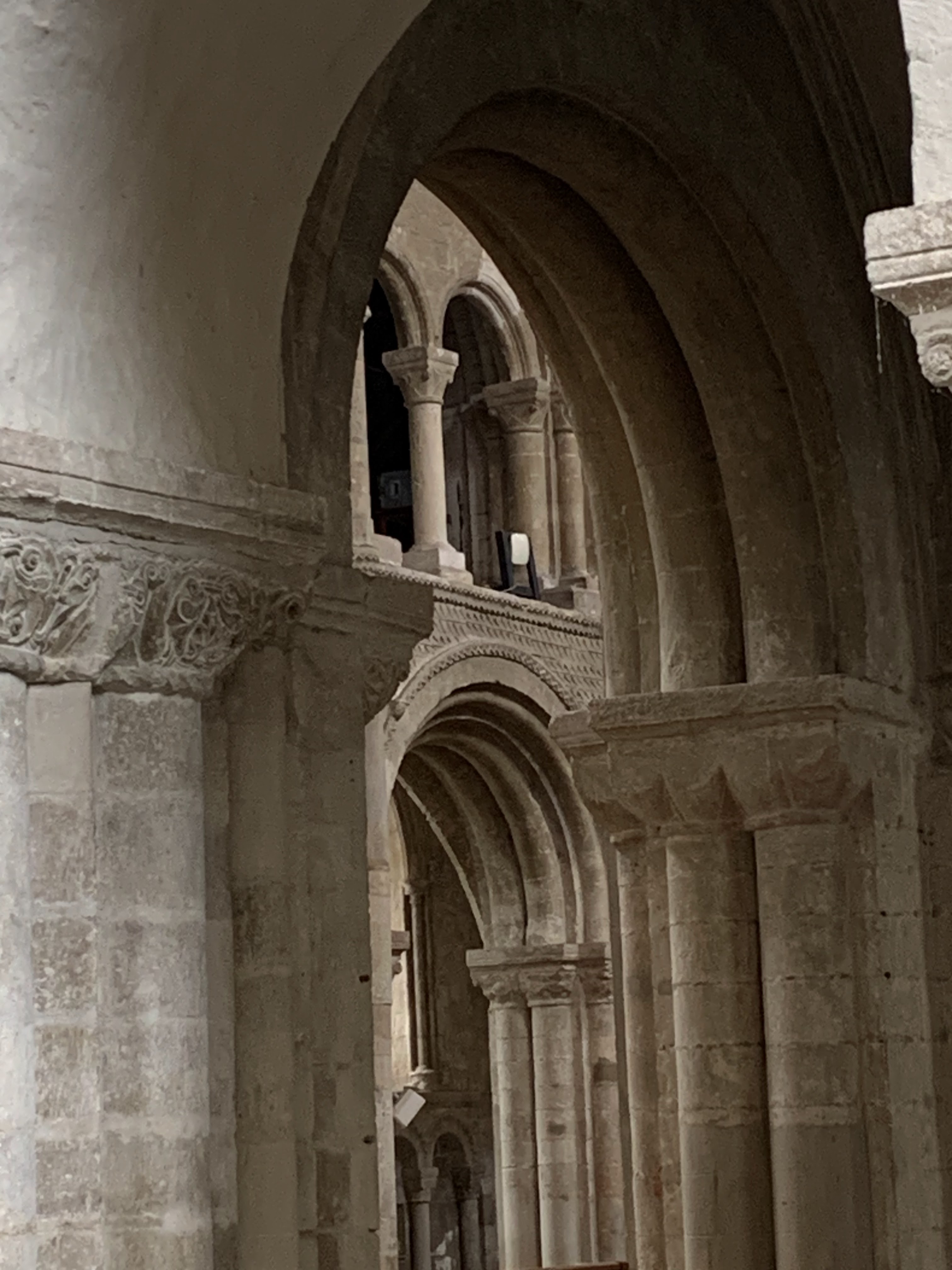
The cathedrals, chapels, and churches in Europe were often built on such ancient locations which is why these quiet spaces offer particular sanctuary for quiet stillness.

Especially during times of stress, uncertainty, and emotional turmoil time spent in solitude or in nature will calm the mind and open the senses to the whispers of the soul. When surrounded by the beauty, sights sounds, and smells of nature you become realigned with the bigger whole.

Allowing the mind to recover from stress and mental fatigue in nature helps restore cognitive functions and clarity. When you practice deep walking in nature you will regain your natural pace and rhythm.

Exposure to sunlight and the natural day-night cycle can help regulate and improve sleep patterns. Adequate sleep is essential for mental well-being. Sunlight plays a crucial role in the production of Vitamin D in the body, essential for bone density, muscle function, immune support, and cardiovascular health.

A principle of nature is constant change

A principle of nature is the cycle of change. Plants, animals and insects are constantly adapting to changing environmental conditions and seasonal cycles. Part of God’s evolutionary plan is constant refinement and perfection. By embracing nature’s wisdom you rediscover purpose and meaning.

The disconnect from our natural environment is responsible for much of the emotional turmoil and imbalance we see around us. With the pull of technology and digital distraction becoming ever greater, it is becoming more important than ever to take a time-out in nature to rediscover who you really are and who you are destined to become.

Reino Gevers – Author – Mentor – Speaker

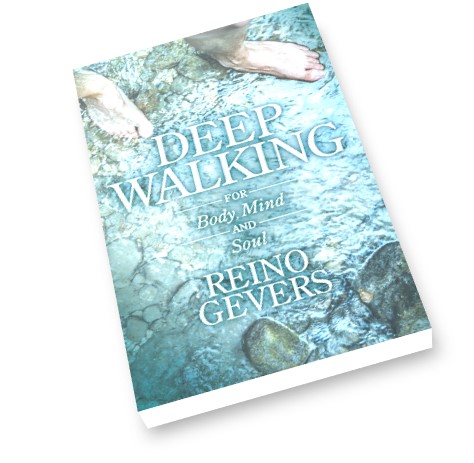
P.S. My new book “The Turning of the Circle: Embracing Nature’s Wisdom for Purposeful Living” has just been published. You might also find my other books “Deep Walking for Body, Mind and Soul” and “Walking on Edge: A Pilgrimage to Santiago” of interest. They are available where all good books are sold.

Leave a comment

Filed under mental health, mental-health, nature, Uncategorized

Connecting to your inner wisdom

Understanding and managing your emotions is key to achieving personal growth and accessing a higher vibrational energy. You can only tap into your inner wisdom by transmuting the charge of your toxic emotions such as fear, shame, anger, and grievance.

This poses a particular challenge during a time when social media and the political narrative feeds on negativity and our darkest toxic emotions.

Your body is the most authentic recording device of everything that has happened in your life. You will dream of events that happened decades ago because those memories are stored away somewhere in the depths of your body cells.

When you dream of when you were a seven-year-old and stole the cookies from Grandma’s closet, you have in some way not closed with that incident emotionally.

Your head-mind probably made up all sorts of reasons why taking those cookies was in order, while your sub-conscious heart-mind knew very well that what you did was stealing and that you hurt Grandma because you lied to her.

A tension or dissonance between head-mind and heart-mind, like acting against a gut feeling or doing something where all the alarm bells are running at a heart level, are just those things that the body will always remember.

Training your “heart-mind” to be emotionally mature is one of the reasons we are here on earth. We humans are imperfect beings, and probably the most disconnected of species from ourselves and our natural environment.

We have incarnated as souls to use our bodies as instruments of learning.

The heart is not merely an organ of the cardiovascular system that transports nutrients, oxygen and hormones throughout the body and removes metabolic waste. In the spiritual sense the heart is described as the “seat of the soul.” It is the first organ that develops in the fetus and is the connection between our physical and non-physical (soul) selves.

Impulses or thoughts flow first from the heart and then to the brain. The brain dissects, rationalizes and analyzes. The “heart-mind” is authentic and closest to the true self or soul purpose. Knowing the difference between “head-mind” and “heart-mind” is the spiritual learning part.

Our body is constantly sending us signals about what we need to hear and work on. The problem is that we are so caught up in the world of distraction that we mostly fail to listen until the body gets really angry and calls a time-out with some illness or malady. It is no surprise that cardiovascular diseases top the list in much of the Western world.

Regaining the connection

Regaining that connection to the “heart-mind” comes mostly during times of solitude, during meditation, prayer and deep walking. That is when we become aware of our emotional state of being. Some of the “emotional memories” stored in the body could go back many years or even decades.

These energies can be transmuted very well with the ancient body arts of tai chi, qi gong and yoga that were developed and refined by spiritual masters over many generations.

It is only fairly recent that these ancient arts have reached the Western world. One of the great tai chi masters, Cheng Mang Ching, was ostracized by the Chinese community in New York when he began teaching tai chi for the first time to Western students in the early 1960s.

If you walk the main Camino Frances, you will be walking for five weeks or longer. After two or three weeks on the road you realize that the Camino is much more than a mere physical exercise.

Not only does the body start detoxing, but I have noticed on my walks that dreams, childhood events, and memories of traumatic relationships that occurred many years ago return with a particular clarity.

These are particularly precious healing moments when old trauma is released to open up the channels for a flow of new energy.

Whatever the heart-mind hasn’t transmuted emotionally will at some stage come back to haunt you. It is why the mother on her death bed has that last wish before dying to reconcile with the son she hasn’t spoken to for years.

Volunteers and therapists companioning the dying have told me that the deepest regret is most often not having made amends with innermost family members. A peaceful death then only comes when that “something” has been dealt with.

What Chinese medicine has known for centuries, modern medicine is confirming with latest research. Many a serious illness has its origins in emotional baggage stored in the body-mind.

There is a particularly poignant passage in the third Beatitude of the Bible: “Blessed are the meek, for they shall inherit the earth.”

In the original Aramaic language, spoken by Jesus, the meaning is more subtle: “Tubwehun l’ makiche d’hinnon nertun arha.” This roughly translates to: “Renewal to those in emotional turmoil and blessed are those who can soften that which has hardened in their bodies.”

While walking in solitude you will inevitably be confronted by the same phenomenon as when lying alone awake at night: Hundreds of thoughts will be passing through your mind of past and future things.

One thought chases the next as you wind yourself up and down in a spiral of dancing monkeys in the head.

You won’t control those thoughts by practicing mind control methods. The mind does become aware of what it is thinking about and can extract itself with an accusatory finger of “why can’t I think of something else? Why can’t I let go of these worrying concerns in my head?”

You will notice that as the body releases tension during your walk, those dancing monkeys gradually start disappearing as you begin the descent from the head into feeling the body.

This is best done by aligning to the present moment by focusing on your breathing and counting the inhaling and exhaling of breaths.

You can also start by feeling each step touching the ground, feeling the ground and how the energy of the earth moves from your foot up your legs, spinal cord, neck and the crown of your head. Start by walking very slowly, aware of the present moment, just concentrating on these small things to liberate your mind.

Our ancestors practiced ceremony and rituals to transmute trauma on a body level. Animals still have this mechanism intact. A herd of antelope will run apparently haphazardly in all directions when one of them has been killed by a predator. Their bodies shiver and shake, but minutes later all has passed and they will resume grazing as if nothing has happened.

Calming mind and body

Transitioning from the depths of our lowest emotional frequencies, such as anger, shame, resentment, hate, greed, fear, and anxiety, towards the pinnacle of human evolution involves embracing the transformative power of compassion, love, empathy, gratitude, peace, and serenity.

Even as you ascend the ladder of higher consciousness, the complete liberation from toxic emotions and feelings remains an elusive goal; you are, after all, only human. However, through unwavering commitment and diligent practice, you can expedite your exit from the rabbit hole of negativity.

It will empower you to savor extended periods of vitality, hope, and inner tranquility, enhancing your overall well-being and vibrational frequency. It is the recipe for longevity and good health.

Reino Gevers – Author – Mentor – Speaker

P.S. This is an extract from “Deep Walking for Body, Mind and Soul. All my books are available on Kindle, and paperback where all good books are sold. If you would like to order in batch to gift to friends, family and employees you can contact me by DM for a special discount.

Leave a comment

Filed under mental health, mental-health, spirituality, Uncategorized

A time to reap your rewards

If you want to enjoy the rainbow you must be prepared to take the journey through pain

In our culture, there is a festering poison of feeling entitled to special benefits or privileges without having made any effort to attain them. If you haven’t invested in the pain and walked the burn that brought you success you will never fully appreciate what you have and risk losing all.

In the ancient Taoist philosophy of the Five Element late summer is associated with the Element Earth. Using the analogy from farming: If you have invested wisely in seeds and fertilizer to plant your crop in spring, and diligently irrigated and weeded your fields in the summer, you will most likely be in the fortunate position of reaping a good crop in late summer.

Every sports star knows that you have to be disciplined and train for several hours every day for several years to reach the top league. Learning a new language requires learning on a regular basis. If you start a new business you have to invest money first, risk failure and maybe start all over again before finally making it.

Investing more than the average

The most successful people constantly push their boundaries and do much more than the average. It not only demands thinking creatively, breaking free from self-imposed limitations, and pursuing ambitious dreams, but putting in the work and the effort.

An entitled person will only see the rewards and compare. “Why can’t I have the same? I’m after all more beautiful, more intelligent …” It is the mindset that spends more than it earns. It is reaping the crop before it has ripened. There is an old English proverb: “Cheat the earth and it will cheat you.”

Falling into the trap of the blame game

Unconscious people are in the blame game and weak because they are victims of everything. Instead of taking complete responsibility as the captain, they think everyone else is responsible for their unhappy condition.

It’s so easy then to accuse the government, other nations, other races, business competitors, parents, siblings, and other people of the situation we find ourselves in. Few people are capable of taking full responsibility for whatever happens in their lives.

The crop will never bear fruit and grow to its full potential if the field is overgrown with weeds. Bugs only thrive in an unbalanced environment.

We subconsciously accumulate customs, habits, and opinions from the people we surround ourselves with and the information with which we feed our brains.

In the book of Wisdom, the I Ging, the earth is described as the receptive, receiving, and softer energy of the female or yin. It is the counterpart, but not the opposing force of the creative Yang. The enormous and receptive force of Yin needs the Yang force to exert and channel the force.

In much the same way, the heroic leader studies the situation at hand, responding accordingly. Action is never taken without a clear grounding and the realization of what path needs to be taken.

Mother Earth provides life. She provides nutrition and room for all beings, be they of a good or bad predisposition. To illustrate this particular importance in comparison to the other elements, many of the ancient writings and drawings have the earth element positioned centrally with the other elements around it. It also emphasizes the importance that at the end of each change cycle, we go full circle back to earth—to the source.

We need thought processes and thinking to accomplish tasks and to give room to our ideas and creativity. The challenge is to get a feeling about when we cross our own boundaries and those of others.

Do I have enough resources to go ahead with plans? Do I make provision for more or for less? Do I have enough in reserve? Or do I live from too much-borrowed energy, becoming indebted to other people and borrowing money?

These are the questions that need to be asked in almost any life situation where the need for change or turnaround is called for, especially if we are feeling constant fatigue after surrounding ourselves with certain people or are met with constant obstacles.

The balanced earth person is trustworthy, generous, and of a stable temperament. They sometimes are slow to respond, but will be thinking things over carefully before giving you a reply. This could be very irritating for an imbalanced pumped-up person expecting a machine-gun reply.

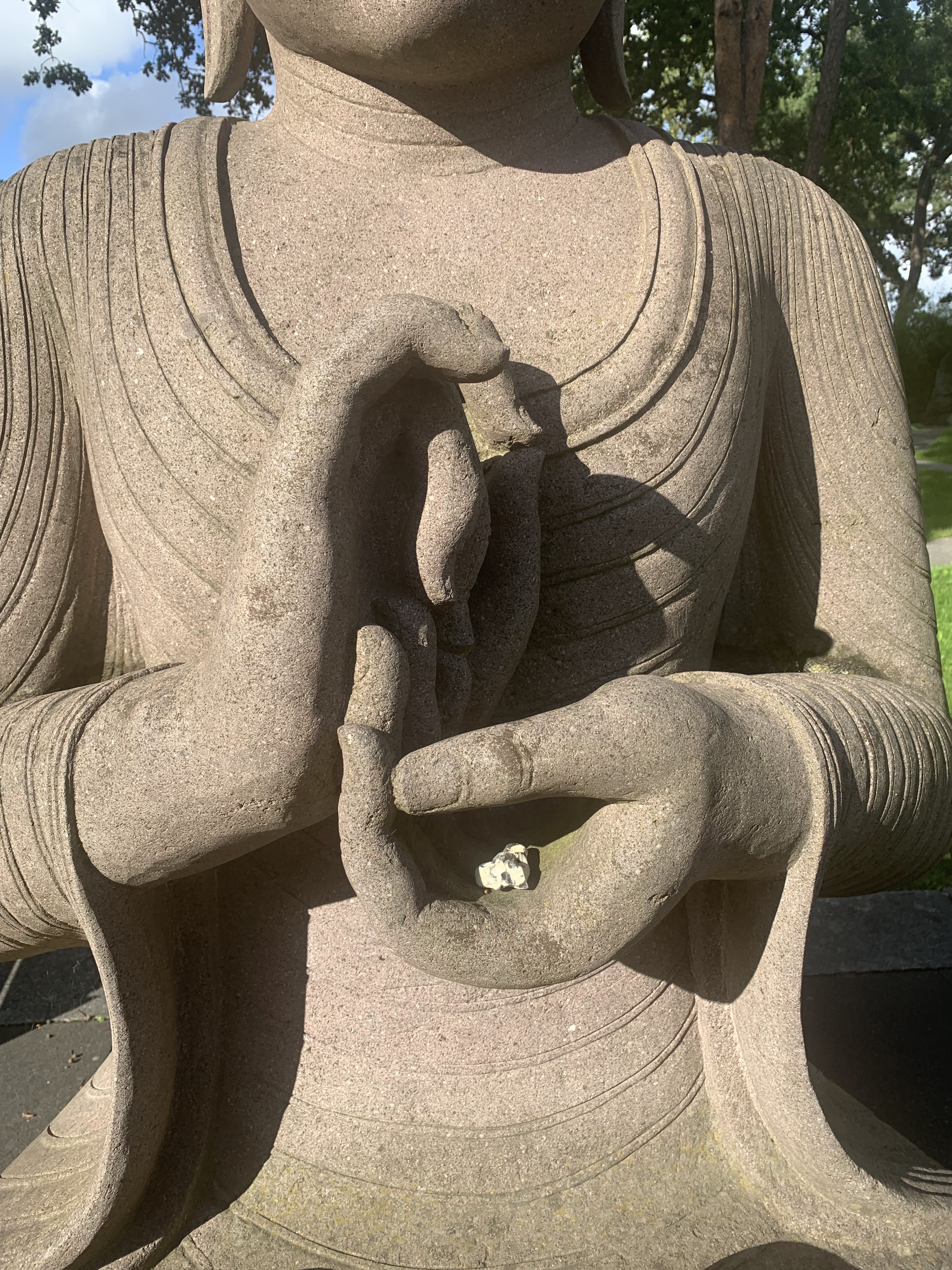
Symbolically, he would be the plump, pot-bellied, sitting Buddha at peace with himself, centered with the universe, and observing calmly while everything around him is falling into loud chaos. They are the steadfast rock in the ocean storm.

In the philosophy of the Five Elements, the Earth is described as being gracious and filled with abundance for all that life has to offer. On the other hand, it demands respect and the absolute maintenance of ethical standards that encompass all living beings. If these are violated, the consequences can be merciless. What is my true motivation? What effect does it have on others? Am I orientated to fulfilling my own greedy needs, or do I have a broader picture in mind?

Reino Gevers – Author – Mentor – Speaker

P.S. This is an extract from “The Turning of the Circle: Embracing Nature’s Wisdom for Purposeful Living” which has just been published. You might also find my other books “Deep Walking for Body, Mind and Soul” and “Walking on Edge: A Pilgrimage to Santiago” of interest – available where all good books are sold.

2 Comments

Filed under mental health, mental-health, Uncategorized

Self-worth and finding purpose and meaning

As you walk the path of life with its up-and-down cycles of dealing with the loss of a loved one, a significant health issue, or financial challenges it is easy to lose self-esteem, passion, and your sense of purpose and meaning.

At the core of how you feel and care for yourself is how you define your place in the world. Are you passionately enjoying what you are doing? Are you a grateful and happy person when you get up in the morning?

What we call a “midlife crisis” can also be a time to redefine purpose and meaning. You might be finding yourself in an unfulfilling job or engaging in repetitive and monotonous routines that suck away your life energy. But you lack the courage or are too fearful to make the necessary changes.

Photo by Spencer Selover on Pexels.com

A once fulfilling or loving relationship has degenerated into hate and recrimination. A job that was aligned with your values and purpose has changed so much that it has just become emotionally and physically exhausting.

Loss of meaning and purpose shows itself in negative thinking, constant bickering, and irritability. You will be compensating the search for existential meaning with addictions to bad foods, alcohol, substance abuse, or digital entertainment. This lack of self-love and self-esteem will inevitably manifest itself in body shape and appearance.

Major life transitions, such as a job loss, retirement, or a divorce, can lead to shifts in identity and purpose. Goals, purpose, and meaning need to be redefined.

A healthy sense of self-worth can be cultivated with the three pillars: body, mind and soul.

  • Looking after your body by doing regular exercise is key. Only 4,000 steps a day of active walking in nature will already significantly boost your metabolism, bone density and mental health, according to latest research. Avoid processed foods, sugars, artificial sweeteners and soda drinks. A mainly Mediterranean diet of fresh fruit, vegetables, olive oil, fish, and a little meat not only feeds your body with vital nutrients but also your brain.
  • Feed your mind with positive thoughts. Replace a negative thought with a positive thought. What is going well? What is good in your life? Stop comparing yourself with others. There will always be people who appear to be wealthier, more successful, and happier than you. Read good books and train your mind by solving puzzles, learn a new skill or language.
  • Soul purpose, meaning, and validation are often found in a community or a tribe sharing the same values, and ideals. Experiential spirituality comes from within. Practices such as meditation, deep walking, mindfulness training can open the gateway to a profound spiritual experience, characterized by a sense of union with the divine, and a feeling of being interconnected with all of existence.

In essence. you have to define or redefine your purpose every new day. Be grateful to be alive. Every new day offers a new perspective and new opportunity. When on your authentic soul path, you will be evolving and growing until the day you die.

Reino Gevers – Author – Mentor – Speaker

P.S. If you’ve found this article of interest you might want to read more in my books. “The Turning of the Circle: Embracing Nature’s Wisdom for Purposeful Living” has just been published. You might also find my other books “Deep Walking for Body, Mind and Soul” and “Walking on Edge: A Pilgrimage to Santiago” of interest – available where all good books are sold.

Leave a comment

Filed under mental health, mental-health, Uncategorized

Are you a “no” person?

Are you finding yourself trapped in self-talk emphasizing all that is not possible when the universe is constantly sending you messages on how you can escape the negativity trap and live a life of purpose and meaning?

The story goes that a village in the Italian Alps was hit by floodwaters with all the locals quickly heeding warnings from rescue workers to leave in buses for shelters on higher ground. All but one man refused to leave. Eventually, the rescue workers came by in speed boats with the waters rising rapidly. Again the villager refused to leave saying: “God will look after me.”

Failing to get the message

As the waters rose the villager had to eventually climb onto his rooftop. A rescue helicopter swooped low offering help. Again the villager refused help: “I’m staying. I’m putting my trust in God to help me.”

The inevitable happened. The man drowned. Reaching heaven’s gate, he accused God of ignoring his prayers. “What do you mean?” God responded kindly. “First I sent buses to the village to rescue everyone, then I sent the rescue workers in speed boats and finally I sent the helicopter and you still refused to get the message.”

When trapped in a spiral of negativity or in the sadness of that which once was and is no more, you will never perceive the whispers of the universe, offering you new opportunities in the ever-turning cyclical spiral of life.

The message from the universe could come in a casual word dropped by a passenger in a train, an image on a billboard or in a book full of wisdom that puts you on a completely different trajectory.

Photo by Jacub Gomez on Pexels.com

The underlying fear and trauma

If you have a partner, a dear friend or a family member who responds with a “no” to everything you are suggesting, then you might consider the following. There might be underlying fears and trauma for their negativity. They might be in the process of transmuting these fears and trauma by taking a necessary painful walk over the hot coals.

They might respond with “no” because they are stressed out and feeling emotionally drained. You will see with great clarity an opportunity for them, while they are not seeing it at all, making you angry for wasting your time with them. You can only react with patient communication and active listening in breaking down the barrier.

Stepping out of the comfort zone

Stepping out of the comfort zone takes courage. Most people would rather suffer all their life in quiet misery than make the change that could completely transform their life. One of the major reasons why people are risk-averse is that they fear the shame of failure and loss if things go wrong. Staying in the comfort zone provides a certain sense of predictability and control. Meanhwhile, the mental imposter feeds low self-esteem and lack of self-confidence with negative self-talk: “That’s impossible. I’ll never manage that. I can’t do that. I don’t have the skills, money, and talent that others have.”

The seeds of low self-esteem are often sown in early childhood with the constant criticism from parents, siblings, teachers and peer groups far outweighing tangible and positive reinforcement. Especially those individuals who are different or highly talented will feel the pressure to conform to the lowest common denominator of the tribe.

Meanwhile opportunity has been waiting all along at the other end of the smokescreen. Overcoming the fear of walking an unknown path involves acknowledging these fears, taking it one step at a time, building self-confidence by acknowledging those steps, and practicing self-compassion. The first steps are a painful walk in leaving well-known territory, and the “protection” of the tribe

But ultimately the walk into authenticity is highly rewarding. By facing and embracing new challenges consciousness and personal growth are elevated. You increase your resilience by facing all the storms of life.

There is no satisfaction greater than the realisation that the universe is sculpturing you into the person you were always meant to be.

Reino Gevers – Author – Mentor – Speaker

P.S. If you’ve found this article of interest you might want to read more in my books. “The Turning of the Circle: Embracing Nature’s Wisdom for Purposeful Living” has just been published. You might also find my other books “Deep Walking for Body, Mind and Soul” and “Walking on Edge: A Pilgrimage to Santiago” of interest – available where all good books are sold.
Leave a comment

Filed under mental health, mental-health, Uncategorized

The dragnet of regret

How often have you caught yourself going back into the past with the feeling of regret on the opportunities missed, the words you wished you had never said, and the things you would do differently if you could turn back the clock?

At times the feeling of regret can be so overwhelming that it’s like a dragnet pulling you down into a dark abyss of unhappiness. But according to author Daniel H. Pink regret is a fundamental part of our lives and can help us make smarter and better decisions in the future.

Based on the World Regret Survey, Pink has identified four core regrets.

Foundation regrets. These are regrets on the human need for some form of stability. Pink quotes Jason who says: “I regret not saving money diligently ever since I started working. It’s nearly crushing every day to think about how hard I’ve worked for the last twenty-five years or so, but financially I have nothing to show for it.”

Boldness regrets. Over time we are much more likely to regret the chances we didn’t take than the chances we did, whether its work choices, education or the choice of a partner. Foregone opportunities can be especially haunting during times of stress and pain.

Moral regrets. Most people wish to be seen as good people. But over time morally dubious decisions can be gnawing such as swindling in a business or cheating on a spouse.

Connection regrets. According to Pink fractured or unrealized relationships with spouses, partners, parents, friends, and all other close relationships constitute the largest deep structure category of regret.

Photo by Liza Summer on Pexels.com

We can set very high standards to the self and are at times our own worst critic. The melancholy sadness and regret over that which was and is no more is not only debilitating but prevents you from moving forward. Many of our regrets can in fact be undone by making amends, reversing bad choices, and taking a different perspective by posing the questions: What did I need to learn and how can I make a better choice in moving forward? If I’ve harmed others, can I make amends through an apology or some form of emotional or material restitution?

Was the regret merely an unpleasant incident in your life or does it define your life? Practicing self-care and self-compassion can neutralize some of those feelings if you treat yourself like you would be treating your best friend.

You forge your identity with the story that you tell yourself. The first step is acceptance of that feeling or emotion of regret and replacing it with a positive thought moving forward. “I made a bad decision. I feel terrible about it. But I lovingly accept myself the way I am. I am harvesting from the rich experience and moving positively forward.”

In loving yourself you build the ability to nurture and better serve your relationships. The lesson of a door slammed shut is to do better next time.

Reino Gevers – Author – Mentor – Speaker

P.S. If you’ve found this article of interest you might want to read more in my books. “The Turning of the Circle: Embracing Nature’s Wisdom for Purposeful Living” has just been published. You might also find my other books “Deep Walking for Body, Mind and Soul” and “Walking on Edge: A Pilgrimage to Santiago” of interest – available where all good books are sold.
Leave a comment

Filed under mental health, mental-health, Uncategorized

Celebrating community on a pilgrimage

One of the reasons I‘m hooked on making an annual pilgrimage walk on the Camino de Santiago is the wonderful people you meet on the way and the celebration of community with people from very different cultures, and religious backgrounds.

It is one of the few places left on earth where you meet individuals who open their hearts, discussing intimate details of their life with you, at times only minutes after meeting for the first time.

The hospitality of the locals on the Camino plays a role. Much of rural Spain still has healthy supportive communities where people meet in cafes and bars on a daily basis to have a chat.

The owner of a bar-hotel and restaurant business confided to me that the cafe part of his business was not really profitable but „closing this place for the winter months would be like closing the local church.“

A sense of belonging

While talking to fellow pilgrims in Santiago we agreed that many spiritual seekers on the Camino were finding a community and sense of belonging on this ancient path they were no longer finding in traditional religions.

As humans, we are hard-wired as social beings. Our relationships and social connections determine who we are. Strong connections and relationships are created when we share our feelings, inner wounds, and vulnerabilities.

Many people walking the Camino have seen their lives come apart on some level. Relationships that have broken down, the death of a loved one, financial loss, or having to deal with the diagnosis of a life-threatening disease. In sharing their stories pilgrims no longer feel “alone.”

Photo by Pavel Danilyuk on Pexels.com

There is experiential spirituality felt in a healthy community that emanates empathy, love, and kindness. Community is not only felt in a relationship with others, a higher deity but also in a commune with nature and the world around you.

It is walking in nature and bonding with people at the same time that makes the Camino such a magnet for spiritual seekers. This year will again register a record number of pilgrims on the path.

The celebration of the communal ritual

For this reason since ancient times humanity has embedded the celebration of community in religious rituals. Communal meals or rituals involving the sharing of food and drink can be found in ancient Greek and Roman religions, where a communal meal with the gods was seen as a means of establishing a bond or connection.

The Jewish Passover festival and the holy communion ceremony in Roman Catholic, Protestant, and Orthodox religions are celebrated as rituals of sacrifice.

The word “commune” has its roots in Latin, derived from the word “communis,” meaning “common” or “shared.”

In our modern era, we are seeing an explosion of “sharing” and “connection” on social media across continents – the result of a human yearning. Urban lifestyle without connection to natural surroundings and friendly neighbors increasingly leads to individuation, self-isolation, loneliness, and mental health issues.

Online “tribes or families” can never be a replacement for the physical community where there is unconditional physical contact – the holding of hands, a hug, and a kiss on the cheek. This became acutely obvious during the recent pandemic.

Ultimately we all yearn to be seen, to be heard, and to be validated in a positive sense. We want to belong and in that belonging, we find purpose and meaning.

Reino Gevers – Author – Mentor – Speaker

One more thing...My new book “The Turning of the Circle: Embracing Nature’s Wisdom for Purposeful Living” can now be ordered on Amazon and where all good books are sold. You might also find my other books “Deep Walking for Body, Mind and Soul” and “Walking on Edge: A pilgrimage to Santiago” of interest.
Leave a comment

Filed under Camino de Santiago, mental health, mental-health, Uncategorized

Beyond Religion?

Membership of Christian churches and attendance of services is falling dramatically in many countries. But does that mean that more people are becoming agnostic, atheist or have lost their belief in a God or the divine?

On my current pilgrimage walk on the Camino de Santiago in northwestern Spain, we passed through several villages and towns on a Sunday. All these beautiful and ancient temples of worship, some dating back to Celtic times and early Christianity, had their doors shut.

One church did happen to be open but a man shooed us pilgrims away, making it clear that we were not welcome to have a look inside. I do normally enjoy sitting in these sacred places, meditating and feeling into the powerful energy fields that they emanate.

It hit a sore point to be rudely turned away. It symbolized for me everything that has gone wrong with conventional religion, fixated on empty external ritual, and controlling doctrine.

Churches and temples should be open for people of all denominations as long as they show respect, giving everyone sanctuary seeking a quiet space from the noisy and distractive pull of the external world.

For centuries religions from all the major faiths have vilified, ostracized, burned at the stake and shamed those that did not conform or belong. At the same time the hypocrisy of the clergy regarding sexual abuse, financial misdemeanors and interference in politics is laid bare like a festering open wound.

Jesus never had plans to establish an institution or a church. His criticism of the Pharisees, the clergy, and their hypocrisy was especially directed at those leaders burdening the faithful with strict rules and regulations while showing little love, mercy and compassion to those in need.

There is a saying that religion is for those who fear hell while spirituality is for those who have been there. On my more than a dozen walks on the Camino I have met countless people who have gone through the hell of losing loved ones, confronted life-threatening illnesses, the dark holes of depression, financial ruin and relationship breakdown. What I can say about all of them is that these life-changing events made them come out stronger and forced them into deep introspection on the purpose and meaning of life.

Experiential spirituality is a process whereby the shutters of the soul window are gradually opened up. It is a feeling of connection with the divine, and the mystery of creation. The great scientist Albert Einstein once said that the religion of the future will be cosmic in nature. 

“The most beautiful and deepest experience a man can have is the sense of the mysterious. It is the underlying principle of religion as well as all serious endeavor in art and science. He who never had this experience seems to me, if not dead, then at least blind,” Einstein is quoted as saying.

The Dalai Lama, the spiritual leader of Tibetan Buddhism, encourages individuals to go beyond the superficial differences among religions and recognize the deeper essence of spirituality and morality that can be found in all faith traditions. 

The fundamental principles of compassion, love, and ethics are not limited to any particular religious tradition or belief system. These principles, the Dalai Lama believes, are universal.

Among the hundreds of thousands of people who walk the Camino each year there are devout Catholics and people of all faiths but also manyspiritual seekers asking the age old question:

Where do I come from? Where am I going? What am I doing with the rest of the days of my life?

Reino Gevers – Author – MentorSpeaker

Leave a comment

Filed under Camino de Santiago, deep walking, self-development, Uncategorized

Finding purpose by realigning with nature

Taking a walk each day and realigning with the green and blue spaces of nature is very likely to bring about multiple positive shifts in your body, mind, and spirit. We are gradually becoming aware that we have lost something essential en route to modernity.

We have reshaped the external environment with roads, cities, and buildings in a way that is in disharmony with nature and harming our own health and well-being. It is time for a major rethink.

A study of 300 cities released by North Carolina State University in 2019 revealed that there was fewer crime and aggression in city areas close to parks and green areas.

According to Lincoln Larson, assistant professor at the university, “We learned that more green space was associated with lower risk of crime across neighborhoods in all 300 cities we studied. Burglaries, larceny, auto theft, and other property crimes occur less often in greener neighborhoods in every city in our sample. Violent crimes like murder and armed robbery were also less common in greener neighborhoods in nearly all the cities we studied.”

Being closer to nature reduces stress, bringing neighbors together and creating a sense of community.

The energy of subduing and conquering nature is a hallmark of the ruling patriarch. The male energy is rational, while the female energy is receptive and more intuitive. An imbalance between the male and the female aspect, the Yin and the Yang, has been responsible for an exploitation and declaration of war on Mother Earth.

It reached its pinnacle in the Inquisition of the Middle Ages when hundreds of thousands of women were burned at the stake. Women were much more closely aligned with nature, especially if they were healers and midwives. But their secret knowledge, passed on over generations in the female lineage, obviously was a threat to the male patriarch.

At a time of great poverty, war and diseases like the plague, these women often were at the forefront of healing, comforting and helping the distressed. Fennel seeds were great at releasing cramps, digestive problems, and increasing the milk supply of breastfeeding mothers. Mint leaves were used as antidepressants and for the treatment of asthma and nausea.

By the 15th century, the church started intervening, forcing the midwives to report every birth to the local parish, especially illegitimate and retarded children.

With their knowledge of contraception, and how to terminate pregnancies, the church saw the midwives as a huge threat to their authority, and sexual morale.

The herbal healers or “witches” and midwives lived dangerous lives in the 15th century as the church started dominating every aspect of the human life from childbirth to death. The Christian cross became the symbol for the suppression and oppression of the female aspect. Women were excluded from the priesthood and holding any higher rank in the church until this day in many denominations.

Interestingly, in the Spanish province of Galicia, we find a version of the cross that finds its roots in Celtic, pre-Christian times. On the one side we find the crucified Christ, while on the other side stands the female goddess, the Madonna. We have the male and female aspects equally depicted on both sides of the cross.

The discovery of ancient Christian scripts, including the Dead Sea Scrolls and the Gospel of St. Thomas, tells us that there was a time when women were at the forefront of spreading the early Christian gospels. Mary Magdalene, one of the apostles closest to Jesus, played a major leadership role in early Christianity.

There is no historical record that Mary Magdalene was ever a former prostitute possessed by demons as claimed in some of the scriptures.

Around the period 500 AD, the male patriarch systems started throwing the Yin and Yang, the natural complementation of energy between the male and the female, seriously out of balance. It has had a profound effect on the world that we have today.

The dominating male aspect has undoubtedly led to huge technological and material advances, unimaginable to the generations before us. But it has come at a huge price where we are exploiting Mother Earth to such an extent that most species, including our own, will not survive without a major shift in human consciousness.

It’s a common belief that during times of crisis, the thin veneer of civilization collapses with most people falling into egotistical and anti-social behavior.

But Dutch philosopher Rutger Bregman, author of the bestseller Utopia for Realists: And How We Can Get There, claims that humans are fundamentally good and want to do good.

“For every panic buyer, there are a thousand nurses working as hard as they can. For every hoarder, there are a thousand civilians setting up WhatsApp groups and Facebook groups and people in the neighborhood trying to help each other. I’ve been really astonished to see this explosion of cooperation and altruism in a very short period of time,” Bregman said in an interview with Deutsche Welle.

A global crisis such as the pandemic also leads to the realization that other global issues, such as the climate crisis that affects us all, can only be solved in cooperation at a global level.

Reino Gevers – Author – Mentor – Speaker

One more thing...This is an extract from my new book “The Turning of the Circle: Embracing Nature’s Wisdom for Purposeful Living”. It can now be preordered as a Kindle edition on Amazon. Paperback and Hardback versions will be available in July 2023.

Leave a comment

Filed under mental health, mental-health, Uncategorized

Narcissism and the wounded inner child

“Many an adult is carrying within the burden of a wounded child”

I’m indeed fortunate to be living in Mallorca, one of the world’s most beautiful islands and a favorite European holiday destination. But these weeks in summer the most popular places are better avoided with some visitors showing little regard for local customs and the public space.

The partying, drinking, and drunken brawls are part of a mindset that seems to say: “I’ve come here to have fun. I will do as I please. I will throw my trash all over the place and urinate where I want to.” Local hoteliers and restaurant workers report that the behavior has never been so bad and we haven’t even reached the peak of the holiday season.

Such bad behavior not only shines a bad light on the countries these people come from but leads to increasingly restrictive local bylaws such as a ban on selling even non-alcoholic beverages or snacks at the beachside, and ever heavier spot fines. Mallorcans are renowned for their hospitality but there is now an understandably increasing pushback to clamp down on bad behavior.

I’ve often wondered why an increasing number of adults seem to lose the plot, have no situational awareness, and lack the most basic courtesy, especially when visiting a foreign country. The foundational stones of adult life are of course in many ways determined in early childhood, setting you up for success or failure in later life. But no matter what baggage from the past you are carrying on your shoulders you still have the power of choice.

Beyond the veil of much of the narcissism we find in today’s culture is the hurt inner child that has either suffered physical or emotional abuse or experienced a lack of emotional support. The narcissist suffers typically from a lack of self-esteem that constantly seeks validation in the center stage.

Emotional support, attention, and affection are crucial for a child’s healthy development. The wounded child may have been an unwanted child, having received little physical or verbal expressions of love and affection.

One or both of the caregivers may have been preoccupied, unavailable, and emotionally distant for much of the child’s life. They turn into adults who may have difficulty regulating their emotions and struggle with their interpersonal relationships or may suffer from anxiety and depression.

Self-care and healing the inner child

Healing the wounded inner child is key to unleashing your creative powers, self-esteem, and soul-driven purpose. It is never a one-off process but can be a lifetime journey of self-reflection and self-compassion.

The worst you can do is fall into the blame game, making your past responsible for all the mishaps in your life. The healing process starts by taking a different perspective and accepting the feelings and emotions from your childhood.

You can connect with your inner child by meditating on a picture of yourself at an age that was particularly hurtful or traumatic. Talk to that younger version of yourself offering parental comfort, support, and understanding that it didn’t have at the time. It is extremely helpful to start the process with the help of an experienced mentor or therapist.

Photo by JoEllen Moths on Pexels.com

Engage in activities that nurture the joy of the inner child

Even if most of your childhood was a long dark chapter, there were also moments where you experienced joy. Find out what gave you joy in the early stages of your life and whether you can expand on that in your adult life. Maybe it was playing with a favorite pet, reading a particular book, or watching a particular fairytale movie.

Setting boundaries

The hurt inner child has never learned to set healthy boundaries. Setting boundaries goes hand-in-hand with self-care. The more you start loving and practicing self-care with your inner child, the more you will become aware of what expands your energy and what sucks away at your energy level. Practice saying no to persons when you feel overwhelmed, when something doesn’t align with your values, or when you simply need your own space.

Healing the wounded inner child is a deeply personal journey, and different techniques or approaches may resonate with different individuals. Trust your instincts and the voice of your inner child.

Reino Gevers – Author – Mentor – Speaker

One more thing...My new book “The Turning of the Circle: Embracing Nature’s Wisdom for Purposeful Living” can now be preordered as a Kindle edition on Amazon. Paperback and Hardback versions will be available in July 2023.

2 Comments

Filed under mental health, mental-health, Uncategorized