Category Archives: Uncategorized

A time to reap your rewards

If you want to enjoy the rainbow you must be prepared to take the journey through pain

In our culture, there is a festering poison of feeling entitled to special benefits or privileges without having made any effort to attain them. If you haven’t invested in the pain and walked the burn that brought you success you will never fully appreciate what you have and risk losing all.

In the ancient Taoist philosophy of the Five Element late summer is associated with the Element Earth. Using the analogy from farming: If you have invested wisely in seeds and fertilizer to plant your crop in spring, and diligently irrigated and weeded your fields in the summer, you will most likely be in the fortunate position of reaping a good crop in late summer.

Every sports star knows that you have to be disciplined and train for several hours every day for several years to reach the top league. Learning a new language requires learning on a regular basis. If you start a new business you have to invest money first, risk failure and maybe start all over again before finally making it.

Investing more than the average

The most successful people constantly push their boundaries and do much more than the average. It not only demands thinking creatively, breaking free from self-imposed limitations, and pursuing ambitious dreams, but putting in the work and the effort.
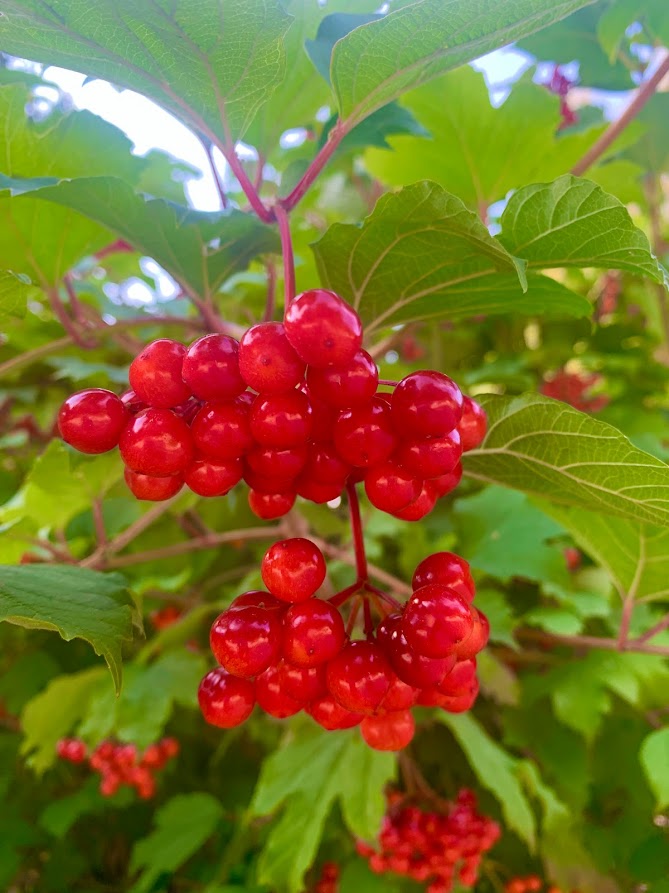
An entitled person will only see the rewards and compare. “Why can’t I have the same? I’m after all more beautiful, more intelligent …” It is the mindset that spends more than it earns. It is reaping the crop before it has ripened. There is an old English proverb: “Cheat the earth and it will cheat you.”

Falling into the trap of the blame game

Unconscious people are in the blame game and weak because they are victims of everything. Instead of taking complete responsibility as the captain, they think everyone else is responsible for their unhappy condition.

It’s so easy then to accuse the government, other nations, other races, business competitors, parents, siblings, and other people of the situation we find ourselves in. Few people are capable of taking full responsibility for whatever happens in their lives.

The crop will never bear fruit and grow to its full potential if the field is overgrown with weeds. Bugs only thrive in an unbalanced environment.

We subconsciously accumulate customs, habits, and opinions from the people we surround ourselves with and the information with which we feed our brains.

In the book of Wisdom, the I Ging, the earth is described as the receptive, receiving, and softer energy of the female or yin. It is the counterpart, but not the opposing force of the creative Yang. The enormous and receptive force of Yin needs the Yang force to exert and channel the force.

In much the same way, the heroic leader studies the situation at hand, responding accordingly. Action is never taken without a clear grounding and the realization of what path needs to be taken.

Mother Earth provides life. She provides nutrition and room for all beings, be they of a good or bad predisposition. To illustrate this particular importance in comparison to the other elements, many of the ancient writings and drawings have the earth element positioned centrally with the other elements around it. It also emphasizes the importance that at the end of each change cycle, we go full circle back to earth—to the source.

We need thought processes and thinking to accomplish tasks and to give room to our ideas and creativity. The challenge is to get a feeling about when we cross our own boundaries and those of others.

Do I have enough resources to go ahead with plans? Do I make provision for more or for less? Do I have enough in reserve? Or do I live from too much-borrowed energy, becoming indebted to other people and borrowing money?

These are the questions that need to be asked in almost any life situation where the need for change or turnaround is called for, especially if we are feeling constant fatigue after surrounding ourselves with certain people or are met with constant obstacles.

The balanced earth person is trustworthy, generous, and of a stable temperament. They sometimes are slow to respond, but will be thinking things over carefully before giving you a reply. This could be very irritating for an imbalanced pumped-up person expecting a machine-gun reply.

Symbolically, he would be the plump, pot-bellied, sitting Buddha at peace with himself, centered with the universe, and observing calmly while everything around him is falling into loud chaos. They are the steadfast rock in the ocean storm.

In the philosophy of the Five Elements, the Earth is described as being gracious and filled with abundance for all that life has to offer. On the other hand, it demands respect and the absolute maintenance of ethical standards that encompass all living beings. If these are violated, the consequences can be merciless. What is my true motivation? What effect does it have on others? Am I orientated to fulfilling my own greedy needs, or do I have a broader picture in mind?

Reino Gevers – Author – Mentor – Speaker

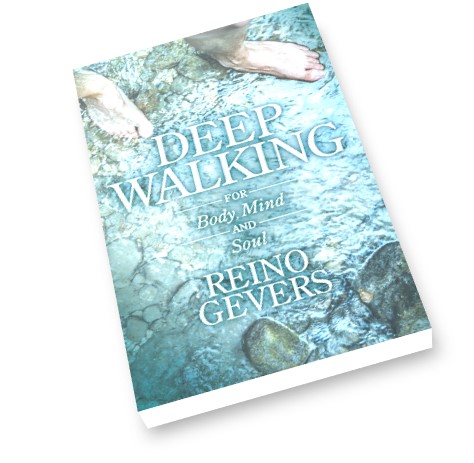
P.S. This is an extract from “The Turning of the Circle: Embracing Nature’s Wisdom for Purposeful Living” which has just been published. You might also find my other books “Deep Walking for Body, Mind and Soul” and “Walking on Edge: A Pilgrimage to Santiago” of interest – available where all good books are sold.

2 Comments

Filed under mental health, mental-health, Uncategorized

Self-worth and finding purpose and meaning

As you walk the path of life with its up-and-down cycles of dealing with the loss of a loved one, a significant health issue, or financial challenges it is easy to lose self-esteem, passion, and your sense of purpose and meaning.

At the core of how you feel and care for yourself is how you define your place in the world. Are you passionately enjoying what you are doing? Are you a grateful and happy person when you get up in the morning?

What we call a “midlife crisis” can also be a time to redefine purpose and meaning. You might be finding yourself in an unfulfilling job or engaging in repetitive and monotonous routines that suck away your life energy. But you lack the courage or are too fearful to make the necessary changes.

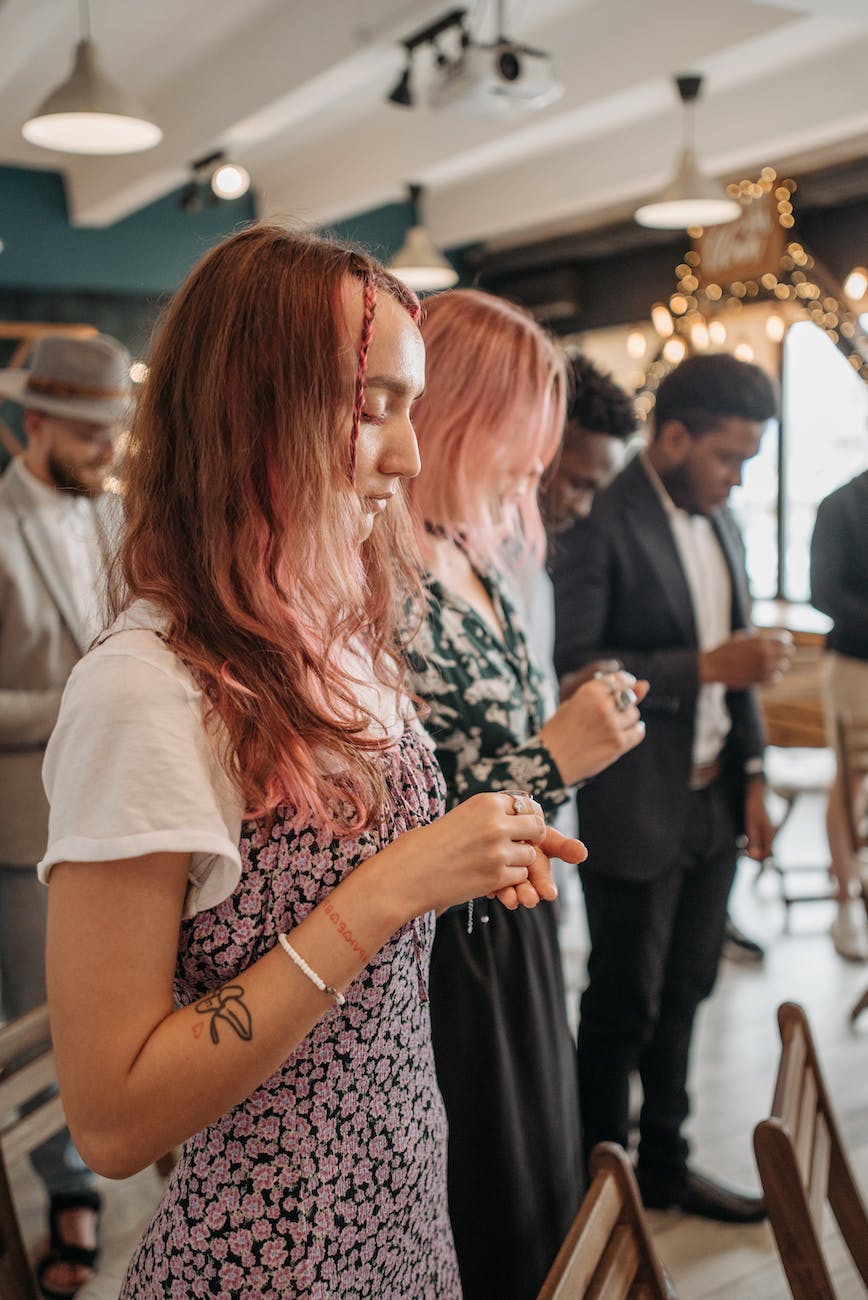
Photo by Spencer Selover on Pexels.com

A once fulfilling or loving relationship has degenerated into hate and recrimination. A job that was aligned with your values and purpose has changed so much that it has just become emotionally and physically exhausting.

Loss of meaning and purpose shows itself in negative thinking, constant bickering, and irritability. You will be compensating the search for existential meaning with addictions to bad foods, alcohol, substance abuse, or digital entertainment. This lack of self-love and self-esteem will inevitably manifest itself in body shape and appearance.

Major life transitions, such as a job loss, retirement, or a divorce, can lead to shifts in identity and purpose. Goals, purpose, and meaning need to be redefined.

A healthy sense of self-worth can be cultivated with the three pillars: body, mind and soul.

  • Looking after your body by doing regular exercise is key. Only 4,000 steps a day of active walking in nature will already significantly boost your metabolism, bone density and mental health, according to latest research. Avoid processed foods, sugars, artificial sweeteners and soda drinks. A mainly Mediterranean diet of fresh fruit, vegetables, olive oil, fish, and a little meat not only feeds your body with vital nutrients but also your brain.
  • Feed your mind with positive thoughts. Replace a negative thought with a positive thought. What is going well? What is good in your life? Stop comparing yourself with others. There will always be people who appear to be wealthier, more successful, and happier than you. Read good books and train your mind by solving puzzles, learn a new skill or language.
  • Soul purpose, meaning, and validation are often found in a community or a tribe sharing the same values, and ideals. Experiential spirituality comes from within. Practices such as meditation, deep walking, mindfulness training can open the gateway to a profound spiritual experience, characterized by a sense of union with the divine, and a feeling of being interconnected with all of existence.

In essence. you have to define or redefine your purpose every new day. Be grateful to be alive. Every new day offers a new perspective and new opportunity. When on your authentic soul path, you will be evolving and growing until the day you die.

Reino Gevers – Author – Mentor – Speaker

P.S. If you’ve found this article of interest you might want to read more in my books. “The Turning of the Circle: Embracing Nature’s Wisdom for Purposeful Living” has just been published. You might also find my other books “Deep Walking for Body, Mind and Soul” and “Walking on Edge: A Pilgrimage to Santiago” of interest – available where all good books are sold.

Leave a comment

Filed under mental health, mental-health, Uncategorized

Are you a “no” person?

Are you finding yourself trapped in self-talk emphasizing all that is not possible when the universe is constantly sending you messages on how you can escape the negativity trap and live a life of purpose and meaning?

The story goes that a village in the Italian Alps was hit by floodwaters with all the locals quickly heeding warnings from rescue workers to leave in buses for shelters on higher ground. All but one man refused to leave. Eventually, the rescue workers came by in speed boats with the waters rising rapidly. Again the villager refused to leave saying: “God will look after me.”

Failing to get the message

As the waters rose the villager had to eventually climb onto his rooftop. A rescue helicopter swooped low offering help. Again the villager refused help: “I’m staying. I’m putting my trust in God to help me.”

The inevitable happened. The man drowned. Reaching heaven’s gate, he accused God of ignoring his prayers. “What do you mean?” God responded kindly. “First I sent buses to the village to rescue everyone, then I sent the rescue workers in speed boats and finally I sent the helicopter and you still refused to get the message.”

When trapped in a spiral of negativity or in the sadness of that which once was and is no more, you will never perceive the whispers of the universe, offering you new opportunities in the ever-turning cyclical spiral of life.

The message from the universe could come in a casual word dropped by a passenger in a train, an image on a billboard or in a book full of wisdom that puts you on a completely different trajectory.

Photo by Jacub Gomez on Pexels.com

The underlying fear and trauma

If you have a partner, a dear friend or a family member who responds with a “no” to everything you are suggesting, then you might consider the following. There might be underlying fears and trauma for their negativity. They might be in the process of transmuting these fears and trauma by taking a necessary painful walk over the hot coals.

They might respond with “no” because they are stressed out and feeling emotionally drained. You will see with great clarity an opportunity for them, while they are not seeing it at all, making you angry for wasting your time with them. You can only react with patient communication and active listening in breaking down the barrier.

Stepping out of the comfort zone

Stepping out of the comfort zone takes courage. Most people would rather suffer all their life in quiet misery than make the change that could completely transform their life. One of the major reasons why people are risk-averse is that they fear the shame of failure and loss if things go wrong. Staying in the comfort zone provides a certain sense of predictability and control. Meanhwhile, the mental imposter feeds low self-esteem and lack of self-confidence with negative self-talk: “That’s impossible. I’ll never manage that. I can’t do that. I don’t have the skills, money, and talent that others have.”

The seeds of low self-esteem are often sown in early childhood with the constant criticism from parents, siblings, teachers and peer groups far outweighing tangible and positive reinforcement. Especially those individuals who are different or highly talented will feel the pressure to conform to the lowest common denominator of the tribe.

Meanwhile opportunity has been waiting all along at the other end of the smokescreen. Overcoming the fear of walking an unknown path involves acknowledging these fears, taking it one step at a time, building self-confidence by acknowledging those steps, and practicing self-compassion. The first steps are a painful walk in leaving well-known territory, and the “protection” of the tribe

But ultimately the walk into authenticity is highly rewarding. By facing and embracing new challenges consciousness and personal growth are elevated. You increase your resilience by facing all the storms of life.

There is no satisfaction greater than the realisation that the universe is sculpturing you into the person you were always meant to be.

Reino Gevers – Author – Mentor – Speaker

P.S. If you’ve found this article of interest you might want to read more in my books. “The Turning of the Circle: Embracing Nature’s Wisdom for Purposeful Living” has just been published. You might also find my other books “Deep Walking for Body, Mind and Soul” and “Walking on Edge: A Pilgrimage to Santiago” of interest – available where all good books are sold.

Leave a comment

Filed under mental health, mental-health, Uncategorized

The dragnet of regret

How often have you caught yourself going back into the past with the feeling of regret on the opportunities missed, the words you wished you had never said, and the things you would do differently if you could turn back the clock?

At times the feeling of regret can be so overwhelming that it’s like a dragnet pulling you down into a dark abyss of unhappiness. But according to author Daniel H. Pink regret is a fundamental part of our lives and can help us make smarter and better decisions in the future.

Based on the World Regret Survey, Pink has identified four core regrets.

Foundation regrets. These are regrets on the human need for some form of stability. Pink quotes Jason who says: “I regret not saving money diligently ever since I started working. It’s nearly crushing every day to think about how hard I’ve worked for the last twenty-five years or so, but financially I have nothing to show for it.”

Boldness regrets. Over time we are much more likely to regret the chances we didn’t take than the chances we did, whether its work choices, education or the choice of a partner. Foregone opportunities can be especially haunting during times of stress and pain.

Moral regrets. Most people wish to be seen as good people. But over time morally dubious decisions can be gnawing such as swindling in a business or cheating on a spouse.

Connection regrets. According to Pink fractured or unrealized relationships with spouses, partners, parents, friends, and all other close relationships constitute the largest deep structure category of regret.

Photo by Liza Summer on Pexels.com

We can set very high standards to the self and are at times our own worst critic. The melancholy sadness and regret over that which was and is no more is not only debilitating but prevents you from moving forward. Many of our regrets can in fact be undone by making amends, reversing bad choices, and taking a different perspective by posing the questions: What did I need to learn and how can I make a better choice in moving forward? If I’ve harmed others, can I make amends through an apology or some form of emotional or material restitution?

Was the regret merely an unpleasant incident in your life or does it define your life? Practicing self-care and self-compassion can neutralize some of those feelings if you treat yourself like you would be treating your best friend.

You forge your identity with the story that you tell yourself. The first step is acceptance of that feeling or emotion of regret and replacing it with a positive thought moving forward. “I made a bad decision. I feel terrible about it. But I lovingly accept myself the way I am. I am harvesting from the rich experience and moving positively forward.”

In loving yourself you build the ability to nurture and better serve your relationships. The lesson of a door slammed shut is to do better next time.

Reino Gevers – Author – Mentor – Speaker

P.S. If you’ve found this article of interest you might want to read more in my books. “The Turning of the Circle: Embracing Nature’s Wisdom for Purposeful Living” has just been published. You might also find my other books “Deep Walking for Body, Mind and Soul” and “Walking on Edge: A Pilgrimage to Santiago” of interest – available where all good books are sold.
Leave a comment

Filed under mental health, mental-health, Uncategorized

Celebrating community on a pilgrimage

One of the reasons I‘m hooked on making an annual pilgrimage walk on the Camino de Santiago is the wonderful people you meet on the way and the celebration of community with people from very different cultures, and religious backgrounds.

It is one of the few places left on earth where you meet individuals who open their hearts, discussing intimate details of their life with you, at times only minutes after meeting for the first time.

The hospitality of the locals on the Camino plays a role. Much of rural Spain still has healthy supportive communities where people meet in cafes and bars on a daily basis to have a chat.

The owner of a bar-hotel and restaurant business confided to me that the cafe part of his business was not really profitable but „closing this place for the winter months would be like closing the local church.“

A sense of belonging

While talking to fellow pilgrims in Santiago we agreed that many spiritual seekers on the Camino were finding a community and sense of belonging on this ancient path they were no longer finding in traditional religions.

As humans, we are hard-wired as social beings. Our relationships and social connections determine who we are. Strong connections and relationships are created when we share our feelings, inner wounds, and vulnerabilities.

Many people walking the Camino have seen their lives come apart on some level. Relationships that have broken down, the death of a loved one, financial loss, or having to deal with the diagnosis of a life-threatening disease. In sharing their stories pilgrims no longer feel “alone.”

Photo by Pavel Danilyuk on Pexels.com

There is experiential spirituality felt in a healthy community that emanates empathy, love, and kindness. Community is not only felt in a relationship with others, a higher deity but also in a commune with nature and the world around you.

It is walking in nature and bonding with people at the same time that makes the Camino such a magnet for spiritual seekers. This year will again register a record number of pilgrims on the path.

The celebration of the communal ritual

For this reason since ancient times humanity has embedded the celebration of community in religious rituals. Communal meals or rituals involving the sharing of food and drink can be found in ancient Greek and Roman religions, where a communal meal with the gods was seen as a means of establishing a bond or connection.

The Jewish Passover festival and the holy communion ceremony in Roman Catholic, Protestant, and Orthodox religions are celebrated as rituals of sacrifice.

The word “commune” has its roots in Latin, derived from the word “communis,” meaning “common” or “shared.”

In our modern era, we are seeing an explosion of “sharing” and “connection” on social media across continents – the result of a human yearning. Urban lifestyle without connection to natural surroundings and friendly neighbors increasingly leads to individuation, self-isolation, loneliness, and mental health issues.

Online “tribes or families” can never be a replacement for the physical community where there is unconditional physical contact – the holding of hands, a hug, and a kiss on the cheek. This became acutely obvious during the recent pandemic.

Ultimately we all yearn to be seen, to be heard, and to be validated in a positive sense. We want to belong and in that belonging, we find purpose and meaning.

Reino Gevers – Author – Mentor – Speaker

One more thing...My new book “The Turning of the Circle: Embracing Nature’s Wisdom for Purposeful Living” can now be ordered on Amazon and where all good books are sold. You might also find my other books “Deep Walking for Body, Mind and Soul” and “Walking on Edge: A pilgrimage to Santiago” of interest.

Leave a comment

Filed under Camino de Santiago, mental health, mental-health, Uncategorized

Beyond Religion?

Membership of Christian churches and attendance of services is falling dramatically in many countries. But does that mean that more people are becoming agnostic, atheist or have lost their belief in a God or the divine?

On my current pilgrimage walk on the Camino de Santiago in northwestern Spain, we passed through several villages and towns on a Sunday. All these beautiful and ancient temples of worship, some dating back to Celtic times and early Christianity, had their doors shut.

One church did happen to be open but a man shooed us pilgrims away, making it clear that we were not welcome to have a look inside. I do normally enjoy sitting in these sacred places, meditating and feeling into the powerful energy fields that they emanate.

It hit a sore point to be rudely turned away. It symbolized for me everything that has gone wrong with conventional religion, fixated on empty external ritual, and controlling doctrine.

Churches and temples should be open for people of all denominations as long as they show respect, giving everyone sanctuary seeking a quiet space from the noisy and distractive pull of the external world.

For centuries religions from all the major faiths have vilified, ostracized, burned at the stake and shamed those that did not conform or belong. At the same time the hypocrisy of the clergy regarding sexual abuse, financial misdemeanors and interference in politics is laid bare like a festering open wound.

Jesus never had plans to establish an institution or a church. His criticism of the Pharisees, the clergy, and their hypocrisy was especially directed at those leaders burdening the faithful with strict rules and regulations while showing little love, mercy and compassion to those in need.

There is a saying that religion is for those who fear hell while spirituality is for those who have been there. On my more than a dozen walks on the Camino I have met countless people who have gone through the hell of losing loved ones, confronted life-threatening illnesses, the dark holes of depression, financial ruin and relationship breakdown. What I can say about all of them is that these life-changing events made them come out stronger and forced them into deep introspection on the purpose and meaning of life.

Experiential spirituality is a process whereby the shutters of the soul window are gradually opened up. It is a feeling of connection with the divine, and the mystery of creation. The great scientist Albert Einstein once said that the religion of the future will be cosmic in nature. 

“The most beautiful and deepest experience a man can have is the sense of the mysterious. It is the underlying principle of religion as well as all serious endeavor in art and science. He who never had this experience seems to me, if not dead, then at least blind,” Einstein is quoted as saying.

The Dalai Lama, the spiritual leader of Tibetan Buddhism, encourages individuals to go beyond the superficial differences among religions and recognize the deeper essence of spirituality and morality that can be found in all faith traditions. 

The fundamental principles of compassion, love, and ethics are not limited to any particular religious tradition or belief system. These principles, the Dalai Lama believes, are universal.

Among the hundreds of thousands of people who walk the Camino each year there are devout Catholics and people of all faiths but also manyspiritual seekers asking the age old question:

Where do I come from? Where am I going? What am I doing with the rest of the days of my life?

Reino Gevers – Author – MentorSpeaker

Leave a comment

Filed under Camino de Santiago, deep walking, self-development, Uncategorized

Finding purpose by realigning with nature

Taking a walk each day and realigning with the green and blue spaces of nature is very likely to bring about multiple positive shifts in your body, mind, and spirit. We are gradually becoming aware that we have lost something essential en route to modernity.

We have reshaped the external environment with roads, cities, and buildings in a way that is in disharmony with nature and harming our own health and well-being. It is time for a major rethink.

A study of 300 cities released by North Carolina State University in 2019 revealed that there was fewer crime and aggression in city areas close to parks and green areas.

According to Lincoln Larson, assistant professor at the university, “We learned that more green space was associated with lower risk of crime across neighborhoods in all 300 cities we studied. Burglaries, larceny, auto theft, and other property crimes occur less often in greener neighborhoods in every city in our sample. Violent crimes like murder and armed robbery were also less common in greener neighborhoods in nearly all the cities we studied.”

Being closer to nature reduces stress, bringing neighbors together and creating a sense of community.

The energy of subduing and conquering nature is a hallmark of the ruling patriarch. The male energy is rational, while the female energy is receptive and more intuitive. An imbalance between the male and the female aspect, the Yin and the Yang, has been responsible for an exploitation and declaration of war on Mother Earth.

It reached its pinnacle in the Inquisition of the Middle Ages when hundreds of thousands of women were burned at the stake. Women were much more closely aligned with nature, especially if they were healers and midwives. But their secret knowledge, passed on over generations in the female lineage, obviously was a threat to the male patriarch.

At a time of great poverty, war and diseases like the plague, these women often were at the forefront of healing, comforting and helping the distressed. Fennel seeds were great at releasing cramps, digestive problems, and increasing the milk supply of breastfeeding mothers. Mint leaves were used as antidepressants and for the treatment of asthma and nausea.

By the 15th century, the church started intervening, forcing the midwives to report every birth to the local parish, especially illegitimate and retarded children.

With their knowledge of contraception, and how to terminate pregnancies, the church saw the midwives as a huge threat to their authority, and sexual morale.

The herbal healers or “witches” and midwives lived dangerous lives in the 15th century as the church started dominating every aspect of the human life from childbirth to death. The Christian cross became the symbol for the suppression and oppression of the female aspect. Women were excluded from the priesthood and holding any higher rank in the church until this day in many denominations.

Interestingly, in the Spanish province of Galicia, we find a version of the cross that finds its roots in Celtic, pre-Christian times. On the one side we find the crucified Christ, while on the other side stands the female goddess, the Madonna. We have the male and female aspects equally depicted on both sides of the cross.

The discovery of ancient Christian scripts, including the Dead Sea Scrolls and the Gospel of St. Thomas, tells us that there was a time when women were at the forefront of spreading the early Christian gospels. Mary Magdalene, one of the apostles closest to Jesus, played a major leadership role in early Christianity.

There is no historical record that Mary Magdalene was ever a former prostitute possessed by demons as claimed in some of the scriptures.

Around the period 500 AD, the male patriarch systems started throwing the Yin and Yang, the natural complementation of energy between the male and the female, seriously out of balance. It has had a profound effect on the world that we have today.

The dominating male aspect has undoubtedly led to huge technological and material advances, unimaginable to the generations before us. But it has come at a huge price where we are exploiting Mother Earth to such an extent that most species, including our own, will not survive without a major shift in human consciousness.

It’s a common belief that during times of crisis, the thin veneer of civilization collapses with most people falling into egotistical and anti-social behavior.

But Dutch philosopher Rutger Bregman, author of the bestseller Utopia for Realists: And How We Can Get There, claims that humans are fundamentally good and want to do good.

“For every panic buyer, there are a thousand nurses working as hard as they can. For every hoarder, there are a thousand civilians setting up WhatsApp groups and Facebook groups and people in the neighborhood trying to help each other. I’ve been really astonished to see this explosion of cooperation and altruism in a very short period of time,” Bregman said in an interview with Deutsche Welle.

A global crisis such as the pandemic also leads to the realization that other global issues, such as the climate crisis that affects us all, can only be solved in cooperation at a global level.

Reino Gevers – Author – Mentor – Speaker

One more thing...This is an extract from my new book “The Turning of the Circle: Embracing Nature’s Wisdom for Purposeful Living”. It can now be preordered as a Kindle edition on Amazon. Paperback and Hardback versions will be available in July 2023.

Leave a comment

Filed under mental health, mental-health, Uncategorized

Narcissism and the wounded inner child

“Many an adult is carrying within the burden of a wounded child”

I’m indeed fortunate to be living in Mallorca, one of the world’s most beautiful islands and a favorite European holiday destination. But these weeks in summer the most popular places are better avoided with some visitors showing little regard for local customs and the public space.

The partying, drinking, and drunken brawls are part of a mindset that seems to say: “I’ve come here to have fun. I will do as I please. I will throw my trash all over the place and urinate where I want to.” Local hoteliers and restaurant workers report that the behavior has never been so bad and we haven’t even reached the peak of the holiday season.

Such bad behavior not only shines a bad light on the countries these people come from but leads to increasingly restrictive local bylaws such as a ban on selling even non-alcoholic beverages or snacks at the beachside, and ever heavier spot fines. Mallorcans are renowned for their hospitality but there is now an understandably increasing pushback to clamp down on bad behavior.

I’ve often wondered why an increasing number of adults seem to lose the plot, have no situational awareness, and lack the most basic courtesy, especially when visiting a foreign country. The foundational stones of adult life are of course in many ways determined in early childhood, setting you up for success or failure in later life. But no matter what baggage from the past you are carrying on your shoulders you still have the power of choice.

Beyond the veil of much of the narcissism we find in today’s culture is the hurt inner child that has either suffered physical or emotional abuse or experienced a lack of emotional support. The narcissist suffers typically from a lack of self-esteem that constantly seeks validation in the center stage.

Emotional support, attention, and affection are crucial for a child’s healthy development. The wounded child may have been an unwanted child, having received little physical or verbal expressions of love and affection.

One or both of the caregivers may have been preoccupied, unavailable, and emotionally distant for much of the child’s life. They turn into adults who may have difficulty regulating their emotions and struggle with their interpersonal relationships or may suffer from anxiety and depression.

Self-care and healing the inner child

Healing the wounded inner child is key to unleashing your creative powers, self-esteem, and soul-driven purpose. It is never a one-off process but can be a lifetime journey of self-reflection and self-compassion.

The worst you can do is fall into the blame game, making your past responsible for all the mishaps in your life. The healing process starts by taking a different perspective and accepting the feelings and emotions from your childhood.

You can connect with your inner child by meditating on a picture of yourself at an age that was particularly hurtful or traumatic. Talk to that younger version of yourself offering parental comfort, support, and understanding that it didn’t have at the time. It is extremely helpful to start the process with the help of an experienced mentor or therapist.

Photo by JoEllen Moths on Pexels.com

Engage in activities that nurture the joy of the inner child

Even if most of your childhood was a long dark chapter, there were also moments where you experienced joy. Find out what gave you joy in the early stages of your life and whether you can expand on that in your adult life. Maybe it was playing with a favorite pet, reading a particular book, or watching a particular fairytale movie.

Setting boundaries

The hurt inner child has never learned to set healthy boundaries. Setting boundaries goes hand-in-hand with self-care. The more you start loving and practicing self-care with your inner child, the more you will become aware of what expands your energy and what sucks away at your energy level. Practice saying no to persons when you feel overwhelmed, when something doesn’t align with your values, or when you simply need your own space.

Healing the wounded inner child is a deeply personal journey, and different techniques or approaches may resonate with different individuals. Trust your instincts and the voice of your inner child.

Reino Gevers – Author – Mentor – Speaker

One more thing...My new book “The Turning of the Circle: Embracing Nature’s Wisdom for Purposeful Living” can now be preordered as a Kindle edition on Amazon. Paperback and Hardback versions will be available in July 2023.

2 Comments

Filed under mental health, mental-health, Uncategorized

Nature and purposeful living

“No man ever steps in the same river twice, for it’s not the same river and he’s not the same man. Time is a game played beautifully by children.”—Heraclitus.

The seasons of life are in a constant state of expansion and contraction. Like the systolic and diastolic beating of a heart, we cannot escape the impermanence of life. During spring there is birth, growth in the summer, harvest in fall, and withdrawal in winter.

The notion that we are an integral part of nature and its natural laws was never questioned by the hunter and gatherer societies, and even so-called “primitive” societies today.

The ancient Chinese teaching of the Five Elements is very much about yielding to and synchronizing with the natural cycle of the seasons. The tenets of this philosophy is rooted in Taoist philosophy, dating back thousands of years when humanity did not see the world around us as a separate entity.

Timing with nature’s seasonal cycles

Great respect was given to the timing and expressed in elaborate ritual. There was a time to plant, a time to harvest, and a time to rest. This is still applicable today even though the necessity is clouded by the demands of modern life and its luring distractions.

Modern man has severed his ties to the natural order of things in his mad striving for material wealth and prosperity. Cut off from his spiritual roots and the natural order of things, he is filled with a deep sense of loneliness and fear, which seeks compensation for that void in boundless greed and substance abuse.

We know from numerous neurological studies that the sounds of nature, green meadows, and trees, or the gentle sound of waves breaking on the shore calm the mind.

The permanent hum of traffic noise in cities and crowded living conditions in the concrete jungles of an urban environment is alien to the human condition.

So what has led us to today’s disconnect? Paradoxically, religion, which is meant to align us with God or the universal intelligence has been abused in large parts by the institutions.

The Role of concept-based religion

A misunderstood Christianity has played a huge role in the estrangement of man from the natural world. The mystical part of Christianity was exorcised in the Council of Nicaea in AD 325. Roman Emperor Constantine I presided over the Council which defined the Christian belief and doctrine. While the mystical part of early Christianity left much room for individual spiritual experience, the doctrine clearly defined what had to be believed and what religious rules had to be followed. One of the consequences is that for centuries Christianity has had a false understanding of man’s role in nature based on the misinterpretation of the Old Testament in Genesis 1:28, in which man is given the cultural mandate to subdue and rule over the earth.

As in ancient Chinese philosophy, the old Greek, Egyptian, and Roman worlds, applied nature’s golden rule in the arts, architecture, and many other endeavors, striving to create synchronicity with nature.

On a collective level, we have to face the question of whether we have enough time to transform a system based on greed and exploitation, where only a small minority reap the rewards, into a value-based restorative nature-based system that serves the betterment of all living beings.

Reino Gevers – Author – Mentor – Speaker

One more thing...This article is an extract from my new book “The Turning of the Circle: Embracing Nature’s Wisdom for Purposeful Living”. You can preorder a Kindle edition on Amazon. Both Kindle and Paperback versions will be available in July 2023.

Leave a comment

Filed under meditation, mental health, mental-health, Uncategorized

The Mystery of Easter and the Shroud of Turin

The Shroud of Turin believed to depict an image of Jesus continues to baffle researchers. Neither a painting nor a photograph, its origins remain unclear. Scientists have undertaken rigorous research, employing methods such as short bursts of ultraviolet light and laser technology to unravel its secrets. At the same time, it continues to keep believers in awe.

The impossibility of recreating a forgery

The scientists managed to re-create a small section of the cloth with some of the properties at a microscopic level, concluding that “some form of electromagnetic energy” such as a flash of light created the image.   Ultraviolet lasers were not available to medieval forgers thus opening the possibility that the Shroud is actually Jesus’ burial cloth, with the image created at the point of resurrection.

Some ancient paintings depict the Roman soldiers guarding the grave of Jesus being blinded by a flash of lightning as he rises from the grave but there is no mention of this in the biblical scriptures. The story of the crucifixion and the resurrection is the reason why we celebrate Easter in the Christian tradition.

Why we celebrate Easter

The exact details of the events after Jesus’ crucifixion vary slightly. After dying on the cross his followers wrapped him in a cloth and buried him in a tomb. A group of women went to the tomb on the third day to anoint his body with spices. When they arrived, they found the stone covering the entrance to the tomb had been rolled away and the tomb was empty. An angel appeared to them and told them that Jesus had risen from the dead.

Later that same day, Jesus appeared to two of his followers on the road to Emmaus, and then to the rest of his disciples, who were gathered in a locked room. He showed them his wounds and ate with them to prove that he was not a ghost, but had risen bodily from the dead.

One of the Italian scientists who examined the shroud, Professor Paolo Di Lazzaro, said:

“When one talks about a flash of light being able to color a piece of linen in the same way as the shroud, discussion inevitably touches on things like miracles and resurrection. But as scientists, we were concerned only with verifiable scientific processes. We hope our results can open up a philosophical and theological debate but we will leave the conclusions to the experts, and ultimately to the conscience of individuals.”

Carbon dating tests conducted in 1988 indicated that the shroud was created between 1260 and 1390 AD, leading many to conclude that it was a medieval forgery. However, these results have been disputed by other researchers who argue that if it was a forgery it would have to be possible to replicate it easily with modern methods.

Fake or forgery?

During the Middle Ages, the trade in Christian relics was a thriving industry that involved the buying, selling, and exchanging of objects that were believed to have belonged to saints, martyrs, or other holy figures. These objects included fragments of bone, pieces of clothing, and other personal items, which were often housed in ornate reliquaries and venerated by believers as objects of spiritual power. The Crown of Thorns that was placed on Jesus’ head as a means of torture was housed in the Notre-Dame Cathedral in Paris, where it has been on public display since the 19th century and dramatically rescued during the fire of April 2019.

The bones that are believed to be those of St. James the Apostle, also known as Santiago, are kept in the Cathedral of Santiago de Compostela in Spain. According to tradition, the remains of St. James were discovered in the 9th century by a hermit named Pelagius, who saw a bright light shining over a field near the town of Iria Flavia. The discovery of the bones led to the establishment of the shrine in the Cathedral of Santiago which has become one of the most important pilgrimage sites in Europe.

Trade in religious relics goes back to the earliest times. Relics were considered sacred objects imbued with spiritual powers, possessing a direct connection to the divine and serving as a conduit for blessings, healing protection, and power.

Is it important whether the bones of St. James are real or whether the Shroud of Turin is an authentic image of Jesus? What we do know is that some of the world’s most beautiful architectural creations have been built to house relics. As long as there is a mysterious aura about them we will continue to be stimulated by them on a deep spiritual level.

For most of the tens of thousands of pilgrims who have rediscovered the ancient pilgrimage route to Santiago, it is unimportant whether the apostle ever lived or was buried in Spain. The shared experience of veneration, the common search for meaning, and the individual spiritual experience while walking on an ancient path is of greater significance.

Likewise, the Shroud of Turin with the life-size image of the man with stains of blood on the cloth, appearing to be consistent with the wounds that Jesus suffered on the cross, will continue to fascinate. Believers feel a deep sense of awe and reverence, leading to peace, comfort, and inspiration during difficult times. More than ever we need those quiet places of power to explore the inner world of who we really are.

Reino Gevers – Author – Mentor – Speaker

P.S. I’m excited to announce the release of my latest book, “The Turning of the Circle: Embracing Nature’s Wisdom for Purposeful Living.” If you enjoy it, you might also be interested in my previous works, “Deep Walking for Body, Mind and Soul” and “Walking on Edge: A Pilgrimage to Santiago.” You can find all of these titles at reputable bookstores near you.

Leave a comment

Filed under spirituality, Uncategorized