
When disaster strikes on a massive scale, people instinctively ask the same ancient question:
Is this God’s judgment?
It is a question that has echoed throughout human history.
In the 14th century, as the Black Death swept across Europe, entire populations believed they were witnessing divine punishment. Churches filled with desperate prayers. Some people turned toward deeper faith. Others lost their faith entirely.
Centuries later, during the COVID-19 pandemic, that same question quietly resurfaced.
What happens to faith when the world believes God’s judgment has arrived?
Fear, Faith, and the Flagellants
During the Black Death, fear spread as quickly as the disease itself. Many believed the plague was a punishment for humanity’s sins.
Across Europe, bands of penitents known as flagellants marched from town to town, whipping themselves in public acts of penance. They believed that if humanity suffered enough, God might show mercy.
Crowds gathered to watch them.
Some saw them as holy reformers.
Others saw them as dangerous fanatics.
It was faith under extreme pressure.

The Quiet Courage of Compassion
Yet there was another response to the plague.
While many fled cities in terror, others stayed behind to care for the sick and dying. Monks, nuns, and priests often remained when everyone else ran.
Historians estimate that in some regions nearly half the clergy died while caring for plague victims.
For these people, faith did not mean explaining suffering.
Faith meant standing beside those who suffered.
When Catastrophe Shakes Belief
But the plague also shook belief at its foundations.
People began asking difficult questions:
- Why would a loving God allow such devastation?
- Why did the devout die alongside the corrupt?
- Why did prayers not stop the disease?
These questions gradually reshaped Europe’s intellectual landscape, eventually contributing to major religious transformations, including the Protestant Reformation.
Faith did not disappear.
But it began to evolve.
How Faith Responds to Crisis
History shows that when a catastrophe strikes, faith often moves in three different directions.
Some people become more rigid and fearful, searching for certainty in times of chaos.
Others lose faith entirely, unable to reconcile suffering with belief in a loving God.
And some discover a deeper, quieter faith—one rooted not in easy answers, but in compassion, humility, and solidarity with others.
What Did Jesus Say About Suffering?
In the teachings of Jesus Christ, suffering is rarely presented as punishment directed at specific individuals.
Instead, suffering often becomes an invitation to reflect on how we live and how we treat one another.
The focus shifts away from blame and toward compassion, mercy, and moral transformation.
The Inspiration Behind Sages, Saints and Sinners
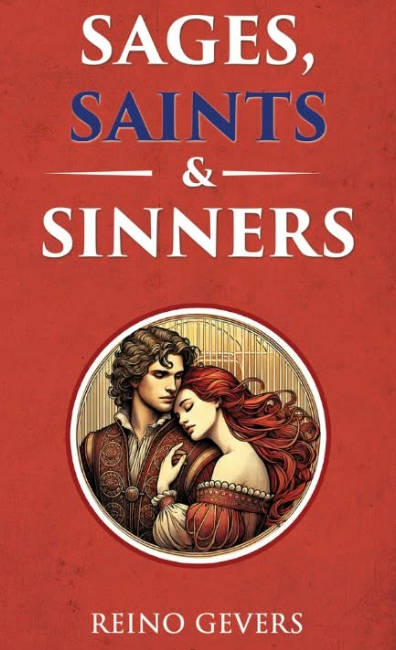
These were the questions that fascinated me when I began writing my historical novel Sages, Saints and Sinners.
I wanted to explore what happens to ordinary people when the world around them collapses and they believe that God’s judgment has arrived.
In many ways, the questions raised during the recent pandemic helped inspire that exploration.
Set during the Black Death, Sages, Saints and Sinners explores love, faith, and spiritual conflict in the midst of an existential crisis.
What do people hold onto when everything begins to collapse?
The novel tells a story of faith, doubt, and forbidden love in a time when many believed the end of the world had come.
If these questions intrigue you, you may enjoy the novel that grew out of them.
Sages, Saints and Sinners is available on Amazon, and all good bookshops.
What Pandemics Reveal About Us
History reminds us that pandemics do more than challenge our health.
They challenge our beliefs.
They challenge our assumptions.
And they challenge our understanding of God.
Perhaps the deepest question is not whether suffering is punishment.
Perhaps the real question is this:
Do moments of crisis invite us to rediscover compassion, courage, and faith?
Reino Gevers – Author – Mentor –Speaker
P.S: If you enjoyed this article you might be interested in reading: Sages, Saints and Sinners Get it today on Amazon, Barnes & Noble and where all good books are sold.


 ReinosBlog