Tag Archives: lifestyle

The shooter: A problem of angry young men

A 20-year-old individual with mental health issues narrowly missed assassinating former President Donald Trump, with the bullet missing him by just an inch. While the media highlights the apparent security lapses, the deeper concern lies in the alarming pattern of another troubled, angry young person resorting to gun violence.

Minutes after the incident, both sides of the political spectrum devolved into outlandish conspiracy theories, blaming each other for inciting political extremism with their rhetoric. However, the incident reflects a broader issue: a troubled young man who could have directed his violence at any other prominent person or innocent people in a school or shopping mall.

Young men responsible for mass shootings

Nearly all mass shootings in the United States have been committed by young men. A 2019 report titled “Mass Murder with Firearms: Incidents and Victims, 1999-2013” provides detailed demographic breakdowns, showing that most mass shooters are male and often in their 20s and 30s.

For most people outside the United States, the gun culture and the ease with which deeply disturbed human beings can get access to highly dangerous weapons is incomprehensible.

The man who fired at Trump, Thomas Mathew Crooks, fits the profile of most other shooters such as social isolation, mental health challenges, and access to a firearm. His political views seem ambiguous. We will never know his motives after he was killed by a secret service agent sniper.

Regression into macho-culture

A breakdown of recent European elections and the MAGA culture in the United States reveals that a large swathe of young men are regressing into an unhealthy demagogic macho culture headed by male figureheads, tapping into their grievances, anger, and lack of self-esteem.

Recent studies and statistics show us that young women in their early twenties are crushing it on nearly all levels from education to job performance while men in the same age group are falling behind with a devastating impact on their mental health.

According to the U.S. National Center for Education Statistics (NCES), in 2020, about 59 percent of all undergraduate students were women, while 41 percent were men. In the 2019-2020 academic year women earned 60 percent of all Masters degrees and 54 percent of all doctoral degrees.

Higher education levels mean higher earnings with women in their early twenties increasingly entering high-paying fields in traditionally male-dominated industries like tech and engineering.

Young men in their early twenties typically report higher rates of substance abuse across various categories. According to the Substance Abuse and Mental Health Services Administration (SAMHSA), in 2020, some 53.4 percent of young men aged 18-25 reported binge drinking in the past month, compared to 40.3 percent of women in the same age group.

Young men typically far outnumber women when it comes to violent crime and the number of prison inmates. While over 1.1 million men serve time in prison in the United States the number of women is only 80,000.

A poll by the Institute of Politics (IOP) at Harvard Kennedy School revealed striking differences between how young Democrats, Republicans, and independents view the role of men and women in society. Young men are increasingly turning away from the Democrats and adopting more conservative Republican ideology.

In a culture where young men have the feeling they are losing out, macho male political extremists are telling them that the system is rigged against them, that immigrants and minorities are responsible for their misery, and that science is a hoax.

Overly rigid “woke” and “cancel culture” sidelines individuals for perceived transgressions contributing to societal divisiveness.

We have seen a dangerous precedent where fascist movements in Germany, Spain, and Italy during the early 1930s were led by charismatic leaders such as Hitler, Mussolini, and Franco. Fascist movements are male-dominated macho cults, emphasizing traditional gender roles. Project 2025, a plan crafted by the Heritage Foundation and various conservative groups emphasizes the role of men as providers and protectors while advocating for women primarily as caretakers and nurturers within the traditional nuclear family context.

Young men turning to the right, women to the left

A strong gender gap in political affiliation can also be detected in countries such as Germany where young men are increasingly turning to more conservative views while women in the same age group tend to vote for progressive parties. Based on recent data, it can be estimated that around 30-35 percent of young men in their early twenties in France support right-wing parties, particularly the National Rally and similar far-right parties.

In the recent European elections, the upsurge in support for right-wing parties was fueled by young voters, especially young men, embracing hardline anti-immigration views. According to pollsters political allegiances forged in young adulthood tend to last for a lifetime with the trend toward radicalism unlikely to ebb anytime soon.

While political parties on the extreme fringes are propagating the message to young men that external circumstances are responsible, the real issue of their pain is not addressed. A multi-faced approach is needed:

  • We urgently need to promote healthy, non-toxic models of masculinity that allow for emotional expression and vulnerability.
  • Peer support groups and mentoring programs can assist young men in sharing their experiences
  • Community-based programs that offer team sports, skill-building workshops, and social support can help reduce social isolation.

We cannot allow demagogues and political cults to poison the minds of young men with a false sense of meaning and purpose with a regression into a macho-culture, glorifying gun culture and confusing self-empowerment with the use of force.

Reino Gevers – Author – Mentor – Speaker

P.S. If you enjoyed this article you might be interested in my books available where all good books are sold.

Leave a comment

Filed under mental health, mental-health, Uncategorized

AI and social media: A generational challenge

Every era faces different challenges, defined by the changing landscapes of society, technology, and geopolitical events, and we have not even begun to understand the current impact of social media and Artificial Intelligence (AI) on mental health and social cohesion.

It was telling that in the U.S. presidential debate, both candidates not only made a devastatingly poor impression but that one of the biggest challenges of our time such as the impact of social media and AI on every facet of our lives was not even mentioned.

The pervasive effect of social media on mental health

Studies have shown an alarming increase in suicide rates, especially among teenage girls in recent years coinciding with the widespread adoption of social media platforms like Instagram, Snapchat, and TikTok. Girls are at greater risk of cyberbullying, facilitating bullying behavior that can be relentless and pervasive. Unrealistic beauty standards are perpetuated, leading to body dissatisfaction and low self-esteem.

Among teenage boys, the dangers of addiction to online gaming and porn are leading to growing isolation and a breakdown in social skills.

AI is changing our world

We are just at the cusp of rapid technological changes triggered by AI with positive as well as negative effects. The technology is already proving to be most effective in medicine. At the Institute of Cancer Research, for example, researchers have developed a unique canSAR database that can combine patients’ clinical and genetic data with independent chemistry, biology, patient, and disease information. It i likely to revolutionize transportation with self-driving cars, buses, and drones.

But many jobs, especially those involving routine and repetitive tasks, are at risk of being automated. Sectors such as manufacturing, logistics, and retail are particularly vulnerable to automation, potentially leading to significant job losses. The rapid pace of AI development requires workers to continuously update their skills, which can be challenging for many.

The rapid technological changes we are seeing inevitably lead to a growing gap between the cultural and mental capacities of societies to adapt to these changes and the legal frameworks to prevent the abuse of such technology. It creates fear and anxiety among those individuals who have particular difficulty in adapting to changes.

The use of AI and other new technologies have to be designed in ways that respect human rights, privacy, and autonomy, and do not dehumanize users. Human capabilities need to be augmented rather than replacing the human touch in critical areas like customer service, healthcare, and creative fields.

A holistic approach needs to be made recognizing and valuing the unique identity, experiences, and needs of each person rather than treating them as anonymous entities. Every individual has different
emotional, psychological, and social needs.

With all our senses becoming over-stimulated by technology and threatening our mental and physical well-being it becomes all the more essential to reconnect with nature and our primal roots and senses.

Taking time out for a deep walk in nature is becoming a crucial pillar of survival in the digital world. Here are just some ways how we can rehumanize our senses:

Immersing in the green and blue spaces

Immersing yourself in the blue and green spaces of natural landscapes such as forests, mountains, oceans, and streams plays a major part in reducing freeze, flight and fight stress hormones such as cortisol. Auditory engagement with natural sounds such as the rustling of leaves, flowing water and birdsong contrast with the constant noise of an urban environment, providing a peaceful respite to help clear the mind.

Sensory Stimulation

The clean, fresh air of natural environments, free from pollutants and artificial smells, invigorates and refreshes your senses with the diverse scents from natural herbs, flowers and trees. They can positively evoke memories and emotions. Feeling and touching natural elements such as a tree, rock, sand or water provides direct physical connection with the natural world and the present moment.

Deep walking

Walking in nature is one of the most beneficial and underestimated ways of boosting your immune system, and preventing cardiovascular and metabolic disease. At the same time, exposure to sunlight helps your body produce vitamin D which is essential for bone health and overall mental well-being. Walking less than 5,000 steps per day is generally considered to be a sedentary lifestyle. Anything between 8,000 and 10,000 steps a day will significantly improve your health.

Reino Gevers – Author – Mentor – Speaker

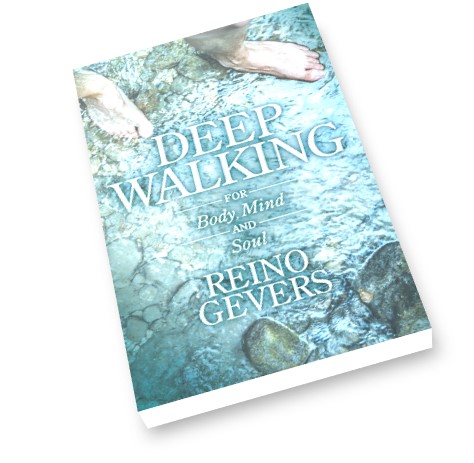
P.S. I’m excited to announce the release of my latest book, “The Turning of the Circle: Embracing Nature’s Wisdom for Purposeful Living.” If you enjoy it, you might also be interested in my previous works, “Deep Walking for Body, Mind and Soul” and “Walking on Edge: A Pilgrimage to Santiago.” You can find all of these titles at reputable bookstores near you.

Leave a comment

Filed under mental health, mental-health

Hardened body, hardened mind

After spending several weeks on my annual pilgrimage retreat along the Camino in northwestern Spain, I have had ample time to reflect on some pressing issues affecting our collective state of mind. I’m increasingly concerned about humanity’s tendency to retreat into tribal bubbles, becoming addicted to fixed concepts and thoughts.

Here is my theory on why the world is at real risk of tipping back into authoritarianism, intolerance, and the cult-like idealization of the “strongman” leader.

Social media thrives on toxic culture

We live in an age where any person in a dark cellar with a deranged mind can get millions of views by posting the most outlandish conspiracy theories, extremism, and anger. There are no real filters or control mechanisms in place to prevent the algorithms from blocking obviously false, distorted, and hateful information. And, there are no legal consequences for those responsible.

A preoccupation with fear, anxiety, and negativity will inevitably impact your mental and physical health. The eyes, brain, and spinal cord are intricately connected through the central nervous system (CNS), facilitating vision, sensory processing, and motor control.

The interconnection of body and mind

The eyes capture visual information and convert it into electrical signals. The optic nerve then transmits these signals to the brain which processes and interprets this information, coordinating with other sensory inputs and cognitive functions The spinal cord transmits these motor commands from the brain to the eyes and other body parts, integrating visual information to coordinate body movements.

Stress starts with negative thought

Stress hormones responsible for flight, fight, and freeze responses of the body are triggered by chronic negative thoughts. Constant worry, fear, and tension will inevitably negatively impact your daily functioning and decision-making. In extreme cases, it leads to depression, hopelessness, and loss of self-esteem.

People preoccupied with negative thoughts may resort to unhealthy coping mechanisms, such as overeating, smoking, substance abuse, or addiction to simplistic thoughts and concepts to numb their emotional pain.

Cognitive distortions, such as catastrophizing (expecting the worst), overgeneralization (viewing a single negative event as a never-ending pattern), and black-and-white thinking (seeing things as all good or all bad).

It is an open door for cult leaders, and extremist political movements offering simple solutions for complex global problems.

What is the antidote?

You have the power to make lifestyle choices, that determine whether you become a tool in the hands of manipulators or take back control over your own mental and physical health. Here are some tips:

  • What you feed your brain with that you become. Monitor your time spent on social media and the consumption of negative news.
  • Physical activity, a balanced diet, and adequate sleep can help mitigate the effects of stress and improve your overall feeling of well-being.
  • How are you talking to yourself? Are your thoughts mainly negative or positive?
  • Mindfulness practices including meditation, deep walking, yoga, tai chi, qi gong reduce the impact of negative thinking and improve awareness. These exercises also impact your body posture and how you feel about yourself.
  • Techniques such as deep breathing, progressive muscle relaxation, and Cognitive Behavioral Therapy (CBT) can help identify negative thought patterns.
  • Choose your friends wisely. Don’t waste your time arguing with people addicted to fixed concepts and illusions. Positively-minded and supportive friends, family, and community make all the difference.

Reino Gevers – Author – Mentor – Speaker

P.S. I’m excited to announce the release of my latest book, “The Turning of the Circle: Embracing Nature’s Wisdom for Purposeful Living.” If you enjoy it, you might also be interested in my previous works, “Deep Walking for Body, Mind and Soul” and “Walking on Edge: A Pilgrimage to Santiago.” You can find all of these titles at reputable bookstores near you.

Leave a comment

Filed under mental health

The power of community

Happiness is a state of mind, often based on those small joys of life that wield immense power to our sense of bliss.

Recently, I engaged in an exercise with course participants, probing into what fueled their energy reserves versus what drained them. Surprisingly, the resounding echoes leaned towards moments spent with loved ones, the companionship of pets, or the peace of mind found in nature as profound sources of rejuvenation.

Notably absent from their reflections was any mention of shopping or the accumulation of material possessions. Yet, society incessantly indoctrinates us that such acquisitions are the keys to happiness. The allure of novelty quickly dims, leaving behind a feeling of regret and shame from overspending.

Humans are tribal by nature

We humans are tribal by nature. Positive interaction with our fellow human beings where we feel seen, supported, and heard is key to perceiving a sense of safety and well-being. A supportive community has for eons been part of the survival mechanism of the human species.

In his research on the Five Blue Zones, Dan Buettner explored the lifestyles and diets in regions of the world where people lived the longest and were healthiest.

It is a fact that aging and death are part of life but living a healthy lifestyle can add decades to your life and happiness. Some key pillars of the research of the Five Blue Zones:

  • Physical Activity. People who live long lives do regular moderate exercise such as walking
  • All the Five Blue Zones came from strong communities with a healthy mixture of young and old people
  • They had a sense of purpose and joy
  • Their intake of calories and alcohol was minimal and most had Mediterranean or whole food plant-based diet.

Genetics play a relatively insignificant part of between 20-25 per cent when it comes to longevity.

With stress related physical and mental disorders becoming a growing threat to the very fabric of society, a supportive network of family, friends, or broader social circles, helps fortify your ability to weather life’s storms.

Belonging to a community fosters a sense of connection and belonging, which is fundamental to human well-being.

Healthy communities can serve as platforms for shared knowledge, emotional support and coping strategies. By exchanging insights and learning from one another’s experiences, individuals within a community can develop adaptive skills for managing stress more effectively.

The bonds of community are often strengthened by shared religious rituals, festivals, music and dancing.

In essence, community acts as both a shield and a sanctuary, offering protection from the onslaught of negativity from the external world while nurturing the resilience needed to bounce back after going through the loss of a loved one or any other challenge that life throws at you.

Reino Gevers – Author – Mentor – Speaker

P.S. I’m excited to announce the release of my latest book, “The Turning of the Circle: Embracing Nature’s Wisdom for Purposeful Living.” If you enjoy it, you might also be interested in my previous works, “Deep Walking for Body, Mind and Soul” and “Walking on Edge: A Pilgrimage to Santiago.” You can find all of these titles at reputable bookstores near you.

1 Comment

Filed under Uncategorized

Wisdom is drowning in the flood of information

“Listen to the wind, it talks. Listen to the silence, it speaks. Listen to your heart, it knows.”
– Ojibwe Prayer

Acquired knowledge and intelligence are often confused with wisdom in our digital age where we have a world of information at our fingertips while the deeper understanding and insight into life’s mysteries appears to be on the wane.

The ancient Mystics, notably the 13th-century Dominican monk Meister Eckart, understood true wisdom as the intimate connection and surrender to the divine will.

Eckart’s idea was that of a “divine birth” within the soul, where a transformative experience leads to a profound shift in consciousness.

“In this divine birth, I find that God and I are the same: I am what I am and what I shall remain, now and forever. I am carried above was the highest angels. I neither increase nor decrease, for in this birth I have become the motionless cause of all that moves. I have won back what has always been mine. Here, in my own soul, the greatest of all miracles has taken place-God has returned to God!

(quote 3086  |   Meister Eckhart).

Knowledge is worthless without wisdom

The sages and Mystics were well aware of the limitations of intellectual thought and knowledge. The accumulation of information, facts, theories, and concepts on the cognitive level were deemed worthless if they were not connected to wise decision-making.

Intelligence, especially on the part of egocentric politicians, scientists, and business leaders, has in the past caused havoc to humanity and become even more topical in an age where spreading falsehoods and toxic emotions to millions on a global level has become the norm.

Millions of people are being spoonfed with external beliefs, concepts, and ideas that ultimately are far removed from authentic soul purpose, finding themselves digging deeper and deeper into the rabbit hole of falsehoods and illusion.

Wisdom meanwhile encompasses a broader understanding of human nature, ethics, and the interconnectedness of the world by letting go of “ego” desires and attachments, especially of fixed beliefs and concepts that are closely intertwined with personality and ego.

The misunderstanding of Karma

Wisdom is an alignment with the cosmic laws and a greater whole that governs all existence. In this context the concept of karma or the law of attraction is often misunderstood as a predestined inevitability, yet with the growth of wisdom comes the growth of awareness.

It is inseparable from such values as compassion, empathy, and unconditional love. Mystic teachers emphasize the importance of cultivating these qualities as essential aspects of spiritual growth, enlightenment, and ultimately fulfilling life’s purpose.

Karma is the result of habits, actions, and choices made. We have been given the power of choice by the divine. If you extract yourself from the addiction of blaming external circumstances you become the creator and master of your destiny.

“Life is a meteor
Let your eyes roam
Heaven is beautiful
It’s almost like home
Children! get ready
It’s time to come home”

(Paul Simon Track Seven on Seven Psalms)

Reino Gevers – Author – Mentor – Speaker

P.S. I’m excited to announce the release of my latest book, “The Turning of the Circle: Embracing Nature’s Wisdom for Purposeful Living.” If you enjoy it, you might also be interested in my previous works, “Deep Walking for Body, Mind and Soul” and “Walking on Edge: A Pilgrimage to Santiago.” You can find all of these titles at reputable bookstores near you.

Leave a comment

Filed under mental health, spirituality

Staying clear-headed amid emotional turmoil

The average person spends a large portion of their life daydreaming, problem-solving, planning, worrying, and mulling over the past and the future, caught in the maelstrom of between 50,000 and 70,000 thoughts per day.

A large part of these thoughts would be influenced by a spectrum of emotions that have a major impact on your physical and mental well-being.

Numerous studies reveal that positive emotions such as happiness, gratitude, and love have been associated with a stronger immune system, while negative emotions like sadness or loneliness may weaken it, making you more susceptible to infections and illnesses.

Emotions impact your physical and mental well-being

Toxic emotions such as anger, anxiety, and fear are known to trigger stress hormones responsible for the fight, flight, and freeze response in the body. Prolonged stress can cause problems such as cardiovascular issues, a weakened immune system, digestive problems, muscle tension, and metabolic diseases.

Your business success, your relationships, your partnership, and basically your happiness are linked by how well you have your emotions under control, and how well you understand your own emotional response mechanism.

Doing the self-work and understanding your own emotions is key

Developing emotional awareness, and understanding your emotions is therefore key to leading a beautiful life.

This week I interviewed on my podcast Living to BE , a Sensory Perception Analyst and Expert in her field, Kim Korte. I would highly recommend you listen to the valuable advice she gives on finding a good emotional balance. You can also watch it on my youtube channel. Some of the highlights of our conversation:

  • Finding the right balance in your emotional response
  • Training your mind for greater emotional resilience
  • Self-awareness on the different emotional nuances

Reino Gevers – Author – Mentor – Speaker

P.S. I’m excited to announce the release of my latest book, “The Turning of the Circle: Embracing Nature’s Wisdom for Purposeful Living.” If you enjoy it, you might also be interested in my previous works, “Deep Walking for Body, Mind and Soul” and “Walking on Edge: A Pilgrimage to Santiago.” You can find all of these titles at reputable bookstores near you.

Leave a comment

Filed under mental health, mental-health, psychology, self-development, Uncategorized

Your social network matters

Humans thrive on social connections, as evidenced by research from the American Medical Association (AMA), which underscores the profound impact that a healthy community has on both physical and mental well-being.

Loneliness and isolation have reached epidemic levels in most Western countries, emerging as significant public health issues. Highlighting the severity of this problem, a U.S. Surgeon General advisory equates social connection with fundamental necessities like food and water in terms of its importance for long-term survival.

“We all need our time away for rejuvenation and reflection,” says Dr. Frank Clark, an associate clinical professor at the University of South Carolina School of Medicine-Greenville, “but social isolation is a form of solitude that is unhealthy and can occur due to multitude of reasons.”

Causes of social isolation could be the loss of friends or a partner due to death, divorce, or separation. An illness could make social connections difficult to maintain, but other factors such as a caregiver’s responsibility, a traumatic event, or life changes such as the loss of a job or retirement could all play a role.

Researchers who examined longevity in the Five Blue zones that included  Sardinia, Italy; the Greek island of Ikaria; Loma Linda, California; Nicoya Peninsula, Costa Rica and Okinawa, Japan, found that social interconnectedness played a key role in a healthy lifestyle. It can literally add decades to your life.

Social connections slow cognitive decline

Keeping up social connections as people get older helps to maintain thinking skills and slow cognitive decline. “It’s not uncommon for our social networks to shrink as we get older,” says Marilyn Albert, chairwoman of the Global Council on Brain Health.

Maintaining social bonds and having a sense of purpose have been identified by researchers in the Blue Zones Project as a critical element for longevity.

Photo by Matthias Zomer on Pexels.com

Here are some common practices observed in Blue Zones that help strengthen social ties:

  1. Strong family bonds: Families tend to stay close-knit across generations. Elders are respected and often live with or near their extended family members. Regular family gatherings and celebrations are common, fostering a sense of belonging and support.
  2. Active social lives: People in Blue Zones often engage in regular social activities with friends and neighbors. This can include communal meals, gatherings, festivals, and religious or cultural events.
  3. Collaborative work and projects: Communities in Blue Zones often come together to work on shared projects or goals. Whether it’s farming cooperatives, community gardens, or other collaborative efforts.
  4. Cultural traditions: Many Blue Zones have strong cultural traditions that emphasize social connections. This can include practices like storytelling, music, dance, and rituals that bring people together and reinforce community ties.
  5. Support networks: Blue Zones tend to have strong support networks built on reciprocity and mutual assistance. People help each other in times of need, whether it’s through informal networks of friends and neighbors or more formal community organizations.

While rural settings often have characteristics conducive to strong community ties, the lifestyle factors observed in Blue Zone were not exclusively rural. The key lies in the cultural and social practices that promote longevity and well-being, regardless of whether they’re found in rural or urban environments.

Reconnecting with others after a period of social isolation can be challenging but is certainly possible. Start by reaching out to a close friend or family member for example with a simple text or phone call to catch up.

  • Consider joining groups, a religious community, or clubs that align with your interests or hobbies. This could be a book club, hiking group, cooking class, or volunteer organization.
  • Keep an eye out for local community events such as festivals, workshops, or meetups. These events offer opportunities to meet new people and engage with your community.
  • If you’re struggling with specific challenges such as mental health issues, addiction, or grief, consider attending support groups where you can connect with others who are going through similar experiences.
  • When interacting with others, practice active listening by showing genuine interest in what they have to say. Ask questions, offer support, and show empathy to deepen connections.

Cultivating a sincere interest in others not only enriches your relationships but also enhances your own appeal and magnetism. Developing and honing your social skills is essential for experiencing a fulfilling and rewarding life.

Reino Gevers – Author – Mentor – Speaker

P.S. I recently had a great chat on the fitforjoy podcast with Valeria Koopman on Living a Beautiful Life. If you found this Blog an interesting read you might also enjoy my latest book, “The Turning of the Circle: Embracing Nature’s Wisdom for Purposeful Living.” My previous titles, “Deep Walking for Body, Mind and Soul” and “Walking on Edge: A Pilgrimage to Santiago,” can also be ordered from all reputable bookstores near you.

Leave a comment

Filed under mental health, mental-health

The truth be told

“Three things cannot be long hidden: the sun, the moon, and the truth.” – Buddha

In my early days as a news reporter covering the ‘court beat’ and witnessing some of humanity’s worst crimes, it was disheartening to see how many criminals, even when faced with undeniable evidence, would contort the truth, painting their victims as the villains.”

In the tumultuous public information space, truth finds itself relegated to the backseat, drowned out by a cacophony of lies, deception, and hate speech. The manipulation of truth isn’t solely the domain of petty criminals; it’s a tool wielded with equal fervor by autocrats, dictators, and cult leaders.

I’ve often pondered how individuals can fabricate and obscure with such unwavering conviction that one might almost be inclined to believe them. It dawned on me that evil, or Satan isn’t merely a religious concept but a stark reality, inhabited by individuals devoid of a moral compass and exhibiting behavior far removed from what society deems normal and ethical.

In the increasingly muddied water of social media, we need to call out the purveyors of evil messaging. They are easily identifiable:

  • They lack complete empathy and have no qualms in causing harm and suffering to others.
  • They are masters at manipulating words. Their tools are deception and gaslighting. Their lies and twisting of the truth will make you doubt your own sanity.
  • They seek complete control. They will pressure, intimidate, and coerce. They demean, humiliate, or degrade others as a means of asserting power and dominance.
  • Charisma. Externally they are sometimes charismatic, outgoing, and charming personalities. But they have an agenda. They are trying to gain your trust while secretly pursuing their own selfish agenda – typical among religious and political cult leaders.
  • Emotional manipulation. If you have not transmuted your own dark emotions of fear, anxiety, hate, and shame you are easy prey. They will tell you that all your “bad feelings” have been caused by “others” – people of other faiths, cultural origins, and political beliefs. By this stage, you will be willing to follow them unconditionally all the way into the darkest of dungeons.

The good news is that God has given us the power of choice. Our primary purpose on earth is to elevate consciousness. You ultimately have the power to transcend limited perspectives, biases, and conditioned beliefs, gaining greater clarity, empathy, and interconnectedness with the broader world of existence.

By engaging in simple acts of service, kindness, and altruism you will cultivate a sense of purpose, fulfillment, and connection to something greater than yourself.

By learning to love yourself you will cultivate empathy and compassion towards others, fostering a greater sense of connection and understanding of the human experience.

Explore and study spiritual and philosophical traditions that promote personal growth, self-discovery, and a sense of interconnectedness with higher consciousness.

To quote Robert Frost: “Two roads diverged in a wood, and I took the one less traveled by, and that has made all the difference.”

Reino Gevers – Author – Mentor – Speaker

P.S. I’m excited to announce the release of my latest book, “The Turning of the Circle: Embracing Nature’s Wisdom for Purposeful Living.” If you enjoy it, you might also be interested in my previous works, “Deep Walking for Body, Mind and Soul” and “Walking on Edge: A Pilgrimage to Santiago.” You can find all of these titles at reputable bookstores near you.

1 Comment

Filed under raised consciousness, self-development, spirituality, Uncategorized

Do what you love

You must never think of the whole street at once, understand? You must only concentrate on the next step, the next breath, the next stroke of the broom, and the next, and the next. Nothing else.”

– Michael Ende, Momo

Are you finding yourself on a frustrating treadmill of doing a job that you hate and counting the years until retirement? There are millions of people out there wasting the most precious years of their lives for all the wrong reasons.

On average about half of your lifetime will be spent working, assuming you retire in your mid-60s and have a typical lifespan between 70 and 80. It therefore makes sense that you spend your best years doing what you love and what you are passionate about.

If you are stuck in grievance culture, unhappy in your job, or your relationship, and have problems with your self-esteem the universe will be sending you many signs that you need to change direction.

A job environment with constant high-stress levels will not only cause mental and physical exhaustion but eventually lead to a host of other health problems that will severely impact your lifespan and quality of life. Some typical red flags:

  • Your personal values are no longer in alignment with the values of the organization
  • All your efforts go unnoticed or unappreciated
  • You feel undervalued and underpaid for what you are doing
  • You have reached a dead end in personal growth. The job lacks growth opportunity, meaning, and purpose.

You might have started a particular career or job with a passion, but it has meanwhile outlived its purpose. It has become a grinding chore and is exhausting you physically and mentally. That might be the time for you to move on. One path is often the stepping stone or learning curve for you to move on to another path.

In doing what you love, you will discover that the true richness of life is not just in the paycheck, but in the fulfillment of your soul. When you are doing what you are passionate about your higher vibrational frequency will automatically attract all the abundance and the money you need.

Photo by Riya Kumari on Pexels.com

Even in carrying out the most mundane tasks your mindset and perspective are key, according to the 13th-century Mystic Meister Eckhart. Being in alignment is the discovery of mysticism in all of your activities in a “joyful experiential presence”.

Eckart’s formula for happiness was liberation from attachment and complete surrender to “dedication” in giving yourself wholeheartedly to a cause, person, or activity. This, he argues, is only possible if you create space for contemplative “emptiness”.

The more in alignment “the more powerful, dignified, useful, commendable, and perfect is the prayer and the work,” Eckart writes in one of his sermons.

Similarly, Zen Buddhism encourages practitioners to cultivate mindfulness, which involves paying full attention to each moment, fully immersing yourself in the present experience, and extending to all activities whether it’s walking, eating, working, or any other daily task.

Mindful activity involves being fully present in the current moment, paying attention to thoughts, feelings, and sensations without becoming entangled by attachment or judgment. Developing a kind and compassionate attitude is integral to the spiritual path.

In a busy world, you are constantly being pulled into a thousand different directions, becoming a playball for social media and the “glitter of the shiny things.” Distraction and addiction are trying to stifle the voice of your soul yearning to accomplish that which it was destined to bring forth and create from the day you were born.

Reino Gevers – Author – Mentor – Speaker

P.S. I’m excited to announce the release of my latest book, “The Turning of the Circle: Embracing Nature’s Wisdom for Purposeful Living.” If you enjoy it, you might also be interested in my previous works, “Deep Walking for Body, Mind and Soul” and “Walking on Edge: A Pilgrimage to Santiago.” You can find all of these titles at reputable bookstores near you.

2 Comments

Filed under psychology, self-development, spirituality, Uncategorized

Why are so many people angry and unhappy?

“A comfort zone is a really beautiful place, but nothing grows there”~ Anonymous

We are living in the most prosperous and exciting era of mankind, yet if we look and hear around us many people seem stuck in the grievance culture of anger and unhappiness.

During the past centuries, mankind has made groundbreaking discoveries in discoveries in physics, astronomy, and biology. In the latter half of the 20th century computers and the invention of the Internet have led to an unprecedented acceleration of knowledge and information on a global level.

In 1982, futurist and inventor R. Buckminster Fuller estimated that up until 1900, human knowledge doubled approximately every century, but by 1945 it was doubling every 25 years. And by 1982, it was doubling every 12-13 months. Current estimates predict that with the revolution of AI technology human knowledge will double every 12 hours.

At the same time, the cultural gap between technological progress and the ability of human consciousness to process these changes has increased. Rapid change produces uncertainty with the unknown perceived as a threat.

A natural aversion to change

Evolutionary psychology suggests that humans have developed a natural aversion to risk as a survival mechanism. Change is inherently associated with uncertainty and risk, triggering a “walling off” from potential harm. Changing habits and routines requires effort and the ability to adapt.

While, some people thrive in a new environment of innovation, and see every new challenge as an opportunity for growth and evolution, others are gripped by fear and retreat into the cave of their comfort zone, not realizing that if they don’t adapt, their lives will be changed for them anyway.

The grievance culture feeding on toxic emotions

As we enter 2024 with elections scheduled in several major countries there is a real danger of the public narrative being hijacked by “grievance culture” feeding on innate human fears, anxiety, and anger. Fanatacists promise a return to the “golden era” of the past by building walls, creating the illusion that the comfort zone can be protected from “external threat”.

Photo by Robin Schreiner on Pexels.com

You will be comfortably resting in your “comfort zone” if a demagogue is telling you that all your grievances and unhappiness have been caused by the opposing political party, a minority group, a foreign nation, or an institution. He is telling you that you can comfortably sit back while I will sort out these problems. Meanwhile, backstage your basic liberties and freedom of expression are being eroded.

We are at the cusp of embracing a bright new future or falling back into old divisions of intolerance and xenophobia

Much of the unhappiness is caused by cultural indoctrination and addiction to the accumulation of “things”. It has replaced the spiritual void left by institutional religion with ever more people questioning its emphasis on what to believe and how to behave. When you define yourself by the “things” you own, you will never be happy because you are missing out on the BEING of life. And life is constantly in motion and evolution.

With the growth of spiritual awareness comes the recognition that evolution and change are inherently part of the divine plan. Everything in the universe is ultimately interconnected and composed of Divine Oneness.

When born there is separation from the Oneness and a natural tendency to separate from the body only to yearn and strive for the reconnection with the Whole.

The American poet Louise Erdrich describes how life will break and heal you during this process … “Nobody can protect you from that, and being alone won’t either, for solitude will also break you with its yearning. You have to love. You have to feel. It is the reason you are here on earth. You have to risk your heart. You are here to be swallowed up. And when it happens that you are broken, or betrayed, or left, or hurt, or death brushes too near, let yourself sit by an apple tree and listen to the apples falling all around you in heaps, wasting their sweetness. Tell yourself that you tasted as many as you could.

Forgetting to live the experience

We are constantly chasing after happiness and forgetting to live the experience. At that moment when we have achieved what we have been striving for all along, we feel a sense of loss and emptiness. Grievance culture feeds on what is lacking in life or what is under threat of being taken away from you.

Practicing a gratitude ritual elevates consciousness and creates an abundance mindset. If you are healthy, have food on your table, and a warm home with electricity, you are already better off than most people in the world.

Reconnecting with body and soul

Reconnecting with body and soul is more important than ever when the pull of grievance culture is trying to pull you away from your center. Life is meant to be difficult and challenging. We only grow when we confront those challenges and obstacles. And, you will be better equipped to deal with those challenges if you nurture your mind and body. When you change your perspective with a gratitude mindset the universe will conspire creating more happiness, joy, and energy in your life.

Reino Gevers – Author – Mentor – Speaker

P.S. I’m excited to announce the release of my latest book, “The Turning of the Circle: Embracing Nature’s Wisdom for Purposeful Living.” If you enjoy it, you might also be interested in my previous works, “Deep Walking for Body, Mind and Soul” and “Walking on Edge: A Pilgrimage to Santiago.” You can find all of these titles at reputable bookstores near you.

Leave a comment

Filed under mental health, mental-health, Uncategorized