Tag Archives: mental-health

Humanity at the crossroads

As we end an old year and enter another new year in the 21st century it is worth reflecting of where we stand as a humanity. We have witnessed in 2023 two major wars traumatizing millions of people, a world grappling with a climate and environmental crisis and and a resurgance of authoritarianism.

Humanity stands at the cusp of forging a new earth characterized by elevated vibrational energy and heightened consciousness, fostering an unprecedented era of abundance, tolerance, and peace. Alternatively, there is the ominous prospect of regressing into another dark age, replete with conflicts fueled by tribalist fears, anxieties, and hatred.

Regrettably, a significant portion of humanity appears to operate on autopilot, blissfully ignorant that their responses are dictated by emotions and feelings rooted in obsessive thoughts and beliefs, steeped in the shadows of past traumas or programmed by mass media.

Photo by Pixabay on Pexels.com

These ingrained thoughts and beliefs wield a potency akin to that of substance addiction. A vehement denial of this addiction persists, the grip so formidable that they prefer to die rather than acknowledging that their beliefs and perspectives rest on a flawed foundation.

Beliefs and thoughts impacting cell expression

In his book “The Biology of Belief”, the cell biologist Dr. Bruce Lipton, argues that beliefs and thoughts have an influence on our gene expression and have a profound effect on our health and physical well-being.

Lipton argues that positive beliefs can contribute to health and healing, while negative beliefs can potentially lead to illness. The good news is that by becoming aware of the shadow, your thought patterns and emotions, you have then power of choice and become a co-creator on a collective level in transmuting these beliefs, ultimately living a happier and healthier life.

The power of words and thoughts

Words and sound have a vibrational energy that affects your body and mind. Research conducted on 700 million words and phrases used on Facebook by the University of Warwick, United Kingdom, in 2013 revealed some astonishing facts.

Neurotic people disproportionately used the phrase “sick of” and the word “depressed”. Research conducted by Eichstedt et al. in 2015 found a correlation between language used on Twitter accounts and heart disease in U.S. counties where words expressing anger, hate, and resentment were predominantly used.

In this week’s “Living to BE” podcast I interview an expert on the subject, Janet Schmidt, explains her own path into creating a life of abundance after losing nearly all her money, and becoming aware of her own ancestral program of scarcity. We delve on the subjects of healing trauma and limiting beliefs, building a prosperity mindset and reprogramming for success.

Why do some people procrastinate in victimhood and the “blame game” while others develop an emotional resilience that catapults them into a life they have always dreamed of with happy relationships, material abundance, and a healthy mind and body?

What are you feeding your mind with?

What you feed your mind and body with is one of the keys of reprogramming. Avoid toxic people poisoning your mind with their prejudices, fears and hate. Be mindful of what books, social media feeds and news channels you feed your mind with.

Are you still in control or are you a member of the ranting crowd addicted to grievance culture? Who are you really? What is your purpose in life? If you choose to create a space for solitude, for example by taking a walk in the green and blue spaces of nature, you will reconnect to the awe inspiring gift from the universe and the bigger whole. You will start to perceive the faint whispers from the universe, revealing the waymarkers of your authentic path of destiny.

If you find yourself caught in the rabbit hole of toxic emotions try the method of emotional shifting. Replace the word “fear” with “courage”, “hate” with “love and compassion”, “anxiety” with “confidence and trust”, “scarcity” with “abundance”, “melancholy sadness”, with “happiness and gratitude.”

There are some powerful mantras and prayers that elevate into a higher vibrational field. Examples are the Buddhist mantra: Om Mani Padme Hum, the Christian Catholic prayer song: “Ave Maria” and the Lord’s Prayer in the original Aramaic version.

The purpose in life is to find synchronicity with divine purpose. What the Buddhists call the “Buddha nature” and the Christian mystics the “Christ within” is evolution of spiritual consciousness that begins with practising kindness and compassion with the self that emanates into all your relationships making the world a better place – one step at a time.

Reino Gevers – Author – Mentor – Speaker

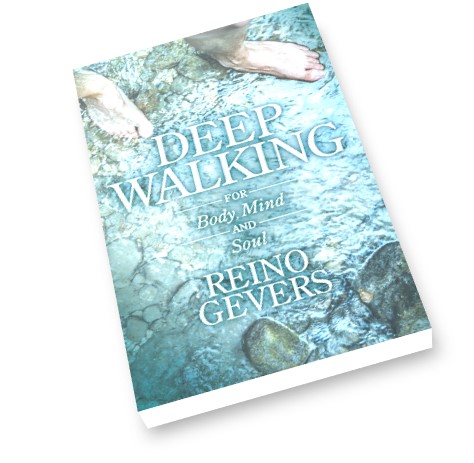
P.S. I’m excited to announce the release of my latest book, “The Turning of the Circle: Embracing Nature’s Wisdom for Purposeful Living.” If you enjoy it, you might also be interested in my previous works, “Deep Walking for Body, Mind and Soul” and “Walking on Edge: A Pilgrimage to Santiago.” You can find all of these titles at reputable bookstores near you.

Leave a comment

Filed under mental health, mental-health, self-development, spirituality

Building resilience in turbulent times

Humanity is about to embark on a journey marked by monumental shifts and unprecedented disruptions, unlike anything we have seen before. It will impact every aspect of our lives, creating a ripple effect that will affect us on multiple levels.

This is the conclusion reached in a workshop we had recently in a German monastery. The participants included experts from finance, research, health, and education – all of them having delved deeply into philosophy, religion, and spirituality.

A tumultuous shift into a new era inevitably comes with disruptions in the form of wars, breakdown of institutions and industries, extremism, and social changes. Some notable examples of the past include the industrial revolutions of the 18th and 19th centuries, the Great Depression of the 1930s, the two world wars, the end of the Cold War in the early 1990s, and the digital revolution of the late 20th century.

We can expect in the next five years an unprecedented leap in quantum computing, biotechnology, genetic engineering, robotics, and artificial intelligence automation. The ability to enhance, alter, or transfer consciousness raises profound existential and ethical questions about identity, mortality, and the human experience.

During times of uncertainty, we are seeing a retreat into political extremism and religious fanaticism. Fear is what fuels the radicals, exploiting emotions to sow discord and chaos. Millions will find themselves on the losing end, navigating the turbulent waters of change.

The winners who embrace change

Yet, amidst these challenges, there will emerge a resilient group of individuals and communities who seize the opportunity. Winners not only adapt to change but have the innate ability of turning adversity into an advantage. They embody the human spirit’s ability to innovate and flourish during times of uncertainty.

Building resilience

The more you build your mental, spiritual, and physical resilience at this point in time the easier it will be for you to navigate the disruptions of the future.

In my new book “The Turning of the Circle: Embracing Nature’s Wisdom for Purposeful Living”, I emphasize the point that all of life underlies a seasonal principle of natural and spontaneous changes. Evolutionary change, sometimes disruptive, is an elementary aspect of the universal intelligence, of God, or the divine.

Embedded within the fabric of all things lies a divine essence, a source that intricately connects us all within a vast and intricate cosmic matrix. This profound interconnectedness is in perpetual motion, constantly evolving, adapting, and striving toward refinement. Within this intricate tapestry, God finds expression through the awe-inspiring wonders of nature.

Creation, in all its diverse and manifold forms, is a testament to the boundless creativity of the divine. It is a dynamic masterpiece, never at a standstill, but rather, continuously in motion and unfolding in the exquisite dance of creation.

The purpose of life is life itself

With the sunrise of another day, the delicate bloom and aroma of a flower, the melodious song of a bird, and the fleeting touch of the wind, you hear the divine whispering to the soul. The everyday miracles of nature serve as reminders of the eternal dance of existence, illuminating the path of endless growth and the limitless opportunities that dwell within the universe’s vast and loving embrace.

While the external world will continue to focus on the distractions of the 10,000 things and short-term material and sensory gratification, the spiritual teachings of the ancient Mystic teachers become more relevant than ever, providing a haven of comfort and resilience during times of uncertainty.

Happiness and contentment can ultimately only be found in alignment with the vertical dimension of the spiritual.

The term “spiritual” traces its roots back to the Greek word “pneumatikos,” later translated to “spiritualis” in Latin. Unlike religion, it stands apart from rigid doctrines and defined systems of belief. Instead, it inherently signifies an exploration of the inner essence, a journey towards the core or spark of the “holy spirit,” integrating the life force in connection with divine energy. It embodies a sacred communion that transcends the boundaries of organized faith, emphasizing the personal and transformative relationship between the individual and the divine.

Lifting the veil to fulfillment and life purpose entails uncovering your individual creative niche within the vast tapestry of God’s creation. The purpose of life is life itself.

The choice is between embracing a bright future of hope and purpose or heading for the pitfalls of negativity laid by the forces of darkness.

Reino Gevers – Author – Mentor – Speaker

P.S. I’m excited to announce the release of my latest book, “The Turning of the Circle: Embracing Nature’s Wisdom for Purposeful Living.” If you enjoy it, you might also be interested in my previous works, “Deep Walking for Body, Mind and Soul” and “Walking on Edge: A Pilgrimage to Santiago.” You can find all of these titles at reputable bookstores near you.

.

Leave a comment

Filed under mental health, mental-health, spirituality, Uncategorized

Your compelling bright future

A deluge of negative news from atmospheric disasters, economic meltdowns, and wars is collectively inundating the minds of humanity. It not only corrodes our trust in the future, but also frays the delicate fabric of communities, and nurtures grievance culture.

Without ignoring the real and tangible threats that our world faces, the fears and anxieties of a collapsing future are just thoughts.  Stress always begins in the mind and triggers the reptilian part of the brain.

Freeze, flight or fight

We are hindered from discovering genuine solutions as humanity collectively remains ensnared in the primal instincts of freeze, flight, or fight. In this state, the very essence of our creative minds lies dormant. Our potential for innovation and problem-solving remains untapped, buried beneath the weight of instinctual responses.

Mass media, especially the social media variant feeds on toxic emotions. It exaggerates, inflates, inflames, distorts, and falsifies reality.

Here are some questions you can ask yourself when your emotions have been triggered, and you are stressed out or feel that you are losing control.

  • Is it true or is it just my perception? Who said it with what motivation?
  • How can I adjust to new circumstances without letting emotions seize control over my mind?
  • Is it really important in the bigger picture of things?
  • Is it a problem or just a difficulty?
  • This too shall pass?

One of the most powerful books of our time is “The Search for Meaning” by Victor Frankl. It was based on his experiences in a concentration camp during World War II. He found that those people who kept their minds focused on a compelling future, despite the most horrific circumstances of the present moment, had a far greater chance of survival.

Frankl argued that even in the most dire circumstances, some of the prisoners who survived the Holocaust identified a deeper reason to live such as the pursuit of a higher purpose or calling.

How is your response to pain and suffering

While you cannot always control external circumstances, you have the power to choose how to respond to those circumstances. By finding meaning in suffering and adversity, you maintain human dignity and inner strength.

In moments of deepest despair, those contemplating suicide often feel utterly bereft of hope, their minds consumed by a relentlessly bleak vision of the future. Yet, just as a single thought can plunge someone into darkness, it holds the power to reshape their destiny into one of brightness, joy, and well-being.

Photo by Ben Mack on Pexels.com

Life’s journey inevitably leads us all toward our ultimate destination—the cessation of our physical existence. However, amidst the uncertainties of this voyage, there lies an opportunity to embrace the present and celebrate every moment.

Rather than succumbing to despair, why not choose to savor the journey, finding solace in the beauty that surrounds you, and in doing so, discovering a profound sense of purpose and contentment?

Keeping the monkey mind under control

Nobody knows what the future might bring. We therefore should keep that monkey mind under control that is jumping incessantly from branch to branch. Keep your feet firmly planted to the ground and focus your mind on your breathing.

By inhaling I know that I am inhaling. Exhaling I’m aware that I’m exhaling. Breathe and focus your mind on the present moment. The present moment is the only reality. It is the only truth.

Life is seasonal and choreographed like an intricate dance between opposing forces. We sway between night and day, navigating through darkness and light, embracing both happiness and sadness, tasting the bitter tang of scarcity and sweet abundance. Dancing between the opposites without attachment is what gives life purpose and meaning.

When you invite the light to penetrate the depths of your shame, and the wounds of your fear, and anxiety, life becomes a transformational ritual. Illuminating the shadows of your unconscious mind serves as the sacred trailhead, guiding you into the divine plan of your soul purpose.

Reino Gevers – Author – Mentor – Speaker

P.S. I’m excited to announce the release of my latest book, “The Turning of the Circle: Embracing Nature’s Wisdom for Purposeful Living.” If you enjoy it, you might also be interested in my previous works, “Deep Walking for Body, Mind and Soul” and “Walking on Edge: A Pilgrimage to Santiago.” You can find all of these titles at reputable bookstores near you.

Leave a comment

Filed under mental health, mental-health, Uncategorized

Why nobody is safe from a cult

Have you asked yourself why decent, educated, and well-meaning people are pulled into the dragnet of a dangerous cult? Do you think you are immune to making the same mistake? All it takes for them to capture your mind is to push certain emotional triggers and feelings.

Times of uncertainty and rapid change impact personal lives in multiple ways. The world’s getting more complex. We are seeking easy answers and simple solutions. If you are at an especially vulnerable point in your life. If you haven’t done the self-work in transmuting archaic fears, anxieties, and anger issues, you are at risk.

Historians and psychologists to this day ask themselves why a highly civilized nation that brought forth some of the world’s greatest philosophers, writers, and inventors could literally “worship” in masses a madman demagogue like Adolf Hitler. Cult leaders in different variations are malignant narcissists, display psychotic personality disorders, and carry an extreme personal grievance.

Hitler perfectly epitomized and tapped into the collective humiliation and undercurrent seething anger Germans felt after losing a war and suffering hunger and poverty during the economic meltdown of the 1930s. With a rising number of extremist groups coming to the fore in once unshakeable democracies, scholars and historians are seeing dangerous parallels and comparisons to the 1930s and the rise of fascism that culminated in the catastrophe of World War II.

An “us-versus-them” mentality

Cult movements typically have an “us versus them” mentality, providing a “safe haven” for individuals who have suffered a personal loss or humiliation. The “tribe” in the form of an organization, religion or political movement with a charismatic leader at its head perceives all outsiders of the movement as a threat. They will pound the message of “exceptionalism” of their leader or group. The “non-believers” and especially minority groups are vilified and dehumanized. Followers of the cult inevitably break off contact with family, and friends who do not belong or refuse “to see the light.”

Control and Isolation

The control mechanisms of a cult can be on a very subtle emotional level. Once the member has gone all-in by severing long-term relationships, it becomes very difficult to return to the old life. Few people will admit to having made a mistake or the wrong decision after sacrificing the best years of their lives and donating all their money to the “movement” or “cause.” We are hard-wired as social beings and it gets very difficult to leave “the cult family”. Those who leave are vilified as traitors to the cause, threatened, and in extreme cases harmed physically and mentally.

Photo by Luis Dalvan on Pexels.com

Group-Think, Lies and Deception

Once in the movement you inevitably become part of “group-think.” Members expressing the faintest doubts, who engage in a critical discourse or ask the wrong questions are shamed, coerced, and brought into line by the cult leader or his lieutenants. The critics will be told that they are “in their ego” or have strayed from the path – a favorite one in the religious cults. They will be playing on a core fear of most humans – the fear of being excommunicated from the safety of the tribe. Meanwhile, the real objectives and the financial dealings of the movement can be shrouded in mystery. The leader is always right. Excuses will be made over and over again as to why the leader could never be responsible for sexual misconduct, overspending on luxury items, or committing a serious crime.

Financial Exploitation

A common denominator of all cults is the financial exploitation of their members. They will be asked to contribute high membership fees, provide funds for a new temple, and pay for the private jet or the legal fees of the cult leader. At times members would have to donate all their assets to the movement for “the common good” as a sign of their commitment and loyalty. A small portion might be channeled to real charities as a marketing ploy while the major part will be kept by the cult leader for his personal needs.

Exploitation of vulnerabilities

You might say: “This can’t happen to me.” But cults and sects are masters at exploiting human vulnerabilities and emotions. Nobody is safe. A religious sect with a therapeutic New Age touch might catch you during an especially vulnerable point in your life when you are lonely and in need of social support and love, have just gone through a divorce, lost a loved one, or have a spiritual crisis.

The political cult and charismatic leader at its head will ensnare you if you haven’t dealt with your darkest toxic emotions such as anger and fear. You are functioning on “automatic” in the fight and flight mode of your reptilian mind, separated from the prefrontal cortex of your brain responsible for critical and logical thought.

Addiction to a cult has to be treated like any other addiction. First and foremost there is the need for an honest recognition and acceptance of the problem. Concrete action has to be taken like leaving the cult, breaking all contact with its members, and possibly leaving town. What lifestyle changes, support groups, and therapy are necessary? What would my life look like without the addiction? What freedoms would I be enjoying? How can I prevent relapse and find supportive friends with a higher vibrational energy?

If you are drawn to a charismatic leader with a hate-filled, and vindictive message, ask yourself: “What anger within me is he tapping into? What can I positively change in my life, instead of delegating action to the “political messiah.”?

Walking the path of your highest calling in personal freedom and liberty is foundational to fulfilling your soul destiny and living a life of bliss. By becoming subservient to a cult you are surrendering your unique God-given authenticity and weakening your self-esteem.

You have instead a wonderful opportunity to build on self-development from the gems and wisdom of many teachers past and present who have transcended the temptations of power and ego. If you should run into that “guru” offering a seemingly perfect solution or the only path to enlightenment – you had better run.

Reino Gevers – Author – Mentor – Speaker

P.S. My new book “The Turning of the Circle: Embracing Nature’s Wisdom for Purposeful Living” has just been published. You might also find my other books “Deep Walking for Body, Mind and Soul” and “Walking on Edge: A Pilgrimage to Santiago” of interest. They are available where all good books are sold.

Leave a comment

Filed under humanity, mental health, mental-health, psychology, self-development, spirituality

Are you enough?

Once upon a time, there was a poor farmer who owned just one goose. But then one day the goose laid an egg made entirely of gold. Overjoyed by his newfound wealth, the farmer sold the golden egg and became rich overnight.

The next day, the goose laid another golden egg, and the farmer continued selling them and accumulating wealth until the farmer’s greed began to consume him. What he had was not enough. He compared himself to other farmers who were much wealthier than he was.

Believing that the goose contained a treasure trove of gold inside her, the farmer decided to slaughter the goose and cut her open. To his dismay, he found that the goose was just like any other, with no gold inside. In his foolishness, the farmer lost both his source of wealth and his beloved goose.

The earliest written version of “The Goose that Laid the Golden Eggs” can be traced back to ancient Greek and Roman times and is timeless in its moral relevance.

Photo by Pixabay on Pexels.com

Especially our modern consumerist culture thrives on the notion that you are never enough. Your old iPhone might still be working perfectly but the hype is out there that you will be needing the new iPhone 15 expected to cost well over 1000 dollars. Few things destroy personal assets as much as buying a brand-new car. It is worth several thousand dollars less as soon as you drive it out of the salesroom.

When you have been hypnotized with the notion that you “are not enough”, you will be constantly comparing yourself with others who seemingly have happier marriages, bigger cars, bigger houses, and vacations in more exotic places.

The “never enough” culture feeds on basic human fears and insecurities. “Why can’t I have… Why can’t I be like … If only I had … everything will be good. The dark void resulting from a lack of self-worth, self-love, and inner self-care is compensated with a material wish list. The truth is that the novelty of the new thing is short-lived. The emptiness creeps in again, even regret of having spent so much money on something you don’t really need.

If you want to live a happier, more fulfilling, and joyful life you have to do the inner work.

What is your reason to wake up in the morning?

The Japanese Ikigai philosophy on purpose and meaning in life essentially teaches that satisfaction and fulfillment are achieved when there is an alignment of your personal passion, values, and skills with the bigger needs of the world.

In a similar vein, the Japanese concepts of Mono and Wabi-sabi emphasize the appreciation and acknowledgment of the impermanence of all things. It is the exploration of the beauty in the imperfection, in the brokenness, the transience of nature, and the patina of age.

The Zen Buddhist concept of Muga refers to the “selfless self” that is an interconnected part of the whole, transcending the ego and self-centered desires. Meaning and purpose are found in serving others and cultivating compassion and wisdom.

Reino Gevers – Author – Mentor – Speaker

P.S. If you’ve found this article of interest you might want to read more in my books. “The Turning of the Circle: Embracing Nature’s Wisdom for Purposeful Living” has just been published. You might also find my other books “Deep Walking for Body, Mind and Soul” and “Walking on Edge: A Pilgrimage to Santiago” of interest – available where all good books are sold.

Leave a comment

Filed under mental health, mental-health

Defining your authentic purpose

“Each of us is an artist of our days; the greater our integrity and awareness, the more original and creative our time will become.” – John O’Donohue

Being successful and living a purposeful life is not the same thing. Success is often counted in the external trappings of wealth, fame, and youth but you could still miss the mark of what you were destined to become when you were born.

The disconnect between external and internal needs will inevitably trigger a pain often drowned in the addiction to short-lived gratifications and distractions. This is why taking time to reflect, digest, and reassess personal values and needs is so important.

Humanity is collectively transitioning to higher consciousness

The meaning of life and purpose differs for every individual but at the same time, humanity is collectively transitioning to an ever-changing evolution of consciousness. The global crisis situations we are experiencing at the moment are the very nature of the transition between the old and the new.

Austrian psychiatrist and Holocaust survivor Viktor Frankl describes the journey of creating and doing, experiencing and encountering, and cultivating a different perspective on pain and suffering. 

For eons, the largest part of humanity has essentially struggled to provide basic needs such as food, shelter, and reproduction. Our ability to walk on two legs and use our hands to shape, mold, and exploit our environment has honed exceptional survival skills, even in the harshest environments.

As social beings, humans have in communities, villages, and cities made major technological advances through division of labor. Individuals were able to specialize in skills such as carpentry, clothing manufacturing, or food production while others could spend their time studying or working on new inventions.

Moving from a culture of exploitation to one of restoration and sustainability

The downside is that we have become so successful that we are threatening the foundations not only of our own future but of most other species on Earth. Since the incremental industrialization of the 19th century natural resources have been extracted, exploited, and destroyed. The burning of fossil fuels is the foundation of our transportation and manufacturing industries but it has heated the atmosphere to such an extent that if nothing is done, life on earth will become uninhabitable for humans.

We should not be nostalgic about outmoded structures and institutions but work on new initiatives which reconnect us in search of common goals and help restore the natural balance of nature.

There is no silver arrow in finding a life of meaning and purpose. One stage of life often is a training ground for the next stage. The skillset acquired in one discipline serves another but in a different way. Growth and meaning are found where we perceive the flow of where we can engage actively with our unique abilities and creativity.

The pain and trauma of the past can either be a burden pulling you back or it was that “walk over the hot coals” that instilled the burning desire, providing the fuel that catapulted you forward into a new future.

In a spiritual context, we as individuals have been bestowed with Grace by a divine entity. We have been given unique individual talents and were born into circumstances that have put us on the trajectory of becoming who we really are.

The soul path is always edging toward fulfillment but often this path is clouded, confused, and distracted. Yet in those most extreme moments of pain and joy, there is alignment with soul purpose. You become aware that the universe is minding your back and that you are being guided into your authenticity.

Life is a constant process of learning, adapting, realigning, and ultimately growing as spiritual beings in human form. While deep walking through life, the soul is harvesting from all of life’s experiences and becoming whole.

Reino Gevers – Author – Mentor – Speaker

P.S. In my new book “The Turning of the Circle: Embracing Nature’s Wisdom for Purposeful Living” I go into more detail on this topic. It is available on Amazon and where all good books are sold. You might also find my other books “Deep Walking for Body, Mind and Soul” and “Walking on Edge: A Pilgrimage to Santiago” of interest.

Leave a comment

Filed under meditation, mental health

Celebrating community on a pilgrimage

One of the reasons I‘m hooked on making an annual pilgrimage walk on the Camino de Santiago is the wonderful people you meet on the way and the celebration of community with people from very different cultures, and religious backgrounds.

It is one of the few places left on earth where you meet individuals who open their hearts, discussing intimate details of their life with you, at times only minutes after meeting for the first time.

The hospitality of the locals on the Camino plays a role. Much of rural Spain still has healthy supportive communities where people meet in cafes and bars on a daily basis to have a chat.

The owner of a bar-hotel and restaurant business confided to me that the cafe part of his business was not really profitable but „closing this place for the winter months would be like closing the local church.“

A sense of belonging

While talking to fellow pilgrims in Santiago we agreed that many spiritual seekers on the Camino were finding a community and sense of belonging on this ancient path they were no longer finding in traditional religions.

As humans, we are hard-wired as social beings. Our relationships and social connections determine who we are. Strong connections and relationships are created when we share our feelings, inner wounds, and vulnerabilities.

Many people walking the Camino have seen their lives come apart on some level. Relationships that have broken down, the death of a loved one, financial loss, or having to deal with the diagnosis of a life-threatening disease. In sharing their stories pilgrims no longer feel “alone.”

Photo by Pavel Danilyuk on Pexels.com

There is experiential spirituality felt in a healthy community that emanates empathy, love, and kindness. Community is not only felt in a relationship with others, a higher deity but also in a commune with nature and the world around you.

It is walking in nature and bonding with people at the same time that makes the Camino such a magnet for spiritual seekers. This year will again register a record number of pilgrims on the path.

The celebration of the communal ritual

For this reason since ancient times humanity has embedded the celebration of community in religious rituals. Communal meals or rituals involving the sharing of food and drink can be found in ancient Greek and Roman religions, where a communal meal with the gods was seen as a means of establishing a bond or connection.

The Jewish Passover festival and the holy communion ceremony in Roman Catholic, Protestant, and Orthodox religions are celebrated as rituals of sacrifice.

The word “commune” has its roots in Latin, derived from the word “communis,” meaning “common” or “shared.”

In our modern era, we are seeing an explosion of “sharing” and “connection” on social media across continents – the result of a human yearning. Urban lifestyle without connection to natural surroundings and friendly neighbors increasingly leads to individuation, self-isolation, loneliness, and mental health issues.

Online “tribes or families” can never be a replacement for the physical community where there is unconditional physical contact – the holding of hands, a hug, and a kiss on the cheek. This became acutely obvious during the recent pandemic.

Ultimately we all yearn to be seen, to be heard, and to be validated in a positive sense. We want to belong and in that belonging, we find purpose and meaning.

Reino Gevers – Author – Mentor – Speaker

One more thing...My new book “The Turning of the Circle: Embracing Nature’s Wisdom for Purposeful Living” can now be ordered on Amazon and where all good books are sold. You might also find my other books “Deep Walking for Body, Mind and Soul” and “Walking on Edge: A pilgrimage to Santiago” of interest.

Leave a comment

Filed under Camino de Santiago, mental health, mental-health, Uncategorized

Finding purpose by realigning with nature

Taking a walk each day and realigning with the green and blue spaces of nature is very likely to bring about multiple positive shifts in your body, mind, and spirit. We are gradually becoming aware that we have lost something essential en route to modernity.

We have reshaped the external environment with roads, cities, and buildings in a way that is in disharmony with nature and harming our own health and well-being. It is time for a major rethink.

A study of 300 cities released by North Carolina State University in 2019 revealed that there was fewer crime and aggression in city areas close to parks and green areas.

According to Lincoln Larson, assistant professor at the university, “We learned that more green space was associated with lower risk of crime across neighborhoods in all 300 cities we studied. Burglaries, larceny, auto theft, and other property crimes occur less often in greener neighborhoods in every city in our sample. Violent crimes like murder and armed robbery were also less common in greener neighborhoods in nearly all the cities we studied.”

Being closer to nature reduces stress, bringing neighbors together and creating a sense of community.

The energy of subduing and conquering nature is a hallmark of the ruling patriarch. The male energy is rational, while the female energy is receptive and more intuitive. An imbalance between the male and the female aspect, the Yin and the Yang, has been responsible for an exploitation and declaration of war on Mother Earth.

It reached its pinnacle in the Inquisition of the Middle Ages when hundreds of thousands of women were burned at the stake. Women were much more closely aligned with nature, especially if they were healers and midwives. But their secret knowledge, passed on over generations in the female lineage, obviously was a threat to the male patriarch.

At a time of great poverty, war and diseases like the plague, these women often were at the forefront of healing, comforting and helping the distressed. Fennel seeds were great at releasing cramps, digestive problems, and increasing the milk supply of breastfeeding mothers. Mint leaves were used as antidepressants and for the treatment of asthma and nausea.

By the 15th century, the church started intervening, forcing the midwives to report every birth to the local parish, especially illegitimate and retarded children.

With their knowledge of contraception, and how to terminate pregnancies, the church saw the midwives as a huge threat to their authority, and sexual morale.

The herbal healers or “witches” and midwives lived dangerous lives in the 15th century as the church started dominating every aspect of the human life from childbirth to death. The Christian cross became the symbol for the suppression and oppression of the female aspect. Women were excluded from the priesthood and holding any higher rank in the church until this day in many denominations.

Interestingly, in the Spanish province of Galicia, we find a version of the cross that finds its roots in Celtic, pre-Christian times. On the one side we find the crucified Christ, while on the other side stands the female goddess, the Madonna. We have the male and female aspects equally depicted on both sides of the cross.

The discovery of ancient Christian scripts, including the Dead Sea Scrolls and the Gospel of St. Thomas, tells us that there was a time when women were at the forefront of spreading the early Christian gospels. Mary Magdalene, one of the apostles closest to Jesus, played a major leadership role in early Christianity.

There is no historical record that Mary Magdalene was ever a former prostitute possessed by demons as claimed in some of the scriptures.

Around the period 500 AD, the male patriarch systems started throwing the Yin and Yang, the natural complementation of energy between the male and the female, seriously out of balance. It has had a profound effect on the world that we have today.

The dominating male aspect has undoubtedly led to huge technological and material advances, unimaginable to the generations before us. But it has come at a huge price where we are exploiting Mother Earth to such an extent that most species, including our own, will not survive without a major shift in human consciousness.

It’s a common belief that during times of crisis, the thin veneer of civilization collapses with most people falling into egotistical and anti-social behavior.

But Dutch philosopher Rutger Bregman, author of the bestseller Utopia for Realists: And How We Can Get There, claims that humans are fundamentally good and want to do good.

“For every panic buyer, there are a thousand nurses working as hard as they can. For every hoarder, there are a thousand civilians setting up WhatsApp groups and Facebook groups and people in the neighborhood trying to help each other. I’ve been really astonished to see this explosion of cooperation and altruism in a very short period of time,” Bregman said in an interview with Deutsche Welle.

A global crisis such as the pandemic also leads to the realization that other global issues, such as the climate crisis that affects us all, can only be solved in cooperation at a global level.

Reino Gevers – Author – Mentor – Speaker

One more thing...This is an extract from my new book “The Turning of the Circle: Embracing Nature’s Wisdom for Purposeful Living”. It can now be preordered as a Kindle edition on Amazon. Paperback and Hardback versions will be available in July 2023.

Leave a comment

Filed under mental health, mental-health, Uncategorized

Narcissism and the wounded inner child

“Many an adult is carrying within the burden of a wounded child”

I’m indeed fortunate to be living in Mallorca, one of the world’s most beautiful islands and a favorite European holiday destination. But these weeks in summer the most popular places are better avoided with some visitors showing little regard for local customs and the public space.

The partying, drinking, and drunken brawls are part of a mindset that seems to say: “I’ve come here to have fun. I will do as I please. I will throw my trash all over the place and urinate where I want to.” Local hoteliers and restaurant workers report that the behavior has never been so bad and we haven’t even reached the peak of the holiday season.

Such bad behavior not only shines a bad light on the countries these people come from but leads to increasingly restrictive local bylaws such as a ban on selling even non-alcoholic beverages or snacks at the beachside, and ever heavier spot fines. Mallorcans are renowned for their hospitality but there is now an understandably increasing pushback to clamp down on bad behavior.

I’ve often wondered why an increasing number of adults seem to lose the plot, have no situational awareness, and lack the most basic courtesy, especially when visiting a foreign country. The foundational stones of adult life are of course in many ways determined in early childhood, setting you up for success or failure in later life. But no matter what baggage from the past you are carrying on your shoulders you still have the power of choice.

Beyond the veil of much of the narcissism we find in today’s culture is the hurt inner child that has either suffered physical or emotional abuse or experienced a lack of emotional support. The narcissist suffers typically from a lack of self-esteem that constantly seeks validation in the center stage.

Emotional support, attention, and affection are crucial for a child’s healthy development. The wounded child may have been an unwanted child, having received little physical or verbal expressions of love and affection.

One or both of the caregivers may have been preoccupied, unavailable, and emotionally distant for much of the child’s life. They turn into adults who may have difficulty regulating their emotions and struggle with their interpersonal relationships or may suffer from anxiety and depression.

Self-care and healing the inner child

Healing the wounded inner child is key to unleashing your creative powers, self-esteem, and soul-driven purpose. It is never a one-off process but can be a lifetime journey of self-reflection and self-compassion.

The worst you can do is fall into the blame game, making your past responsible for all the mishaps in your life. The healing process starts by taking a different perspective and accepting the feelings and emotions from your childhood.

You can connect with your inner child by meditating on a picture of yourself at an age that was particularly hurtful or traumatic. Talk to that younger version of yourself offering parental comfort, support, and understanding that it didn’t have at the time. It is extremely helpful to start the process with the help of an experienced mentor or therapist.

Photo by JoEllen Moths on Pexels.com

Engage in activities that nurture the joy of the inner child

Even if most of your childhood was a long dark chapter, there were also moments where you experienced joy. Find out what gave you joy in the early stages of your life and whether you can expand on that in your adult life. Maybe it was playing with a favorite pet, reading a particular book, or watching a particular fairytale movie.

Setting boundaries

The hurt inner child has never learned to set healthy boundaries. Setting boundaries goes hand-in-hand with self-care. The more you start loving and practicing self-care with your inner child, the more you will become aware of what expands your energy and what sucks away at your energy level. Practice saying no to persons when you feel overwhelmed, when something doesn’t align with your values, or when you simply need your own space.

Healing the wounded inner child is a deeply personal journey, and different techniques or approaches may resonate with different individuals. Trust your instincts and the voice of your inner child.

Reino Gevers – Author – Mentor – Speaker

One more thing...My new book “The Turning of the Circle: Embracing Nature’s Wisdom for Purposeful Living” can now be preordered as a Kindle edition on Amazon. Paperback and Hardback versions will be available in July 2023.

2 Comments

Filed under mental health, mental-health, Uncategorized

The biggest threat to humanity is not what you think

In terms of the public narrative humanity is very much threatened by external threats such as the environmental crisis and a potential nuclear war, failing to pinpoint the major underlying cause why the vast number of human beings appear to be unaware and unable to solve the problems threatening our species.

Stress lies at the core of many relationship breakdowns, health problems, financial woes, and preoccupation with drama. The weight of past and current emotional stress is preventing millions of people from living their full potential and elevating human consciousness to another level.

Grievance culture spread by mass media is amplifying the twin shadows of anger and melancholy sadness. A person under mental and physical stress with emotions running out of control has literally lost his mind. This is what happens:

The oldest part of the brain the Amygdala, also known as the reptilian brain, is responsible for the fight or flight response that is triggered immediately when we are under duress. We feel increased anxiety, fear, or anger. Impulse control or rational thinking that we find in the prefrontal cortex of the brain is shut down.

Elevated levels of stress hormones in the body such as cortisol can further impair emotional response. Trauma from the past can be triggered by a mere thought if we have not learned how to transmute that thought.

How many adults in the world are living in the bodies of the hurt inner child?

Carl Gustav Jung, the notable Swiss psychiatrist, and psychoanalyst, often referred to these unconscious aspects of the human psyche that collectively posed the greatest threat to humanity. A repressed hurt or denied aspect of the “shadow” of the human personality could manifest in destructive behaviors on a larger scale.

A repressed feeling or hurt can be a boiling cauldron just waiting to explode as we have seen and are seeing in many tyrants and authoritarian rulers.

Many historians believe that the roots of Adolf Hitler’s cruelty were buried in his childhood. An abusive father and several other personal humiliations following Germany’s defeat in World War I may have contributed to Hitler’s deep-seated anger, resentment, and desire for power and control.

But while some abused children end up being angry and resentful adults others manage to transmute such trauma into something positive. A mind at peace has learned to reconcile itself with the past.

How do you create peace of mind?

It is still somewhat of a mystery why some people learn and grow from adversity while others succumb to the blame game and stay stuck in the quagmire of grievance culture.

One of the key factors appears to be the capacity of self-reflection and willingness to engage in personal growth. Persons willing to examine their thoughts, beliefs, and behaviors gain valuable insights into their patterns and make necessary changes. It involves the humility of taking responsibility for one’s actions, and actively seeking out personal development resources, such as therapy, counseling or mentoring.

You are never done in the self-healing and self-development process. The higher you develop your spiritual consciousness and leadership skills, the higher will be your challenges but also your opportunity for further growth. Zen masters encourage practitioners to embrace adversity as an essential part of life’s journey. They teach that difficult circumstances provide opportunities for growth, self-discovery, and spiritual development. Adversity can be a catalyst to dig deep into inner resources and wisdom.

Take a walk in nature

Some of the world’s greatest writers, philosophers, and musicians spent alone time walking in nature to realign and stimulate their creativity. Meanwhile, several studies conclude that natural sounds such as the flowing waters of a creek, bird song, and the blue and green spaces significantly help reduce stress hormones in the body, lowers blood pressure, and improve heart variability.

The mere act of walking can release endorphins, reduce stress, and improve your mood, which can, in turn, enhance cognitive function and creative thinking. By stepping away from the distractions and demands of daily life, you can enjoy a sense of freedom and foster a deeper connection to the higher self.

Henry David Thoreau, the renowned American writer, philosopher, and naturalist said: “In wildness is the preservation of the world. Every tree sends its fibers forth in search of the wild. The cities import it at any price. Men plow and sail for it. From the forest and wilderness come the tonics and barks which brace mankind.”

Reino Gevers – Author – Mentor – Speaker

One more thing...If you have found this article interesting you might want to subscribe with the “follow” button above or recommend my FREE weekly Blog to friends and family. My books can be ordered at all places that sell good books in both paperback and kindle.

Leave a comment

Filed under meditation, mental health, mental-health