Tag Archives: mental-health

Finding purpose by realigning with nature

Taking a walk each day and realigning with the green and blue spaces of nature is very likely to bring about multiple positive shifts in your body, mind, and spirit. We are gradually becoming aware that we have lost something essential en route to modernity.

We have reshaped the external environment with roads, cities, and buildings in a way that is in disharmony with nature and harming our own health and well-being. It is time for a major rethink.

A study of 300 cities released by North Carolina State University in 2019 revealed that there was fewer crime and aggression in city areas close to parks and green areas.

According to Lincoln Larson, assistant professor at the university, “We learned that more green space was associated with lower risk of crime across neighborhoods in all 300 cities we studied. Burglaries, larceny, auto theft, and other property crimes occur less often in greener neighborhoods in every city in our sample. Violent crimes like murder and armed robbery were also less common in greener neighborhoods in nearly all the cities we studied.”

Being closer to nature reduces stress, bringing neighbors together and creating a sense of community.

The energy of subduing and conquering nature is a hallmark of the ruling patriarch. The male energy is rational, while the female energy is receptive and more intuitive. An imbalance between the male and the female aspect, the Yin and the Yang, has been responsible for an exploitation and declaration of war on Mother Earth.

It reached its pinnacle in the Inquisition of the Middle Ages when hundreds of thousands of women were burned at the stake. Women were much more closely aligned with nature, especially if they were healers and midwives. But their secret knowledge, passed on over generations in the female lineage, obviously was a threat to the male patriarch.

At a time of great poverty, war and diseases like the plague, these women often were at the forefront of healing, comforting and helping the distressed. Fennel seeds were great at releasing cramps, digestive problems, and increasing the milk supply of breastfeeding mothers. Mint leaves were used as antidepressants and for the treatment of asthma and nausea.

By the 15th century, the church started intervening, forcing the midwives to report every birth to the local parish, especially illegitimate and retarded children.

With their knowledge of contraception, and how to terminate pregnancies, the church saw the midwives as a huge threat to their authority, and sexual morale.

The herbal healers or “witches” and midwives lived dangerous lives in the 15th century as the church started dominating every aspect of the human life from childbirth to death. The Christian cross became the symbol for the suppression and oppression of the female aspect. Women were excluded from the priesthood and holding any higher rank in the church until this day in many denominations.

Interestingly, in the Spanish province of Galicia, we find a version of the cross that finds its roots in Celtic, pre-Christian times. On the one side we find the crucified Christ, while on the other side stands the female goddess, the Madonna. We have the male and female aspects equally depicted on both sides of the cross.

The discovery of ancient Christian scripts, including the Dead Sea Scrolls and the Gospel of St. Thomas, tells us that there was a time when women were at the forefront of spreading the early Christian gospels. Mary Magdalene, one of the apostles closest to Jesus, played a major leadership role in early Christianity.

There is no historical record that Mary Magdalene was ever a former prostitute possessed by demons as claimed in some of the scriptures.

Around the period 500 AD, the male patriarch systems started throwing the Yin and Yang, the natural complementation of energy between the male and the female, seriously out of balance. It has had a profound effect on the world that we have today.

The dominating male aspect has undoubtedly led to huge technological and material advances, unimaginable to the generations before us. But it has come at a huge price where we are exploiting Mother Earth to such an extent that most species, including our own, will not survive without a major shift in human consciousness.

It’s a common belief that during times of crisis, the thin veneer of civilization collapses with most people falling into egotistical and anti-social behavior.

But Dutch philosopher Rutger Bregman, author of the bestseller Utopia for Realists: And How We Can Get There, claims that humans are fundamentally good and want to do good.

“For every panic buyer, there are a thousand nurses working as hard as they can. For every hoarder, there are a thousand civilians setting up WhatsApp groups and Facebook groups and people in the neighborhood trying to help each other. I’ve been really astonished to see this explosion of cooperation and altruism in a very short period of time,” Bregman said in an interview with Deutsche Welle.

A global crisis such as the pandemic also leads to the realization that other global issues, such as the climate crisis that affects us all, can only be solved in cooperation at a global level.

Reino Gevers – Author – Mentor – Speaker

One more thing...This is an extract from my new book “The Turning of the Circle: Embracing Nature’s Wisdom for Purposeful Living”. It can now be preordered as a Kindle edition on Amazon. Paperback and Hardback versions will be available in July 2023.

Leave a comment

Filed under mental health, mental-health, Uncategorized

Narcissism and the wounded inner child

“Many an adult is carrying within the burden of a wounded child”

I’m indeed fortunate to be living in Mallorca, one of the world’s most beautiful islands and a favorite European holiday destination. But these weeks in summer the most popular places are better avoided with some visitors showing little regard for local customs and the public space.

The partying, drinking, and drunken brawls are part of a mindset that seems to say: “I’ve come here to have fun. I will do as I please. I will throw my trash all over the place and urinate where I want to.” Local hoteliers and restaurant workers report that the behavior has never been so bad and we haven’t even reached the peak of the holiday season.

Such bad behavior not only shines a bad light on the countries these people come from but leads to increasingly restrictive local bylaws such as a ban on selling even non-alcoholic beverages or snacks at the beachside, and ever heavier spot fines. Mallorcans are renowned for their hospitality but there is now an understandably increasing pushback to clamp down on bad behavior.

I’ve often wondered why an increasing number of adults seem to lose the plot, have no situational awareness, and lack the most basic courtesy, especially when visiting a foreign country. The foundational stones of adult life are of course in many ways determined in early childhood, setting you up for success or failure in later life. But no matter what baggage from the past you are carrying on your shoulders you still have the power of choice.

Beyond the veil of much of the narcissism we find in today’s culture is the hurt inner child that has either suffered physical or emotional abuse or experienced a lack of emotional support. The narcissist suffers typically from a lack of self-esteem that constantly seeks validation in the center stage.

Emotional support, attention, and affection are crucial for a child’s healthy development. The wounded child may have been an unwanted child, having received little physical or verbal expressions of love and affection.

One or both of the caregivers may have been preoccupied, unavailable, and emotionally distant for much of the child’s life. They turn into adults who may have difficulty regulating their emotions and struggle with their interpersonal relationships or may suffer from anxiety and depression.

Self-care and healing the inner child

Healing the wounded inner child is key to unleashing your creative powers, self-esteem, and soul-driven purpose. It is never a one-off process but can be a lifetime journey of self-reflection and self-compassion.

The worst you can do is fall into the blame game, making your past responsible for all the mishaps in your life. The healing process starts by taking a different perspective and accepting the feelings and emotions from your childhood.

You can connect with your inner child by meditating on a picture of yourself at an age that was particularly hurtful or traumatic. Talk to that younger version of yourself offering parental comfort, support, and understanding that it didn’t have at the time. It is extremely helpful to start the process with the help of an experienced mentor or therapist.

Photo by JoEllen Moths on Pexels.com

Engage in activities that nurture the joy of the inner child

Even if most of your childhood was a long dark chapter, there were also moments where you experienced joy. Find out what gave you joy in the early stages of your life and whether you can expand on that in your adult life. Maybe it was playing with a favorite pet, reading a particular book, or watching a particular fairytale movie.

Setting boundaries

The hurt inner child has never learned to set healthy boundaries. Setting boundaries goes hand-in-hand with self-care. The more you start loving and practicing self-care with your inner child, the more you will become aware of what expands your energy and what sucks away at your energy level. Practice saying no to persons when you feel overwhelmed, when something doesn’t align with your values, or when you simply need your own space.

Healing the wounded inner child is a deeply personal journey, and different techniques or approaches may resonate with different individuals. Trust your instincts and the voice of your inner child.

Reino Gevers – Author – Mentor – Speaker

One more thing...My new book “The Turning of the Circle: Embracing Nature’s Wisdom for Purposeful Living” can now be preordered as a Kindle edition on Amazon. Paperback and Hardback versions will be available in July 2023.

2 Comments

Filed under mental health, mental-health, Uncategorized

The biggest threat to humanity is not what you think

In terms of the public narrative humanity is very much threatened by external threats such as the environmental crisis and a potential nuclear war, failing to pinpoint the major underlying cause why the vast number of human beings appear to be unaware and unable to solve the problems threatening our species.

Stress lies at the core of many relationship breakdowns, health problems, financial woes, and preoccupation with drama. The weight of past and current emotional stress is preventing millions of people from living their full potential and elevating human consciousness to another level.

Grievance culture spread by mass media is amplifying the twin shadows of anger and melancholy sadness. A person under mental and physical stress with emotions running out of control has literally lost his mind. This is what happens:

The oldest part of the brain the Amygdala, also known as the reptilian brain, is responsible for the fight or flight response that is triggered immediately when we are under duress. We feel increased anxiety, fear, or anger. Impulse control or rational thinking that we find in the prefrontal cortex of the brain is shut down.

Elevated levels of stress hormones in the body such as cortisol can further impair emotional response. Trauma from the past can be triggered by a mere thought if we have not learned how to transmute that thought.

How many adults in the world are living in the bodies of the hurt inner child?

Carl Gustav Jung, the notable Swiss psychiatrist, and psychoanalyst, often referred to these unconscious aspects of the human psyche that collectively posed the greatest threat to humanity. A repressed hurt or denied aspect of the “shadow” of the human personality could manifest in destructive behaviors on a larger scale.

A repressed feeling or hurt can be a boiling cauldron just waiting to explode as we have seen and are seeing in many tyrants and authoritarian rulers.

Many historians believe that the roots of Adolf Hitler’s cruelty were buried in his childhood. An abusive father and several other personal humiliations following Germany’s defeat in World War I may have contributed to Hitler’s deep-seated anger, resentment, and desire for power and control.

But while some abused children end up being angry and resentful adults others manage to transmute such trauma into something positive. A mind at peace has learned to reconcile itself with the past.

How do you create peace of mind?

It is still somewhat of a mystery why some people learn and grow from adversity while others succumb to the blame game and stay stuck in the quagmire of grievance culture.

One of the key factors appears to be the capacity of self-reflection and willingness to engage in personal growth. Persons willing to examine their thoughts, beliefs, and behaviors gain valuable insights into their patterns and make necessary changes. It involves the humility of taking responsibility for one’s actions, and actively seeking out personal development resources, such as therapy, counseling or mentoring.

You are never done in the self-healing and self-development process. The higher you develop your spiritual consciousness and leadership skills, the higher will be your challenges but also your opportunity for further growth. Zen masters encourage practitioners to embrace adversity as an essential part of life’s journey. They teach that difficult circumstances provide opportunities for growth, self-discovery, and spiritual development. Adversity can be a catalyst to dig deep into inner resources and wisdom.

Take a walk in nature

Some of the world’s greatest writers, philosophers, and musicians spent alone time walking in nature to realign and stimulate their creativity. Meanwhile, several studies conclude that natural sounds such as the flowing waters of a creek, bird song, and the blue and green spaces significantly help reduce stress hormones in the body, lowers blood pressure, and improve heart variability.

The mere act of walking can release endorphins, reduce stress, and improve your mood, which can, in turn, enhance cognitive function and creative thinking. By stepping away from the distractions and demands of daily life, you can enjoy a sense of freedom and foster a deeper connection to the higher self.

Henry David Thoreau, the renowned American writer, philosopher, and naturalist said: “In wildness is the preservation of the world. Every tree sends its fibers forth in search of the wild. The cities import it at any price. Men plow and sail for it. From the forest and wilderness come the tonics and barks which brace mankind.”

Reino Gevers – Author – Mentor – Speaker

One more thing...If you have found this article interesting you might want to subscribe with the “follow” button above or recommend my FREE weekly Blog to friends and family. My books can be ordered at all places that sell good books in both paperback and kindle.

Leave a comment

Filed under meditation, mental health, mental-health

Finding purpose with deep walking

Living a modern sedentary lifestyle glued to a screen rebels against our very human nature that is designed from the dawn of mankind to walk. Homo Sapiens has populated the planet walking, which is today one of the most underrated, yet most effective ways of keeping body, mind, and soul healthy.

A body of research has meanwhile confirmed the many positive effects only a moderate amount of walking per day can positively impact your health.

The Harvard Nurses’ Health Study, which has been tracking the health behaviors of more than 200,000 women for more than three decades, has revealed that walking for an average of 30 minutes a day can lower the risk of heart disease, stroke, and diabetes by 30 to 40 percent.

Walking at this rate can also lower the risk of breast cancer by 20 to 30 percent.

A 2018 study by UCLA researchers has found that a sedentary lifestyle is also bad for mental health.

The researchers did brain scans of 35 people aged 45 to 75, finding that those who sat the most had more thinning in an area of the brain involved with memory, a change that may be linked to cognitive decline and dementia.

Living a sedentary lifestyle surrounded by things created by the “head mind” will never make you feel the same sense of aliveness and awareness that you will feel through the intuitive “heart-mind” when walking in nature. The universe, or God, finds expression through nature.

In my latest “Living to BE” podcast I discussed with my pilgrim friend Kevin Considine the many life lessons deep pilgrimage walking has to offer. Kevin has walked more than 14,000 kilometers on ancient pilgrimage paths since he retired eight years ago.

Scientists have found that exposure to blue spaces such as lakes, rivers, and the sea are particularly beneficial to mental health.

A team from the Barcelona Institute for Global Health (ISGlobal) undertook the first international review of 35 studies on “blue spaces.” They concluded that outdoor blue spaces not only reduce stress levels, but also improve general well-being.

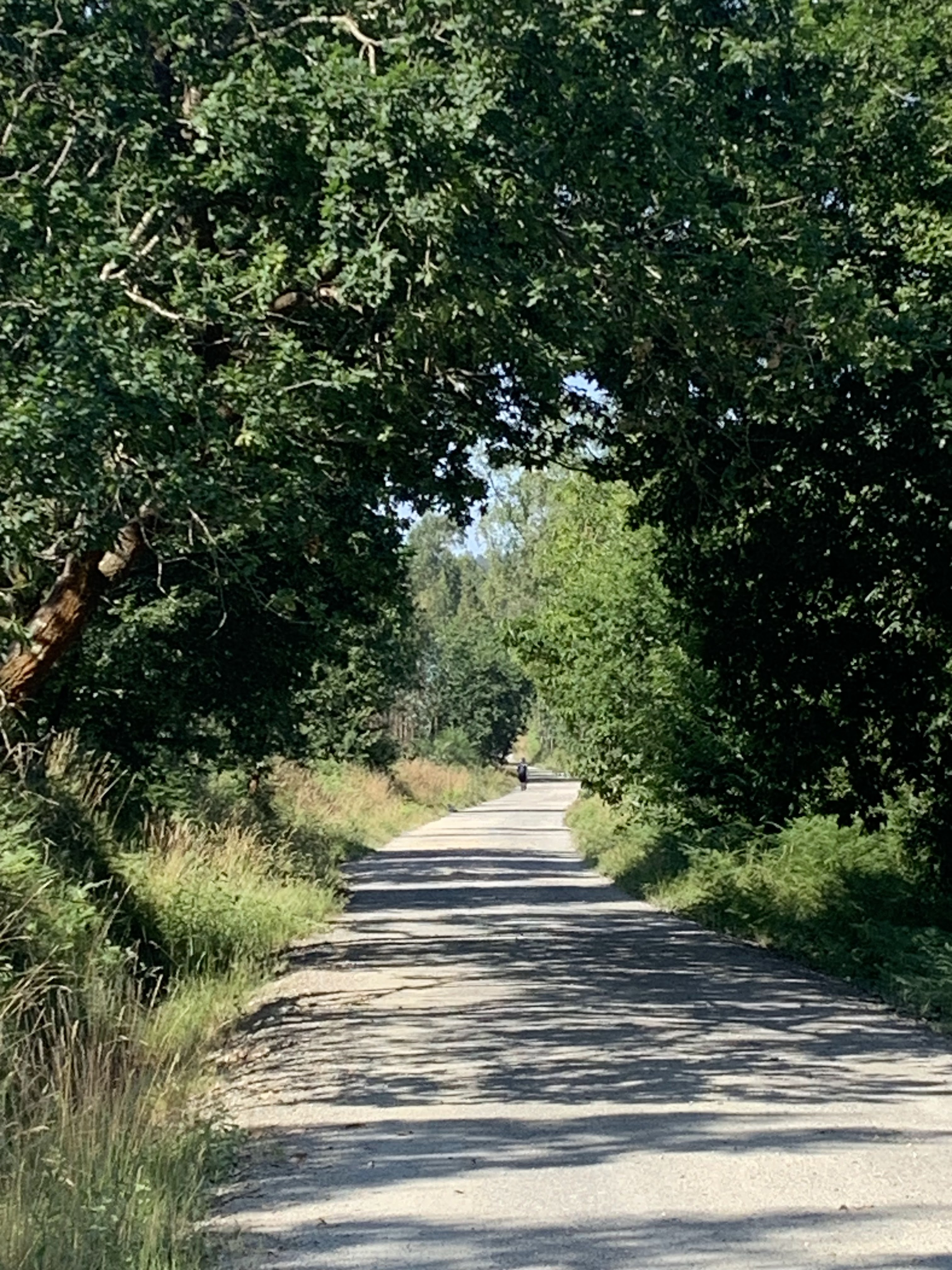
Crossing the Pyrenees mountains from France to Spain on one of my pilgrimage walks

The difference between a hike and a deep-walking pilgrimage experience

One of the most popular paths is the Camino de Santiago in northwestern Spain, which has been traversed by pilgrims for centuries. In recent years, it has been rediscovered by tens of thousands of people from all walks of life as a path of healing and self-discovery.

Some of the world’s most creative and talented artists, including Johann Sebastian Bach, William Blake, and Jean-Jacques Rousseau explored their inner worlds on long walks, acutely aware of the positive effects in opening the senses to nature.

The conservationist John Muir, tormented by nightmares and anxiety after nearly going blind in a work accident, immersed himself in nature on a 1,000-mile journey on foot from the banks of the Ohio River to the Gulf of Mexico.

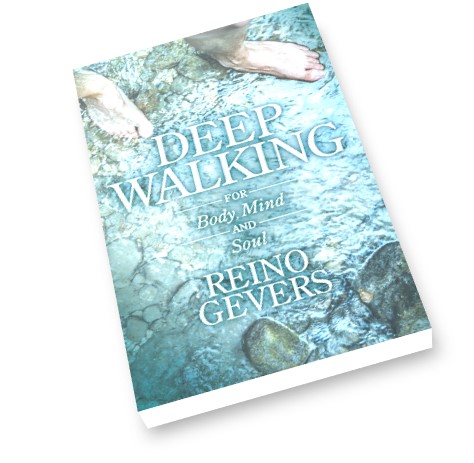
On my first pilgrimage walk to Santiago, I too was tormented by a dysfunctional relationship, a stressed-out job and childhood trauma that I had suppressed for many years. Any amount of therapy did not have the same effect as facing those inner demons on long, lonely walks of solitude in nature. I have described in detail my journey in my two books: Walking on Edge and Deep Walking for Body, Mind and Soul.

Experiential spirituality at its best

The universe speaks to us in many ways but nowhere more than with such clarity when body, mind, and soul are completely immersed in nature and not distracted by the pull of countless things in our daily, modern lives. It is experiential spirituality at its best.

A particular fascination with the Camino de Santiago in northwestern Spain is that these ancient pilgrimage paths have been walked by pilgrims for many centuries. It is marked by numerous crosses and symbols left by the pilgrims of old, many of whom did not survive the long trip. I would concur with my pilgrim friend Kevin that the route is filled with the spirits of pilgrims who have gone before, who guide us on the way.

Many a person has started the more than 800-kilometer walk from Jean Pied de Port in France to Santiago de Compostela as a hiking or sporting endeavor but ended the walk as a pilgrim. It is a part of the Camino mystery. It has a different impact on every individual, awakening channels to the soul that you had never dreamed possible.

Reino Gevers – Author – Mentor – Speaker

One more thing...If you have found this article interesting you might want to subscribe with the “follow” button above or recommend my FREE weekly Blog to friends and family. My books can be ordered at all places that sell good books in both paperback and kindle.

Leave a comment

Filed under Camino de Santiago, deep walking, exercise mental health

The virus of victim culture

How would you feel when after your passing you were shown by an angel the life you could have lived but didn’t live because you were too afraid to take action or spent a life in misery by blaming everyone else, especially your elementary family for what went wrong in your life?

To some degree, it’s everyone’s story. Families and relationships are strained by divorce, emotional abuse, financial issues or poor physical and mental health. But the external world, especially social media, indoctrinates us with the message that we are always supposed to be happy. Life is never like that. The seasons of nature teach us that we go through cycles of spring, summer, autumn and winter.

Our grievance culture thrives on negativity which has become like a virus infecting individuals and millions of people in entire nations. A person infected with grievance culture is incapable of self-reflection and taking responsibility. He would rather wallow in feeling sorry for himself for what all the others did to him in creating the situation he finds himself in. By blaming others he has a perfect excuse for not taking action to change the status quo.

Victim culture can poison entire nations

On a macro-level, it is a hallmark of fascist and extremist movements led by demagogues who have the ability to channel the toxic emotions of hate, anxiety, and fear into blaming ethnic minorities, other religions, political parties or genders for everything that has gone wrong in society. The fascists of Nazi Germany found fertile ground in stirring the flames of existing 19th-century Prussian militarism, hurt national pride, and prejudice toward the Jewish minority.

Comparisons with the current situation in Russia are striking. The Russian leadership is effectively using hurt national pride after the collapse of the Soviet Union to justify the invasion of another country. The messaging from state Russian media is that NATO was responsible for starting the war and that the atrocities committed by Russian troops are fake news.

A democratic modern Germany and the European Union could only be built after total defeat of Adolf Hitler and the realization that nationalism can never be a solution. In the same way dramatic changes in Russia will possibly only came after total collapse of the current authoritarian economic and political order.

Grievance culture is an addiction to a mindset. The individual is in total denial that there is a problem. The healing process is then only possible during an epiphany that comes with a flat-on-the-ground moment. The frustration level, disgust, and pain threshold has reached such a level that the first steps toward changing the situation are taken.

Photo by Simon Berger on Pexels.com

Life is cyclical: Winter is a time for reflection and opportunity

The winter cycles of life when we are in pain, grief and suffering offer also the greatest opportunity to an elevation of consciousness and change. Conflicts in relationships, in a job, or in a family are signposts pinpointing that changes need to be made, and that the status quo is no longer working. You are given an opportunity by the universe to dig deep into your inner resources, your inner truth, and your soul purpose. The winter cycles of life are a time for withdrawal and self-reflection where the ideas, and opportunities for the next cycle, spring, are born.

Some of the most successful start-ups have been founded during an economic downturn or recession. Several of the world’s most outstanding business and political leaders transmuted the winter years of their lives into activism, leadership, and creativity. Nelson Mandela spent 27 years in prison, never losing sight of the long-term goal to become president of a non-racial democratic South Africa.

Martin Luther King wrote about his own suffering:

“As my sufferings mounted I soon realized that there were two ways that I could respond to my situation: either to react with bitterness or seek to transform the suffering into a creative force. I decided to follow the latter course. Recognizing the necessity for suffering I have tried to make of it a virtue. If only to save myself from bitterness, I have attempted to see my personal ordeals as an opportunity to transform myself and heal the people involved in the tragic situation which now obtains. I have lived these last few years with the conviction that unearned suffering is redemptive.”

Success for these outstanding personalities came after many trials and tribulations where any normal person would have succumbed to bitterness and blame. We see often only the end result of their accomplishment and not the rough path, the inner work, discipline, and dedication they built to get there.

Reino Gevers – Author – Mentor – Speaker

One more thing...If you have found this article interesting you might want to subscribe with the “follow” button above or recommend my FREE weekly Blog to friends and family. My books can be ordered at all places that sell good books in both paperback and kindle.

Leave a comment

Filed under mental health, mental-health, Uncategorized

Things don’t fall apart suddenly

A leak in the roof of a house will drip by drip gradually weaken the structural walls until the foundations give way and the house collapses. When small repairs are not carried out they become big problems. A health crisis is preceded by many small aches and pains. A relationship breakdown will have a long history of hurts, insults, and betrayals. A company’s bankruptcy comes after years of poor management and missed opportunities.

The seeds of the failed nation are sown with the gradual growth of the tentacles of corruption, poor government, and nepotism. Countries such as Venezuela, Zimbabwe, Argentina, and my home country South Africa once had booming economies but are today sad reminders of how fast the rot can set in.

In the 1990s the South African city centers of Johannesburg, Durban, and Pretoria were bustling with excellent restaurants, jazz clubs, theatres, and parks. Visitors from many countries could move around fairly safely. Today these same areas are a sad conglomerate of dilapidated buildings with broken windows and ransacked and gutted interiors. The pot-holed streets are littered with trash and any tourist walking through these areas would be risking their life. It did not come overnight. The rot was gradual after years of mismanagement and corruption by the ruling African National Congress (ANC).

When Vladimir Putin took over from Russian president Boris Yeltsin in the year 1999, several critics warned that the former KGB agent was a dangerous threat to democracy. Western leaders simply failed to see the early warning signs that presaged Russia’s ever-greater slide into authoritarianism as journalists, opposition politicians, and businessmen were poisoned, shot, or imprisoned. Turning a blind eye eventually led to the invasion of the sovereign country Ukraine.

A successful company begins to decline when market signals are ignored and customers are taken for granted or their complaints are ignored. How many successful brand names of the past are today no more. Some iconic brand names that have disappeared are Pan Am, once the world’s largest air carrier, Polaroid, the pioneer of Instamatic cameras, the bookstore Borders which failed to make the transition to a new business or digital business model and many automobile brands such as Pontiac, Saab, Oldsmobile, and Borgward.

The boiling frog syndrome

The phenomenon of the boiling frog syndrome is that the water in the pot is gradually heated so that the frog hardly notices the gradual rise in temperature until it’s too late. Does that not tell us something about the climate debate? Scientists have warned since the late 1980s that we would be seeing extreme weather patterns as the result of the warming of the earth’s atmosphere because of the excessive burning of fossil fuels by the middle of this century. They were off the mark by at least two decades. Nobody could have predicted the ferocity of summer temperatures and storms that we are seeing in many countries at this moment in time.

Photo by Anthony DeRosa on Pexels.com

Tunnel vision

A hallmark of an entitlement culture is the tunnel vision of the ego mind. When in tunnel vision there is no evolution or progress of mind and spirit. The head-mind or “ego-mind” is caught in a belief. Its mind is made up of what is right and wrong in the world.

Head-Mind is incapable of listening to the alternative argument and will interrupt you before you have finished your sentence. They will tell you that 1+1 = 4. Nothing will persuade them otherwise. Their lives have been taken over by an alternate reality and they will be reaffirming their belief daily with similar believers in social media bubbles. Once entrenched in a tunnel-vision bubble it is virtually impossible to break down the walls the person has surrounded himself with. The person is addicted to a certain belief or thought.

When the human is in puberty you will be warning him with greater urgency of the train ahead. He will nevertheless deny that there is a train coming until it’s too late. It’s what parents all too often painfully have to go through. The child in puberty has to make its own experience, learn its own lessons and draw its own conclusions from the pain it suffers.

An alcoholic will very often only seek help during an epiphany that comes in a “flat on the ground” moment. The person is so disgusted and pained about his own behavior that he will admit finally that he has a problem. It is the first step in the healing process.

Negative and destructive behavior has the habit of sneaking into life in many subtle ways. It is one of the reasons why so many New Year resolutions fail. Typical sabotaging self-talk could be: “It won’t make much of a difference if I skip my workout this morning.” “I need to reward myself with a shopping spree after saving for two months.” “It won’t affect my relationship if I cheat on my partner just this once.”

Creating a life of bliss with positive habits

Transmuting pain and suffering leads to higher consciousness and positive change. Meaning and purpose is found after years of depression. A fulfilling, loving relationship is found after enduring years of abuse in a dysfunctional marriage. A different and more fulfilling work is sought after job burnout. An exercise routine and a healthy diet are followed with passion after overcoming a life-threatening disease.

The underlying reason for procrastination and indecision is often the fear that a change might be worse than the status quo. Starting with small “baby steps” in taking the first doable actions can make all the difference. You don’t have to wait and experience pain. You will know by now in what areas of life you need to make a change.

What can you do today? What can be done that will start the ball rolling? If you enter an untidy room filled with junk, you start by clearing one small area, then the following day the next, and so on. Getting physically fit could start with a walk of 2,000 steps and then gradually increase it day by day to 10,000 steps. Reducing a stressed out and fearful mind can begin with a short meditation lasting three minutes until 15-20 minutes is done with ease because you feel so much better afterward. Training body, mind, and spirit to a new level of consciousness and bliss comes after a reawakening from the shadowlands.

Reino Gevers – Author – Mentor – Speaker

One more thing...If you have found this article interesting you might want to subscribe with the “follow” button above or recommend my FREE weekly Blog to friends and family. My books can be ordered at all places that sell good books in both paperback and kindle.

Leave a comment

Filed under mental health, mental-health

You are not your beliefs and thoughts

Change your thoughts and you will change your life

The average human being typically has more than 6,000 thoughts per day. The figure was pinpointed by a team of psychology experts at Queen’s University in Canada, who say they have developed a never-before-seen way to detect when one thought ends and another begins.

Other researchers estimate that we process between 60,000 and 70,000 thoughts per day. In 2005, the National Science Foundation published an article saying of those thousands of thoughts, 80 percent were negative, and 95 percent were exactly the same repetitive thoughts as the day before.

What you think you become

It, therefore, makes perfect sense to practice thought control. It can change your life. What you think you will become. It is the self-image with which you program yourself. Attachment to thoughts and beliefs imprison the mind. It is what the Buddhists describe as one of the major causes of suffering.

Our culture has been poisoned by narcissism and ego-centered thought. The predominant messaging is on external appearance, image, and possession. This inevitably leads to a disconnect with inner authenticity, spiritual purpose, and BEING. The more pronounced this disconnect the greater the addiction to all that offers short-term gratification.

We are seeing an explosion of substance abuse in those cultures worshipping the false gods of materialism. At the same time, we are seeing a dangerous tendency of fanatical addiction to fixed thoughts and beliefs that are threatening the foundations of democracy and free thought.

The loss of identity

The Ego-Mind confuses identity with thought and belief. It is a house built on a sandy foundation because a disconnect from the true self makes the person susceptible to holding onto a fixed belief or ideology. Identity is defined by the “others” who are wrong. An opposing idea thought or belief that threatens this false self-identity is perceived as a threat to all who we think we are. What is left of identity when we realize that the cultural icons that we have worshipped are emperors wearing no clothes? What is left of the ego when all the facts on the ground show us that we have been wrong all along?

The personality imprisoned by the Ego-Mind inevitably becomes physically and psychologically ever more rigid and inflexible to the point where it will not even hesitate to kill if it feels its identity crumbling away. It would rather die than admit that it was mistaken all along. The Ego-Mind has no inner substance, it knows no laughter, joy, or love.

All creativity that is dominated by the right side of the brain is stifled. But it is what makes us essentially human when we show a willingness to go with the flow of creativity in learning new things and developing our skill set. Soul authenticity is connected to the heart-mind. It serves a much greater wholeness than the self, the tribe, or the nation. The soul knows no attachment. It knows only unconditional love, joy, and laughter.

Connecting to the Heart-Mind

We will only survive as a species if we reconnect with this greater wholeness when we begin to realize that truth and belief happens in tolerance and interaction. We need to let go of the attachment to the opinionated head, the closed heart, and the defensive walls of what we believe to be identity.

Religious and political fanaticism is rooted in fear. Emotional stress and fear always begins with a thought. Fear and hate are never a reflection of truth. It comes from the lowest vibrational energy. When you take action in doing what you really love you begin to move beyond the fear.

There comes a point where you have to unlearn all the conditioning to become whole again by surrendering to trust. Experiential spirituality is essentially the practice of emptying the mind of all attachment and at the same time connecting to the inner room of the soul. It is surrendering to the magic of the moment and opening to the whispers of the universe.

Reino Gevers – Author – Mentor – Speaker

One more thing...If you have found this article interesting you might want to subscribe with the “follow” button above or recommend my FREE weekly Blog to friends and family. My books can be ordered at all places that sell good books in both paperback and kindle.

Leave a comment

Filed under mental health, mental-health, Uncategorized

The power of self-love

The first principle is that you must not fool yourself and you are the easiest person to fool.”

Richard P. Feynman

The need for self-love as the precondition to giving love is a key to many spiritual teachings. At the heart of much self-destructive behavior, and the addiction problems we see in the world today are the rejection and contempt of self.

You cannot love and accept yourself without unconditionally accepting the shadows within. You have to learn to accept that you are an incomplete human being.


The hypocrisy that often underlies institutionalized religion stems from the notion that those who don’t believe and behave the same way that we do are in some way inferior and lesser human beings. When you are in denial of your own inadequacies and weaknesses you will see them more pronounced in others.

The beginning of forgiveness


The beginning of forgiveness begins with the forgiving of self. The seeds of inadequacy and lack of self-esteem are planted early in life by social norms or misguided parental pressure.


Failure and missteps are part of the human condition. As the sages and Mystics teach us: They are the stepping stones to self-awareness and self-love. By learning to forgive yourself you can accept and learn to forgive others.

The scriptures teach us that “If you forgive others their sins, they are indeed forgiven. If you withhold forgiveness from one another, they are held bound.” (John 20:23).

Photo by cottonbro studio on Pexels.com


The more addicted we become to a preferred self-image the more judgemental we become. But it is precisely the relationship difficulties, conflict situations, failures, and disappointments of life that mirror the shadow aspects within. These are the aspects in need of acceptance or transformation that help elevate you to a higher vibrational energy, your inner power, and strength.

Surrendering to life


Surrendering to life is complete surrender to that which is greater than any image of self and the essence of what is the vulnerability of body, mind, and soul. It is what Paula D’Arcy describes as “God comes to us disguised as our life.”


As the spiritual teacher, priest, and author Richard Rohr explains: “Surrender is not giving up, as we tend to think, nearly as much as it is a giving to the moment, the event, the person, and the situation.”

Life happens. You cannot change what has happened in the past. Taking a different perspective can transmute feelings of pain and guilt. A personal mantra of forgiveness could be:

“I release at this moment the attachment to the pain and the melancholy sadness to that which was and is no more. I love and accept myself the way I am. I love and accept my true soul nature. I am in loving care and kindness to myself and others.

Reino Gevers – Author – Mentor – Speaker

One more thing...If you have found this article interesting you might want to subscribe with the “follow” button above or recommend my FREE weekly Blog to friends and family. My books can be ordered at all places that sell good books in both paperback and kindle.

Leave a comment

Filed under meditation, mental health, mental-health, spirituality, Uncategorized

Raising your vibrational energy for 2023

Starting another New Year you have all the possibility of rewriting your future by raising your vibrational energy to the level that attracts the circumstances, people, and opportunities to make this your best year yet.

It is a time to release attachments and addictions to associations, habits, thoughts, beliefs, and the negative self-talk that limits your power and keeps you at the level of the eagle that is scratching with the chickens, unaware that it can in reality soar high in the sky.

The Austrian psychiatrist Viktor Frankl theorized that the absence of meaning and purpose in life inevitably leads to the pursuit of distracting “pleasures” and addictions. Frankl, a Holocaust survivor, describes in his famous book “Man’s Search for Meaning”, the deep yearning of every individual to live a life of purpose and meaning whatever the external circumstances.

There is a deep yearning within every human being to be seen, recognized, and appreciated for who they are with their unique individual capabilities, strengths, and vulnerabilities.

Relationships

It is why relationships, the people you surround yourself with on a daily basis, are such an important key to happiness. There would be only a select group of very few people you would be willing to spend alone with on an island. The people you spend the most time with influence you in multiple and many subtle ways. You inevitably adopt the views, mannerisms, and beliefs of the people closest to you. Surround yourself with people who emanate positivity, joy, and kind-heartedness and you will become like them.

Health should be a top priority

If you are eating low-nutrient processed foods, and not getting enough sleep and exercise you will never raise your energy frequency. It’s a downward spiral that inevitably ends in poor mental and physical health. We are not only social beings but our metabolism is simply not built for a sedentary lifestyle. The best way of staying physically active is to find a set time – at best early in the morning – for a regular exercise routine. Start with just a 15-20 minute exercise sequence a day and then gradually build on it. Trying to do too much at once most often fails. Choose an exercise that you enjoy doing. For me, the most enjoyable part of the day is taking my dog for a walk in nature. Getting enough daylight sun on your body is very important because the body produces Vitamin D when exposed to sunlight. Vitamin D helps boost the immune system, improves sleep, and maintains a strong bone structure.

Attachments

Attachment to that which was and is no more can be like a huge dragnet pulling you away from seeing the opportunities, joys, and magic of the present moment. Thoughts dwelling on the past are mostly blurred by emotion and very seldom reflect the true events. The “monkey mind” constantly dances between the past and the future. The worrying mind will paint the worst possible scenario of all that could happen. The result: frozen paralysis.

Breathing into the present moment

By consciously focusing the mind on your breathing rhythm you will be instantly pulling yourself back to the present moment. Breathing meditations release tension and tightness in the body. Deep breathing through the nose releases nitric oxide which widens the blood vessels allowing for better transportation of oxygen to vital organs.

What information are you feeding your mind with?

The business model of most mass media is based on fanning the flames of negative emotion. Outlandish conspiracy theories hate tweets and irrelevant gossip are shared millions of times. Negative emotions however are a threat to your long-term health. Anger, resentment, fear, and anxiety keep you at the lowest possible vibrational frequency. It is that frequency that you are most easily manipulated because you are disconnected from your true self. Karl Marx described in 1843 in a celebrated dictum “religion is the opium of the people.” The place of old-school institutional religion has undoubtedly today been taken by the 24-7 drumbeat of mass media, influencing and manipulating the minds of hundreds of millions of people in an alternate reality. Information and knowledge cannot be compared to wisdom.

Gaining more wisdom

We are drowning in information and starving in wisdom. Some ways of gaining more wisdom:

  • Surround yourself with wise, intelligent people who offer a different perspective to the one you might have.
  • Read regularly and read books that have an impact on your life
  • Listen more and ask more questions, rather than talking

Wisdom has depth and nuance far removed from transitory mainstream superficiality. It can be developed and strengthened and is not limited to the wise and old. As Albert Einstein once said: “Any fool can know. The point is to understand.”

Reino Gevers – Author – Mentor – Speaker

One more thing...If you have found this article interesting you might want to subscribe with the “follow” button above or recommend my FREE weekly Blog to friends and family. My books can be ordered at all places that sell good books in both paperback and kindle.

Leave a comment

Filed under mental health, mental-health, Uncategorized

The tree of life

Some 2,000 years ago a soul incarnated into the family of a simple carpenter and his wife in the town of Nazareth of what was then part of the Roman province of Judaea.

Jesus of Nazareth was to change the world for generations to come and elevate human consciousness to a new level.

From an early age, the scriptures tell us, Jesus astounded the temple priests with his knowledge and wisdom. By the time he was a young man his revolutionary teachings and miracle healings were drawing huge crowds and followers.

The threatened priesthood

The priesthood of the day saw him as a grave threat when he exposed their hypocrisy and their literal interpretation of the scriptures.

Jesus led by example showing us that service for the downtrodden, the sick, the vulnerable, and the discriminated minorities was the stepping stone to creating a life of bliss.

The God-given meaning and purpose of life is closely intertwined with the unraveling of the veils covering the soul and living who you were born to become.

It was far removed from abiding to the rules and regulations of a belief structure controlled and imposed by the priesthood.

Photo by Pixabay on Pexels.com

Ancient scriptures revealed

The long hidden texts of St. Thomas, discovered only in recent times, reveal early Christian teachings deeply embedded in experiential Spirituality and multi-layered interpretation that read much like Zen Koans of Buddhist tradition. Jesus is quoted as saying:

“Rather, the kingdom is inside of you, and it is outside of you. When you come to know yourselves, then you will become known, and you will realize that it is you who are the sons of the living father. But if you will not know yourselves, you dwell in poverty and it is you who are that poverty.”

This reminds much of the inscription in the Ancient Greek Temple of Delphi: Knowing Thyself, Knowing who you are not and then finding the God within – or your truth

Jesus was crucified in a place called Calvary in Jerusalem at the age of 33. In Kabbalistic teaching 33 is a magical number. It is the number of steps on Jacob’s ladder on which the angels walked bringing the wisdom of heaven unto earth or aligning with the higher (Christ) self.

Calvary in its original Hebrew form means “place of the skull.”

The arbor vitae in the brain is also described as the tree of life. It lies within the center of the cerebellum and helps provide valuable sensory information to the brain, protruding from the skull.

In Kundalini Yoga energy rises up the 33 vertebrae of the spinal cord to the seventh chakra located at the crown of the head, illuminating the third eye or pineal gland, your spiritual consciousness.

Jesus’ crucifixion and resurrection after three days is ultimately a story of salvation from suffering, after transgressing through the dark night of the soul.

There is a surrendering to forgiveness and grace. After a point of great suffering and doubt Jesus could look upon the people causing his suffering and forgive, knowing that it all ultimately had a higher meaning.

Sacrifice and expansion of consciousness

Making sacrifices expands your conscious awareness. When you transmute the lower energy vibrations rooted in the emotions of fear, anxiety, greed and hate, you achieve Christ consciousness – the 33rd degree of consciousness – unconditional love.

According to the Mystics God is un­separated from all things, for God is in all things and is more inwardly in them than they are in themselves.

St. Augustine is quoted as saying that the soul has within her all knowledge, and whatever we practice outwardly serves only to awaken that knowledge.

In places of solitude and in the quiet spaces of nature the cracks open to the wisdom and window of your soul’s longing, to the depths of your purpose and destiny – to the Christ within.

Reino Gevers – Author – Speaker – Mentor

One more thing...If you have found this article interesting you might want to subscribe with the “follow” button above or recommend my FREE weekly Blog to friends and family. My books can be ordered at all places that sell good books in both paperback and kindle.

Leave a comment

Filed under happiness, lifestyle management, mental health, self-development, Uncategorized