Tag Archives: mental-health

The twin threats to humanity

It’s the time of year to reflect on the major events of the past twelve months and how they will possibly affect humanity’s very survival. While the media narrative is focused on mostly external threats we are losing sight of mental well-being that will equally determine our capacity of dealing with the major challenges ahead.

The sages of old and the great Mystics teach us that God expresses himself in and through nature in experiential spirituality. God can only be experienced. He cannot be believed. Religious doctrine mainly tells us what to believe and how to behave but possibly it’s biggest sin has been in elevating man as a separate entity from a nature that had to be subdued and conquered.

The spiritual disconnect

It has inevitably led to a spiritual disconnect of modern man who sees the hill as a mineral resource, the indiginous plant and tree as a threat to monocultured agriculture, the animal as expendible if it cannot be put to domestic use and the rivers and seas as a resource for harvesting fish.

Within our lifetime we are therefore seeing the largest extinction of species since the Mesozoic era (252-266 million years ago with the multiple effects of climate crisis, desertification, deforestation, burning of fossil fuels, factory and monoculture farming all playing their part in this mass extinction.

We are just beginning to see the first signs of climate impact on food chain supplies, and what it could ultimately mean for the survival of future generations. Coffee, a must-have drink in most western countries, could soon become a luxurious rarity. Already many coffee bean producers are having trouble with harvests because of extreme drought and rain periods caused by climate change. Some of the world’s major staple food regions will in less than one generation be unable to produce food for ten billion hungry people if water shortage and desertification continues at the current pace.

Dr Florian Schierhorn, research associate at the Leibniz Institute of Agricultural Development in Transition Economies, cites latest research showing maize yields in the world’s major breadbaskets under increasing pressure worldwide as a result of climate change. 

Photo by Zetong Li on Pexels.com

We are an integral part of nature

It is part of modern man’s delusion that he sees himself as external to nature, failing to realize that he/she is an integral part of creation and that the way he lives, impacts and shapes the world. The bottom line: If we don’t change the way we live, think and what we believe, we as a civilization will not survive the next century.

But all hope is not yet lost. A crisis is always a wake-up call that something needs to change. In 1987 the world signed the landmark Montreal Protocol phasing out the production of ozone depleting substances. A report in nature magazine reveals that if nothing had been done, many of the world’s plants would have disappeared by today, destroyed by harmful UV rays piercing through the earth’s protective ozone layer.

So, if humanity could do what it did it 1987, why has it so far lost at least 15 years in seriously addressing climate change? The reason is that a large portion of educated, well-meaning and decent people are being brainwashed by grievance culture that thrives on rage, negativity, and hate. We are finding ourselves in an era where values and common norms of decent behaviour and kindness have fallen by the wayside. The basic tenets of science are being questioned with the environmental and climate protection movements becoming part of the culture wars.

The big brainwash of grievance culture

Negative news sells and generates advertising revenue. The tabloids, and the Twitter feeds are constantly feeding the minds of millions of people around the world with “junk” and false information. If we feed our bodies with junk food we will become ill and it is the same way with feeding the mind. A mind constantly in anger, fear, greed and anxiety will eventually also impact the physical body.

If your mind has been hijacked by toxic emotions, you are unable to reflect and think rationally. If you are fearful your instinctual or reptilian survival mode part of the brain will have been triggered into fear and flight mode. You will believe the strangest of conspiracy theories spun by the tabloids. One of the recent ones: Meghan Markle a sleeper agent of the U.S. government while another that Harry and Meghan were secret British agents wanting to recolonise America?!

Depression and anxiety has become endemic

It might be funny but there are people who actually believe what they read and want to believe. Depression and unhappiness has become endemic in our culture. It is human nature to compare with others. Millions of people feel deeply unhappy, a failure and inadequate if they cannot conform to the physical and material attributes of the rich and famous. Could this be one of the reasons why we are seeing so many suicides among teenagers who spend much of their time on social media and following the lives of “influencers”?

The mental health of the collective unconscious mind is under siege. More than ever before we need to teach ourselves and our loved ones on the importance of standing guard at the doorway to the soul. What serves me in a higher sense to become a happier, kinder and better human being? What interactions and conversations with my fellow human beings serve me and others and what do I need to stay away from?

Soul connection forms the essence of BEING. If you are connected to the essence of your BEING and you begin to realize that you are a unique individual, with unique talents and a unique purpose in life, you will begin to live a happier and far more fulfilling life.

The journey of life is a pilgrimage. When you have climbed a hill you realize that you are not yet at the end of your journey. There is another hill to climb, another valley to traverse. Another lesson to learn. Every crisis and a wrong turn in the road can also be an opportunity to turn back, to press the reset button and to start afresh.

Take a walk in nature to clear the mind and to realign body, mind and soul. Take a moment to reconnect with your breathing rhythm and connect that inhaling and exhaling sequence with the breath of life all around you. What do you smell, hear and see. Do you notice the harmonious cadence of the bird song, the fine texture of a leaf, the beauty of a flower growing from the crevice of a rock?

“Live in each season as it passes; breathe the air, drink the drink, taste the fruit, and resign yourself to the influence of the earth.” – Henry David Thoreau –

Reino Gevers – Author – Mentor – Speaker

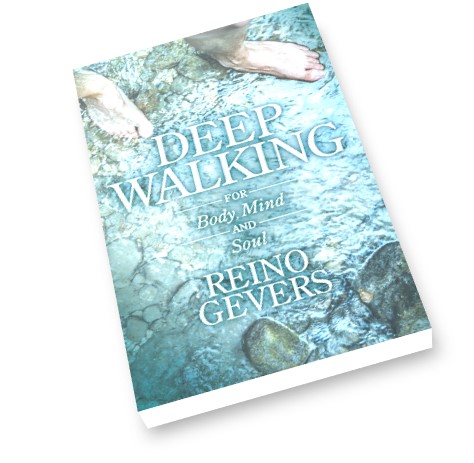
One more thing...If you have found this article interesting you might want to subscribe with the “follow” button above or recommend my FREE weekly Blog to friends and family. My books can be ordered at all places that sell good books in both paperback and kindle.

Leave a comment

Filed under mental health, mental-health

Is society fraying at the edges?

Life is a choice. You can see the colour, the nuanced beauty in all, the diversity of creation and the magic.

Or, you see everything in just black and white

Within the walls of a turreted castle in the east German state of Thuringia a disparate group of plotters including a judge, a celebrity cook, a prince, and a former general of an elite army unit planned seizure before Christmas this year of the country’s parliament and replace modern Germany’s political structures with a monarchical Reich with a king at its head.

In the past, the fringe group of “Reichsburger” fanatics was at the receiving end of jokes but the country’s security services were sufficiently concerned that they launched one of the biggest security raids involving several thousand police raids on more than two dozen properties. All the plotters will now be spending Christmas behind bars.

What makes well-educated, upper-middle-class people lose the plot?

Most western countries are having to deal with rising populist movements that question the very foundations of democratic norms and values. Meanwhile in Russia “Tsar” Vladimir Putin decides to invade one of the world’s major breadbaskets plunging much of the Third World into a food crisis, an energy price shock in all the major economies and the largest refugee crisis in central Europe since the end of World War II.

The pandemic and its repercussions have only compounded the underlying currents that come with major economic and social changes that we are seeing in much of western society. Communities, institutions and beliefs that have stood rock solid for centuries are seemingly fraying at the edges.

Family and community

From the end of the 1950s we have seen a growing emphasis on individuation as opposed to community. Personal expression, freedom of movement and living one’s life purpose to the full has come at the expense of the individual being subservient to the needs of the community, the group or the family as a whole. It has come on the tailwinds of the harmonious 1950s family unit being exposed as the myth it always was. Women were largely disempowered and forced to service large babyboomer families. A revolt was inevitable. Young women were at the forefront of the 1960s anti-establishment movement. Divorce, multiple patchwork families, same-sex marriages are on the one hand commonplace but also deeply disoncerting to fundamentalists. Women are mostly the first to end a dysfunctional relationship. It is very often the male part of a relationship that refuses to change from the traditional role model and pursue a path of self-development and reflection.

Photo by Krizjohn Rosales on Pexels.com

The male identity crisis

Young women are far outpacing their male counterparts on all levels starting from school achievement to successful career paths while men form by far the largest group affected by addiction, mental health problems, homelessness and violent crime. Especially during puberty young men are in need of fathers stepping up to their role in providing structure and orientation. Sadly, this is mostly not the case with the “absent father” playing a major role in the mental health problems of young men who seek orientation in the antiquated gun-slinging “heroic” male figureheads that we find in extremist movements and computer war games.

What you feed your mind with you become

The Internet has revolutionised our world and opened up unlimited communication and new job opportunities. The downside is that it has also scuttled many traditional industries including the local and regional newspaper that was a platform of diverse debate and different opinion. Social media, especially Twitter, has become a platform for grievance culture and confirmation bias. Automated Google algorithms feed us with what we want to read, confirming existing views and biased opinion. We live in information silos. What we feed our mind with we become. And what we notice is that a lot of unhappy people are becoming more unhappy and discontented from what they read and hear. A large portion of the daily information intake is designed to appeal to negative emotions of hate, lust, and greed. Good news just doesn’t sell.

The spiritual disconnect and the crisis of religious institutions

For centuries religion has told us how to behave and what to believe, citing divine will. Much of religion and the priesthood suppressed and separated religion from spirituality. Sexual misconduct and abuse has exposed the hypocrisy and alienated millions of faithful from what they perceived as their spiritual home. The spiritual disconnect and the crisis of the religious institutions has led to countless pseudo-religions that compound the mental health crisis.

For so-called “primitive man” God was never part of a religion but part of fundamental daily experience lived every day in interaction with the world of nature. When God is experiential we cannot believe. We can only experience.

The mental health crisis

The opiod crisis, and other addictions only pinpoint a major mental health crisis. How can you become more resilient and aligned in a fast-changing world that seems increasingly frightening to more and more people? Apart from the basic biological needs that make us no different from the animal kingdom, humans have the deep need to be seen and to be heard. We are spiritual beings in need of purpose and a place in community. Some tips:

  • One of the most effective ways of preventing physical and mental job exhaustion is to nurture friends and relationships. Surround yourself with positively-minded people who uplift and support you.
  • Find a spiritual community to practice a religious ritual that is free from dogma and constraint. It has real life-extending and stress-reducing benefits, according to scientific studies.
  • Spend alone time in nature. The green and blue spaces of nature have a real positive effect on boosing your immune system and aligning yourself with a higher sense of Being.
  • Find a personal mentor who acts as a sounding board in refining your goals and sense of purpose.

First and foremost maintain a critical mindset to your own thoughts and beliefs. They might have been influenced by external voices that have little in common with your individual and authentic soul purpose.

Reino Gevers – Author – Mentor – Speaker

One more thing...If you have found this article interesting you might want to subscribe with the “follow” button above or recommend my FREE weekly Blog to friends and family. My books can be ordered at all places that sell good books in both paperback and kindle.

Leave a comment

Filed under mental health, mental-health, Uncategorized

What fills the soul?

„It is veils that wrap past, present, and future time from your view. When the veils are withdrawn one can see all.“

—  Abu al-Hassan al-Kharaqani 963 – 1033

The birth of a newborn entering the world is of pure and bare innocence. But as the sages of old teach us the child grows older with layer upon layer in the form of conformity, unworthiness, fears, and insecurities covering the true self. The journey of life then proceeds in another process of unwinding and uncovering the layers of what is true soul nature.

Choosing a spiritual path, which comes often after an epiphany or a wake-up call, then becomes a process of peeling back the layers of programming, trauma, and limitations that have been holding you back from living your truth.

The 19th-century American teacher and philosopher Amos Bronson Alcott said “there are truths that shield themselves behind veils, and are best spoken by implication. Even the sun veils himself in his own rays to blind the gaze of the too curious starer.”

Unveiling the soul is a journey that cannot be fast-tracked. Each uncovering of a veil is preceded by a chapter that has to be lived into maturity.

The shifting of old paradigms

As consciousness expands the veils start thinning and you enter a higher vibrational energy. Old paradigms of self start shifting, and rigid belief systems start falling by the wayside. It is the necessary precondition to make room for the new.

Institutionalized religion most often wraps individuals into a cocoon of what to believe, and how to behave. The purpose of life is to discover your individual true soul path. The journey of life is a journey into BEING.

While religion constitutes a set of externally induced worship practices, beliefs, and ways of conduct, spirituality is experiential. It is a deep connectedness to the moment, opening the cracks to the soul and to something much higher than the self. The spiritual seeker is on a “pathless path” of self-discovery. There are no external rules. The seeker follows an inner call to spirit.

Your voice matters. The world needs you with all your unique abilities and creativity. You are a beautiful person. You have the choice and you are the captain of your soul.

It requires at times a stock-taking of what fills and nurtures your soul. What makes you happy and live a life of bliss?

Photo by Quang Nguyen Vinh on Pexels.com

Your relationships are key

One of the biggest tests is to let go of people who are not good for you. They are your secret enemies who are actually preventing you from peeling away the next layer. But you are afraid to lose them or are afraid that you will no longer be loved. Surround yourself with people who emanate positivity, who encourage, nurture, and feed your soul.

Your relationships are key. From the day you were born, you have been surrounded by parents, siblings, carers, and teachers who have molded you into who you are. As a child, you had no other choice but to conform to the norms and behaviors of those around you. But as you grew into puberty and adulthood you will have begun questioning and seeking your own identity.

  • Who am I?
  • Where do I come from and where am I going?
  • What is my soul’s purpose?

What fills and nurtures your soul is a very unique and individual process. But here are some guidelines.

  • It will be serving and in service of something higher than the self.
  • It is unconditional and liberated from the transactional.
  • It triggers within you unlimited creativity and joy.

Do you remember when you were a child before you were conditioned by external expectations? At a time when you were closely aligned to your true soul nature, you might vaguely recall what activity, relationship, and state of BEING elevated you into a high state of bliss and happiness. All these are clues that you can pursue in creating the matrix of the path to purpose and meaning.

Reino Gevers – Author – Mentor – Speaker

One more thing...If you have found this article interesting you might want to subscribe with the “follow” button above or recommend my FREE weekly Blog to friends and family. My books can be ordered at all places that sell good books in both paperback and kindle.

Leave a comment

Filed under mental health, mental-health, Uncategorized

You are not alone

Our culture is dominated by the emphasis on the individual hero’s journey to fulfillment, self-expression, and success. It comes at a huge price, leading to social alienation, spiritual disconnect, and mental illness. For we humans are in essence a species whose survival can be attributed to successful group interaction and relationships with each other.

The seeds of this disconnect can be found in the philosophies and theologies underpinning the mindset that led to the industrial revolution in the mid-18th century. Individualism became the core ideology in the United States in the late 19th century heavily influenced by the “survival of the fittest” doctrine of Charles Darwin.

The “lone wolf” hero

The philosophies of Jean-Jacques Rousseau, Friedrich Nietzsche, and others had a huge influence on modern economic, political and educational thought. The “lone wolf hero” coming out victorious against all odds remains a central theme in the sports arena, movies, books, and plays.

What is not taken into account is that the hero in real life will almost always have relied on a network of support from others.

It belies the fact that from the day you were born you were fed, clothed, educated, and shaped into the person you are today by your closest associations. In his meditations, the 16th-century English scholar and poet John Donne emphasizes this point with the famous poem: “No man is an island.”

Photo by Pixabay on Pexels.com

The “relationship crisis” has led to the exploitation of the environment but in essence has its roots in the disconnect to the spiritual self. We cannot solve the environmental crisis without looking within.

Prior to the industrial revolution most of mankind was in sync with the natural world. Even today the still existing hunter and gatherer societies see themselves as an integral part of nature. The natural world is seen as a manifestation of the Creator of which mankind is one part.

Buber: I and Thou

German philosopher Martin Buber in his book Ich und Du (translated as I and Thou) finds that human life essentially finds meaning and purpose in relationships.

In this view, all our relationships ultimately bring us into a relationship with God or our Creator.

In the Christian mystic tradition, it is about finding God within. We are part of the creation matrix and not separate from it.

In the Gospel of St. Thomas, discovered at Nag Hammadi in Egypt in 1945, Jesus is quoted as saying:

“See, the kingdom is in the sky, then the birds of the sky will precede you. If they say to you, ‘It is in the sea,’ then the fish will precede you. Rather, the kingdom is inside of you, and it is outside of you. When you come to know yourselves, then you will become known, and you will realize that it is you who are the sons of the living father (Saying 3, p. 654.9-21).

This is closely related to the words of the Greek philosopher Pythagoras:

“Man, know thyself: then thou shalt know the Universe and God.”

When you know yourself and especially your shadow you create the foundation for going into an authentic relationship. Most relationships fail because the shadow of the subconscious is triggered by the “other”. This is when ego takes over with typical self-talk such as “my needs aren’t being met”, or “I don’t have space for myself”, and all the other sentences that start with “I need…”

Buber describes the “I and though” authentic relationship as going far beyond two people interacting. It is based on mutuality, directness, and intensity where an “in-between” becomes manifest. The relationship has a greater dimension than the individual contributions of those involved.

When one meets the other as Thou, the unique and separate qualities of the other are acknowledged within the framework of the commonality of humanness.

Buber saw human development within a relational context as social beings who need love and care from others to survive from infancy and throughout a lifetime. Human isolation and the absence of these relationional needs inevitably impact mental health.

Reino Gevers – Author – Mentor – Speaker

One more thing...If you have found this article interesting you might want to subscribe with the “follow” button above or recommend my FREE weekly Blog to friends and family. My books can be ordered at all places that sell good books in both paperback and kindle.

Leave a comment

Filed under mental health, mental-health

A life dedicated to service

The passing of Queen Elizabeth II has been mourned by millions of people, many feeling the same grief as if a close family member had died. Even anti-Royalists would have to concede that the Queen triggers something deep in the collective consciousness.

The death of a famous person sends a stark reminder of our own mortality. A collective outpouring of grief on a global level has a cathartic, healing effect. We are reminded over the loss of our own loved ones who are no more. The queen herself said in a message after the 9/11 terror attacks on September 11, 2001: “Grief is the price we pay for love.”

The public image of the rich, powerful and famous is carefully crafted by teams of professional public relations experts and seldom bears resemblance to the real lives of the persons portrayed.

Individual needs, hopes, dreams, and aspirations are projected onto persons in the public limelight. It is part of the marketing strategy to remain a talking point, with tidbits of information on the private lives being fed to the yellow press at timed intervals.

The projection of hopes and dreams

The result is that the addictive consumer of gossip press knows more about some distant movie star or royal family member than about their immediate family or friends.  Sadly, they become so engrossed with the life of a complete stranger that they forget to live their own life.

There seems to be almost a masochistic indulgence in the rise and fall of some famous rock legend, movie, or sports star. Nothing seems to provide the yellow press with so much “Schadenfreude” as to elevate a superstar to a “God” and then to do everything possible to oust them from the throne.

There are indeed rare historical examples of leaders who never set a foot wrong and through their life of service become a game-changer for generations afterward. Queen Elizabeth’s vow to serve was made in a famous speech in Cape Town on her 21st birthday.

Nelson Mandela committed his life to the struggle for a non-racial democratic  South Africa. Just prior to being sentenced to life imprisonment by the apartheid government in 1961, he said:

“The struggle is my life. I will continue fighting for freedom until the end of my days.”

Eleanor Roosevelt,  working tirelessly in the background of her husband, Franklin D. Roosevelt’s presidency, campaigned for the rights of women in the workplace and the civil rights of African Americans.

“Since you get more joy out of giving joy to others, you should put a good deal of thought into the happiness that you are able to give,” she said in one of her most famous quotes.

Spiritual leaders made the ultimate sacrifice

Many of the world’s greatest spiritual leaders gave the ultimate sacrifice. Jesus was crucified on the cross. During the Middle Ages the Mystics and religious leaders Giordano Bruno, Jan Hus, Joan of Arc, and Marguerite Porete were burned at the stake for heresy like tens of thousands of others.

In an age where personal material gratification and narcissism have become the norm, a “life dedicated to service” has become an almost archaic term from bygone times.

It is no coincidence that a culture of narcissism is interlinked to the epidemic rise in depression. Disappointment, grievance, and loss of self-esteem are inevitable when the drumbeat of the cultural message is all external. Meaning and value are defined according to “fame parameters” such as the number of social media followers, material possessions, and particular definitions of physical beauty.

An antidote to depression?

A life of service is one of the best antidotes to depression. Studies reveal that people doing volunteer work in their community and who have a life philosophy based on serving something that far outweighes their individual needs are more successful, happier, and contented human beings.

It is why some of the world’s wealthiest people have become the world’s greatest philanthropists, using their wealth as their tool of destiny for the betterment of society.

Analysis of three waves of data from the Americans’ Changing Lives data set (1986, 1989, 1994) reveals that volunteering lower depression levels, especially for those over the age of 65. An Irish study concluded that volunteer work and as a result social connectedness improved mental health. Helping others gives a sense of meaning and purpose.

Even the Royal Family has been skillful in crafting its public image to counter growing sentiment questioning the meaning of having a monarchy. Yet, it is obvious that like Lady Diana, the Queen has touched the hearts of millions of people with small, simple gestures of kindness and compassion.

The simple things and their compound effect ultimately make all the difference in building a better world, something the Queen had obviously understood and is the message that has resounded with so many during these past days.

In a Christmas broadcast in 2002 the Queen said: “Our modern world places such heavy demands on our time and attention that the need to remember our responsibilities to others is greater than ever.” 

Reino Gevers – Author – Mentor – Speaker

One more thing...If you have found this article interesting you might want to subscribe with the “follow” button above or recommend my FREE weekly Blog to friends and family. My books can be ordered at all places that sell good books in both paperback and kindle.

Leave a comment

Filed under humanity, mental health, mental-health

One step forward, five steps backward

Recent events create the impression that humanity is moving five steps backward to a dark era dominated by tribal allegiances, superstition, xenophobia, and intolerance. But are things really so bad and what lessons can we learn from history?

Russia invades a sovereign country triggering the largest refugee crisis in Europe since World War II. There is the mindless bombing of civilian targets, and wanton destruction of cities, towns, and villages.

At the same time, nearly every country in the world is feeling the impact of human-induced climate change with unprecedented heat waves, floods, and other extreme weather conditions.

 A sizeable minority of people have retreated into tribal bubbles, affirming each other in the most outlandish conspiracy theories, lies, and pseudo-scientific postulations.

We’ve been there before

It’s small comfort but humanity has been there before. Evolution takes place in cyclical seasons and we have much to learn from history and past response to unforseen external events.

Individuals respond to a crisis that they cannot control in different ways, often seeking simple explanations to complex problems. When humanity had to deal with the black death, or bubonic plague, in the Middle Ages, there followed a wave of pogroms against Jews and the burning of thousands of innocent people at the stake. External catastrophes were interpreted as a punishment from God for “sins” committed mainly in their view by minorities and those who dared to differ from the mainstream.

Photo by Pixabay on Pexels.com

Humanity currently finds itself at a similar inflection point where the environmental crisis, economic hardships, and mental health challenges are painful to process. But we are a long way from burning people at the stake.

The resurgence of 18th and 19th-century nationalism in many countries is merely the last desperate battle of a macho culture that has long outlived its purpose. The new humanity has a softer, feminine side that emphasizes restoration rather than exploitation, resolution of conflict through peaceful dialogue instead of autocratic dominance, and diversity of race, color, and gender. The new spring already sees a growing movement of experiential spirituality liberated from institutional religion that tells people what to believe and how to behave.

Major external and internal changes always go hand-in-hand with pain linked to the difficulty of releasing that which once was and is no more. If you want to really grow and expand your life on all levels you have to release that which is holding you back.

The hurt that comes with change is short-lived compared to a life not lived, and years spent suffering in quiet misery of escapism that includes addiction,  procrastination, and external distraction.

At some point, the pain gets too much. That is when you take the five steps backward to gather the momentum that catapults you forward. A relationship has reached a stage when only separation is a solution. A safe and secure job has become so stressful that different and more fulfilling alternatives are sought to earn a living.

The body and mind send early signals when something is not in synchronicity with soul destiny. A tightness, pain, or hollow feeling in the gut is often the first indication “that something does not feel right.”

You will have lost control when you are on the treadmill of external distractions or in the fight or flight response of the brain’s limbic system.

Seizing back control  

“I am the master of my fate, I am the captain of my soul.” The words of William Ernest Henley’s famous poem “Invictus” is a rallying cry when times are rough and seemingly insurmountable adversity looms.

Practicing awareness sharpens the mind’s toolkit. You will be getting much better at differentiating between what is truth and authenticity and what is manipulation, and deception.   

  More than ever you need to stand guard at the doorway of mind and body:

  • What foods nourish and boost my immune system?
  • Which friends positively uplift, support and affirm?
  • What information that I hear, see and read is helping me grow spiritually into a better human being?

Reino Gevers – Author – Mentor – Speaker

One more thing...If you have found this article interesting you might want to subscribe or recommend my FREE weekly Blog to friends and family. My books can be ordered at all places that sell good books in both paperback and kindle.

2 Comments

Filed under mental health, mental-health

When brokenness leads to healing

One of the common causes of pain and suffering in the human mind is the inability to accept the impermanence and unpredictability of life’s seasons.

The world is constantly changing around us and we are changing with it, but often the greatest fear is the fear of the unknown and the desire to keep things “just as they are.” Adapting to new circumstances may require the hard work of letting go of external things, friends, associations, and especially old habits and beliefs.

Searching for purpose can sometimes be a trap

Life happens with “up-and-down” cycles and hardly ever along one clear trajectory. “I just can’t find my purpose,” a young woman said to me. “It just stresses me out completely when I just think of it.”

The misconception is that destiny has chosen for us one clear purpose in life that just has to be found like a hidden treasure. The reality is that one purpose often leads to another. One experience in life creates the foundation for the next step or elevation of consciousness. A job that we once carried out with much passion, energy, and creativity becomes routinely mundane where the days just become a hard chore.

You realize that the person you once fell in love with and shared the same interests, hobbies, and ideas with is now very different. You no longer agree about anything whether it’s the food you eat, political affiliation, or the friends you are going to meet for dinner in the evening.

Photo by Oleksandr Pidvalnyi on Pexels.com

The dream house you bought some years ago is showing cracks. The new neighbors are noisy, your favorite restaurant around the corner has closed and the garden is too small for your children to play.

In this week’s podcast “Living to BE” I interviewed Kevin Palmieri who was living the typical American dream with a six-figure income, a beautiful girlfriend, and a nice car. And yet he was deeply unhappy and contemplating suicide. It is in those moments of brokenness that you are forced into introspection. And so began Kevin’s journey into self-development and awareness. He founded Next Level University and a podcast that reaches over half a million people in 125 countries.

Another hill to climb

You will be on a journey climbing a hill and when you reach the hill you find that there is yet another hill to climb. Many accomplished artists, writers, and entrepreneurs describe the feeling of emptiness and even sadness after reaching their goal, realizing that being on the journey was in reality the destination. The process of writing the book created greater fulfillment than actually finishing it. Building the company into a million-dollar enterprise was more energizing than running it. Painting the picture more fulfilling than having it completed.

Nature’s path is constant evolution on a never-ending spiral of change, adaptation, withdrawal, and momentum. If you are going through a difficult time at the moment, one of Abraham Lincoln’s favourite sayings might be comforting to you:

“This too shall pass.”

It is an ancient Persian adage reflecting the temporary nature of all things and the transitory nature of human existance.

Reino Gevers – Author – Mentor – Speaker

One more thing...If you have found this article interesting you might want to subscribe or recommend my FREE weekly Blog to friends and family. My books can be ordered at all places that sell good books in both paperback and kindle.

Leave a comment

Filed under mental health, mental-health

Whatever happened to the good debate

A good leader can engage in a debate frankly and thoroughly, knowing that he and the other side must be closer, and thus emerge stronger. You don’t have that idea when you are arrogant, superficial and uninformed.

Nelson Mandela

In ancient Greece, the exchange of different ideas in lively debate and argument was seen as crucial to education and growth. The key to personal growth and self-development is how we master the art of conversation and active listening.

Yet increasingly the narrative in our digital age has become a slamming match between opposing views. Dialogue with persons who don’t share our opinions, beliefs, and habits appears increasingly difficult if not impossible.

Free democratic societies are based on the acceptance and tolerance of different cultures, ideas, and beliefs. If we retreat back to tribal silos of talking only to those people who share our opinions conflict and authoritarian thought control are only one small step away.

Good conversation and dialogue are only possible through active listening and asking questions. Through active listening, we might just gain another insight or a new perspective on a topic that we would otherwise not have become aware of.

Photo by shutter_speed on Pexels.com

Belief and opinion

If an opinion becomes a belief and part of self-identity the mind will inevitably wall itself off to a different opinion or belief. It will never adapt, change or amend a perspective because such a mindset is ego-driven. You will see every different angle or opinion as a personal threat no matter how good or scientifically based the opposing argument is.

Rational level-headed thought falls prey to toxic emotion, fanatacism, and intolerance.

Civil discourse in the democratically organized community of ancient Greece sowed the seeds of philosophy, science, medicine, and all that we have achieved in successful modern societies. There was a consensus on the parameters on settling differences and dealing with different opinion.

Giving people the freedom to express themselves with their individual unique qualities and giving them an environment where they can freely develop an innovative mindset and utilize their creative abilities to the full is the backbone of every successfull democracy.

In my home country South Africa the lights are literally going out in a collapsing economy and failing infra-structure because a ruling party has for the past decades replaced experienced and competent employees in key state industries and local governments with loyal party hacks or “cadres” who share the same ideology and party loyalty. The result: corruption, maladministration, and nepotism.

Autocratic or authoritarian systems stifle free speech. Those opposing the mainstream are villified, persecuted, and often killed. But on the long-term nothing can suffocate the human spirit and desire for free expression. Autocratic systems inevitably are doomed because nobody has the courage to tell the “emperor” the truth about what is happening on the battlefield or on the street. At some point all that has been suppressed boils over in an uprising or revolution.

The foundation of the democratic state is built on how we communicate with each other

The art of active listening is indeed becoming a rare art. How often have you caught yourself already formulating what you are going to say before the other person has even finished speaking? How often do we interrupt the other person before he or she has finished speaking? (A common trait by the way among marriage partners). How often are you drifting away from a conversation by breaking off eye contact and looking at “important” messages” on your cell phone?

At some educational institutions, it has become acceptable to shout down people expressing opposing viewpoints with so-called “political correctness” stifling healthy debate. On social media, there is little evidence of an exchange of ideas on controversial topics. It often evolves into slamming matches, bullying, and the exchange of personal insults.

On the one hand, we have become more connected than ever in human society but at the same time more disconnected.

Ancient Greece was abuzz with different ideas in energetic debate and conversation. Hundreds of people engaged and listened to different arguments in the marketplace and in the courts. People could cast their vote for what they perceived to be the best argument. In symposia and the theatre, there was a long debate and probing inquiry on fundamental questions of human existence.

Philosophers such as Socrates believed that through dialogue opinions could be tested and held accountable in the search for truth based on a rational mindset. Socratic dialogue is different from a discussion where two or more parties are trying to “win” an argument. Participants are engaged in active listening and effort in trying to understand each other’s different perspectives.

On a spiritual level universal intelligence, or God, has created diversity as a principle of creation. It is no coincidence that dynamic, and diverse cultures have also been most creative in the arts, music, technology, and medical breakthroughs.

But we seem to be at a crossroads where we have the choice of either falling back into stifling autocratic conformity or choosing a free, democratic society abuzz in creative discourse and creativity.

Reino Gevers – Author – Mentor – Speaker

One more thing...If you have found this article interesting you might want to subscribe or recommend my FREE weekly Blog to friends and family. My books can be ordered at all places that sell good books in both paperback and kindle.

2 Comments

Filed under mental health, mental-health

Are you living someone else’s life?

Are you living through a life of a celebrity and forgetting to live your own life? Millions of people around the globe were glued for hours each day to the live coverage of the recent court drama between Johnny Depp and Amber Heard.

The business model of certain mass media is to elevate normal people like you and me to “God-like status” for the particular field they are successful at and then relish in their fall from grace with every detail of their shortcomings and failings.

The dynamics of the Depp and Amber relationship not only seems to have stirred a dark underside of their respective characters but resonated with something in the shadow of the collective consciousness.

We have the perfect Hollywood couple falling in love. It’s a paradise world where they have everything going for them – youthful beauty, fame, beautiful homes, and travelling to the most exotic places of the world in private jets. Then the curtain falls revealing a world of brutal accusations and counter accusations – a couple literally creating their own version of hell.

External success is no guarantee for happiness

What does that tell us? No matter what status, wealth and fame you have, it is no guarantee for happiness. “Both heaven and hell lie in your own mind. As heaven is your good memories and hell is your bad memories. Whether you want to enter into heaven or hell. It’s not at someone else hands. It’s your own choice,” according to Lord Robin.

Preoccupation with the lives of others is something we observe in village gossip, family drama and on the global stage. You can become so immersed with the life of another that you forget to live your own life. Celebrity worship syndrome (CWS) can become an obsessive addictive disorder. In extreme cases it results in stalking and in relatively mild cases regularly following a certain celebrity on social media.

Researchers in the United Kingdom have linked celebrity worship with higher levels of depression, anxiety and negative stress. Significant relationships were found between attitudes toward celebrities and body image among female adolescents.

We all have the same struggles, fears and anxieties

A big part of the problem is comparing one’s own unhappy and unfulfilled life with that of the celebrity who seemingly has everything that life has to offer. Such comparisons are based on illusion. On the material level certain individuals might live in completely different worlds. But on the consciousness level we are all humans with the same fears, anxieties, and emotional struggles.

Photo by Pixabay on Pexels.com

The journey of life is ultimately a journey in growth of consciousness. It is practise of presence and in becoming aware of what the Holy Oneness, the Universe, or God whispers to the soul.

You have been given the power of choice. What you feed your mind with, what programs you watch on television, what books you read and the people you choose to spend most of your time determine who you become. What daily habits you practise have a major outcome on the quality of your life. It is a life with a limited timeline that you won’t want to squander.

As a wise sage once said: “You have all the time in the world and yet you have no time to lose.”

Reino Gevers – Author – Mentor – Speaker

One more thing...If you have found this article interesting you might want to subscribe or recommend my FREE weekly Blog to friends and family. My books can be ordered at all places that sell good books in both paperback and kindle.

Leave a comment

Filed under mental health, mental-health, Uncategorized

Improve your life with this daily habit

What the ancient spiritual teachers and sages knew all along is being confirmed by modern research. Meditation and mindfulness training has a major positive impact on brain health in helping to lower stress hormones and reducing fear and anxiety.

Tragic events in the external world are magnified by mass media which in turn amplifies a general atmosphere of fear and anxiety. We can easily have the feeling that we are losing control. Whole societies and nations can fall into fear and flight mode.

In contrast, a calm mind remains focused, putting events into realistic perspective. It is solution orientated rather than being tugged into all directions by the emotions of fear, hate, and anxiety.

Harvard researcher Gaelle Desbordes has performed functional magnetic resonance imaging scans on persons before and after an eight-week course in mindfulness-based cognitive therapy.

Desbordes’ interest in the topic stems from her personal experience when she began meditating in seeking respite from stress. Her experience convinced her that something real was happening and prompted her to study the subject more closely, in the hope of shedding enough light to underpin therapy that might help others.

Other researchers, including Sara Lazar, in 2012 used MRI to show that the brains of subjects thickened after an eight-week meditation course.

Especially those meditation techniques incorporating breathing, prayer and the humming of mantras measurably reduce stress hormones such as cortisol and adrenaline.

I interviewed for my Podcast Kara Goodwin, who has made the transition from the stressful corporate IT world, into becoming a meditation teacher. She says that we cannot hope to find solutions to the problems in the external world if we don’t do the work within at the same time.

You can check out her work and courses at http://www.karagoodwin.com

Buddhist teacher Thich Nath Hanh said: “Meditation is not evasion. It is serene encounter with reality.”

And, according to Amit Ray: “Suffering is due to our disconnection with the inner soul. Meditation is establishing that connection.”

Every person obviously has different needs and expectations from practicing meditation. Mostly people starting off with the practice give-up in frustration because their expectations are too high.

We can do the traditional sitting meditation, slow movement meditation in yoga and qi gong or deep walking in nature. However, the big changes don’t come overnight, It’s the small little steps practiced as a daily habit that have the compound effect that brings the change long-term.

Jim Rohn once said: “Success is nothing more than a few simple disciplines, practiced every day.”

Check out also the following Podcasts on the power of meditation:

Kara Goodwin: Healing the inner and outer world

Cassandra Bodzak: Designing your life with meditation

Breathing into health and wellbeing

Power meditating into your day with this guided meditation

Reino Gevers – Author – Mentor – Speaker

One more thing...If you have found this article interesting you might want to subscribe or recommend my FREE weekly Blog to friends and family. My books can be ordered at all places that sell good books in both paperback and kindle.

2 Comments

Filed under meditation, mental health, mental-health