In a world plagued by anger and fear, the pursuit of happiness is primarily directed toward external gratification and distractions, causing much pain. Now, more than ever, it is crucial to seek quiet moments of solitude to rediscover true meaning, purpose, and a life of bliss.
The ancient Mystics often interpret the voice of the divine as coming in a whisper, a still voice within the soul, giving guidance and instructions on the spiritual journey, especially when reconnecting with the beauty and harmony found in nature.
Evil draws to what is other
As opposed to the wholeness and beauty of divine creation, the 13th-century Mystic Meister Eckart describes evil as essentially “accidental in its nature: it stands outside, draws and directs things outwards, distracts from inner things, draws to what is other, smacks of otherness of division, withdrawal or falling away. Evil, therefore is nothing but a defect or shortcoming.”
In experiential spirituality the divine is perceived through silent contemplation or in a state of presence and being that transcends concept and language. The Mystics understood divine truth as direct experience rather than surrender to the fixed belief and dogma of religion.
After walking the Camino de Santiago for the first time in 2006 I sensed this “something” of a mystery beyond concept and religion. I have meanwhile walked more than a dozen Caminos, which has for me become an annual retreat of inner reflection. I’ve spoken to hundreds of pilgrims on the Camino who have had a profound transformation in reconnecting with their inner voice whilst walking on this magical path.
But there are also many other ways including the creation of a “quiet space” amid the turmoil of a busy and noisy life.
Between time and eternity
Meister Eckhart describes the soul as created in a place between time and eternity:
“With its highest powers it touches Eternity, with its lower Time. To the extent that the soul is able to withdraw from Time and its concerns, the more God is revealed in it and the more God is speaking in it and by it.”
The whispers from the universe or God can be heard most clearly when the soul transcends the temporal and focuses on the eternal, turning contemplatively inward.
A life of bliss, according to Eckart, is closely aligned to living a “virtuous life” in seeking connection with the divine. Every person has a divine spark within them—a part of God that resides in the soul. A virtuous life involves living in awareness of this divine presence within and allowing it to guide one’s actions.
Eckhart emphasizes the importance of inner purity and detachment from worldly desires and attachments. For him, a virtuous life involves freeing oneself from ego, selfishness, and the distractions of the material world. This detachment allows the soul to be more receptive to God’s presence and to act from a place of divine inspiration rather than personal will.
The famous Sufi poet Rumi describes in one of his lines:
“The breeze at dawn has secrets to tell you. Don’t go back to sleep.”
The subtle, quiet communication from the divine comes in moments of stillness when all the senses are sharpened to full presence.
Reino Gevers – Author – Mentor – Speaker
P.S. If you enjoyed this article you will be interested in my books available where all good books are sold.
Check out also the latest episode on the Living to BE podcast and Youtube with our special guest Matt O’Neill. The topic: Happiness is a Choice
A few months after Nelson Mandela was released from 27 years of imprisonment by South Africa’s apartheid regime, I had the extraordinary privilege of meeting him at his home with a small group of journalists.
As I stood in his presence, I couldn’t help but wonder how a man who had endured such immense suffering could radiate such profound kindness and show no desire for retribution toward those who had wronged him.
The answer became clear when he shared a powerful insight: “Forgiveness liberates the soul, it removes fear. That’s why it’s such a powerful weapon.”
A powerful message of leadership
Mandela’s wisdom and unwavering commitment to forgiveness set him apart as a leader of unparalleled stature, guiding his nation from the brink of civil war to the dawn of a modern democracy. His example is a powerful reminder of the qualities of leadership that are so desperately needed in our world today.
Seeking retribution for wrongs committed by others is at the heart of the Middle East conflict and peace will not be found unless Israelis and Palestinians learn to forgive each other. It is difficult enough on a personal level to forgive but wise leaders of a country can make all the difference.
Are you struggling to forgive yourself and others? The biblical story of Joseph is one of the most powerful teachings of how the ways of the universe or God can be very different from the plans we often make in life.
Joseph was slandered, beaten, and sold into slavery by his own brothers because of jealousy. Joseph could have easily succumbed to his fate but he never lost faith that everything in life had purpose and meaning.
The trap of the blame game
Only from such a perspective could he forgive his brothers and move out of the trap of the blame game. He made the best out of his situation to such an extent that Potiphar, the man who bought him on the slave market in Egypt, soon promoted him to a higher position. Later he was put in charge of managing Potiphar’s huge estate.
Potiphar had taken a liking to Joseph and must have been impressed by his kindness, wisdom, and humility. For all intents and purposes, Joseph had made it. But Potiphar’s bored wife had taken just as much a liking to the handsome young Joseph.
Realizing that he would betray his master who had done so much for him, Joseph avoided the advances of Potiphar’s wife who became so upset that she accused him of rape. Joseph was thrown into prison losing everything. He could again have succumbed to despondency.
But it so happens that he meets in prison two of the Pharaoh’s ministers who had lost favor with the ruler. One of them was eventually released from prison and restored to his old position. Only when the Pharaoh had a strange dream did the minister remember the time in prison with Joseph who had impressed him as an interpreter of dreams.
Long story short: Joseph gets released from prison to interpret the Pharaoh’s dream. The essence of the dream was that the ruler had to prepare the country for seven years of drought. Amazingly Joseph’s fortune changed in an instant when the Pharaoh recognized the wisdom of the man he was dealing with. Joseph is promoted to viceroy of all of Egypt as the righthand man of the most powerful ruler of the world at the time.
Life comes in strange twists and turns
True to the dream interpretation the drought did come and only by wise management of the food and grain resources could countless lives be saved including those of Joseph’s brother and aging father Jacob.
Life comes often in strange twists and turns. Fortunes can be earned and lost overnight. High positions of political power and influence may be gone tomorrow. The amazing story of Joseph is that he never lost trust and faith. By forgiving his brothers and Potiphar’s wife for falsely accusing him, he made peace with himself and could go into trust and humility. From that energy grew his wisdom and incredible foresight to prevent a catastrophe.
Forgiving does not mean approval of wrongdoing
Forgiving does not mean that you are approving of wrongdoing, of abuse, and all the terrible things that humans do to each other. It is making peace with the past in the knowledge that you are the person today because of all of that which you have experienced.
The famous Austrian psychiatrist Victor Frankl only survived the Nazi death camps by telling himself that “everything can be taken from a man but one thing: the last of human freedoms – to choose one’s attitude in any given set of circumstances, to choose one’s one way.”
Forgiveness is self-care at the highest level
Forgiveness requires a conscious decision to release feelings of resentment and vengeance toward someone who has harmed you. It is self-care at the highest level.
Forgiveness allows you to release negative emotions and to move on in life. Remaining locked in hate and retribution keeps you at a low vibrational energy that prevents you from spotting the new opportunities the universe is presenting to you.
By choosing to forgive, you are paving the way to a healthier, happier, and more fulfilling life. You are creating room for positive feelings to flourish.
Reino Gevers – Author – Mentor – Speaker
P.S. If you enjoyed this article you might be interested in my books available where all good books are sold.
With temperatures soaring well over 40 degrees Celcius here on the Mediterranean island of Mallorca, local authorities have imposed water restrictions and warned people to avoid heat stroke by staying indoors for most of the day.
As climate change warms the planet, heat waves are becoming more common and lasting longer. Vulnerable population groups, especially the elderly, are exposed to life-threatening temperatures. Nature is affected by drying soils and vegetation, posing higher fire risks, according to a recent study.
Climate change is shifting entire populations
Mallorca is Europe’s main holiday destination with tourism generating most of the island’s income. The problem is that the island’s limited water resources can no longer cope with an estimated 18 million visitors this year. In the long-term tourists will be choosing cooler places to go in the northern hemisphere such as Scandinavia.
For most of us these are only the beginnings of rapid climate change. We have not been forced to leave our homes, like the millions of people in Africa, the Middle East, and Latin America who are bearing the brunt of climate change. Repeated flash floods or extreme dry seasons have destroyed large swathes of agricultural land.
Partisan politicization of climate change has muddied the waters
The warning signs and news reports of extreme weather patterns are getting louder by the day. Unfortunately, the issue of climate change has become extremely politicized and prey to America’s culture wars. The climate scientists, who in most cases have studied this field for decades, are getting increasingly alarmed that sound scientific data is being ignored or lambasted as fake.
When I attended the summit of the Intergovernmental Panel on Climate Change (IPCC) in Bonn in 1999, scientists got only one thing wrong. The climate scenarios of extreme weather patterns they had predicted by the middle of this century are already a reality in the year 2024.
Based on the annual report from NOAA’s Global Monitoring Lab, global average atmospheric carbon dioxide was 419.3 parts per million (“ppm” for short) in 2023, setting a new record high. In 1999 the rate of ppm was 367 and some of those scientists I interviewed at the time warned that the tipping point of no return was around 420 ppm.
The human mind tends to go into denial when faced with problems that seem too complex, distant, or threatening to the status quo. Climate activists may have erred in choosing the term “global warming” instead of “climate change.”
Reframing the fossil fuel debate to emphasize pollution, such as clean air, clean rivers, and biodiversity, could be more persuasive. Additionally, reliance on fossil fuels finances some of the world’s most oppressive regimes.
Climate scientists have long warned that extreme weather patterns—including hurricanes, severe winters followed by scorching summers, and flash flooding—would become increasingly common.
Mass animal production and climate change
Climate activists have not done their cause any favor by targeting the airline industry and blaming motorists for most of the carbon dioxide emissions. Somehow the animal food-producing industry has managed to dodge the fact that it impacts climate change to a far greater extent than the transportation industry.
Scientists were aware that the methane produced by grazing cattle – around two-thirds of livestock emissions come from cows – was a significant chunk of the anthropogenic greenhouse gases that were heating the planet’s atmosphere. However, there had been no attempt to quantify how large a chunk it might be.
The report estimated that livestock were responsible for 18% of global greenhouse gas emissions – including nine percent of anthropogenic CO2 emissions, mostly due to deforestation for (pasture and) feed crops, 37% of anthropogenic methane emissions, largely from cow burps, 65% of anthropogenic nitrous oxides, overwhelmingly from manure and 64% of anthropogenic ammonia emissions, according to a study by Henning Steinfeld, head of the UN Food and Agriculture Organization (FAO)’s livestock policy branch.
And then there is the issue of food waste. According to a WWF report about 6%-8% of all human-caused greenhouse gas emissions could be reduced if we stop wasting food. In the US alone, the production of lost or wasted food generates the equivalent of 32.6 million cars’ worth of greenhouse gas emissions.
There is still hope. Our species has survived for so many thousands of generations because we have the ability to adapt to changing circumstances. By making conscious choices on what you buy in the grocery store and what you eat, you will not only be turning things around on your own health but also that of the planet.
There are numerous health benefits by focusing on foods that are nutrient-dense, minimally processed, and sustainably produced:
Opt for locally produced and seasonal products such as leafy greens, berries, carrots, tomatoes, apples, and citrus fruits.
Production of lentils, chickpeas, black beans, and peas have lower greenhouse gas emissions and improve soil health through nitrogen fixation.
Poultry generally has a lower carbon footprint than red meat. Choose organic and free-range options.
Steer clear of seafoods that don’t have sustainable eco-labelling. Species like sardines, anchovies, and herring are lower on the food chain and reproduce quickly, making them more sustainable options.
Processed foods often have added sugars, additives, unhealthy fats, and preservatives. Their production is resource-intensive, resulting in high transportation costs and greenhouse gas emissions. By better planning your meals, storing food properly, and using leftovers you can minimize waste.
Starting with these small changes, you can contribute to a more livable planet while enjoying a healthier life with more energy, better sleep, and mental resilience.
Reino Gevers – Author – Mentor – Speaker
P.S. If you enjoyed this article you might be interested in my books available where all good books are sold.
A 20-year-old individual with mental health issues narrowly missed assassinating former President Donald Trump, with the bullet missing him by just an inch. While the media highlights the apparent security lapses, the deeper concern lies in the alarming pattern of another troubled, angry young person resorting to gun violence.
Minutes after the incident, both sides of the political spectrum devolved into outlandish conspiracy theories, blaming each other for inciting political extremism with their rhetoric. However, the incident reflects a broader issue: a troubled young man who could have directed his violence at any other prominent person or innocent people in a school or shopping mall.
Young men responsible for mass shootings
Nearly all mass shootings in the United States have been committed by young men. A 2019 report titled “Mass Murder with Firearms: Incidents and Victims, 1999-2013” provides detailed demographic breakdowns, showing that most mass shooters are male and often in their 20s and 30s.
For most people outside the United States, the gun culture and the ease with which deeply disturbed human beings can get access to highly dangerous weapons is incomprehensible.
The man who fired at Trump, Thomas Mathew Crooks, fits the profile of most other shooters such as social isolation, mental health challenges, and access to a firearm. His political views seem ambiguous. We will never know his motives after he was killed by a secret service agent sniper.
Regression into macho-culture
A breakdown of recent European elections and the MAGA culture in the United States reveals that a large swathe of young men are regressing into an unhealthy demagogic macho culture headed by male figureheads, tapping into their grievances, anger, and lack of self-esteem.
Recent studies and statistics show us that young women in their early twenties are crushing it on nearly all levels from education to job performance while men in the same age group are falling behind with a devastating impact on their mental health.
According to the U.S. National Center for Education Statistics (NCES), in 2020, about 59 percent of all undergraduate students were women, while 41 percent were men. In the 2019-2020 academic year women earned 60 percent of all Masters degrees and 54 percent of all doctoral degrees.
Higher education levels mean higher earnings with women in their early twenties increasingly entering high-paying fields in traditionally male-dominated industries like tech and engineering.
Young men in their early twenties typically report higher rates of substance abuse across various categories. According to the Substance Abuse and Mental Health Services Administration (SAMHSA), in 2020, some 53.4 percent of young men aged 18-25 reported binge drinking in the past month, compared to 40.3 percent of women in the same age group.
Young men typically far outnumber women when it comes to violent crime and the number of prison inmates. While over 1.1 million men serve time in prison in the United States the number of women is only 80,000.
A poll by the Institute of Politics (IOP) at Harvard Kennedy School revealed striking differences between how young Democrats, Republicans, and independents view the role of men and women in society. Young men are increasingly turning away from the Democrats and adopting more conservative Republican ideology.
In a culture where young men have the feeling they are losing out, macho male political extremists are telling them that the system is rigged against them, that immigrants and minorities are responsible for their misery, and that science is a hoax.
Overly rigid “woke” and “cancel culture” sidelines individuals for perceived transgressions contributing to societal divisiveness.
We have seen a dangerous precedent where fascist movements in Germany, Spain, and Italy during the early 1930s were led by charismatic leaders such as Hitler, Mussolini, and Franco. Fascist movements are male-dominated macho cults, emphasizing traditional gender roles. Project 2025, a plan crafted by the Heritage Foundation and various conservative groups emphasizes the role of men as providers and protectors while advocating for women primarily as caretakers and nurturers within the traditional nuclear family context.
Young men turning to the right, women to the left
A strong gender gap in political affiliation can also be detected in countries such as Germany where young men are increasingly turning to more conservative views while women in the same age group tend to vote for progressive parties. Based on recent data, it can be estimated that around 30-35 percent of young men in their early twenties in France support right-wing parties, particularly the National Rally and similar far-right parties.
In the recent European elections, the upsurge in support for right-wing parties was fueled by young voters, especially young men, embracing hardline anti-immigration views. According to pollsters political allegiances forged in young adulthood tend to last for a lifetime with the trend toward radicalism unlikely to ebb anytime soon.
While political parties on the extreme fringes are propagating the message to young men that external circumstances are responsible, the real issue of their pain is not addressed. A multi-faced approach is needed:
We urgently need to promote healthy, non-toxic models of masculinity that allow for emotional expression and vulnerability.
Peer support groups and mentoring programs can assist young men in sharing their experiences
Community-based programs that offer team sports, skill-building workshops, and social support can help reduce social isolation.
We cannot allow demagogues and political cults to poison the minds of young men with a false sense of meaning and purpose with a regression into a macho-culture, glorifying gun culture and confusing self-empowerment with the use of force.
Reino Gevers – Author – Mentor – Speaker
P.S. If you enjoyed this article you might be interested in my books available where all good books are sold.
You don’t need to be a conspiracy theorist to see that extremist groups are exploiting global fears and uncertainties to push an agenda that threatens basic freedoms and hinders humanity’s collective progress.
Despite significant advancements over the past two decades, there is rising resistance from forces entrenched in primordial ideologies, where power is maintained through subjugation and conflict.
For your own peace of mind, it is important not to be overwhelmed by the voices of negativity emanating from the external world, but at the same time be aware of the manipulative forces trying to lure you into a false reality.
Fear and anxiety create an imagined threat
When in fear and anxiety you not only become susceptible to a false narrative but you will be held back to the next level of growth and consciousness. The natural human survival mechanism of freeze, flight, or fight mode is triggered by the primitive or “reptilian brain” when a real or imagined threat is perceived.
Those regions of the brain playing a significant part in decision-making, creativity, and problem-solving such as the prefrontal cortex, parietal cortex, and portions of the temporal and occipital lobes are literally put on hold.
Evil forces are masters at creating and manipulating grievance culture
If you are unable to reflect and put those fears and anxieties in perspective or when emotions from past trauma are suppressed, you are easy prey for manipulation by external forces. Political demagogues are masters at building a grievance culture based on existing collective fears, shame, or humiliation.
These simple but highly effective techniques have been used by dictators, authoritarians, and cult leaders throughout history:
Reshaping public opinion by spreading a false and misleading narrative. Quality media and journalism characterized by in-depth reporting and fact-checking is slammed as fake news. Followers are increasingly lured into a “group-think” mentality where all other perspectives are vilified as disloyalty and betrayal.
The charismatic leader presents himself as a “messianic figure” promising to solve all problems and fulfill people’s needs. They promote an image of themselves as infallible leaders cultivating a cult-like devotion among followers.
Certain groups, individuals, parties, and minorities are scapegoated to deflect blame and to unite followers behind the leader, deflecting from their own failings and weaknesses.
They manipulate historical narratives to legitimize their rule and justify their actions. This can involve glorifying past achievements, whitewashing atrocities, or demonizing political opponents.
Independent institutions such as the judiciary, legislature, and civil society organizations are usurped to prevent checks and balances in the system. It took Adolf Hitler and his Nazi party less than three months to replace the entire German civil service with loyalists after coming to power in a democratic election in 1933.
Loyalists are rewarded with a combination of rewards and punishments to discourage dissent. Critics are either forced into exile, imprisoned or litigated into bankruptcy.
The Maga Republicans in the United States, Viktor Orbán’s Fidesz party in Hungary, Germany’s extremist AfD party, the Putinist movement in Russia or the Erdogan program in Turkey, all show similar totalitarian characteristics and have a common agenda.
Extremist movements are adept at creating a nostalgic and glorified view of the past where in their view “there was more prosperity, less crime, less social unrest, and the woman knew her place in the social hierarchy.”
Present realities are painted darker than they actually are. Our parents and grandfathers by far did not have the same opportunities as we have today: Here a few examples:
Global poverty rates have declined significantly over the past two decades. Many countries, particularly in Asia, have experienced rapid economic growth, lifting millions out of poverty.
Technological advancements have transformed communication and access to information, enabling greater connectivity and social mobilization. Can you imagine a world today without Internet and a cell phone in your hand with all the information in the world at your fingertips?
Renewable energy sources have become more prominent, creating cheaper energy and boosting economic prosperity.
There is a growing recognition of the interconnectedness of all life and the importance of environmental sustainability, social justice, and ethical living. Many spiritual and religious traditions emphasize values such as compassion, empathy, and stewardship of the Earth.
There has been a proliferation of spiritual movements, beliefs, and practices, reflecting diverse cultural, religious, and philosophical traditions. We are fast embracing a more tolerant and universal “cosmic religion.”
These changes could only take place with more freedoms, room for expression and acceptance of diversity and change as a fundamental part of human evolvement and advancement. It is worth fighting to protect these freedoms.
Let’s acknowledge the historical truth: extremist, fascist movements inflicted the most catastrophic human tragedy and loss of life during World War II.
Today, we stand at a critical juncture where concerted action is imperative to thwart Russia’s advances in Ukraine, a crucial player in global food exports. If the United States, were to cease armament support to Ukraine and inadvertently aid Putin’s aggression, the consequences would be dire. We could witness a mass displacement of many millions of people towards Western Europe, destabilizing societies on a global scale.
Furthermore, intelligence assessments suggest that Putin’s ambitions extend far beyond Ukraine. There are concerns of potential Russian expansion into the Baltic states and even Poland, effectively redrawing geopolitical boundaries.
Simultaneously, Putin’s regime propagates an insidious information war, sowing seeds of hatred and division in numerous countries. Alarmingly, elements within the Maga Republican movement have been parroting verbatim Russian disinformation.
However, a successful defense by Ukraine against Russian forces would not only safeguard its sovereignty but also channel resources to long-term global goals of environmental conservation, public health, poverty alleviation, and securing a brighter and more peaceful future for generations to come.
When confronted with dark forces, you have a choice: Will you follow the path of hate, division, anger, and conflict, or will you embrace your own inner truth and humanity of joy, kindness,and compassion?
Reino Gevers – Author – Mentor – Speaker
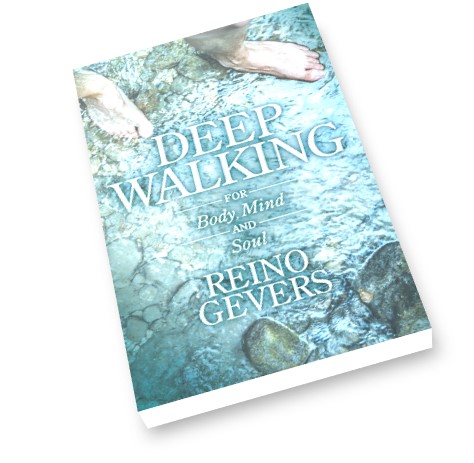
P.S. I’m excited to announce the release of my latest book, “The Turning of the Circle: Embracing Nature’s Wisdom for Purposeful Living.” If you enjoy it, you might also be interested in my previous works, “Deep Walking for Body, Mind and Soul” and “Walking on Edge: A Pilgrimage to Santiago.” You can find all of these titles at reputable bookstores near you.
Happiness is a state of mind, often based on those small joys of life that wield immense power to our sense of bliss.
Recently, I engaged in an exercise with course participants, probing into what fueled their energy reserves versus what drained them. Surprisingly, the resounding echoes leaned towards moments spent with loved ones, the companionship of pets, or the peace of mind found in nature as profound sources of rejuvenation.
Notably absent from their reflections was any mention of shopping or the accumulation of material possessions. Yet, society incessantly indoctrinates us that such acquisitions are the keys to happiness. The allure of novelty quickly dims, leaving behind a feeling of regret and shame from overspending.
Humans are tribal by nature
We humans are tribal by nature. Positive interaction with our fellow human beings where we feel seen, supported, and heard is key to perceiving a sense of safety and well-being. A supportive community has for eons been part of the survival mechanism of the human species.
In his research on the Five Blue Zones, Dan Buettner explored the lifestyles and diets in regions of the world where people lived the longest and were healthiest.
It is a fact that aging and death are part of life but living a healthy lifestyle can add decades to your life and happiness. Some key pillars of the research of the Five Blue Zones:
Physical Activity. People who live long lives do regular moderate exercise such as walking
All the Five Blue Zones came from strong communities with a healthy mixture of young and old people
They had a sense of purpose and joy
Their intake of calories and alcohol was minimal and most had Mediterranean or whole food plant-based diet.
Genetics play a relatively insignificant part of between 20-25 per cent when it comes to longevity.
With stress related physical and mental disorders becoming a growing threat to the very fabric of society, a supportive network of family, friends, or broader social circles, helps fortify your ability to weather life’s storms.
Belonging to a community fosters a sense of connection and belonging, which is fundamental to human well-being.
Healthy communities can serve as platforms for shared knowledge, emotional support and coping strategies. By exchanging insights and learning from one another’s experiences, individuals within a community can develop adaptive skills for managing stress more effectively.
The bonds of community are often strengthened by shared religious rituals, festivals, music and dancing.
In essence, community acts as both a shield and a sanctuary, offering protection from the onslaught of negativity from the external world while nurturing the resilience needed to bounce back after going through the loss of a loved one or any other challenge that life throws at you.
Reino Gevers – Author – Mentor – Speaker
P.S. I’m excited to announce the release of my latest book, “The Turning of the Circle: Embracing Nature’s Wisdom for Purposeful Living.” If you enjoy it, you might also be interested in my previous works, “Deep Walking for Body, Mind and Soul” and “Walking on Edge: A Pilgrimage to Santiago.” You can find all of these titles at reputable bookstores near you.
In a recent conversation, someone asked about the essence of “living your authenticity,” the central theme of my podcast and YouTube channel. While it typically entails remaining faithful to one’s core values and identity, its scope is more intricate.
How can you discern when you’re not living authentically?
Embarking on the journey of fulfilling your destiny and purpose tends to engender a sense of natural alignment, accompanied by feelings of flow, joy, and passion. You will be operating on a higher vibrational frequency, naturally radiating an allure in your relationships and interactions.
Choosing happiness and masterminding your thoughts is a conscious choice.
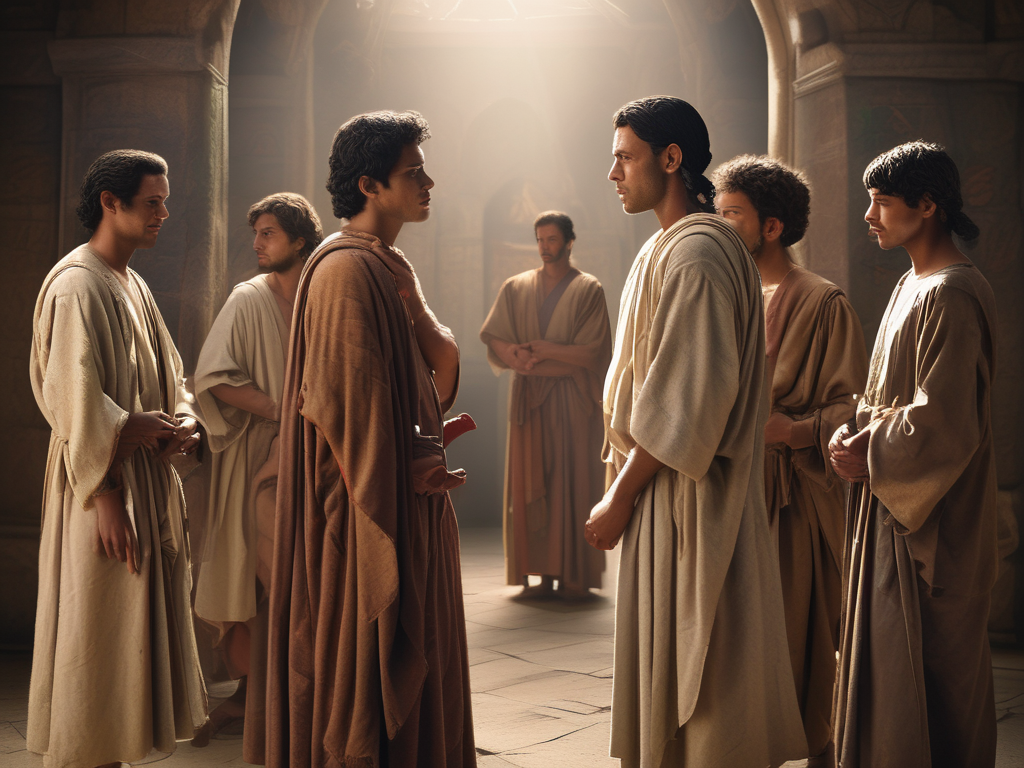
In a conversation with the Pharisees, the Jewish clergymen of the time, Jesus admonishes them for seeking the kingdom of heaven in the external world, telling them: “Neither shall they say, Lo here! or, lo there! for, behold, the kingdom of God is within you.” (Luke 17:21)
Living your authenticity is not a destination or procrastinating in some utopia.
The whole purpose of life is to keep on growing and elevating your consciousness. The activities that you pursue with a passion and where you stay in the flow will ultimately shape you into the person you are destined to be.
Living authentically does not mean you won’t have setbacks but how fast you can bounce back into the flow after the experience of loss, pain, or shame. It is the courage to stand up for what you believe in and to pursue your goals, even in the face of adversity especially if it gets difficult or you are unpopular.
You might lose friends, family members, and what you believed was your support network. But very often those people closest to you are those that pull you back to their low vibrational field because they can’t bear one of their “tribal members” pursuing their dream. It would, in their mind, expose them as weak and a failure.
Most unhappiness and much of the depression epidemic we are seeing is when there is addiction to a false identity that feeds on external validation.
Especially the passive consumption of mass media is designed to make you unhappy. Their whole purpose is to generate profit for someone else, and they can literally suck out your lifeblood if you allow their messaging to shape an identity that is far removed from authentic soul purpose. You become a mere consumer instead of a creative shaper of your destiny.
If you are addicted to a mindset that is fixated on external gratification and where you are dependent on flaunting your status and possessions you will fall into a spiral of unhappiness. For there will always be someone more successful, younger, more beautiful, more famous, and happier than you are.
It is the reason why lottery winners end up bankrupt or commit suicide. Or film or sports stars at the height of their success fall prey to substance abuse, as they desperately try to avoid an underlying emptiness.
Cultivating a sense of self-love, gratitude, and awareness is key.
Your body will at an early stage send warning signals if you need to change something, like feeling stress, anxiety, and sleeplessness. Your gut feeling will tell you that something needs to change. The high-value man or woman you meet might show all the right credentials for a good partnership but something inside tells you that he/she is just not the right fit or that something is wrong.
You might be doing something where you consistently have to compromise your core values, beliefs, and feelings. When external voices have led you astray on the wrong path you will consistently face obstacles, setbacks, and disappointment. When you are on the right path you feel instinctively that wind in the sails where the universe has your back, and everything falls into place like meeting the right people at the right time.
You might just be going through the motions without feeling any sense of passion or purpose. You feel like you’re wearing a mask and pretending to be someone you are not. You might want to drown that underlying growing feeling of unhappiness by accumulating more and more things with the novelty wearing off after only a few minutes.
Experiencing a profound “flat-on-the-ground” moment can often serve as the catalyst for seeking a deeper reconnection with the essence of existence. Authenticity and true meaning come into focus when you realize that your purpose is intertwined with the universal fabric of life and its inherent wholeness.
Following the estrangement from nature, humanity faces the formidable task of recognizing this avenue of reconnection through an experiential spirituality that transcends the confines of religious dogma, belief systems, and political or ideological barriers.
Reino Gevers – Author – Mentor – Speaker
P.S. I’m excited to announce the release of my latest book, “The Turning of the Circle: Embracing Nature’s Wisdom for Purposeful Living.” If you enjoy it, you might also be interested in my previous works, “Deep Walking for Body, Mind and Soul” and “Walking on Edge: A Pilgrimage to Santiago.” You can find all of these titles at reputable bookstores near you.
“Listen to the wind, it talks. Listen to the silence, it speaks. Listen to your heart, it knows.” – Ojibwe Prayer
Acquired knowledge and intelligence are often confused with wisdom in our digital age where we have a world of information at our fingertips while the deeper understanding and insight into life’s mysteries appears to be on the wane.
The ancient Mystics, notably the 13th-century Dominican monk Meister Eckart, understood true wisdom as the intimate connection and surrender to the divine will.
Eckart’s idea was that of a “divine birth” within the soul, where a transformative experience leads to a profound shift in consciousness.
“In this divine birth, I find that God and I are the same: I am what I am and what I shall remain, now and forever. I am carried above was the highest angels. I neither increase nor decrease, for in this birth I have become the motionless cause of all that moves. I have won back what has always been mine. Here, in my own soul, the greatest of all miracles has taken place-God has returned to God!
The sages and Mystics were well aware of the limitations of intellectual thought and knowledge. The accumulation of information, facts, theories, and concepts on the cognitive level were deemed worthless if they were not connected to wise decision-making.
Intelligence, especially on the part of egocentric politicians, scientists, and business leaders, has in the past caused havoc to humanity and become even more topical in an age where spreading falsehoods and toxic emotions to millions on a global level has become the norm.
Millions of people are being spoonfed with external beliefs, concepts, and ideas that ultimately are far removed from authentic soul purpose, finding themselves digging deeper and deeper into the rabbit hole of falsehoods and illusion.
Wisdom meanwhile encompasses a broader understanding of human nature, ethics, and the interconnectedness of the world by letting go of “ego” desires and attachments, especially of fixed beliefs and concepts that are closely intertwined with personality and ego.
The misunderstanding of Karma
Wisdom is an alignment with the cosmic laws and a greater whole that governs all existence. In this context the concept of karma or the law of attraction is often misunderstood as a predestined inevitability, yet with the growth of wisdom comes the growth of awareness.
It is inseparable from such values as compassion, empathy, and unconditional love. Mystic teachers emphasize the importance of cultivating these qualities as essential aspects of spiritual growth, enlightenment, and ultimately fulfilling life’s purpose.
Karma is the result of habits, actions, and choices made. We have been given the power of choice by the divine. If you extract yourself from the addiction of blaming external circumstances you become the creator and master of your destiny.
“Life is a meteor Let your eyes roam Heaven is beautiful It’s almost like home Children! get ready It’s time to come home”
(Paul Simon Track Seven on Seven Psalms)
Reino Gevers – Author – Mentor – Speaker
P.S. I’m excited to announce the release of my latest book, “The Turning of the Circle: Embracing Nature’s Wisdom for Purposeful Living.” If you enjoy it, you might also be interested in my previous works, “Deep Walking for Body, Mind and Soul” and “Walking on Edge: A Pilgrimage to Santiago.” You can find all of these titles at reputable bookstores near you.
“Silence in the face of evil is itself evil: God will not hold us guiltless. Not to speak is to speak. Not to act is to act.” – Dietrich Boenhoeffer (German theologian killed by the Nazis)
A couple of days back, a startling headline lit up my screen: Russian dissident Alexei Navalny had been assassinated. The news shook me to my core, leaving me appalled at the apparent depths to which Russian leader Vladimir Putin would stoop, fully aware of the shockwaves it would send worldwide.
Navalny’s murder snuffed out a beacon of hope in the oppressive landscape of Putin’s Russia. When a leader turns to such brutal tactics, it reveals not strength but profound weakness. Navalny epitomized everything the autocrat in the Kremlin was not.
It is the nature of dictatorial regimes that they bring forth the best and the worst extremes in mankind. South Africa’s apartheid regime had shining examples of courage and humanity in Nelson Mandela, Archbishop Desmond Tutu, Steve Biko, and many others. Nazi Germany had Dietrich Boenhoeffer and dissidents such as Sophie Scholl. Czechoslovakia had Vaclav Havel and Poland Lech Walesa.
Navalny’s assassination, probably directly ordered by Putin, is one of many in today’s Russia including opposition politicians, journalists, businessmen, and academics who dared speak out about the corruption, cruelty, and nepotism.
We discover who we are in confronting evil and at the same time the darkness and the light within. The external is a reflection of that which is within. Evil manifests itself where there is a complete absence of what is good and pure.
Failure to engage in self-reflection, transmuting one’s own shadows, and speaking out against evil renders one vulnerable to the influence of evil. This truth was starkly realized by figures such as Dietrich Bonhoeffer and Winston Churchill during World War II. Attempting to placate, appease, or negotiate with evil proves futile, as it perceives such actions as weaknesses, stemming from a consciousness devoid of moral values.
In Greek mythology, the evil Goddess Eris has the only purpose of sowing discord. She causes a conflict among the Goddesses Athena, Hera, and Aphrodite by throwing a golden apple among them with the words: “to the fairest”.
No other God wanted to be put on the receiving end of the wrath of the three Goddesses by choosing one of them as the fairest. The Goddesses then ask the mortal prince of Troy Paris to do it for them. Each tries to bribe him by pledging great gifts, and Paris then gives the apple to Aphrodite who had promised to make the most beautiful woman on earth fall in love with him.
The woman chosen was Helen, the queen of Sparta and wife to Menelaus. When Paris eloped off with her, Menelaus declared war on Troy, rallying all the Greek kings, and triggering the Trojan War.
Another Greek Goddess, Enyo, delighted in war and destruction, bloodshed, and the ransacking of cities.
The fallen angel and the lure of power
Christianity describes the devil, Satan, as a fallen angel and the very personification of evil. He was expelled from Heaven at the beginning of time after attempting to become equal to God.
The archetypal motif of the fallen angel or Lucifer is found in Summerian folklore, Roman mythology, Germanic tribes, and the Vedas.
In popular culture, we find Darth Vader, a fictional character in the Star Wars series. He is the dark father and the personification of evil in popular culture, serving the empire as its chief enforcer.
The windows to the soul
Eyes are said to be the windows to the soul with the bible quoting several passages in this vein. “The eye is the lamp of the body. So, if your eye is healthy, your whole body will be full of light,” (Matthew 6:22). “But if your eye is bad, your whole body will be full of darkness. If then the light in you is darkness, how great is the darkness!” (Matthew 6:23).
I remember very well when my elderly German neighbor, who had experienced the horrors of World War II, remarked on Vladimir Putin’s ascension to power in 1999. “You can’t trust him. His eyes are cold like those of a wolf.”
U.S. President Joe Biden told Putin during a closed-door meeting in 2011: “I looked in your eyes and I don’t think you have a soul,’ and [he] looked back at me, he said, ‘We understand each other.'”
For all those millions of people in the West who blindly follow the Russian narrative of lies, deception and fake news, I highly recommend the book: “The Killer in the Kremlin”, an explosive account and exposure of Putin’s tyranny and sinister ambitions by award-winning journalist John Sweeney.
Often evil disguises its real intentions behind a smokescreen of lies, disinformation, and false flag operations. It is the playbook of such Lords of Evil as Adolf Hitler, Slobodan Milosevic, Joseph Stalin, and Mao Zedong. In our lifetime we have to face the truth. We have another Lord of Evil in Vladimir Putin. Over decades he has not only duped western politicians but much of the rest of the world. Let’s connect the dots just to illustrate how much this Lord of Evil has sown destruction and discord.
Under Putin, Soviet-era repression has given way to a marriage between kleptocracy and organized crime, turning Russia into a “Mafia state”.. Organized crime has become an outgrowth of the political machine. Mafia cells have undertaken assassinations, facilitated coercion, and extortion. Outspoken Putin critics such as Garry Kasparov have all the while warned and revealed the true nature of the monster.
During a closed-door meeting in the year 2000, Putin is said to have offered the wealthiest Russian oligarchs a deal: Surrender to my authority, and you can keep your mansions, and multibillion-dollar corporations. Those oligarchs who reneged on this deal and undermined Putin were thrown into prison or died under mysterious circumstances. Putin’s wealth is a secret but it can be safely assumed that he has used the oligarchs as a major source of his hidden assets.
Turning Russia into a Mafia-type state has given Putin huge resources to weaken Western democracies. Putin has repeatedly voiced his disgust for the multi-culturalism, sexual diversity, and free speech which he sees as a direct threat to his authoritarian and 19th-century imperialist dreams. Over the years he has funneled huge resources to rightwing and extremist groups in western countries, spreading lies and disinformation on social media through Russian state-funded bots.
And then the Lord of Evil decides to invade Ukraine, the world’s breadbasket, triggering the largest refugee crisis in Europe since World War II and possibly the deaths of millions of people in Third World countries due to famine. Meanwhile, we have become almost emotionally immune to the daily bombardment of playgrounds, hospitals, and residential buildings in Ukraine as Putin wages a war against innocent civilians.
What does humanity have to learn from all this?
We need the enemy, and the opposite perspective to gain clarity on our own core values and choices. Often the question is asked: “If there is a God, why does he allow evil?”
But we have been given the power of choice. We cannot blame dysfunctional human actions on the Creator. God has often been seen as a strict father figure punishing his flock for sinful or bad behavior. The Mystics in contrast view God, the universal creator or the divine as “a state of Being” – the connection to pure love, kindness, and compassion. The manifestation of evil would therefore be the opposite condition – the state of complete absence of God.
Napoleon Hill once said that every evil carries within it the flames of self-destruction. It was a warning by the famous mentor to his students, political and business leaders to reflect carefully on their actions and goals. When they are not in sync with the universe and designed for the benefit of all, those flames will come back to burn you.
Sometimes those flames can come in the form of such deep disgust and regret with the “Self” that it manifests in self-destructive behavior such as addiction or serious illness.
The tragedy is that the character once held by the stranglehold of the shadow demons finds himself incapable of self-reflection.
Most suffering that we experience in our personal lives or that we witness in the external world is a result of bad human choices and actions carried out from a low level of spiritual disconnect.
The word “evil” is often used in a confusing context to blame, vilify or distract.
The wisdom of the ancient Mystics can be a good guideline. Basic human nature has not changed much over the centuries. There will always be a segment of people who don’t give any regard to the outcome of their actions. Meister Eckhart, the great Dominican friar of the early fourteenth century, warned against those whose “sole concern is how to gain honors, wealth, and pleasure.”
These people, according to Eckart, are those who lack all sense of humility by “running in front of God.” Inevitably their lives will be haunted by what they call bad luck or a bad hand. They will be blaming God, fate, people different from themselves, and basically everyone for what has gone wrong in their lives. They are filled with hate, resentment, and anger. They are the malignant narcissists of our age who seek only personal validation and glory.
As the Lord of Evil and his followers spin the narrative of hate, division, and destruction some comfort can be taken from the fact that evil ultimately destroys itself because it is out of sync with the laws of the universe. The thoughts, actions, and energy you send out inevitably come back to you.
In the same way, the path of light which is that of kindness, unconditional love, compassion, unity, tolerance, gratitude, and acceptance will bless you in a multitude of ways. You will be living a happy and blissful life if you make yourself an instrument of divine purpose.
Reino Gevers – Author – Mentor – Speaker
P.S. I’m excited to announce the release of my latest book, “The Turning of the Circle: Embracing Nature’s Wisdom for Purposeful Living.” If you enjoy it, you might also be interested in my previous works, “Deep Walking for Body, Mind and Soul” and “Walking on Edge: A Pilgrimage to Santiago.” You can find all of these titles at reputable bookstores near you.
Crazy politics is infiltrating the minds of millions of people in key European countries and the United States, with the views of extremist fringe groups becoming mainstream as they cleverly manipulate powerful communication instruments.
Politics is a reflection of massive changes in social norms and values as a growing number of people feel they are being left behind by a technological revolution that benefits a tech-savvy elite to the detriment of industries that have formed the lifeblood of regions and communities for centuries.
Rational thought and logic are being undermined by manipulators
The ancient Greeks and Romans were well aware of how rational thought and logic could be undermined by manipulators feeding on fear, anger and desire. The Stoics therefore advocated logic and reason as an antidote in understanding and navigating the world.
The Stoics categorized emotions into two types: “eupatheiai” or good feelings and “apatheia” – a state of tranquility or freedom from disturbing emotions. They accepted emotions as being part of the human condition and they could not be suppressed. Rather a healthy emotional state should be aligned with reason.
External events are beyond our control but Stoicism teaches us that we should focus on what we can control such as our own thoughts and actions. The concept is encapsulated in the Stoic maxim: “Epictetus’ Dichotomy of Control,” which encourages individuals to distinguish between what is within their control such as their own thoughts and actions, and what is not such as external events.
During these times it is more important than ever to stand guard at the guardrails of the mind. We are seriously lacking in leaders of wisdom who are aware that their actions, words, norms, and values have a huge impact on society. Words and slogans that stir division, and belittle and disparage people with opposing views rip apart the very fabric of what holds a society together.
If emotions overpower logical thought, entire economies and the nation state are at risk. An example is the current political narrative in Germany. A fringe rightwing party called the Afd (Alternative for Germany) was largely ridiculed by the mainstream because of its extremist ideas. But steadily over the past few years it has gathered more support with simplistic xenophobic messaging to the point where it has become the second-most popular party in current opinion polls.
The silent majority was finally stirred into action with hundreds of thousands of moderate Germans taking to the streets during the past few days horrified at the news that Afd party leaders met secretly drafting a master plan on how to deport millions of people both citizens and non-citizens with an immigrant background. The Afd’s economic policies would in reality devastate the German economy as most factories, hospitals, and service industries are totally dependent on foreign labor because of an ever growing older population.
In the same vein the Brexit campaign in the United Kingdom was fixated on the idea that leaving the European Union would save the country billions of pounds that would then be spent on the country’s National Health Service (NHS). In reality economists have calculated that the UK’s GDP is currently about five per cent lower than it would have been had it not voted to leave.
Emotions unfortunately are more powerful than rational tnought and logic. It explains why those politicians arguing on the benefits of remaining in the European Union lost the argument. They provided statistics and economic data whilst the Brexiteers emotionalized the debate with the vision of reborn “Great Britain” freed from the constraints of Brussels bureaucrats.
Most people outside the United States are horrified at the prospect of the world’s most powerful nation being led by a president with obvious mental health issues. Psychologists and sociologists will for many decades be analyzing the “Trump phenomenon.” Part of the explanation could be that he has become the voice for grievance culture – for the large numbers of people suffering from frustration, dissatisfaction, stress, anxiety, anger and compulsive behavior.
Our core values, norms and beliefs are shaped by those people we idolize as leaders. We should choose wisely using the Stoic method of logic and rationality: What is external and beyond my control and what is intrinsically part of my thought process and perspective that I can change?
Are my values of an empathic nature in service of universal rights, liberty, kindness, tolerance, protective of other people and the natural world or are my values motivated by dominance, exploitation, aggressiveness, and retribution that ultimately lead to a world the worse for everyone.
Reino Gevers – Author – Mentor – Speaker
P.S. I’m excited to announce the release of my latest book, “The Turning of the Circle: Embracing Nature’s Wisdom for Purposeful Living.” If you enjoy it, you might also be interested in my previous works, “Deep Walking for Body, Mind and Soul” and “Walking on Edge: A Pilgrimage to Santiago.” You can find all of these titles at reputable bookstores near you.