Tag Archives: spain

Walking the Camino: Lessons in Life and Faith

Walking the Camino is a spiritual journey that mirrors the journey of life, unfolding in three profound stages: a beginning, a middle, and an end. Kierkegaard describes these three stages of life as the aesthetic, the ethical, and the religious.

The first stage—the crucifixion—represents the struggle and hardship of making mistakes, forcing the boat upstream, and losing your way on the wrong path. During the first stage in life we face trial and error, effort often feels futile. You sometimes engage in aimless wandering and deviations. You may easily lose your way with countless distractions in the monkey mind.

The middle stage, symbolized by the Valley of Death or the Meseta, is a surrender of the ego to a higher purpose and deeper meaning. Here, the ego must die for the soul to awaken to its inner truth, allowing for transformation and clarity.

According to Kierkegaard the appeal during this “ethical stage” lies in walking the path with confidence, even though it may be monotonous and exhausting at times.

The final stage—the resurrection—is a state of flow, where you align with the current of life and begin to see that every experience, even the challenges, has been an expression of divine grace, sculpting you into the BEING you were always meant to become.

You feel the ecstasy in the dance of life. Your walk is a gentle surfing of the path without a sense of gravity. There is an unspoken faith in the journey that drives you forward, and quickens your pace.

Reaching the Cathedral of Santiago is a celebration of joy and homecoming, marking the soul’s return to its true essence. Ultimately, the Camino is a journey of the soul, finding its way back home.

Reino Gevers – Author – Mentor – Speaker

P.S. If you enjoyed this article you will be interested in my books available where all good books are sold.

Leave a comment

Filed under Camino de Santiago, meditation, mental health, mental-health, Pilgrimage, psychology, purpose, religion, self-development

Pilgrimage, Mystery, and Healing

In London’s Westminster Cathedral stands a strikingly beautiful statue of Our Lady of Walsingham, emanating timeless grace, peace, and compassion.

The Marian shrine of Our Lady of Walsingham, located in Norfolk, England, traces its origins back to the early 11th century. Known as “England’s Nazareth,” it became one of the most significant and ancient pilgrimage sites in the country.

Known as the „Walsingham Way,” countless pilgrims visited the Holy House with a wooden statue of the Virgin Mary as a focal point of contemplation. It was a time when monasteries and shrines connected medieval pathways in a powerful matrix throughout Europe.

But in 1538 Henry VIII ordered the Walsingham statue to be taken to London and destroyed. As part of his break from Catholicism, monasteries were dissolved, pillaged and pilgrimages prohibited.

Only in recent times, the Walsingham pilgrimage path has been revived now officially forming part of the network of pilgrimage paths to Santiago de Compostela in Spain.

The shrine in Walsingham has regained its medieval significance, often referred to as the “English Lourdes” because of its central place in Catholic and Anglican devotion in England.

Pilgrims to Walsingham seek healing, spiritual guidance, and a deepened relationship with the Virgin Mary. It remains a place of great spiritual renewal for many, with visitors walking the Holy Mile, a traditional part of the pilgrimage route.

The beautiful statue of the Walsingham Lady in Westminster Cathedral was commissioned by Cardinal Griffin in 1954 and sculpted by Pius Dapre. For many years it remained hidden and almost unknown in the Cathedral Crypt until it was recovered.

Mystery still surrounds the original wooden shrine which may have never been burned and destroyed as ordered by Henry VIII.

An article recently published in The Catholic Herald quoted art historians as saying that The Langham Madonna, a battered 13th-century English statue in London’s Victoria and Albert Museum, is in fact the original statue of Our Lady of Walsingham.

There were no eyewitness accounts that the statue was actually destroyed in London, according to the historians but hidden by Catholic loyalists until it reappeared centuries later in the museum.

Throughout history, countless myths, legends, and mysteries have surrounded the figure of the Goddess—whether Mary, Brigid, Kali, Isis or others—appearing and reappearing in various forms. At times, she has been revealed as a beautiful statue, carved from wood, stone, or marble, inspiring the creation of shrines, monasteries, or cathedrals at the place of her discovery.

Mary, in particular, has been known to appear in sacred apparitions at sites like Walsingham, Lourdes, and Fatima—places where the veil between worlds seems thin. Regardless of whether one is a believer, agnostic, or of another faith, her presence has been tied to stories of miracles that defy logic. Yet, time and again, she has brought comfort, solace, and peace to those facing pain and confusion.

Reino Gevers – Author – Mentor – Speaker

P.S. If you enjoyed this article you will be interested in my books available where all good books are sold.

Check out also the recent episode on the Living to BE podcast and Youtube with our special guest Matt O’Neill. The topic: Happiness is a Choice.

Leave a comment

Filed under mental health, Pilgrimage, spirituality, Uncategorized

Can you be a divine messenger?

In ancient oral traditions saints and prophets are often said to return as angels in disguise after departing from their earthly existence, assisting those in desperate need of help, but sometimes unwittingly you too can become a divine messenger by imparting one word or deed that can completely change the trajectory of a person’s life.

Several stories reflect the universal theme of saints and prophets in the afterlife intervening in human affairs, in unexpected and unassuming forms.

Guidance and healing at crucial junctions

In ancient Greek mythology, the deity Asclepius is associated with healing and is said to have returned to the mortal world in disguise offering healing and guidance.

In the Islamic tradition, Khizr is often associated with the archetype of a wise and immortal figure who appears in challenging times, disguised as an ordinary person.

In Slavic folklore, the supernatural being Baba Yaga comes in disguise to test individuals and those who treat her kindly are well rewarded.

According to Jewish-Christian legend the Prophet Elijah intervened at several crucial junctions of human history. During the Battle of Las Navas de Tolosa in 1212 the Christian forces in Spain faced a formidable opponent against the soldiers of the Almohad Caliphate. The Christian army was about to be defeated when a mysterious knight wielding a white banner with a red cross appeared on the battlefield, believed to have been Elijah in disguise, and providing the crucial assistance that turned the tide.

The red cross against a white background is today a familiar symbol on the scallop shell worn by pilgrims walking the Camino de Santiago, many of them probably unaware of its origins. In my novel “Walking on Edge” I refer to several mysterious encounters with strangers that the main character Jake has on the Camino. Some of these accounts are based on real stories that I came across on my own pilgrimage walks.

It is common for pilgrims to have a really low moment while on the Camino, where they are at the point of giving up. I’ve met several people who reported having an epiphany after overhearing a conversation or having a chance encounter with a stranger, giving them the courage to continue.

You should never underestimate the impact your words and deeds could have on a fellow human being. Sometimes you also need to be cruel to be kind.

A teacher or parent might implement a policy of no-nonsense adherence to deadlines and assignments to prepare the student for the obstacles they might encounter in future professional environments, instilling a sense of responsibility and discipline, even though momentarily demanding.

If you have a family member or friend suffering from an addiction problem, the only way you are going to help them is by setting clear boundaries and deadlines where they can get professional help.

But sometimes a simple gesture or act of kindness can leave an everlasting imprint on a person’s memory.

In Charles Dickens’ novella “A Christmas Carol,” the miserly and bitter old man Scrooge is transformed with a child’s kindness that serves as a catalyst for his redemption, reminding him of the joy and warmth associated with Christmas and the importance of human connection.

It costs absolutely nothing to be kind. You never know what impact that could have on a fellow human being. The exact right words and actions might resonate with another person more than you realize.

Reino Gevers – Author – Mentor – Speaker

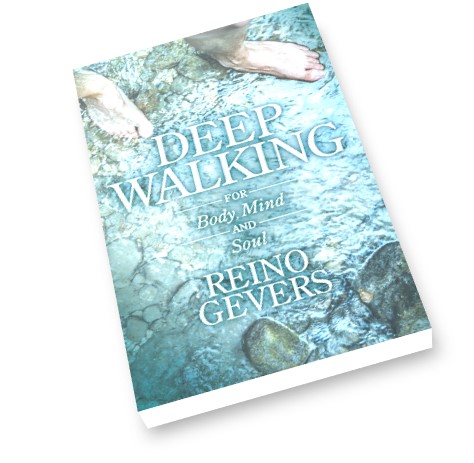
P.S. I’m excited to announce the release of my latest book, “The Turning of the Circle: Embracing Nature’s Wisdom for Purposeful Living.” If you enjoy it, you might also be interested in my previous works, “Deep Walking for Body, Mind and Soul” and “Walking on Edge: A Pilgrimage to Santiago.” You can find all of these titles at reputable bookstores near you.

Leave a comment

Filed under Camino de Santiago, spirituality, Uncategorized