
I will begin with something that I had to painfully realize: Love without boundaries is not love. It is self‑abandonment.
Healthy boundaries are self‑respect in action. They are the quiet courage to say: This is my space.
A space I need to protect my emotional and spiritual well‑being so I can care deeply, give generously, and feel fully.
But here’s the subtle truth: boundary crossings rarely begin with something dramatic. They often start softly, almost imperceptibly. An “energy vampire” is not necessarily a bad person. Most of the time, they simply haven’t learned to honor boundaries — neither yours nor their own. They often struggle with low self‑esteem and, therefore, seek constant validation, reassurance, and emotional reciprocity.
The challenge is that spending time with such people leaves you feeling heavy, drained, or strangely unsettled. Your clarity fades, your energy dips, and your inner balance becomes harder to access.
Awareness is the first boundary
Pay attention to your body. Your nervous system rarely lies, giving you the perfect feedback loop on what people suck you dry and who nurtures and energizes you. It sometimes starts with the person who enters the room. Do I relax and feel a warm energy fill my body, or am I looking at ways to escape as soon as possible?
The first step is saying “no”. It is, for most of us, the hardest thing to do because we are social beings hard-wired to get along with our fellow human beings. Subconsciously, we fear being rejected, isolated, and even betrayed when saying “no.” But here is the thing: Saying “no” is saying “yes” to something else. It is a “yes” to presence, dignity, and self-respect. You owe nobody endless access to your time, energy, and emotional availability. Boundaries do not require justification. They require conviction.
It takes practice, and all comes down to how you say it: Here are some examples
- “That doesn’t work for me.”
- “I’m not available.”
- “I need time to think about that.”
- “No, thank you.”
What Nurtures My Energy? What Depletes My Energy?
Before you can even set healthy boundaries, you must be aware of your own needs, as well as where you are the person crossing the boundaries of others. Clarity creates responsibility. Once you know what nourishes you, it becomes your sacred task to protect it. Take a time out to reflect on what nurtures and what depletes your energy:
- Silence or prayer?
- Nature and walking?
- Deep conversations?
- Creative expression?
- Time alone?
- Physical movement?
What depletes my energy?
- Information overload
- Conflict?
- Multitasking?
- Negative environments?
- Being responsible for everyone’s emotions?
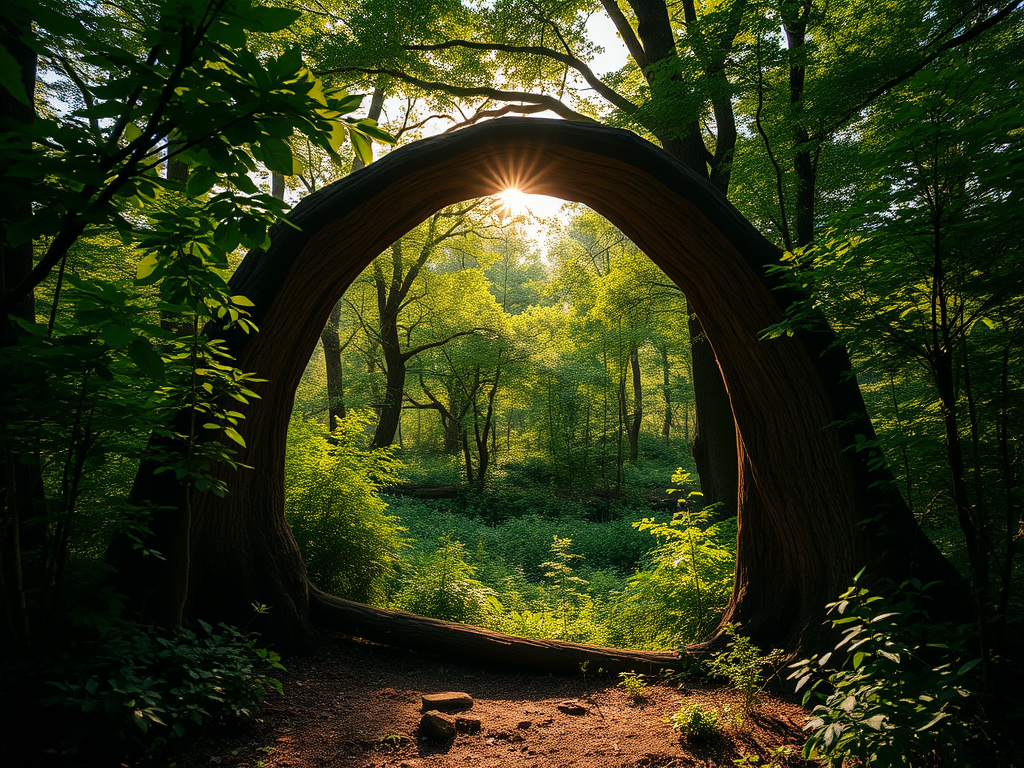
Protecting Your Inner Space
Your inner world is sacred ground. Not every opinion deserves entry. Not every demand deserves a response. Not every crisis deserves your involvement. To protect your inner space:
- Pause before responding. You can say: I need time to think about that
- When is guilt not love driving your choice?
- Create a daily grounding ritual that anchors you
Certainty does not mean rigidity.
It means knowing who you are.
Grounding practices may include:
- Conscious slow breathing
- Placing your feet firmly on the floor and noticing contact
- Naming what you feel without judging it
- Deep Walking in nature
- Returning to faith when uncertainty arises
A Final Reflection
Setting healthy boundaries is an act of spiritual practice. It is the decision to stop outsourcing your worth. It is choosing integrity over approval. It is trusting that the right relationships will honor your limits. Boundaries do not push love away.
They make real love possible.
And perhaps the most important question is this:
Where in my life do I need to choose self-respect over fear?
That is where your next boundary is waiting.
To quote the mystic Teresa of Ávila:
“Let nothing disturb you,
Let nothing frighten you,
All things are passing;
God never changes.
Patience obtains all things.
Whoever has God lacks nothing;
God alone suffices.”If you are currently finding yourself at a threshold—sensing that something has ended, but not yet knowing what comes next—you don’t have to walk this terrain alone. A Pilgrimage to New Beginnings is a gentle online journey created by me for moments just like this: a spacious, reflective path for those navigating endings, listening for what wants to be born, and learning to trust the wisdom of the in-between. If this speaks to where you are, you are warmly invited to join us on March 4th and take the next few steps—slowly, honestly, and in your own time.
Reino Gevers – Host of the LivingToBe podcast



 ReinosBlog