
Back pain is becoming an increasing disability, increasing by more than 50 per cent since 1990. A series of papers just released by The Lancet shows that most treatments such as surgery and the use of opioids is doing more harm than good.

Foto, courtesy Jesper Agergaard
Apart from accidents and genetic conditions, there are multiple reasons why chronic back pain is reaching epidemic proportions. Poor posture, stress and a mainly sedentary lifestyle are some of the obvious. In Germany statistics from public health insurance companies show that back pain has been one of the main reasons for absenteeism from work for years, costing the national economy a fortune in lost productivity.
Anyone who has suffered lower back pain will know how debilitating it can be and what impact it can have on happiness and general well being. It can force us into a state of paralysis where even the most willing of minds is trapped in an incapable body.
During stress situations our muscles tighten, especially around the neck and shoulder areas. Pressure has to go somewhere and will eventually find an avenue around the weakest part of our back in the spinal discs of the lower back.
The spinal discs play a crucial part in supporting the upper body, and allowing a wide range of movement in all directions. The supporting muscles of the spine inevitably degenerate when we don’t exercise enough. A slipped disc often comes when performing a mundane task. Of course back pain has to be checked by a physician. Sometimes an underlying serious condition such as an infection of a vital organ or cancer can be the cause. Every body is different.
Having practised Tai Chi and yoga for years, I can really recommend these body arts as extremely healthy for body and mind with a good teacher giving special emphasis on body posture.
People with lower back pain initially find any type of exercise painful, making an already serious situation worse by reducing all movement and causing more muscle degeneration. Therefore the most simple way to start is simply by walking which increases the stability of the muscles in the feet, legs, hips and torso.
Gentle, slow walking also improves circulation, pumping urgently needed nutrients into the spine and removing the toxins. You are in effect “walking off” that back pain. But with our busy lifestyle, most people will argue: “I don’t have the time to do at least 5-8 kilometers a day!”
There are many ways the mind tricks us into staying in a state of procrastination. But here are some tips of integrating more walking into your daily routine:
- Use the stairs rather than the elevator
- Walk to work and back if you can, or use a parking further away from the office
- Find a nature area you enjoy for your walk. Its that much more fun.
- And the best tip of all: Get a dog. A dog will tell you in many ways when its time for a walk, be there rain or sunshine. Its a fact that dog owners are healthier, simply because they do more walking.
Reino Gevers – Mentor for Leaders and Achievers – Your Health Matters
Awakening the Fire Within – key principles of health and success. Enrolling now will give you a 25 per cent discount.
“Walking on Edge – A Pilgrimage to Santiago” available both in Kindle and paperback.



 I fall into the trap every time, knowing full well that no matter what information I provide, it will not convince the other person to adapt or change his or her mind.
 In our modern world our energies are constantly being depleted by countless distractions that make us forget who we are and what soul purpose we have. Worse still: We imitate “role models” hyped by mass media, making us look foolishly unauthentic.
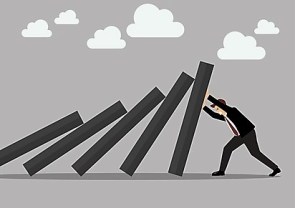 My take on this is that stress is not really the problem but that a host of factors come into play, especially the lack of recuperation in today’s fast track world. Here are some tips to make you more resilient in riding the storm during those tough times. We cannot avoid stress. It is part of life, but we can learn to deal with stressful situations differently.
 s to take one step forward. Mankind is going through a major transition with a leap in technology and information at your fingertips that only a decade ago could only be accessed in cumbersome library research. Entire industries are changing with once secure jobs being lost and new ones being created.
 Every third person on earth has a weight problem. Its a pandemic that is causing major health problems for individuals, societies and the economic future of many countries.
 How would you answer when asked to estimate between 40 and 80 per cent how many people in the world cannot read or write? Most people put the figure at below 60 per cent. The truth is that some 87 per cent of people in the world today can read and write. What an astounding achievement!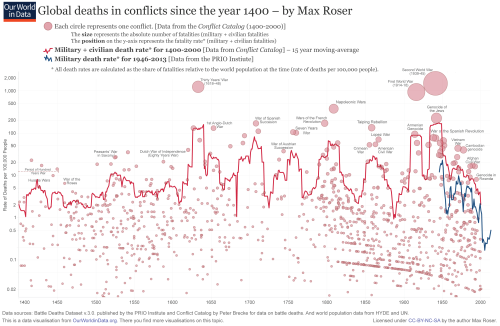



 ReinosBlog